Week 5: Prandtl Meyer Shock problem
AIM: To do a literature search of Boundary conditons that are typically used for shock flow problems, to describe the physics behind shock waves and to look at the effect of sub-grid-scale temperature value on cell count and the shock location
Theoritical Background:
Sound waves are pressure waves and it is at the speed of the sound wave the disturbances are communicated in the medium. Shock is formed due to merging of various small pressure pulses. When an object is moving in a flow field the object sends out disturbances which propagate at the speed of sound and adjusts the remaining flow field accordingly. However, if the object itself happens to travel at speed greater than sound, then the disturbances created by the object would not have traveled and communicated to the rest of the flow field and this results in an abrupt change of property, which is termed as shock.
A] Shock flow boundary conditions
Types of Boundary Conditions
1] Dirichlet boundary condition
It is the type of boundary condition, When imposed on an ordinary or a partial differential equation, it specifies the values that a solution needs to take along the boundary of the domain. In applied sciences, a Dirichlet boundary condition may also be referred to as a Fixed boundary condition.
2] Neumann boundary condition
It is the type of boundary condtion, When imposed on an ordinary or a partial differential equation, the condition specifies the values in which the derivative of a solution is applied within the boundary of the domain.
3] Robin boundary condition
It is the type of boundary condition , When imposed on an ordinary or a partial differential equation , it is a specification of a linear combination of the values of a function and the values of its derivative on the boundary of the domain.
4] Mixed boundary condition
Mixed boundary condition for a partial differential equation defines a boundary value problem in which the solution of the given equation is required to satisfy different boundary conditions on disjoint parts of the boundary of the domain where the condition is stated. Precisely, in a mixed boundary value problem, the solution is required to satisfy a Dirichlet or a Neumann boundary condition in a mutually exclusive way on disjoint parts of the boundary.
5] Cauchy boundary condition
Cauchy boundary condition augments an ordinary differential equation or a partial differential equation with conditions that the solution must satisfy on the boundary; ideally so to ensure that a unique solution exists. A Cauchy boundary condition specifies both the function value and normal derivative on the boundary of the domain.
B] Shock Waves
Shock wave or shock, is a type of propagating disturbance that moves faster than the local speed of sound in the medium. Like an ordinary wave, a shock wave carries energy and can propagate through a medium but is characterized by an abrupt, nearly discontinuous, change in pressure, temperature and density of the medium.
Shock waves are formed when a pressure front moves at supersonic speeds and pushes on the surrounding air. Shock waves are not conventional sound waves; a shock wave takes the form of a very sharp change in the gas properties. Shock waves in air are heard as a loud "crack" or "snap" noise.
Prandtl-Mayer shock expansion Fan
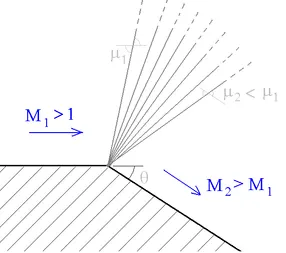
It's a supersonic expansion fan, a two-dimensional simple wave, is a centered expansion process that occurs when a supersonic flow turns around a convex corner. When a flow turns around a smooth and circular corner, these waves can be extended backwards to meet at a point. The fan consists of an infinite number of Mach waves, diverging from a sharp corner.
We have supersonic inflow in to a Duct and there is a Sharp corner. We are going to develop a lot of Mach waves. In the leading edge the angle that shock wave makes is proportional to inlet Mach number and the trailing edge of the shock depends on outflow Mach number.
C] Effect of SGS parameter on shock location
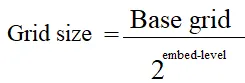
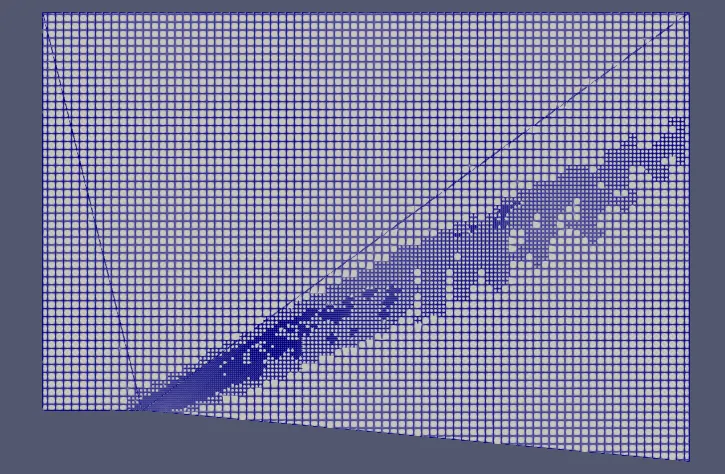
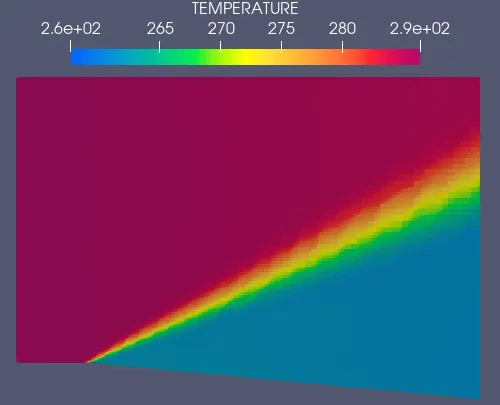
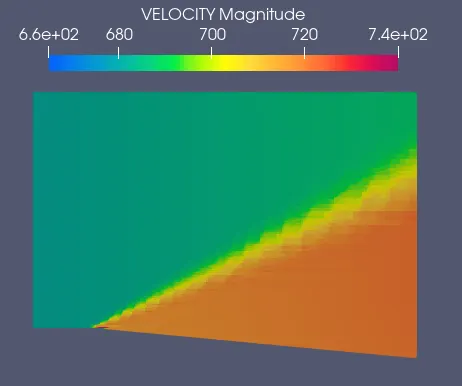
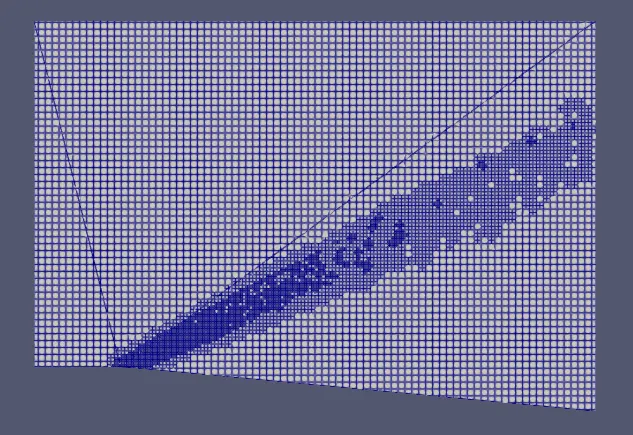
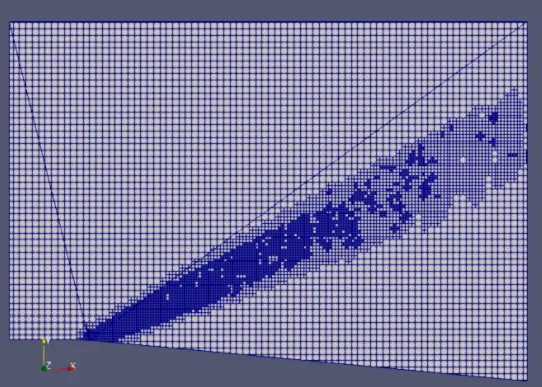
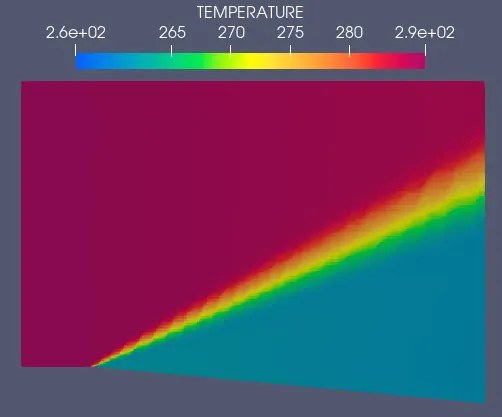
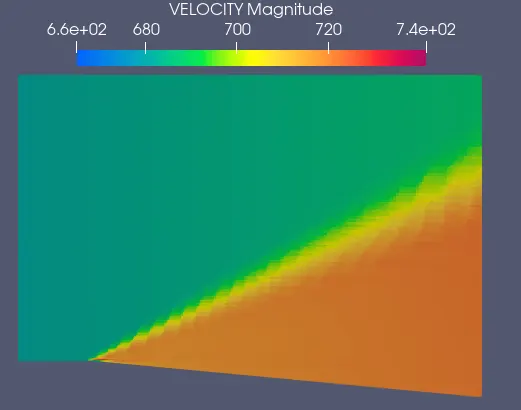
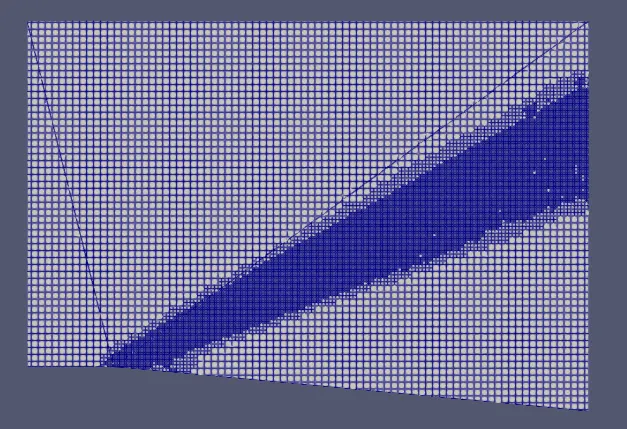
The place where shock occurs we have finer cells, that is adaptive mesh refinement. In this case we are using temperature based adaptive mesh refinement. So we monitor the curvature in Temperature. Whenever the curvature of Temperature is greater than particular value, we refine the mesh. When the shock wave occurs the velocity and Temperature Adaptive Mesh Refinement changes a lot. Wheneve the Sub Grid Scale(SGS) Temperature is greater than 0.05K , Adaptive Mesh Refinement is going to refine. Converge uses Octri data Structure and the refinement is given by the formula.
Geometry:
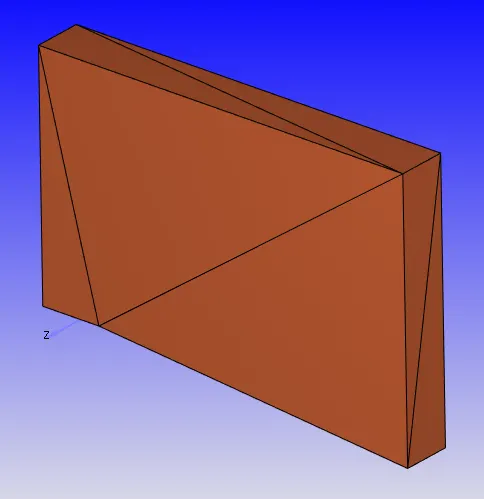
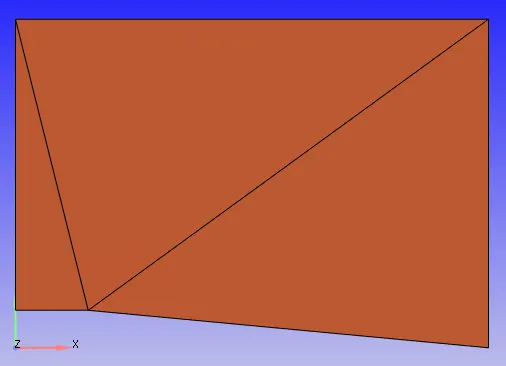
Meshing:
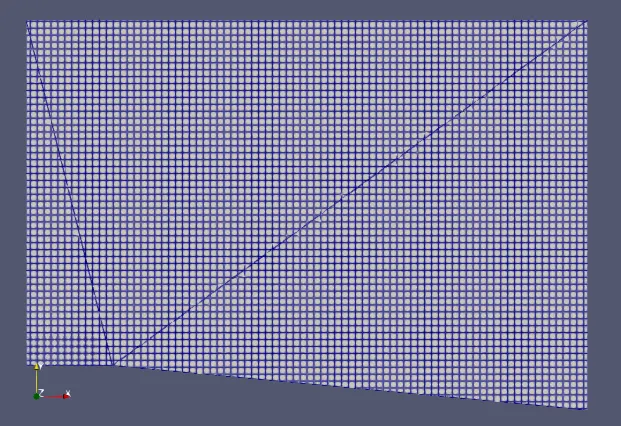
Base Grid
Case Setup:
1. Fluid: Air
Mass fractions of Nitrogen: 0.77, Mass fractions of Oxygen: 0.23
2. Solver: Steady-state Density based solver is used to simulate the flow
3. Regions and Initialization:
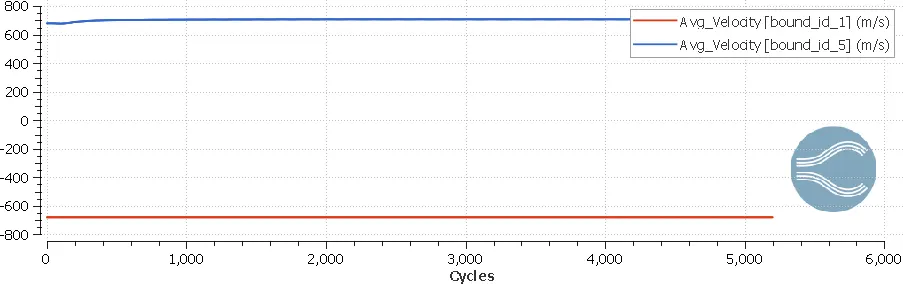
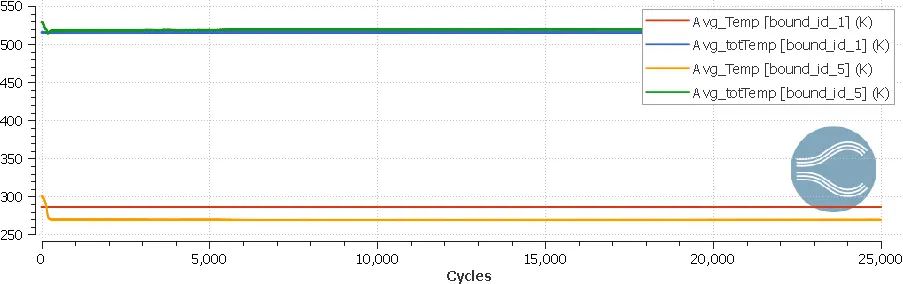
Flow region: Region 0, Velocity = 680 m/s, Total Pressure: 50000 Pa, Temperature: 300 K, Species : Air
4. Boundary conditions
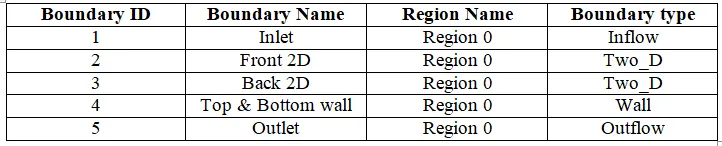
We have to assign boundary conditions for different faces of Geometry as shown in the table below
5. Turbulance Model: RNG k-ε.
6. Grid Control: dx=dy=dz=0.8 m
SUPERSONIC FLOW
Case 1:
SGS = 0.05K, Velocity = 680m/s
Meshing
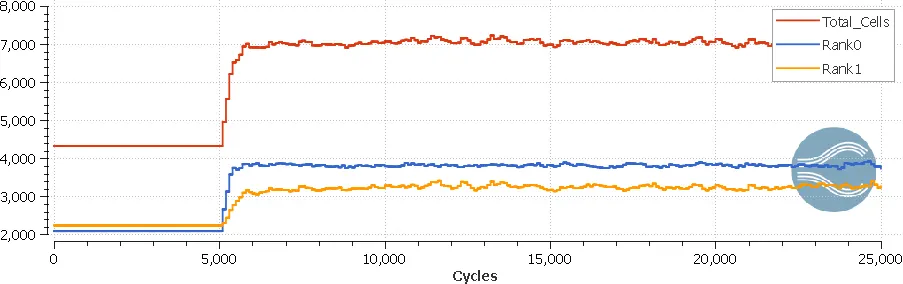
Cell count:
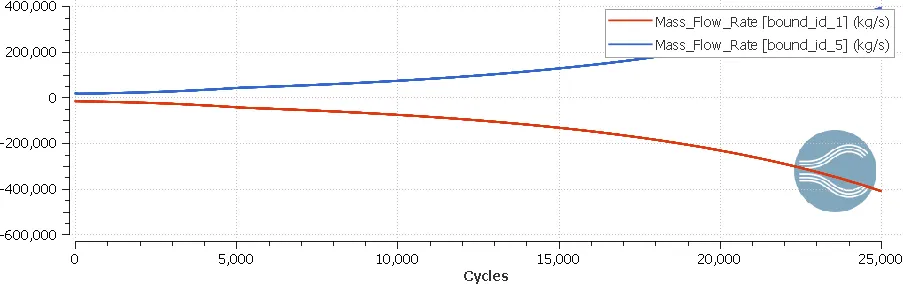
Mass Flow rate:
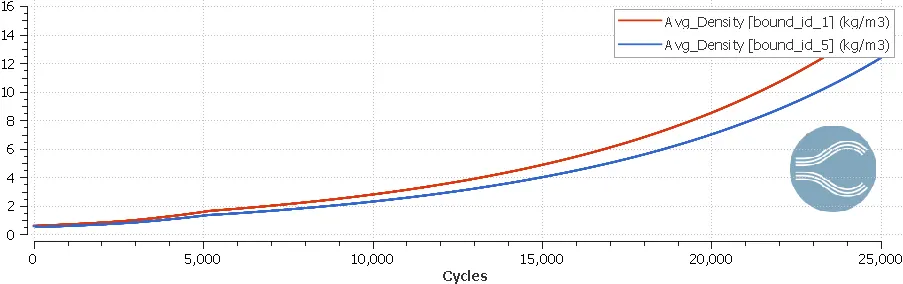
Density:
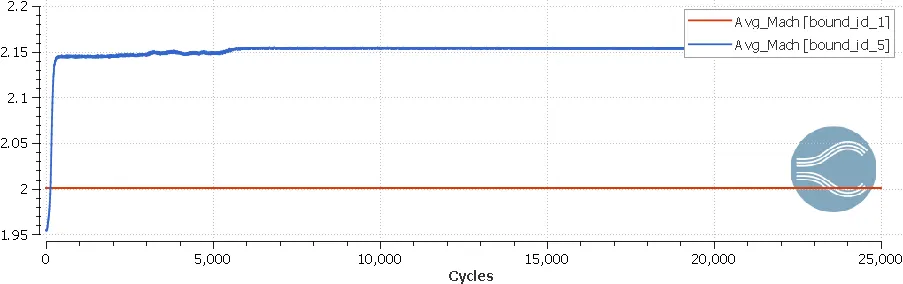
Mach Number:
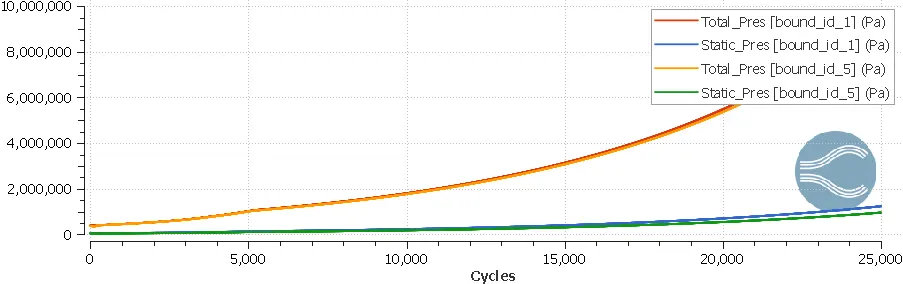
Pressure:
Velocity:
Temperature:
Temperature Contour:
Velocity Contour:
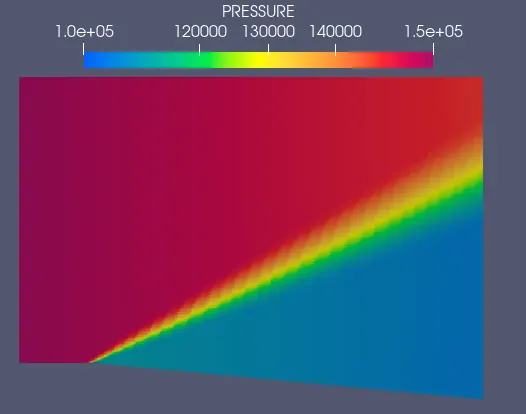
Pressure Contour:
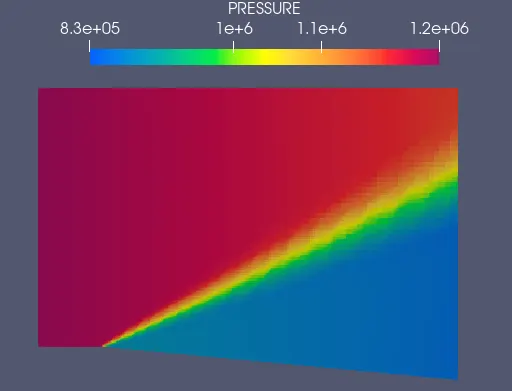
Case 2:
SGS = 0.04K, Velocity = 680m/s
Meshing
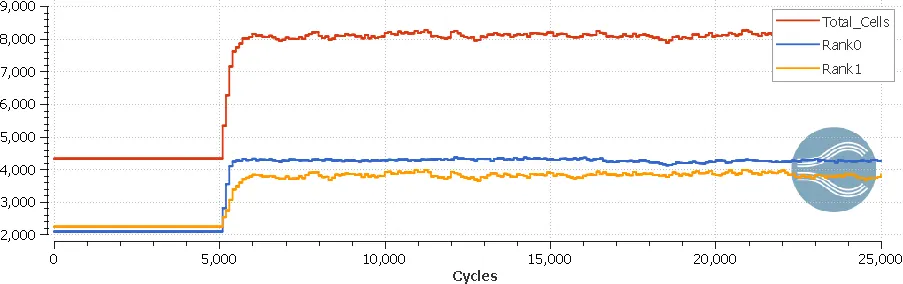
Cell count:
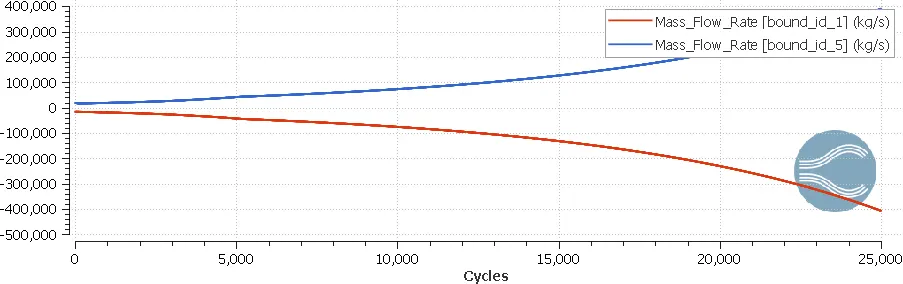
Mass Flow rate:
Density:
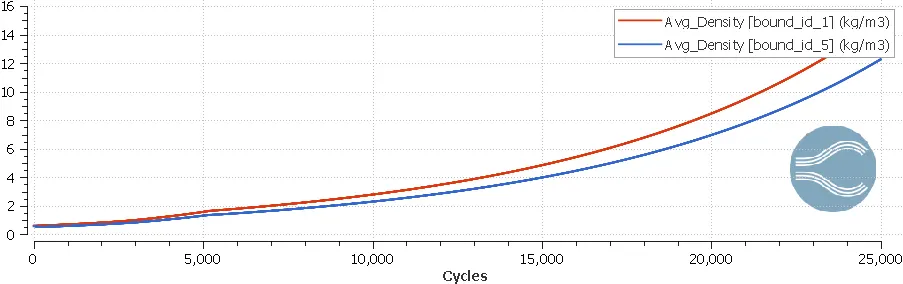
Mach Number:
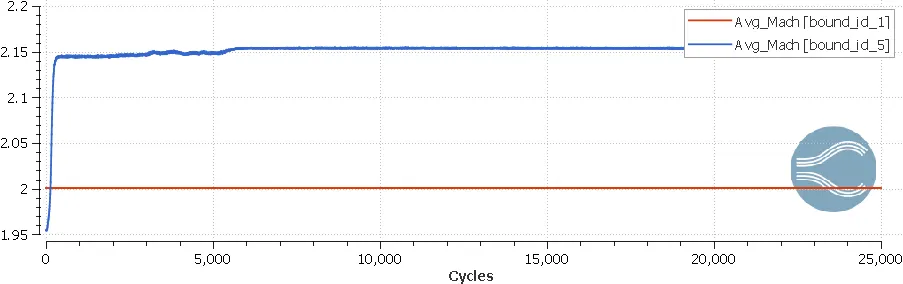
Pressure:
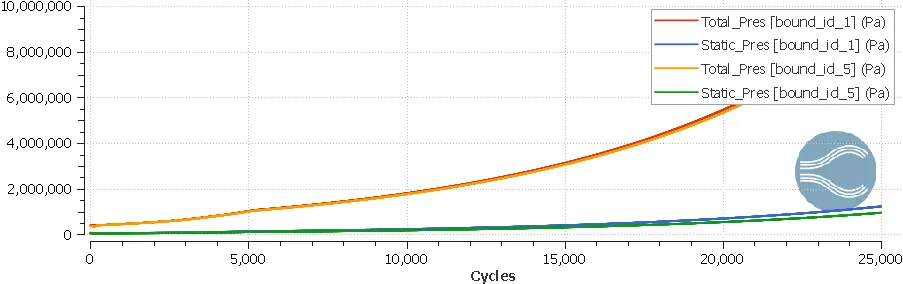
Velocity:
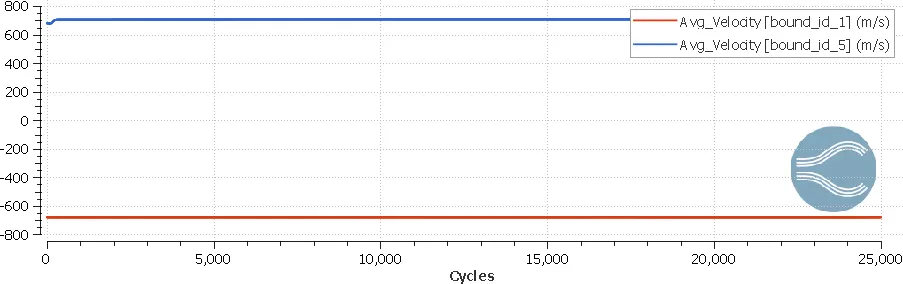
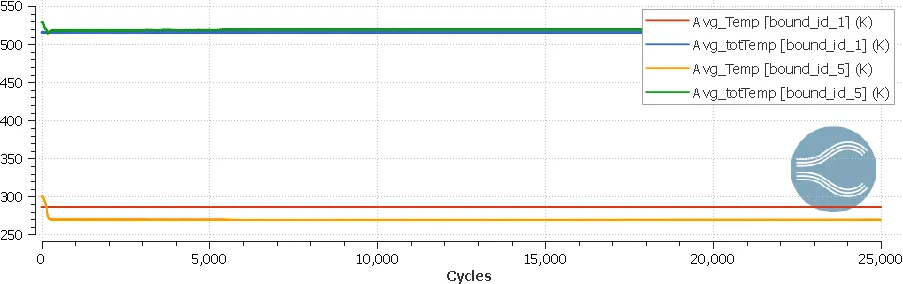
Temperature:
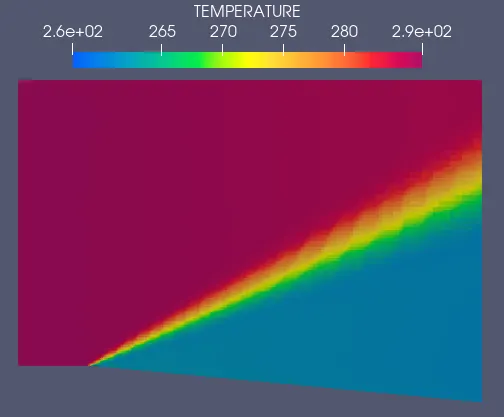
Temperature Contour:
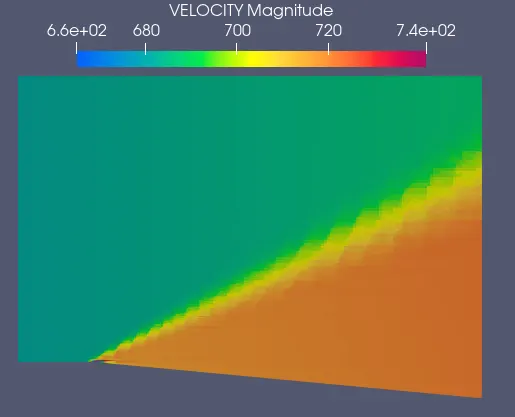
Velocity Contour:
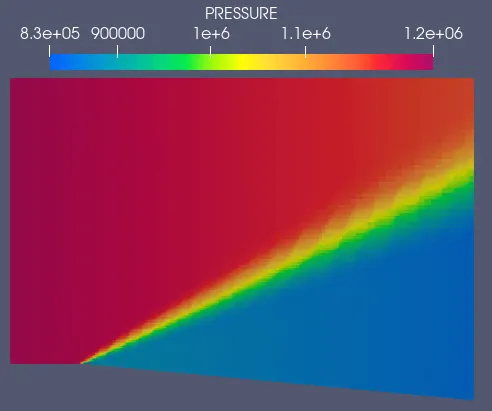
Pressure Contour:
Case 3:
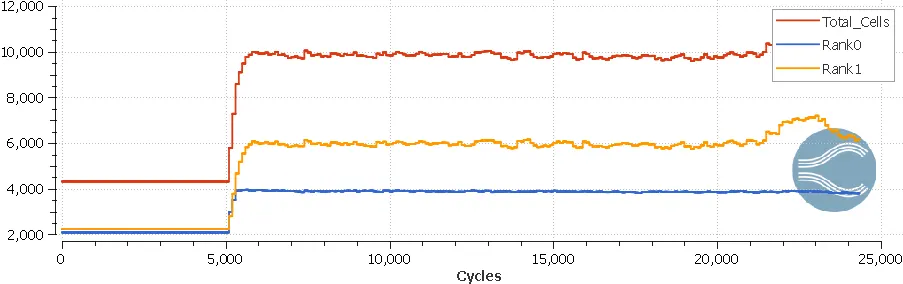
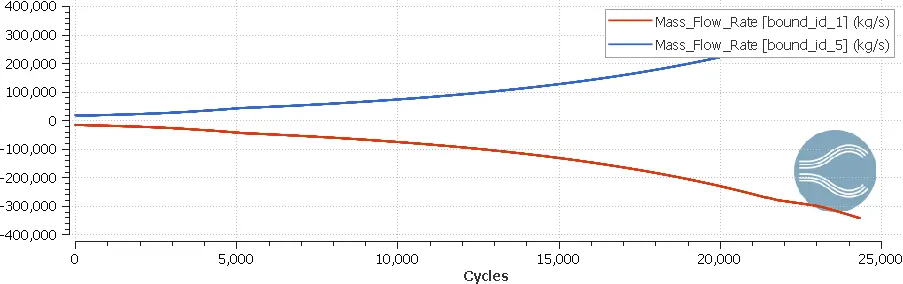
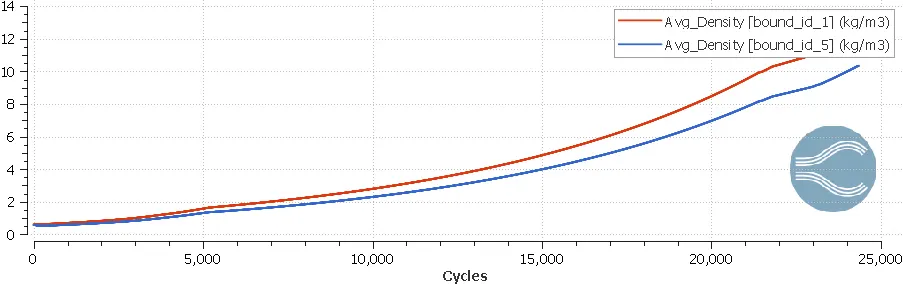
SGS = 0.03K, Velocity = 680m/s
Meshing
Cell count:
Mass Flow rate:
Density:
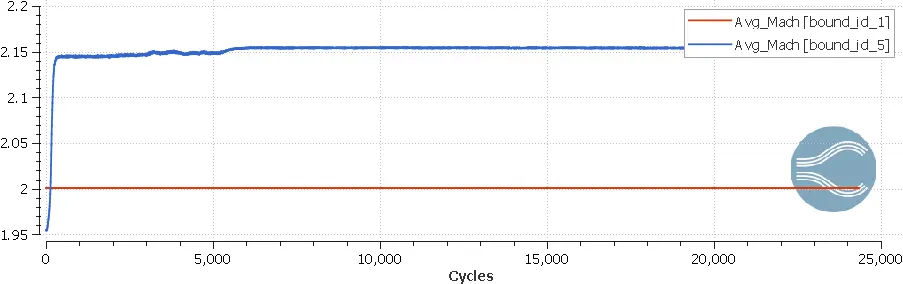
Mach Number:
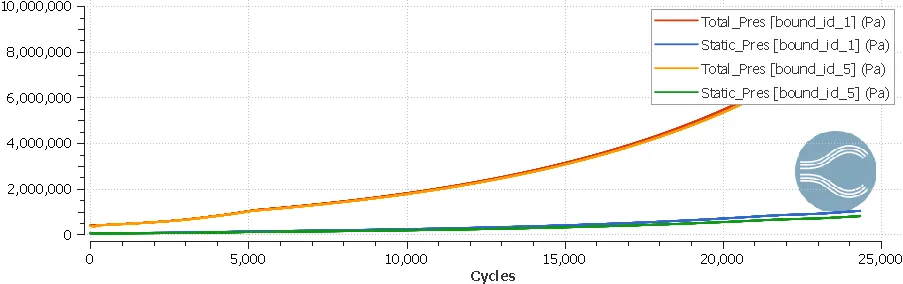
Pressure:
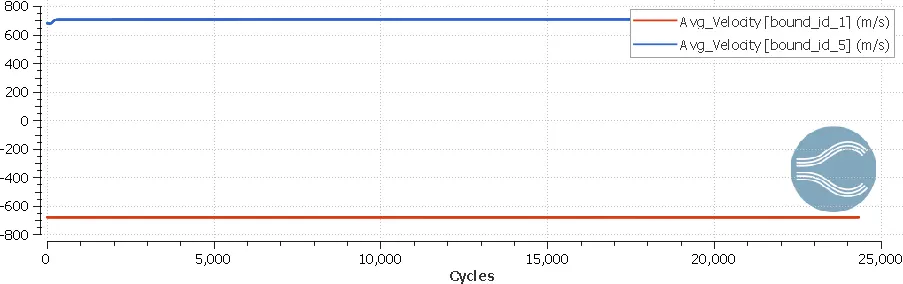
Velocity:
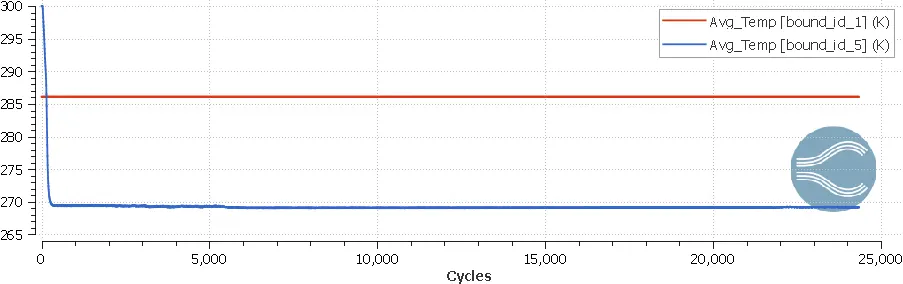
Temperature:
Temperature Contour:
Velocity Contour:
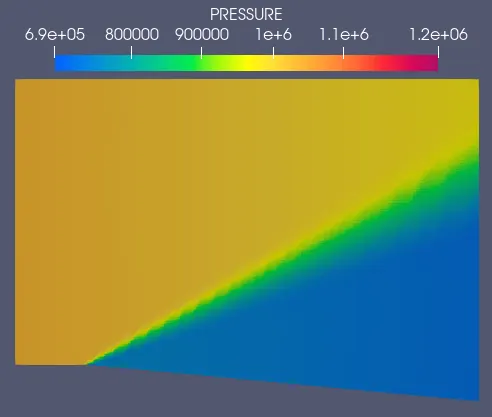
Pressure Contour:
Case 4:
SGS = 0.01K, Velocity = 680m/s
Meshing
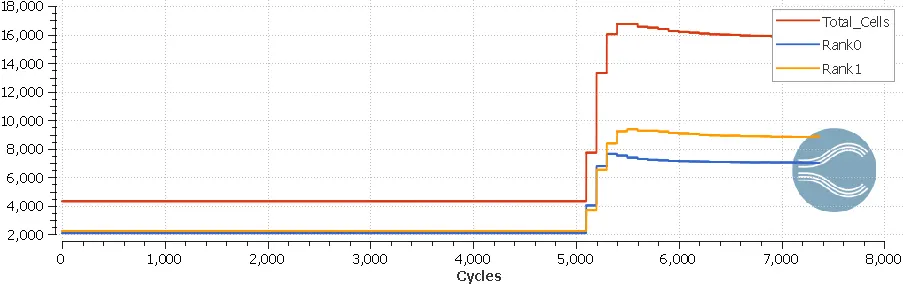
Cell count:
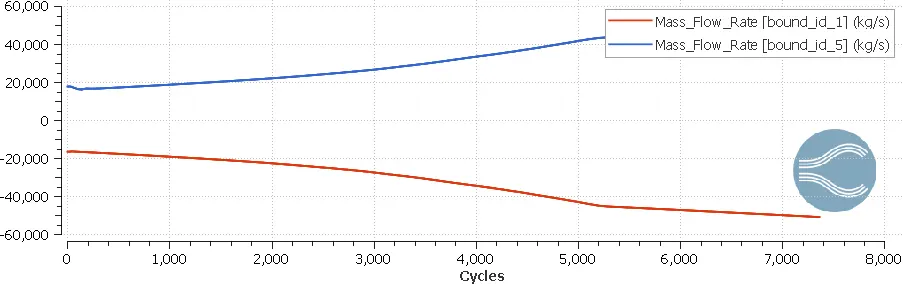
Mass Flow rate:
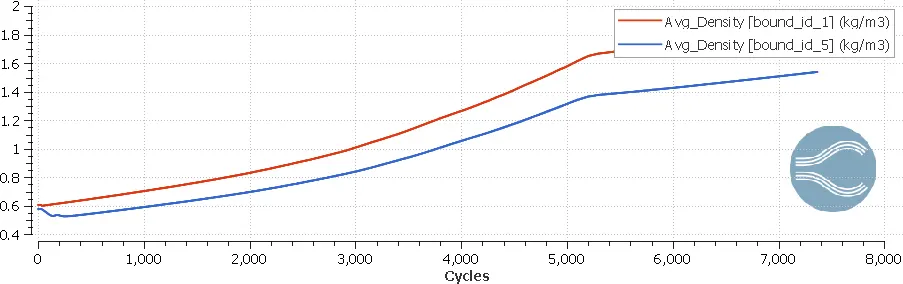
Density:
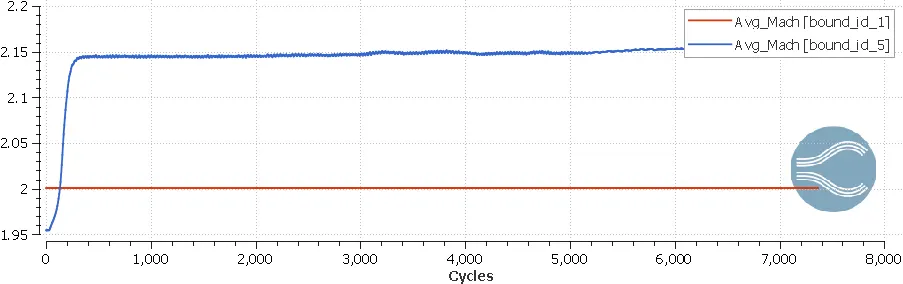
Mach Number:
Pressure:
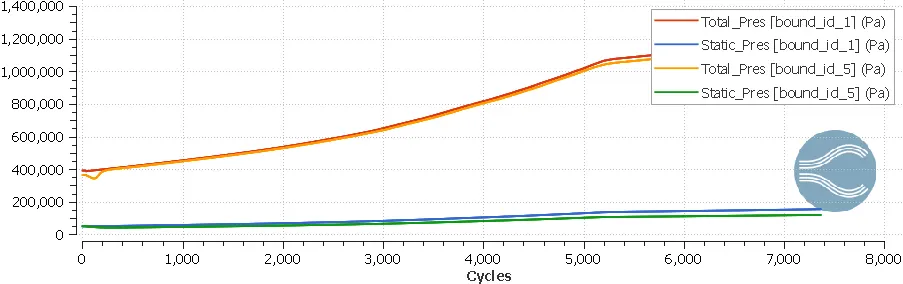
Velocity:
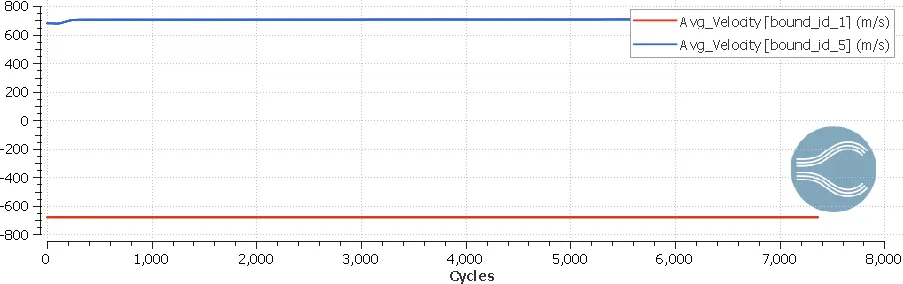
Temperature:
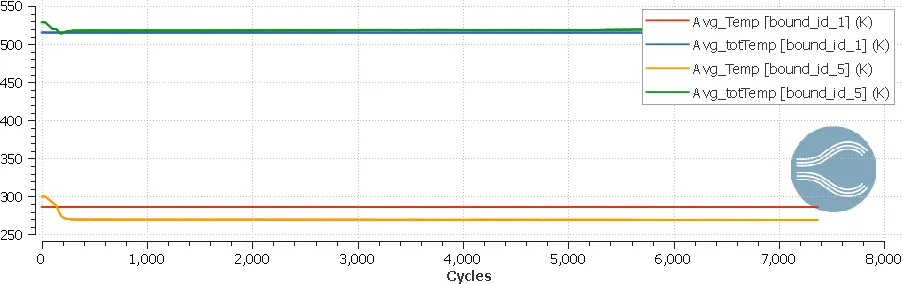
Temperature Contour:
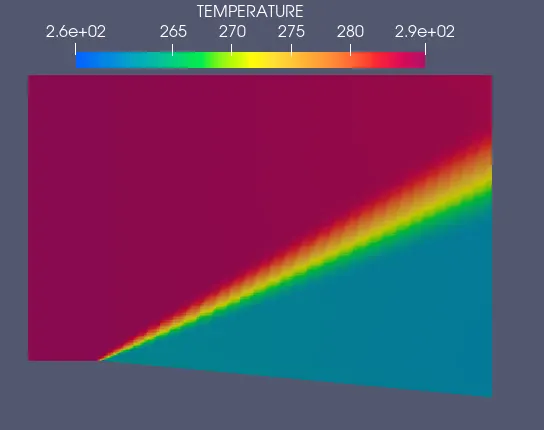
Velocity Contour:
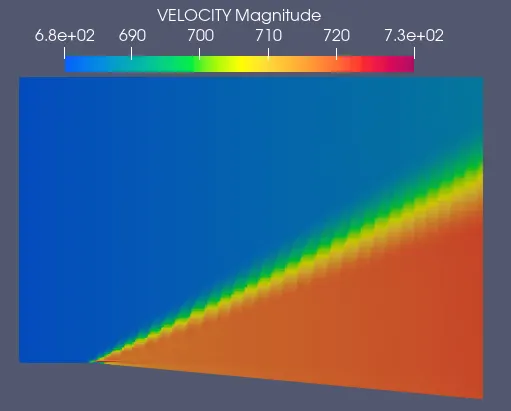
Pressure Contour:
SUBSONIC FLOW
SGS = 0.03K, Velocity = 100m/s
Meshing
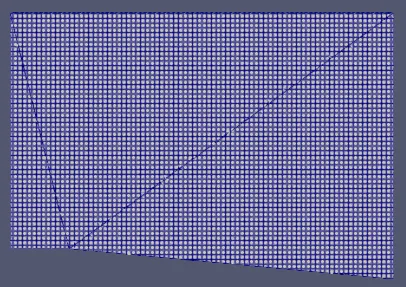
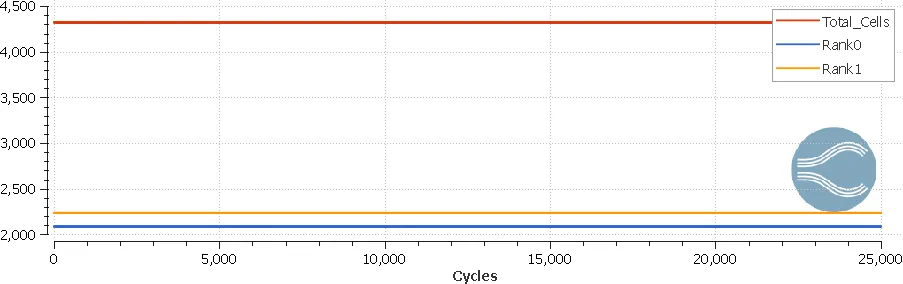
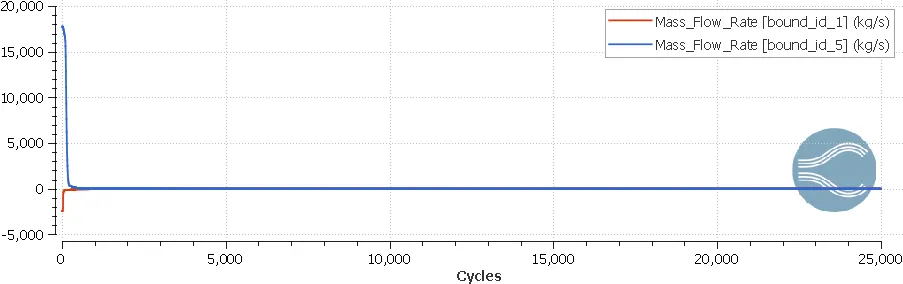
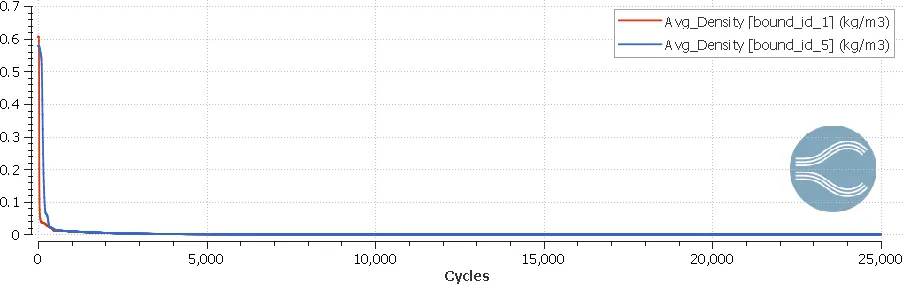
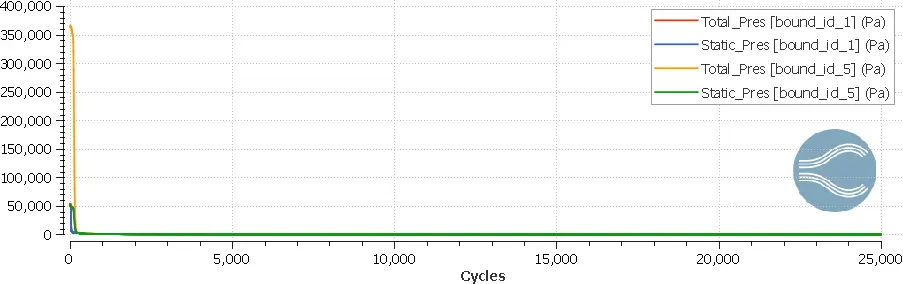
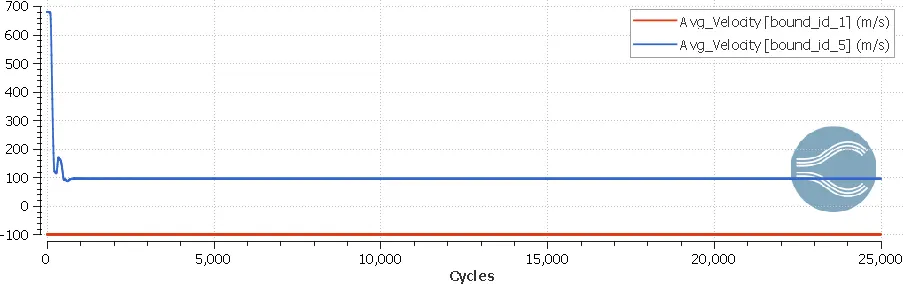
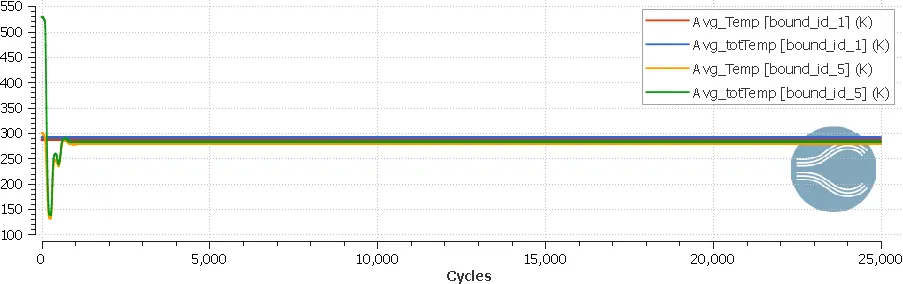
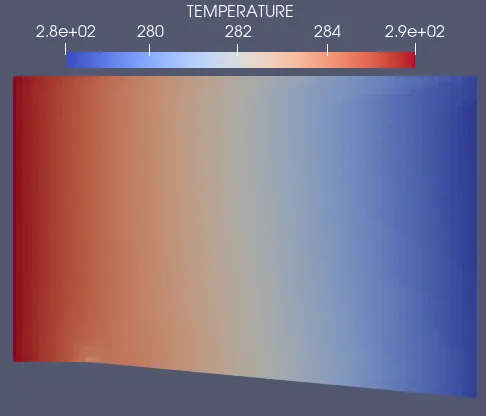
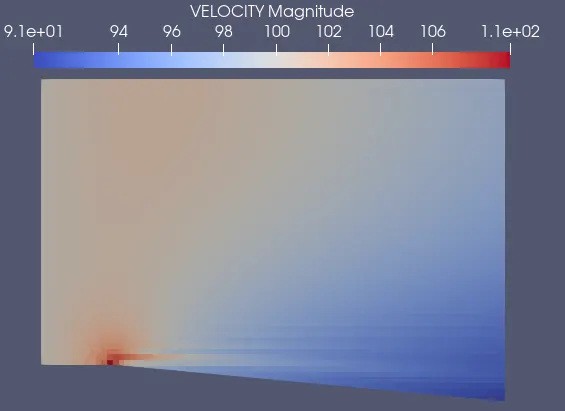
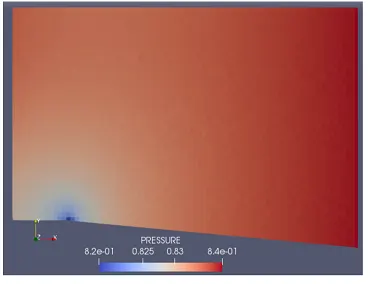
In the case of Subsonic flow we don't see the adaptive mesh refinement instead of the low value of Sub Grid Scale. This is the indication of Curvature of Temperature is not changing as the flow progresses. There is no sudden fluctuations in pressure, velocity and Temperature, Density.
Cell count:
Mass Flow rate:
Density:
Pressure:
Velocity:
Temperature:
Temperature Contour:
Velocity Contour:
Pressure Contour:
OBSERVATIONS:
1] The better refinement can be obtained by the lower value of Sub Grid Scale(SGS), which caputres the variation of property in the region of shock wave generation more accurately.
2] When the shock wave occurs the velocity and Temperature Adaptive Mesh Refinement changes a lot.
3] Pressure, Density, Temperature decreases after the shock but the Mach number increases
4] Neumann Boundary condition is best to study the shock wave, as it doesn't fix the particular value the boundary region.