IPhone Bending Analysis using Ansys structural Module
Aim:
To simulate the bending of the iPhone using Ansys workbench
Case-1 when bending action is performed from one of the longitudinal sides of the Phone.
Case-2 when bending action is performed from the center position to the given position X= 22.5mm & Z= 10mm. Assign Aluminum alloy NL to the frame of the phone and define the S-N curve for the material using the following tabular data:
| Stress, MPa | Number of Cycles, N |
| 225 | 10000 |
| 175 | 100000 |
| 143 | 1000000 |
| 110 | 10000000 |
| 80 | 100000000 |
And from the simulation, we need to determine the directional deformation of the model along the direction of bending action and compare the fatigue life and safety factor of the frame for the above two cases.
CASE-1: when bending action is performed from one of the longitudinal sides of the Phone.
The model containing the phone and finger bodies we are given. Several faces in the model had to merge sot that it becomes compatible with the academic version.
Geometry:
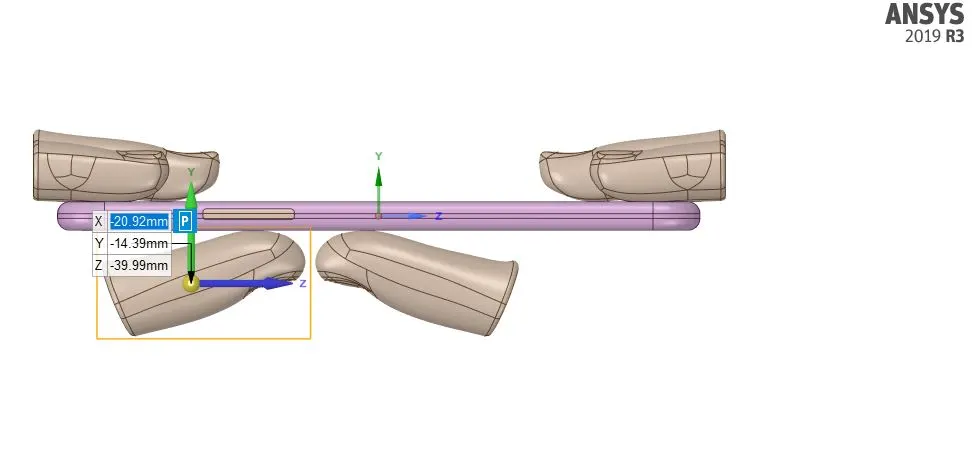
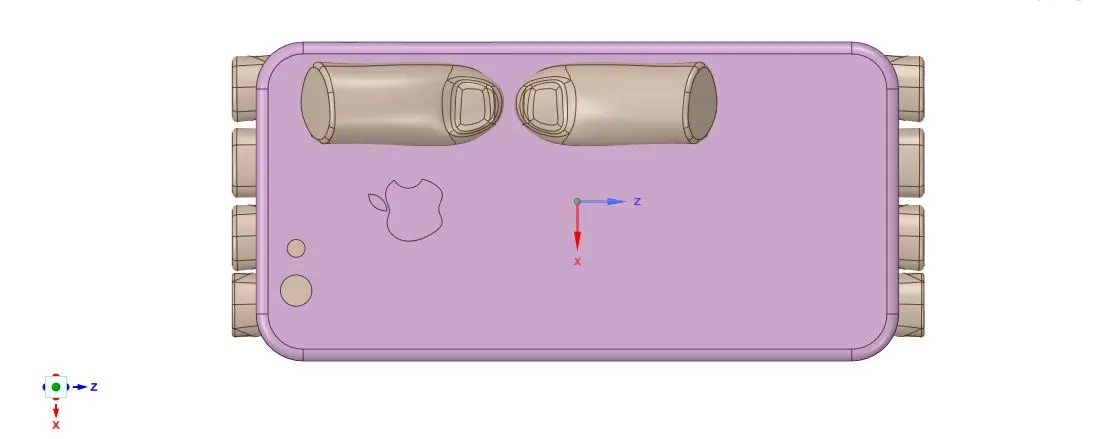
The Cad model of the iPhone is imported using SpaceClaim and checked for any geometry errors.
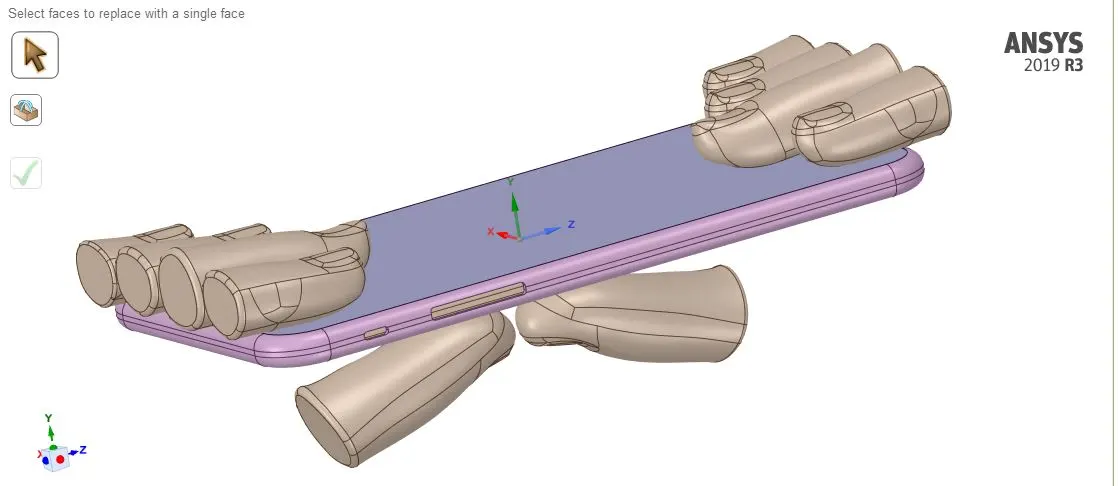
Dimensional values for the Right finger placed in the geometry
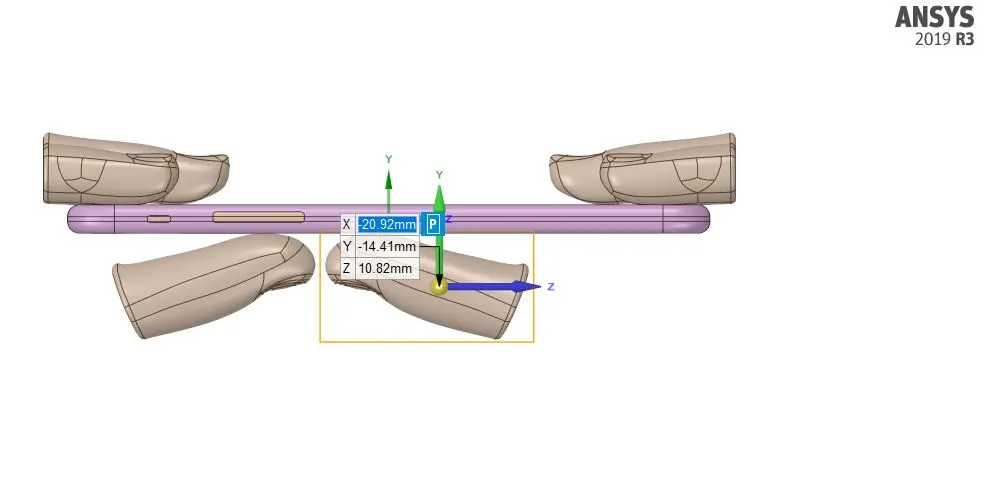
Dimensional values for the Left finger placed in the geometry
Bottom view of the fingers placed on the phone panel in the geometry
Materials:
The different parts in the model were assigned different materials the
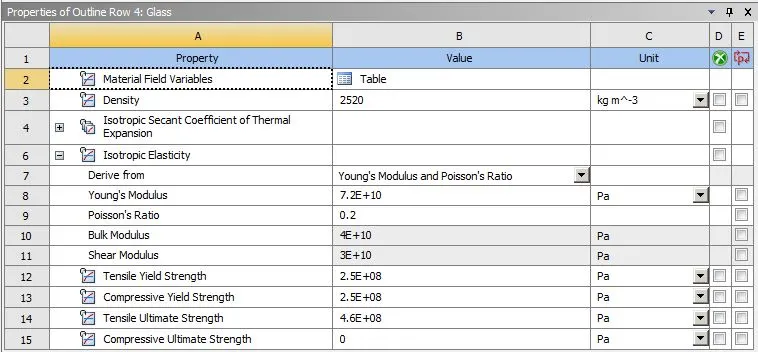
The Display was assigned with the glass material
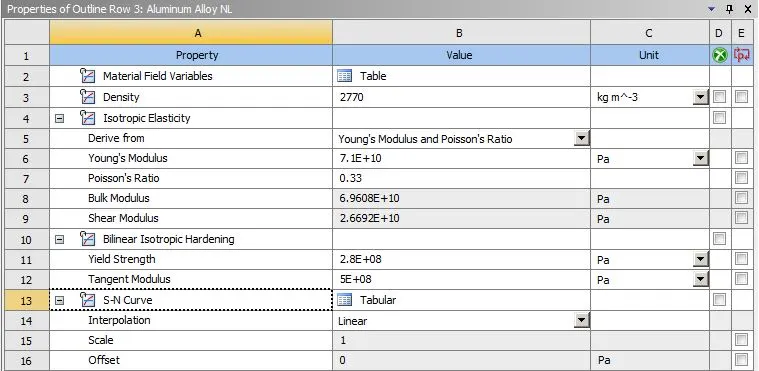
The frame was assigned with the Aluminium alloy NL
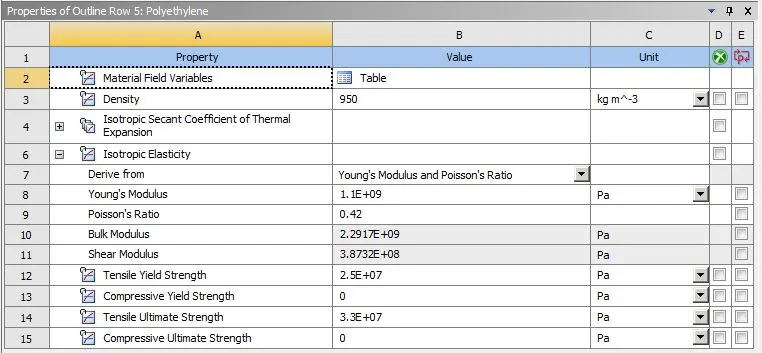
The Motherboard of the phone was assigned with the Polyethylene.
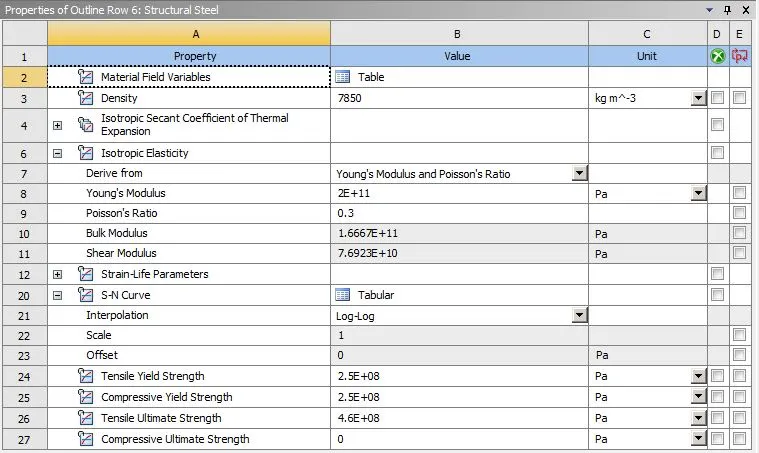
The fingers were assigned with the Structural Steel.
Connections And joints:
The contacts between glass to frame and glass to inside were defined as the Bonded.
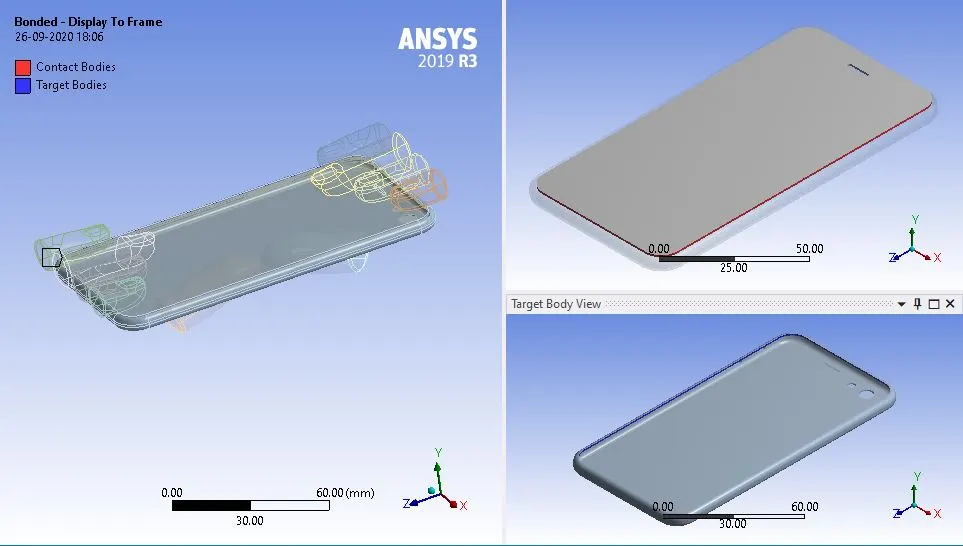
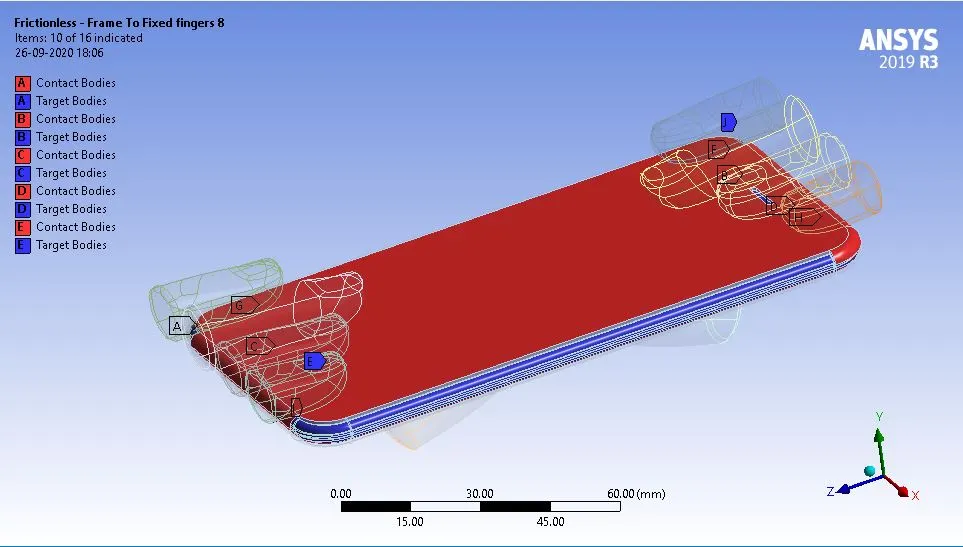
All contacts between the fingers and phone body were defined as Frictionless
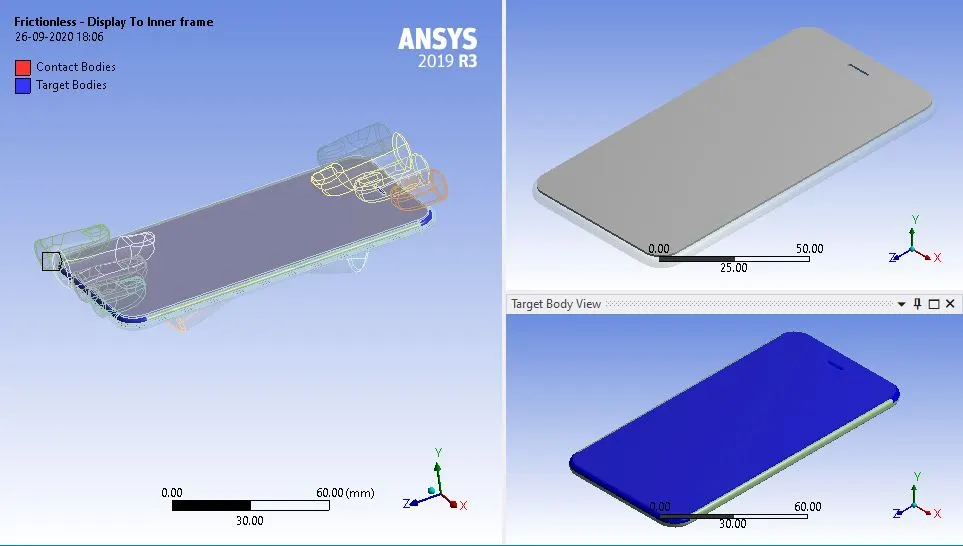
The frictionless Contacts between the fingers and the phone:
Joints:
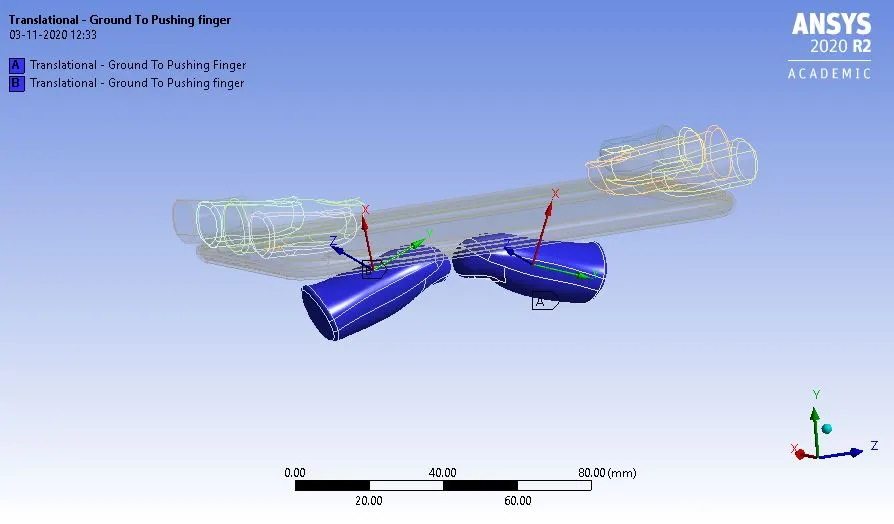
The pushing fingers were defined as translational joints and all other fingers were defined as fixed joints.
Translational joint to the Finger:
Fixed joint:
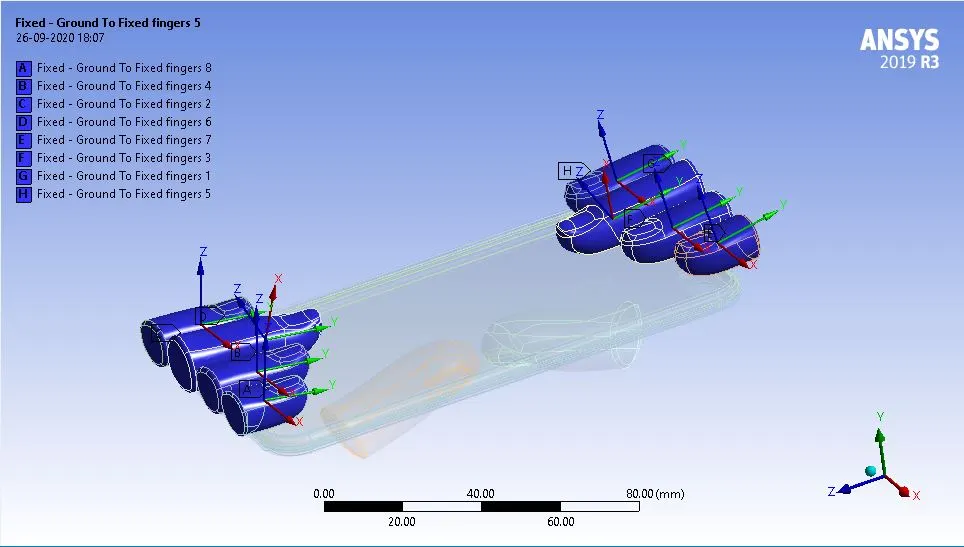
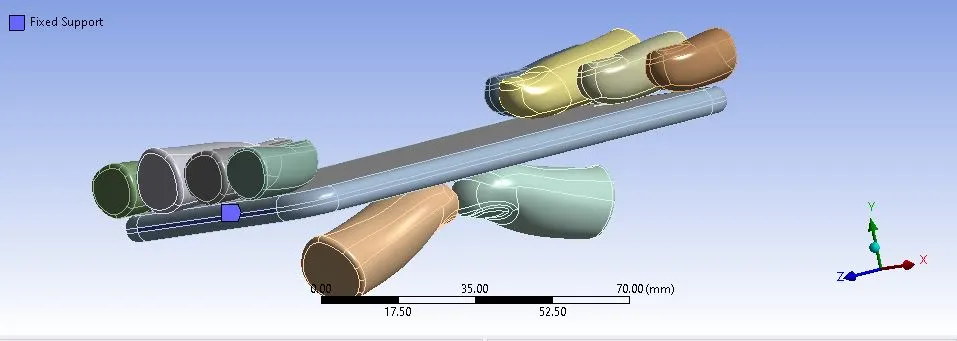
Fixed support for the z-axis:
Meshing:
In the meshing step face sizing with an element size of 6mm.
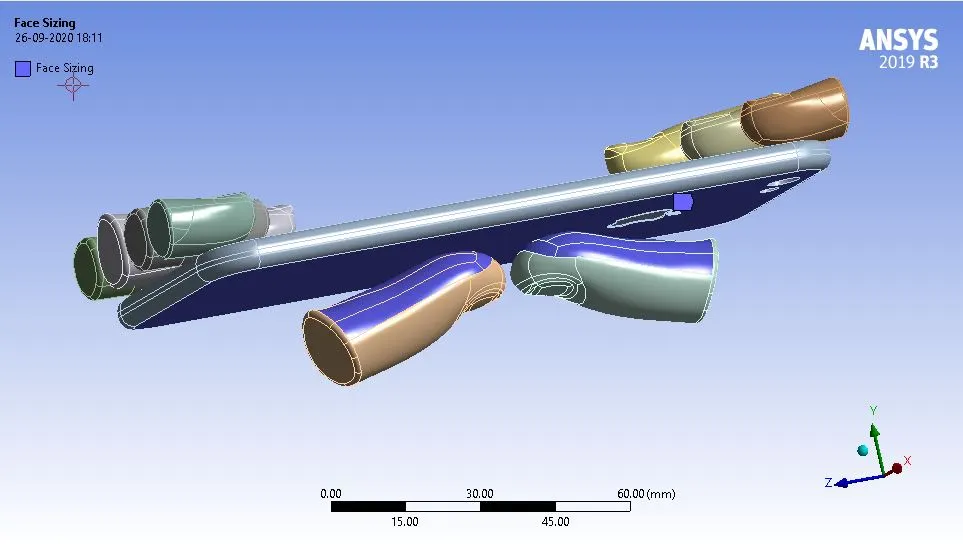
It was given on the contacts between the pushing fingers and the phone body. The general mesh size was defined as 15mm.
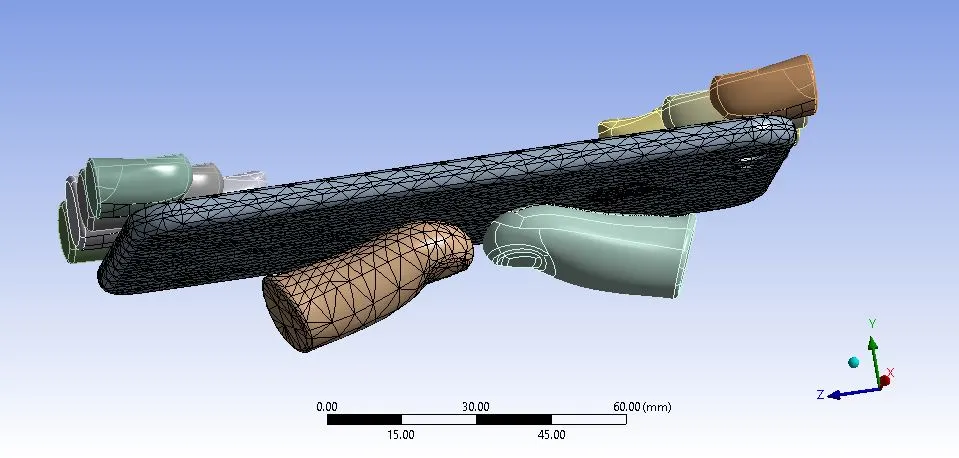
The displacement for the fingers was given as shown in the geometry.
Analysis settings:
The analysis was carried out over 8 steps using a direct solver. The weak springs were program-controlled and the large deflection was turned on. Two ends of the phone body were fixed and the other two ends were defined as zero displacements.
In case-1 both pushing fingers were moved up to 8mm along the y-axis and retracted back.
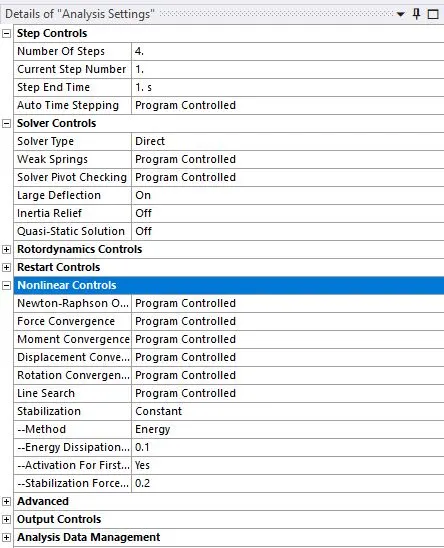
The analytical settings were made as per the requirements made in the simulation.
Supports applied for the simulation:
Fixed support:
Displacement support:
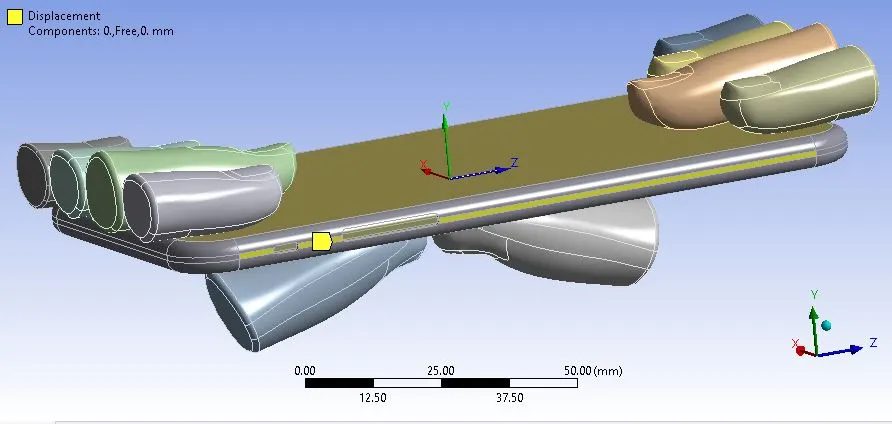
Displacement Joint support for the Fingers at the bottom surface
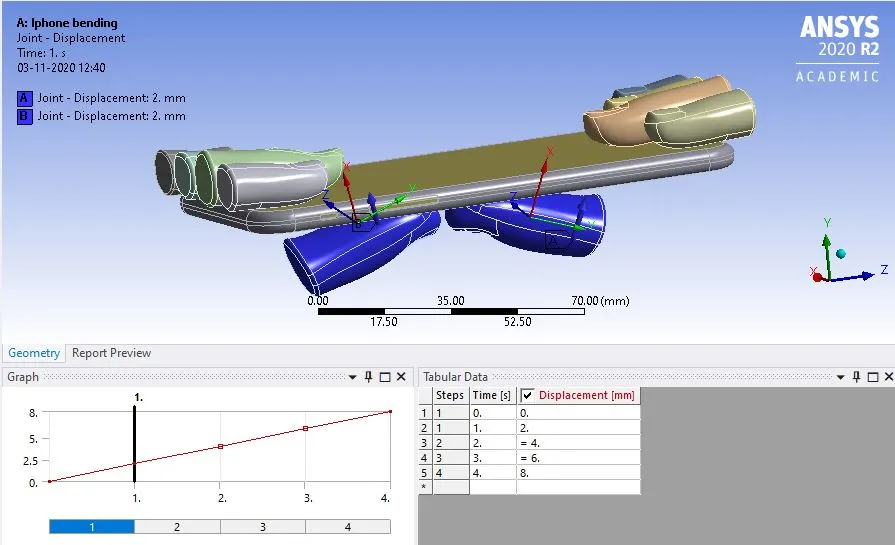
Result for the Case-1:
Total deformation:
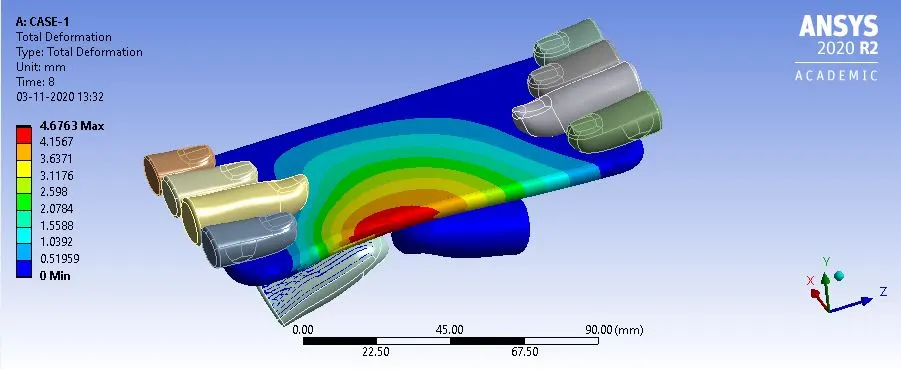
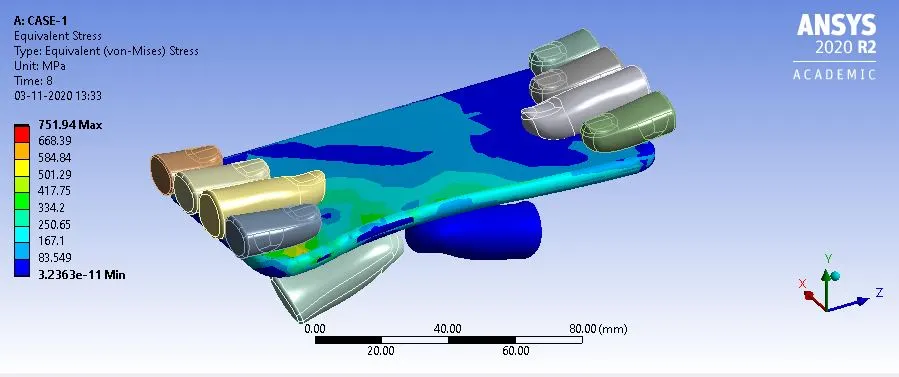
Equivalent stress:
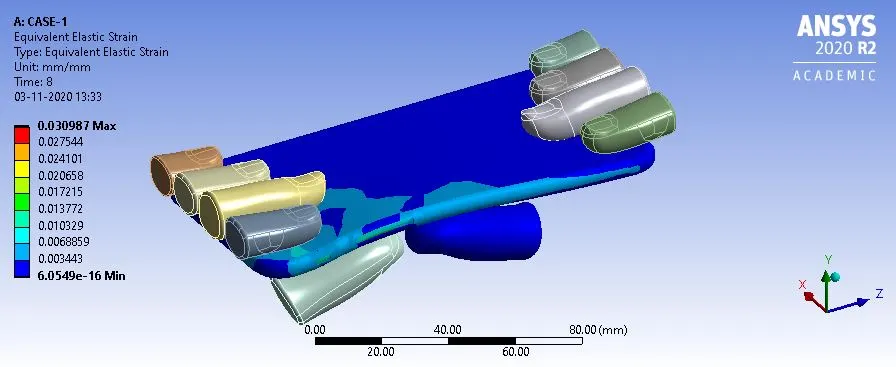
Equivalent Elastic strain:
Case-2:
when bending action is performed from the center position to the given position X= 22.5mm & Z= 10mm. Assign Aluminum alloy NL to the frame of the phone and define the S-N curve for the material using the following tabular data:
| Stress, MPa | Number of Cycles, N |
| 225 | 10000 |
| 175 | 100000 |
| 143 | 1000000 |
| 110 | 10000000 |
| 80 | 100000000 |
And from the simulation, we need to determine the directional deformation of the model along the direction of bending action and compare the fatigue life and safety factor of the frame for the above two cases.
Geometry:
The Cad model of the iPhone is imported using SpaceClaim and checked for any geometry errors.
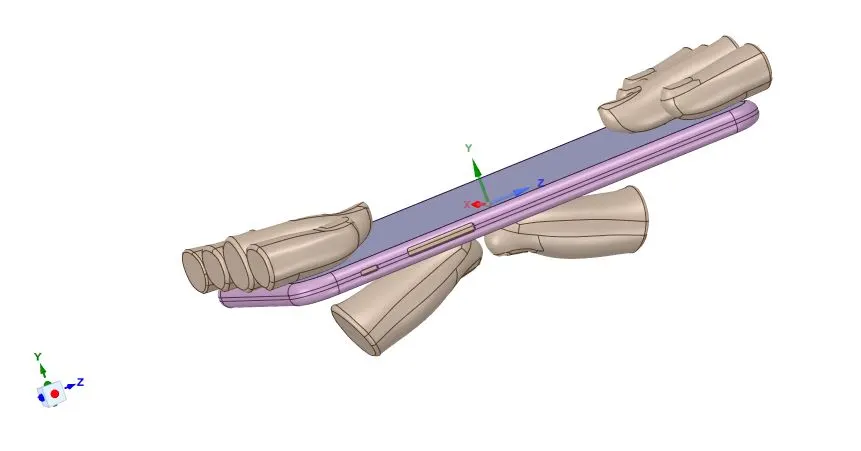
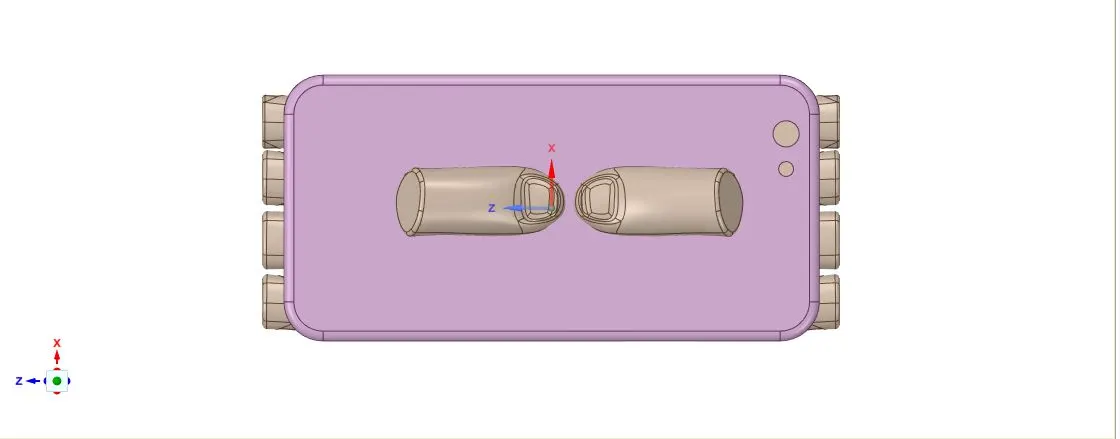
Dimensional values for the Right finger placed in the geometry
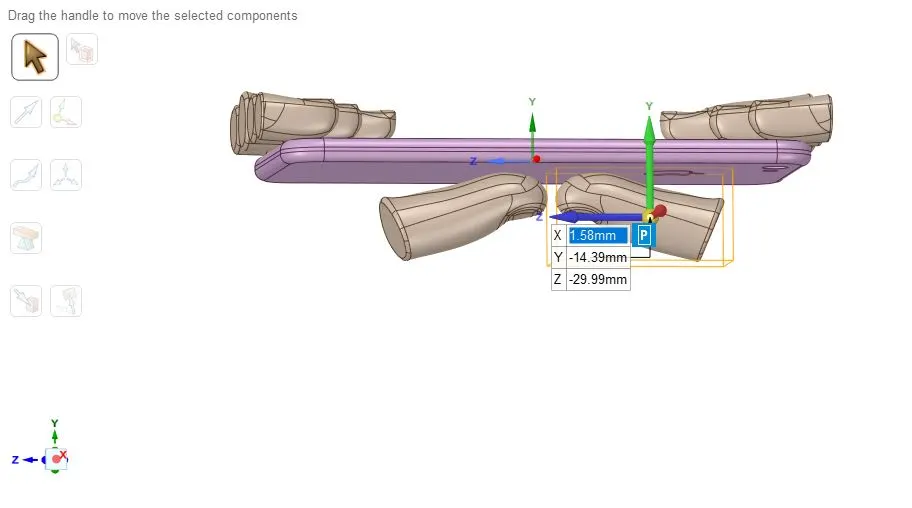
Dimensional values for the Left finger placed in the geometry
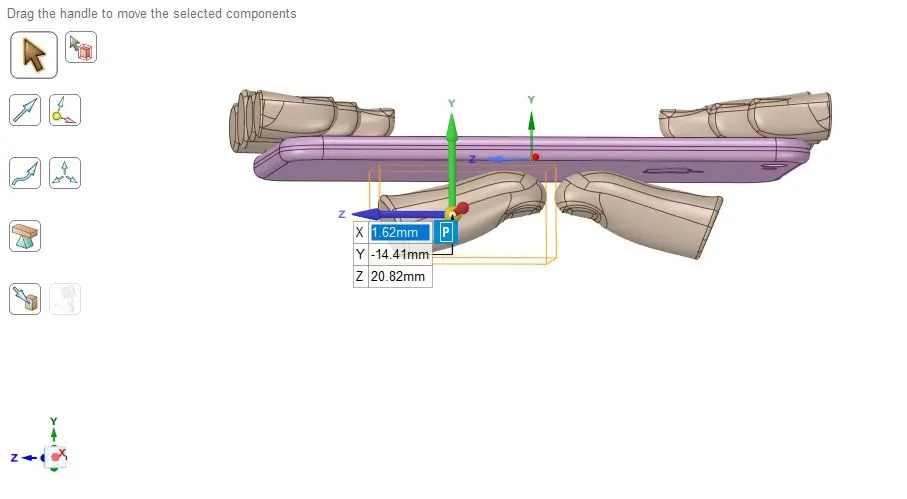
Bottom view of the fingers placed on the phone panel in the geometry
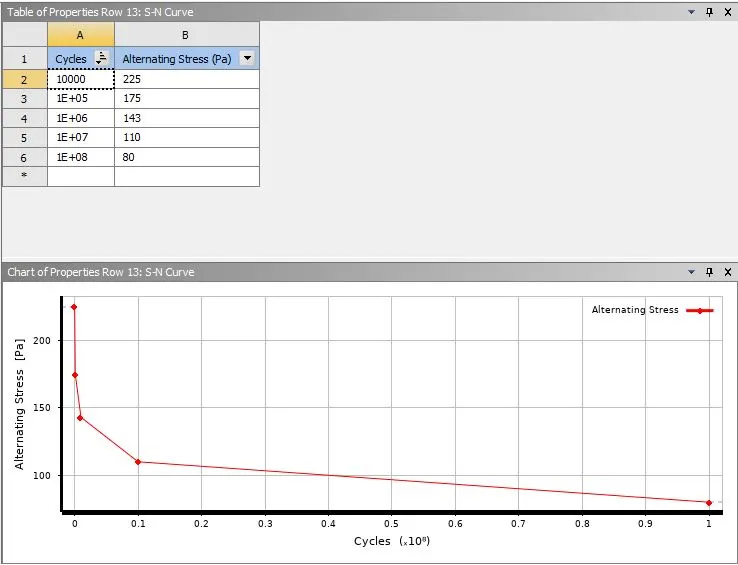
Define the S-N curve for the material using the following tabular data:
| Stress, MPa | Number of Cycles, N |
| 225 | 10000 |
| 175 | 100000 |
| 143 | 1000000 |
| 110 | 10000000 |
| 80 | 100000000 |
Materials:
The different parts in the model were assigned different materials the
The Display was assigned with the glass material
The frame was assigned with the Aluminium alloy NL
The Motherboard of the phone was assigned with the Polyethylene.
The fingers were assigned with the Structural Steel.
Connections And joints:
The contacts between glass to frame and glass to inside were defined as the Bonded.
All contacts between the fingers and phone body were defined as Frictionless
The frictionless Contacts between the fingers and the phone:
Joints:
The pushing fingers were defined as translational joints and all other fingers were defined as fixed joints.
Translational joint to the Finger:
Fixed joint:
Fixed support for the z-axis:
Meshing:
In the meshing step face sizing with an element size of 6mm.
It was given on the contacts between the pushing fingers and the phone body. The general mesh size was defined as 15mm.
The displacement for the fingers was given as shown in the geometry.
Analysis settings:
The analysis was carried out over 8 steps using a direct solver. The weak springs were program-controlled and the large deflection was turned on. Two ends of the phone body were fixed and the other two ends were defined as zero displacements.
In case-2 the pushing fingers were moved up to new coordinates and give the same displacement value.
The analytical settings were made as per the requirements made in the simulation.
Supports applied for the simulation:
Fixed support:
Displacement support:
Displacement Joint support for the Fingers at the bottom surface
Result for the Case-2:
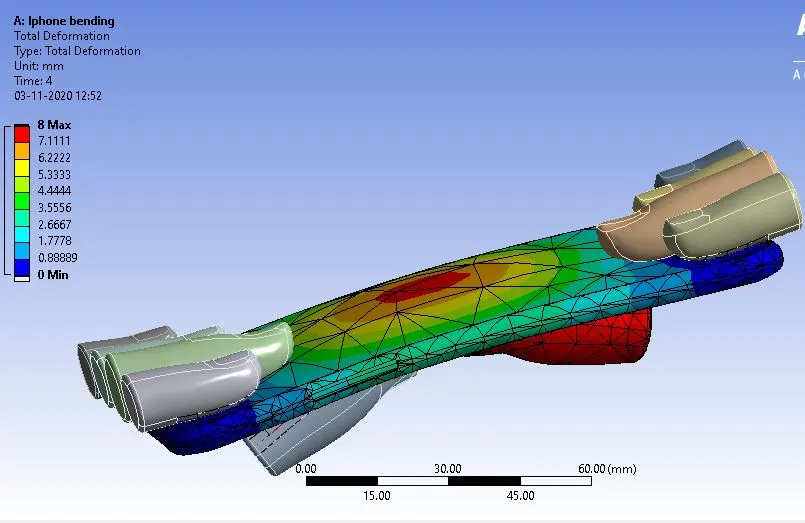
Total deformation:
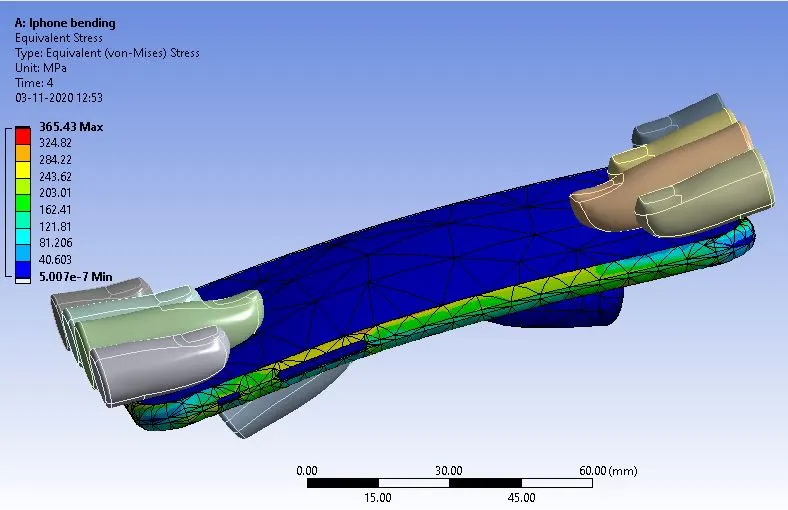
Equivalent stress:
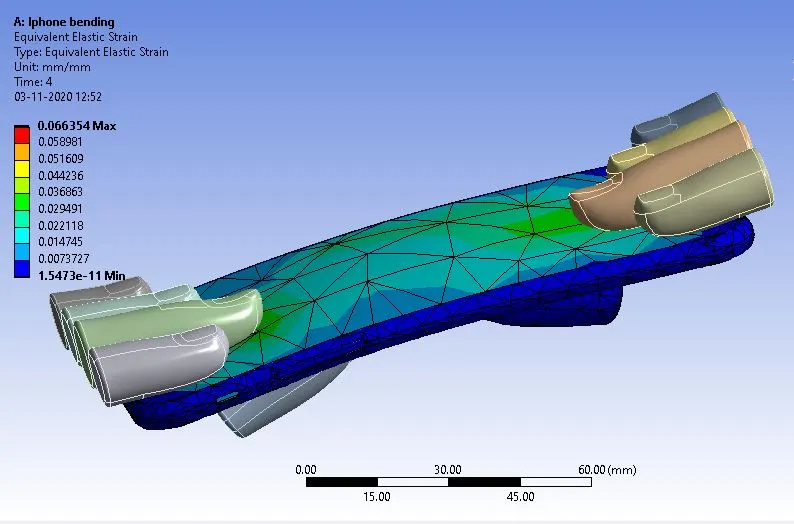
Equivalent Elastic strain:
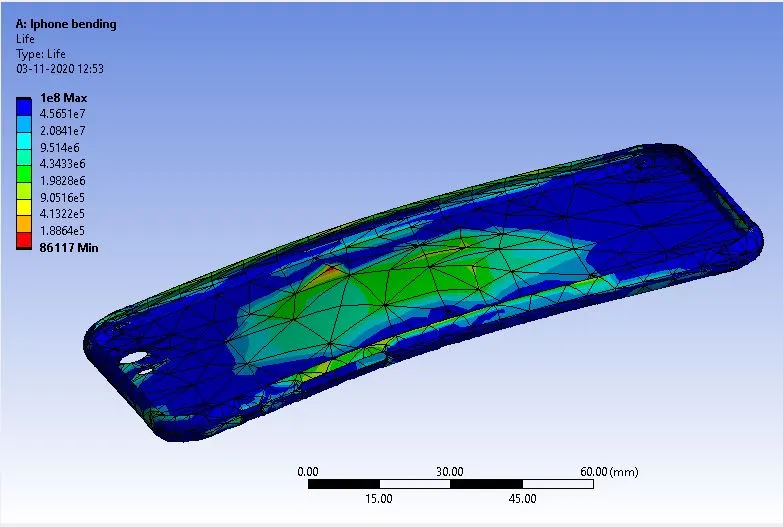
Life of the Phone:
Conclusion:
| Title | Maximum Total deformation | Maximum Equivalent Stress | Maximum Equivalent Elastic strain | Maximum Life |
|
Case-1 |
4.6 | 751.9 | 0.030 | Life not obtained because we have not provided the S-N Curve for the case-1 |
| Case-2 | 8 | 365.4 | 0.066 | 1e8 |
From the above table, it can be inferred that the stress developed is higher in case-1, because the bending is done from the edge of the phone