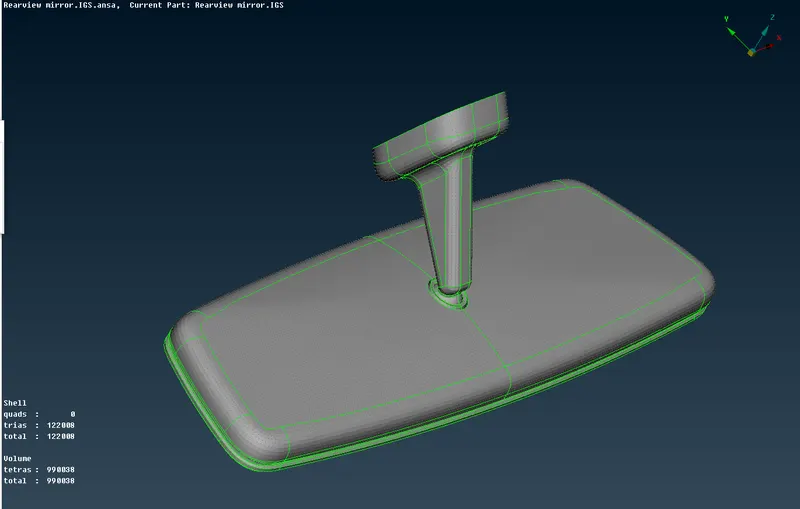
3D MESHING OF A REARVIEW MIRROR USING ANSA PREPROCCESOR
AIM : Succesfully mesh the provided rearview mirror using Ansa
Components
- Single plastic bottle cap
PROCEDURE
- Geometry cleanup
- Meshing of all components
- Checking quality
- Conclusion
GEOMETRY CLEANUP
- When the geometry is first opened in Ansa, it can be seen as a single entity from the image below
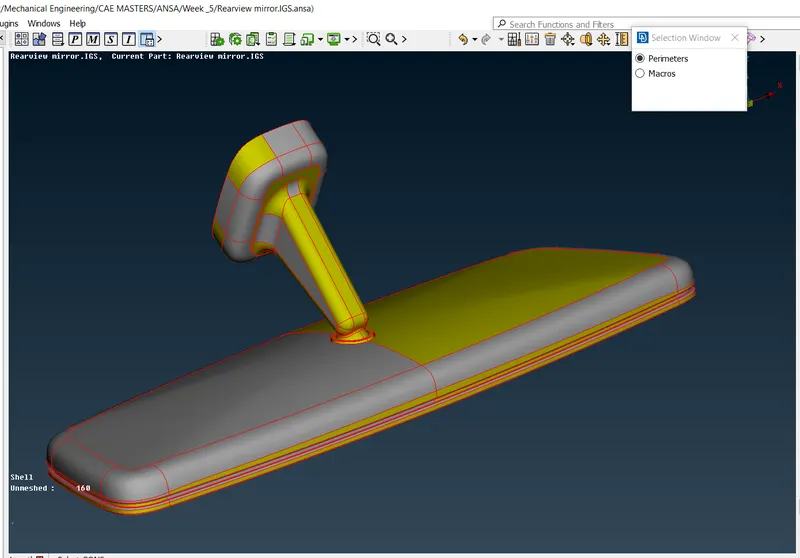
- The whole 3D componenent is fixed by applying Topo
- An automatic geometry check is made on all of these lock screens to check for errors in geometry surfaces by specifying, ( single,triple and double cons , cracks, collapse cons etc). It can be seen below the results.
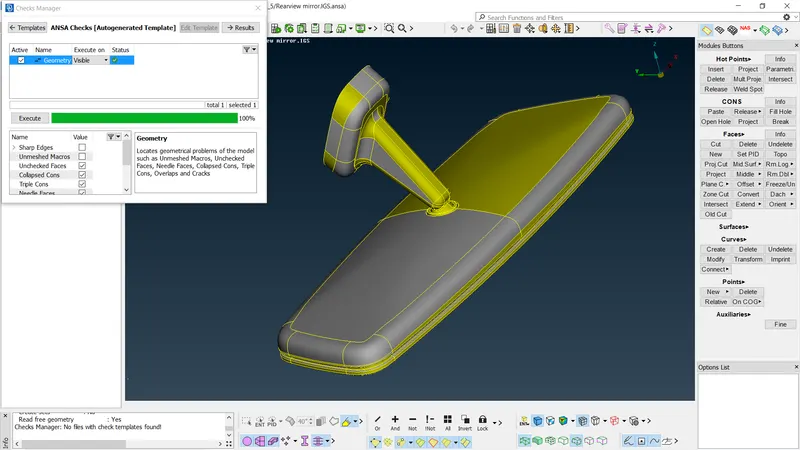
- This geometry is not suitable enough for extraction of midsurface so it is meshed with 3D Tetra element instead .
- But first the surface cons are controlled in order for the surface to pass element lenght criteria.
Meshing of all components
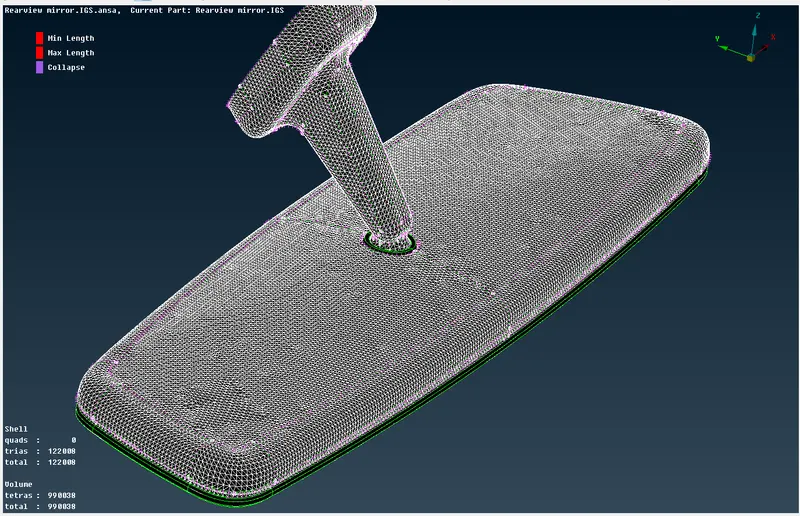
- This component is to be meshed with tetra elements
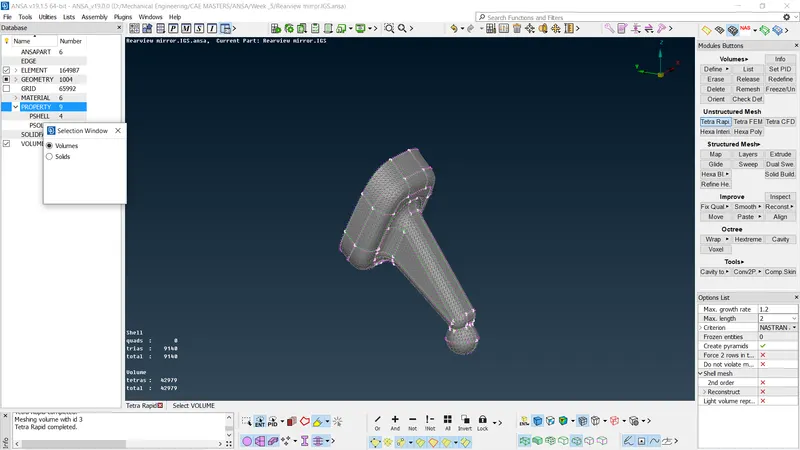
- First the surface is meshed with Tria elements and then later transformed to a volume mesh
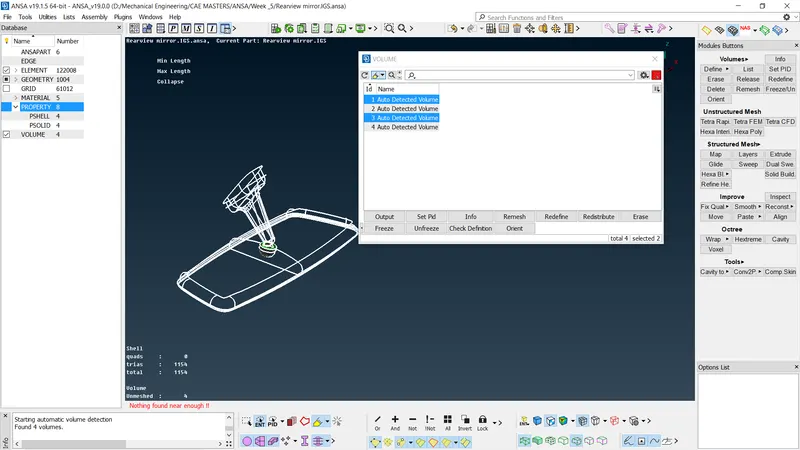
- Tetra rapid is used to convert the meshed 2d to 3d after a volume is defined.
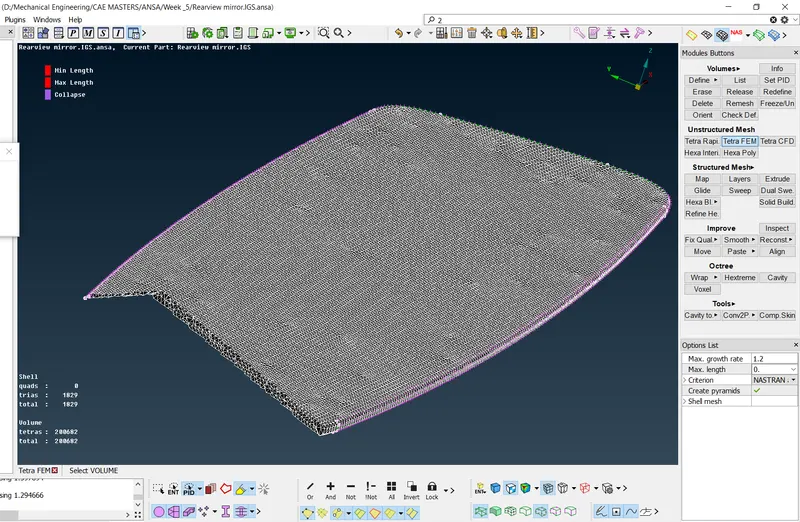
- There are four components in total each is meshed separatly and defined
- Otho trias where used at surface with greater bends whiles tria where used of straight faces
ELEMENT QUALITY
- The meshed 2D surface before conversion is made with a quality of minimum and maximum lenght of 0.5 and 2 respectively.
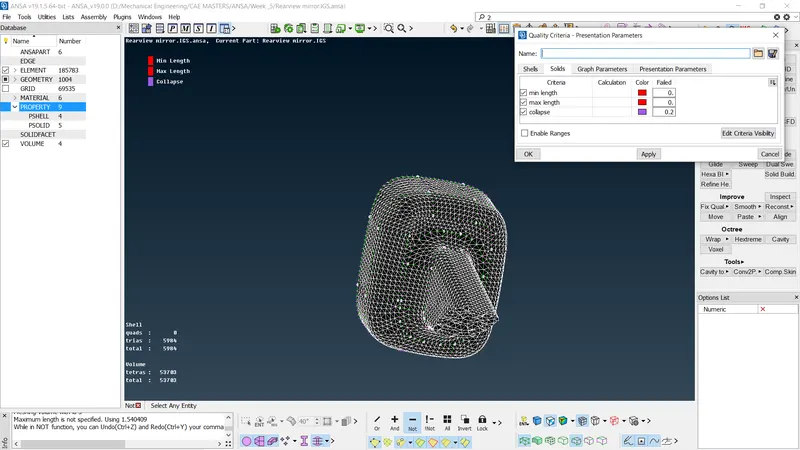
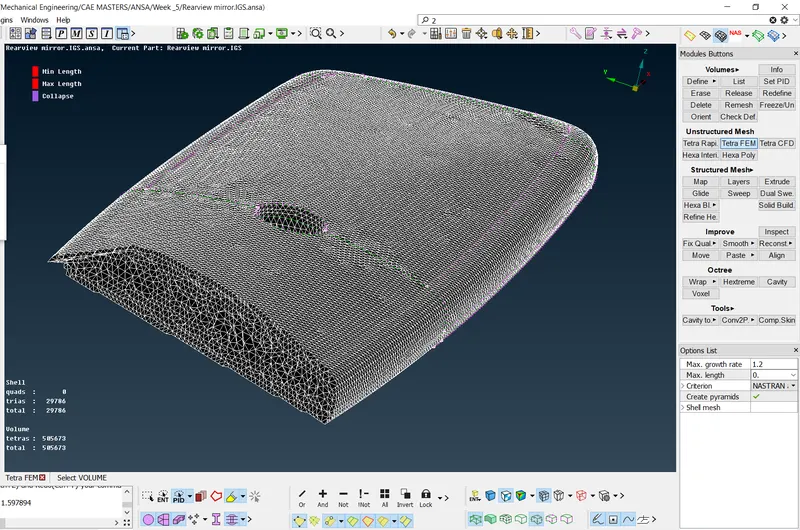
- The 3D tetra elements must be void of any kinks and un even surfaces. Belo is an example of such surfaces and how they were contolled
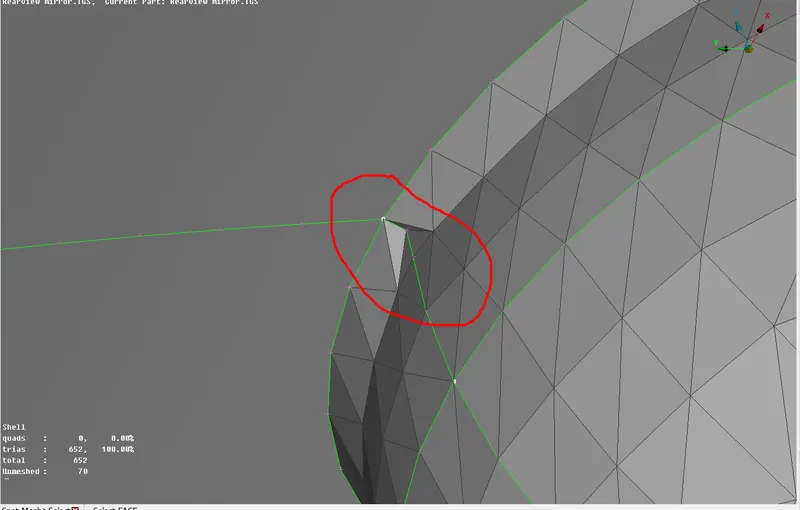
- This was contolled by removing that hot point
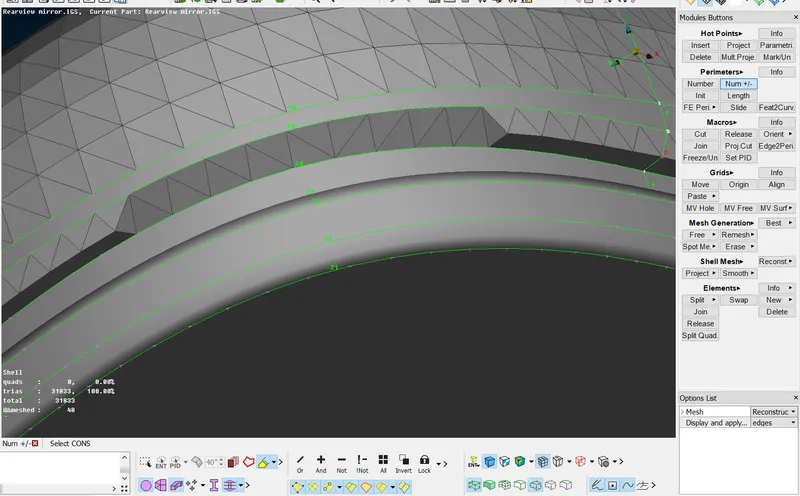
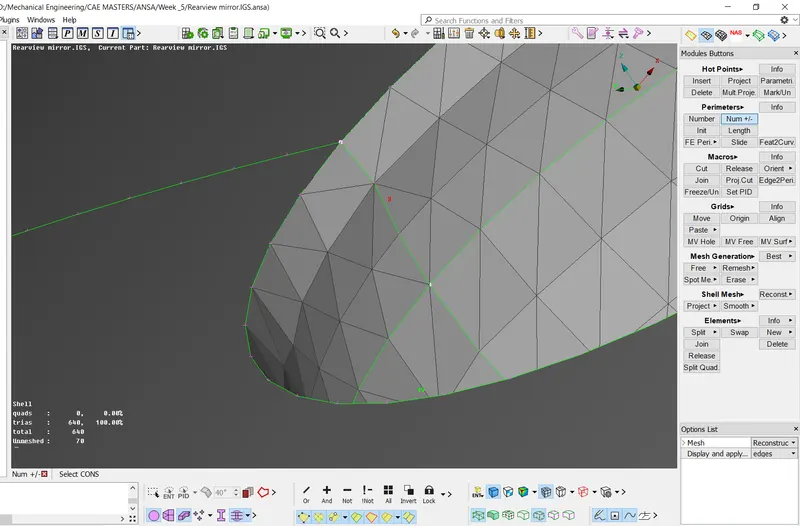
- This was controlled by increasing the number of elements from 1 to 2
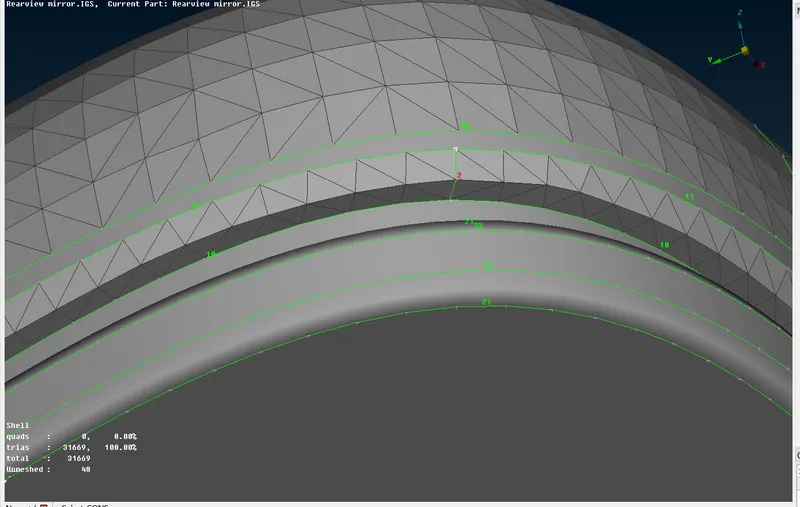
Also the 3D volume meshed needs to be checked for tet collapse of 0.2. All the elements which failled the test were manualy fixed by moving the nodes in a manner not to distort the mesh pattern on the component surface.
CONCLUSION
The 3D component was meshed succesfully without any problem and all the elements passed the neccessory quality checks