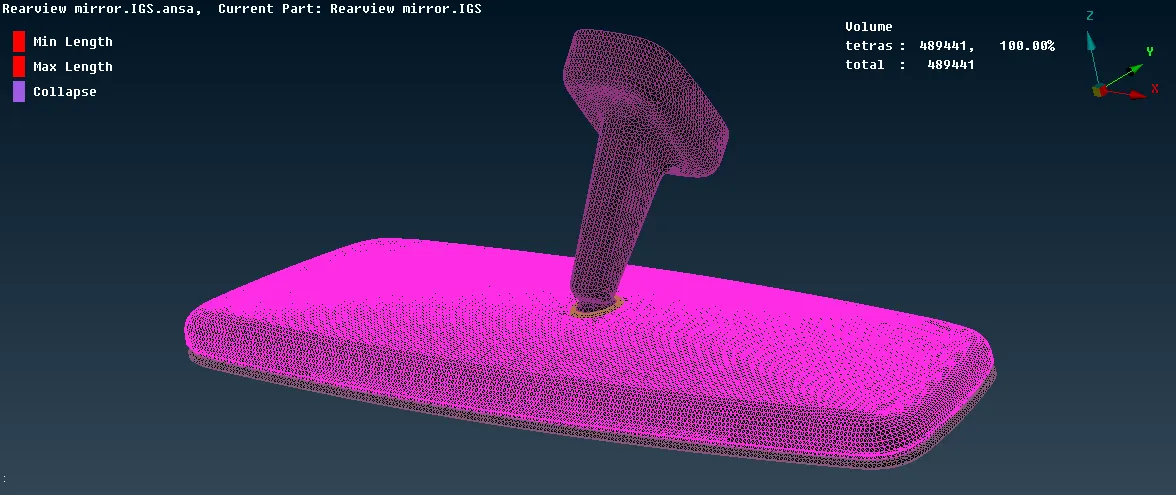
3D Mesh for Rearview mirror model with quality criteria using ANSA
AIM: For the given rearview mirror model, apply structured (Ortho Tria & Tria) and unstructured (Tetra rapid or Tetra FEM) mesh accordingly.
KEYWORDS: Ortho tria, Tria, Tetra Rapid, Volume mesh
SOFTWARE: Ansa
OBJECTIVE:
- To check for Geometry errors, and wkt the model is not a solid type.
- Meshing the faces with structured (Ortho tria & Tria) and again check for geometry errors.
- Meshing the Volume of the particular model with unstructured (Tetra Rapid or Tetra FEM).
INTRODUCTION:
In the previously completed models are solid type, which needs to create Mid_Surface and apply for the mesh-like mixed (both Quad & Tria). Here, the mesh flow is structured as per the quality criteria like Aspect ratio, Skewness, Wrapping, Jacobian, Min & Max length, Min & Max angle of quad and tria, & percentage of trias present in the model. But here, the model is the hallow type and the procedure is quite different. Creating Mid_surface is not required in this model, because of the hallow type. For the hallow type model, the meshing applied for the visible faces which is structured mesh (Ortho tria & Tria). After completed the structured mesh, start applying the mesh for the model volume an unstructured type (Tetra rapid or Tetra FEM) any one of this, which shows the model is structured outside and unstructured inside means which converts the mesh into tetra type in the volume. The steps and procedure are explained below,
( i ) Geometry clean-up:
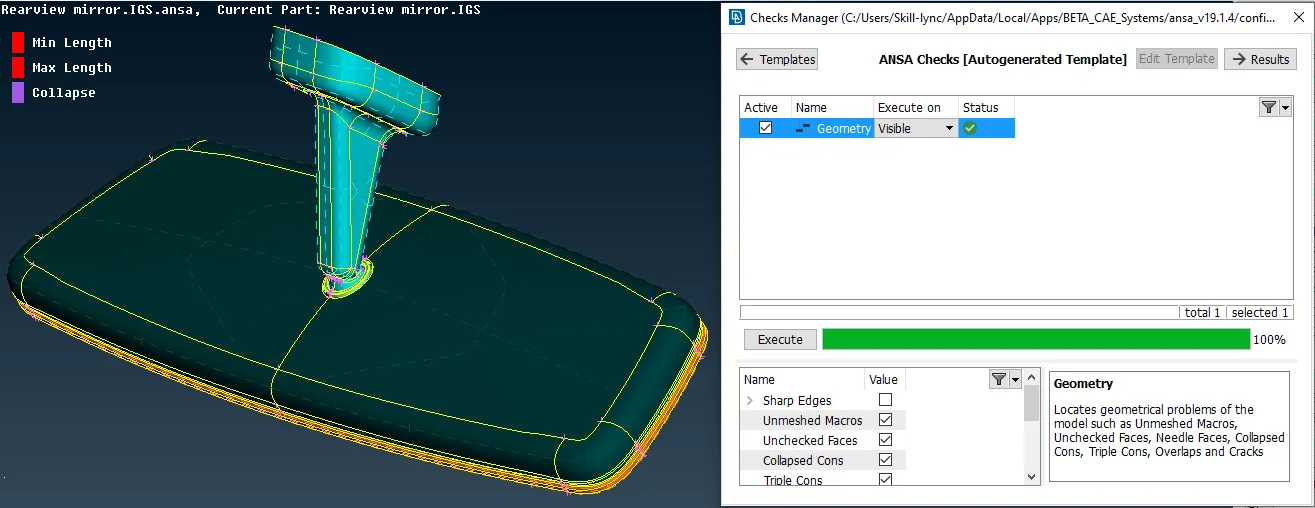
Initially, the given model has to check whether the model has any incomplete area or check for the model as completely defined. Before doing Geometry error, apply topo for all which reduces the error, and complete the geometry. While geometry error there are some issues in the model like needle face, cracked face, etc., which can be fixed automatically.
( ii ) Structured Mesh:
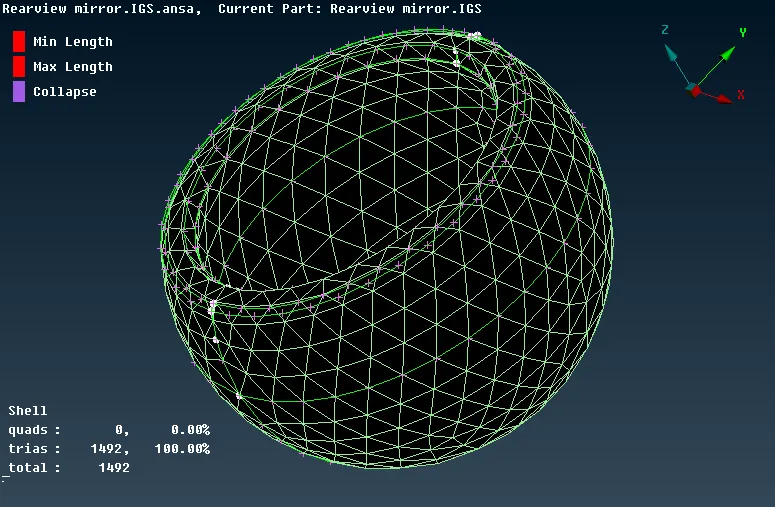
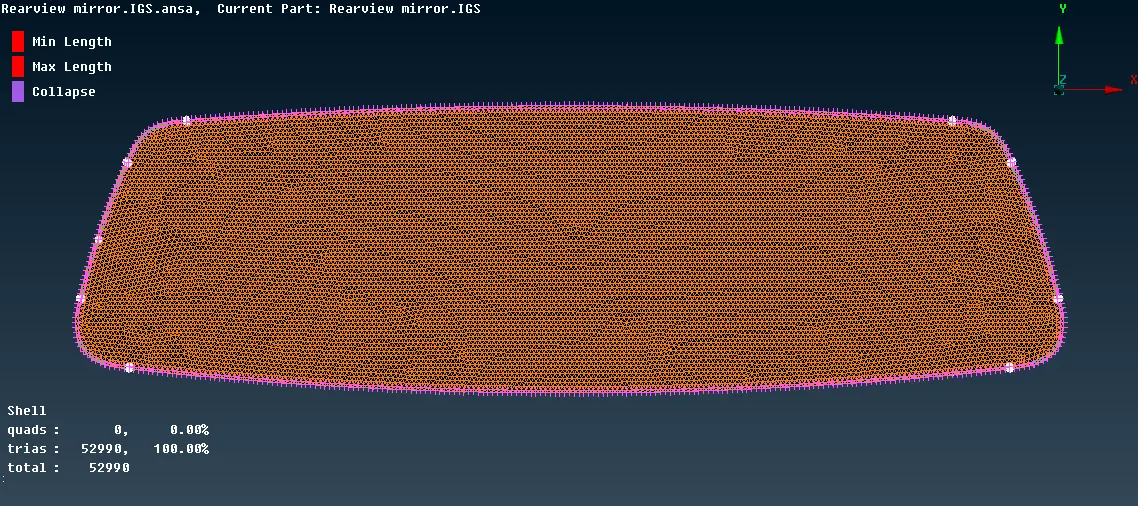
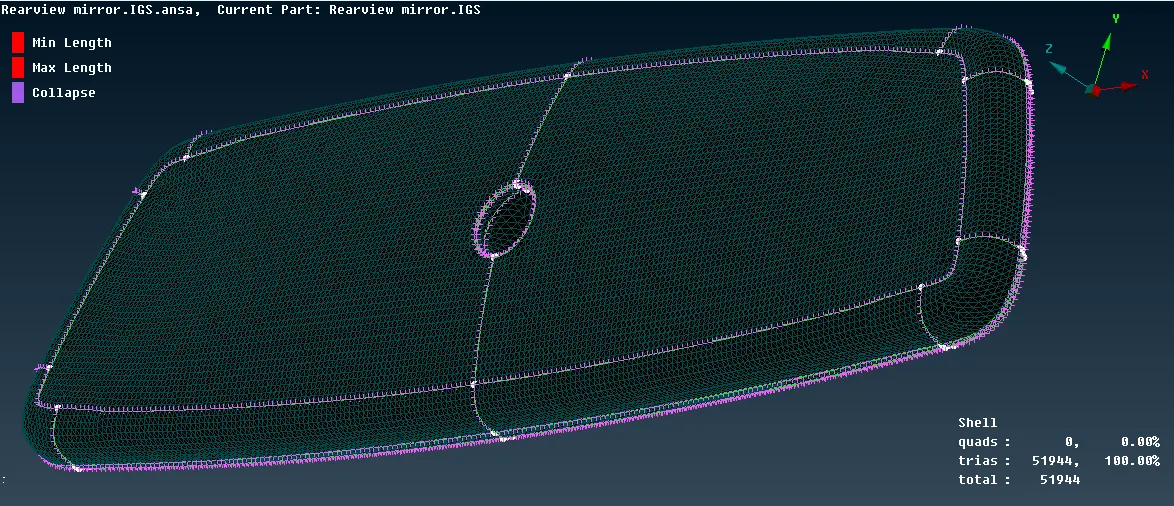
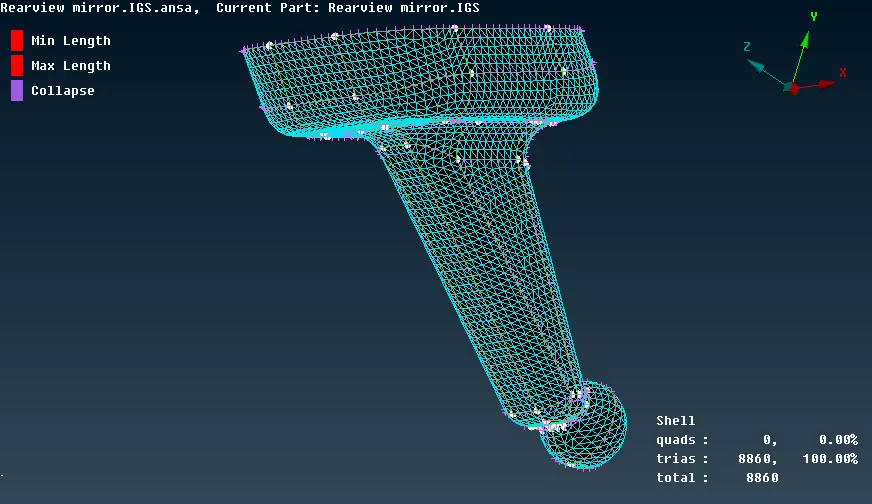
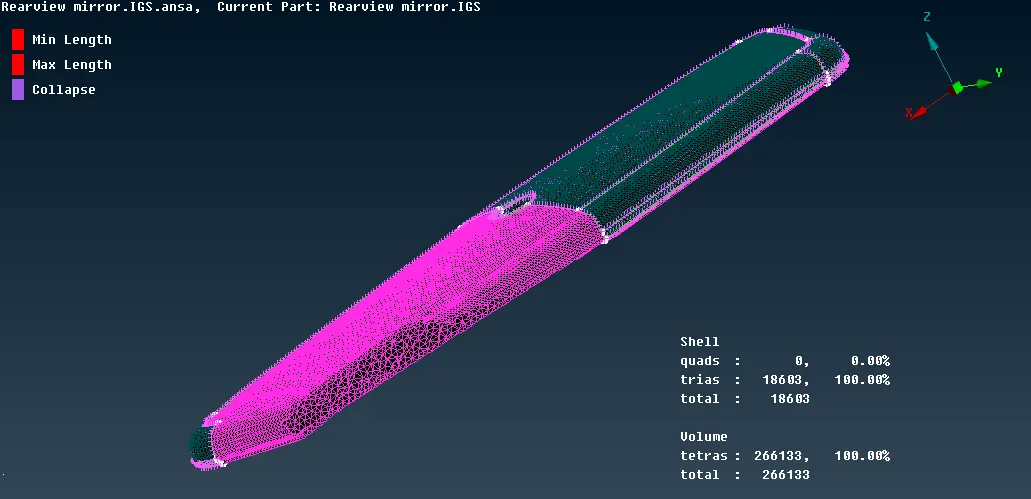
A structured mesh is defined as a mesh where the inner nodes have the same number of elements around them. Another possible interpretation of a structured mesh is that it follows a given topological pattern that is reproduced in all directions of space. Here, Ortho Tria mesh is applied on the curved surfaces and Tria mesh is applied for the plane surfaces as per the quality criteria.
( iii ) Unstructured Mesh:
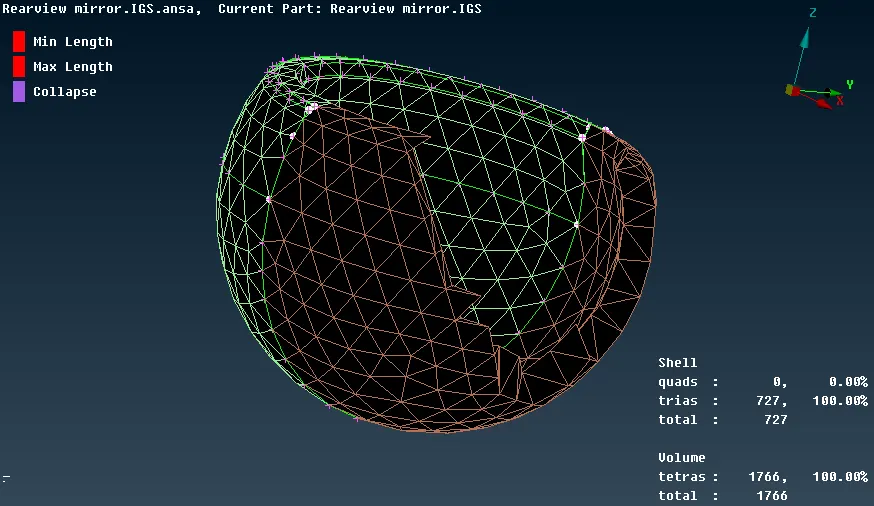
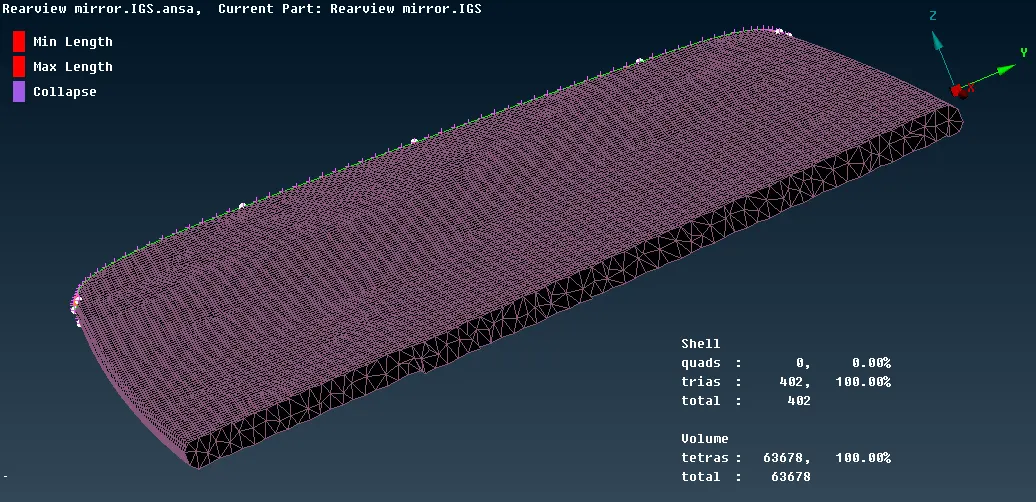
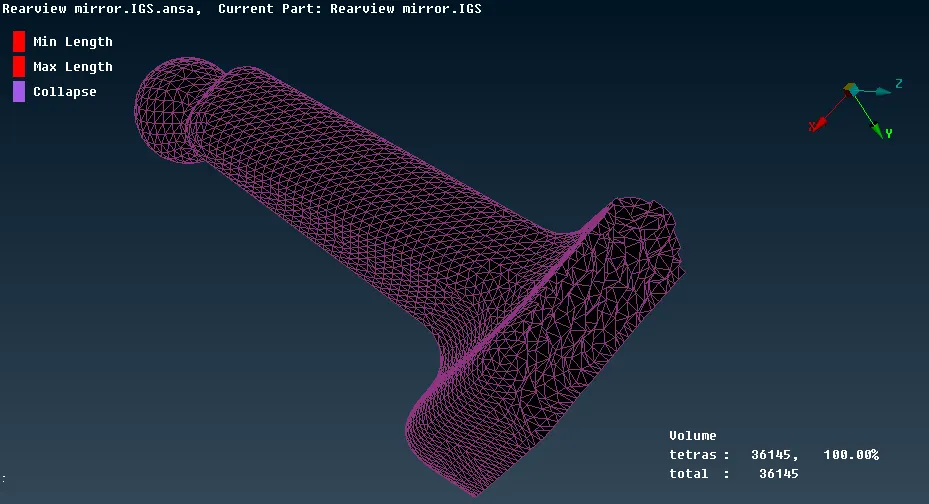
Unstructured meshes are meshes with general connectivity (GCON) whose structure is arbitrary and therefore the connectivity of elements must be defined and stored. GCON element types are non-orthogonal, such as triangles (2D) and tetrahedra (3D). There are certain types in volume mesh-like Tetra rapid, Tetra FEM, Tetra CFD, etc., Here, Tetra rapid is applied throughout the volume and there is no teat collapse present in the model, and also there is no kinks & dips on the surface.
CONCLUSION:
1. The Geometry has been checked and cleared the error by Auto-fix.
2. The Ortho tria and Tria mesh has applied on the surface of the model as per the quality criteria and again checked for geometry error.
3. After completing the two steps, started applying the unstructured mesh as Tetra rapid as per the quality criteria for the overall volume of the model and shown below,