Wire Bending Challenge
- Objectives: To perform Wire Bending Operation in Ansys workbench.
- Geometrical Design:
We are having 3D Geometry of Wire Bending Simulation model. This model consists of three main parts named as Support, Metal Wire & Lever. This geometry looks like this;
- Material Properties:
For the wire alone 3 different material considered for an operation other parts material kept as structural steel only, these materials having various mechanical properties which are stated below;
- Problem Statement:
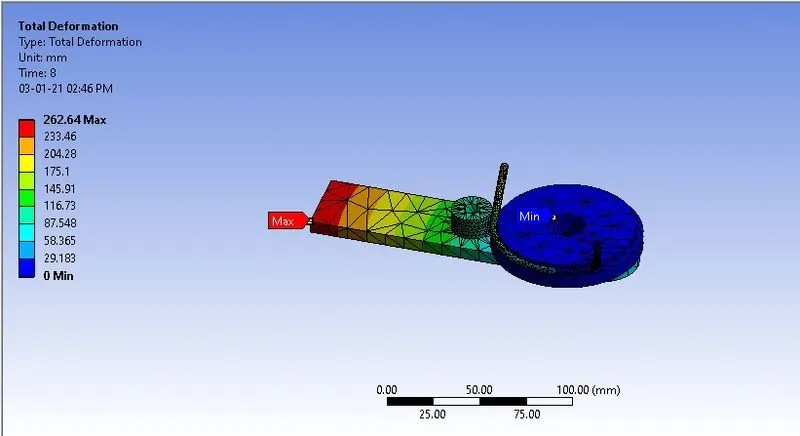
The wire is kept fixed in the support. Roller will be applied with a certain rotation. This rotation will cause the wire to bend in such a way that we will get the required shape. When the lever will be applied with certain rotation, wire will undergo permanent deformation and stress will be generated in certain regions. We will consider 3 different materials for this operation and will observe Deformation, Stress & Strain. At the end of simulation, we will compare all three results obtained.
- Local Co-Ordinate System:
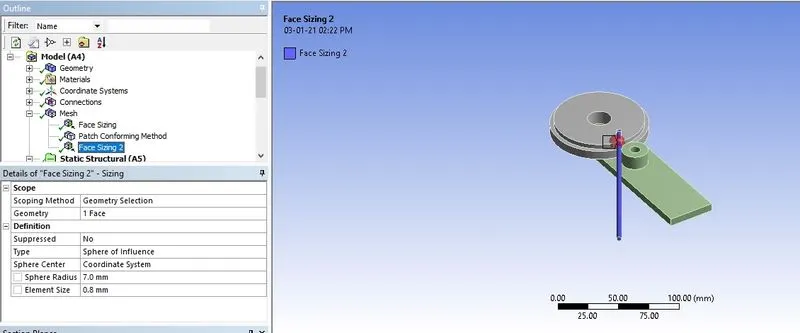
For Mesh refinement one new local co-ordinate is created, this is where the local co-ordinate is created;
Mesh Model:
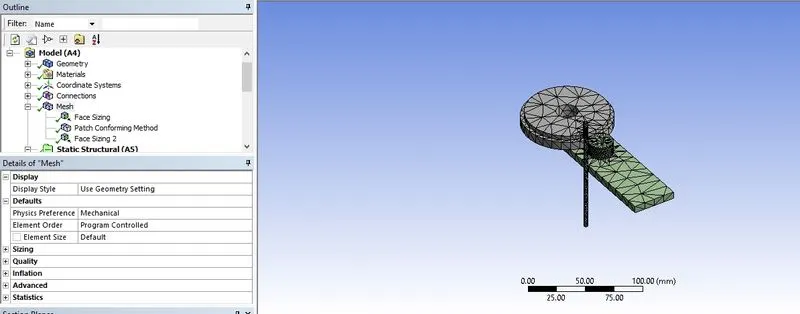
Mesh Refinement: at Local Co-ordinate (Sphere of Influence)
Sphere Radius: 7.00 mm
Element Size: 0.8 mm
- Boundary Condition:
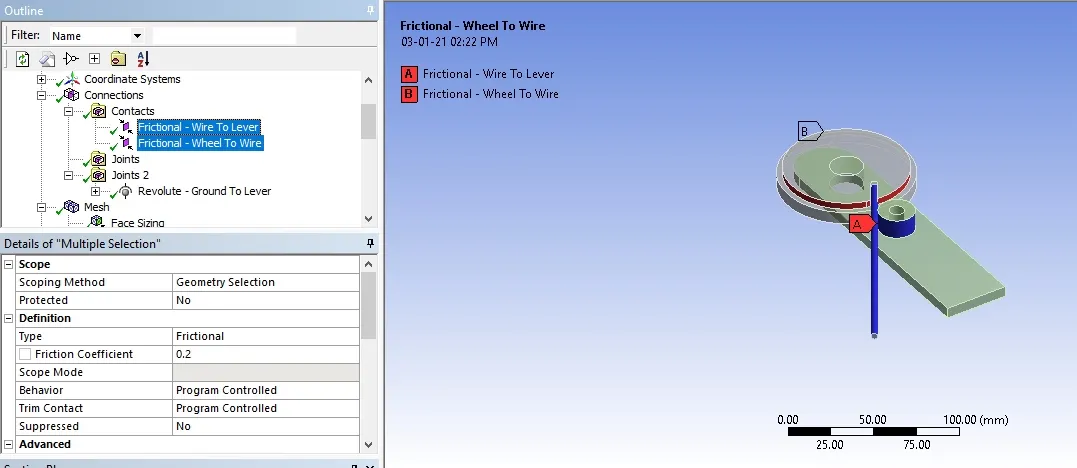
Contacts: For this analysis two frictional contacts applied to various bodies of model with friction co-efficient of 0.2.
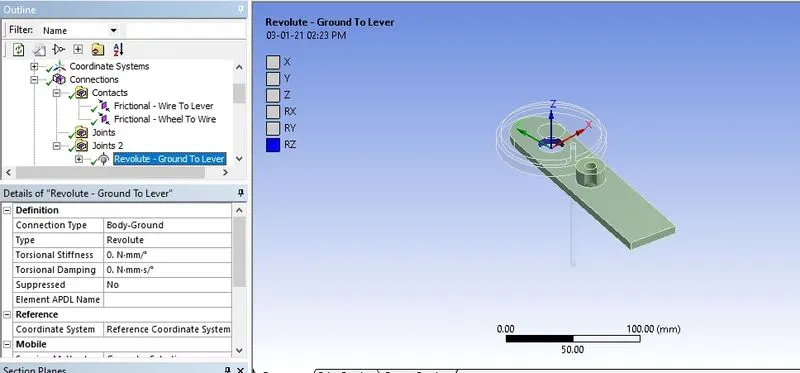
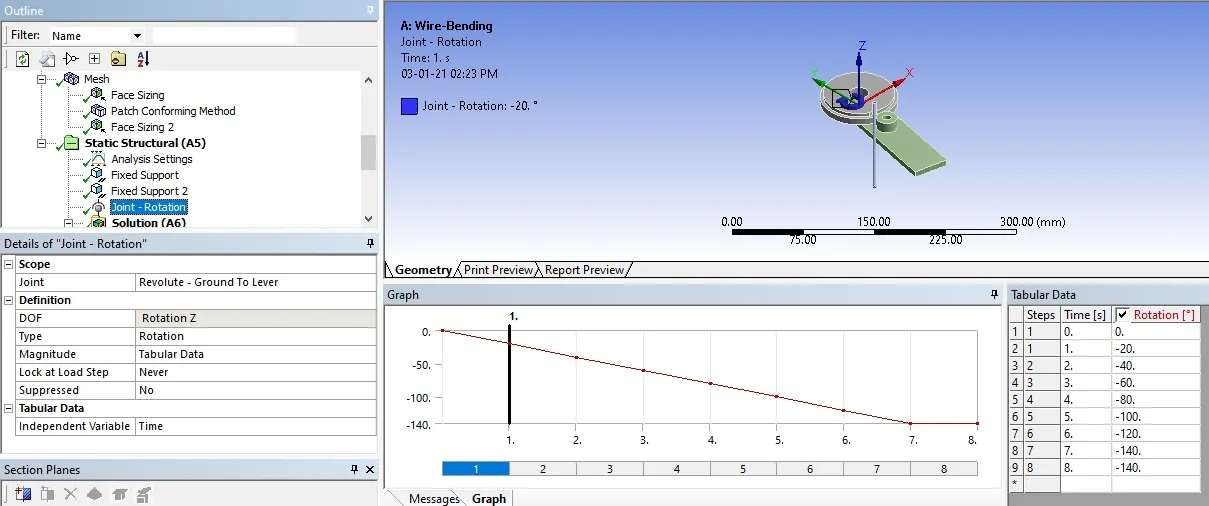
Joint: One Revolute (Body to Ground) joint is created at the hole of lever.
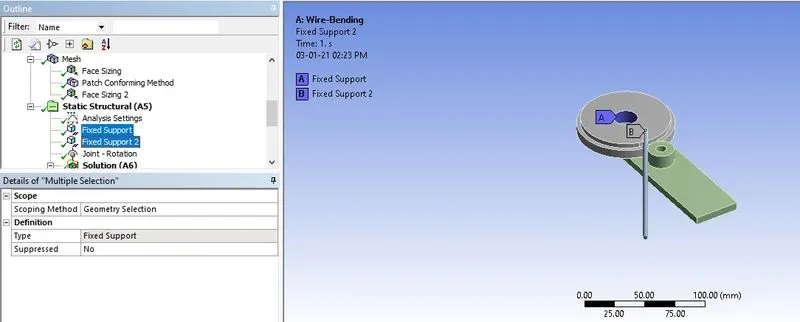
Fixed Support: One end of the wire is kept as fixed
- Loading & Analysis Setting:
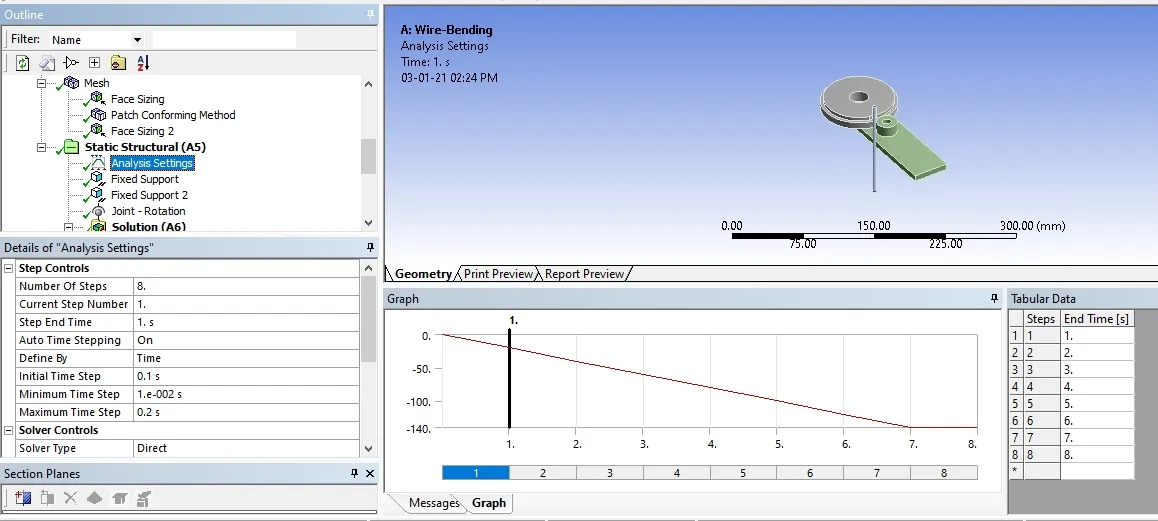
The whole analysis is divided in a total of 8 steps
Initial Time Step:
Minimum Time Step: 1.e-002
Maximum Time Step: 0.2 s
A revolute joint is applied with rotation during 8 Steps
Analysis Settings:
- Post Process:
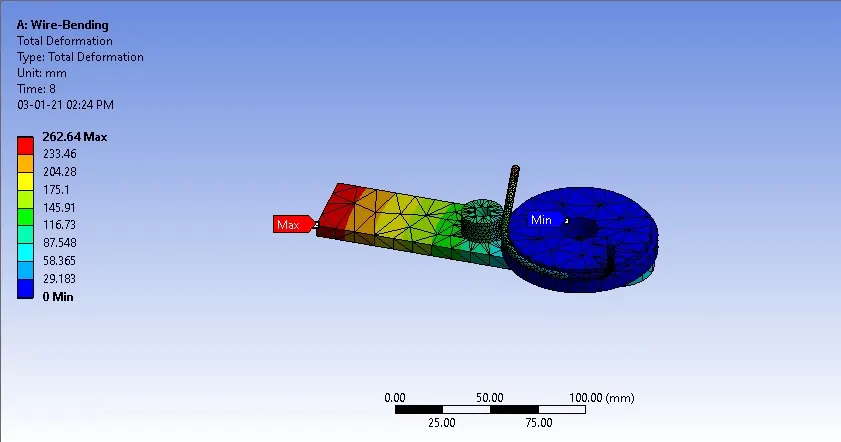
Case 1: Copper Alloy NL
Total Deformation
Equivalent Elastic Strain (for Wire)
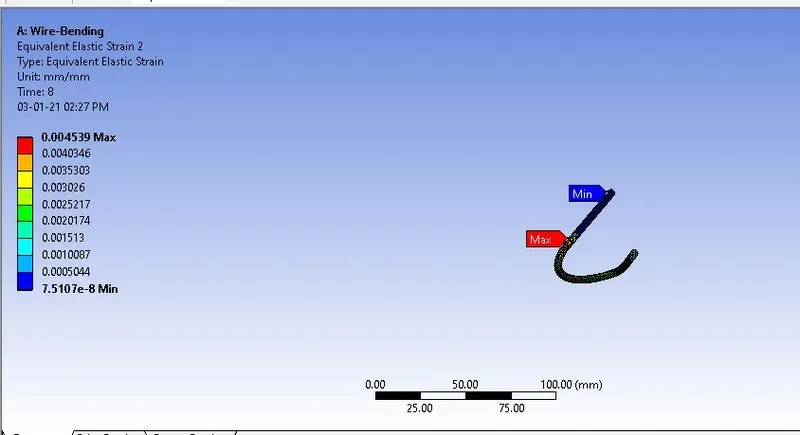
Equivalent Stress (for Wire)
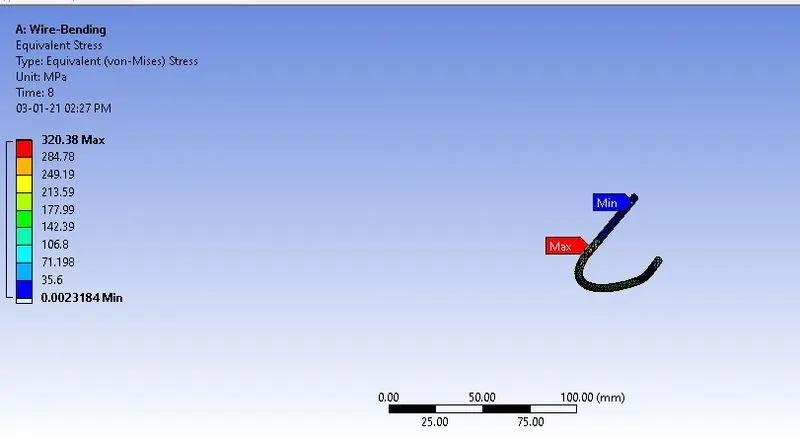
Case 2: Magnesium Alloy NL
Total Deformation
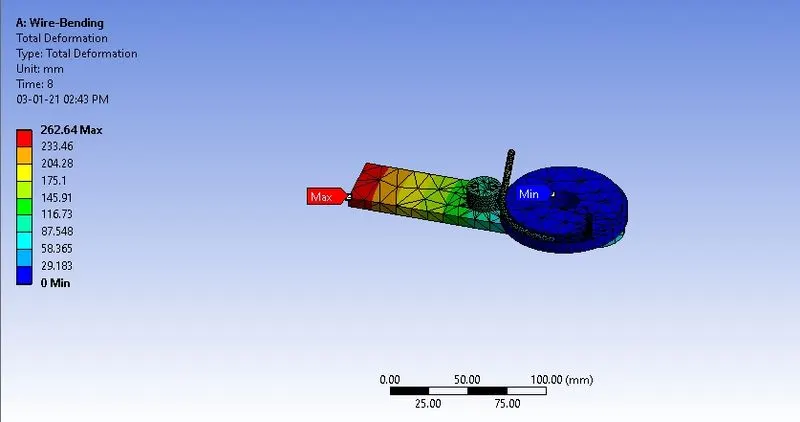
Equivalent Elastic Strain (for Wire)
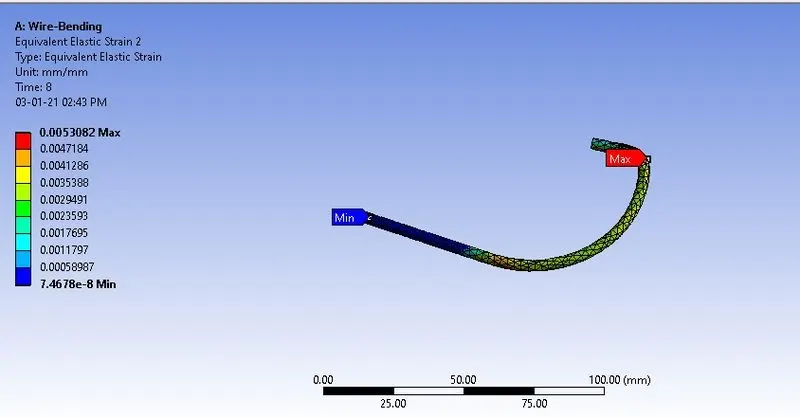
Equivalent Stress (for Wire)
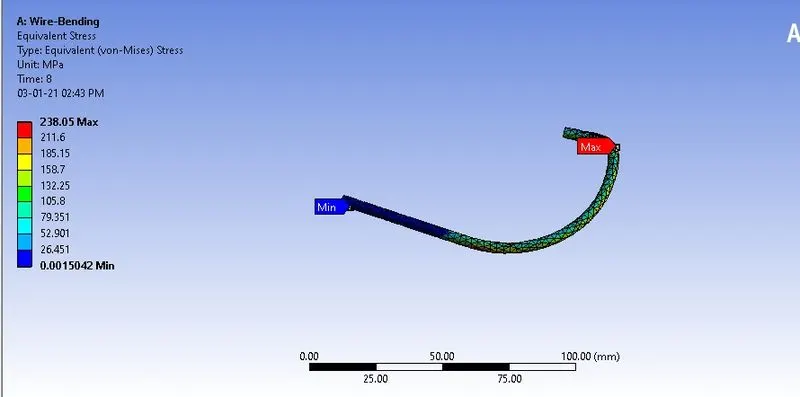
Case 3: Aluminum Alloy NL
Total Deformation
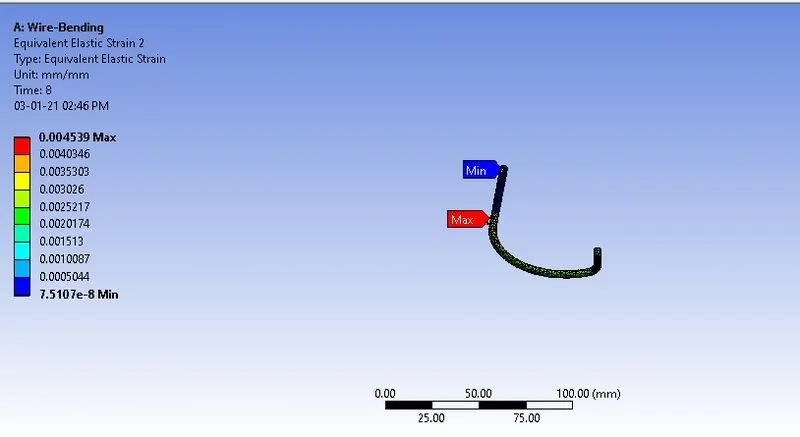
Equivalent Elastic Strain (for Wire)
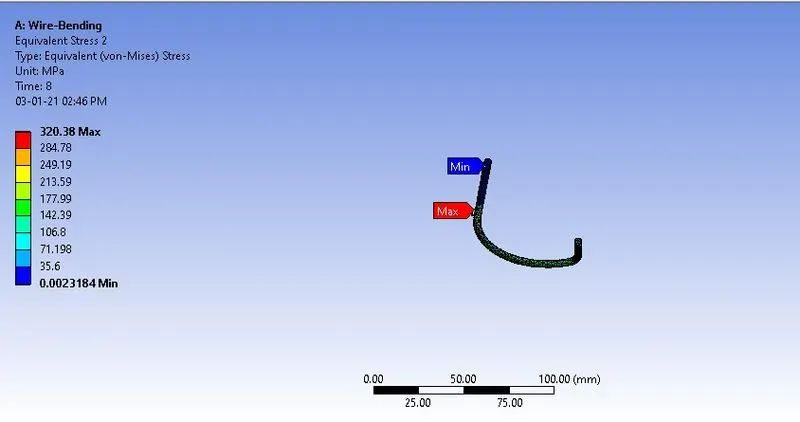
Equivalent Stress (for Wire)
Click here to see an animation of this project,
Post Process Results Summary;

Results & Conclusion:
1) Max Equivalent Elastic Strain is higher in Magnesium Alloy
2) Max Equivalent Stress is same in Copper Alloy and alluminium
We can conclude that Magnesium Alloy will take less load for bending and Copper will take higher load in bending. We can observe high stress at curves where there is actual bend.