Week 4:- Pin Unit Design Challenge
AIM
To design a different types of fixed pin unit and retractable pin unit with different pin, riser, blade, cylinder and block
INTRODUCTION ABOUT FIXED PIN & RETRACTABLE PIN UNIT
FIXED PIN
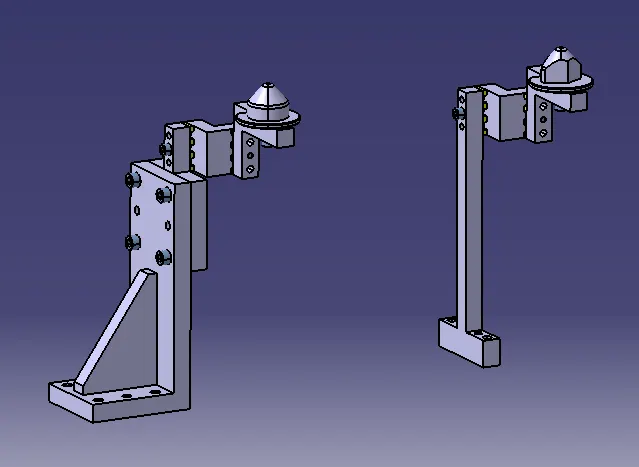
- Fixed pin unit is a unit designed to locate the car panel using pins.
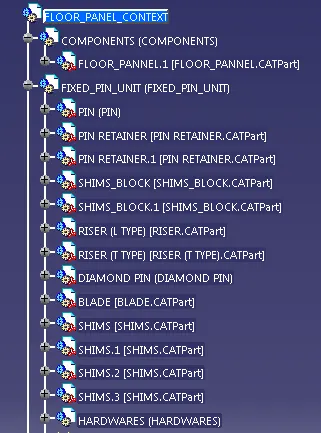
- Pin, pin retainer, shims, blocks, blade, riser are the part of fixed pin units in general .
- pin retainer is used to hold the pin firmly.
RETRACTABLE PIN
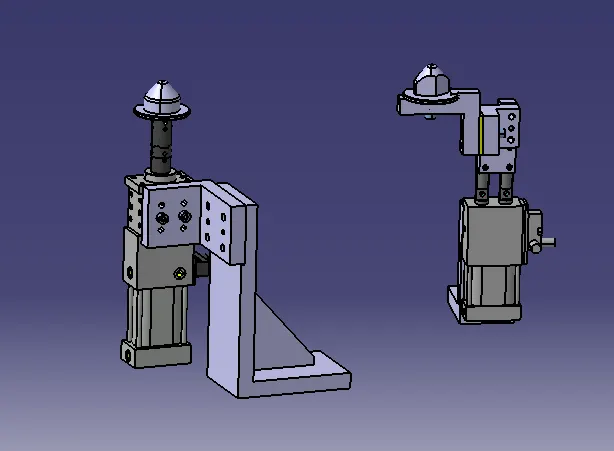
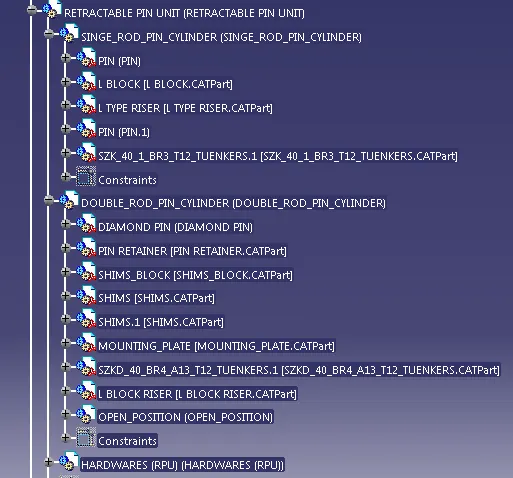
- A retractable pin unit is a unit designed to locate the car panel using pins, but the entire pin package parts will be mounted on the retractable pneumatic cylinder, pin, shims, L Block, pneumatic retractable cylinder, riser are the parts of retractable pin unit.
MATERIALS USED
- In general, the materials used for pins, pin retainers, shims, shim block, blades & risers are
- Pin : C45, EN31, SAE 8620 Steel, etc.
- Pin retainer : Steel / ASTM A-36, SS type 303 or 304, etc.
- Shims/spacer : S.A.E. 1010 CRS FULL HARD, COLD ROLLED STRIP STEEL S.A.E. 1010 FULL HARD, S.A.E. 1020 HRS, etc.
- Shim block : STEEL ASTM A-36, NM Stainless, STEEL ASTM A-36, SS type 303 or 304, etc.
- Blade : STEEL ASTM A-36, etc.
- Riser : STEEL ASTM A-36, etc.
HARDNESS
- In general, the hardness of the materials for pins, pin retainers, shims, shim block, blades & risers are,
- 55 - 60 HRC / 58 - 62 HRC to a depth of 0.5 - 0.7 mm after grinding.
PIN TOLERANCE
- The pin tolerance for a geo pin will be of closer tolerance i.e. -0.15mm & for re-spot pin is of -0.28mm.
PURPOSE OF PIN UNIT
- As by 3-2-1 locating principle, the introduction of two pins helps to arrest the 6 degrees of freedom (4 axial & 2 radial movements) whereas other 6 degrees of freedom are arrested by introducing minimum three supports.
- Typically, the locating pins are used to locate a body part in a position sufficiently accurate to execute a welding process.
- The body part is constrained by a set of appropriately locating pin so total constraint by locating pin should be fully constrained at all times to prevent any movement.
FUNDAMENTALS OF PIN UNIT DESIGN
- It is necessary to have two pins to locate a car panel.
- And here one pin must arrest 4 ways (i.e. 4 translations) & other must have arrest 2 way (i.e. 2 rotational) of a car panel.
- Pin should engage 3 to 5mm from car part entry surface.
- All pin should be accommodated with 2 way adjustable shims irrespective of direction of arresting.
- Round pin should be used in case of 4 way arresting of car panel if the hole is round.
- Round pin can be used for 2 way arresting of car panel only if the hole is slot.
- Diamond pin should be used in case of 2 way arresting of car panel if the hole is round.
- Diamond pin should be used in case of 4 way arresting of car part if the hole is slotted.
- The axis of the car panel hole & the axis of the pin should be same in general.
TYPICAL PARTS ARE USED IN PIN UNIT DESIGN
- Pin
- Pin retainer
- Shims
- L-block/shim block
- Blade
- Riser
PIN
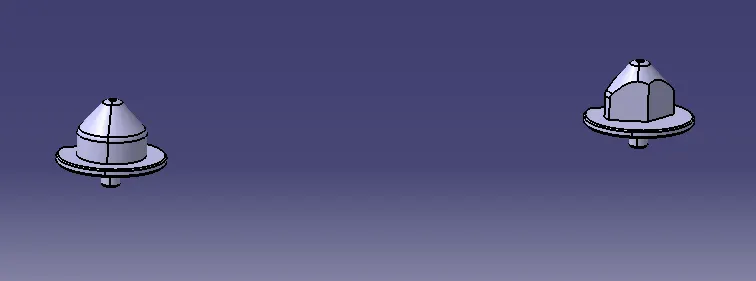
- It is used for the location purpose of the panel.
- Typically, the locating pins are used to locate a body part in a position sufficiently accurate to execute a welding process.
- The body part is constrained by a set of appropriately locating pin so total constraint by locating pin should be fully constrained at all times to prevent any movement.
- There are dozens of styles of locating pins that can be utilized in a design.
- A pin can either be a make part or a standard part also. Below I have shown the commonly used pins.
- One of the most common pins is a stepped pin with either small or large head.
CONSIDERATION
- Pin should have grinding surface on shaft with fits on to which the pin retainers will be fitted.
- The mounting surface of the pin should be a fine machined surface.
- A pin should have a step machine surface to lock the rotation, which matches with the pin retainer.
- The mounting surface of the pin retainer to the blocks should be machined surface.
- All machined planes should be perpendicular to the axis of pin shat.
- Pin must have a fastening provision like tapped hole from the bottom or a v- grove from the side.
- A pin must be hardened ( 55 - 60 HRC) & black oxide finish in general.
PIN RETAINER
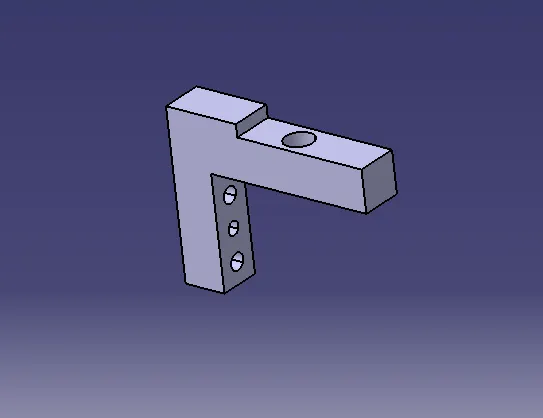
A pin retainer is a part which holds the pin in position, the pin retainer can either be a make part or a standard part also pin retainer is used to hold the locating pins firmly.
CONSIDERATION
- A pin retainer is a part which holds the pin in position, the pin retainer can either be a make part or a stand Pin retainer should have a hole with a fit, on to which the pin will be fixed.
- The pin mounting surface of the pin retainer should be a fine machined surface.
- The pin mounting surface of the pin retainer should have the step to lock the rotation of the pin.
- The pin mounting surface of the pin retainer to the blocks should be a machined surface.
- The pin retainer will be fixed to a block or a L - block to the riser with 2 dowel holes & at least with one screw hole to maintain the tolerance and part also pin retainer is used to hold the locating pins firmly.
SHIMS
- Shim is generally used to adjust the design to manufacturing deviation.
- In general, a shim is a thin and often tapered or wedged piece of material, used to fill small gaps or spaces between objects
- Shims are typically used in order to support, adjust for better fit, or provide a level surface.
- Shims may also be used as spacers to fill gaps between parts subject to wear.
- Shims are the small parts which comes with the thickness of 0.1mm,0.2mm, 0.5mm,1.0mm etc.
- These will compensate the stack up tolerance which reflects at the mylars.
- We give tolerance to all parts of the fixture. Due to this tolerance the mylars will either lift up moves down from its defined position.
- To adjust the mylars for getting the defined position we use shims.
- Shims will be added above the mylar for adjusting according to tolerance.
APPLICATION
- In automobiles, shims are commonly used to adjust the clearance or space between two parts. For example, shims are inserted into or under bucket tappets to control valve clearances. Clearance is adjusted by changing the thickness of the shim.
- In assembly and weld fixtures precision metal shims are used between two parts so that the final production parts are created within the product drawing's specified tolerance.
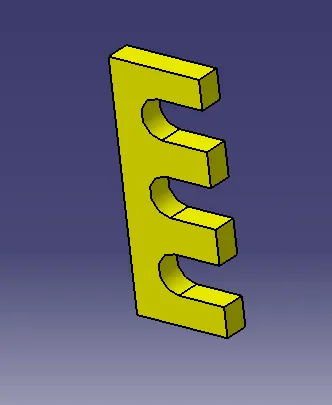
L-BLOCK/SHIM BLOCK
- These parts are mainly used to accommodate the shimming directions as per fundamental in general also in some cases used for other design feasibility.
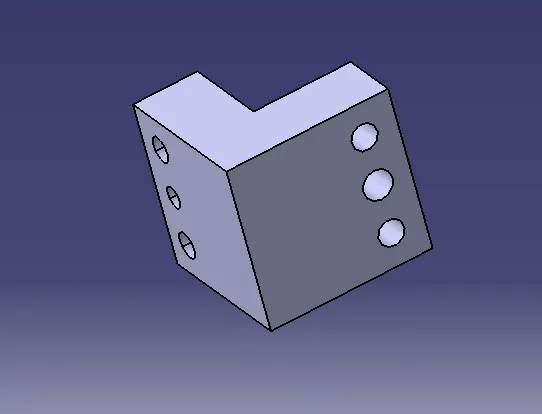
BLADE
- Blade is a part like a plate, which connects the parts of a unit to a riser. In general, the blade can either be making part or a standard part.
- Blade is the plates which are attached to raiser.
- Blade is also attached or mounted with cylinders, arms etc.
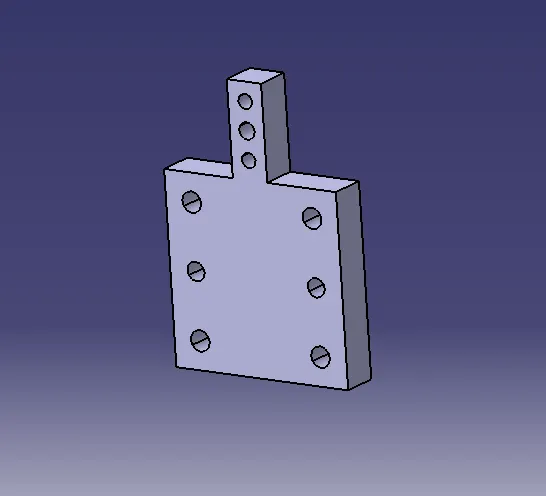
RISER
- Riser is a manufacturing part used to raise/height the assemblies of fixtures.
- One end of the raiser will be attached to the base unit while the other end will be attached to the Blade.
- It is a part on which all the parts of a unit are mounted on the base plate of a tool. In general, the riser can either be making a part or standard part.
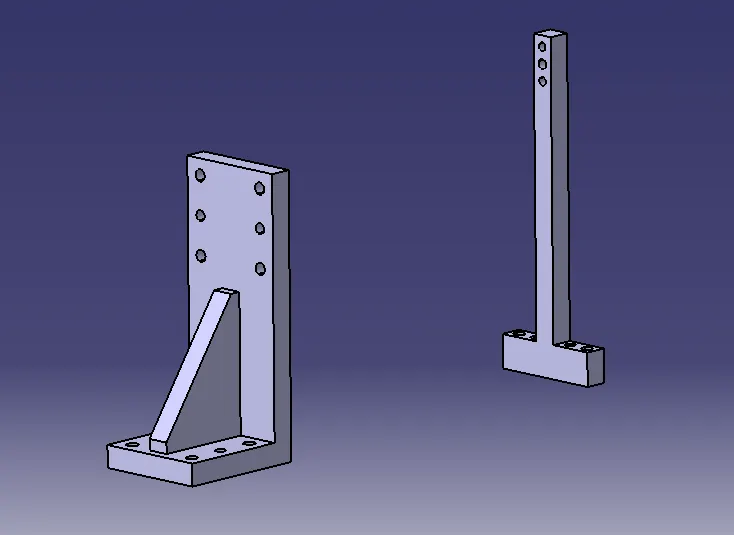
- Raiser can be of two types. They are,
- 'L' type risers.
- Square tube risers.
'L' TYPE RISERS
- 'L' type risers are of welded type where the stiffer will be added at the Centre for support.
- The wedge shaped structure is known as stiffer which is used as a support / to withstand load.
T TYPE RISERS
T type raisers is also a frame type.
CYLINDERS
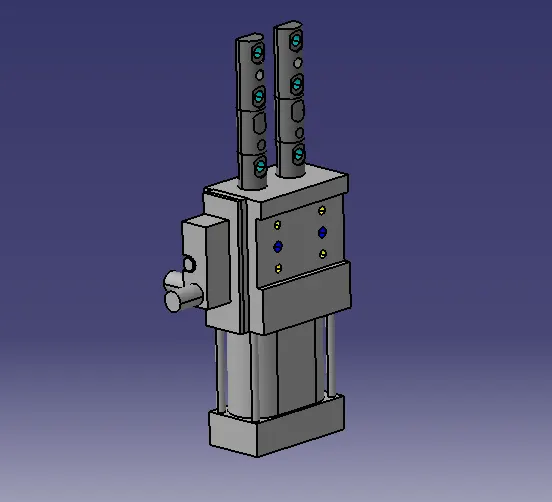
SZKD 40 BR4... LINEAR CYLINDER
- With dual guide, Flat housing of high-strength aluminium material and mounting areas on three sides, Driven by oval-shaped oblong cylinder Ø 63 mm for thrust and tensile forces of 1400 N, Simultaneously driven guide rods, double-supported in bronze/ graphite bushings, Integrated sensors
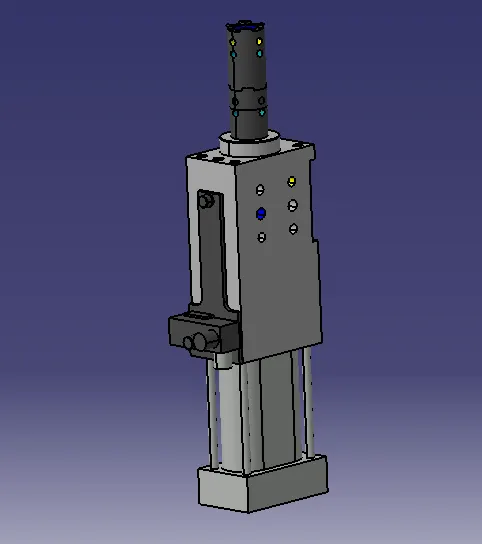
SZK 40.. -63 RETRACTABLE LOCAT. PIN
- Pneumatic cylinder in flat design.
- Encapsulated aluminium housing with mounting areas on several sides and precision guide of the piston rod, anti-rotating, centric receptacle for centring pins, etc., driven via oblong-shaped flat cylinder Ø 40/63 for thrust and tensile forces of ca. 1200 KN.
- Integrated inductive sensing.
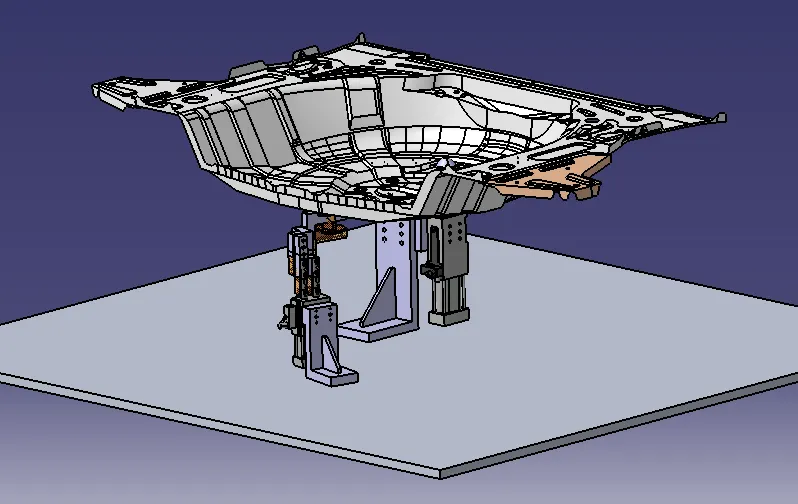
PRODUCT
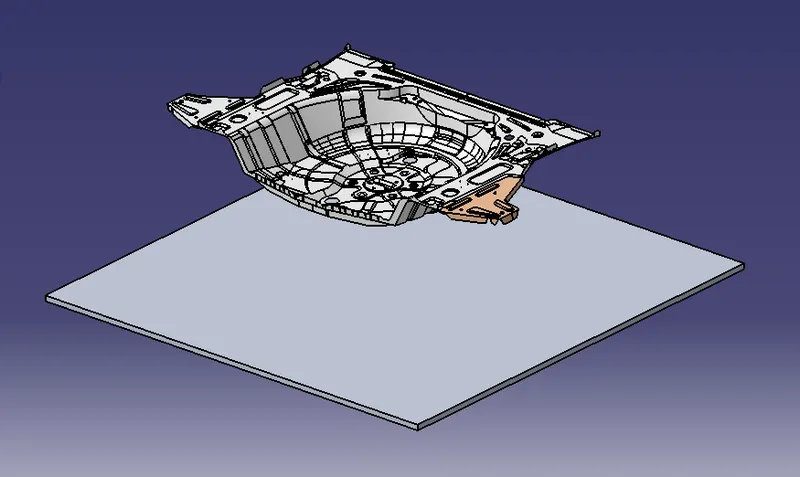
FIXED PIN UNIT DESIGN
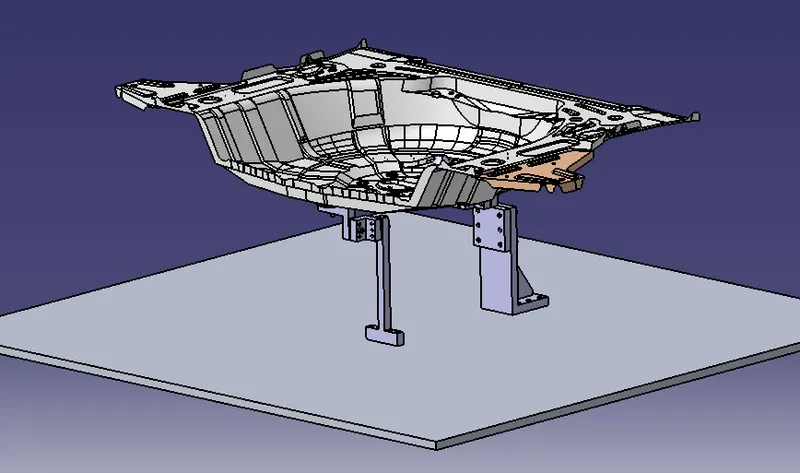
RETRACTABLE PIN UNIT DESIGN
DESIGN TREE STRUCTURE
CONCLUSION
Hence, The design a different types of fixed pin unit and retractable pin unit with using different pin, riser, blade, cylinder and block.