Week 4 - CHT Analysis on Exhaust port
Aim :-
Conjugate Heat Transfer analysis allows for the simulation of heat transfer between solid and fluid domains by exchanging thermal energy at the interfaces between them and transported via conduction within solids and additionally via convection within fluid domains
Q How would you verify if the HTC predictions from the simulations are right? On what factors does the accuracy of the prediction depend on?
Ans :-So if you observe heat transfer coefficient is directly proportional to the Reynolds number (also to the velocity). So if you increase the velocity then there will be increase in the convective heat transfer coefficient.
|
Heat transfer coefficient |
21.926374 |
Step to Solve the congugate heat transfer. CHT
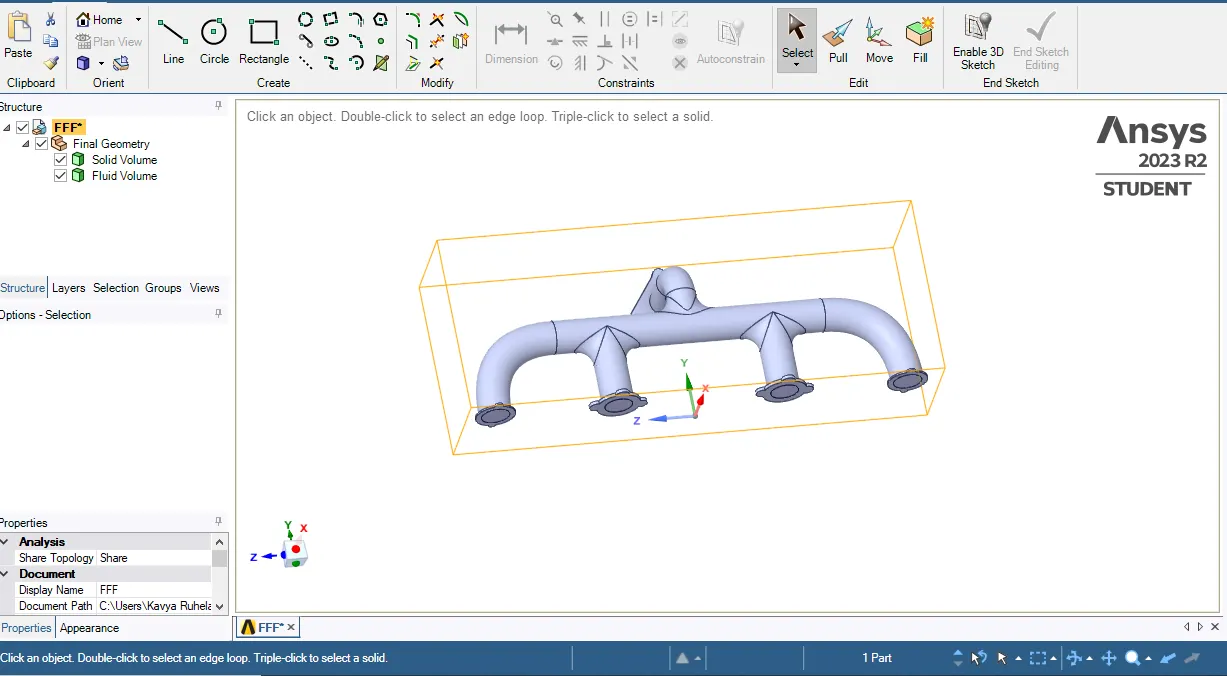
Open Ansys Work Bench→ Name (Exhaust Port) → fluid flow fluent(open In Spaci Claim)→Model Import.
Delete the empty Geometry and share the topology.
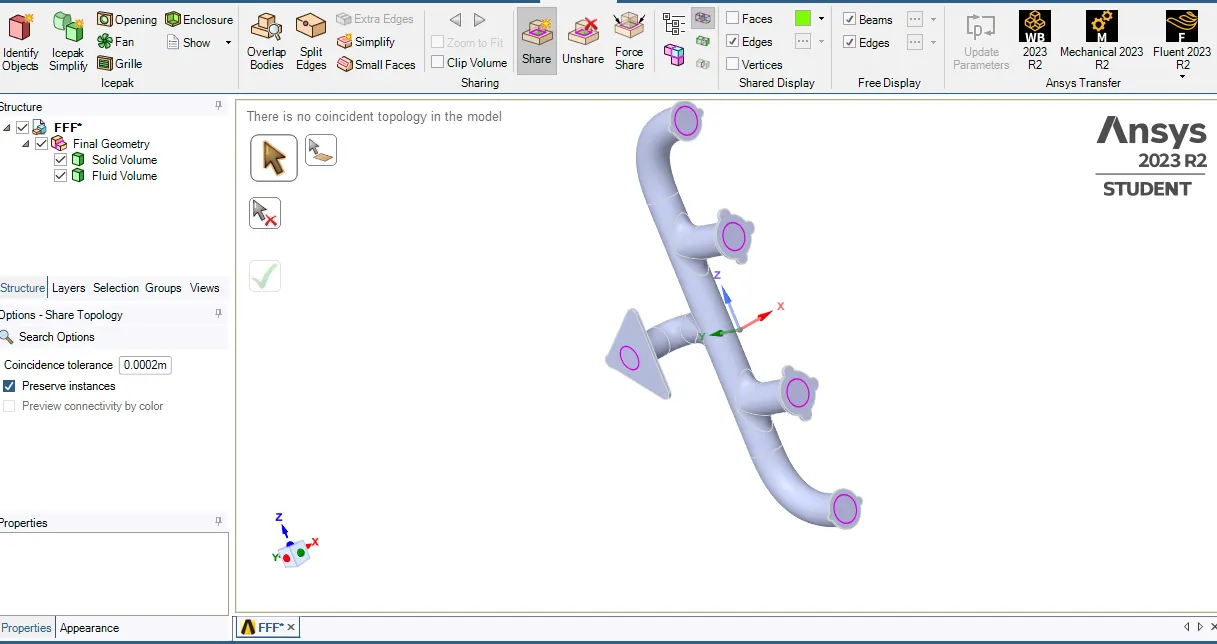
 Go to workbench in geometry and share the topology and click ok . fif pink line are visible then topology is correct.
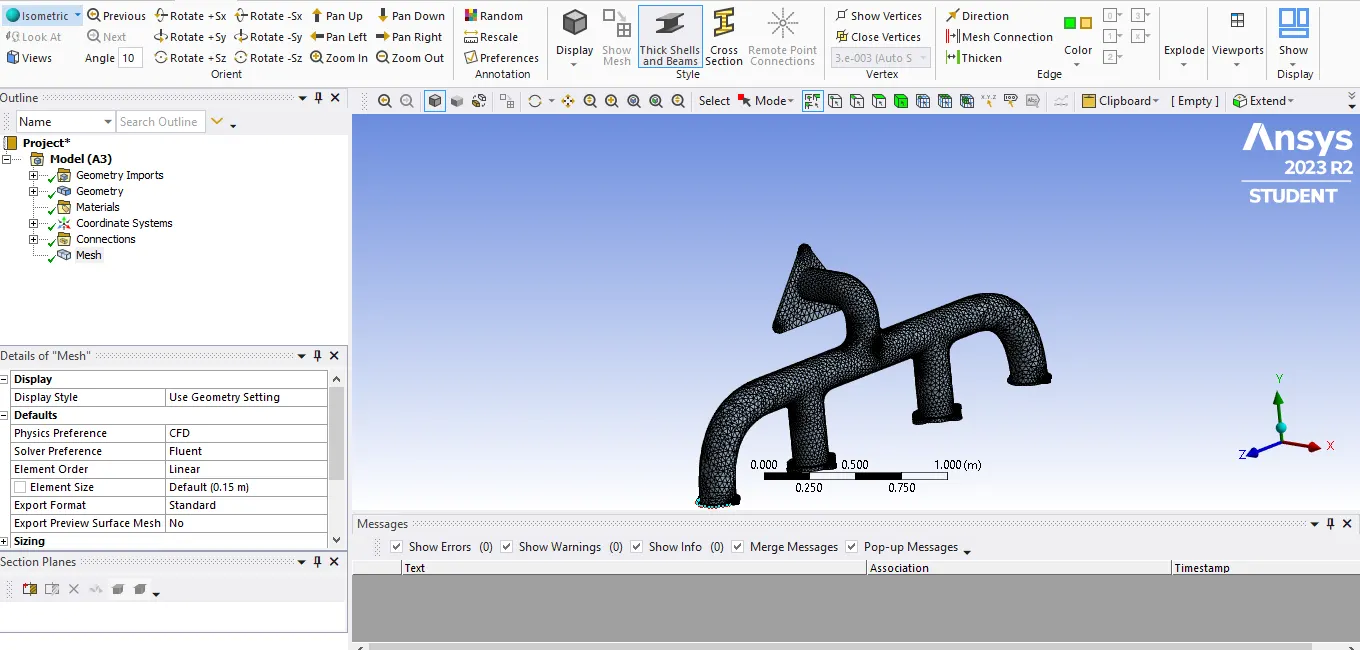
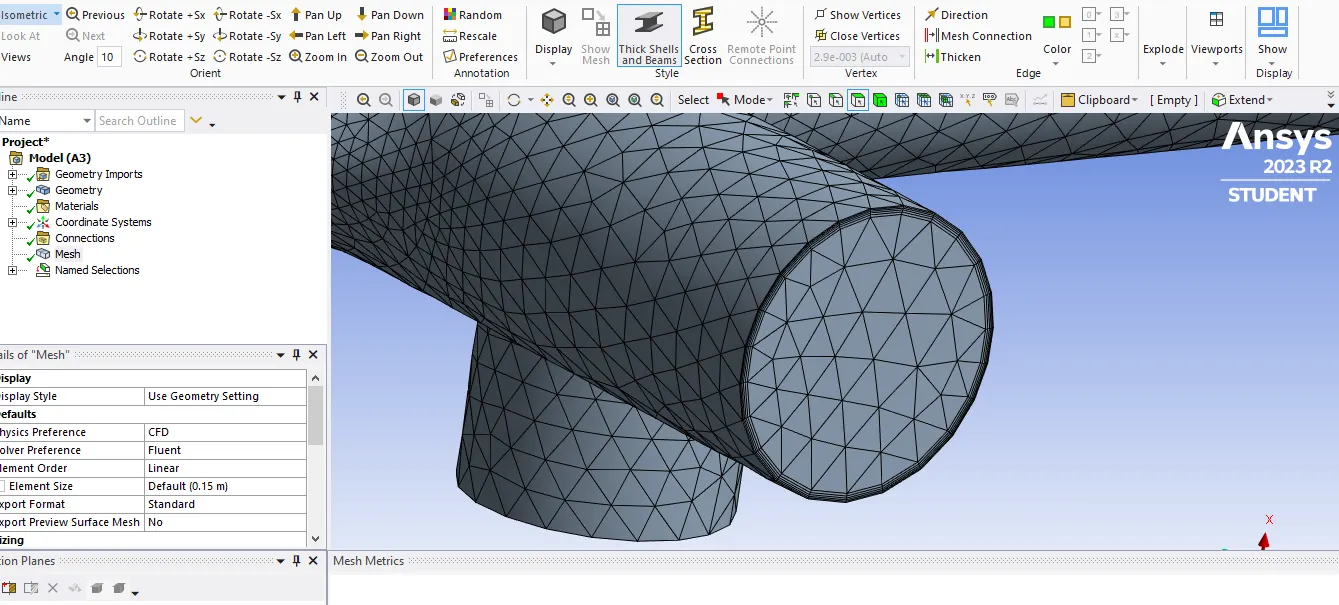
open Mesh And Genrate the standard Mesh.
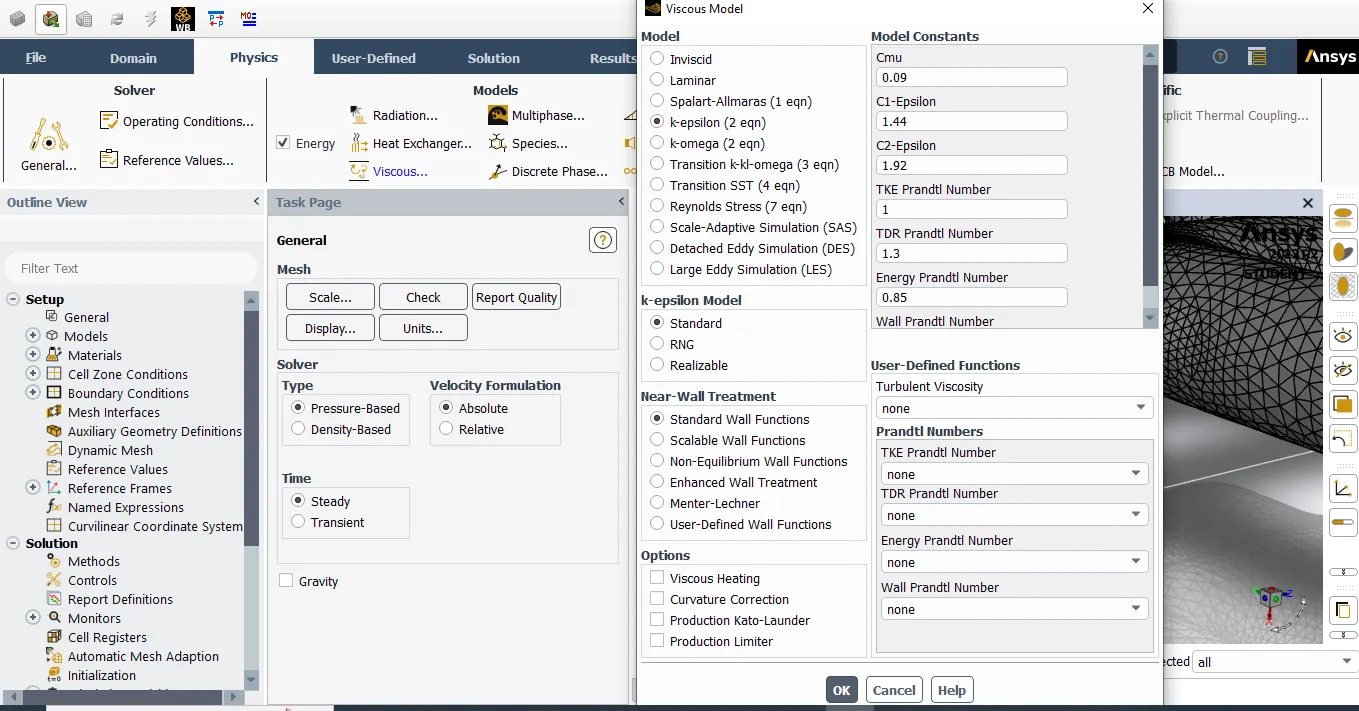
Create The Setup:-
Phycics -Eenrgy Equation
Material
Fluid-Air
Solid-Aluminium
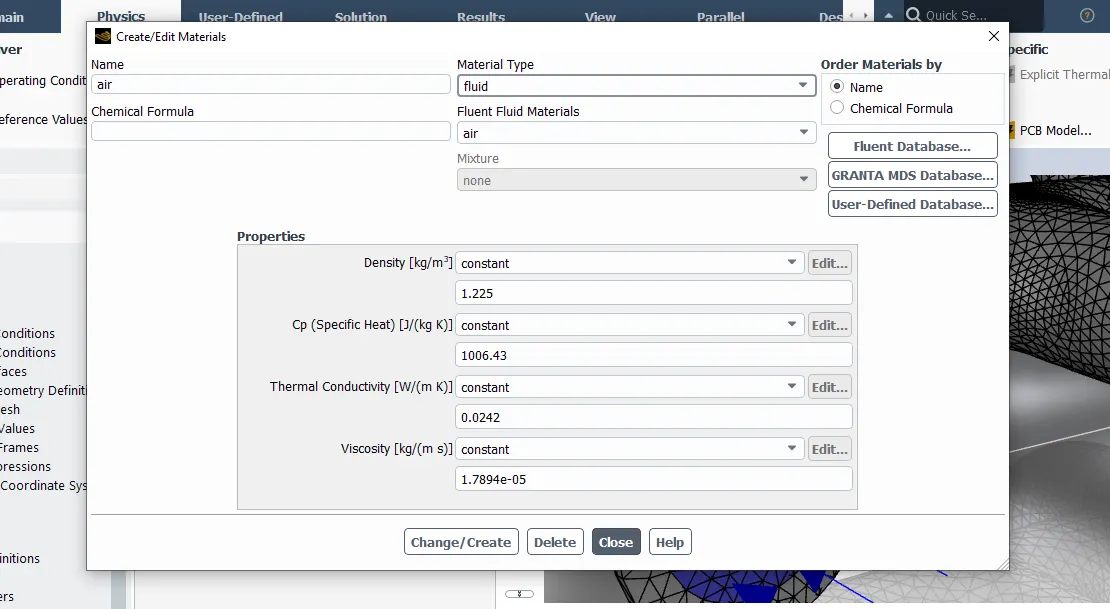
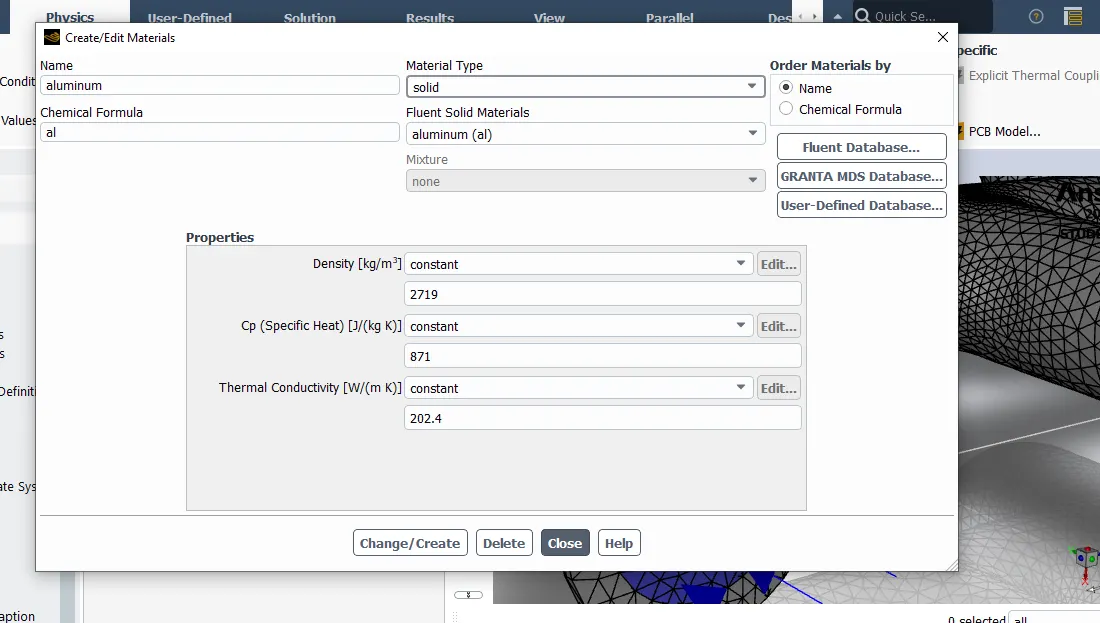
Boundary Condtions.
Inlet Velocity-5m/s, Temprature-700k
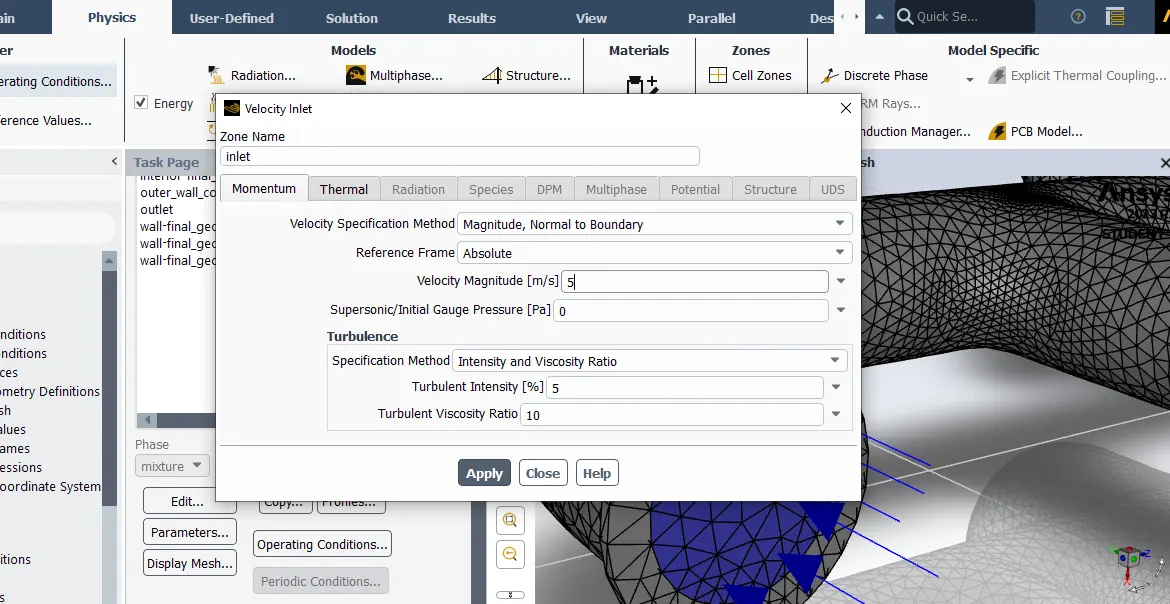
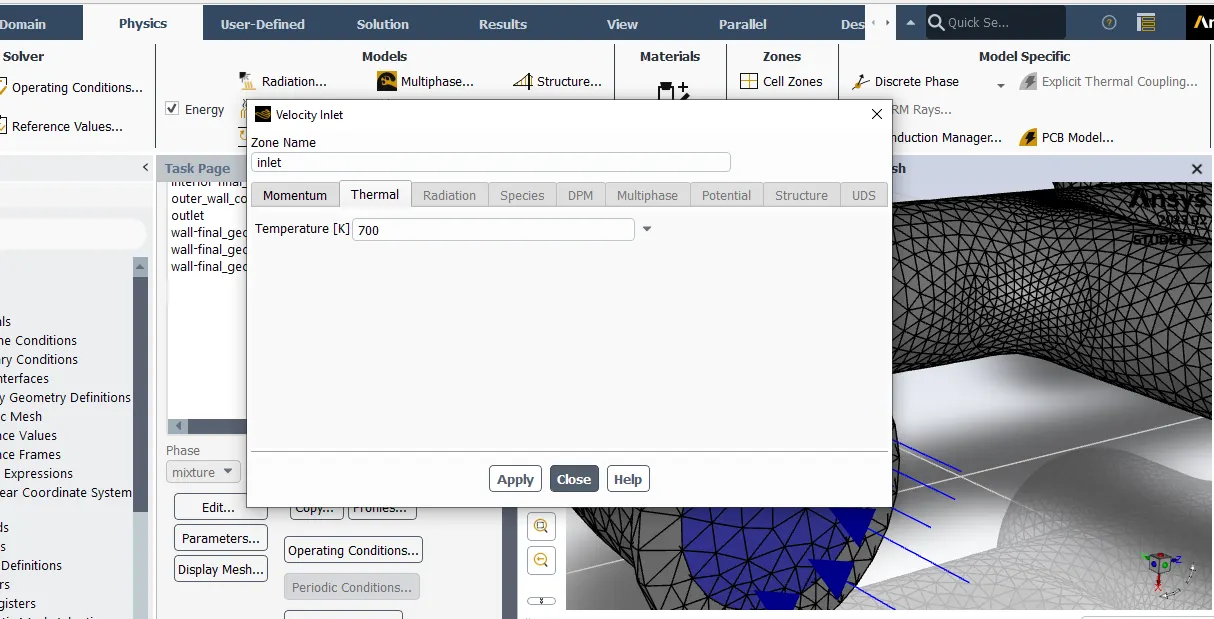
Wall
Outer wall convection (Heat transfer coefficient
The flanges around the inlet and the component encompassing the outlet are adiabatic (no heat transfer takes place through these walls).
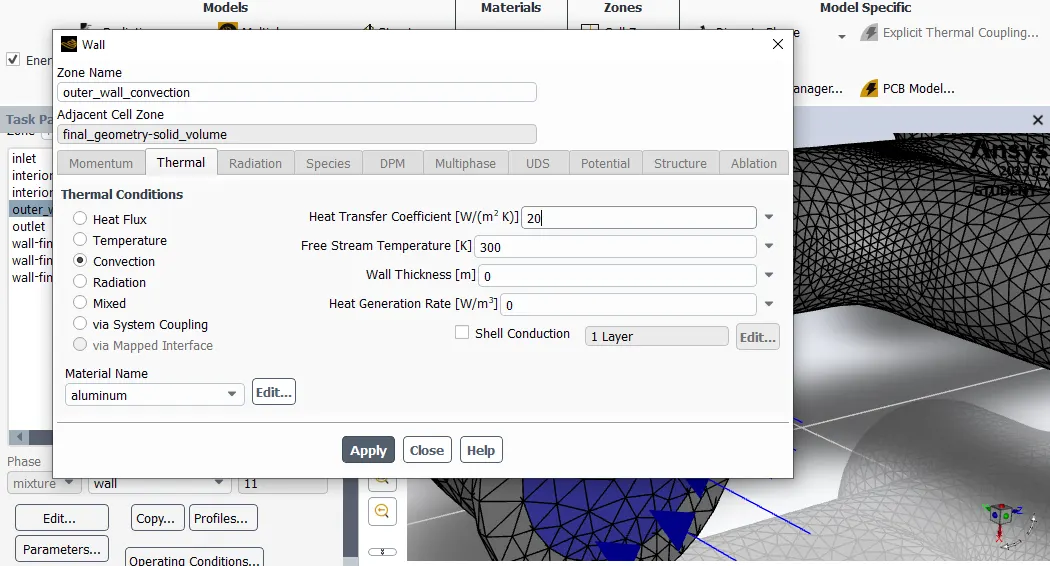
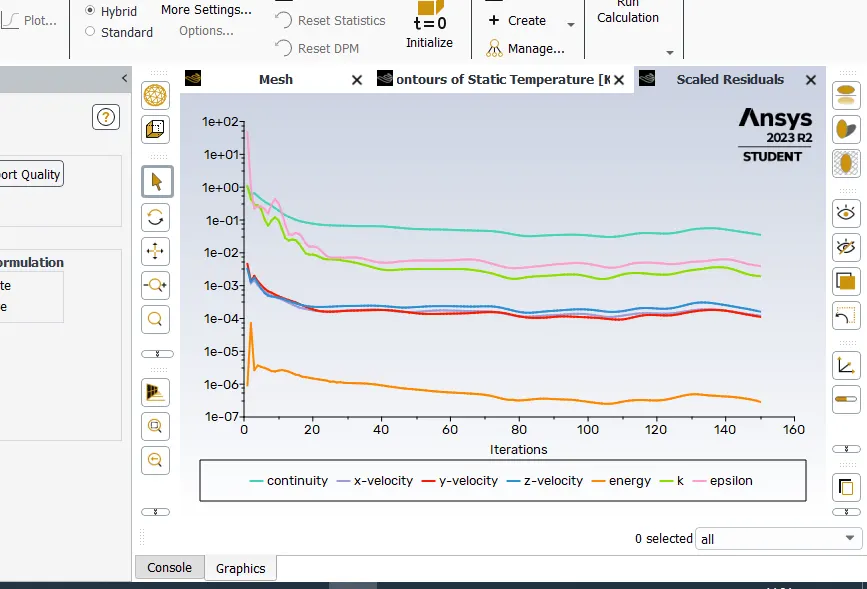
Intialize the Itration in Hybrid .
Create Contour
Temprature
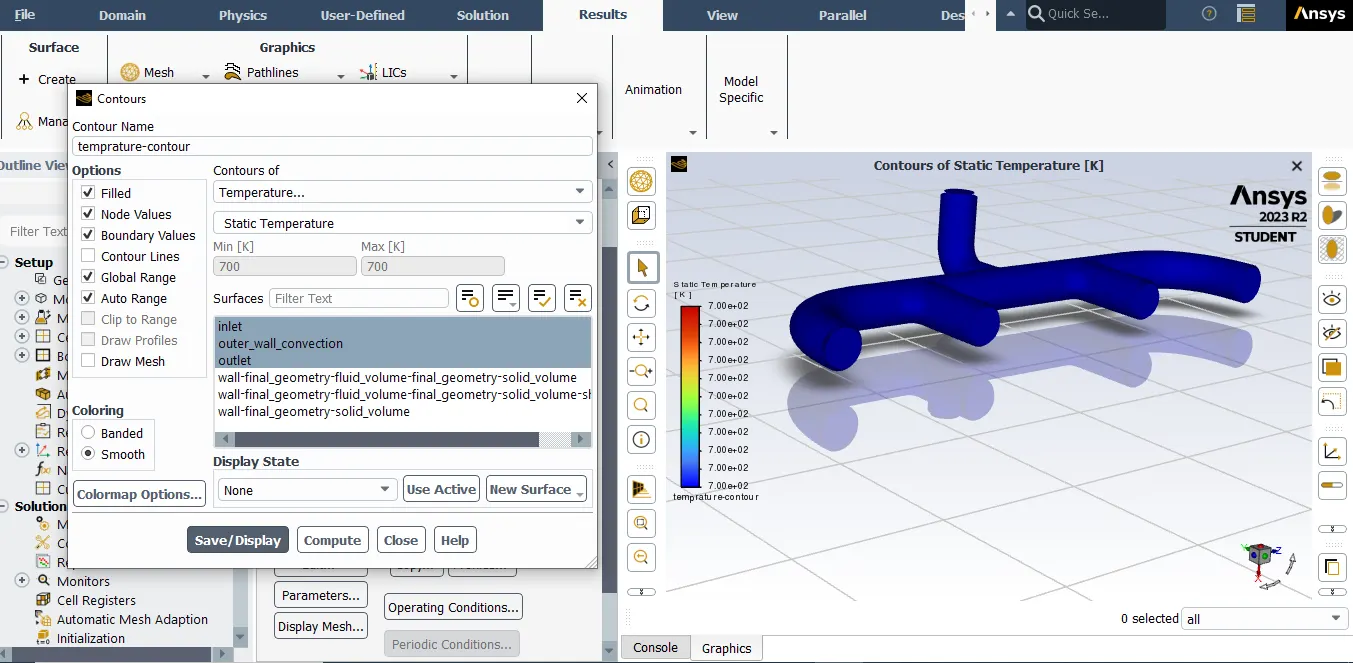
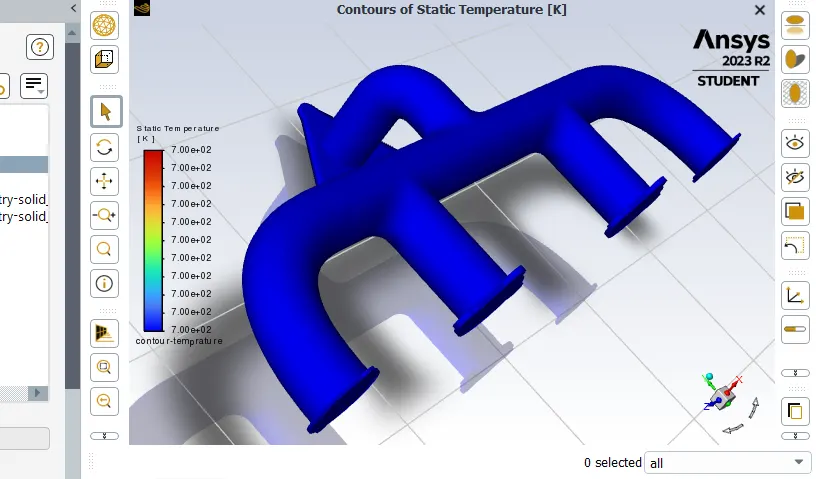
Create Animation .
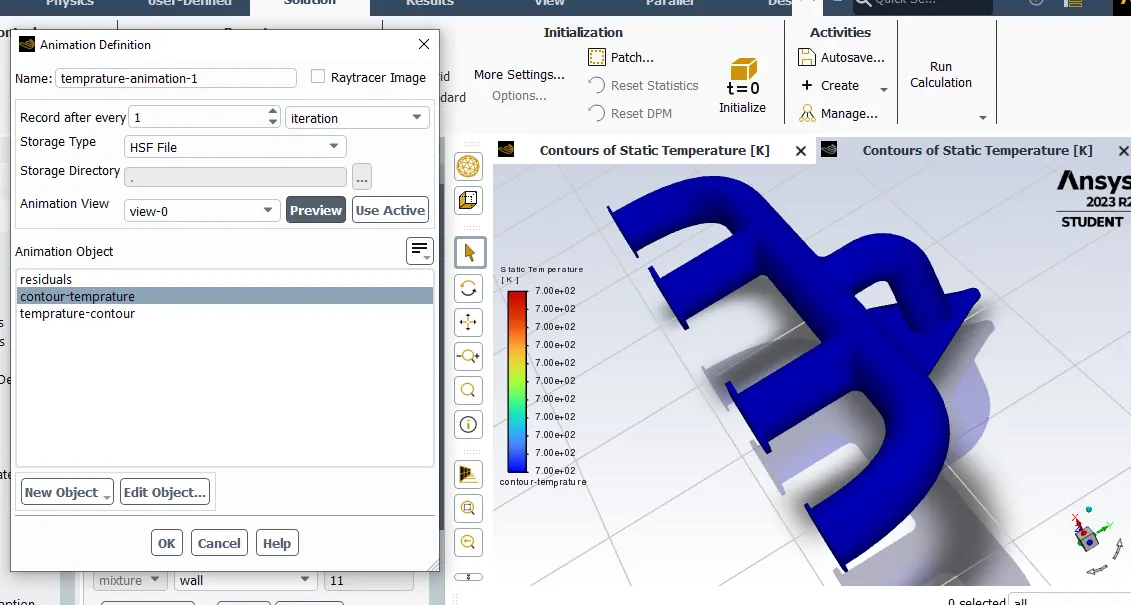
Results.
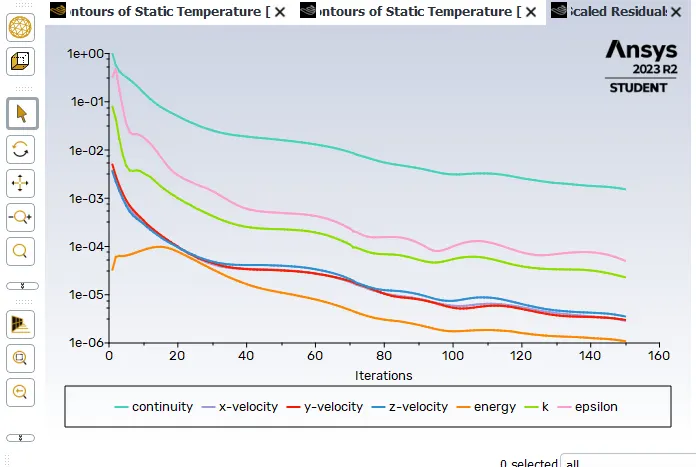
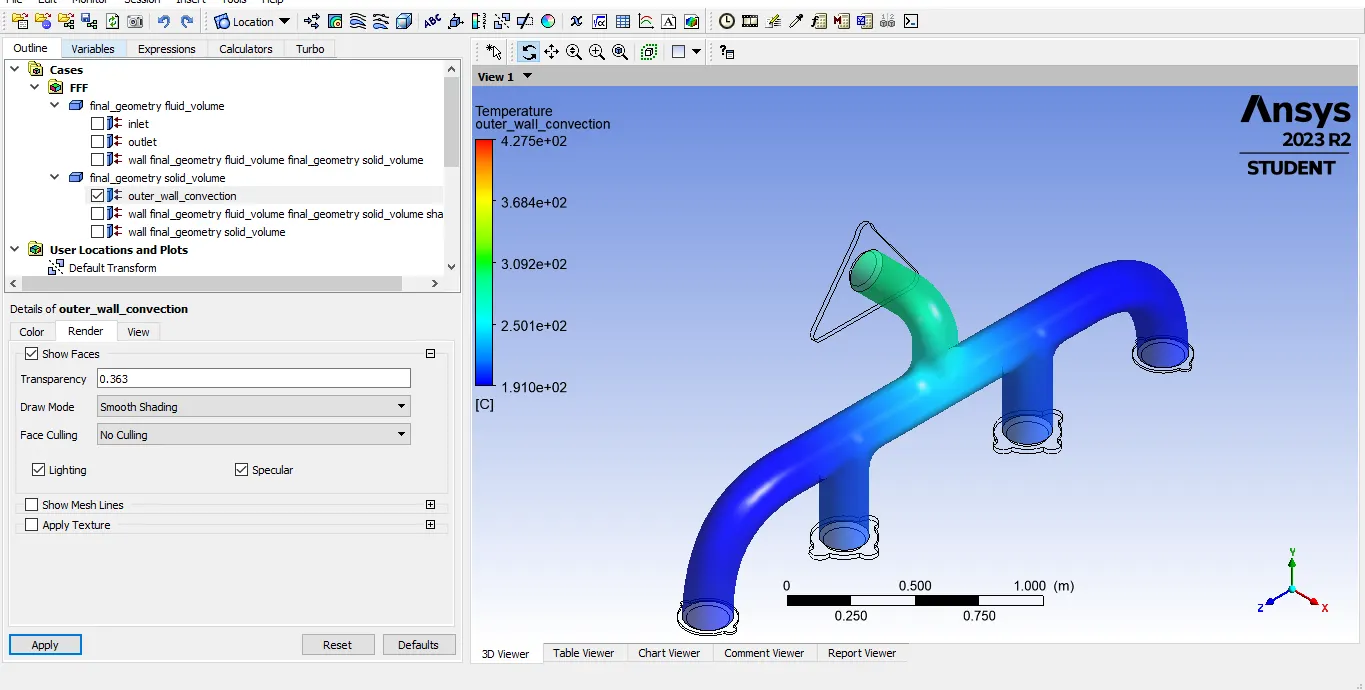
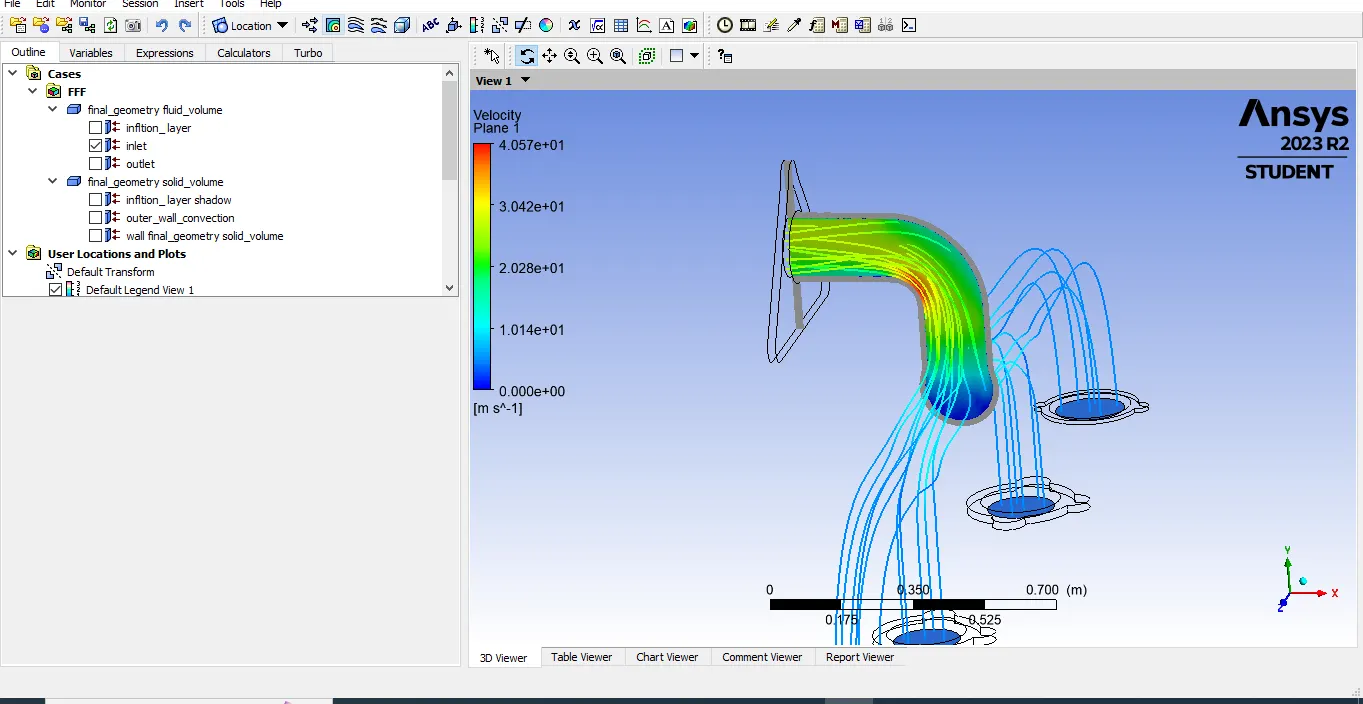
Create the Stream line .
Result →stream line →ok →select inlet →apply
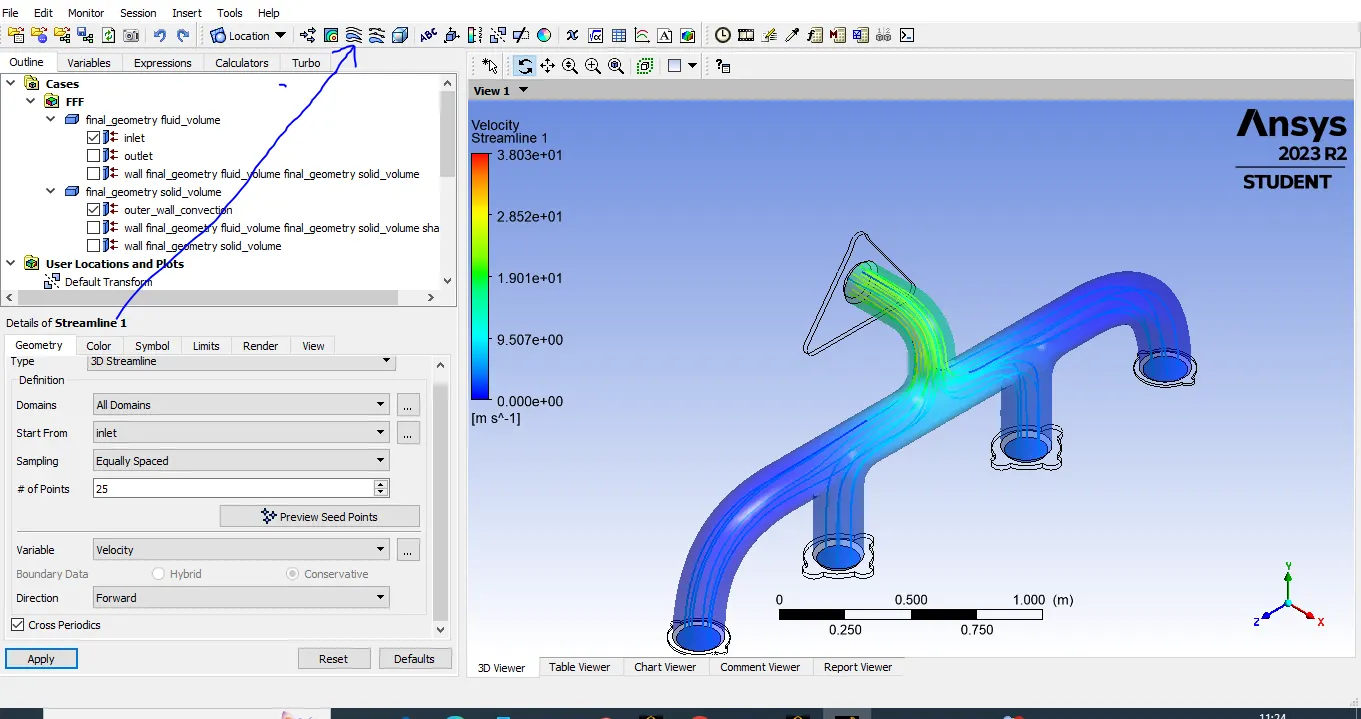
Velocity.
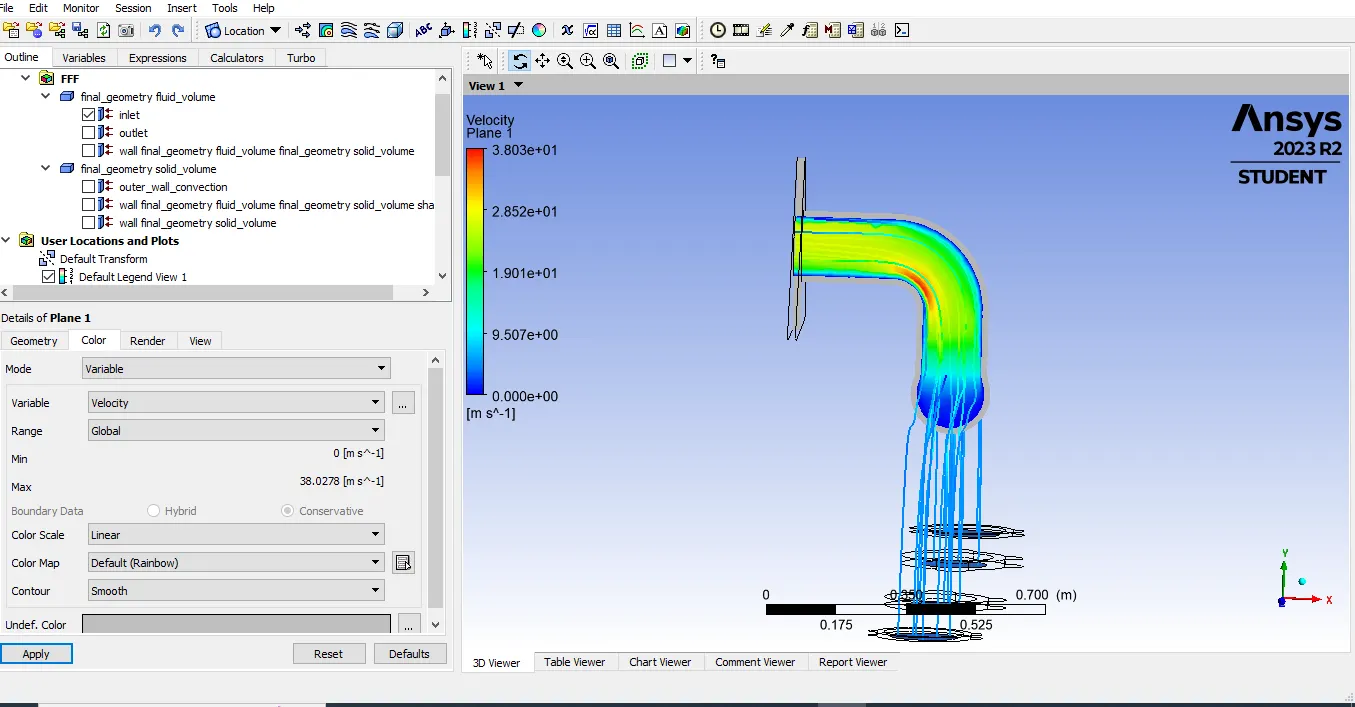
Refineing the mesh
Create the Infliation LAyer-
Select mesh
inflation-No of layer-5
Total thickness-mm
Conclusion :–
In case 1 mesh generated has default setting and the results captured are less accurate due to the same.