Week-4 Challenge WOT Condition Part-2
01)
The terms "mapped model" and "dynamic model" are typically used in the context of modeling and simulating engines, motors, and generators, particularly in the field of engineering and physics. These models describe how these devices operate and can be used for analysis, design, and simulation purposes. Here's an overview of the differences between mapped and dynamic models for these devices:
Mapped Model:
A mapped model is a simplified representation of an engine, motor, or generator that relies on pre-defined mathematical equations or lookup tables to describe their behavior.
These models are often used for quick calculations, design purposes, or when a detailed, real-time simulation is not necessary.
Mapped models are computationally efficient and are based on empirical data or theoretical equations that provide a good approximation of the device's behavior under specific operating conditions.
Mapped models are suitable for steady-state analyses and design optimizations.
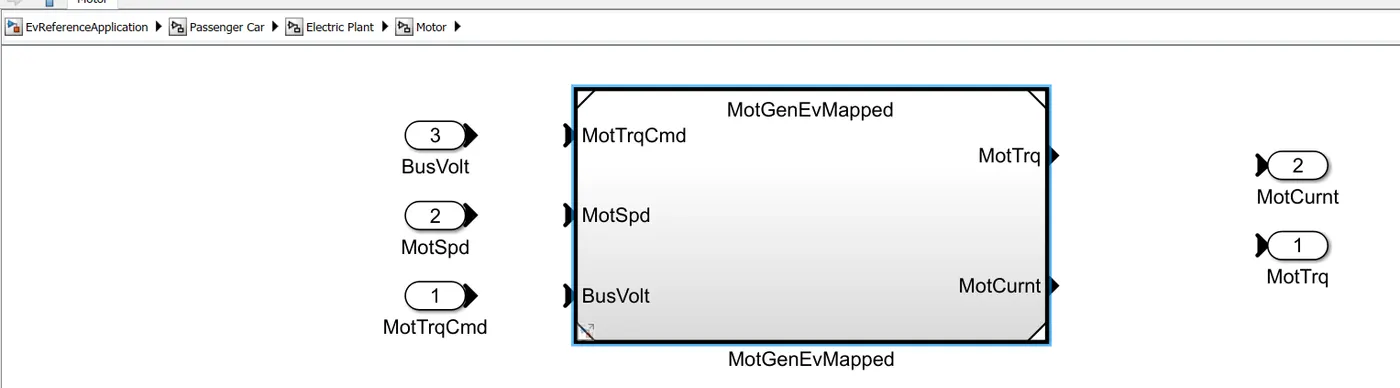
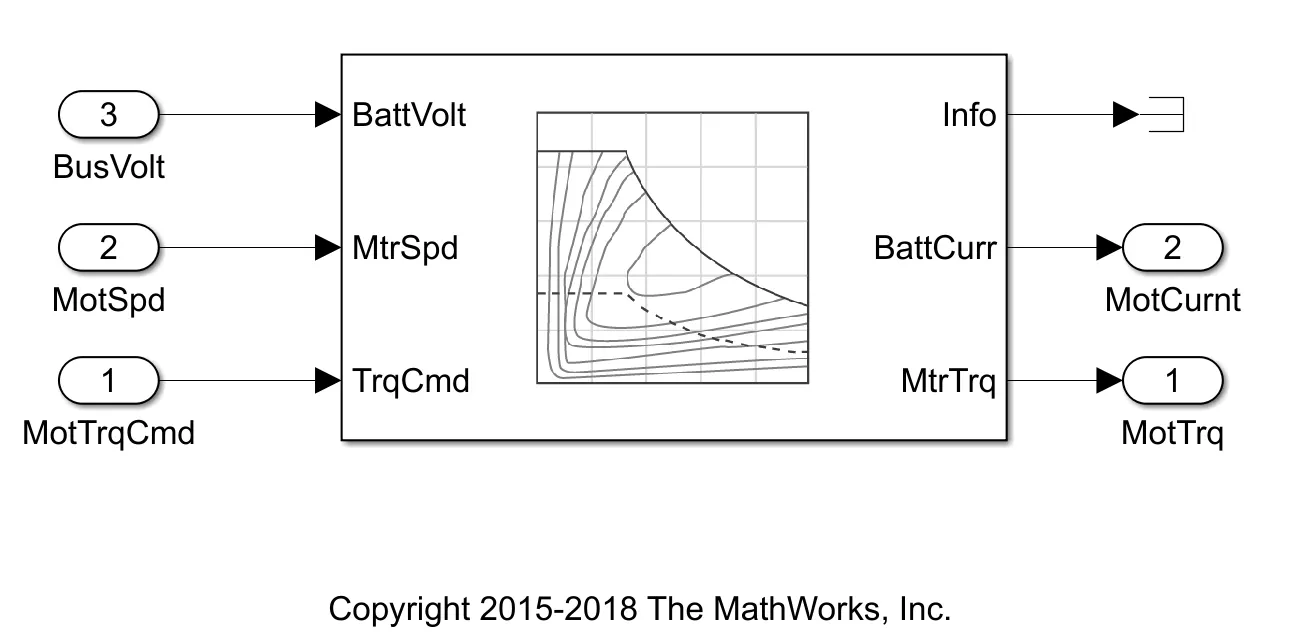
Dynamic Model:
A dynamic model is a more detailed and complex representation of an engine, motor, or generator that considers their transient behavior over time.
These models incorporate differential equations and control systems to capture the dynamic response of the device to changes in input conditions, load variations, and other factors.
Dynamic models are essential for simulating the device's behavior during startup, shutdown, or when it experiences sudden changes in operating conditions.
They are often used in real-time simulations, control system design, and performance analysis.
Changing the model type from mapped to dynamic or vice versa depends on the specific software or tools you are using for simulation and modeling. Here's a general approach:
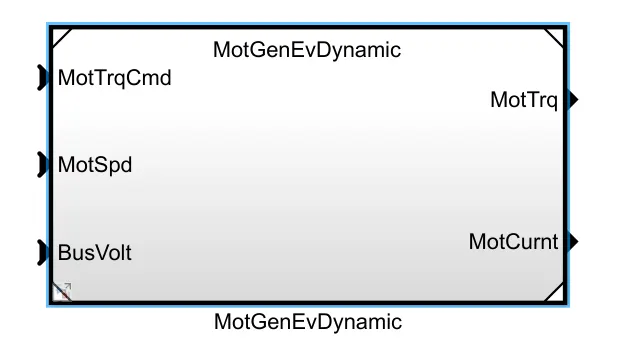
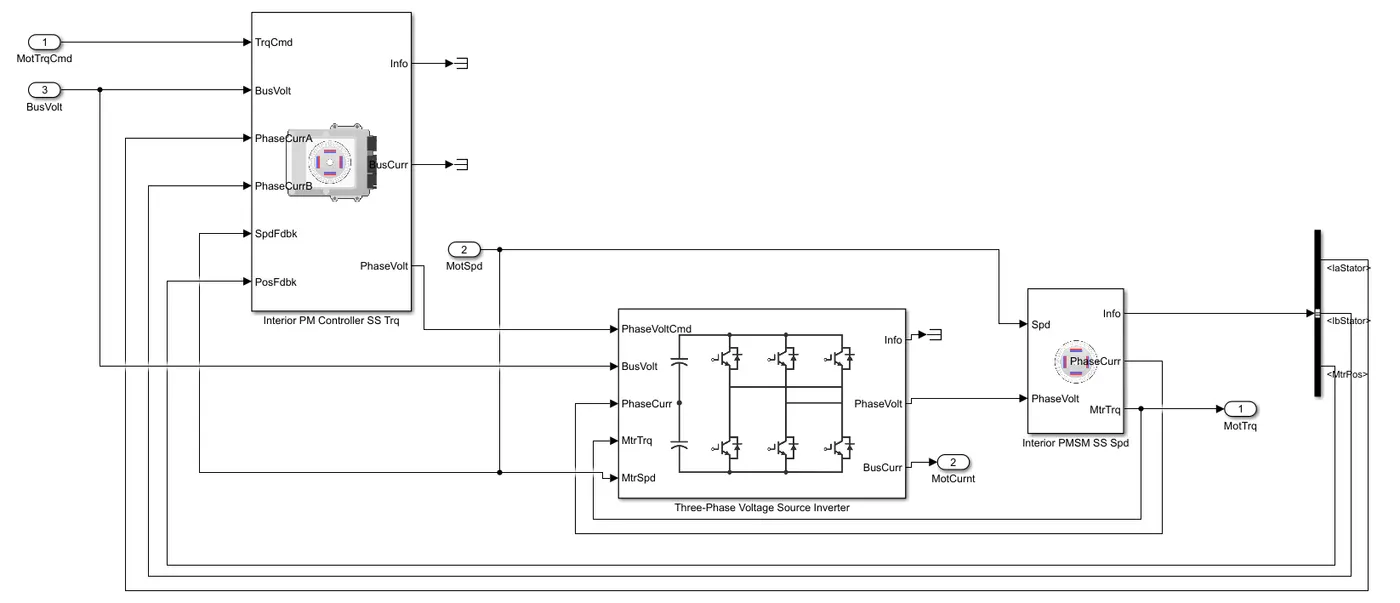
Mapped to Dynamic Model:
To change from a mapped model to a dynamic model, you would need to create or obtain the necessary dynamic equations that describe the behavior of the device over time.
This may involve defining differential equations, control algorithms, and additional parameters that capture the transient behavior of the device.
Implement these equations and algorithms in the simulation software or tool you are using.
Dynamic to Mapped Model:
To simplify a dynamic model into a mapped model, you would typically need to identify the key steady-state behavior and characteristics of the device.
Develop empirical or analytical relationships that capture this steady-state behavior.
Create lookup tables or simplified equations based on these relationships.
Replace the dynamic components of the model with these simplified equations or lookup tables.
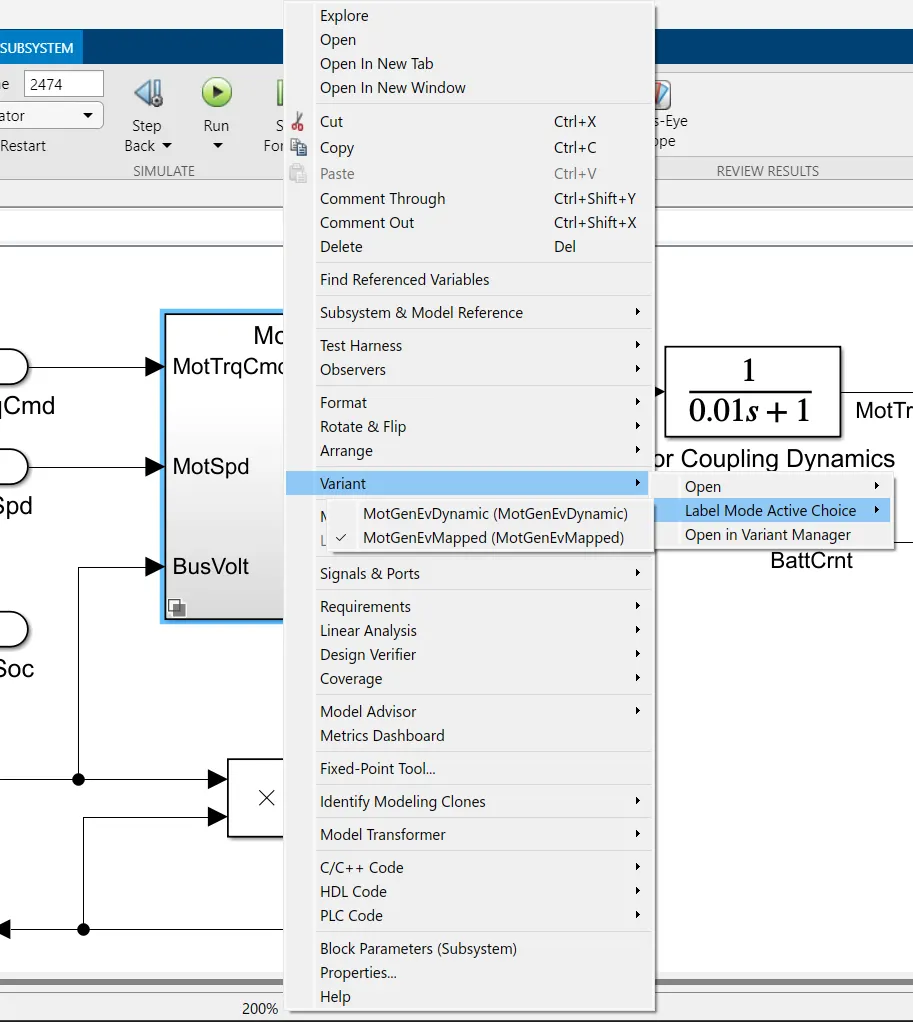
We can switch between mapped and dynamic engines by following below procedures:
1.open the ev model in simulink.
2.enter the passenger car block by double clicking it.
3.then go to electric plant block.
4.inside the motor block right click to find the variant option.
02)
for a conventional gasoline vehicle,the fuel efficiency is calculated via miles per gallon (mpg).however fuel efficiency for hybrid electric vehicles is calculated via miles per gallon equivalent(pge).mpg is the number of miles your car can drive per gallon of gas.figuring out an mpge rating is a littile more complicated.since engines that can use an alternative source of fuel cant be measured by liquid gallons of fuel,the mpge rating is calculated by figuring out the number of milles a vehicle can go using the same energy content as gallon of gas.the epa calculated that 33.7 kilowatt hours of electriccity is equivalent to one gallon of gas.
We should go inside ev reference block that is performance calculations
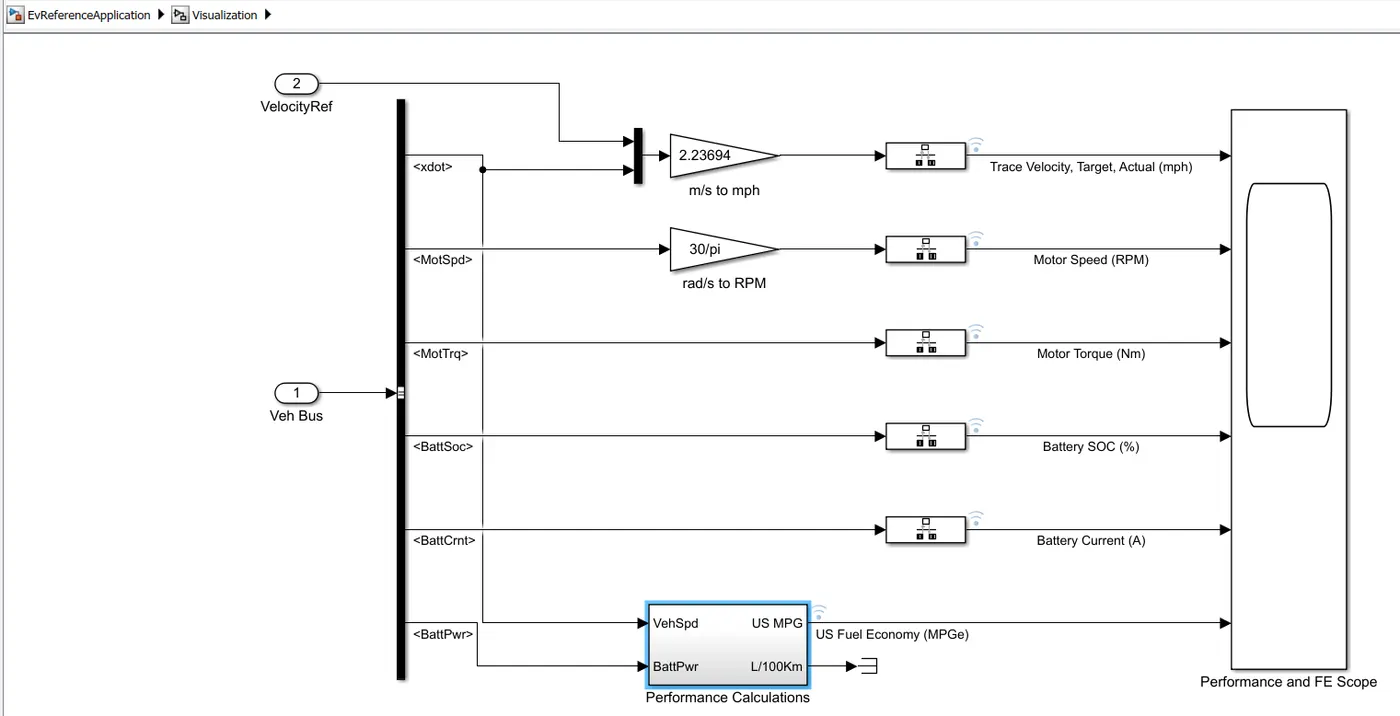
Inside Performance calculation block we will get the Miles per gallon
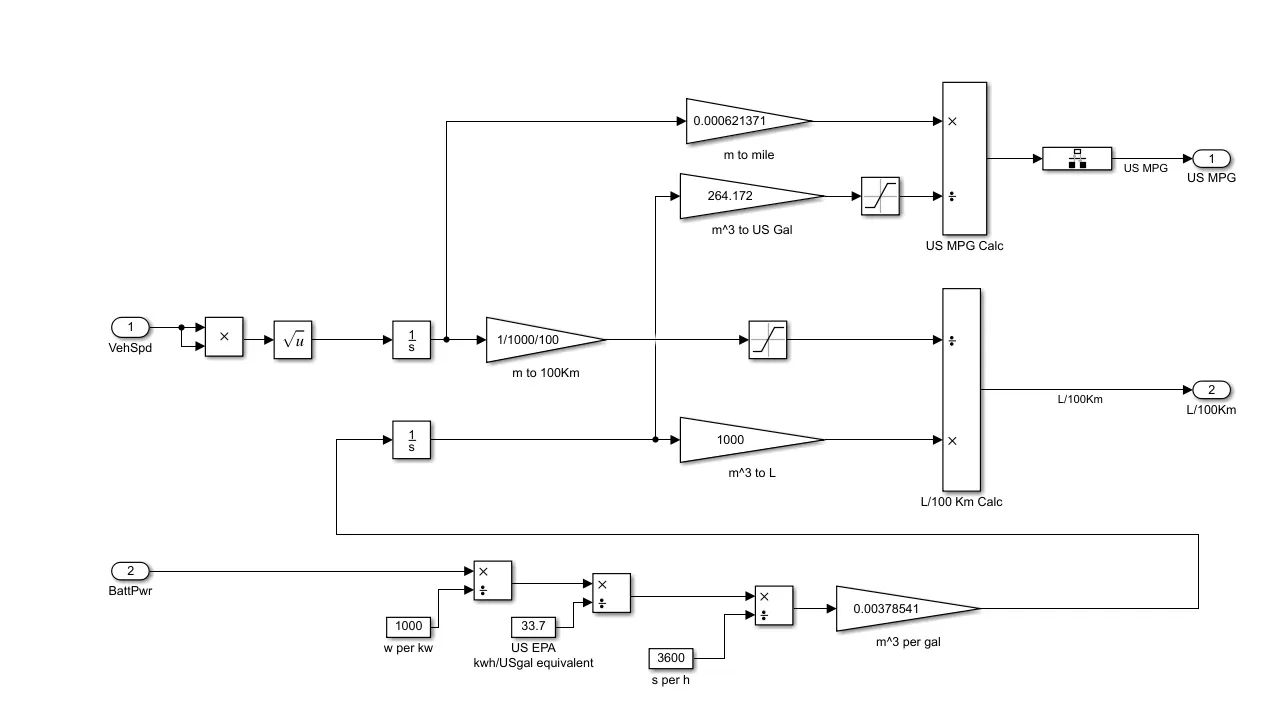
Here,three different inputs are taken into considerations:
1.vehicle speed.
2.fuel flow.
3.battery power.
The vehicle speed inputs is in m/s which is converted into miles by multiplying with 0.000621371.
similarly the kilogram of fuel is converted into cubic meter by multiplying by1/(1000*0.739)
this cubic meter value is then converted into gallons by multiplying it with 264.172.the mile value and gallon value is used to find mpg of the vehicle.
now the battery value is initially converted from watts to kwh by dividing with 1000 and then to gallon equivalent by again dividing it with 33.7(sincw 33.7 kwh=1 gallon)
then divide the value by 3600 to get in per seconds and multiply by 0.00378541nto get the value in cubic meter per gallons.
03)
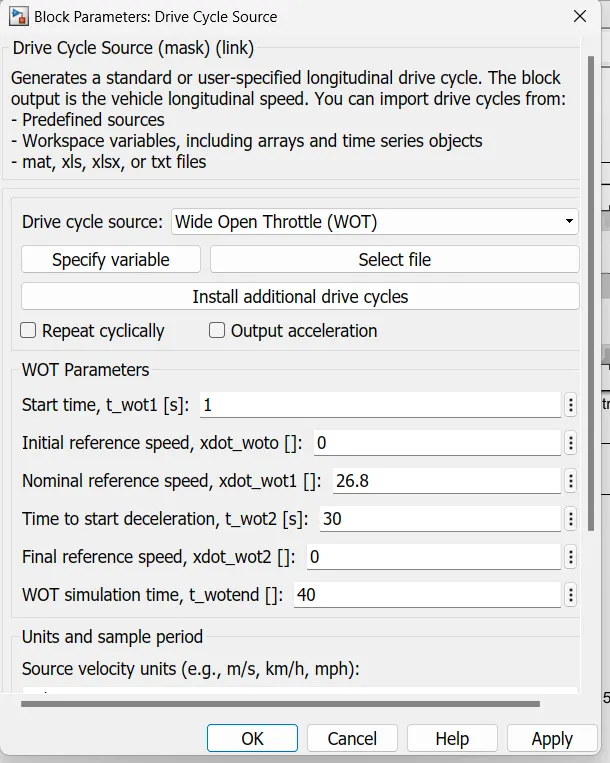
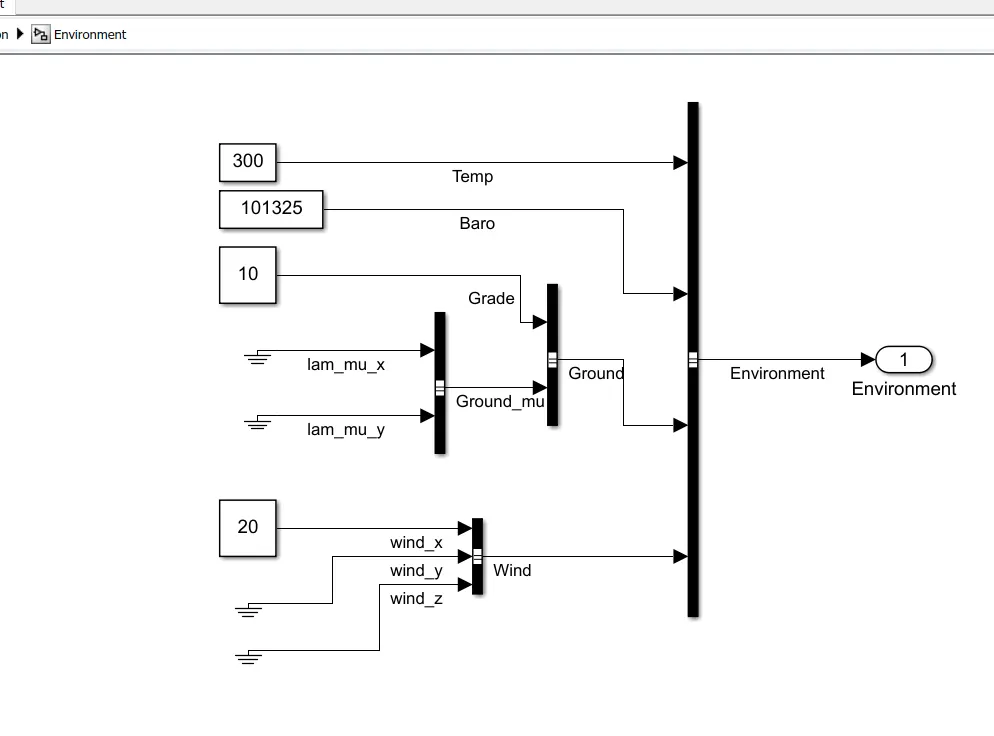
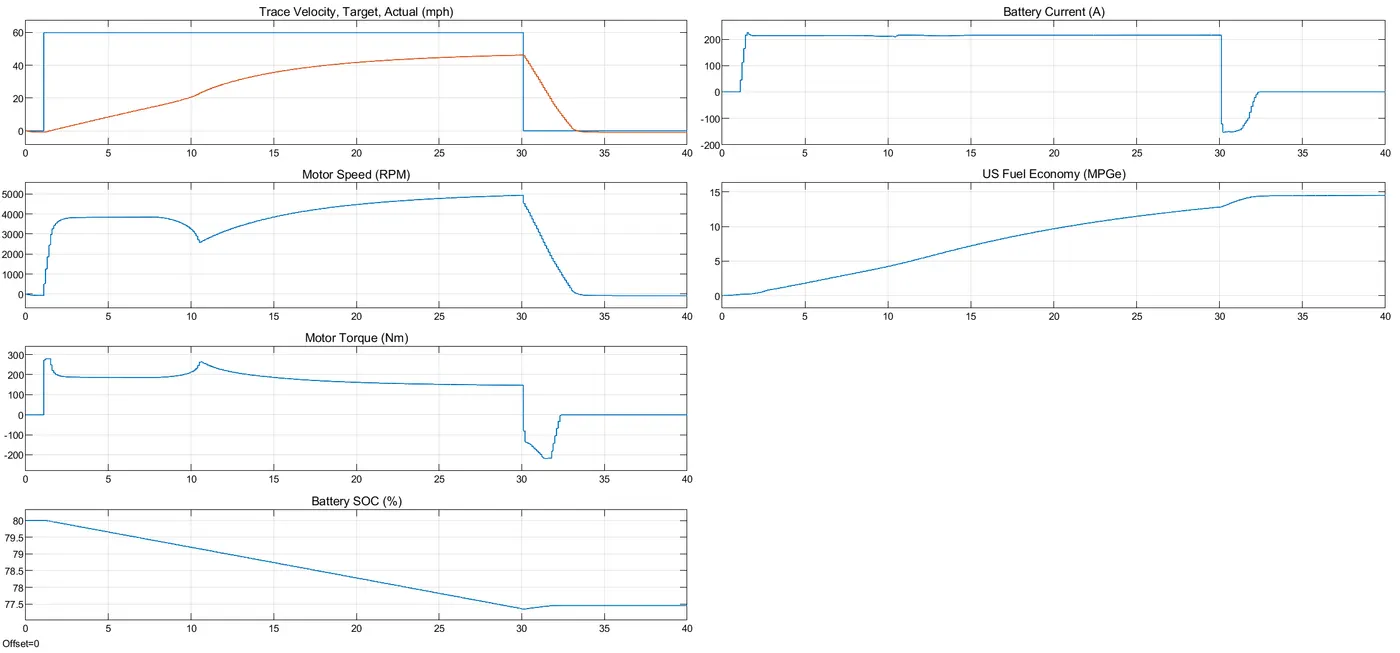
giving Grade as 10 and wind speed 20m/s
Results:
04)
HEV
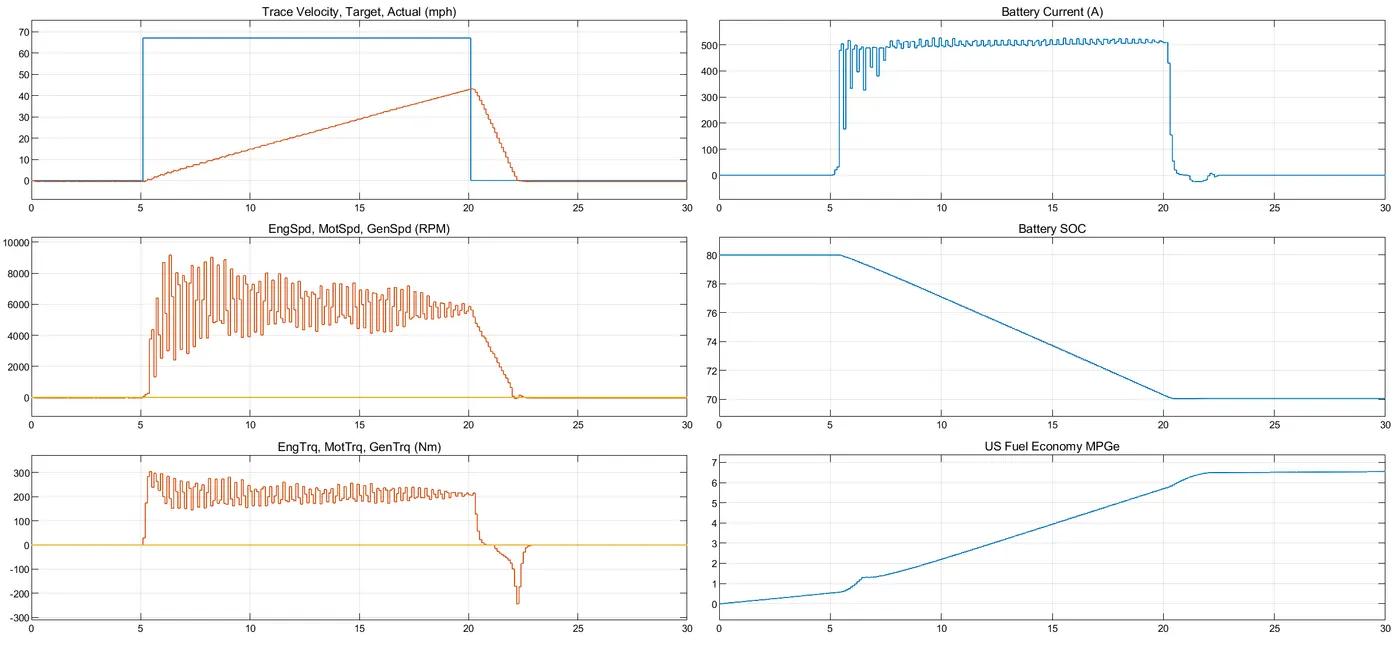
EV