Simulation of Wide Open Throttle (WOT) in HEV and EV using Simulink
WIDE OPEN THROTTLE OF HEV AND EV :-
AIM :-
To simulate power train block set and answer the desired questions mentioned below.
PLATFORM USED :-
- Software – Microsoft Office Excel
SYSTEM SPECIFICATIONS :-
- Manufacturer - DELL
- Model – Vostro 3478
- Operating System - Windows 10
- Processor - Intel(R) Core(TM) i5-8250U CPU @ 1.60GHz 1.80GHz
- RAM – 8 GB
OBJECTIVE :-
To simulate and answer the following questions,
- What is the difference between mapped and dynamic model of engine, motor and generator? How can you change model type?
- How does the model calculate miles per gallon? Which factors are considered to model fuel flow?
- Run the HEV Reference Application with WOT drive cycle. Change the grade and wind velocity in the environment block. Comment on the results.
- Keeping all other parameters same, compare the simulated results of hybrid and pure electric powertrains.
SOLUTIONS :-
1) What is the difference between mapped and dynamic model of engine, motor and generator? How can you change model type?
The difference between mapped and dynamic model are as follows,
Mapped Model :-
- Mapped engines represent macro engine behaviour as a set of lookup tables (brake torque, fuel flow, air mass flow, exhaust temperature, efficiency, and emissions) as functions of commanded load and measured engine speed.
- Mapped engine models are suitable for analysis and design activities that do not require engine subsystem dynamic characteristics, for example, in engine and transmission powertrain matching analysis for fuel economy, emissions, and performance trade-offs.
- Model uses a set of steady-state lookup tables to characterize engine performance.
- The tables provide overall engine characteristics, including actual torque, fuel flow rate, BSFC, and engine-out exhaust emissions.
Dynamic Model :-
- Dynamic engines decompose engine behaviour into individual component models that account for engine dynamics, most notably intake airflow and turbocharger dynamics.
- Dynamic engine models are suitable for designing control, estimator, and diagnostic algorithms that depend on dynamic subsystem states, for example, in closed-loop AFR control algorithm development. Mapped engine models are suitable for analysis and design.
- Model decomposes the engine behaviour into engine characteristics that are separated into lower-level components. By combining components in this way, the models capture the dynamic effects.
Switching over Models :-
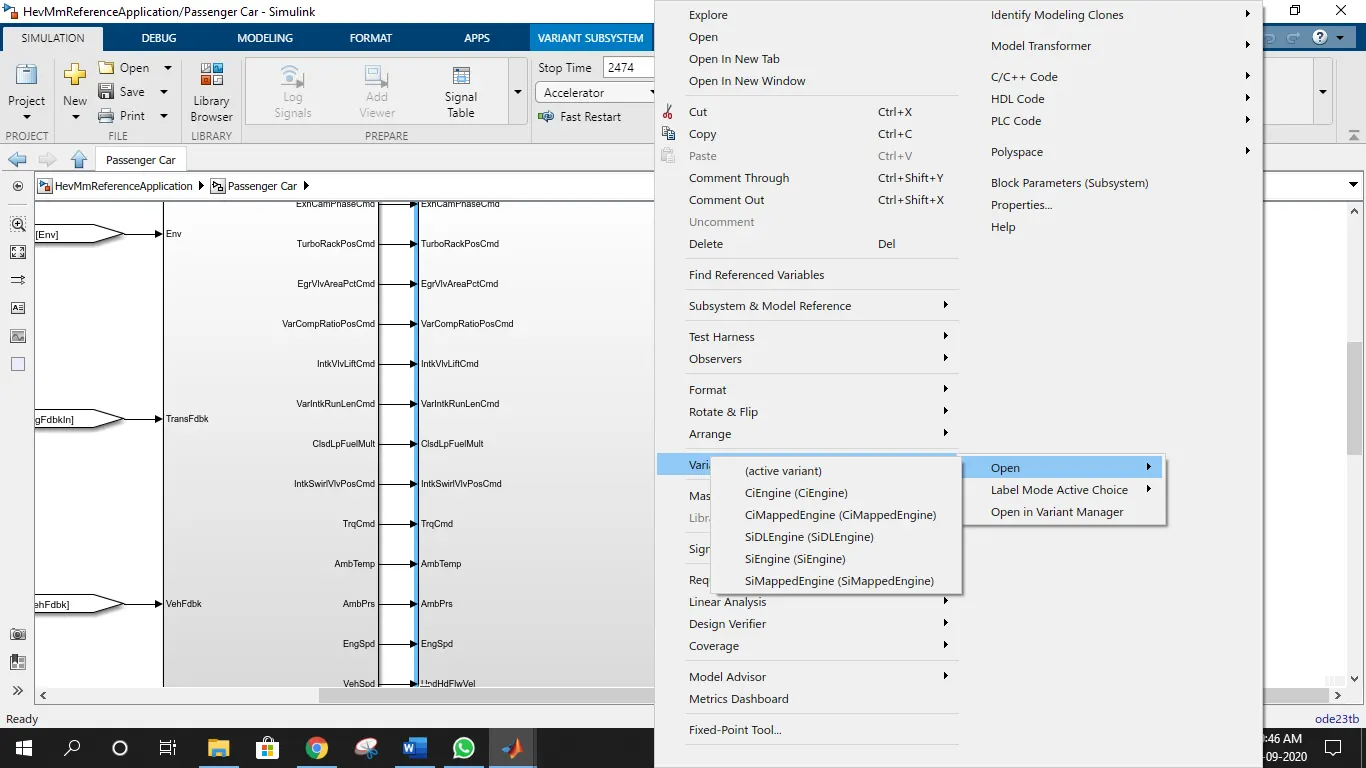
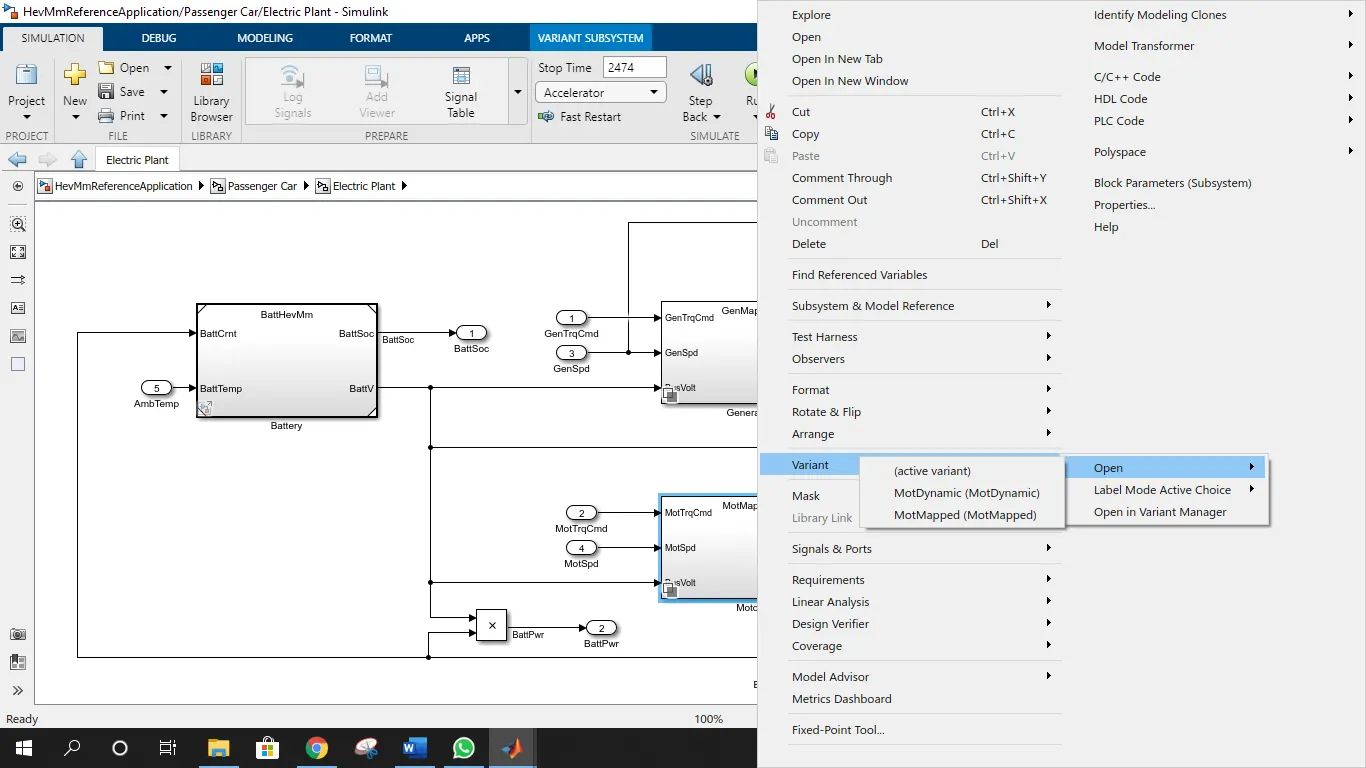
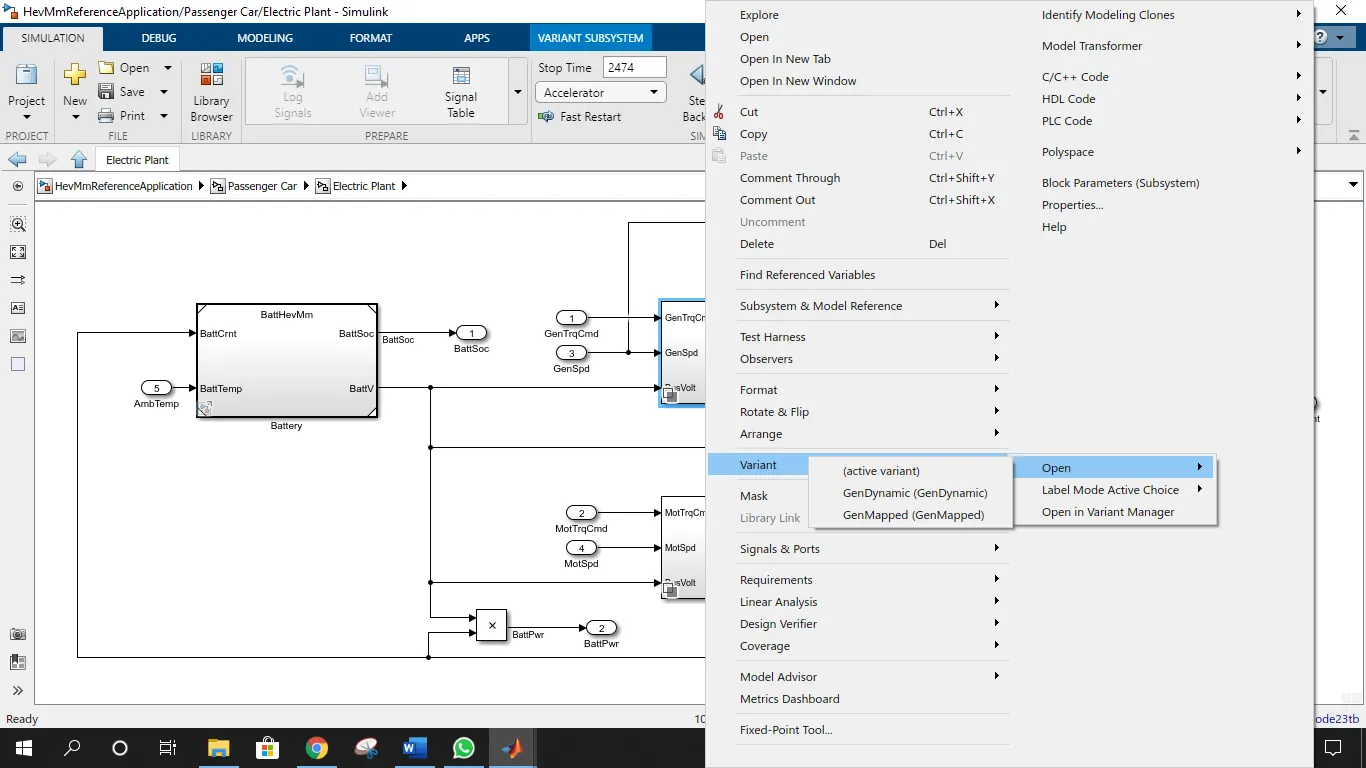
To switch between dynamic and mapped models we need to open up the HEV model and then navigate to passenger car. In that right click on Engine subsystem then select variant to switch over. Switching over for motor and generator is simple that enter electric plant then right click on the motor and generator block select variant to switch over.
Engine Switchover,
Motor Switchover,
Generator Switchover,
2) How does the model calculate miles per gallon? Which factors are considered to model fuel flow?
Miles per gallon (MPG) is a fuel economy rating determined by how far a car can travel on a gallon of gasoline or diesel. Although the metric version would be kilometres per litre, MPG is adopted in many metric-system countries, like Canada.
BLOCK DIAGRAM :-
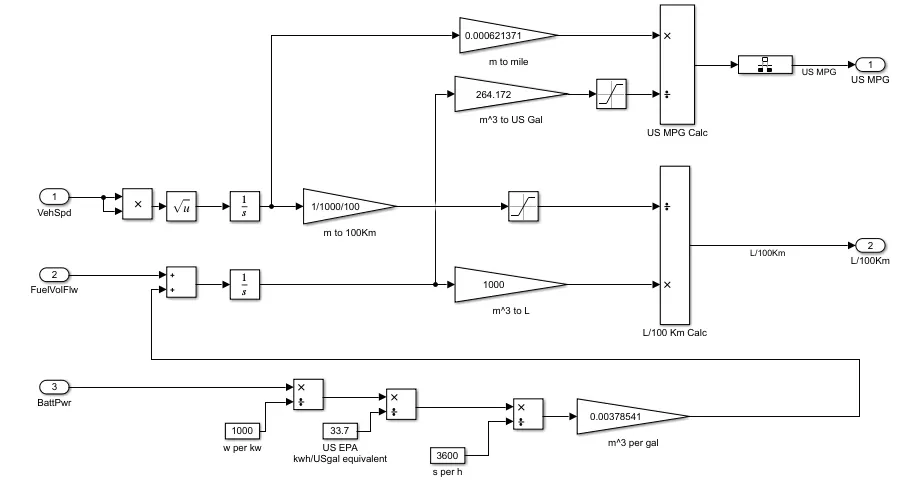
MODEL CALCULATION :-
- The battery power is taken in watt (W) and then divided by 1000 to convert into KW.
- Then the power in KW is divided by 33.7 (KWh/US gal).
- The (US gal/h) value is converted in to (US gal/sec) by being divided by 3600.
- The value is multiplied by 0.00378541 to convert into (m^3/sec).
- The value is taken and added with the fuel volume flow and then integrated so that we obtain it in (m^3).
- Besides that, the vehicle speed is taken and then squared then square root is taken in order to remove the negative values then integrated to obtain speed in (m).
- The (m) value is taken and then divided by the (m^3) value to obtain speed in Miles Per Gallon (MPG).
FACTORS CONSIDERED IN FUEL FLOW :-
- Rapid Acceleration
- Braking
- Weight
- Environment Weather Conditions
3) Run the HEV Reference Application with WOT drive cycle. Change the grade and wind velocity in the environment block. Comment on the results.
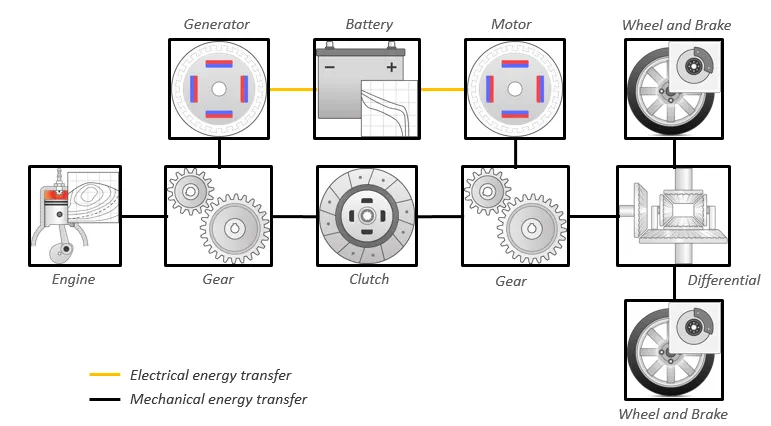
The components in Hybrid Electric Vehicle (HEV) powertrain are as follows,
- Engine
- Gearbox
- Generator
- Battery
- Motor
- Differential
- Wheel and Brake
HEV Powertrain Configuration :-
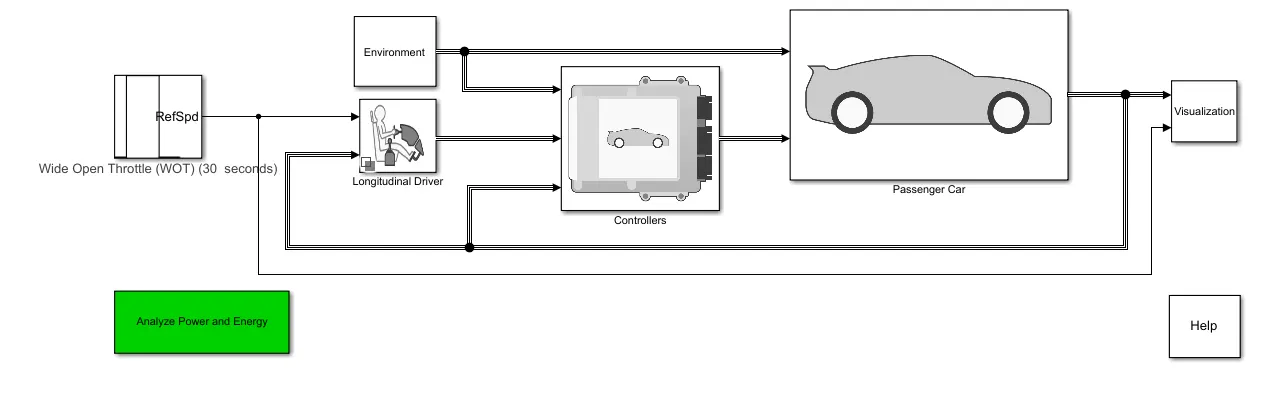
Simulink Model,
Environment Block,
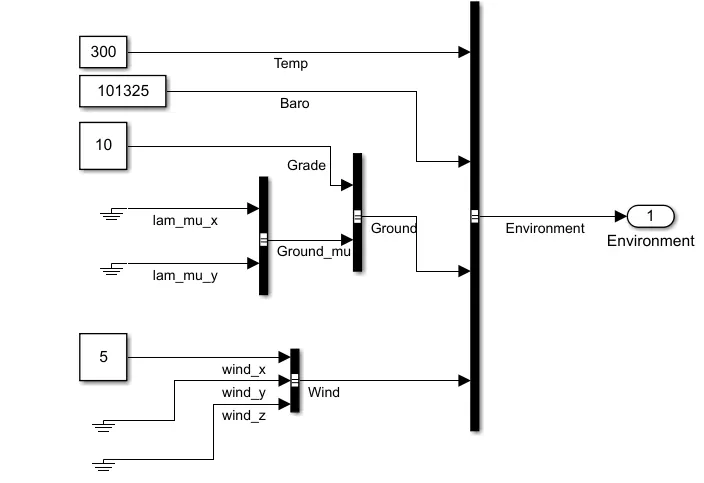
The gradeability and wind velocity is given in order to check the performance of the vehicle.
Simulation Output,
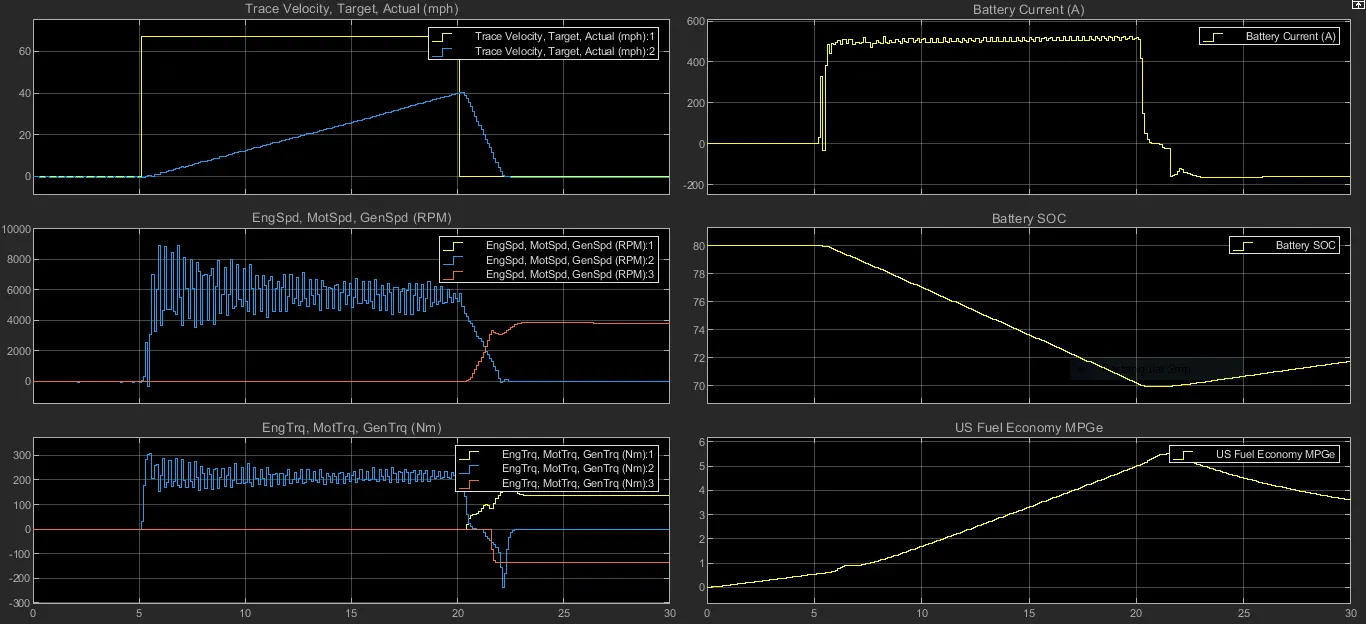
By analysing the above scope we can conclude that,
- The vehicle is at rest from 0-5 sec and then starts accelerating till 20 sec.
- After 20 sec it starts decelerating so that the motor acts as generator and then the battery gets charged through regenerative braking.
- We can see that the State of Charge (SOC) being increased from 20 sec as the vehicle starts decelerating.
- The battery SOC reduces from 80% to 70% while the vehicle is being accelerated so that we can conclude that the battery source is being deployed or used for transmission.
- The maximum battery current being used is around 500 Amps while accelerating and while decelerating -190 Amps so we can conclude it’s being charged.
- Keeping all other parameters same, compare the simulated results of hybrid and pure electric powertrains.
4) Keeping all other parameters same, compare the simulated results of hybrid and pure electric powertrains.
The components in Hybrid Electric Vehicle (HEV) powertrain are as follows,
- Gearbox
- Battery
- Motor
- Differential
- Wheel and Brake
EV Powertrain Configuration :-
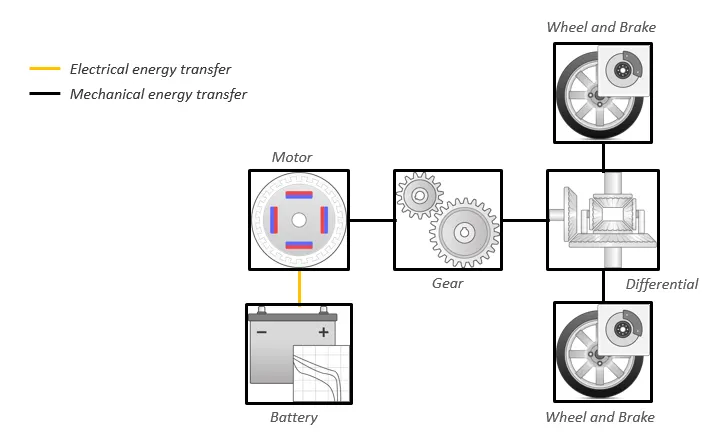
Environment Block,
By keeping all the parameters in environment block as HEV vehicle,
The gradeability and wind velocity is given in order to check the performance of the vehicle.
Simulation Output,
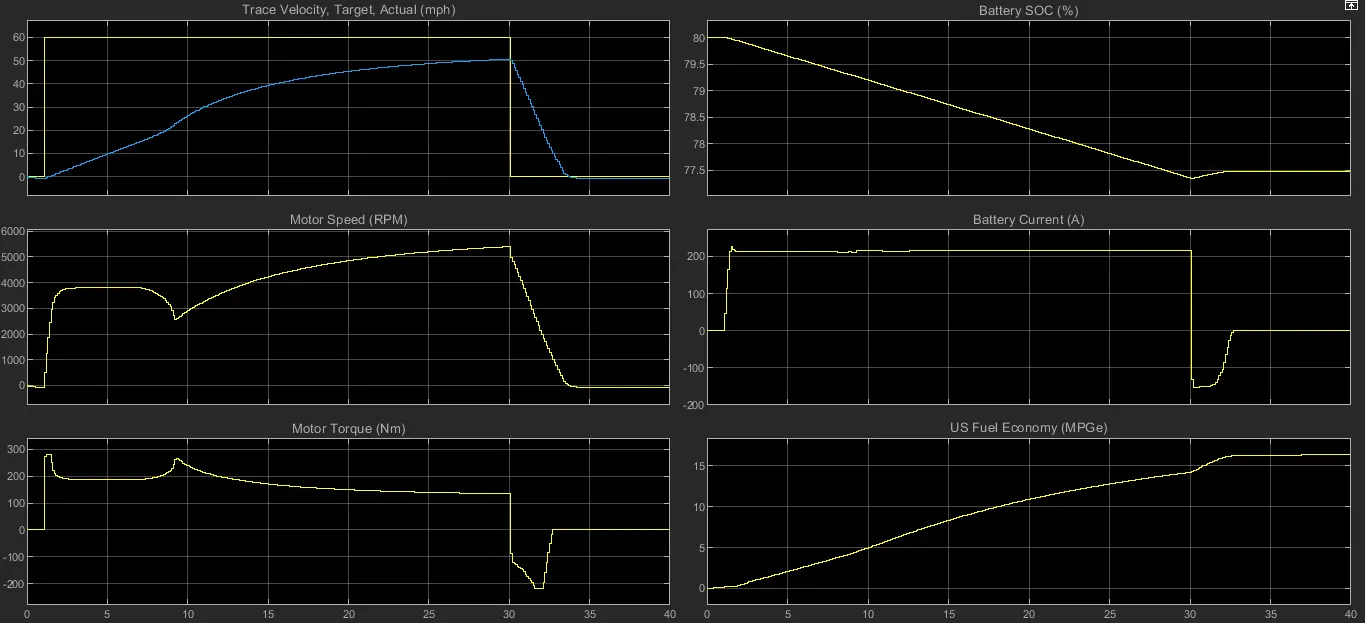
By analysing the above scope we can conclude that,
- The vehicle is at rest from 0-1 sec and then starts accelerating till 30 sec.
- After 30 sec it starts decelerating so that the motor acts as generator and then the battery gets charged through regenerative braking.
- We can see that the State of Charge (SOC) being increased and then stable around 210 Amps.
- The battery SOC reduces from 80% to 77.5% while the vehicle is being accelerated so that we can conclude that the battery source is being deployed or used for transmission.
- The maximum battery current being used is around 210 Amps while accelerating and while decelerating -160 Amps so we can conclude it’s being charged.
- The motor torque reaches around -210 so that it acts as generator to charge the battery and SOC of battery being increased after 30 sec and then being stable around 33 sec where the vehicle acceleration is ‘0’.
HEV AND EV COMPARISION :-