Week 4 Challenge
- Define tooling direction
The Tooling Direction is basically the direction that the mold pulls apart. The mold is built in two separate pieces, basically. You have a Cavity side and you have the Core side. The Core pulls apart from the Cavity and that's the Dyeline or the Tooling Direction.
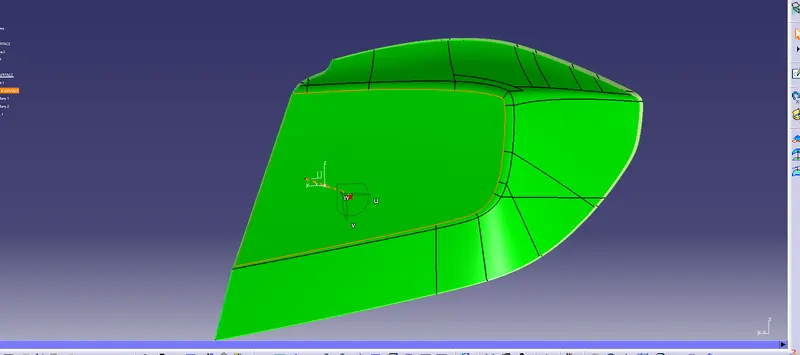
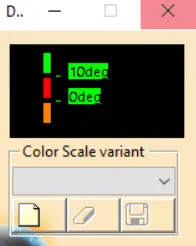
2.Create tooling direction for Class A with 10 deg draft ( draft in command should be 10 deg) and show the draft analysis
Definition parting line :
-
Overview:-
Parting line is most important factor in plastic parts and in plastic part design because it defines boundary of mold parts so it plays a important role in it.
Each plastic part have parting line.Parting line:-
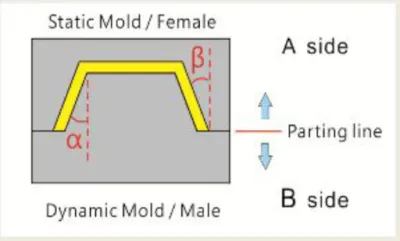
Parting line is the line of separation on the plastic part where two halve of mold meets. Actually parting line indicates the parting 'plane' that passes through the part.
- Ex- Refer Image (1):- Here we have two halve of core and cavity (gray colored parts) and plastic part (yellow Color). Parting line representing separating plane of it.
In simple line, Where mold halve (Core and Cavity) meets with plastic part that line indicates Parting line.- Note:- In Image (1)- Core, Cavity and plastic part is meeting at the edge of plastic part which is known as parting line.
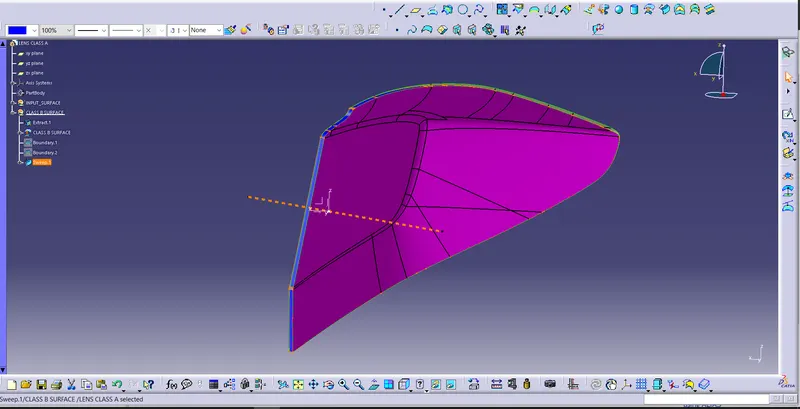
- Create B surface of the given lens in surface modeling (not in part), with 4 mm thickness
Creating tooling direction for Class A with 10 degree draft
1. Open the model
2.Paste special the class A publication in tooling check product and extract this publication in that product
3. Extract the face of the given class A surface using no propogation 4. Create a point on the extracted surface at 0.
5. Create a line with point and direction 6. Using draft analysis toolbar perform draft analysis with 10degree as value
7. Place the compass on the line to evaluate the surafce 8. If any region of the class A falls below 10 degree turn blue if that happens adjust the line using line at an angle or just make slight
adjustment in the compass direction and when the model tums green lock the orientation of compass 9. No modify the direction of line with respect to the compass direction
• Publish the tooling direction.
The tooling axis for the given model with 10degree draft is determined

B surface with 4mm thickness.
1. Copy and paste special the class A skin with link in b surface product file 2. Extract the surface in a new geometric set
3. Offset the surface to 4mm distance 4. Some surfaces may not get offset in that case create the surfaces locally using multi section surface by selecting guides and primary
curves 5. Extract the boundary of the class A extract and the offset
6. Create blend surface between them 7. And for other part create a sweep with respect to the tooling direction with 3degree draft angle inwards
8. Trim the class A and B surfaces with the sweep and make a join of all three. 9. To evaluate whether the surface is closed or not try to apply boundary and it will show enor message, it means the surface is closed.
• Open part workbench and create a close surface to get solid body. • Make sure there are no sharp edges and apply fillets
Add it to a body and make it Boolean to make hassle free updating
Publish the Boolean part body as lens class B surface.
Creating a parting line for thickened Lens
1. After creating the solid body extract the boundary of the model at class B side and this is the parting line of the lens.
2. Make sure that the parting line should be on the B side because if any flash occurs it should be removed or cut off using sharp tools which may damage the aesthetic properties of the lens so to avoid this the parting line is taken on the b side as it won't affect the appearance of the lens.
Related Courses
3. parting line plays major role in avoiding undercuts.