Week 4 Challenge
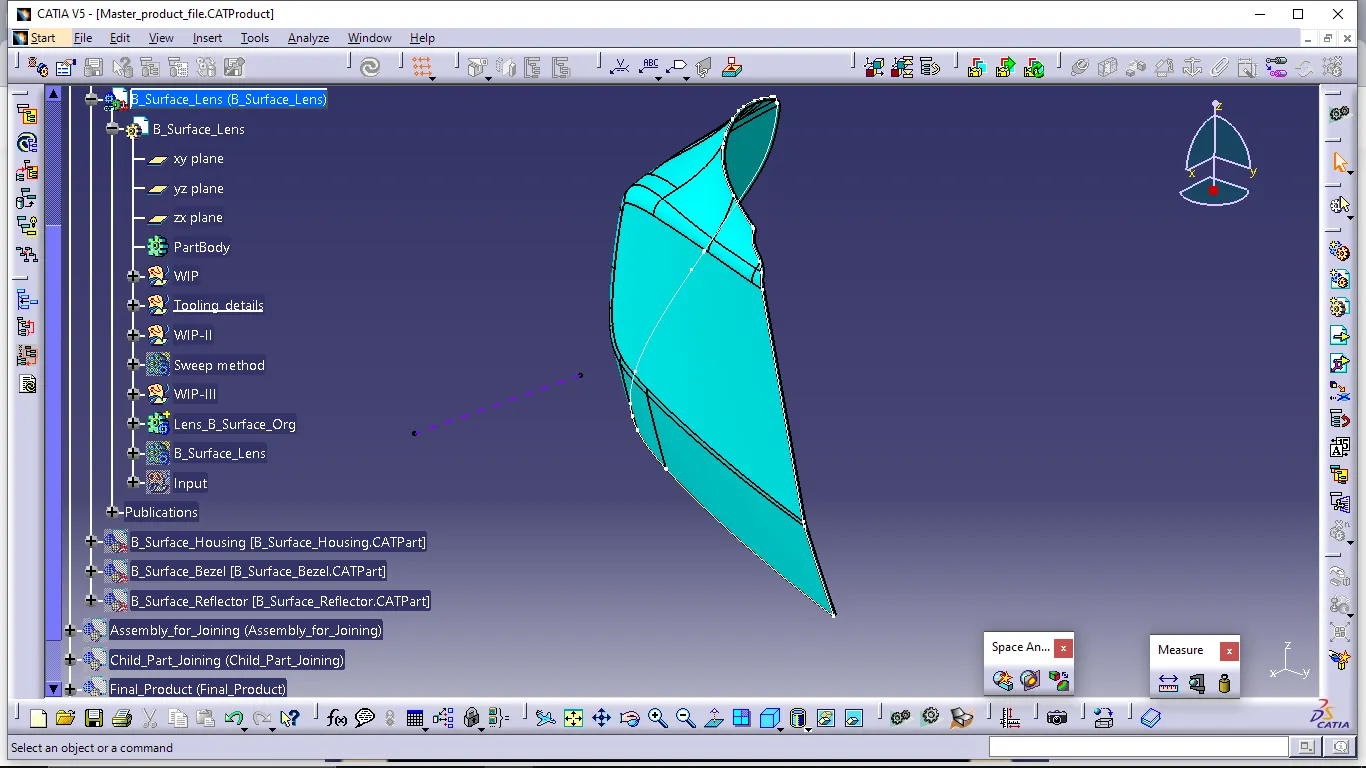
1.Tooling direction
2
.
3.Parting line
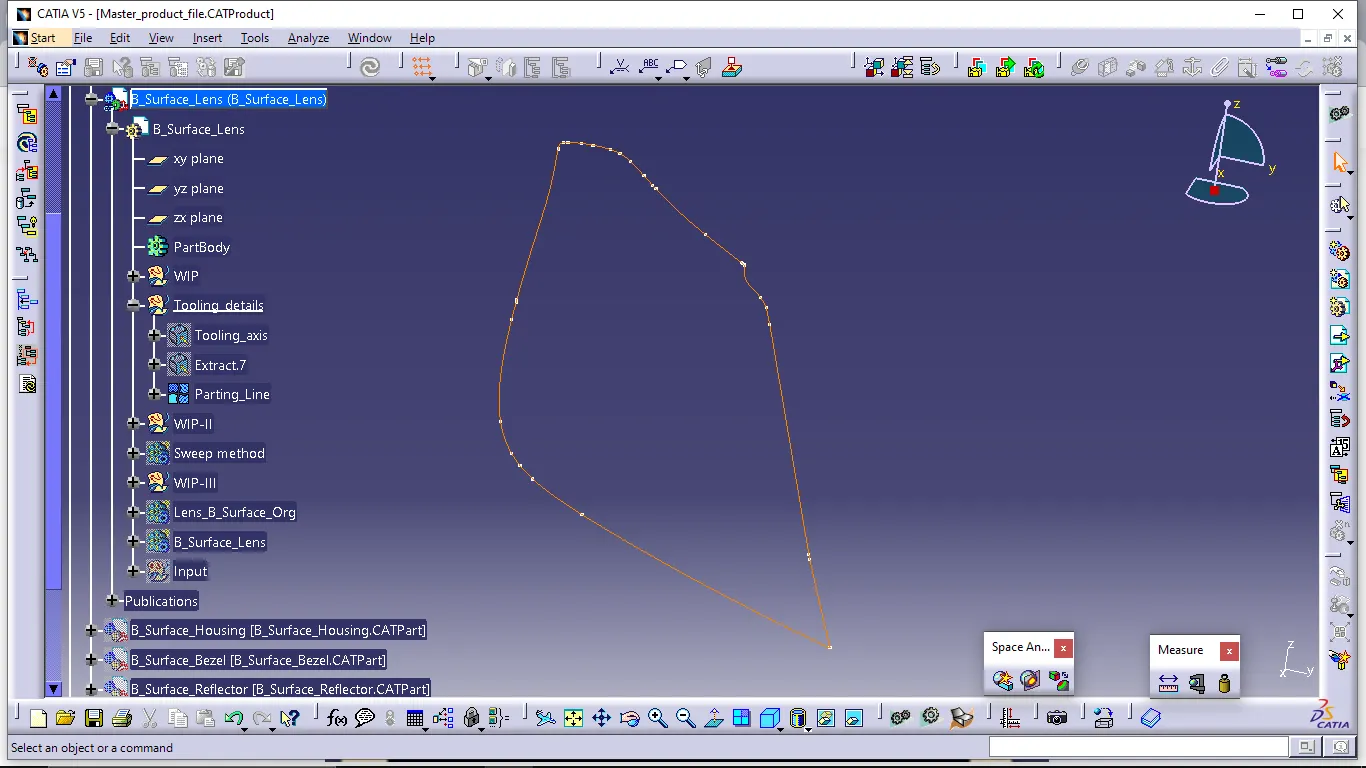
The parting line of a die cast component represents where the two different sides of the mold come together. This line often (but not always) marks the border between the inside and outside of the part. The location of the parting line indicates which side of the die is the cover and which is considered the ejector.
4.
5.
Parting Line Design and Draft Analysis Report for Thickened Lens Mold
1. Introduction:
The objective of this report is to detail the approach taken for designing the parting line for a mold intended for manufacturing thickened lenses. The parting line is a critical element in mold design, influencing the ease of mold separation and the quality of the final product.
2. Initial Considerations:
Before proceeding with the parting line design, the overall geometry and requirements of the thickened lens were carefully studied. Key considerations included the thickness distribution, lens profile, and any potential undercuts that might complicate the molding process.
3. Parting Line Definition:
The parting line was strategically placed to divide the mold into two halves, ensuring that it aligns with the natural separation points of the lens geometry. Attention was given to maintaining a balance between simplicity and accuracy to facilitate mold assembly and disassembly.
4. Draft Analysis:
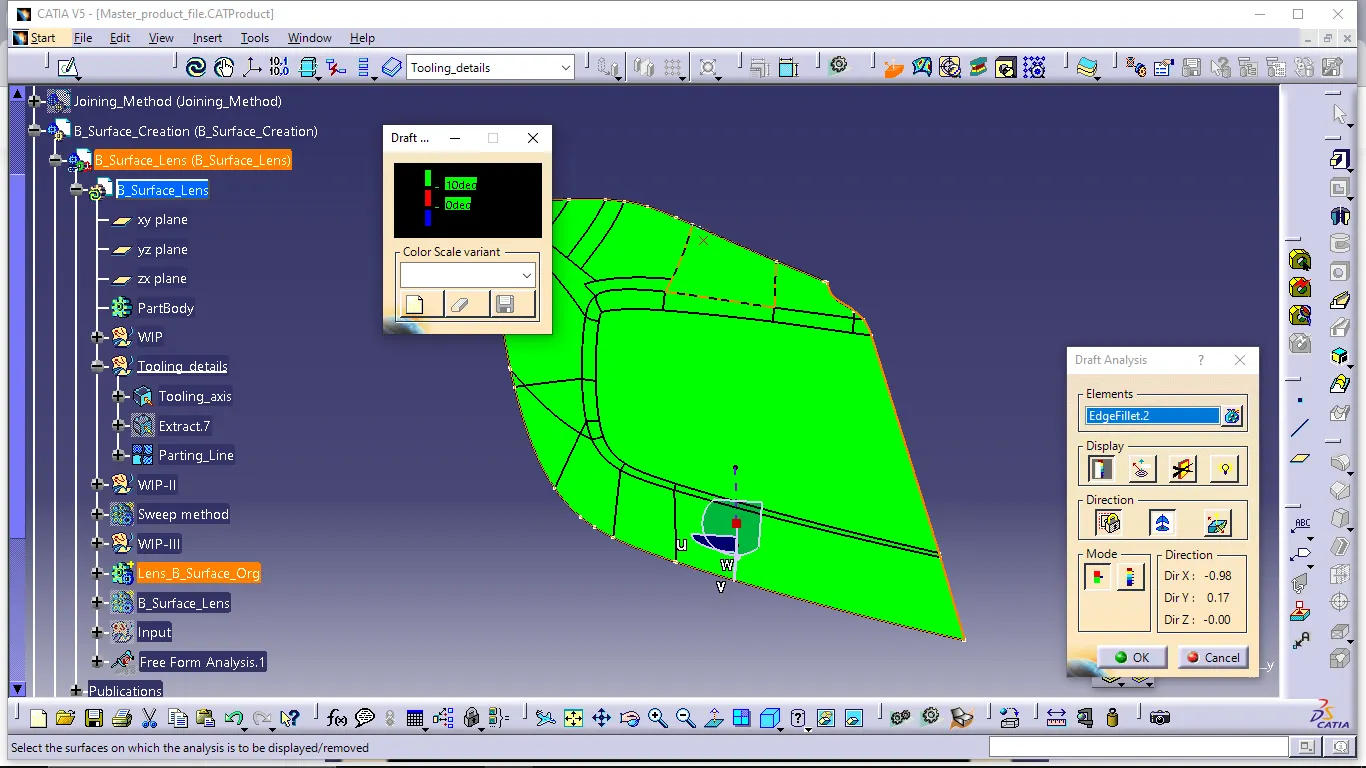
Draft analysis is a crucial step in mold design, helping to prevent issues such as sticking, flash, or other molding defects. The following steps were taken for draft analysis:
a. Identification of Critical Areas: Critical areas with high curvature and potential undercuts were identified. These areas included the transition zones and intricate features of the thickened lens.
b. Application of Draft Angles: Draft angles were applied to the mold surfaces, ensuring that the mold could be easily released from the formed lens. The draft angles were optimized based on the material properties and demolding requirements.
c. Review of Undercut Areas: Undercut areas were carefully examined, and provisions were made to eliminate or minimize them. Additional mold features, such as slides or lifters, were incorporated where necessary to facilitate smooth demolding.
5. Iterative Design Process:
The parting line and draft angles were not fixed in the initial design but were refined through an iterative process. Moldflow simulations and prototyping were employed to validate the design and make adjustments as needed for optimal molding conditions.
6. Final Parting Line Design:
The final parting line design is a result of a comprehensive analysis that balances ease of manufacturing, optimal draft angles, and the elimination of potential molding defects. The parting line is strategically located, ensuring efficient separation of the mold halves during the demolding process.
7. Conclusion:
The approach to designing the parting line for the thickened lens mold involved a careful analysis of the lens geometry, consideration of draft angles, and iterative refinement. The final design aims to enhance mold assembly and demolding while ensuring the production of high-quality thickened lenses.