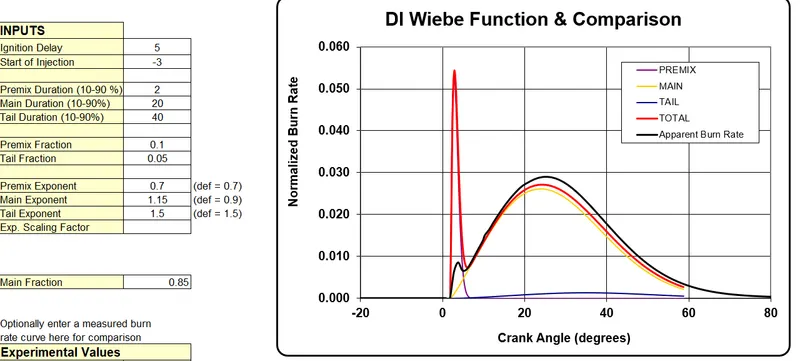
Week-4 : Basic Calibration of Single cylinder CI-Engine
1Compare
SI engine CI engine
1) It works on OTTO Cycle or constant volume heat addition. 2)It works on DIESEL Cycle or constant pressure heat addition.
2)During the intake or suction process, air and fuel are used. 2)During the intake or suction process, only air used.
3)The fuel used Petrol which is highly volatile. 3)The fuel used Diesel which is low volatile. Self-ignition temperature is low. Self Ignition temperature is high.
4)The fuel is supplied by Carburetor. 4)The fuel is supplied by Injector.
5)It is used in Small Vehicles. 5)It is used in Heavy Vehicles.
6)The compression ratio is 6 to 10 6)The compression ratio is 16 to 20.
7)The maintenance cost is low. 7)The maintenance cost is high.
2)BSFC
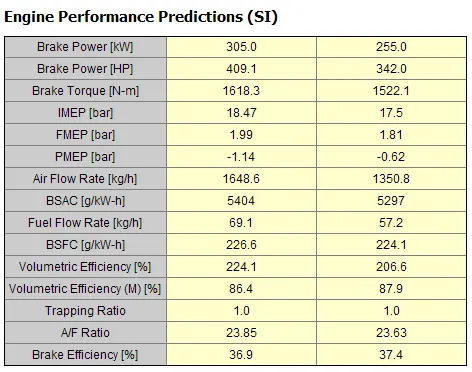
1) Here we get 226.6 and there 2 volumetric efficiency that is volumetric efficiency and volumetric efficiency (m). In turbo charger we get 2 volumetric efficiency.
2) One volumetric talks about ambient and another talks about manifold conditions when it comes to ambient it shows 100% because we are compresssing dense air which results i more air combustion chamber.
3) In manifold condition both pressure and temperature is at higher side.
# A/F ratio-The ideal (theoretical) air fuel ratio, for a complete combustion, is called stoichiometric air fuel ratio. For a gasoline (petrol) engine, the stoichiometric air fuel ratio is around 14.7:1. This means that, in order to burn completely 1 kg of fuel, we need 14.7 kg of air. The combustion is possible even is the AFR is different than stoichiometric. For the combustion process to take place in a gasoline engine, the minimum AFR is around 6:1 and the maximum can go up to 20:1.
Air fuel ratio formula
FAR=mfma=1AFR
3)Exhaust temperature
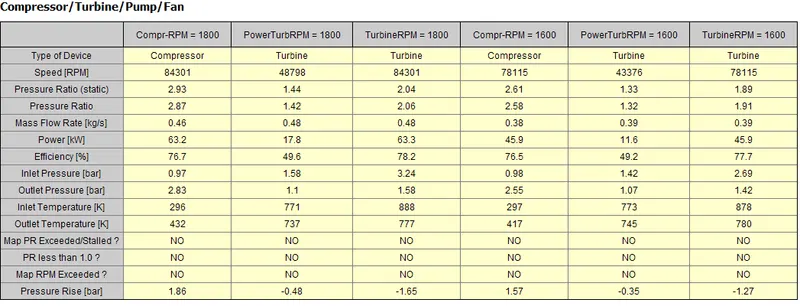
The conservation of energy formula of PV = nRT is the best way to explain this; the pressure at the turbo charger inlet is greater than the pressure at the exhaust manifold; this increase in pressure is a result of the resistance in spinning the turbo. An increase in pressure means the temperature will increase if the other variables remain constant. And in above table we have both inlet and out let temperatures.
3)MFB 50