Pre-processing of a bottle cap
PRE-PROCESSING OF A BOTTLE CAP
AIM:
The aim of this project is to do a geometry cleanup and to generate a 2D mesh for the mid-surface extracted from the plastic component. Furthermore, mesh refinement is done so as to satisfy certain mesh quality criteria.
PROCEDURE:
1. Importing CAD:
The CAD geometry designed by a CAD/Design engineer can be imported into the ANSA software either as a .step or as a .iges format. These are the most popular CAD formats that ANSA recognizes.
It is recommended to set a specific limit on tolerance and resolution prior to importing the CAD.
2. Geometry cleanup:
There is a high chance that the imported CAD may face having some errors. These errors may include orientation issues, duplicate or missing surface, sharp edges (which could cause errors while meshing), etc.
- A mesh perimeter of 1mm is set for the global model.
- Perform a topology cleanup using the Faces-> Topo.
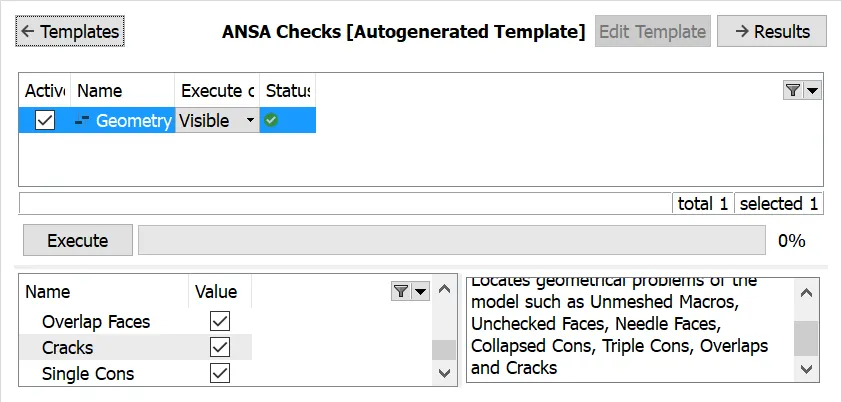
- Do a geometry check for single, double, and triple cons and eliminate those that may cause geometrical errors.
In case the disorientation of cons are moderate then the ANSA Autofix option could eliminate certain errors.
3. Midsurface extraction
Since this model is a casting part, auto midsurfacing using the Skin option is invalid. Since MidSurf-> Skin is only applicable for extruded or processed sheet metal parts and not for cast solids. Hence for such cast pattern parts MidSurf-> Casting is valid for auto extraction.
However, since the model consists of variable thickness, intricate small and un-symmetrical components, the auto mid surface extraction would not give a proper result.
Below is shown the end result upon auto Mid-Surfacing using the casting method.
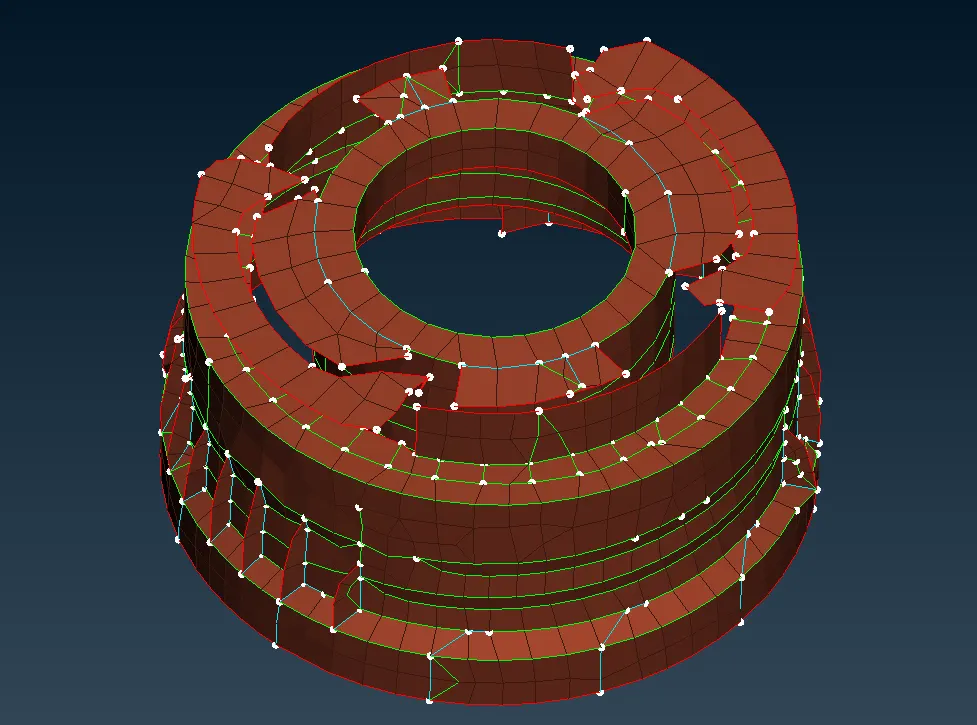
It can be clearly seen that the auto feature failed to give us satisfactory results. Furthermore, for accurate results post solver computation, a fine account of mesh has to be maintained, and by increasing the mesh elements would further complicate the auto mesh process due to low computational power.
Hence shifting to manual mid-surfacing seems to be the viable option.
Manual MidSurfacing
-The tapered part around the outer ends of the model are midsurfaced using the Faces-> Middle command.
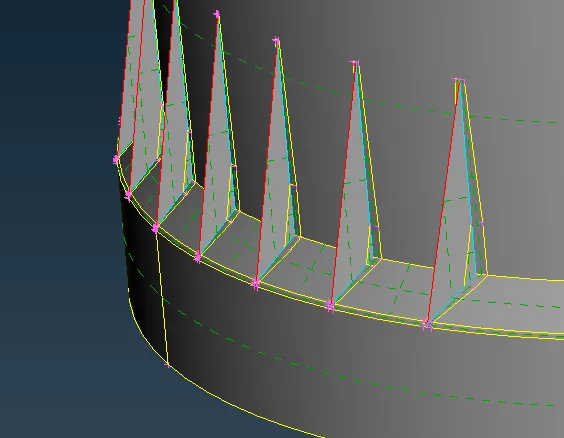
- The cons of the eliminated component may cause issues in the mesh flow. Hence these can be cut off.
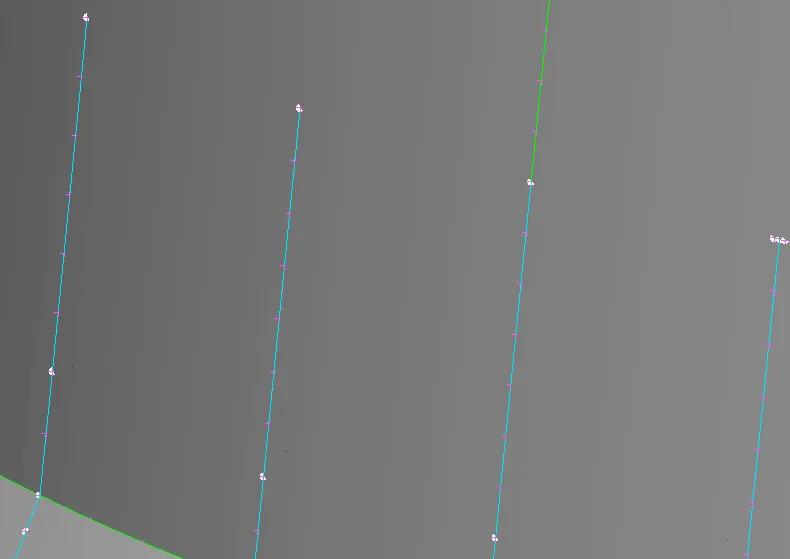
- Another component can be midsurfaced manually either using the Faces-> Middle-> Multi command or by creating a curve in the middle of the cons and creating a new face.
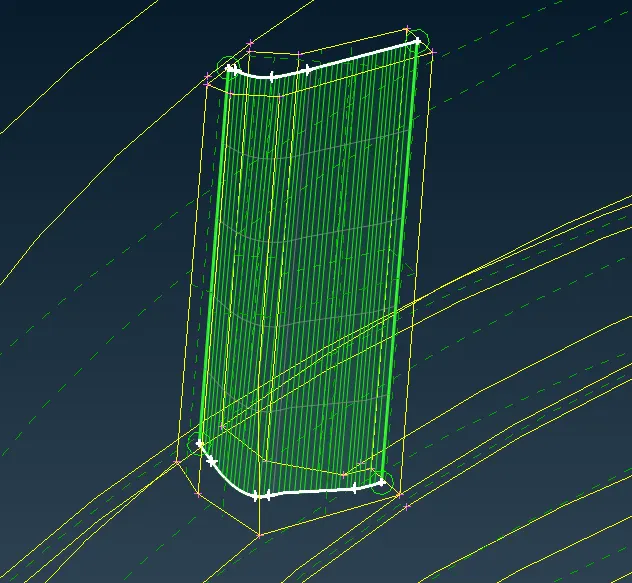
Out of the two, the latter seems to give a more appropriate smooth result.
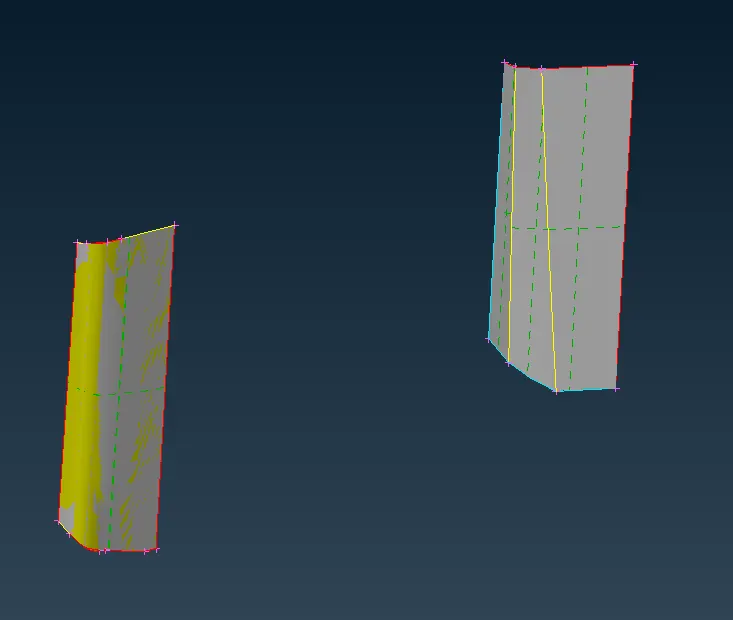
- The bottom end of the model, though having many curves, the components is connected and symmetrical. Hence the Offset command can be used to extract the midsurf.
Hence, the thickness of the component should be measured. This can be achieved either by creating two "Weld spots" on both opposite faces or to get more accurate result the Hotpoint at the bottom face can be projected perpendicular to the top face using the HotPoints-> Project command which gives us a depth of approx. 1.5mm
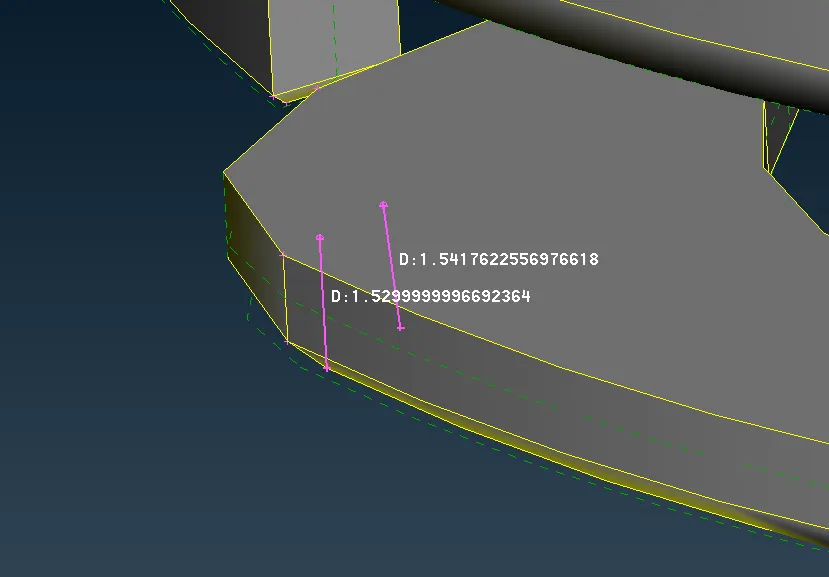
- The outer surface of the bottle cap model can be easily extracted by measuring the thickness between the cons and performing a face offset operation.
-The same can be done for the inner shell surface using the offset command
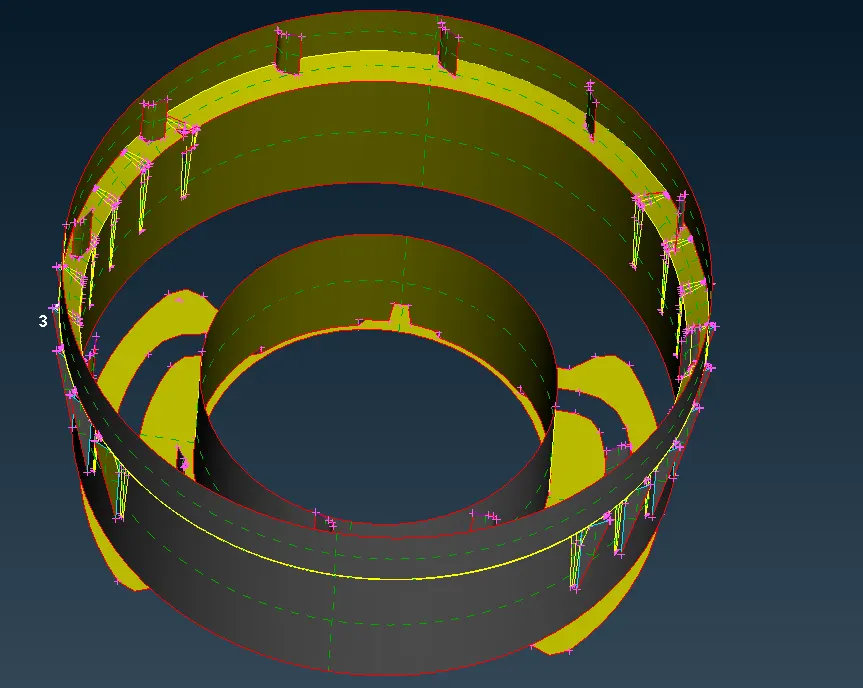
- The curved bottom part can be extracted for midsurface using the MidSurf Multi command prior to which a con has to be cut on one of the face to separate that component from the rest.
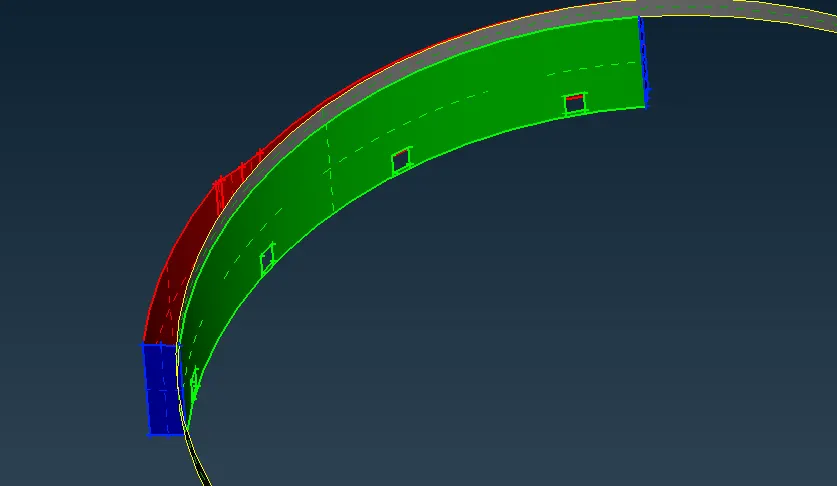
- The threads on both the inner and outer surface can be modeled as a rectangular strip with the same width as the thread since extracting a mid surf from a trapezoidal thread is nearly impossible.
This can be achieved by creating a curve in the middle of the thread using the Curves-> Middle feature and projecting it onto the surface and finally creating a new face using the Faces -> New command.
- The teeth component can be easily transformed as a pattern about an axis.
To accomplish this, two curves are extracted from the cons from which a new face is created. To pattern this face about an axis, two COG points are defined at different Z coordinates (height) to define the axis of rotation. About this axis, the pattern can be replicated for a step of 35 times with an angle of 10 deg.
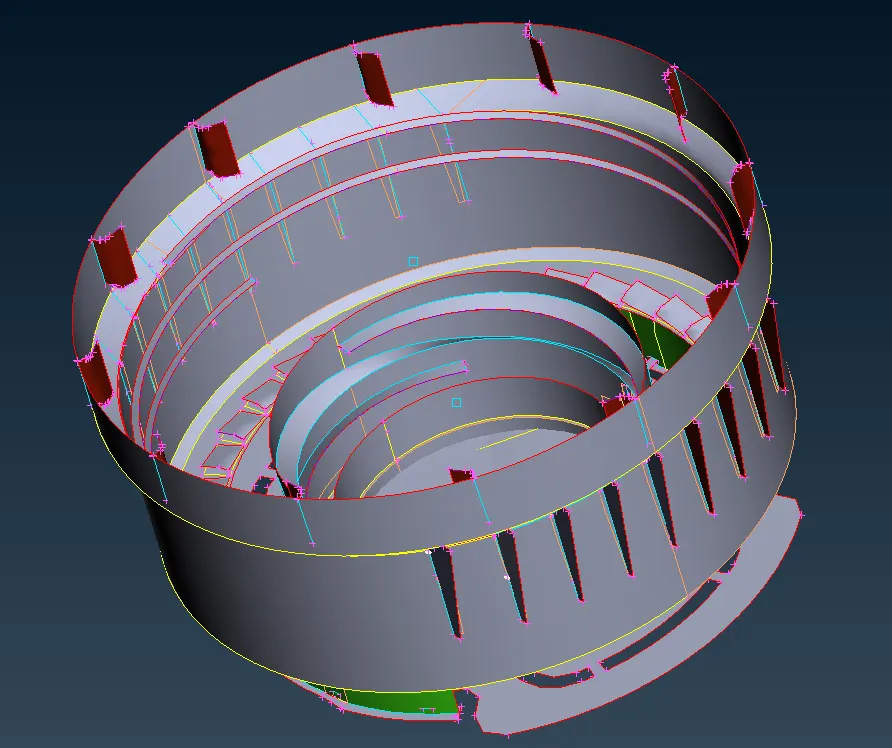
-Finally, the mid surface extracted are adjoined together using the Faces-> Extend & Intersect commands.
This helps us ensure that each manually extracted mid surface of components is connected to each other as in correlation to the design of the parent model.
Mid-Surface result
3. Meshing
Meshing is done on the extracted mid-surface for a target length of 1mm.
The quality criteria to be maintained is shown below,
|
1 |
Target/Average length |
1 |
|
2 |
Minimum Length |
0.5 |
|
3 |
Maximum Length |
3 |
|
4 |
Aspect |
3 |
|
5 |
Warpage |
15 |
|
6 |
Skewness |
45 |
|
7 |
Jacobian |
0.7 |
|
8 |
Minimum Quad Angle |
45 |
|
9 |
Maximum Quad Angle |
135 |
|
10 |
Minimum Tria Angle |
30 |
|
11 |
Maximum Tria Angle |
120 |
|
10 |
Tria Percentage |
15 |
- Meshed elements with aspect ratio below the nominal value (3) were corrected either by removing unnecessary hotpoints or by creating quads from adjacent cells.
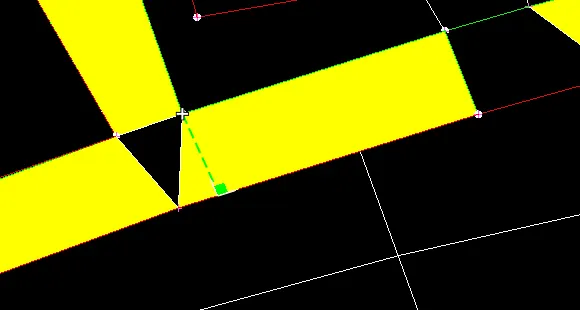
- Intricate patterns were separated from the rest using cons so a smooth mesh flow can be obtained at large areas.
- Elements with quality issues were refined at the best using the commands available in the Elements subtab.
Finally, an acceptable mesh is generated with less than 3% of tria elements.
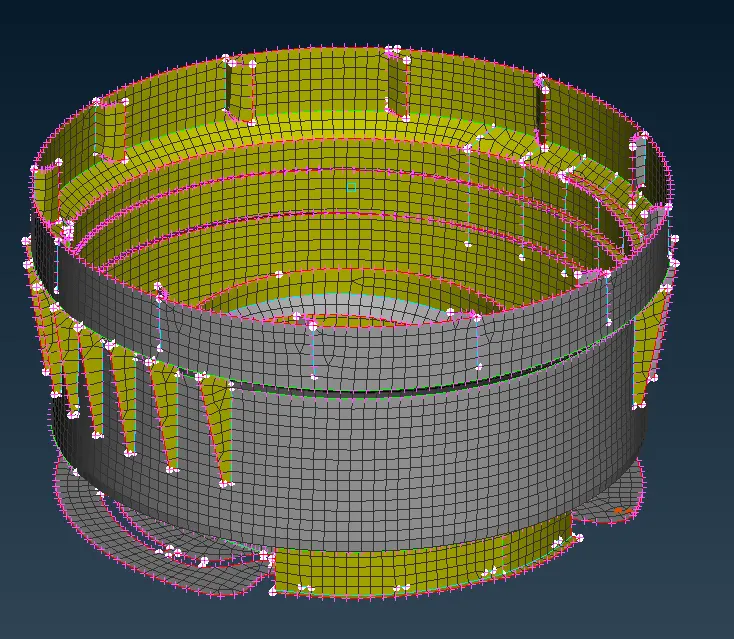
The mid-surface part can then be viewed with its assigned property thickness with respect to its parent object in the presentation parameters toolbar-> View shells as solid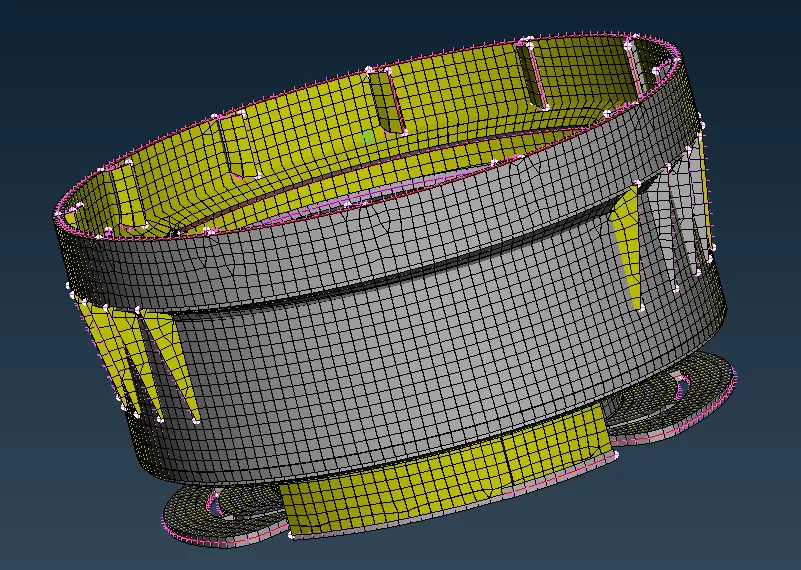
CONCLUSION:
Hence the objective of extracting mid-surface of the component manually and performing 2D mesh on the component was accomplished while satisfying the quality parameter for most of the elements and will a result of less than 3% of tria elements than the nominal 15%.
Learning Outcome:
1. In-depth knowledge of extracting mid-surface from highly intricate, un-symmetrical components with varying thickness
2. Mesh refinement with more new features of eliminating quality issues in ANSA