Week 3 Verification of Weld Joints
AIM :
To Performing a simulation for Verifying the weld joints by using different materials against the applied load.
OBJECTIVES :
Adding the appropriate material as per our requirement from the engineering data.
Assigning the appropriate material to the component.
Apply a connection between the contact surface.
Discritization of the model.
Apply a Boundary Condition
Calculate Directional Deformation and Equialent Strain on the setup.
PROCEDURE FOR ATTAINING THE OBJECTIVES :
I) CAD Model :
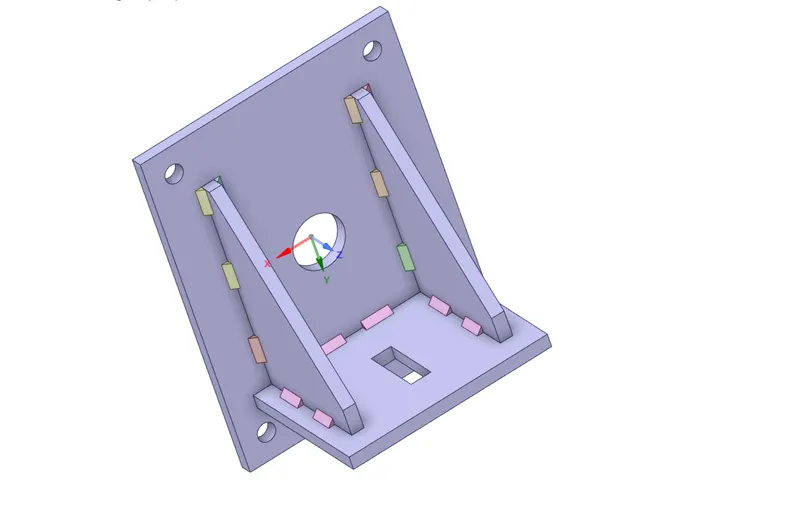
A Bracket component has given from design team. We have to import this model file into Geometry Selection option, inorder to cross check the model on whether given geometry has perfect or not. A model is perfect and it's consists of One Big Plate, One Small Plate, Two ribs and 26 weld joints.
Typically, a big plate is fixed on the wall and we have to apply a load on rectangular face in the small plate.
II) Materials Adding :
We can use those four material as per each case requirement.
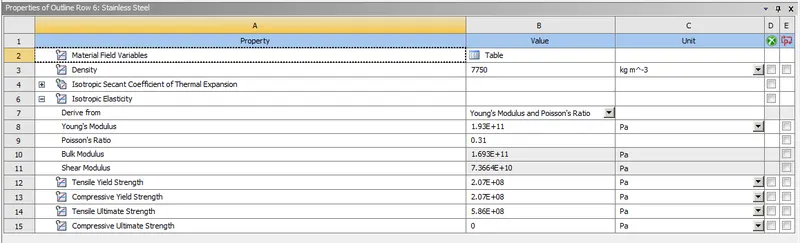
Stainless Steel :
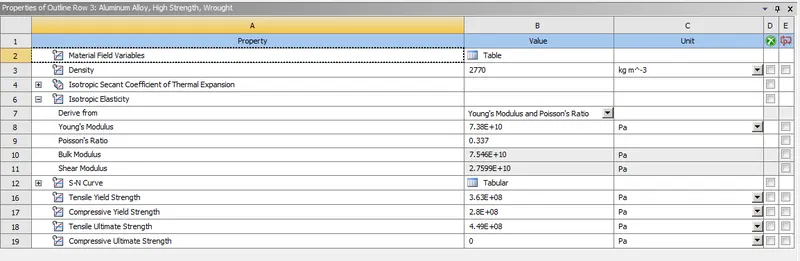
Aluminum Alloy :
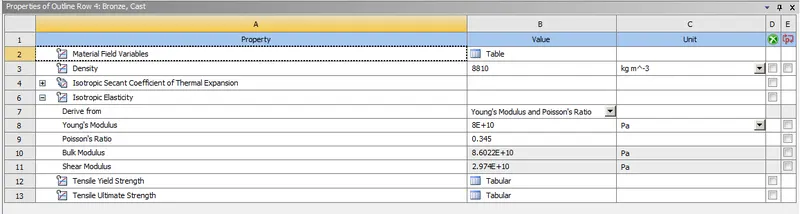
Bronze :
Copper :
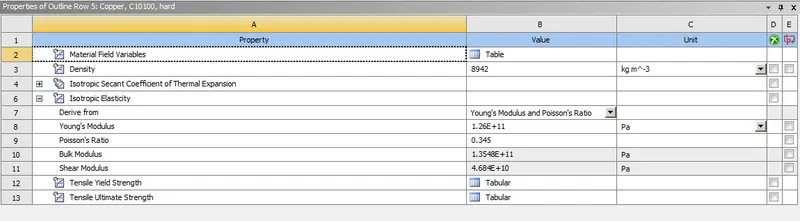
III) Assigning the Materials :
Case 1 :
Assigning the Stainless steel as a material for Big plate, small plate, ribs and all welded joints as well.
Case 2 :
Assigning the Aluminium Alloy as a material for all welded joints and assigning the Stainless steel as a material for big plate, small plate and ribs.
Case 3:
Assigning the Brazing as a material for all welded joints, then assigning the Stainless steel as a material for big & small plates and then assigning the copper material for ribs.
IV) Connections :
We have to use two different contact type which are Bonded and Frictional with 0.2 as a frictional coefficient value.
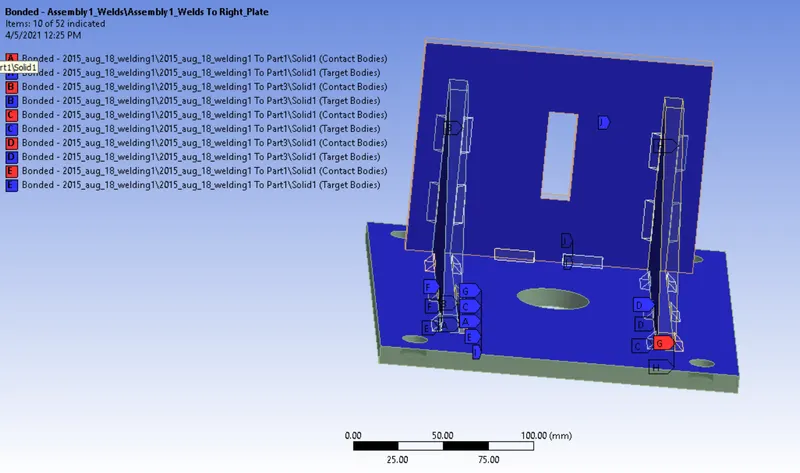
Keep Bonded type contact between each welded joint to Plates.
Keep Frictional type contact between Plate contacted surfaces.
Contacts between plates and Weld joints :
Create a contact between plate to weld joint by using Bonded type of contact. Because, As we know weld joints are permanent joints and it's not allows to any sliding motion or separation takes place by itself.
That's Why, we could chose Bonded as a type of contacts. Because, it will not allow sliding and Separation takes place between the contacted surface.
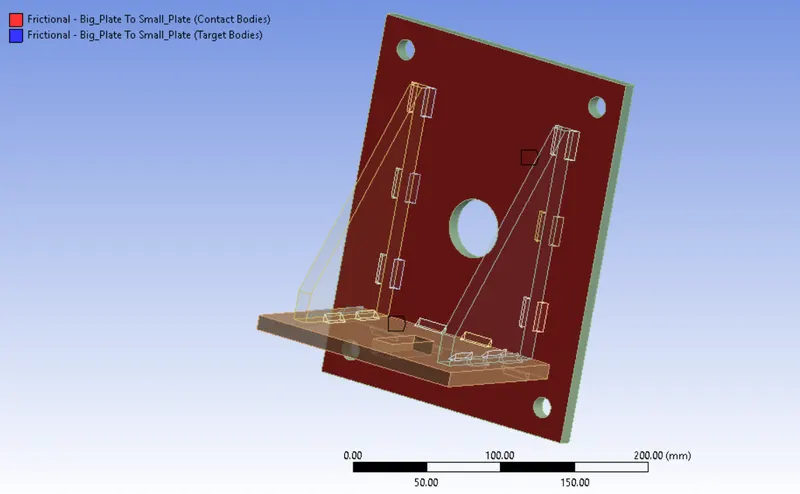
Contact Between Big Plate to Small Plate :
Create a contacts between smaller plate to Bigger plate with frictional type of contacts and frictional coefficient value is 0.2.
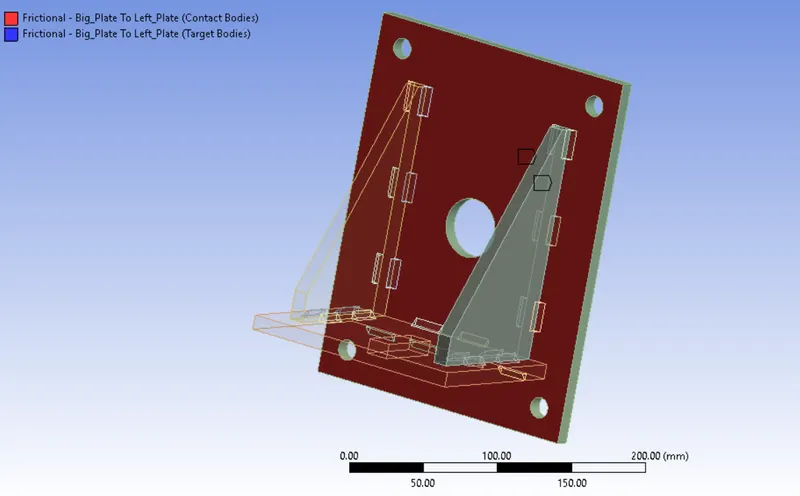
Contact between Big Plate to Left Rib Plate :
Create a contacts between Bigger plate to Left Rib plate with frictional type of contacts and frictional coefficient value is 0.2.
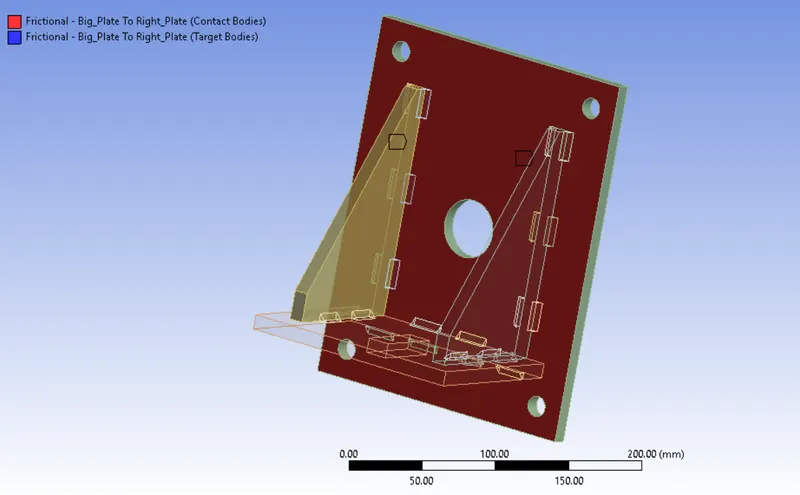
Contact between Big plate to Right Rib Plate :
Create a contacts between Bigger plate to Right side plate with frictional type of contacts and frictional coefficient value is 0.2.
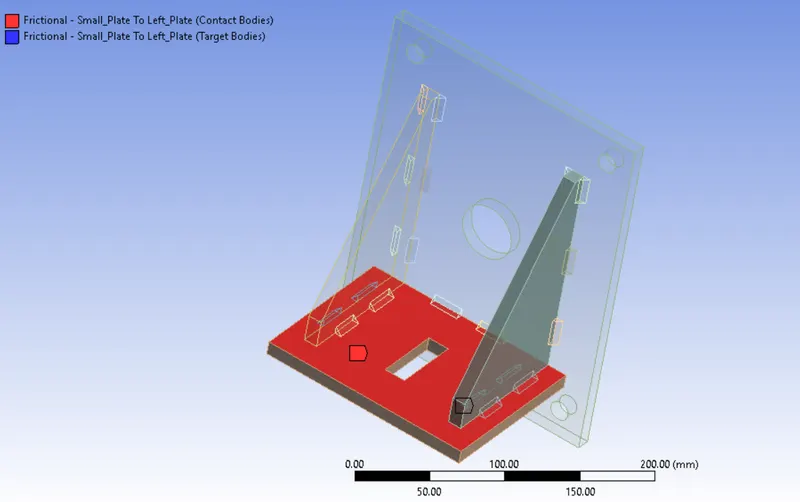
Contact between Small Plate to Left Rib Plate :
Create a contacts between smaller plate to Left Rib plate with frictional type of contacts and frictional coefficient value is 0.2.
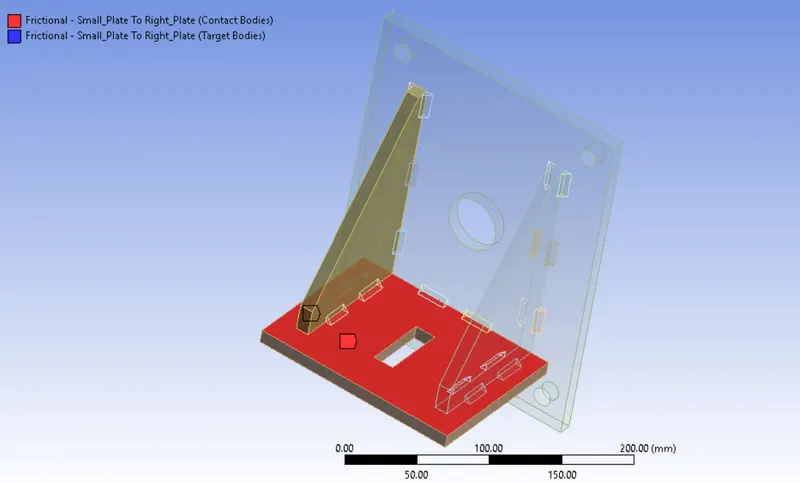
Contact between Small Plate to Right Rib Plate :
Create a contacts between smaller plate to Right Rib plate with frictional type of contacts and frictional coefficient value is 0.2.
V) Meshing :
Basically, To divide the entire model into infinitesimal control volume, that frame work is called Meshing. This process is called Discritization. This FEM is widely used for solving partial differential equation in different physical field such as Structural problem, Heat transfer problem, Fluid flow problem, Electro magnetic Analysis & Acoustics Analysis.
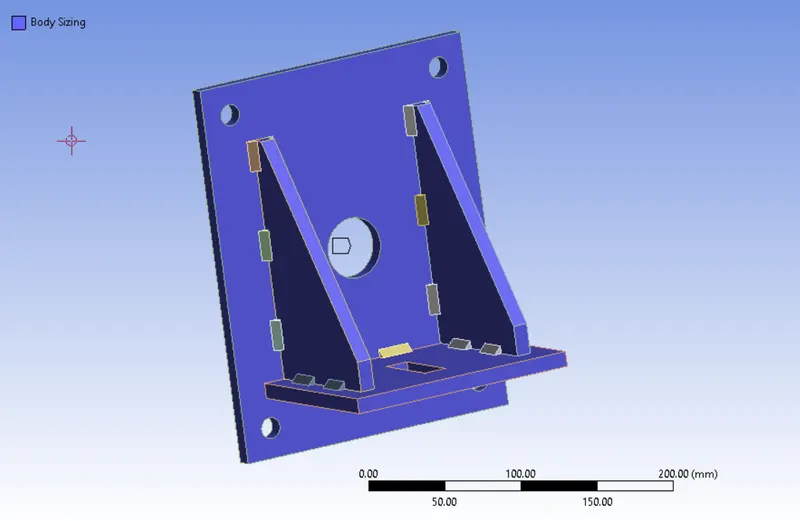
Body Sizing :
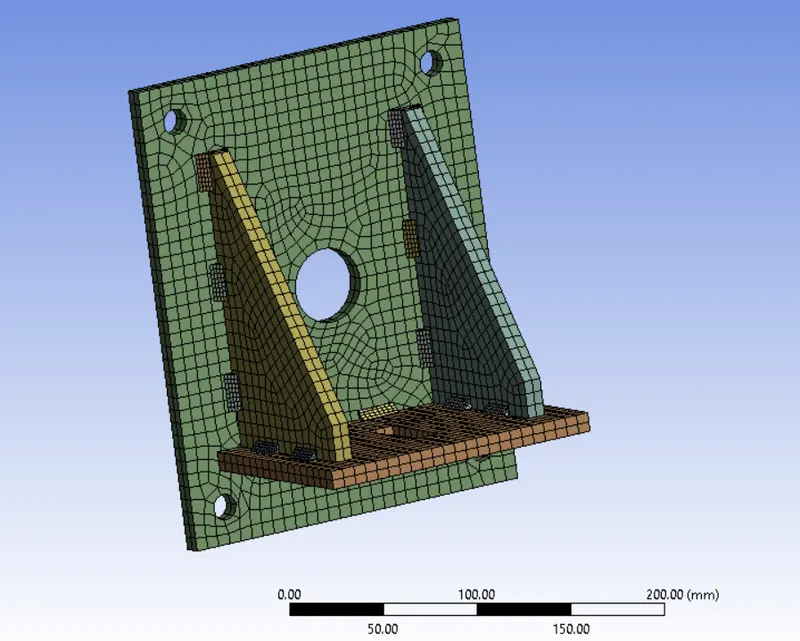
Select the Bigger, Smaller & Ribs plates and proceed the meshing with the element size of 7 mm.
Number of Nodes = 30064
Number of Elements = 4872
A Whole model is meshed with Hexahedral Volumetric Elements.
After done the meshing on all parts, it will looks like as shown in below image.
VI) Analysis Settings :
In this case, we gonna with just only one number of steps for this simulation.
Keep "Program Controlled" for Auto Time Stepping.
Keep "Program Controlled" for Solver Type.
Keep "ON" for Large Deflection.
Boundary Conditions :
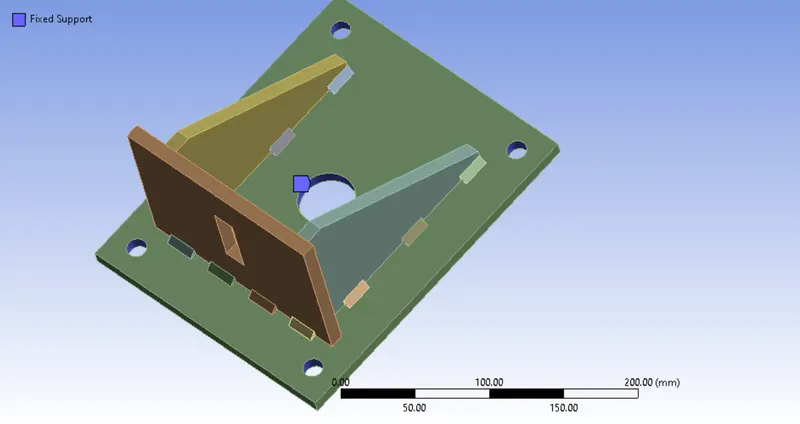
Fixed Support :
By Using Fixed Support to fix the bigger plate, all possible motions are constraint.
Force :
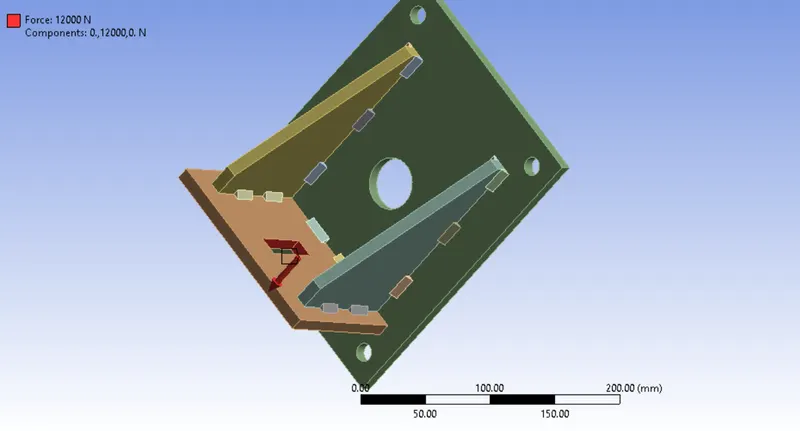
Apply a 120 KN load on a rectangular inner face in the smaller plate like as shown in below image.
RESULTS :
Directional Deformation :
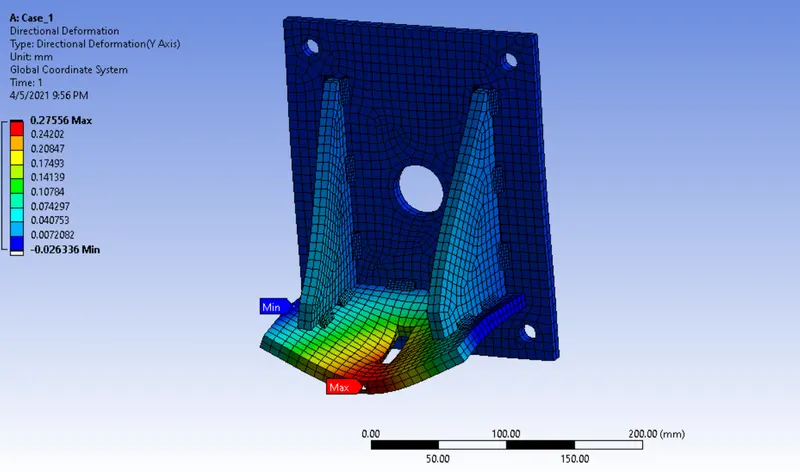
A Stainless steel material is have more strength as compared to remaining materials. And also, in the case 1 we assigned a stainless steel for all the parts. So that, it gives us slightly smaller deformation as compared to others.
Case 1:
In this case, All materials are assigned by stainless steel.
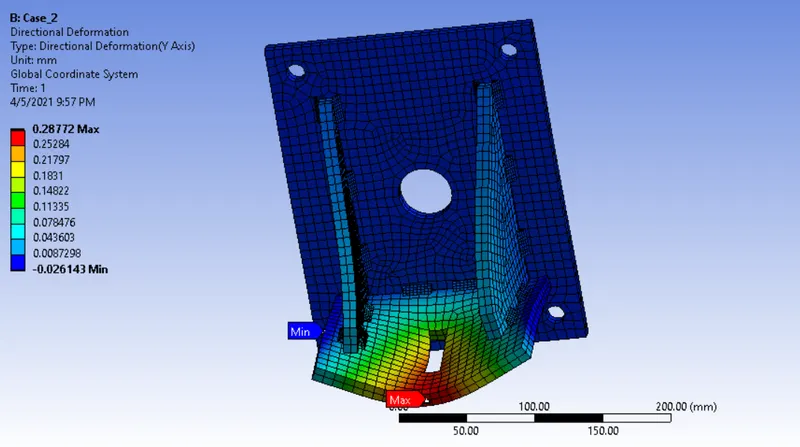
Case 2 :
In this case, a plates are assigned by Stainless Steel and Aluminium Alloy material is assigned to Welded Joints.
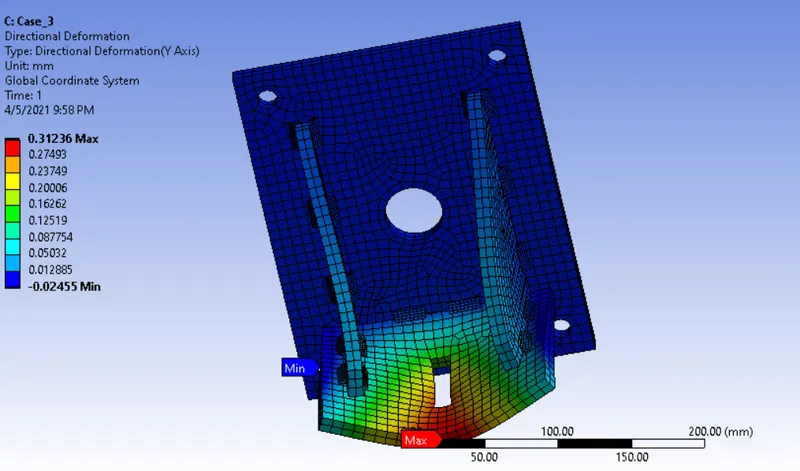
Case 3 :
In this case, a Ribs have been assigned by Copper material, Big & Small Plates are assigned by Stainless steel and Bronze is assigned by Bronze material.
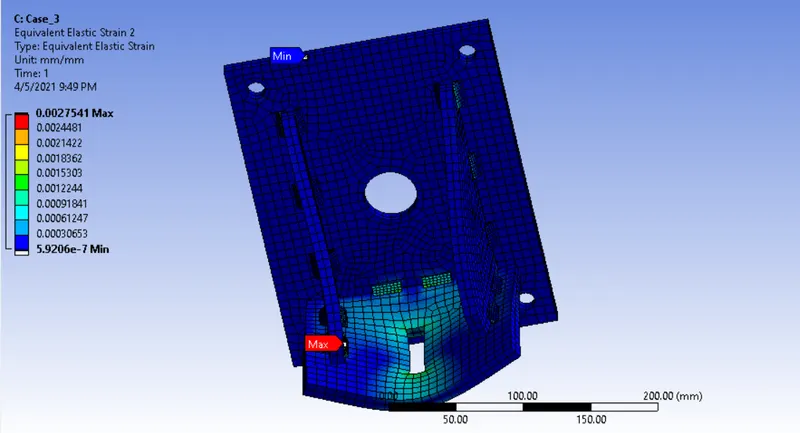
Equivalent Strain :
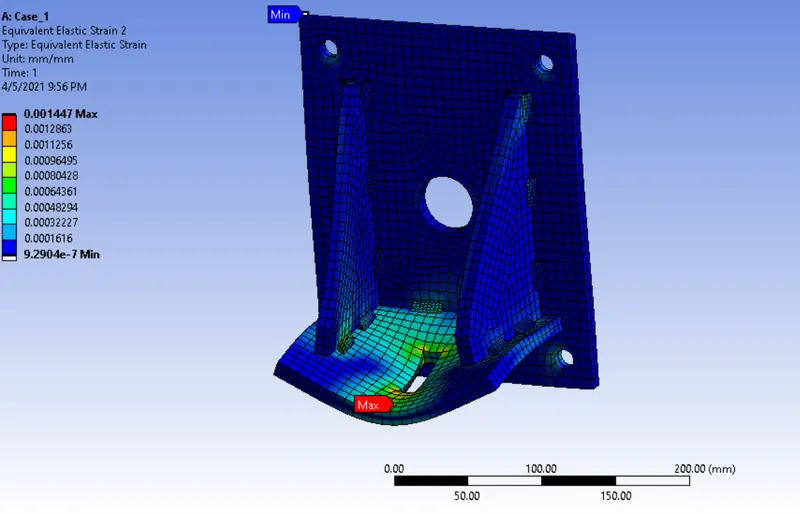
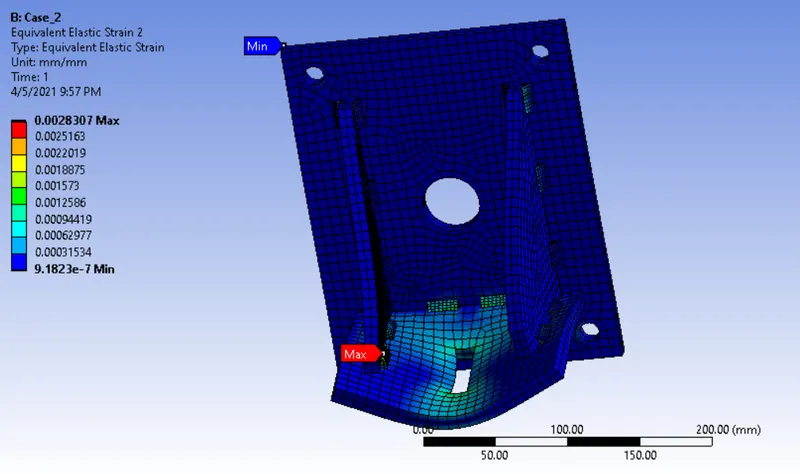
A Elastic deformation is pretty less for all the cases. So, it might be returns by their own position once load has been removed.
Case 1:
Case 2 :
Case 3 :
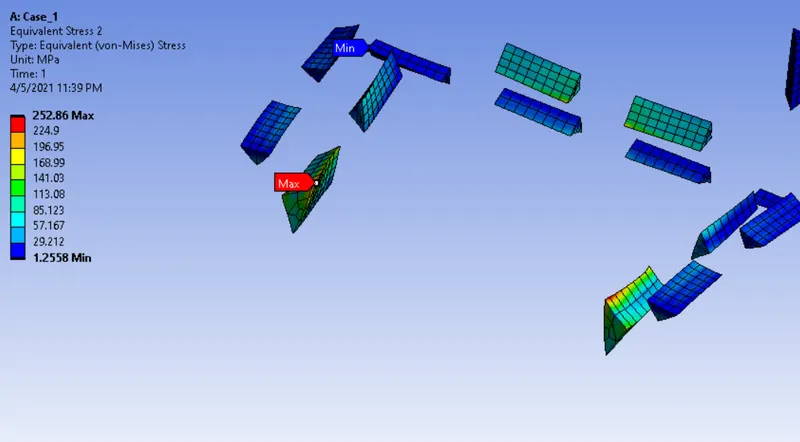
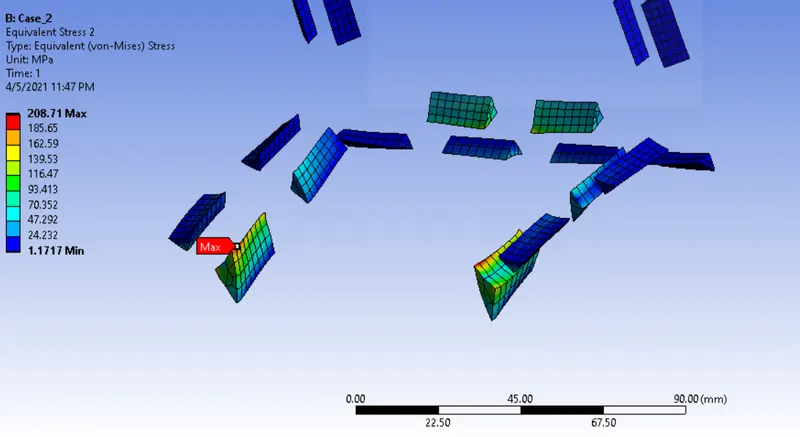
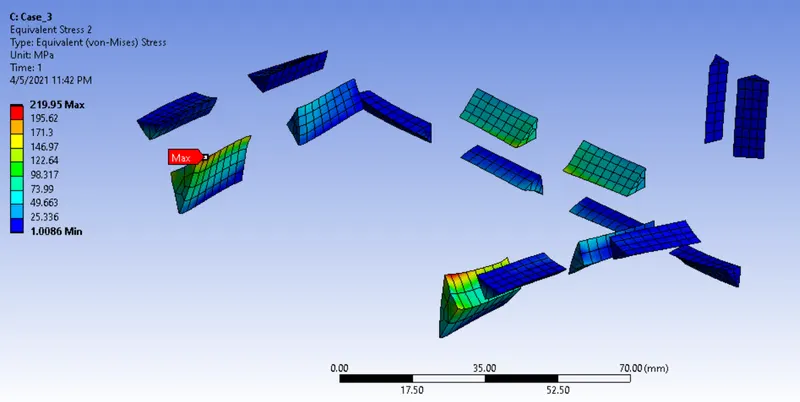
Maximum Equivalent Stress in the Weld Joints :
A Maximum Stress is developed from the weld on where close to load applied location. When we apply a load on a rectangular face, by results a plate will starts to deform on downward direction. On that time, a nearest welded joint are tries to resists change of the shape.
Case 1 :
Case 2 :
Case 3 :
CONCLUSION :
| Cases\Outputs | Equivalent Elastic Strain | Directional Deformation | Maximum Stress developed on the weld joints |
| Case 1 | 0.001447 | 0.27556 | 252.83 |
| Case 2 | 0.0028307 | 0.28772 | 208.71 |
| Case 3 | 0.0027514 | 0.31236 | 219.95 |
If any component have high yield strength than others, by results that component have withstand high strength, low deformation & low Elastic Strain as compared to rest of the materials.
In the Case 1, a Equivalent Elastic Strain and Directional Deformation is less as compared as remaining two cases. Because, it have more yield strength & stiffness. Due to cross sectional area hasn't been varyed much in the weld joint, by results internal stress develped is increased.
So, we prefer stainless steel as a material for welded joint as well as plate.