Week 3 - External flow simulation over an Ahmed body.
Objective:
External flow simulation over an Ahmed body in Ansys fluent.
Theory:
Ahmed's body and its importance
- The Ahmed body is a simplified vehicle model or a bluff model body with basic aerodynamic properties of a vehicle and it was developed for investigating the influence of the slant angle at the back on the flow field and due to aerodynamic forces, with suppressed interaction between the front and the rear parts.
- This model is also used to describe the turbulent flow field around a car-like geometry.
- In terms of a car, the lower the drag coefficient, the more efficient the car is.
- As well as affecting the top speed of a vehicle, the drag coefficient also affects the handling.
- Cars with a low drag coefficient are sought after, but decreasing the drag drastically can reduce the downforce and lead to a loss in road traction and a higher chance of car accidents.
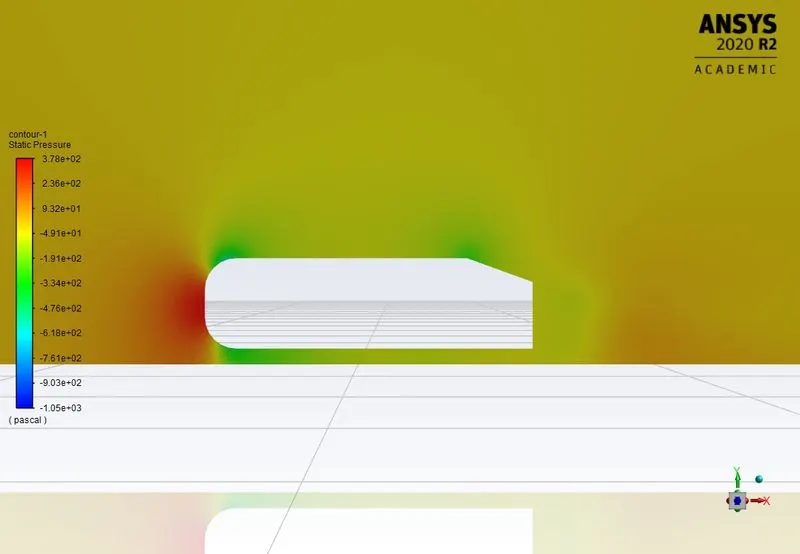
Reason for the negative pressure in the wake region
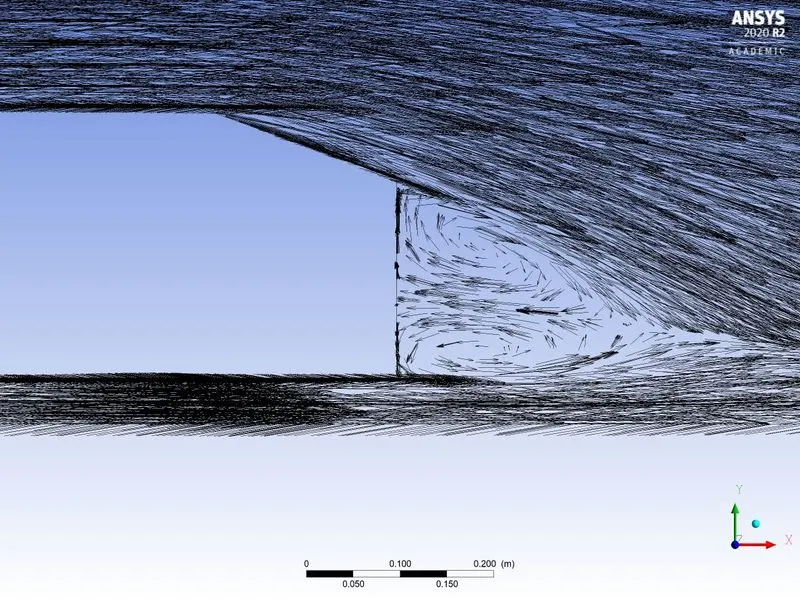
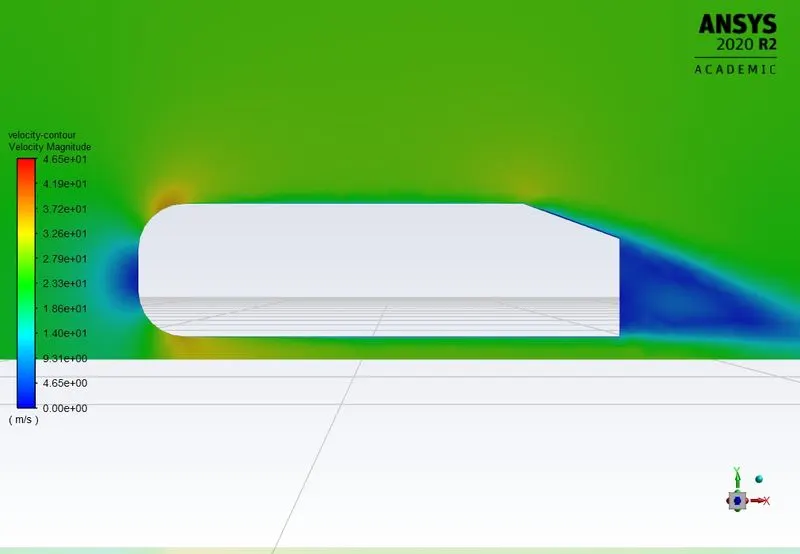
- Wake is defined as the region of recirculating flow immediately behind a moving or stationary blunt body, caused by viscosity, which may be accompanied by the flow of separation and turbulence.
- Adverse pressure gradients cause the boundary layers to separate, which creates a large wake filled with energetic eddies that dissipate a great deal of mechanical energy and thereby increase the drag.
Significance of the point of separation
- Flow separation is the detachment of a boundary layer from a surface into a wake.
- Optimizing the Point of separation helps to reduce the drag coefficient.
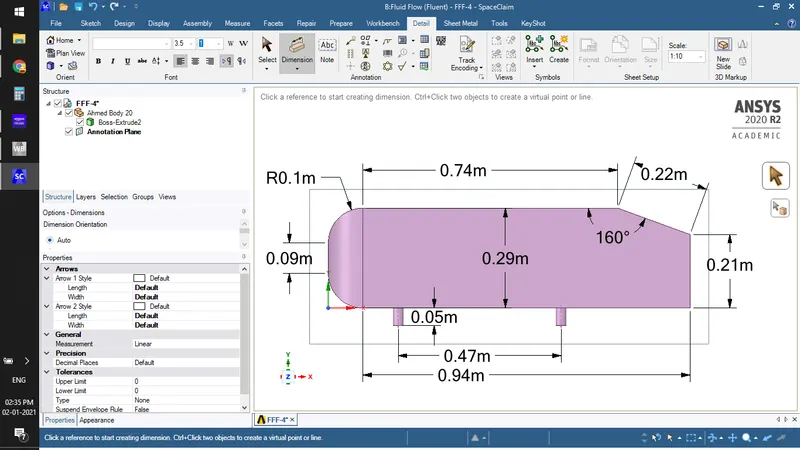
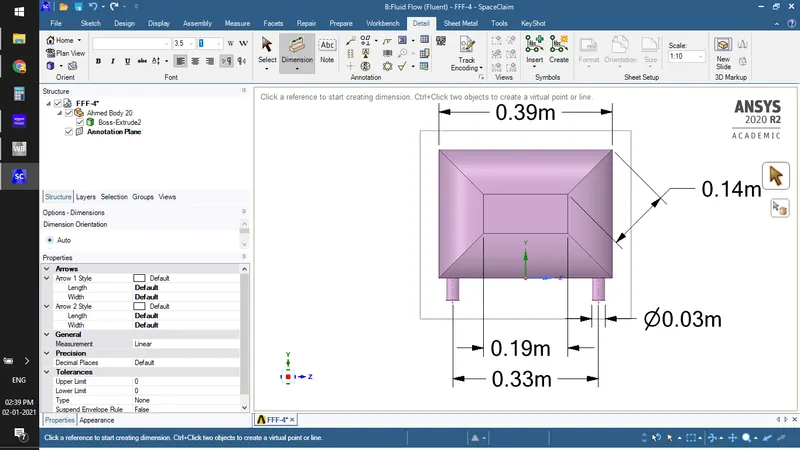
the geometry of Ahmed body:
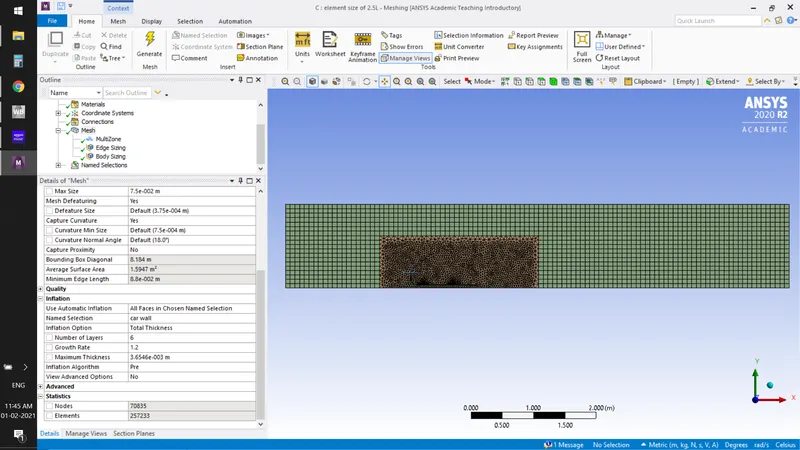
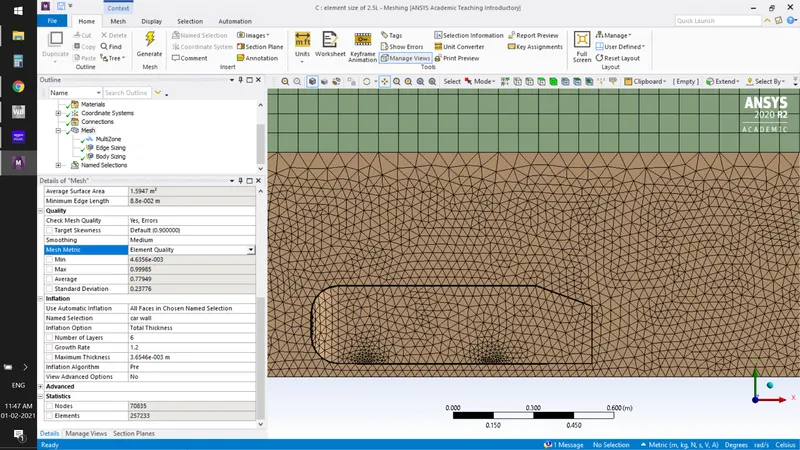
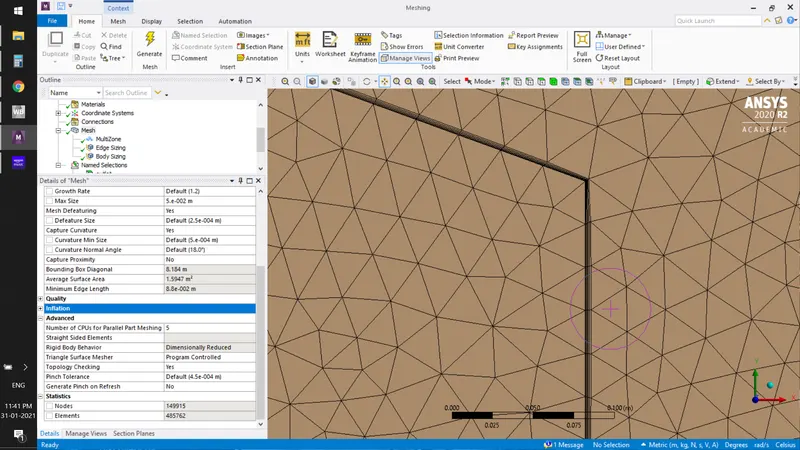
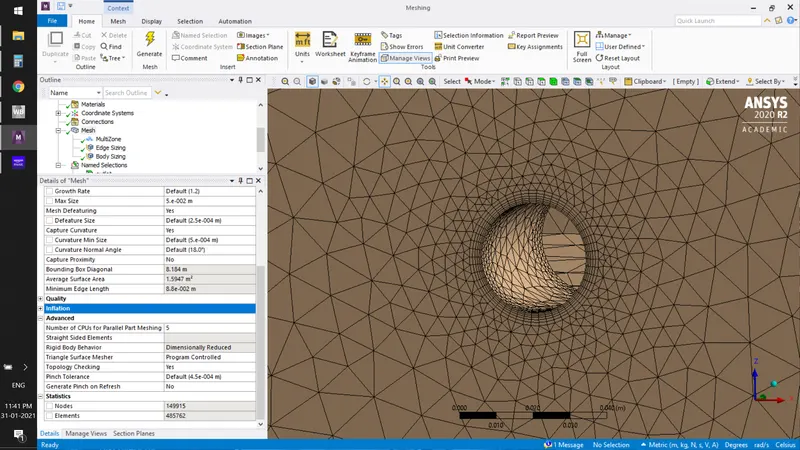
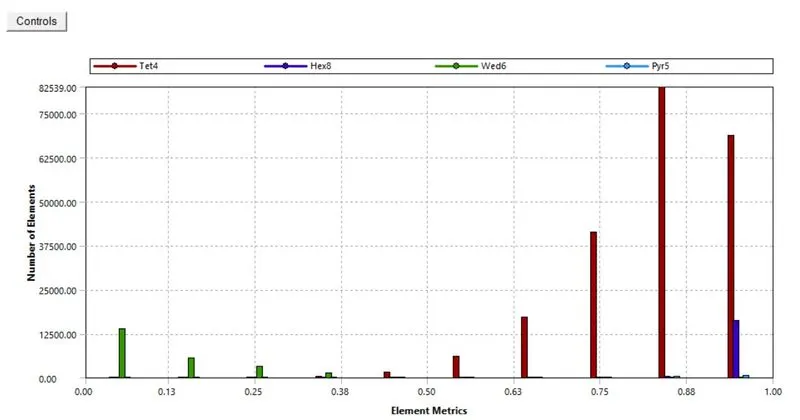
Mesh:
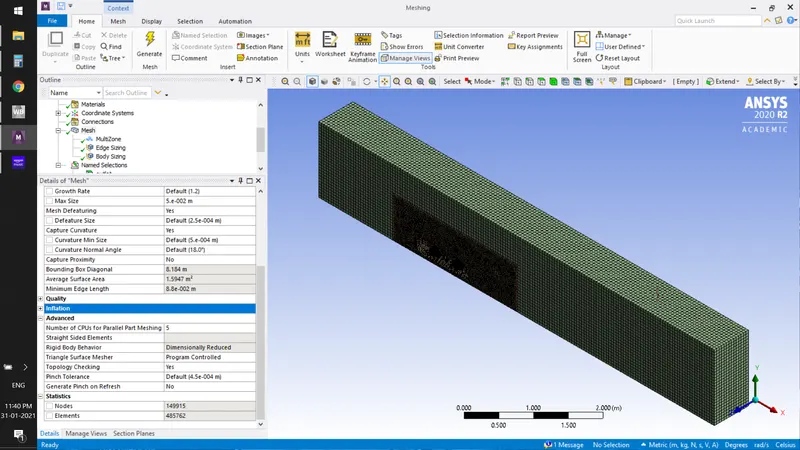
as the Ahmed body is a symmetrical body simulating either half of the body will give precise results as a whole body.
Matlab code to calculate wall thickness:
to calculate total thickness from the desired Y+
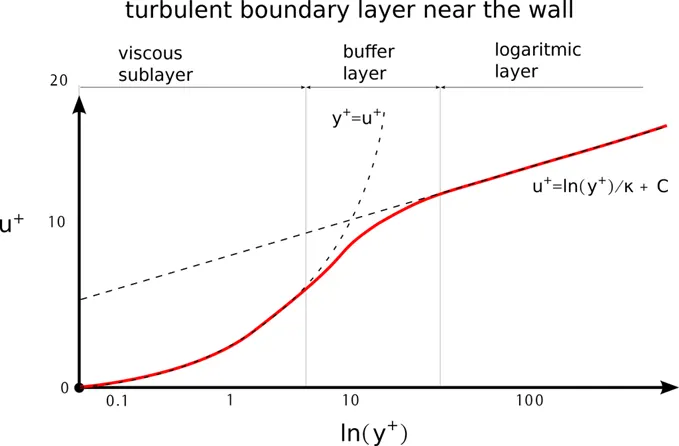
since we are using the k-epsilon model y+ will be above 30.
clear all
close all
clc

u = 25; %m/s
L = 1.044; %m
rho = 1.225; %kg/m3
mu = 0.000018375; %kg/m.s
Y_plus = input('enter desired value of Y+');

Re = u*L*rho/mu; %reynolds number

cf = 0.026/(Re^(1/7)); %skin friction coefficient

T_wall = 0.5*cf*rho*u^2; %wall shear stress

U_fri = sqrt(T_wall/rho); %friction velocity

del_s = Y_plus*mu/(U_fri*rho);

growthrate = 1.2; %growth rate of next cell from previous cell
no_cell = 6; % no of cells
tot_thick = del_s*2*1.2^(no_cell-1);

fprintf('\n Reynolds number is %d \n \n',Re);
fprintf(' first wall thickness is %d in m\n \n',del_s);
fprintf(' Total thickness of the cell %d in m\n', tot_thick);
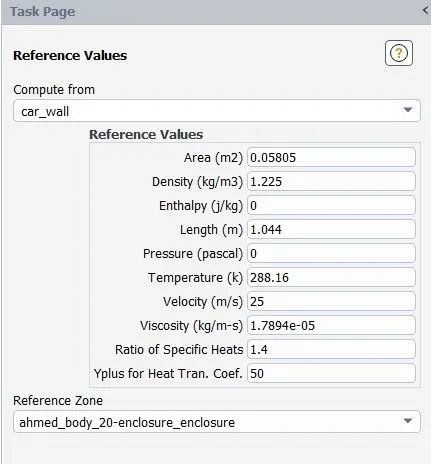
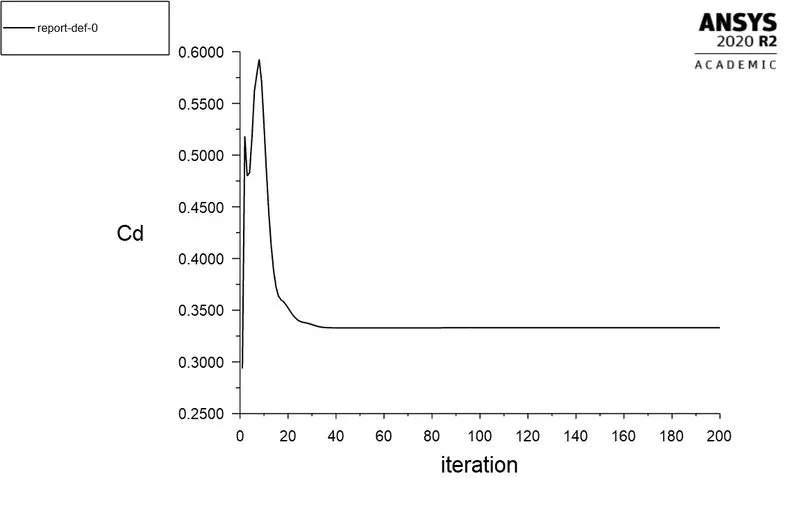
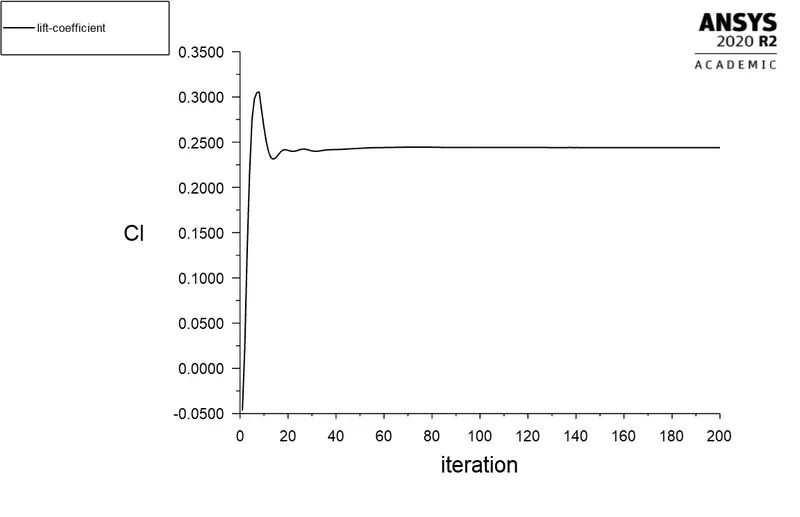
coefficient of drag: coefficient of lift:
Vector plane:
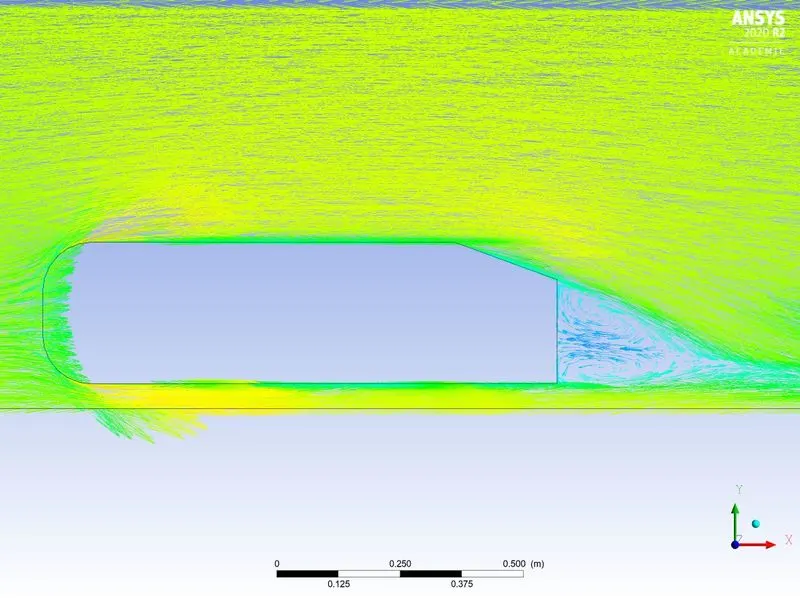
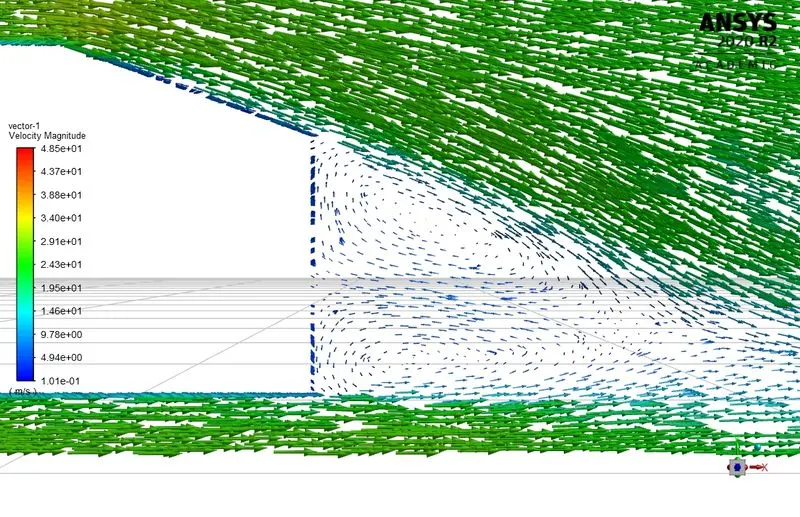
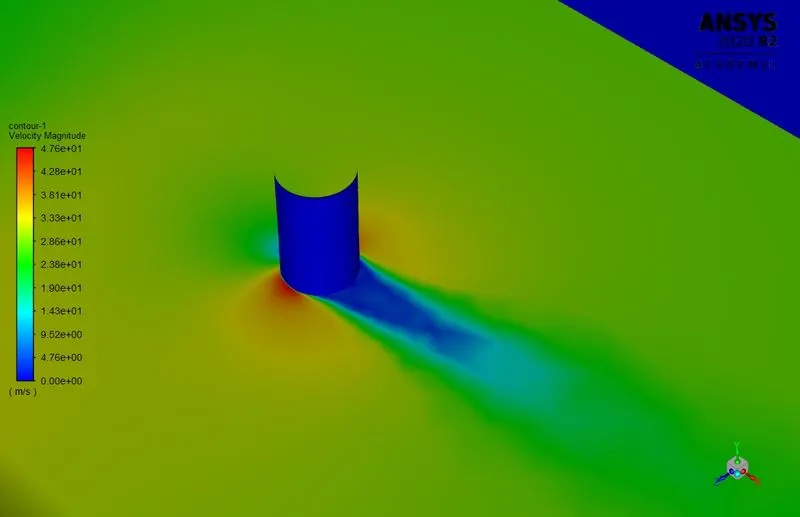
the grid independency test :
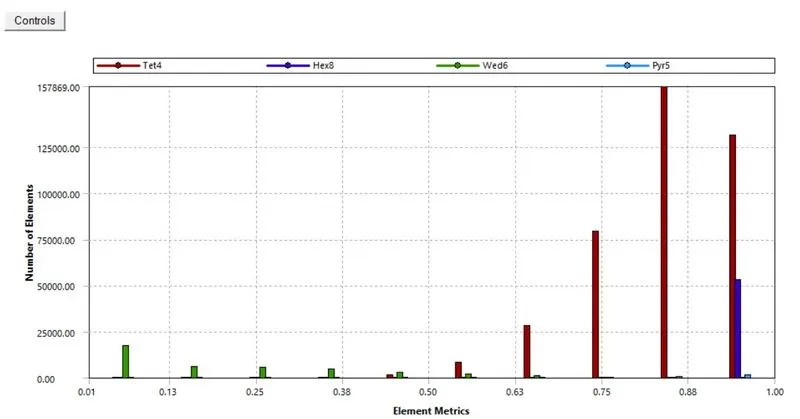
course mesh
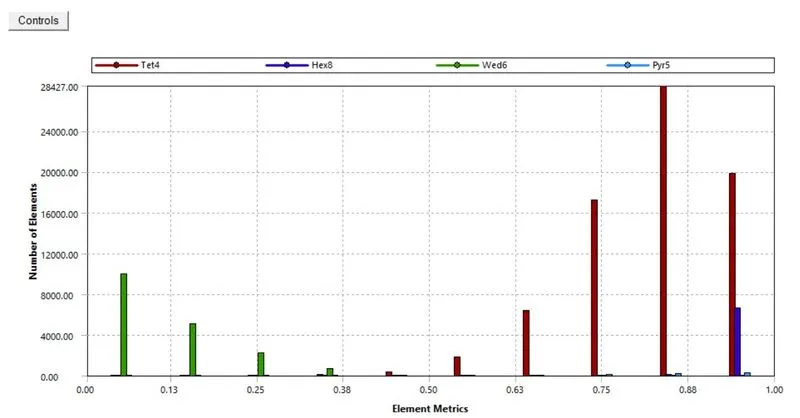
medium mesh
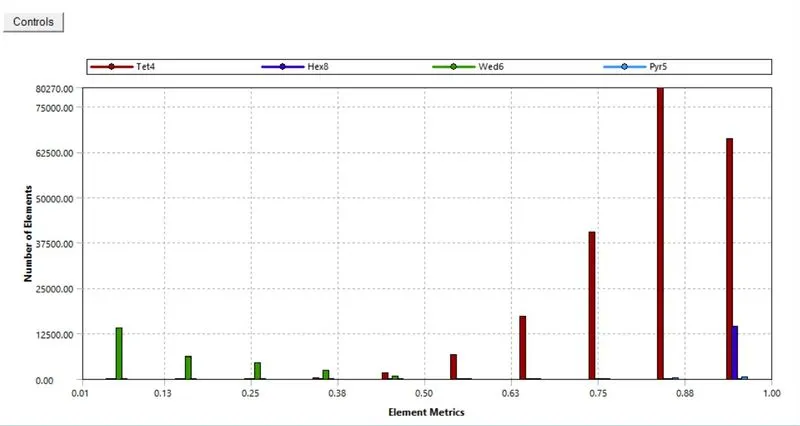
fine mesh
|
|
No. of element |
Drag coefficient |
Lift coefficient |
|
Course |
98989 |
0.4023 |
0.2015 |
|
Medium |
253876 |
0.356 |
0.23728 |
|
Fine |
498965 |
0.333 |
0.244 |
Conclusion:
- From grid independent study finer the mesh will give the result more accuracy.
- Boundary layer thickness depends on the y+ value.
Reference:
targeting-a-specific-y-value-for-your-turbulent-flow-cfd-simulation