Week - 3 Drop test Challenge
Aim:
Conduct a drop test simulation of a mobile with appropriate model definition.
Objective:
Appropriate unit system is selected, required materials, sections, appropriate boundary, load and contacts are defined.
Model setup:
- Meshed model is loaded into the LS PrePost workspace.
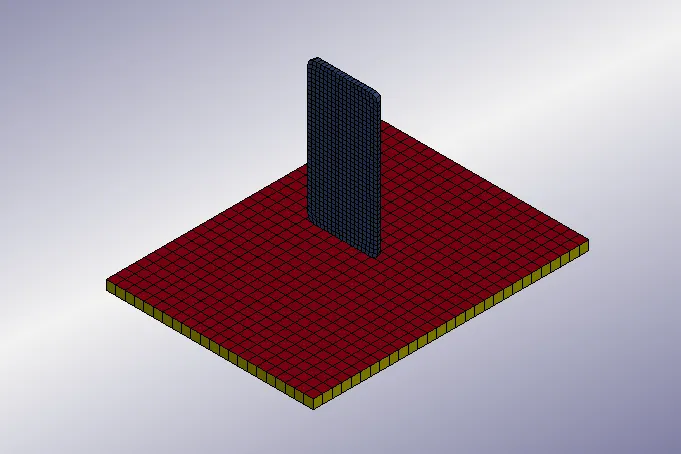
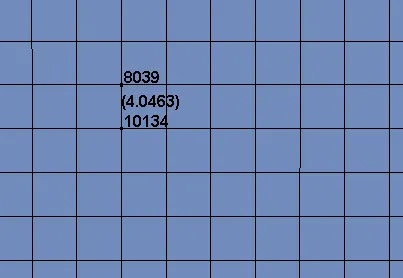
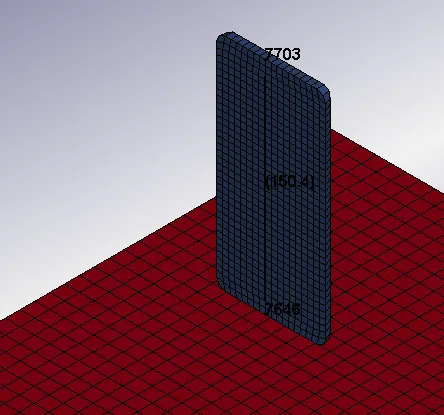
- Element size is measured to be 4.1units and component length 150units. From these measurements, unit of length is Millimeters. Generally mobile’s mass is given in Grams and unit of time is selected as Milliseconds. Therefore, selected unit system is gm/mm/ms.
- Shell and solid sections are defined accordingly. Elastic MAT001 card and Rigid MAT020 card with appropriate constraint options is defined with properties of steel.
- Sections are assigned to the parts accordingly. Elastic material is applied to the mobile component and rigid material is applied to the floor components.
- Initial velocity of 15.56mm/ms is applied to the mobile component towards –Ve Z- axis.
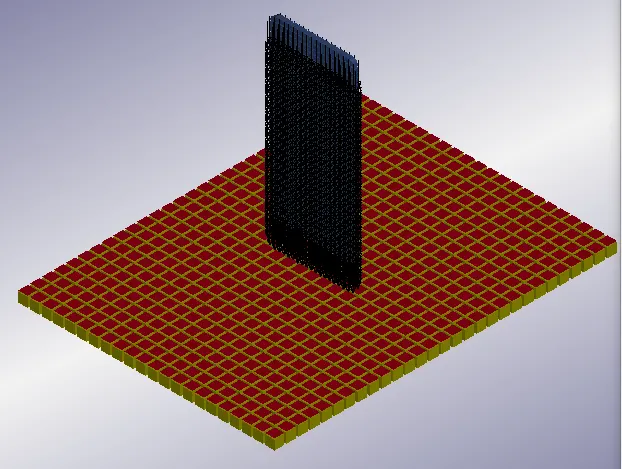
- Automatic Surface – Surface contact is defined with floor components as a set of master parts and mobile component as slave part.
- Termination control of 5ms is given as end time for the simulation.
- Database requests for outputs with a time step of 0.2ms are given.
- The keyword file is saved and model is solved using LS Dyna program manager.
- Material card for mobile is modified to Piecewise linear plasticity card with appropriate yield conditions and model is solved again in LS Dyna program manager.
Results:
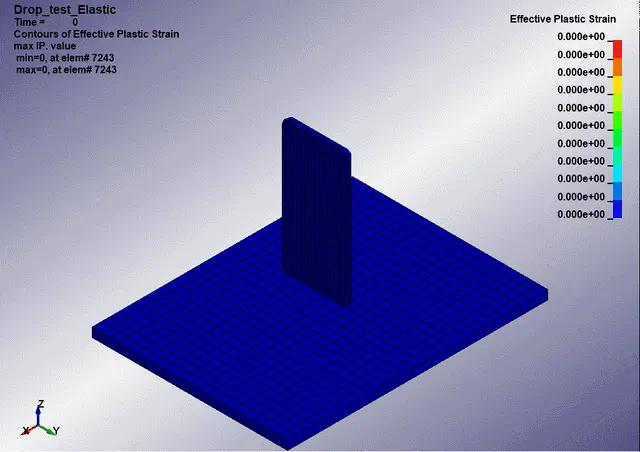
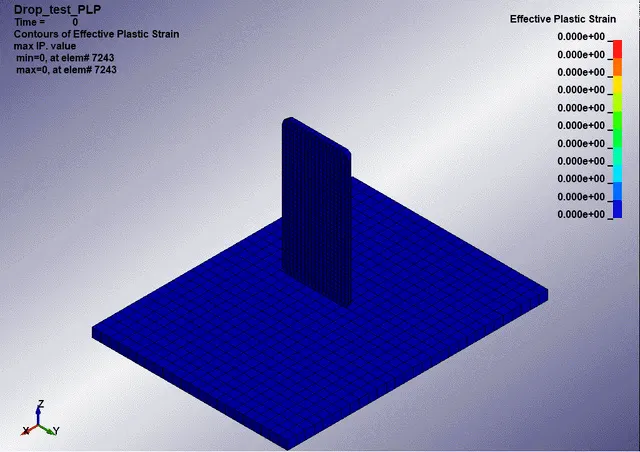
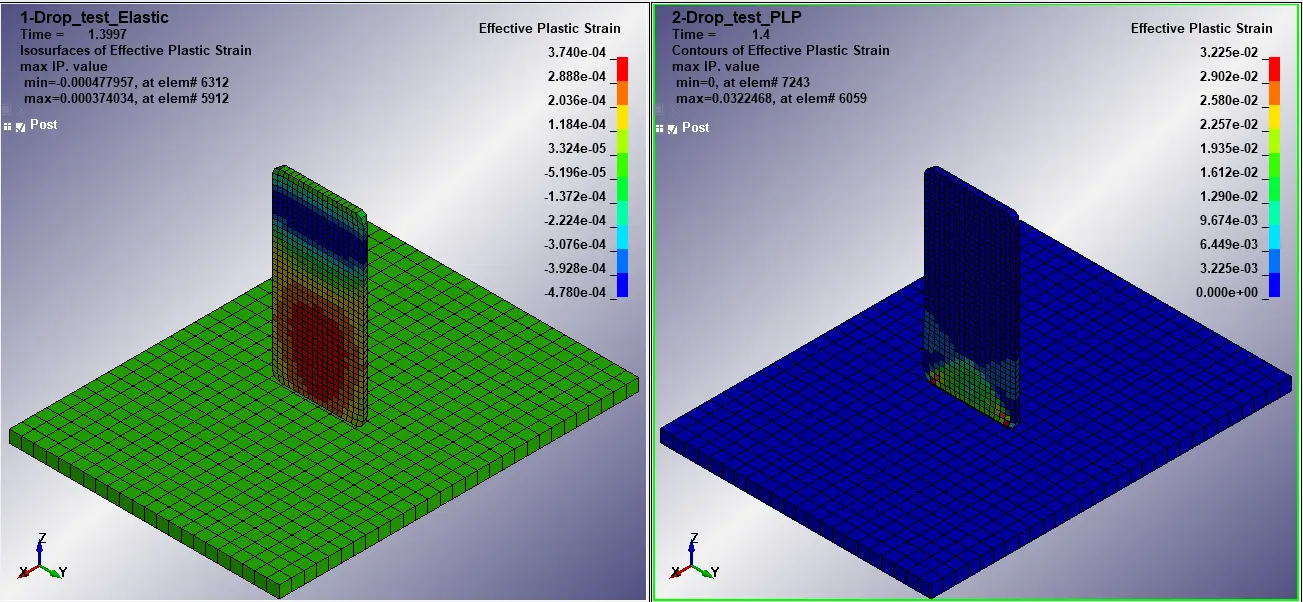
- Elastic material undergoes negligible while Linear plastic material undergoes permanent deviation as stress crosses the given yield conditions. Rebound velocity is observed to be higher in elastic material as compared to plastic material. This shows the variation in the absorption of kinetic energy in plastic material by incresing its internal enegy in the form of plastic deforrmation.
- The gap between the mobile and floor is approximately 19mm and since the velocity is 15.65mm/ms, the mobile hits the floor at 1.2ms. The same can be observed from energy plots given below.
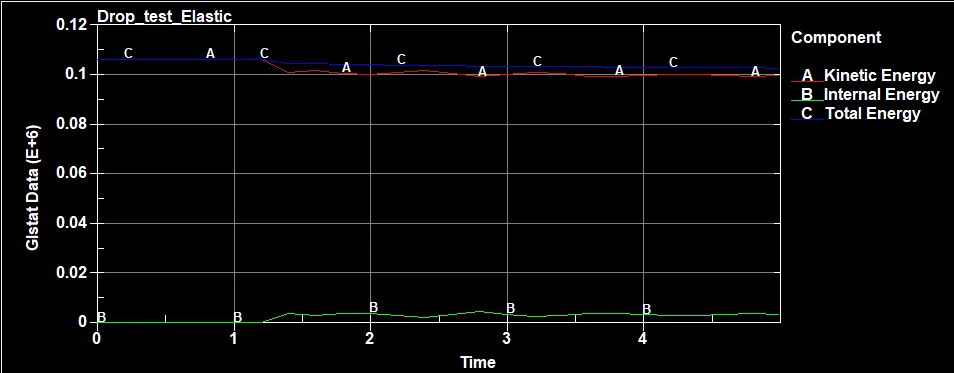
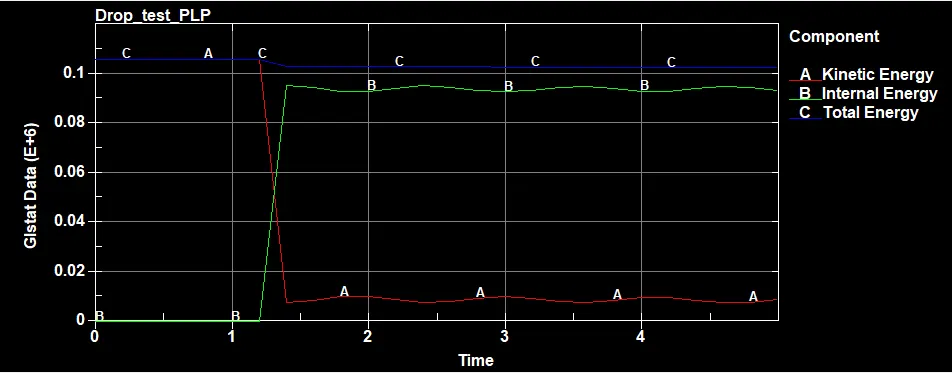
- Piecewise linear plastic material deforms and undergoes plastic deformation while absorbing the kinetic energy into the internal energy and elastic material bounce back due to its elastic property and kinetic energy is slightly reduced.
Learning outcomes:
Importance of consistency of unit system, usage and definition of various material properties, selection of contact are learnt.
Conclusions:
The drop test scenario of the mobile onto a floor is successfully simulated and results are processed. Energy plots are plotted with respect to time.