Week-3 Challenge: ADVISOR Tool
ADVISOR TOOL SIMULATION :-
AIM :-
To simulate the gradeability and drive cycle using ADVISOR TOOL in MATLAB.
PLATFORM USED :-
- Software – Microsoft Office Excel
SYSTEM SPECIFICATIONS :-
- Manufacturer - DELL
- Model – Vostro 3478
- Operating System - Windows 10
- Processor - Intel(R) Core(TM) i5-8250U CPU @ 1.60GHz 1.80GHz
- RAM – 8 GB
OBJECTIVE :-
- To simulate the drive cycle using ADVISOR TOOL in SIMULINK.
- To simulate the gradeability test for the TOYOTA PRIUS vehicle using ADVISOR TOOL in SIMULINK.
THEORY :-
ADVISOR, NREL’s ADvanced VehIcle SimulatOR, is a set of model, data, and script text files for use with MATLAB and Simulink. It is designed for rapid analysis of the performance and fuel economy of conventional, electric, and hybrid vehicles. ADVISOR also provides a backbone for the detailed simulation and analysis of user defined drivetrain components, a starting point of verified vehicle data and algorithms from which to take full advantage of the modelling flexibility of Simulink and analytic power of MATLAB.
SIMULATIONS :-
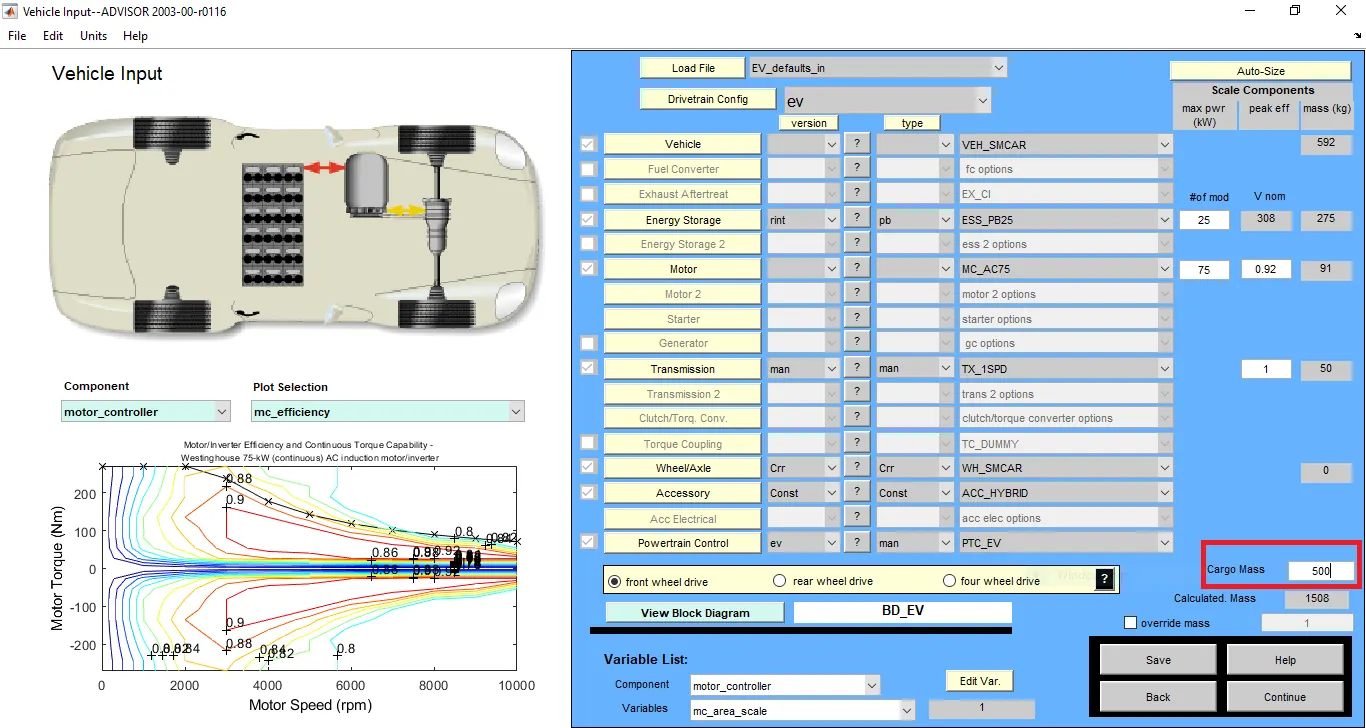
1) For EV_defaults_in file, if cargo mass is 500 kg with all other default conditions, can the vehicle travel for 45 km with FTP drive cycle?
The EV Default vehicle is a pure EV (Electric Vehicle) where it’s completely driven by battery as power source.
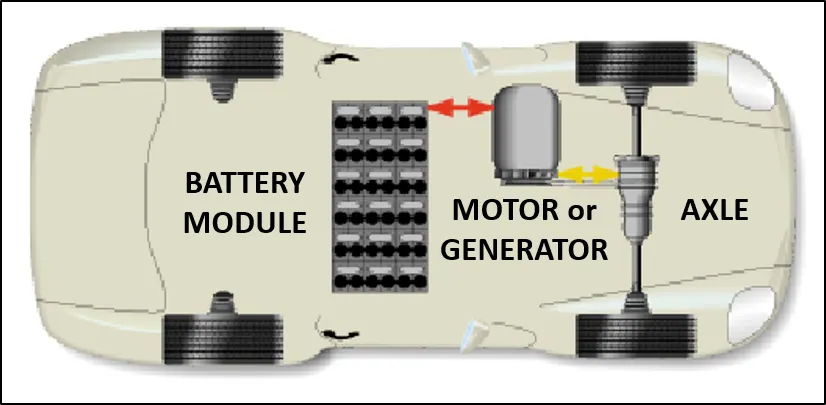
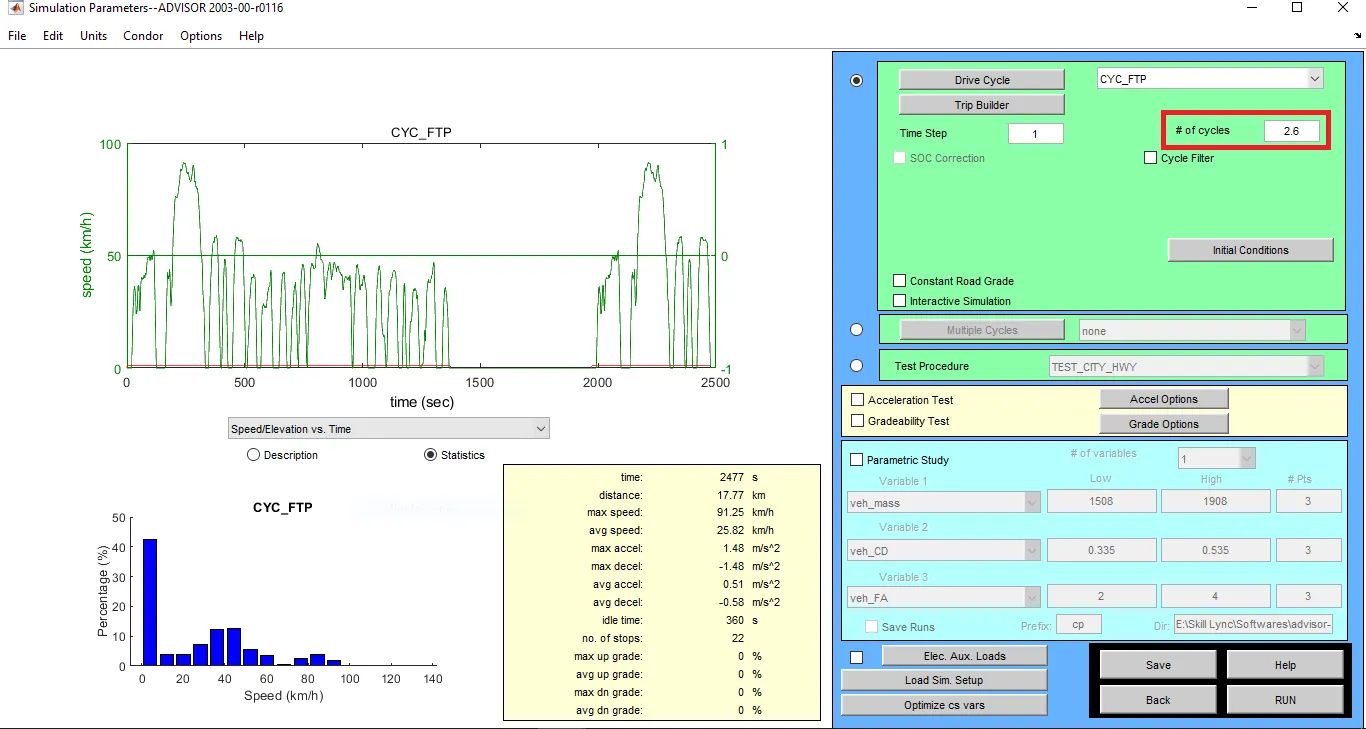
The cargo mass is changed to 500 kg from the default value of 136 kg,
The drive cycle chosen is FTP (Federal Test Procedure) and the maximum distance travelled is 17.7 km,
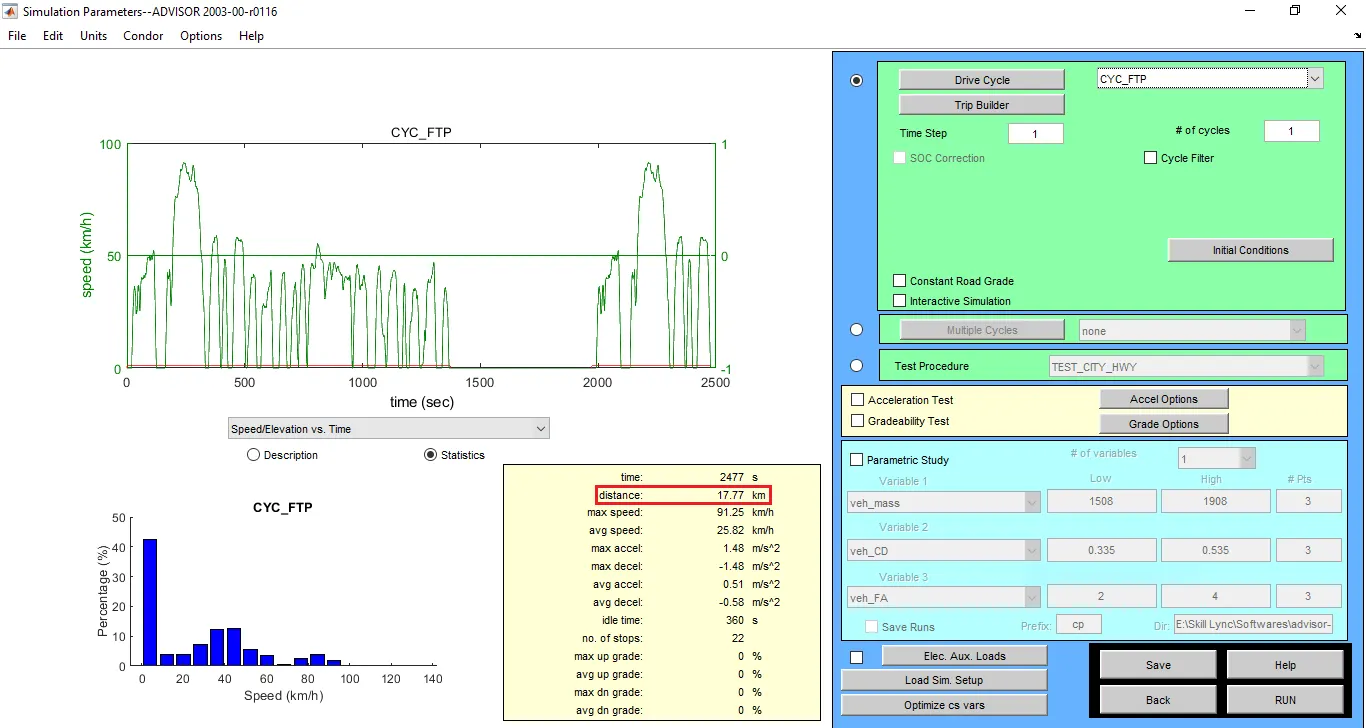
So, In order to achieve 45 km of distance the FTP Drive Cycle to be repeated 2.55 times which will cover the distance of 45.135 km,
Warning,
CONCLUSION :-
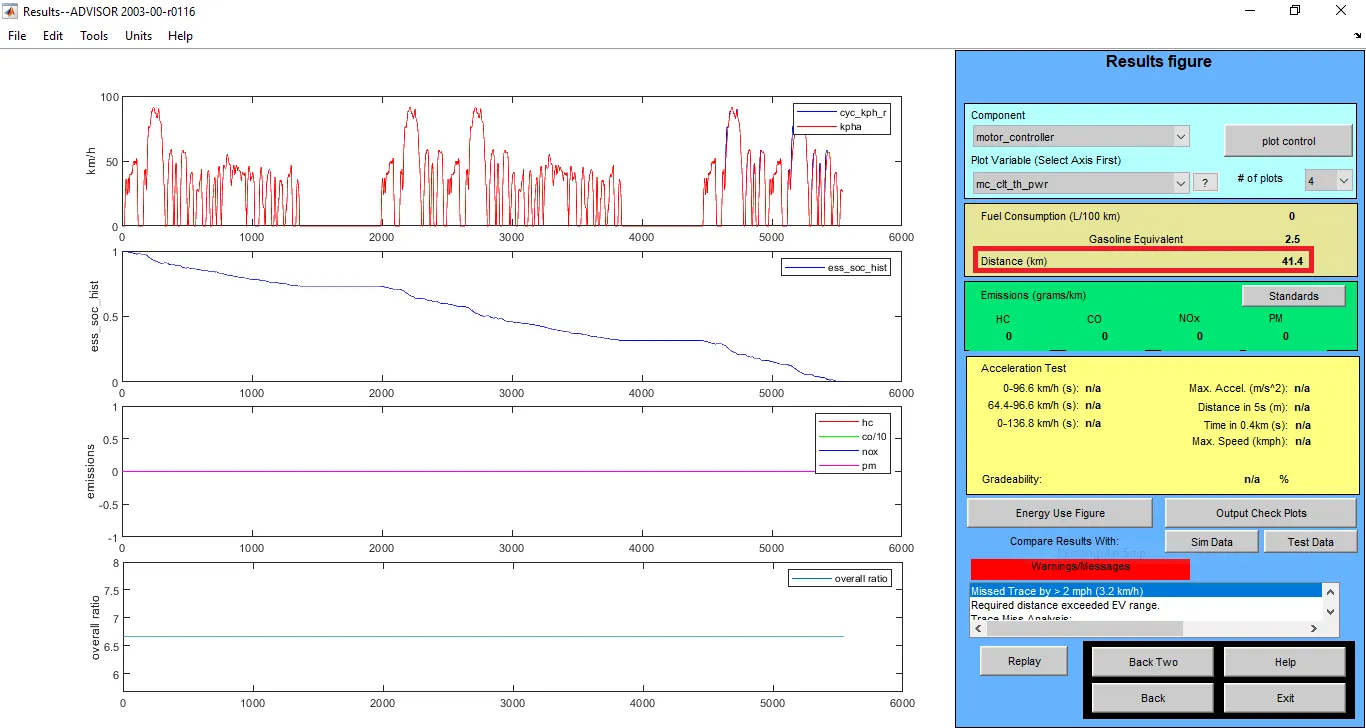
From the simulation we can understand that the vehicle didn’t run for distance of 45.135 km and there is an error popping out that the required distance exceeded the EV range. So, in order to achieve the required distance we need to increase the battery capacity.

2) Changing the battery capacity and repeating the above simulation :-
The battery module is being increased to give more power for further distance of the vehicle from 25 modules to 35 modules,
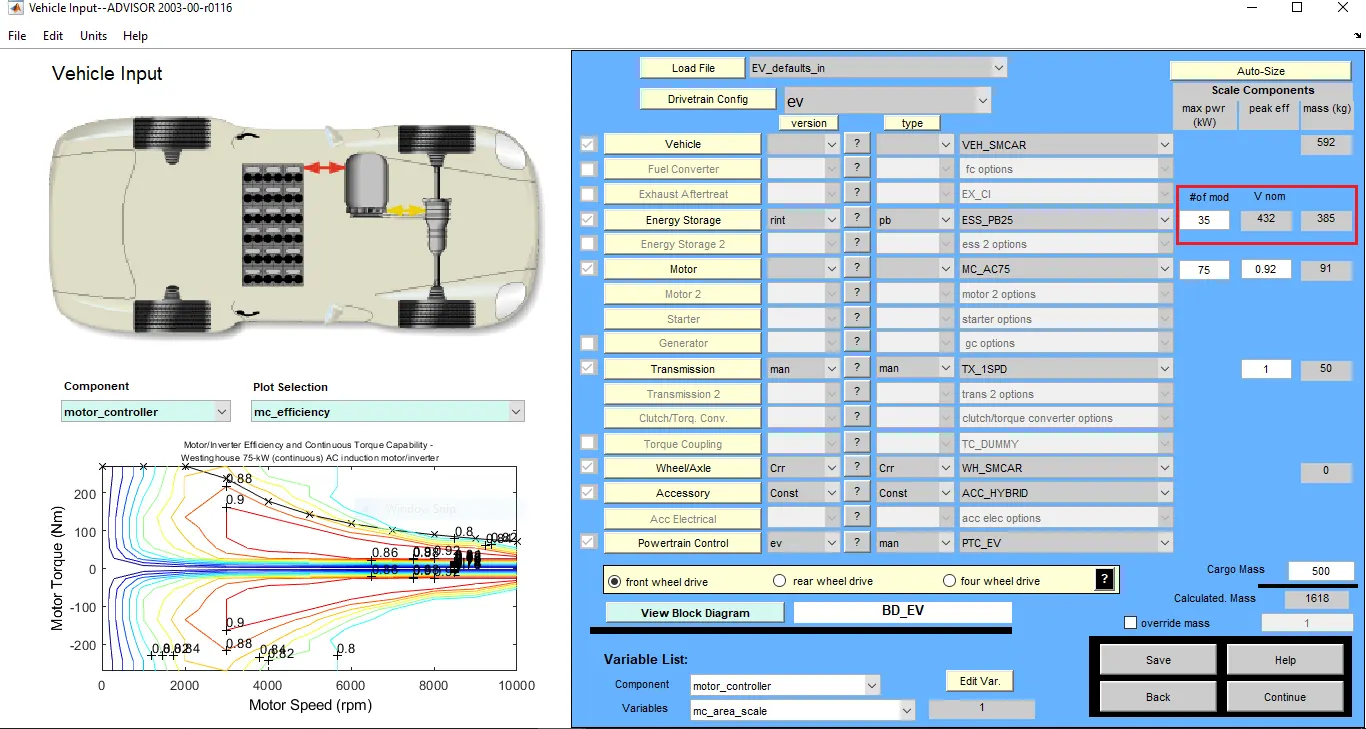
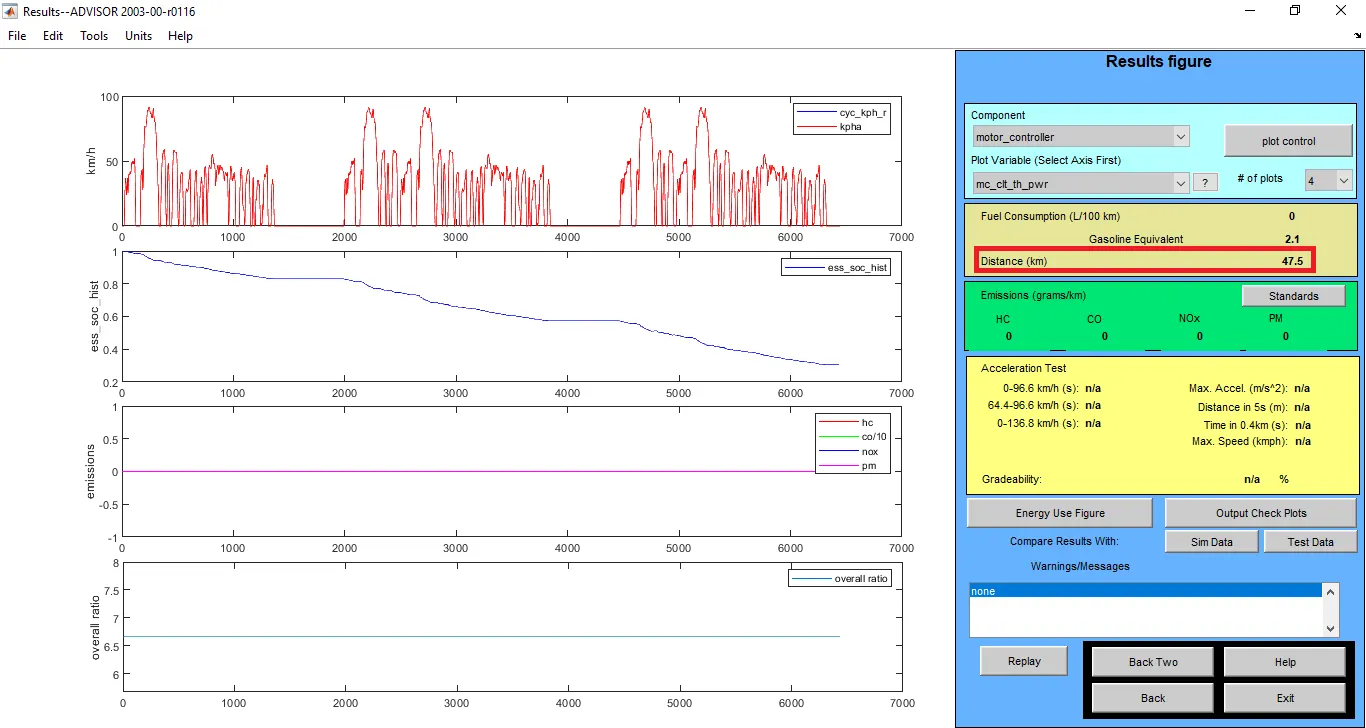
After increasing in the battery capacity the vehicle is able to run for the required distance,
CONCLUSION :-
From this simulation we can conclude that the required distance (45 Km) is being achieved by increasing the battery modules for extra power required to run the vehicle above 41.4 Km.
3) Gradeability Test for Toyota Prius :-
The Toyota Prius is Hybrid vehicle which has both IC (Internal Combustion and Motor) drive systems,
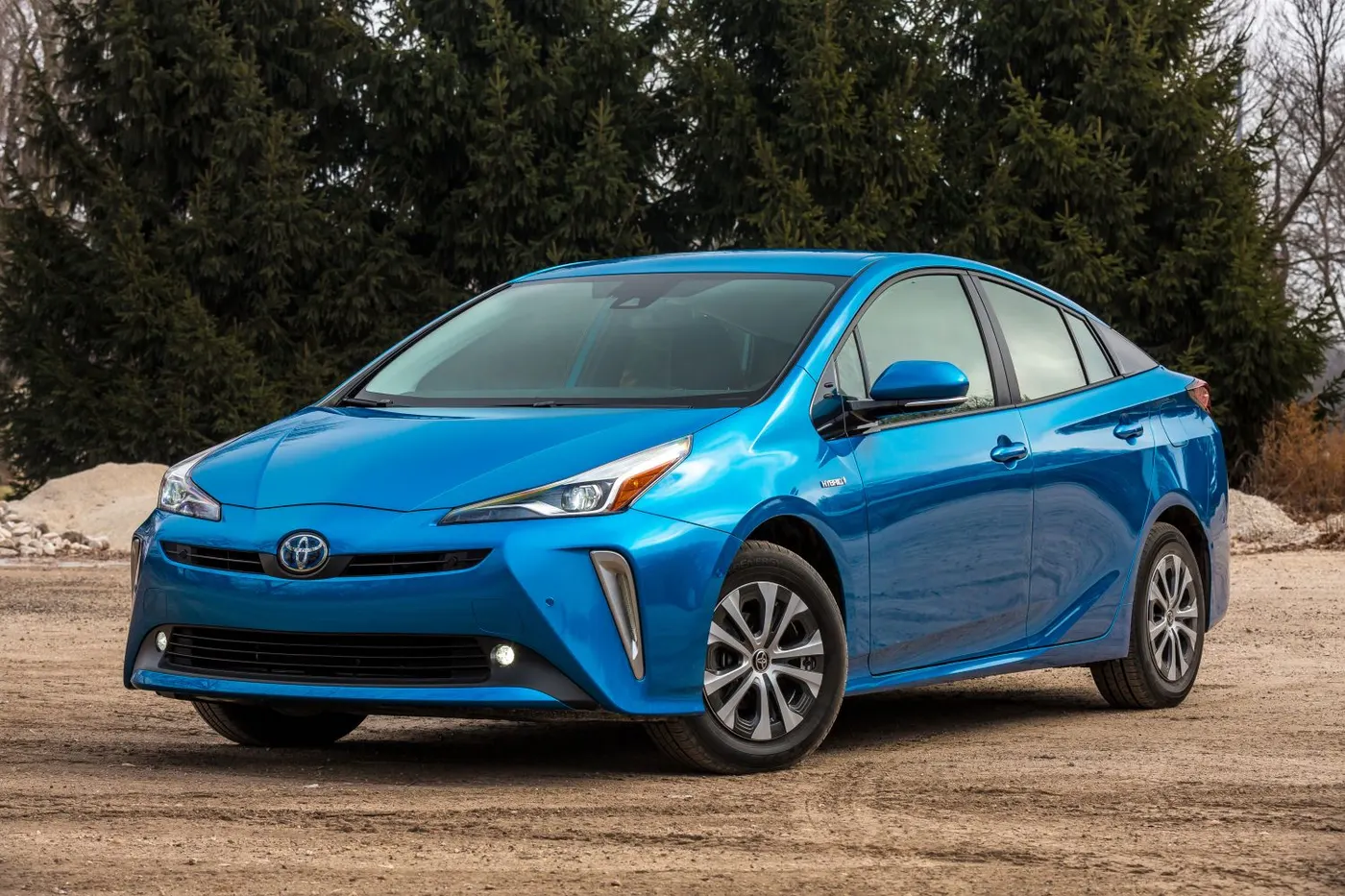
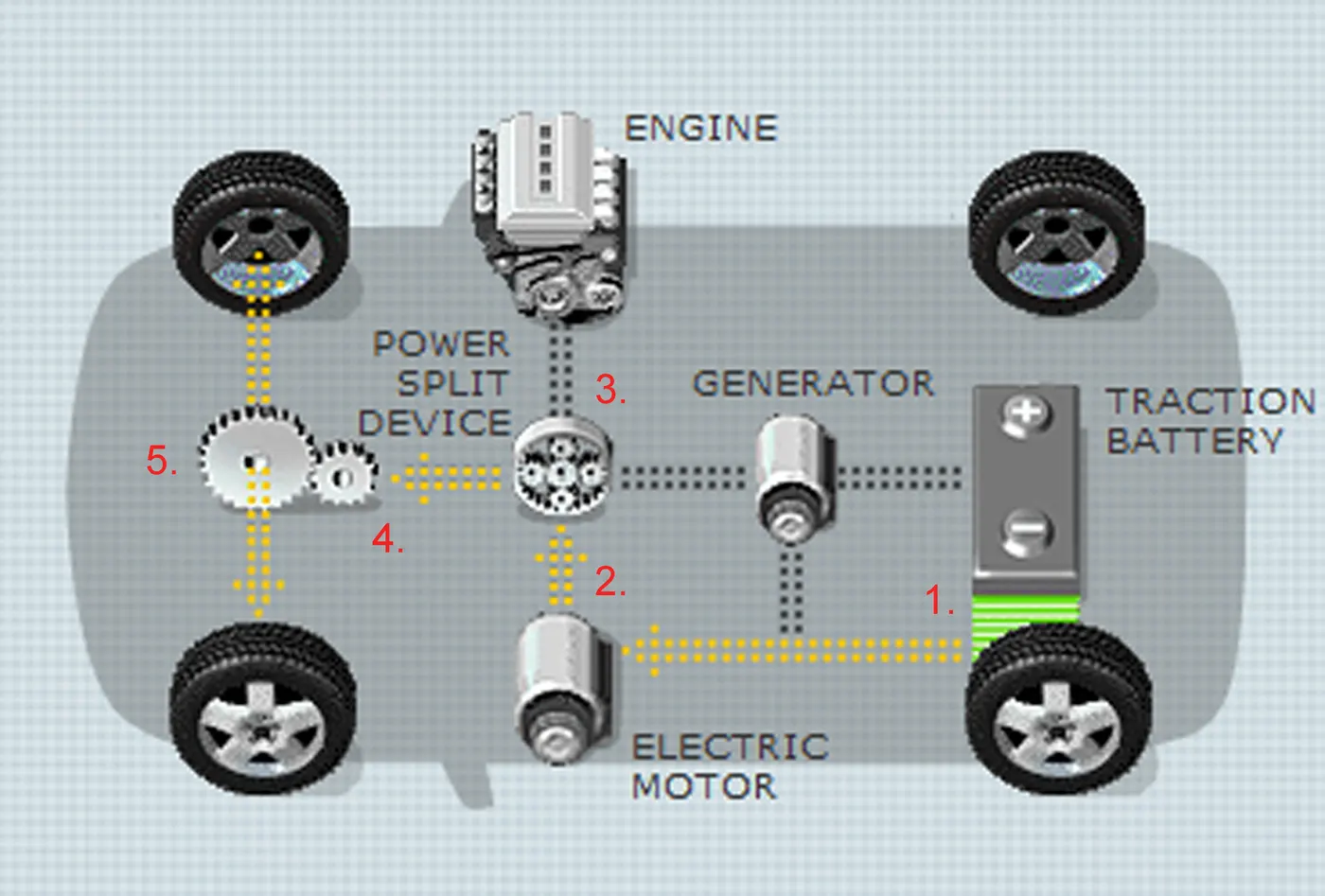
The gradeability test is being performed by increasing the speed of the vehicle for constant duration of 40 sec,
For 8 Km/h,

For 16.1 Km/h,

For 24.1 Km/h,

For 32.2 Km/h,

For 40.2 Km/h,

For 48.3 Km/h,

For 64.4 Km/h,

For 80.5 Km/h,

For 104.6 Km/h,

For 120.7 Km/h,

For 136.8 Km/h,

For 152.9 Km/h,

For 164.2 Km/h,

For 165.8 Km/h,

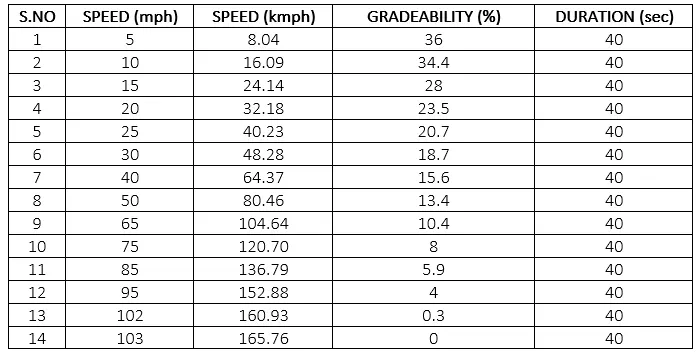
Record of repeated gradeability test for various speed of the vehicle,
CONCLUSION :-
From the above simulation we can conclude that when then vehicle speed increases the gradeability decreases respectively.