Week-3 Challenge: ADVISOR Tool
1.
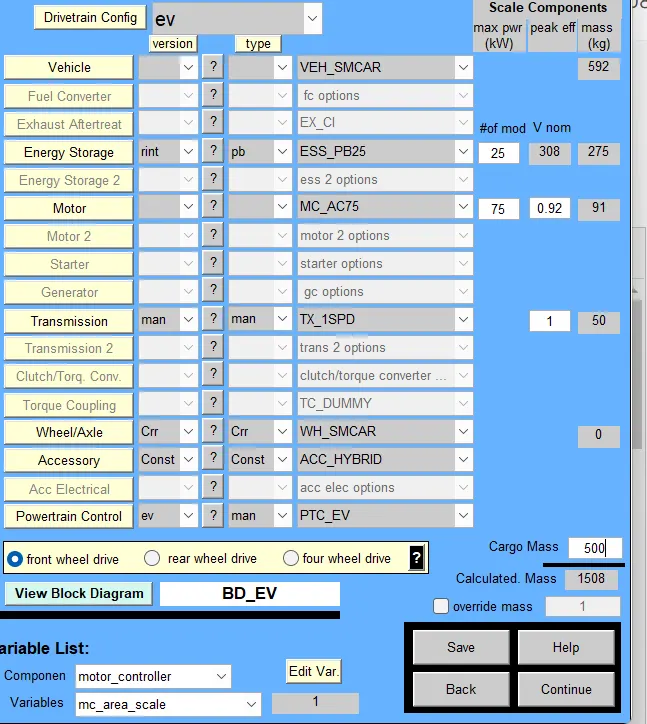
First to load 'EV_defualts_in' file in vehicle input window.

Next change the cargo mass into 500kg,and also change in calculated mass(total mass of the vehicle).
In simulation parameter window,change the drive cycle to 'CYC_FTP'.
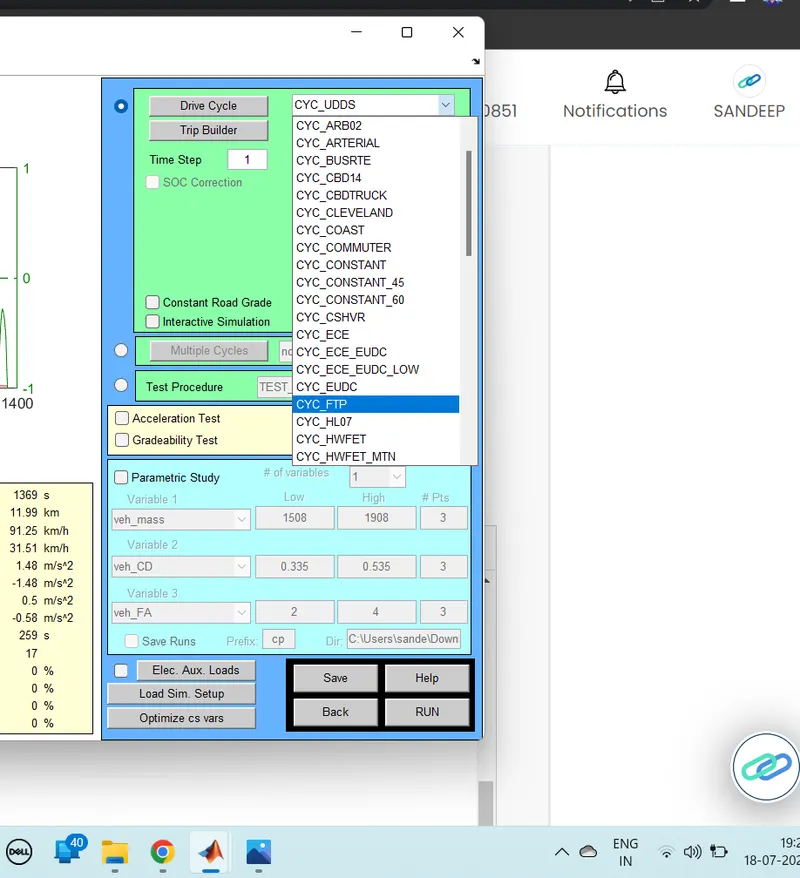
Next set drive cycle,and Run..
1 drive cycle:
Output:
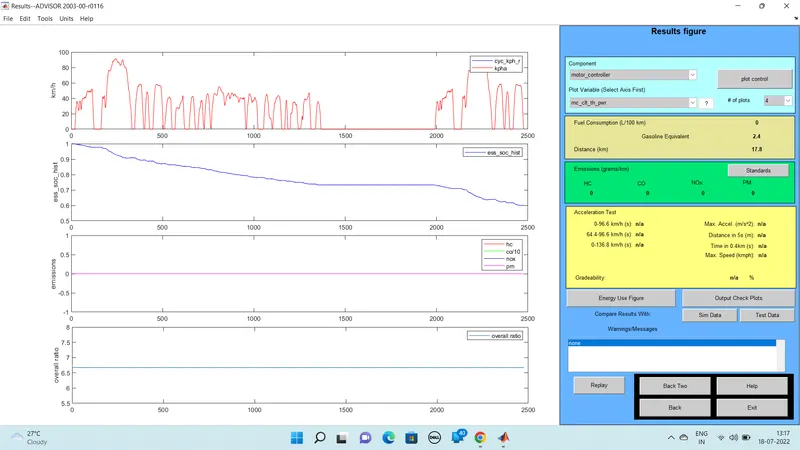
The distance travelled is 17.8Km
2nd drive cycle:
OUtput:
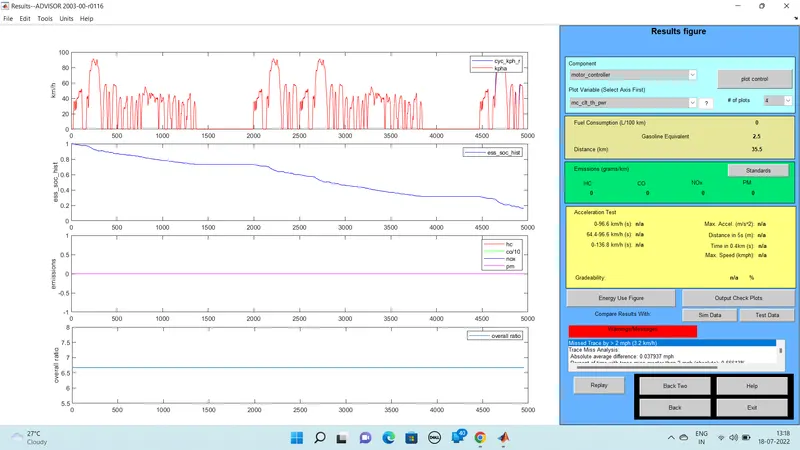
The distance travelled is 35.5km.
3rd drive cycle:
output:
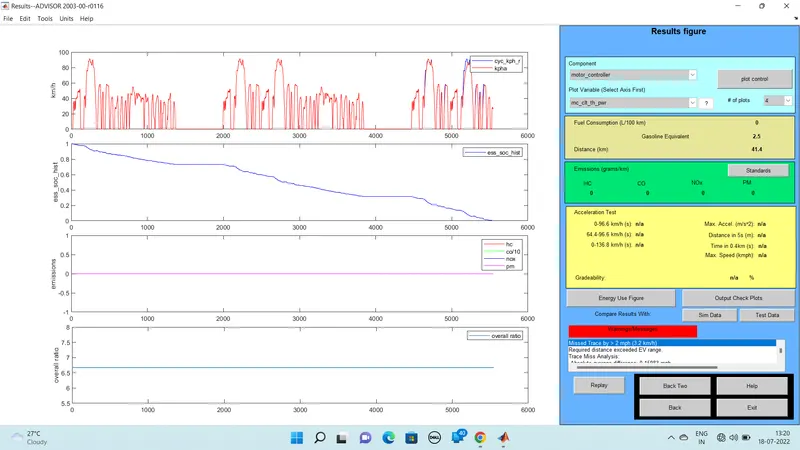
The distance travelled is 41.4km
So in this,conclude that the minimum distance travelled by the car is 17.8 KM with drive cycle CYC_FTP and the maximum distance travelled by car is 41.4km which consumes 100% of the battery in 3 drive cycles.Therefor the EV_defaults_in vehicle cannot travel for 45km with FTP drive cycle.
2.
In vehicle input window we will change the capacity of battery from energy storage .we will change '# of mod' and see the changes in voltage of the battery and weight of the battery.
And next change the no of cycles in simulation parameter window.Here we will change the drive cycles to 2 or 3 one at a time and run the simulation.
After running that simulation we will get an output ,where observe the distance traveled by the vehicle in that battery.
1.When battery module is 26 in 2nd drive cycle,
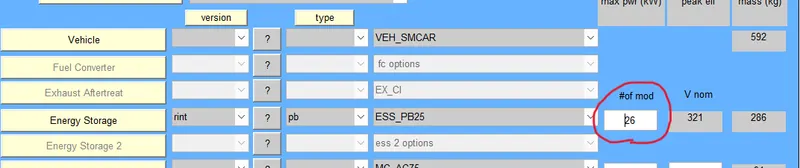
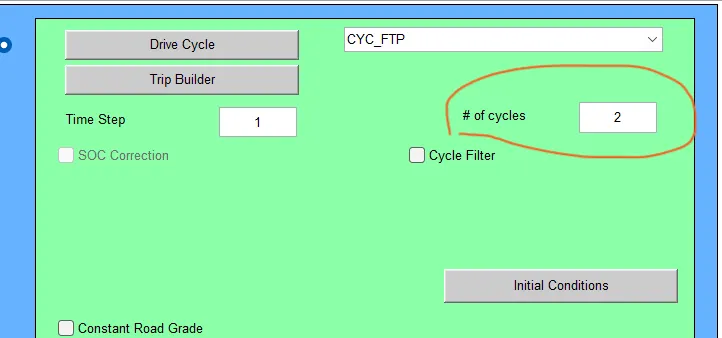
output:
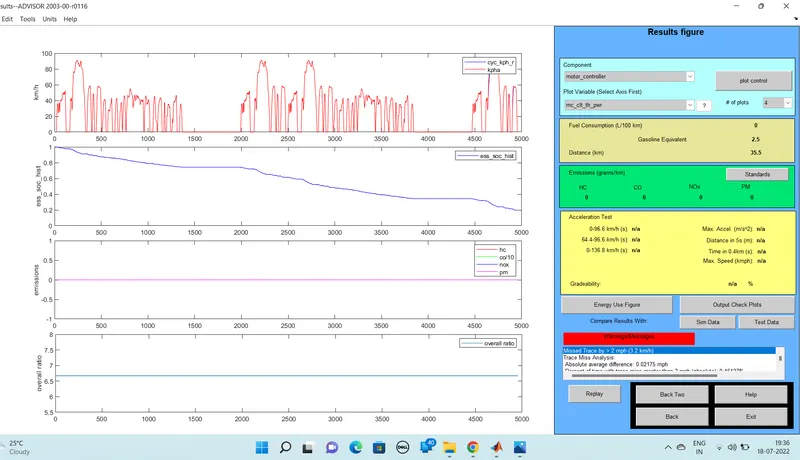
Distance traveled is 35.5km.
2.When battery module is 26 in 3rd drive cycle
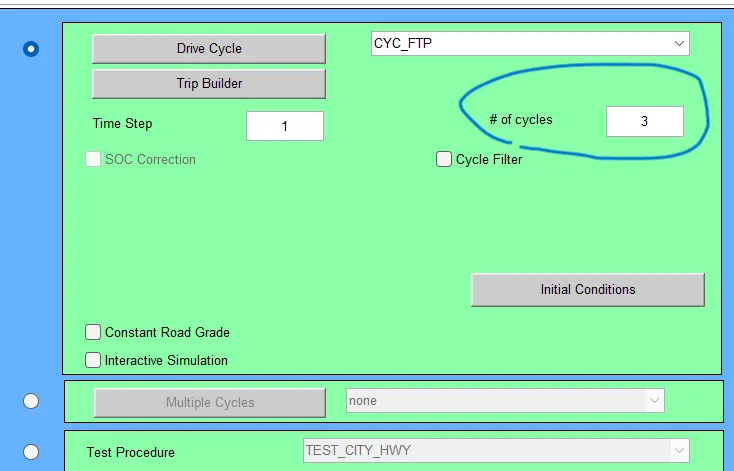
output: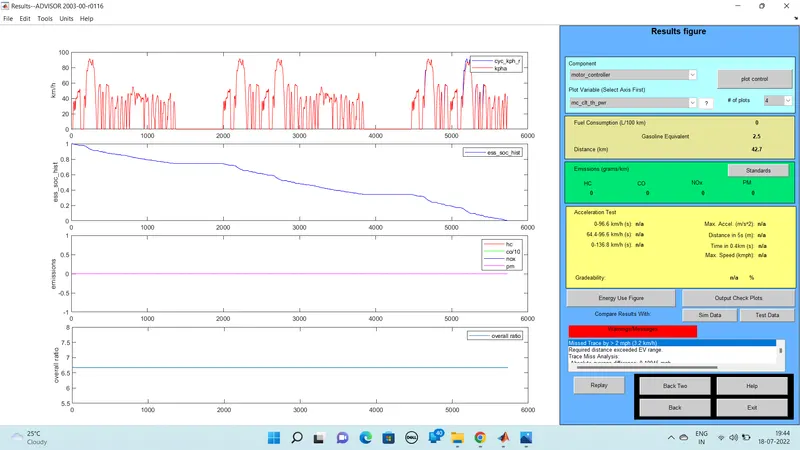
distance traveled is 42.7
3.when battery module is 27 in 2nd drive cycle:

output:
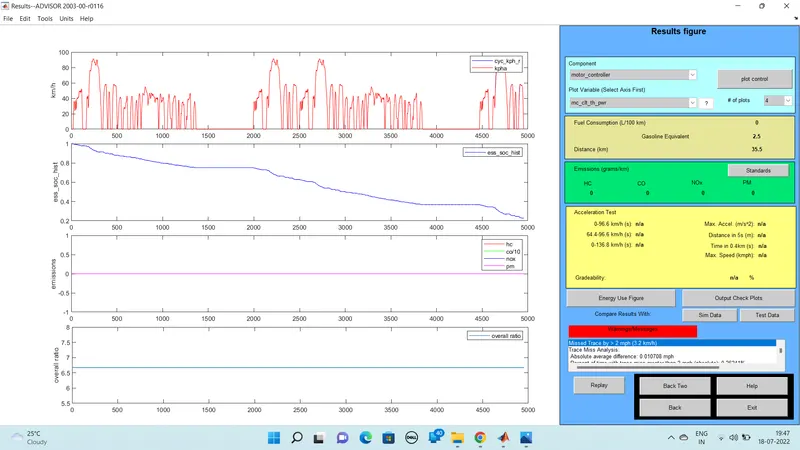
distance traveled is 35.5km.
4.When bttery module is 27 in 3rd drive cycle:
output
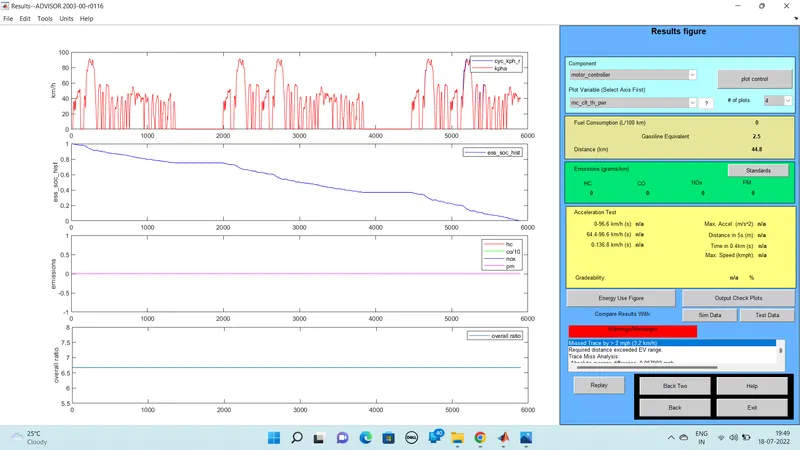
distance traveled is 44.8km.
5.when battery moduel is 28 in 2nd drive cycle:

output
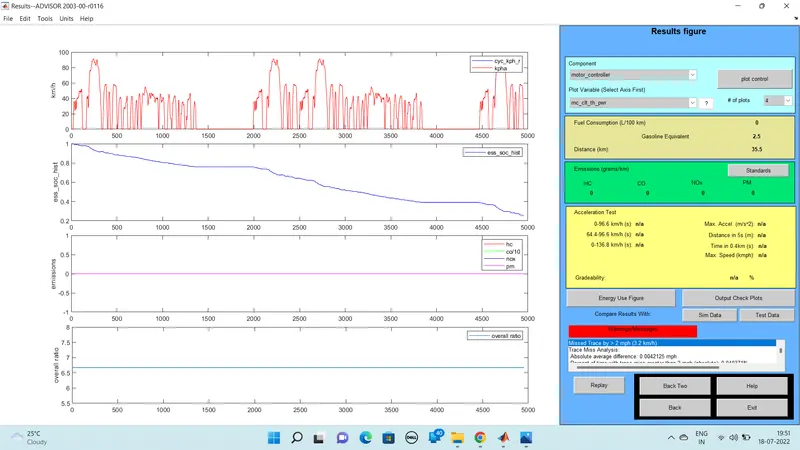
distance traveled is 35.5km.
6.when battery module is 28 in 3rd drive cycle:
output
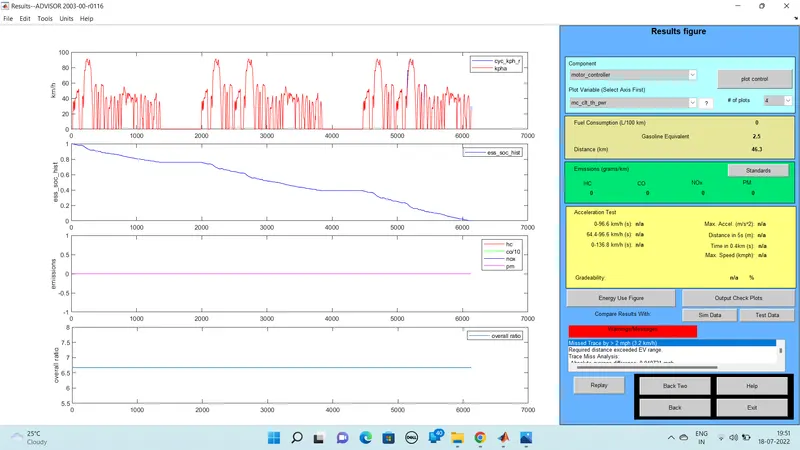
distance traveled is 46.3km.
that is,while changing the battery module in drive cycle 2 we get constant distance.
Changing the battery module in drive cycle 3 we get diffrent distances.
For 28 battery modules and in 3 drive cycles distance travlelled is 46.3 KM,therefor 28 module battery is required for travelleing 45km distance.
3.
First load 'PRIUS_jpn__default_in' model file in vehicle input window.
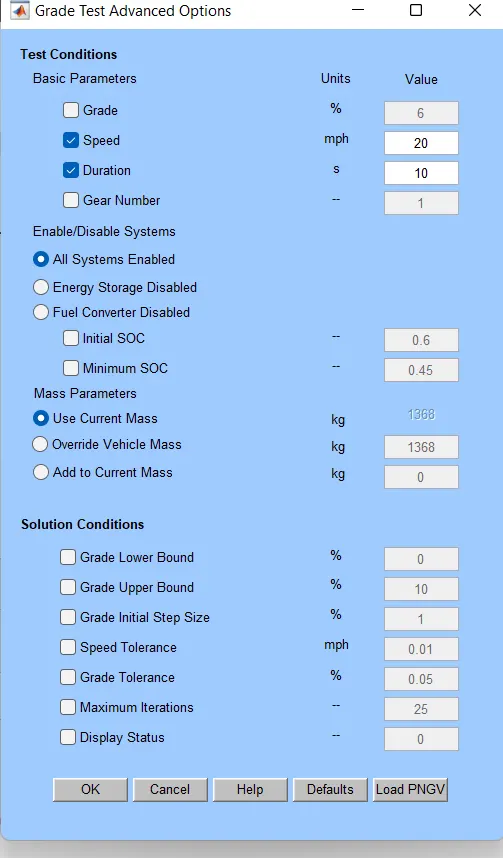
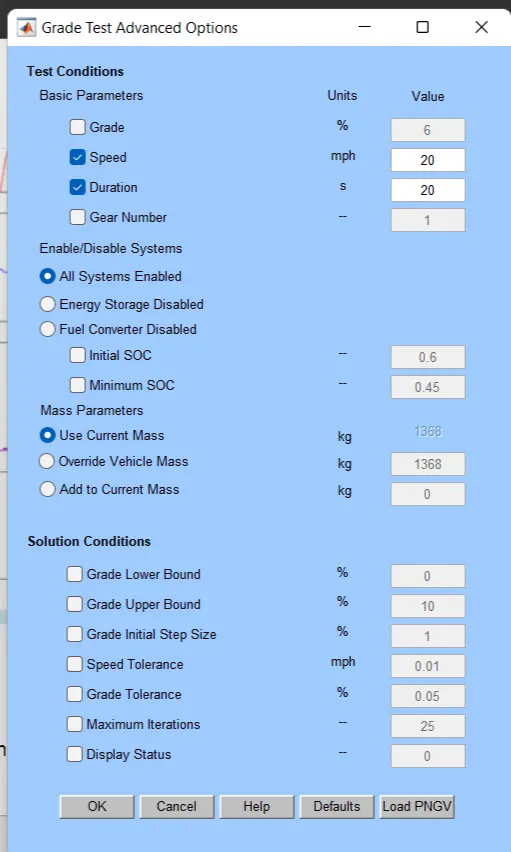
And next select gradeability test in simulation parameter window and change the speed and duration from 'Grade option' box.And also in constant road grade.
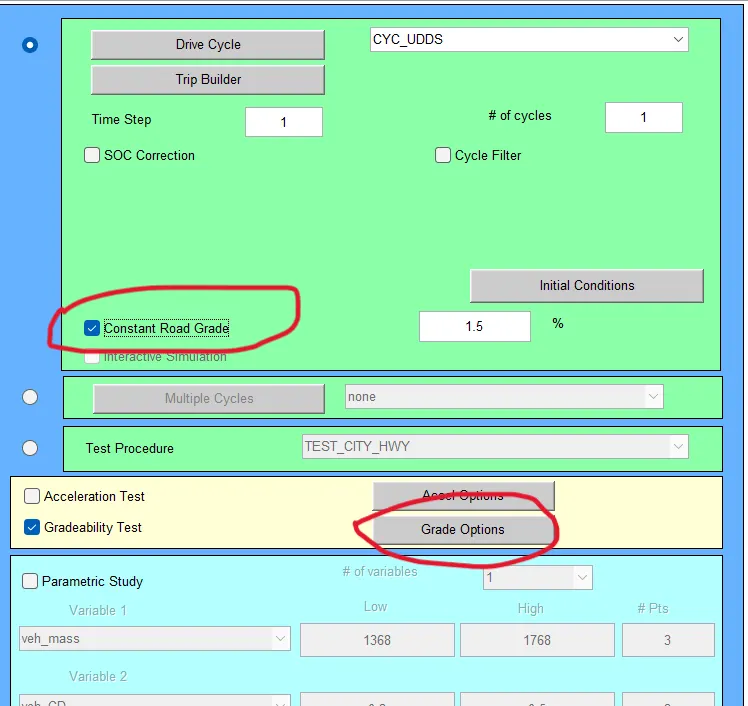
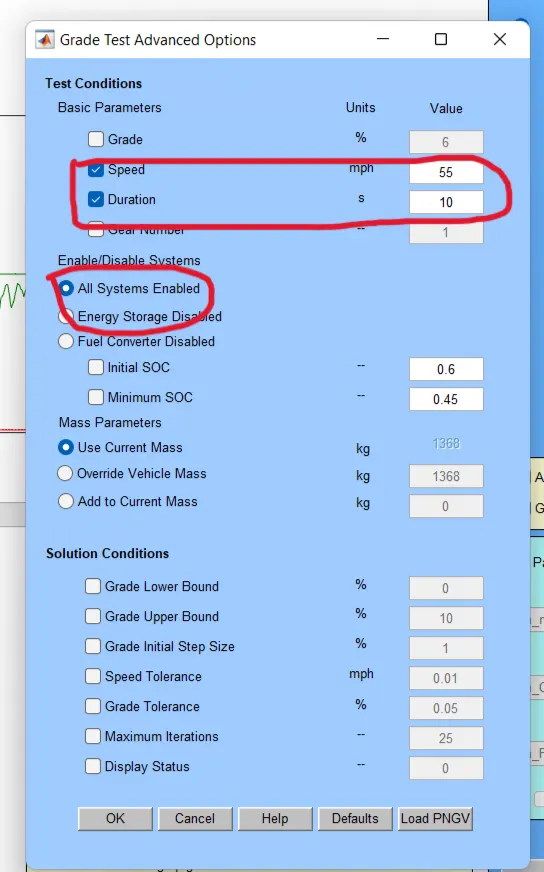
And run the simulation in different speed and time durations one at a time.
1.Speed is 20m/h and 10sec time duration:
output:
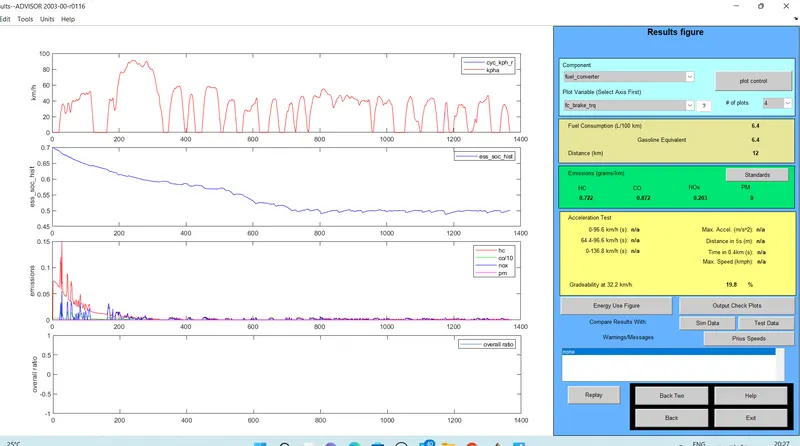
Gradeability is 19.8%.
2.Speed is 20m/h and 20sec time duration:
output:
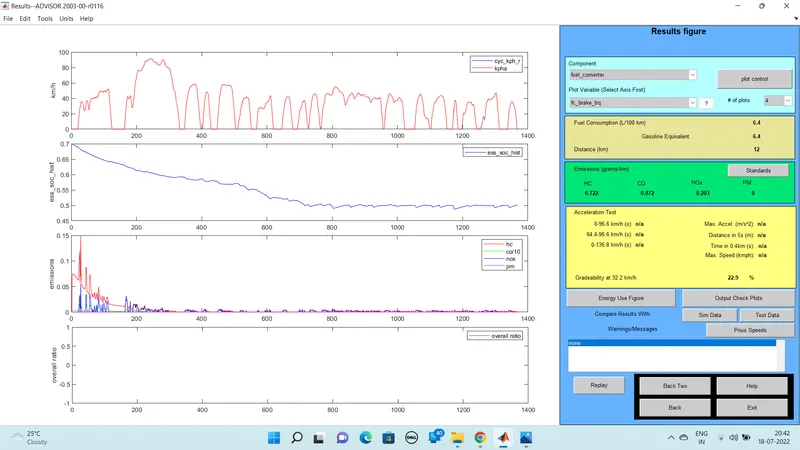
Gradeability is 22.9%.
3.speed is 30m/h and time duration is 10sec.
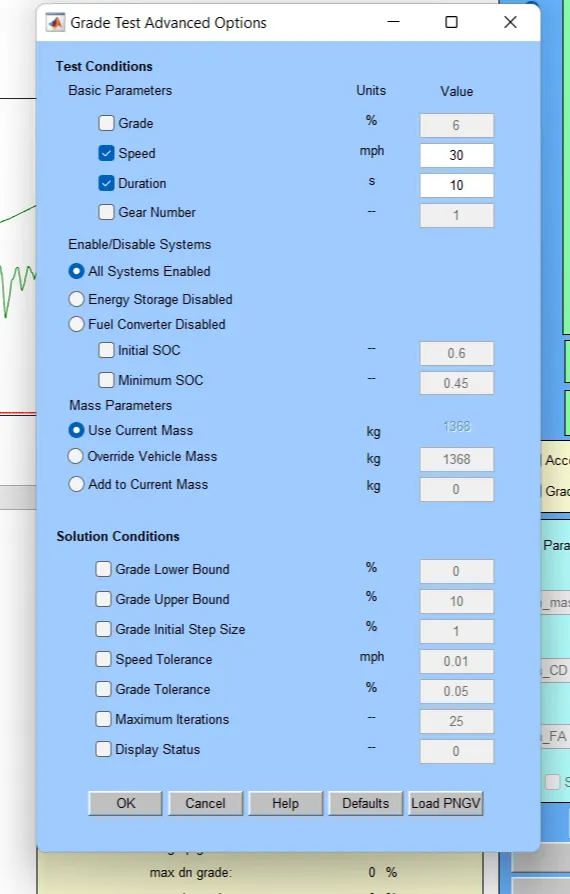
output:
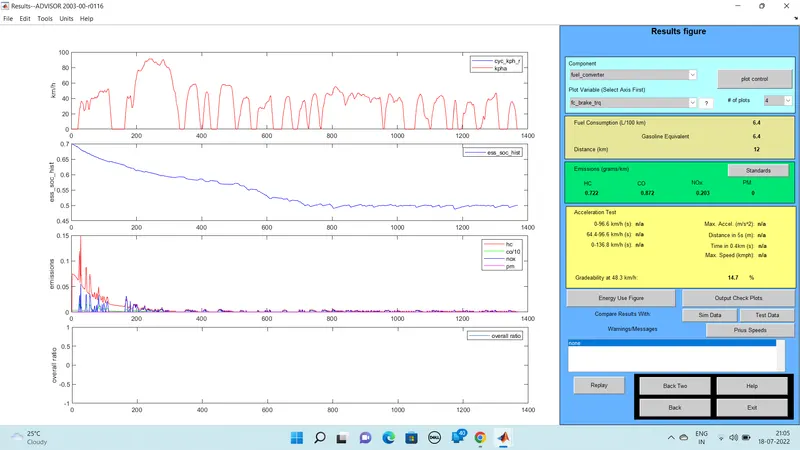
Gradeability is 14.7%
4.Speed is 30m/h and time duartion is 20sec.
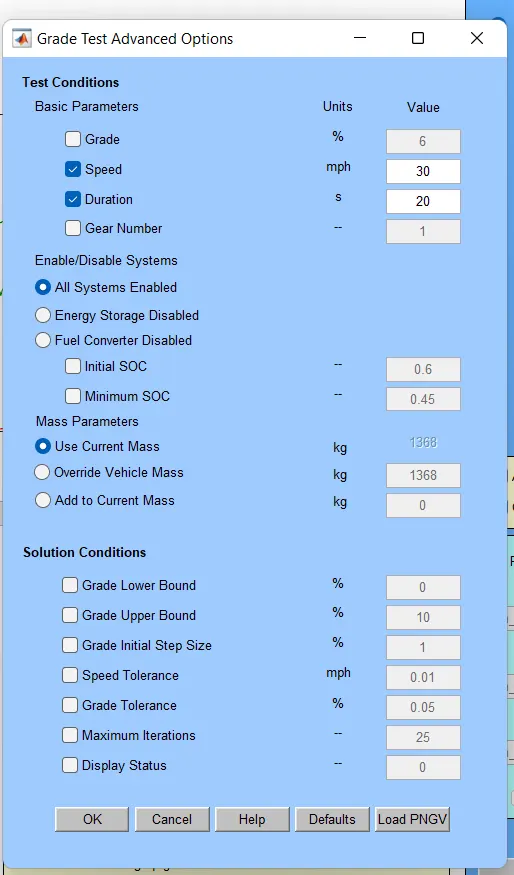
output:
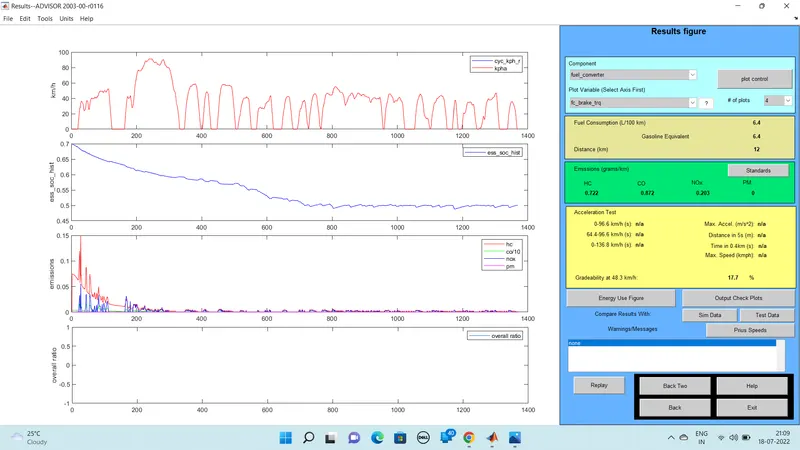
Gradeability is 17.7%.
5.Speed is 40m/h and time duration is 10 sec.
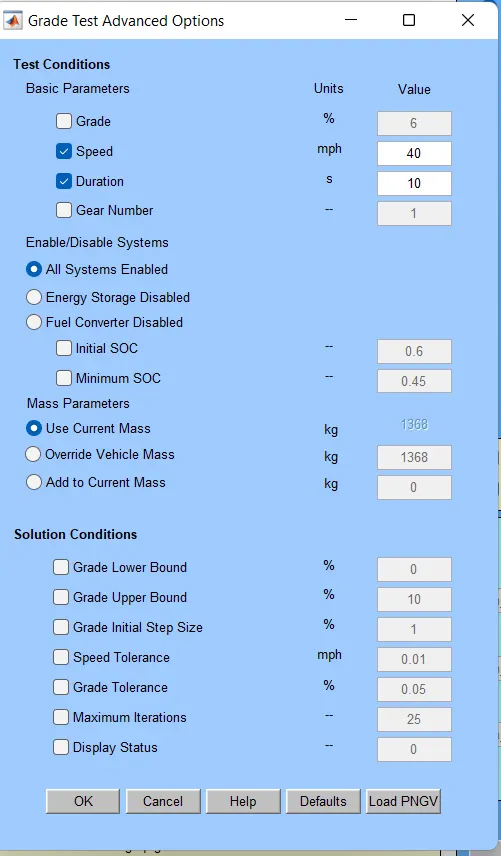
output:
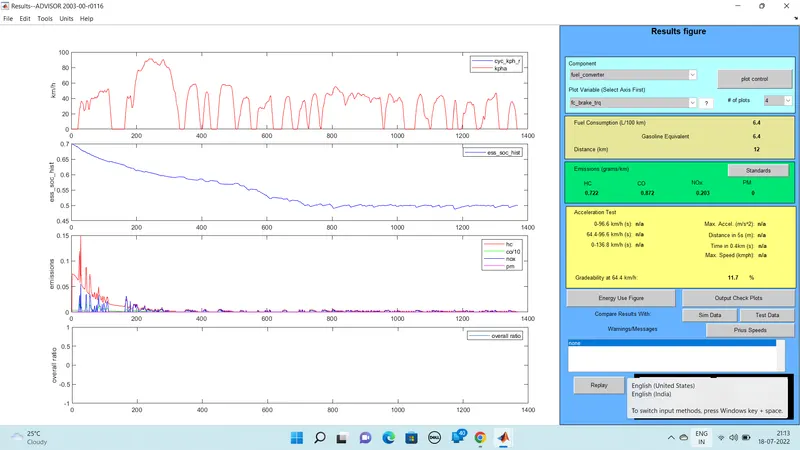
GRadeability is 11.7%.
6.speed is 40m/h and time duration is 20sec.
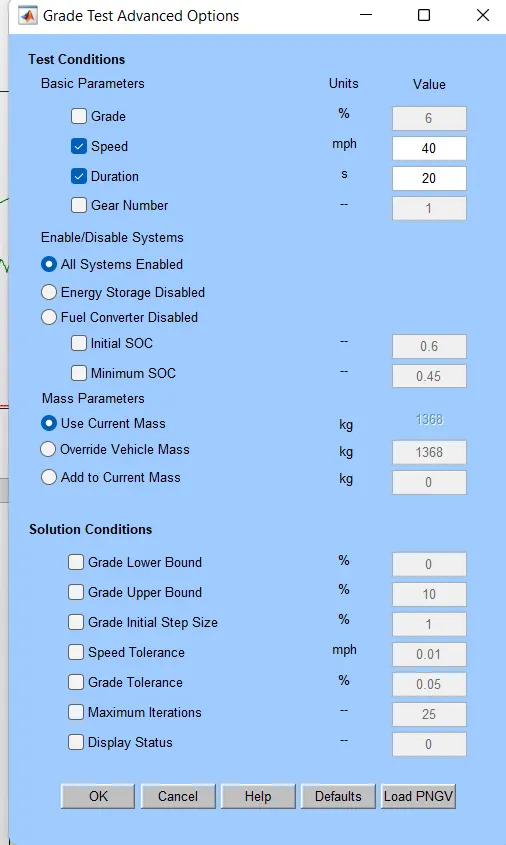
output:
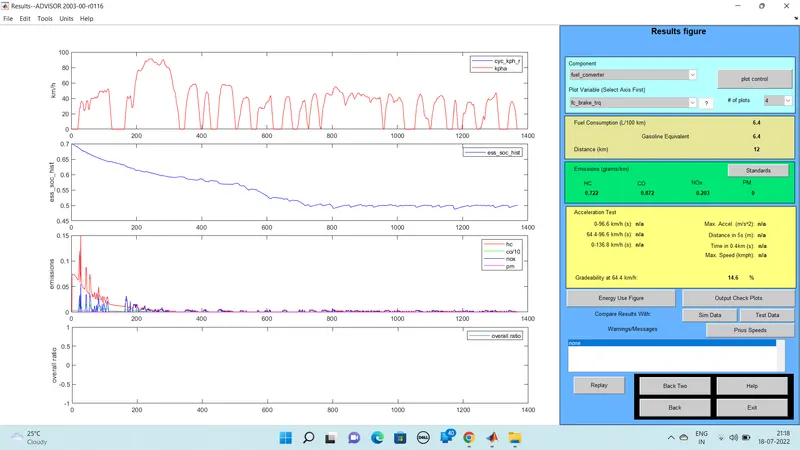
Gradeability is 14.6%.
| sl no. | Vehicle speed(m/h) | time(s) | Gradeability(%) |
| 1 | 20 | 10 | 19.8 |
| 2 | 20 | 20 | 22.9 |
| 3 | 30 | 10 | 14.7 |
| 4 | 30 | 20 | 17.7 |
| 5 | 40 | 10 | 11.7 |
| 6 | 40 | 20 | 14.6 |
we conclude that,When the vehicle speed increases there is a decrease in gradeabiltiy at 10sec and 20sec.