Week-3 Challenge: ADVISOR Tool
Aim: Simulation of Electric Vehicle using ADVISOR tool with different input parameters.
Simulation:
Q1: For EV_defaults_in file, if cargo mass is 500 kg with all other default conditions, can the vehicle travel for 45 km with FTP drive cycle? Conclude your observations.
Procedures:
- Initially we open the MATLAB software and change its path to the folder where advisor tool is installed.
- We run ADVISOR tool by typing ‘advisor’ in the command window.
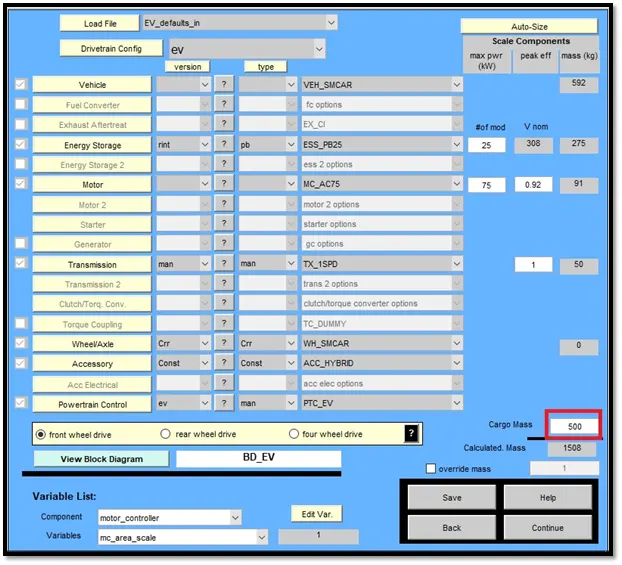
- Once ADVISOR tool window opens up we have to change the vehicle type to EV_defaults_in as mentioned in the question.
- Keeping all the other parameters same, change the cargo weight to 500 kg.
5. In the next window, select the drive cycle as ‘FTP drive cycle’ as per the question. For first condition, keep number of cycle as 1.
Case #1: Drive Cycle = 1:
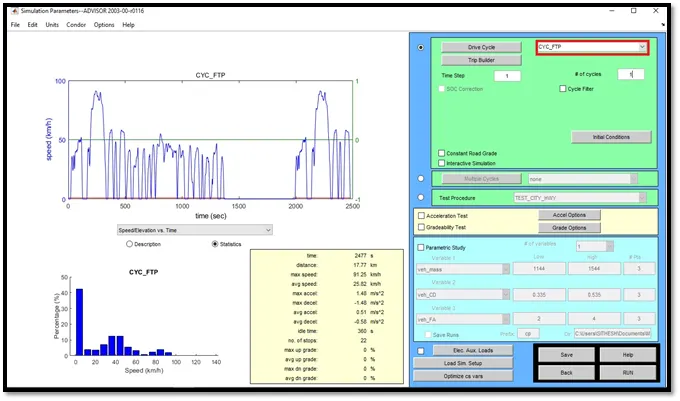 If we run this, we get the following outputs:
Output:
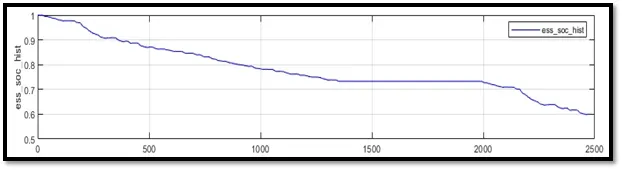
Battery SOC:
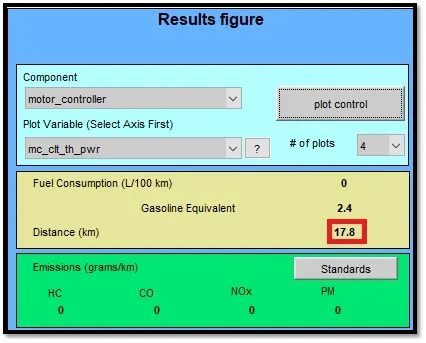
Distance travelled:
Case #2: Drive Cycle = 2:
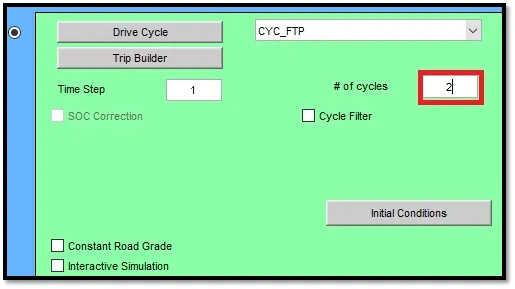
Output:
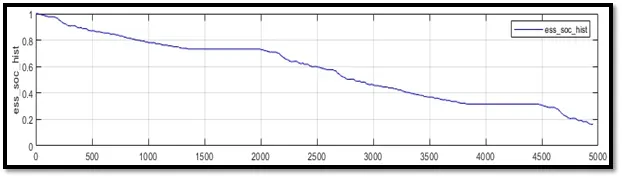
Battery SOC:
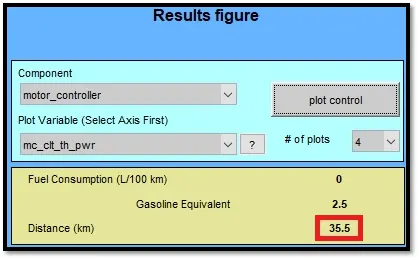
Distance travelled:
Case #3: Drive Cycle = 3:
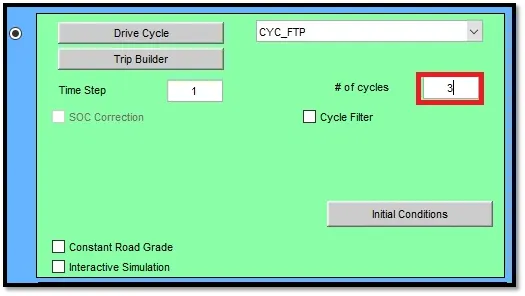
Output:
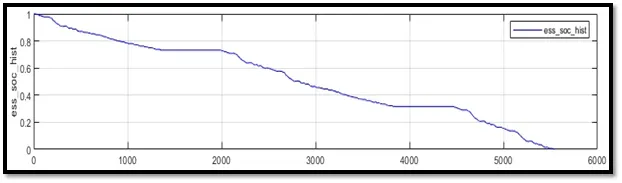
Battery SOC:
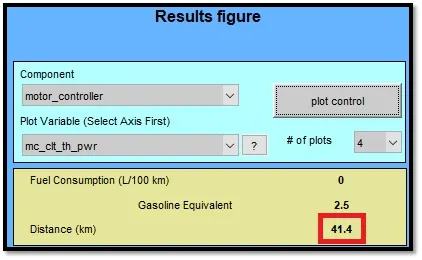
Distance travelled:
From the above plots, the following points can be inferred:
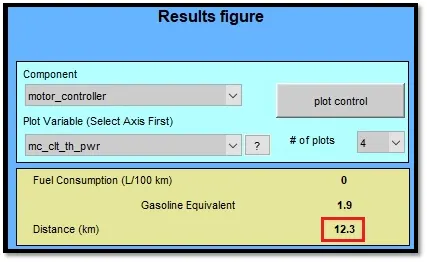
- The maximum travelled distance by an Electric Vehicle using FTP drive cycle (for number of cycle= 1) is 17.77 km.
- As the number of drive cycle increases, the battery SOC decreases. It can be observed that when number of drive cycle = 3, the battery SOC becomes zero. Since the vehicle is completely battery dependent, it cannot travel further.
- So it can be concluded that the maximum distance that can be achieved with FTP driving cycle is less than 45 km (41.4 km).
Q2. In the above case, try changing the battery capacity and repeat the simulation.
All the parameters are kept constant as the previous question and we just change the number of battery modules (Battery capacity) to view its effect on distance travelled:
OUTPUT:
Number of Modules = 10:
Number of Modules = 15:
Number of Modules = 25:
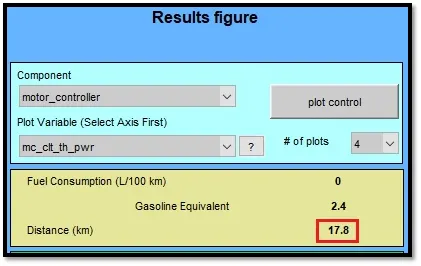
Number of Modules = 30:
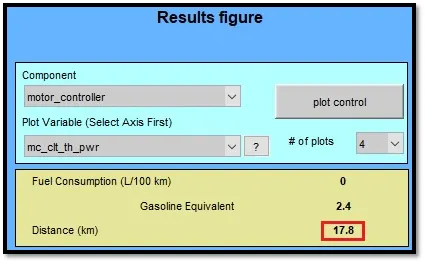
Number of Modules = 35:
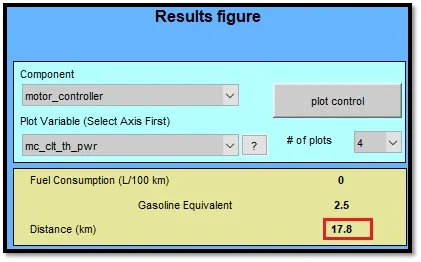
Number of Modules = 40:
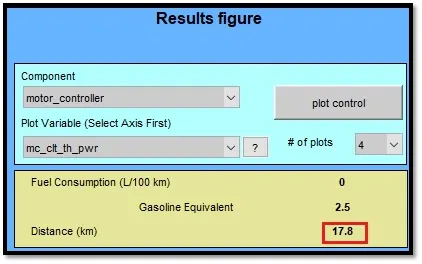
From the above plots, it can be inferred that,
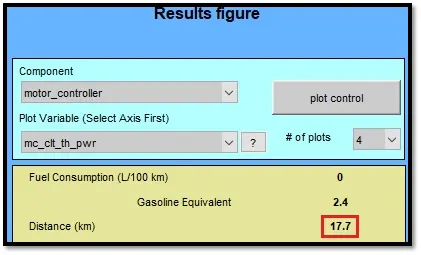
- With increase in the number of battery modules, the distance travelled by the vehicle also increases.
- After 25, the distance covered by the vehicle remains constant at 17.8 km.
Q3. Perform gradeability test with PRIUS_Jpn_defaults_in file. Compare your results in table and conclude.
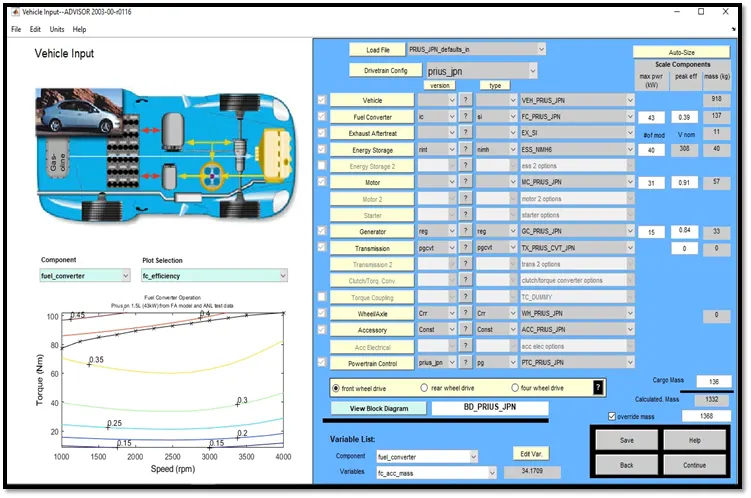
We have opened a new model ‘PRIUS_Jpn_defaults_in’ as mentioned in the question. All the parameters are kept as default.
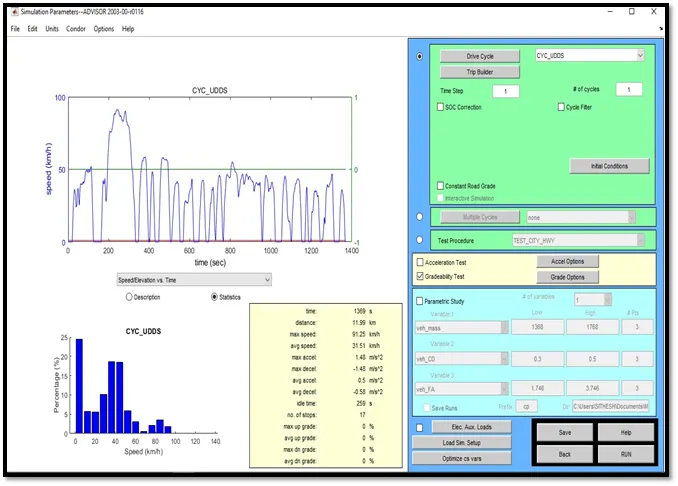
We have enabled the Gradeability option. After clicking on ‘Grade Option’ , this window pops up:
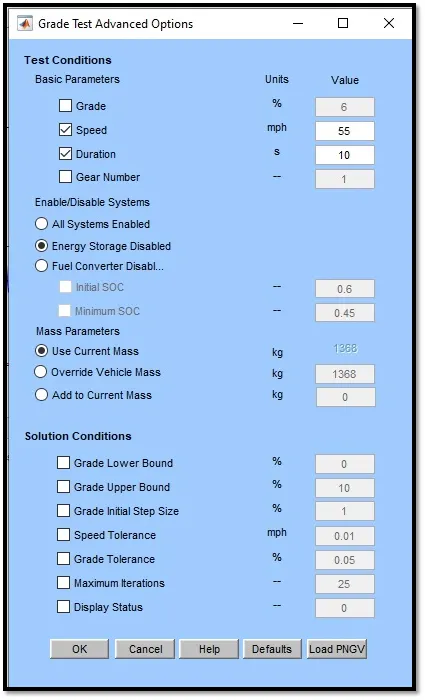
Now, if we change the values of speed in this window we get different grade values.
OUTPUTS:
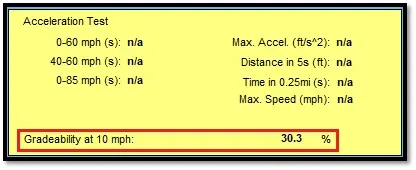
Speed = 10 mph
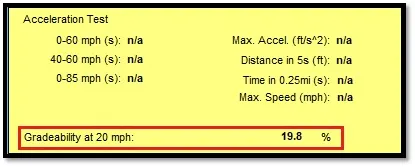
Speed = 20 mph
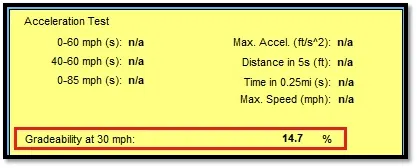
Speed = 30 mph
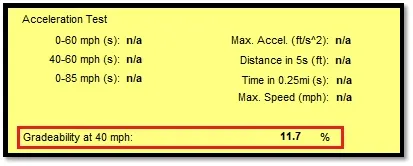
Speed = 40 mph
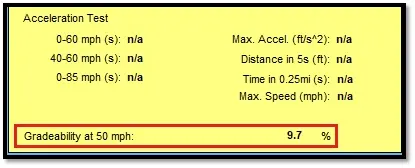
Speed = 50 mph
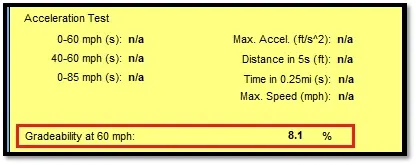
Speed = 60 mph
Speed = 70 mph
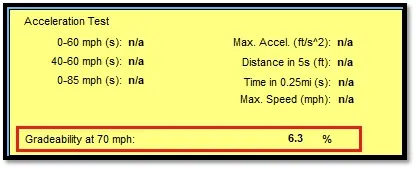
Table:
|
Speed (mph) |
Gradability (%) |
|
10 |
30.3 |
|
20 |
19.8 |
|
30 |
14.7 |
|
40 |
11.7 |
|
50 |
9.7 |
|
60 |
8.1 |
|
70 |
6.3 |
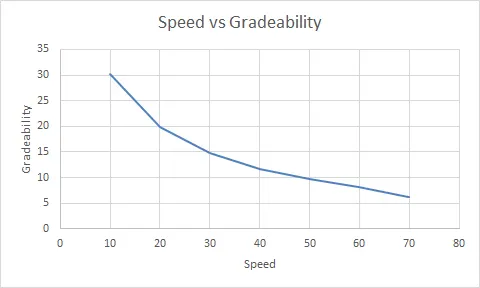
CONCLUSION:
From this table, it can be concluded that with increase in the velocity (mph) of vehicle, the gradeability decreases.