CASE STUDY OF DIFFRENT EV MODELS USING ADVISOR TOOL
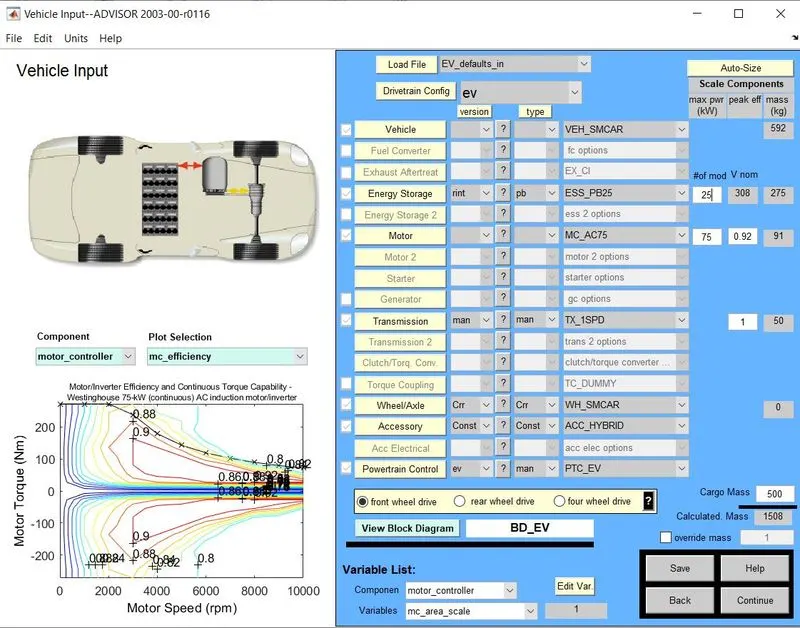
Case Study on EV_Default file for 500 kg cargo mass with default and variable battery conditions on Advisor Simulator.
About Advisor - ADVISOR or Advance vehicle simulator software is a parametric study tool developed by the National Renewable Energy Laboratory or NREL(U.S.A) in collaboration with MATLAB to facilitate the parametric study for hybrid and fully electric vehicles. all the data in the simulator is from the laboratory test result and can be modified. The tool uses Simulink-based models and performs a calculation on various models of parallel or series Hybrid electric vehicles or fully electric models.
In Case Study I, we are going to perform a test on the EV_default file from the model and Calculate the range of the vehicle if the payload is increased to 500 kg weight.
DATA INPUTS(Default) -
CASE I(a) -
- The data used in the study are default data only the payload capacity to 500 kg is updated and the simulation is done.
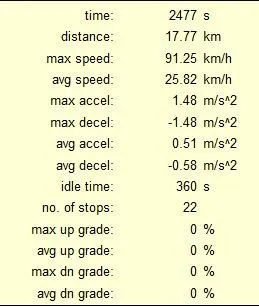
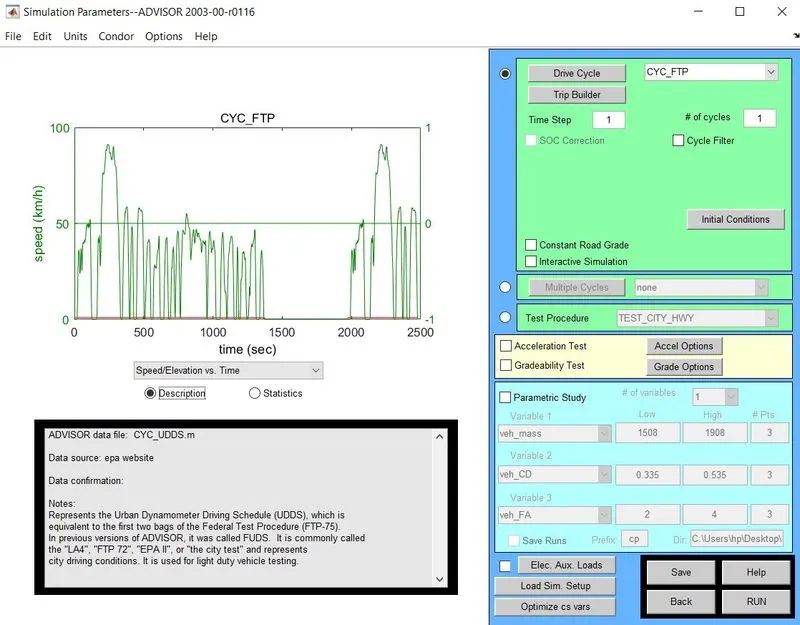
- from the drive cycle menu, we selected the FTP drive cycle for vehicle simulation. Drive cycle statistics are described below.
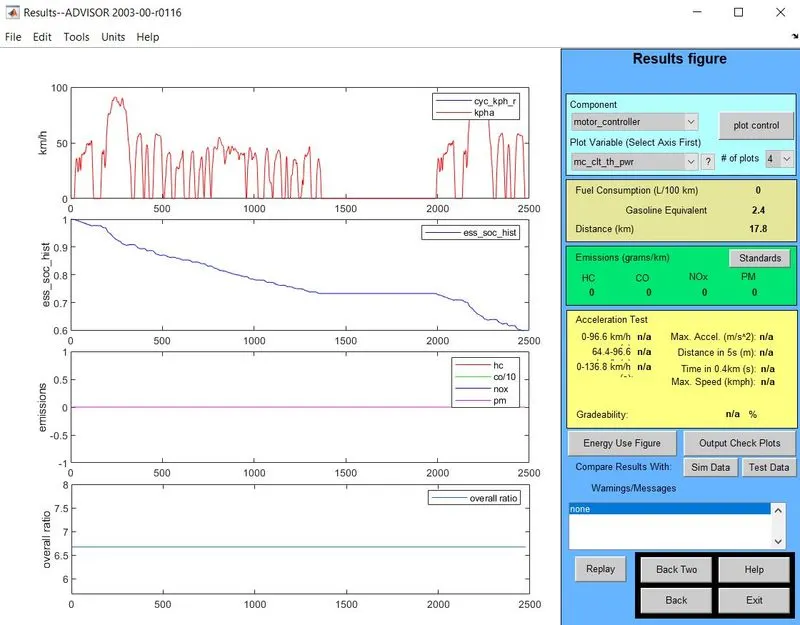
- On running the simulation on these parameters, we get the following results
Conclusions -
- In the 2nd plot, we can see that the SoC of the vehicle is decreased by 40%.
- the total distance covered in 1 complete cycle is 17.8 km
CASE I(b) -
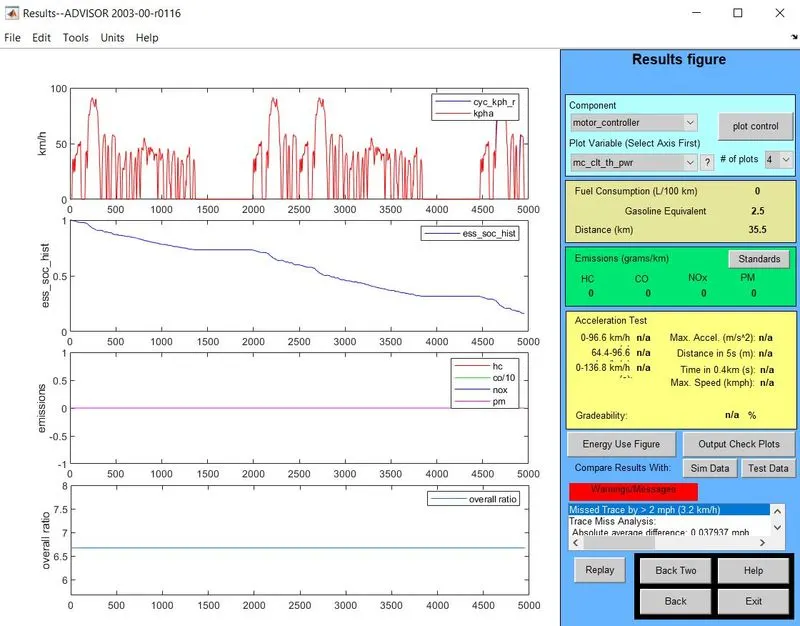
If we increase the number of cycles to 2 and by keeping the other parameters the same then the following result is obtained.
Results -
Conclusion -
- In the above experiment, we can see that if the number of cycles is increased to 2 the SoC in dropped to 20% of the initial condition.
- The total distance covered by the vehicle in the above experiment is 35.5 km
CASE I(c) -
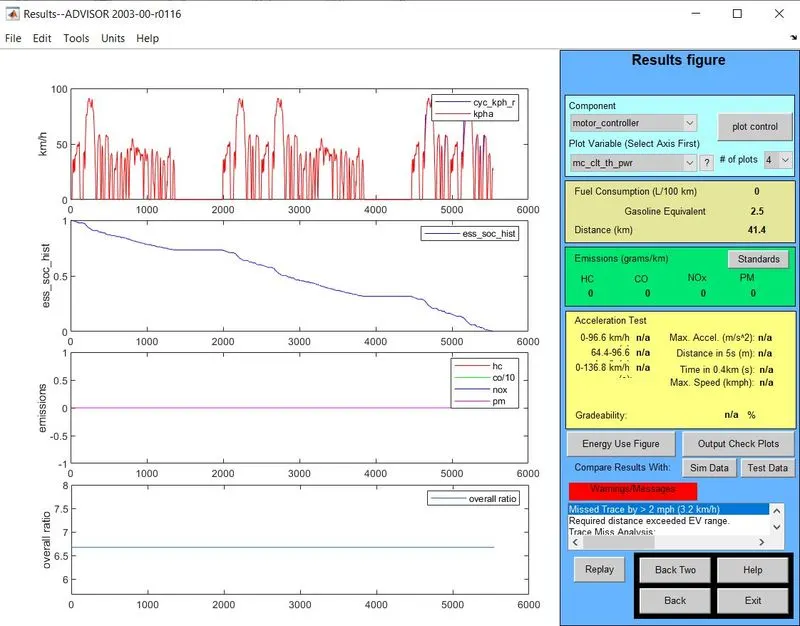
IF the number of FTP cycles is increased to 3 while keeping other parameters constant we get the following result,
Conclusion -
- In the above experiment we can see that the SoC of the vehicle is reached its max capacity hence it can be assumed that the vehicle cannot be used further without charging.
- The distance traveled in this instance is 41.4 km
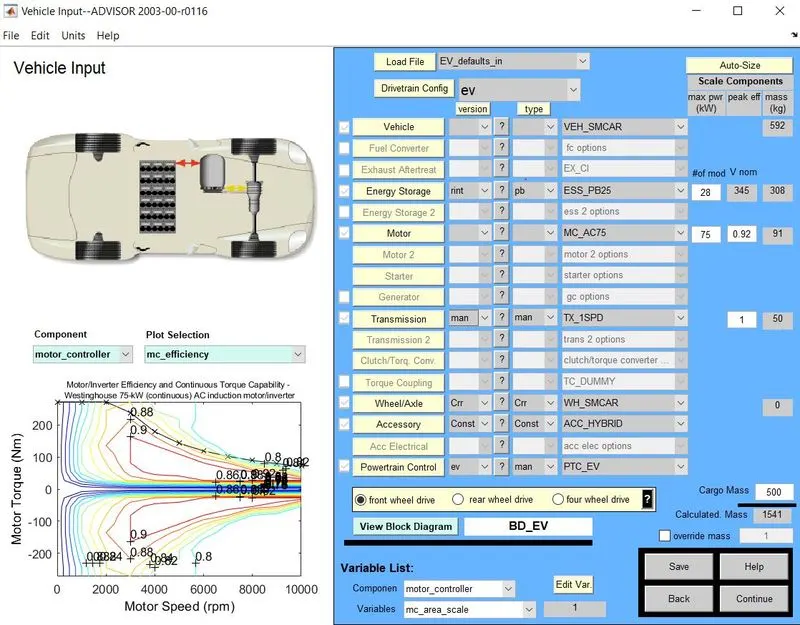
In Case Study II on EV_Default file for 500 kg cargo mass and 345Volt ESS_Pb65 battery with default conditions on Advisor Simulator.
CASE II(a) -
- Payload weight is kept at 500 kg and the battery capacity is increased in the base model.
Result -
Conclusion -
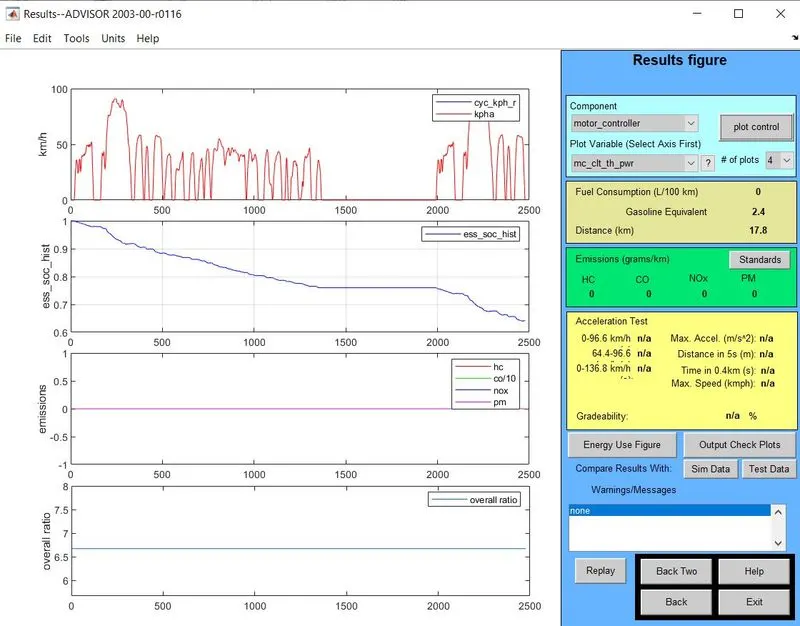
- From the above experiment, we can conclude that the SoC of the vehicle is around 64% which is around 4% more then the previous model.
- The distance covered by the cycle is around 17.8 km.
CASE II(b) -
In this iteration, we are going to run the vehicle for 2 complete cycles and calculate the results. All the other parameters are kept constant.
Result -
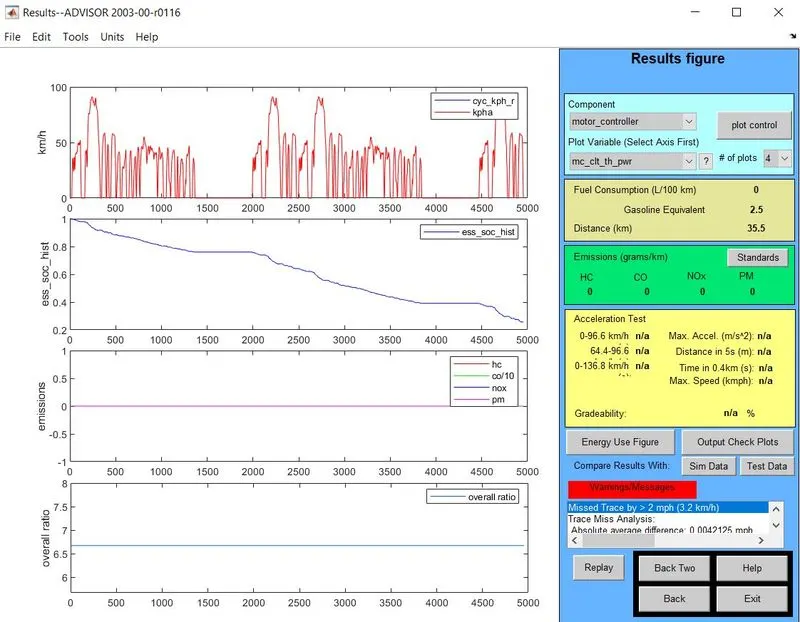
Conclusion -
- The SoC of the vehicle is around 14%.
- The distance covered by the vehicle is around 35.5 km.
Case II(c) -
In this iteration, we are going to run the vehicle for 3 complete cycles and calculate the results. All the other parameters are kept constant.
Result -
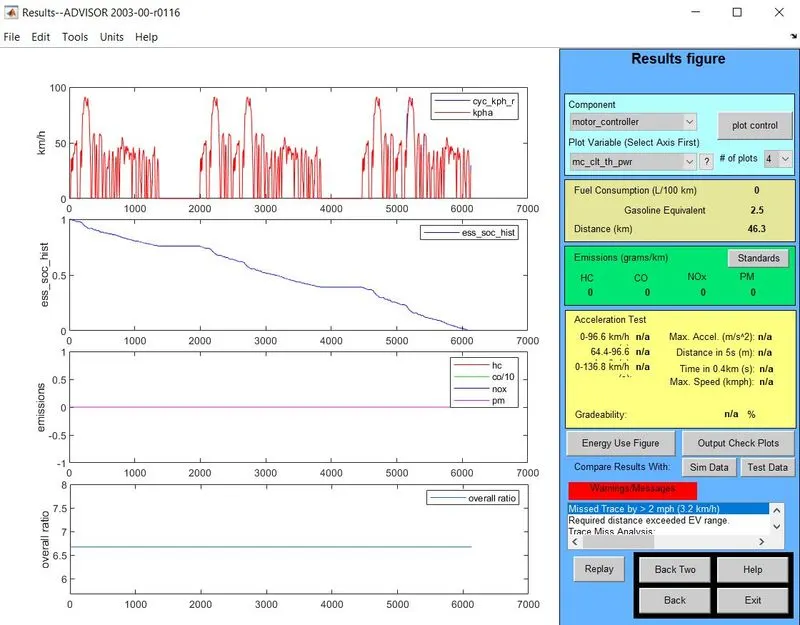
Conclusion -
- The SoC of the vehicle reached zero, the vehicle cannot be used further without charging the battery.
- the total distance covered is 46.3km which is more than the previous model.
From the above 2 experiments, we can say that the range of the current setup can be increased if increase the battery capacity.
Gradability Study on Toyota Prius Japan model
AIM - To perform a gradability study on the Toyota Prius Japan model with default parameters and tabulate the results.
About Toyota Prius -
Toyota Prius is the first mass-production hybrid vehicle developed by Toyota motor corp. in the year 1997 and developed over the span of 5 years. Currently, the 4th generation Toyota Prius is in production. Every new generation model of Toyota Prius offers 10 percent fewer emissions than before, With that in mind, the new Prius features a lighter, more compact, and more efficient hybrid powertrain that delivers better fuel economy, reduced emissions, and lower costs. Its platform adopts the Toyota New Global Architecture that is designed to improve dynamic performance through a lower center of gravity and a stronger structure.
Model Parameters -
- The test is performed with FTP 75 Cycle with 50 mph speed and for a duration of 10 sec.
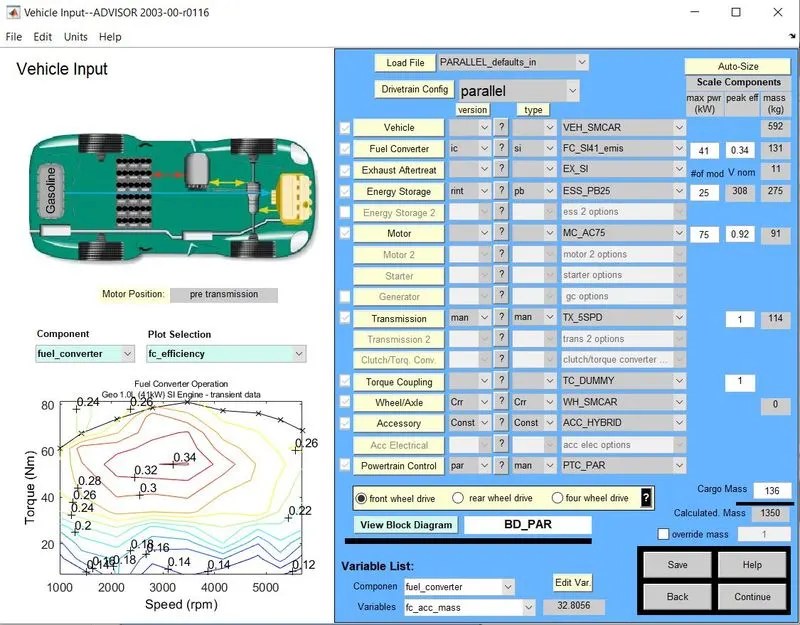
Case I
Gradability test on motor power alone.
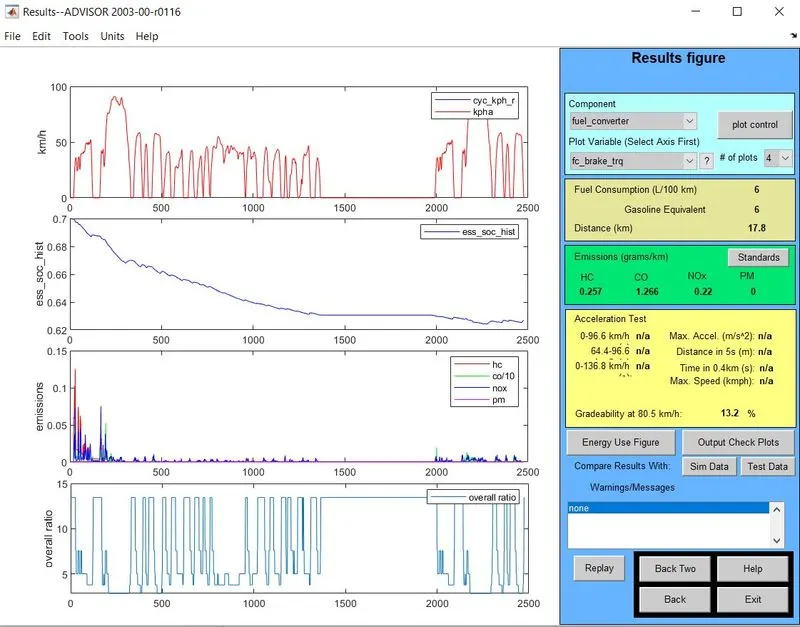
Result - The gradability is 13.2 % on motor power at 80.5 km/h
CASE II -
Gradability test on IC engine power alone
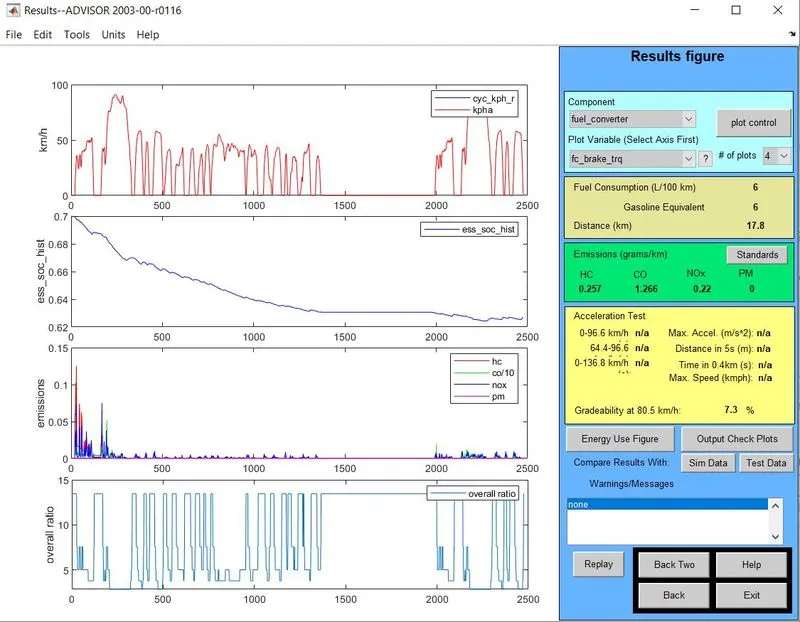
Result - The Gradability is 7.3 % on IC engine at 80.5 km/h.
CASE III -
Gradability study with motor + IC engine
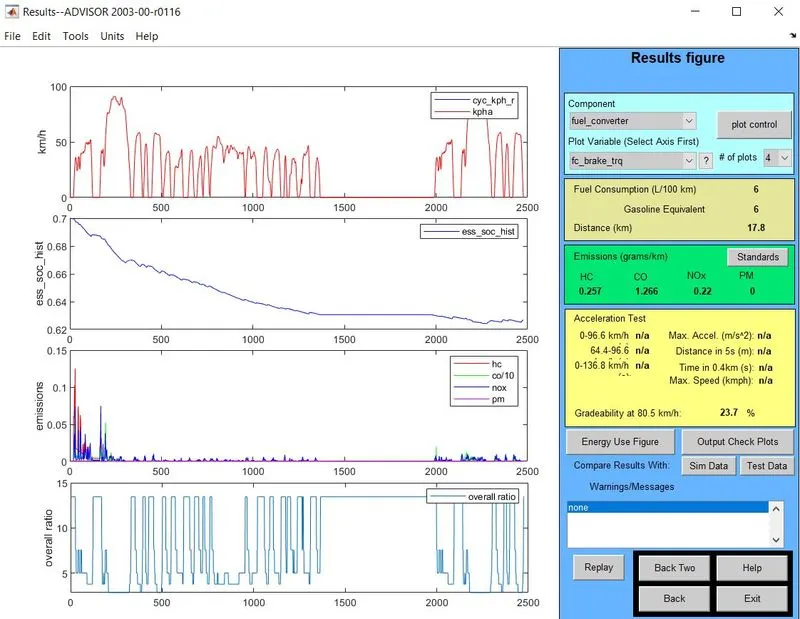
Results - The gradability is 23.7 % at 80.5 km/h
Conclusion -
- from the above results, we can conclude that the maximum gradability in a Toyota Prius is attained when all the propulsion systems in the car are activated.