Week 2 Session 7
1) Compare the different architectures of HEV.
- Series hybrid
- Parallel hybrid
- Split-power hybrid
- Compound hybrid
Series hybrid
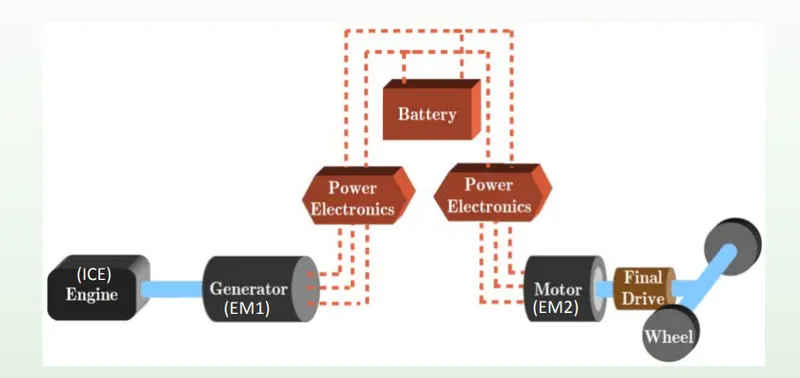
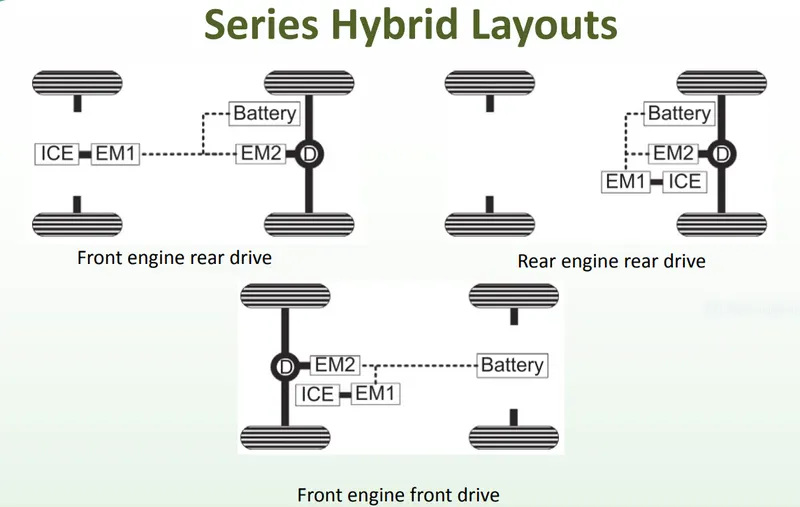
• ICE and EM are connected in series
• Basic components: ICE, electric generator (EM1),
electric motor (EM2), and ESS (battery)
• Only EM provides torque to the final drive
Discuss the Series hybrid layout Pro's:
- ICE always operates at peak efficiency range
- Efficiency loss can be further reduced due to fewer gear pairs and absence of transmission
- Outstanding towing capacity at low speed
- Big EM2 motor is able to capture more regen braking
- Control system is relatively simple
Discuss the Series hybrid layout Con's:
- Overall efficiency suffers especially at high speed
- EM can only output a portion of its maximum power at low speed, reversely increases EM size and costs.
- EM2 needs to meet all driving needs, increasing cost, weight, and installation space
- ICE is not engaged in final driving
Suitable applications
mining vehicle, city bus (with frequent start-stop applications).
Parallel hybrid
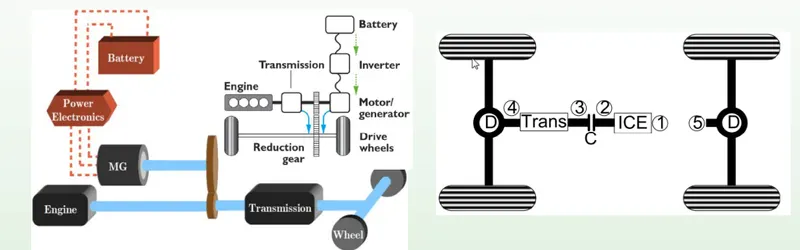
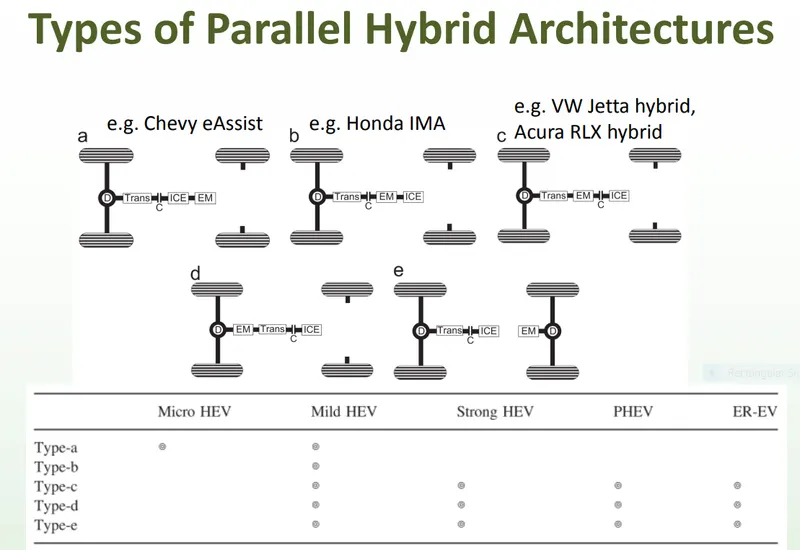
- Engine and electric motor are connected with fixed speed ratio.
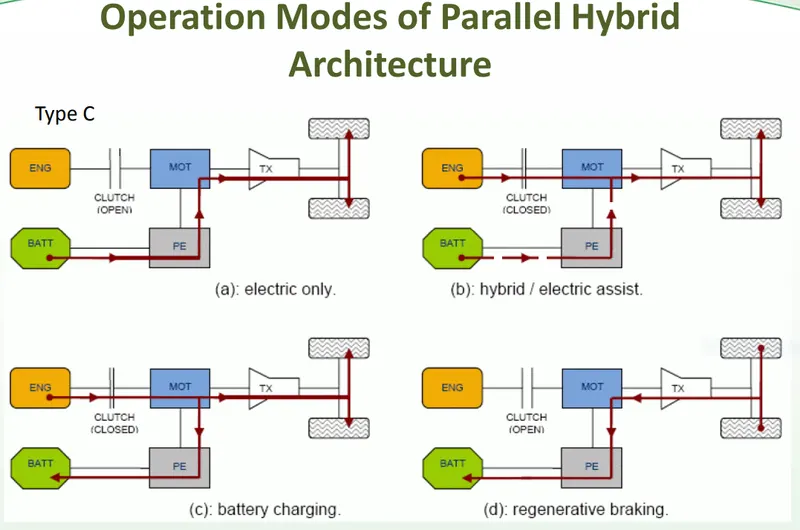
- Both ICE and EM can provide torque to final driving, separately or together.
- Usually includes a transmission.
Discuss the Parallel hybrid layout Pro's:
- Total efficiency is higher doing cruising and highway driving
- Required relatively small EM
- Large design flexibility
Discuss the Parallel hybrid layout Con's:
- Complicated system with many variables
- ICE does not always operate at peak efficiency
- Battery cannot be charged at standstill
Example vehicles: Honda insight Hybrid, VW Jetta Hybrid, Acura RLX Hybrid, Nissan Pathfinder Hybrid
Split-power hybrid
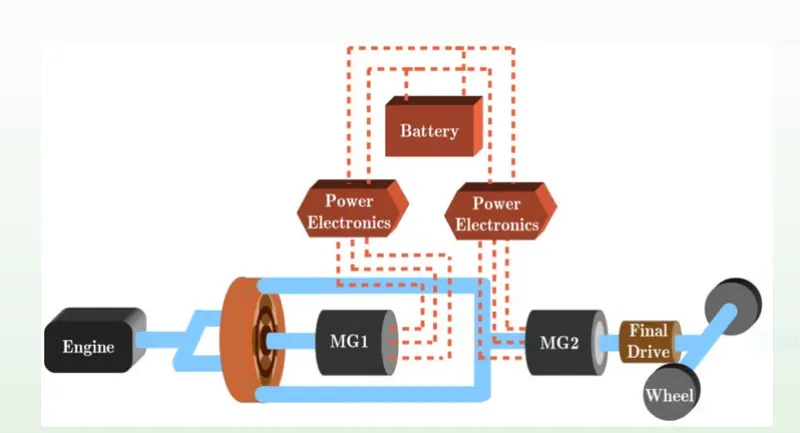
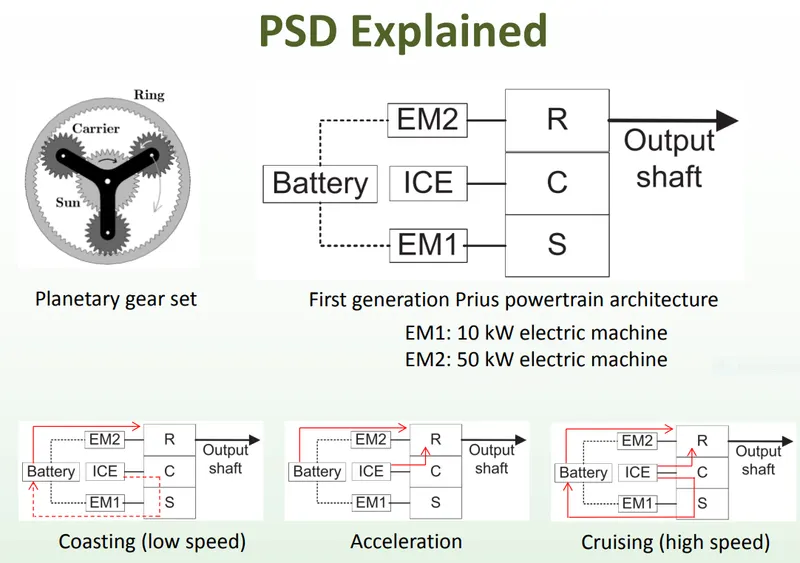
- Double connection between the engine and the final drive: mechanical and electrical.
- Consist of one or more power split device (PSD).
Discuss Split-power hybrid layout Pro's:
- Maximum flexibility to switch between electric and ICE power
- Allows for a smaller, and more efficient ICE design
Discuss Split-power hybrid layout Con's:
- Highly complex system, more expensive than parallel hybrid
- Efficiency transmitted over the electrical path is lower
Example vehicles: Toyota Prius, Lexus CT200h, Lexus RX400h.
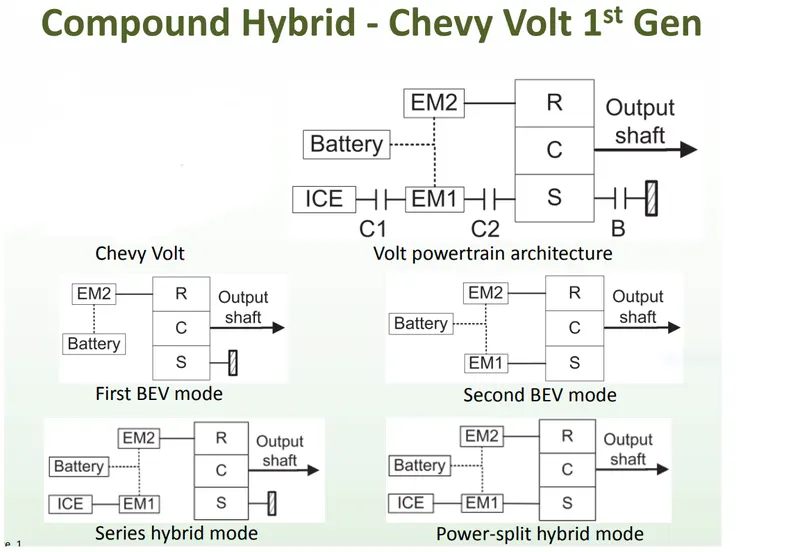
Compound hybrid
- Able to operate in more than one basic hybrid mode in a single architecture.
- May include Series/parallel, series/power split, parallel-parallel, and many other configurations.
- Increased cost and complexity.