Railwheel and Track
- Objectives: To perform Static Structural analysis of Rail Wheel and Track using ANSYS Workbench
- Geometrical Design:
We have 3D Geometry of Rail Wheel with Track; Shaft is also attached with Rail Wheel,
- Material Properties:
We have taken Structural Steel Material for consideration in this analysis;
Here are the mechanical properties of the materials.
- Problem Statement:
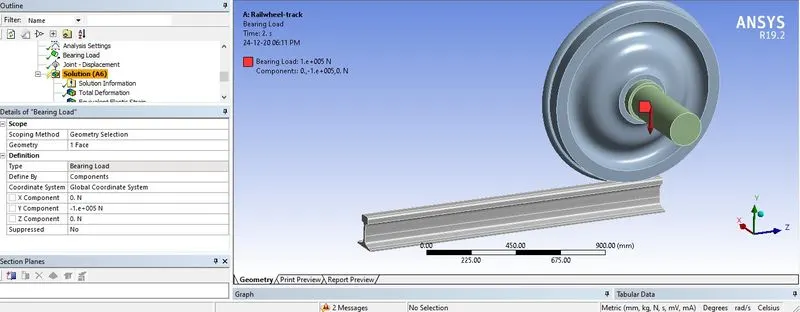
Rail wheel and track will be analysed using ANSYS workbench for two cases, in Case 1 we will apply Bearing Load of 100000 N and in Case 2 we will apply 500000 N Load. Boundary conditions for the both cases will be same.
- Mesh Criterion:
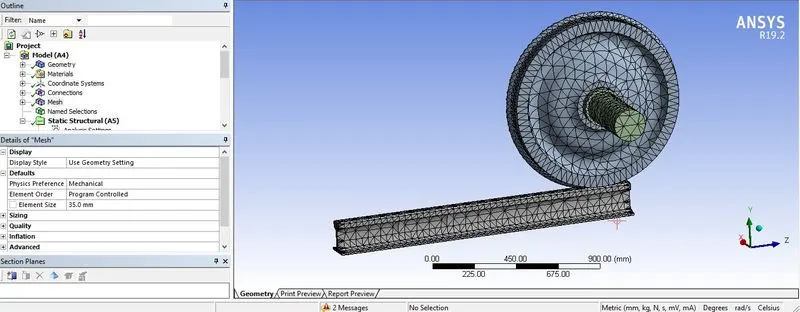
Type of Element: Automatic Method (Mixed Elements, Tet & Hex)
Size of Element: 35 mm
Mesh Refinement: 35 mm (At Faces of Contact)
This is how assembly looks like after Meshing;
- Boundary Conditions:
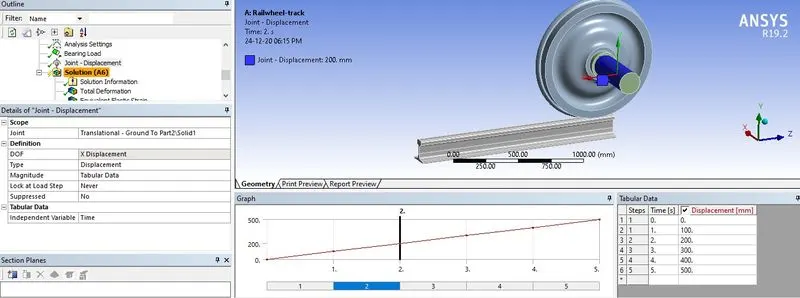
Two Contacts made, One is Wheel to Track (Friction Co-efficient=0.3) and another is Shaft to Wheel (Friction Less). 3 Types of joints considered in one Track is fixed, in second Shaft will be in translation, and in third wheel face is given planner joint on one of its face. We will look for Total Deformation, Equivalent Elastic Strain, Equivalent Stress & User Defined Results.
- Loading and Analysis Settings:
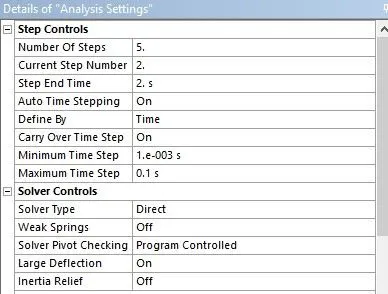
Shaft is applied Joint Displacement of 200 mm in each steps, total 6 steps for the analysis, Rail Wheel inner is applied with Bearing load of 10000 N and 500000 N for case 1 & case 2 respectively.
Large Deflection: On
Initial Time Step: 1 s
Minimum Time Step:0.1 s
Maximum Time Step: 1 s
Solver Type: Direct
1) Bearing Load
2) Joint Displacement
- Post Processing:
After analysing we have focussed on these results,
Case 1:
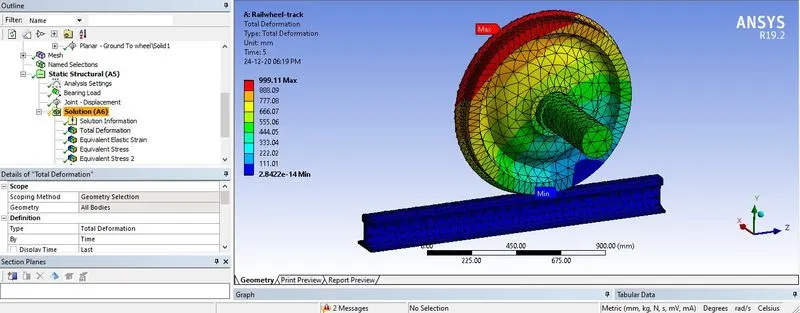
Total Deformation
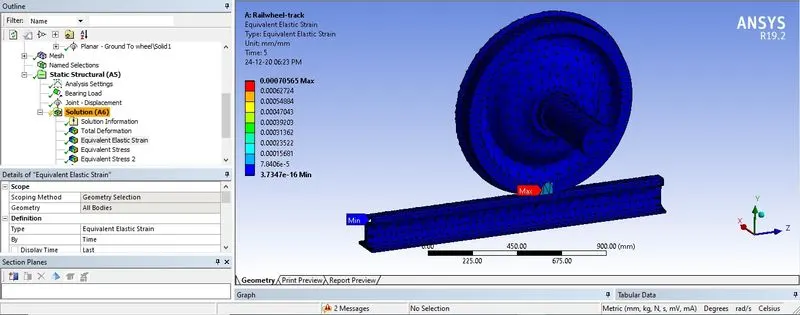
Equivalent Elastic Strain
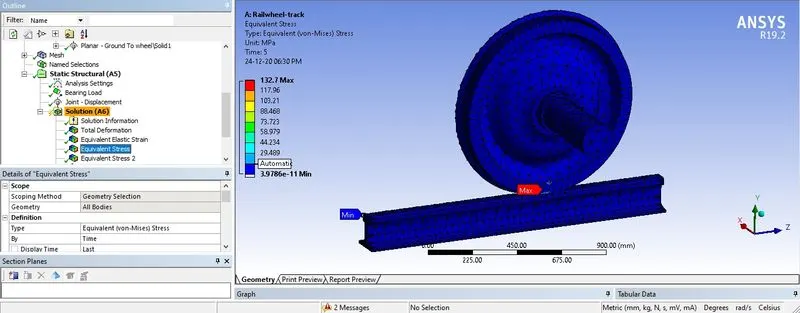
Equivalent Stress
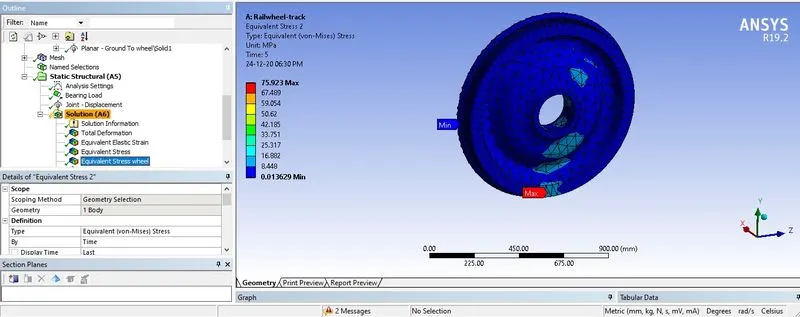
Equivalent Stress (Wheel)
User Defined Result (Total Deformation)
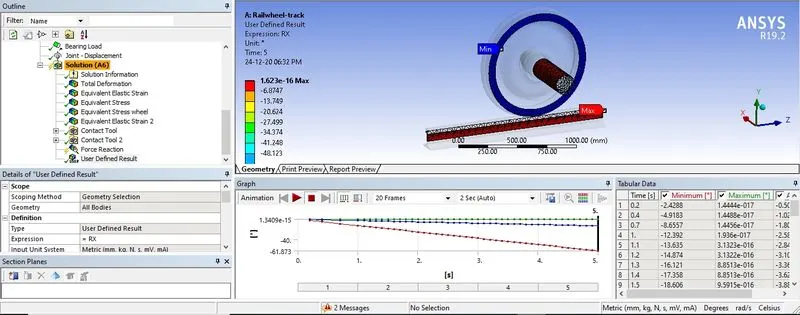
Case 2:
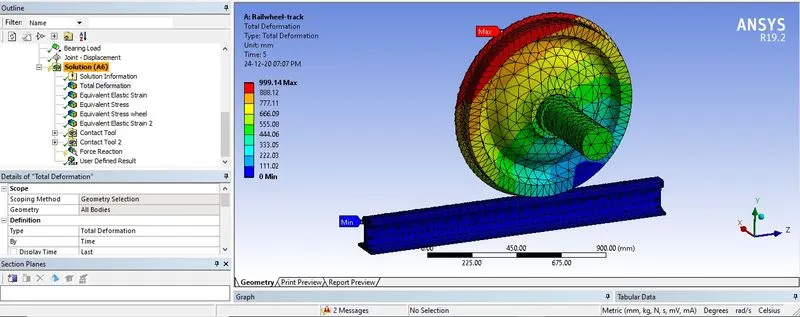
Total Deformation
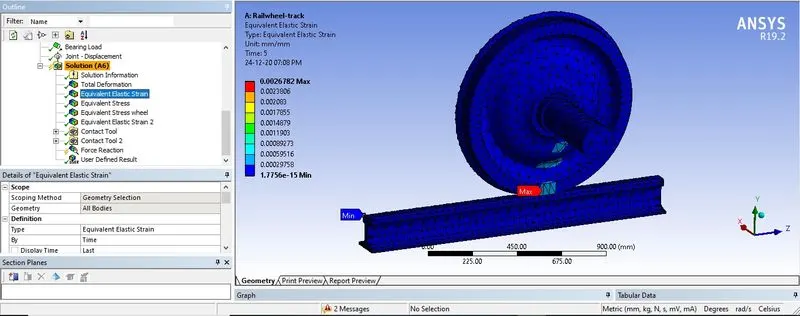
Equivalent Elastic Strain
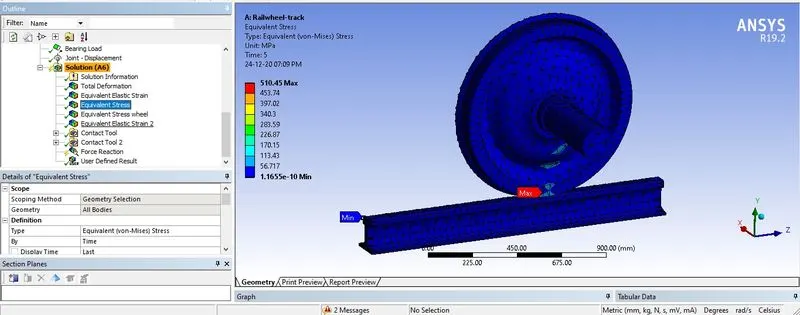
Equivalent Stress
Equivalent Stress (Wheel)
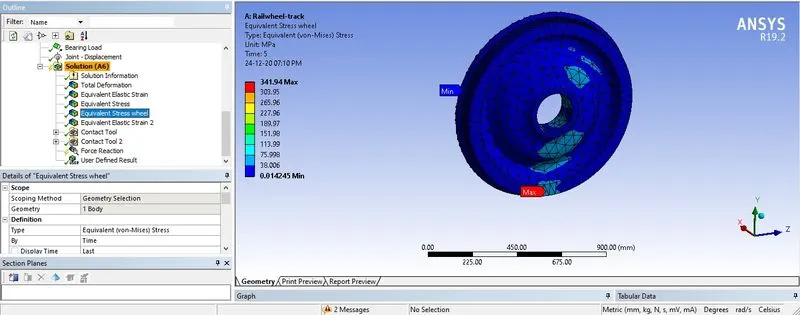
User Defined Result (Total Deformation)
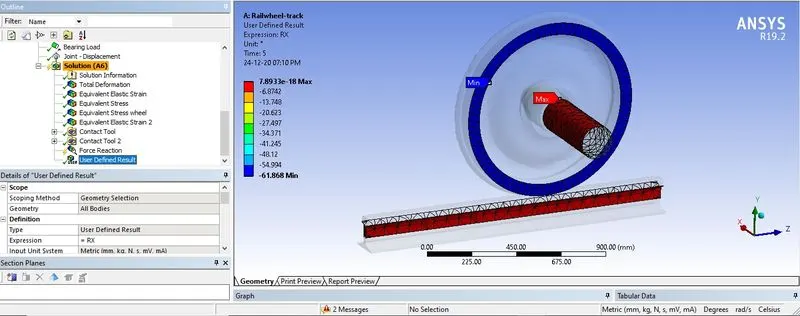
Post Process Results Summary;

- Results & Conclusion:
1) Total Deformation (Max) is comparatively same in both cases
2) Values of Equivalent Elastic Strain (Max) is higher in Case 2
3) Values of Equivalent Stress (Max) is very high in Case 2