Week 2 - Flow over a Cylinder.
Reynold number= Inertial/Viscous force= UL/v
U=velocity, v=viscosity,L=Diameter of pipe/characteristic length.
U and v can still be constant but the length depends on object’s shape. Hence, a direct influence on Reynold number.
Vortex shedding happens at reylond number greater or equal to 90.
When fluid passes over a body, the layer of fluid attached to body has zero velocity and a boundary layer between the top most layer of fluid and the surface of body is formed. When suddenly the fluid expands to a wider region, this boundary layer detaches itself from the surface and
As area increased, velocity of liquid dropped and hence as kinetic energy of liquid drops, its potential energy hence static pressure increases in the direction of flow. For a large pressure increase, fluid can either stop moving or reverse itself in direction , hence vortices form. Vortex shedding happens for a range of reylond number . In turbulent flow, chances of boundary layer separation and adverse pressure gradient formation is lesser as compared to laminar flow. Hence turbulent flow is more desirable in airplane.
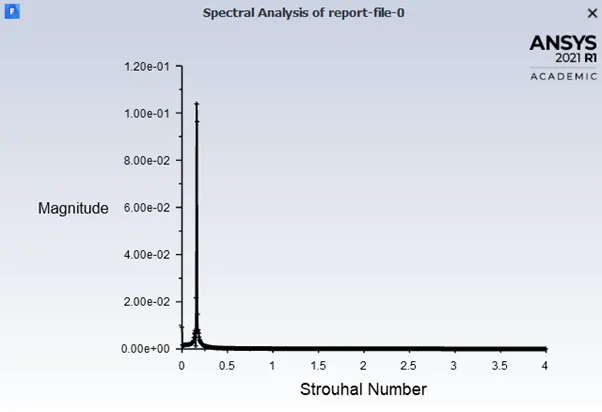
Strahual number is dimensionless number as a measure of shedding frequency of vortex shedding.
S=fL/U, U=freestream velocity, L=Characteristic length,f=Shedding frequency
Reynold number for laminar flow <4x10^5
Von Korman Vortex street-Formation of/shedding of alternating vortices as a result of boundary layer separation when fluid passes over a blunt body. The vortices are formed at a particular frequency, it is a repeating pattern and if it resonates with the natural frequency of object, it can cause failure.
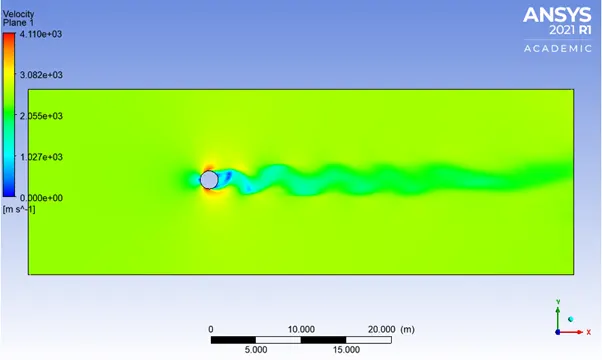
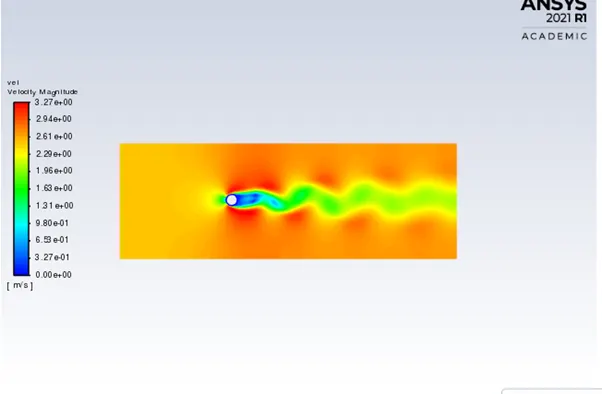
When boundar layer separate , they create a shear layer in which flow is unstable. On the outside, flow appears to be moving forward but on the inside of the backward region , the flow transforms into a wave and then rolls into a vortex , forcing flow in a backward direction. These vortices keep on shedding alternately.
Steady state simulation:
5 cases
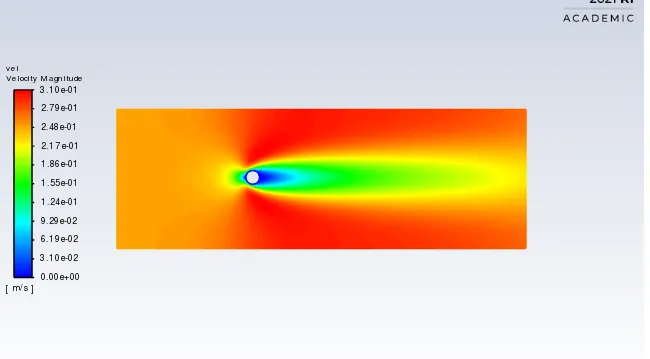
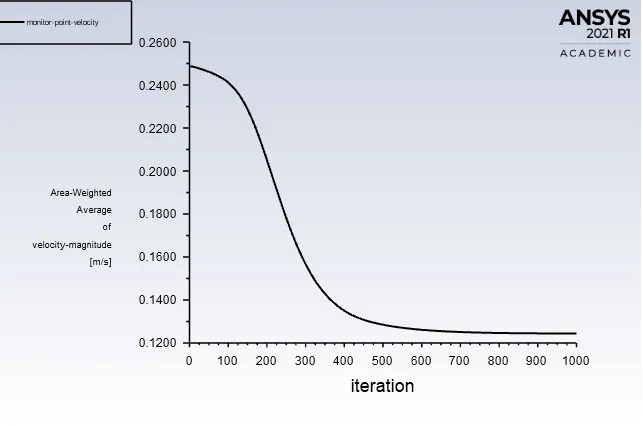
Case 1: Reynold number 10, velocity 0.25
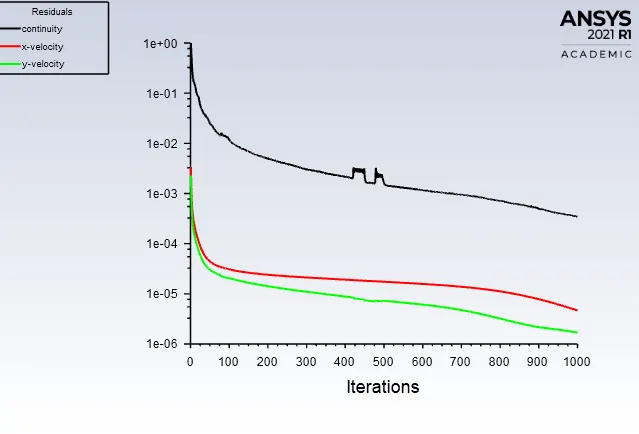
No vortex shedding observed.
Residual:
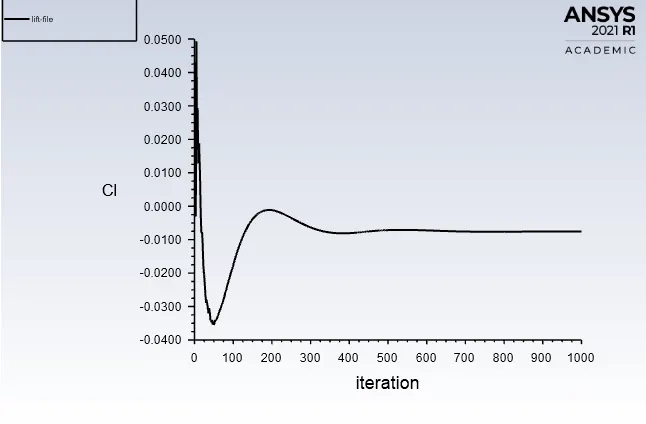
Lift coefficient:
Value:-0.007
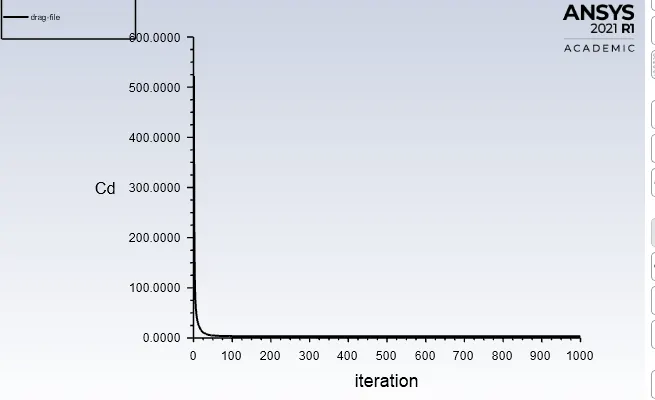
Drag Coefficient:
Value:3.3
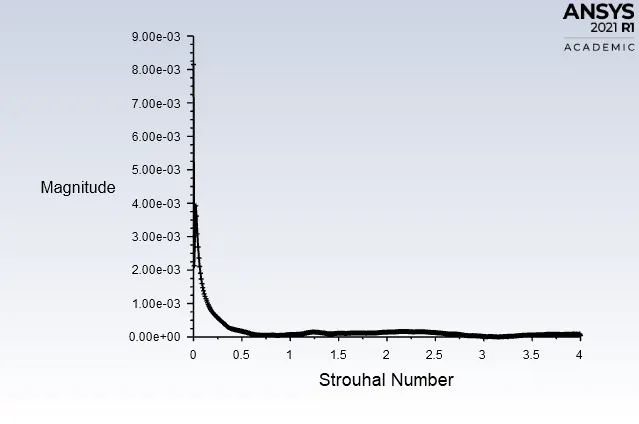
Strouhal number:
Velocity contour:
Area weighted average:
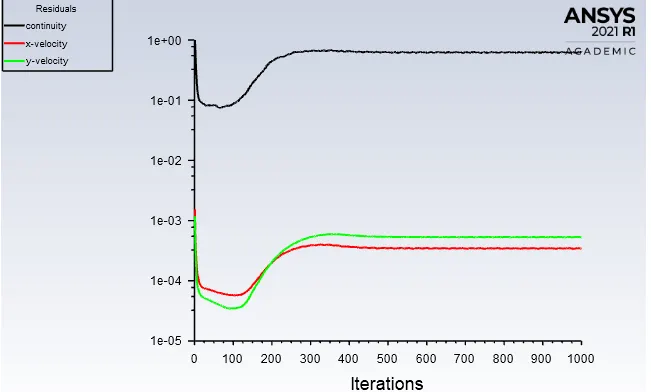
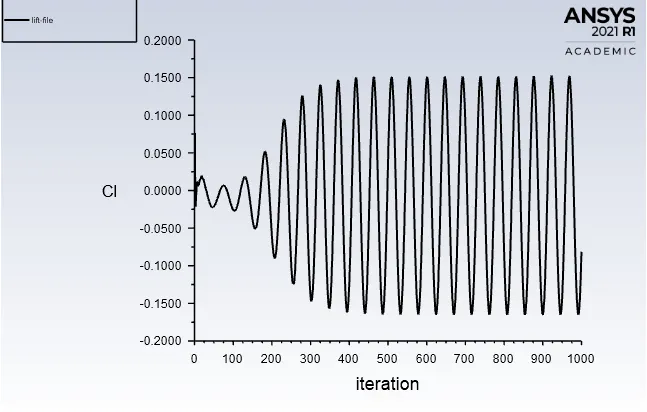
Case2: Reynold number=100, Velocity=2.5
Residual:
Lift coefficient:
Value:-0.08
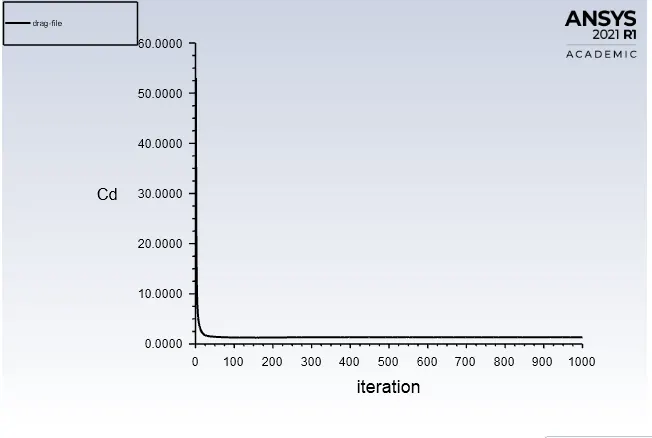
Drag coefficient:
Value:1.35
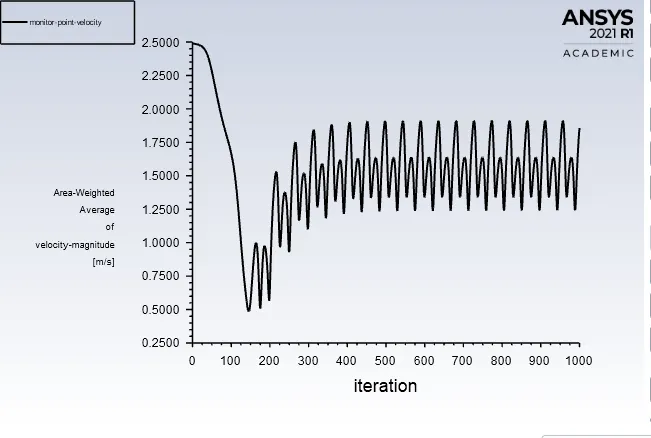
Area weighted average:
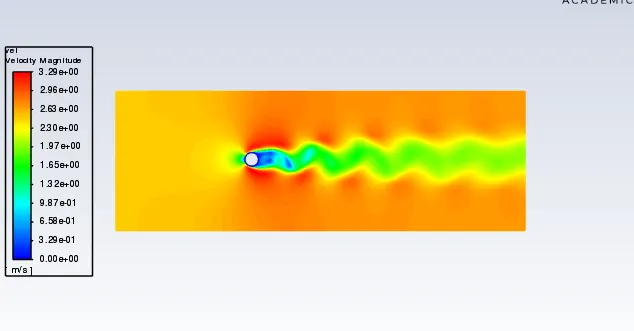
Velocity contour:
Strouhal number:
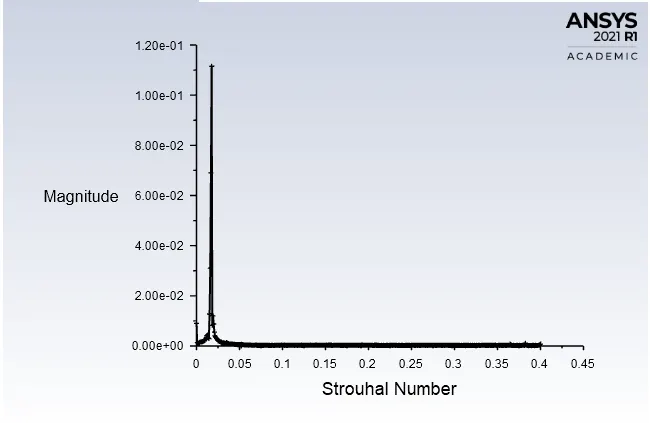
Strouhal number:1.76e-02
Case3 :Reynold number 1000, velocity 25
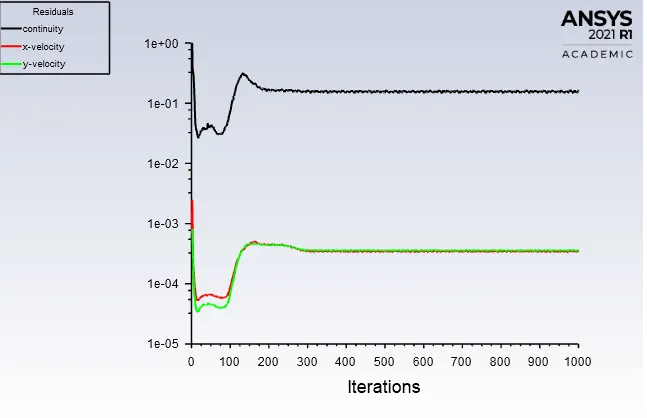
Residual:
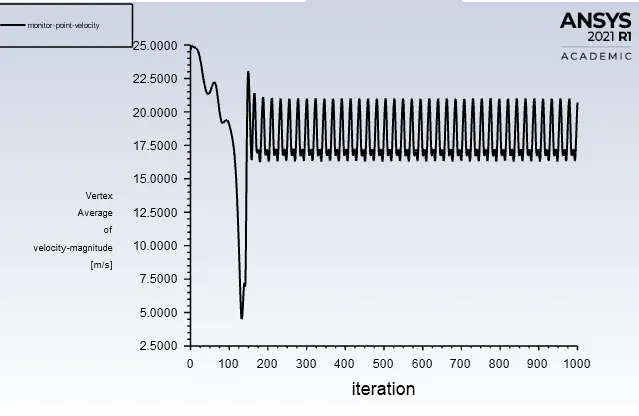
solution converges afte 300 iterations.This can also be seen by velocity graph oscillations.
Vortex velocity average magnitude graph:
Drag Coefficient:
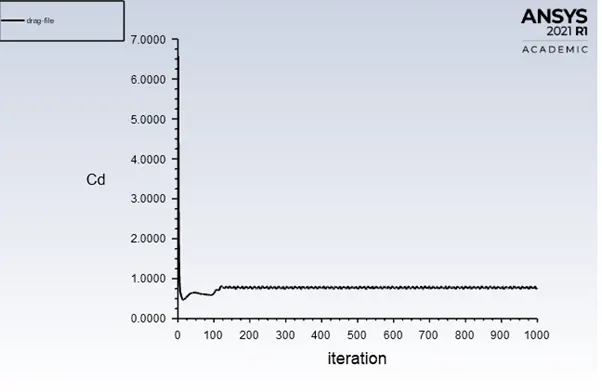
Calculated value (Cd):0.766
Lift Coefficient:
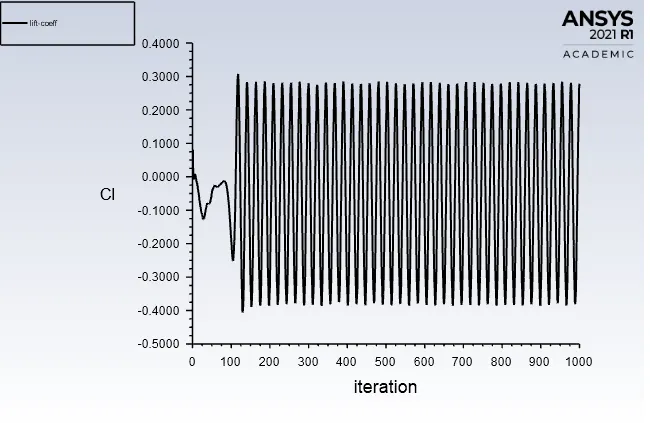
Calculated value (Cl):0.277
Velocity contour:
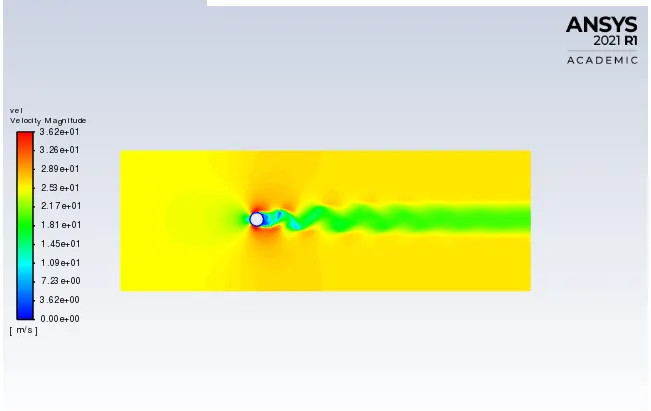
Strouhal number:
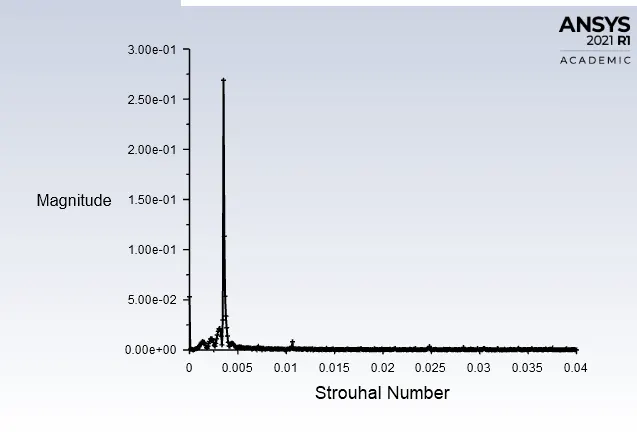
Strouhal number=0.003
Vortex shedding:
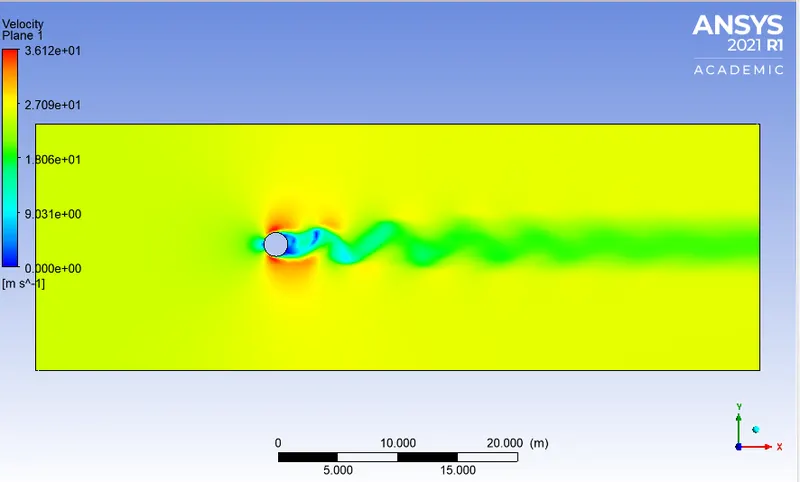
Case 4: reynold number 10000, velocity 250
Residual:
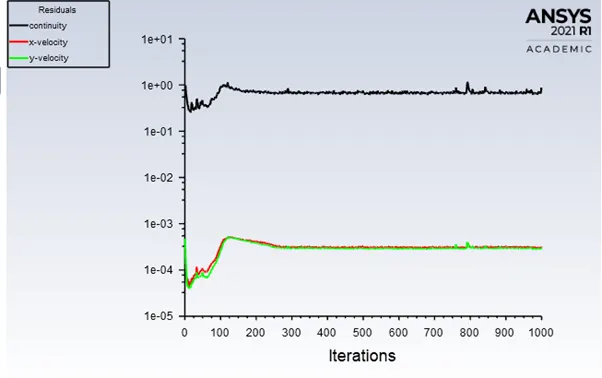
Lift Coefficient:
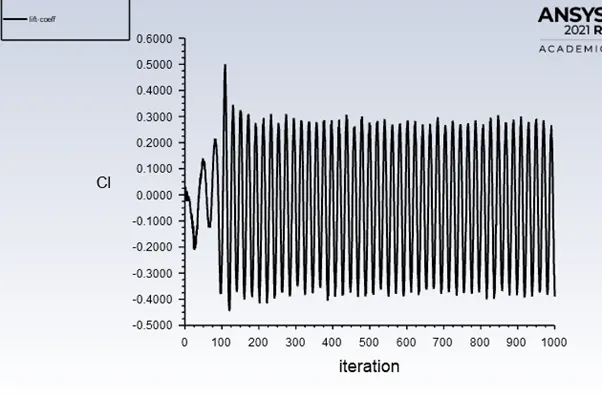
Lift Coefficient value= -0.33
Drag coefficient:
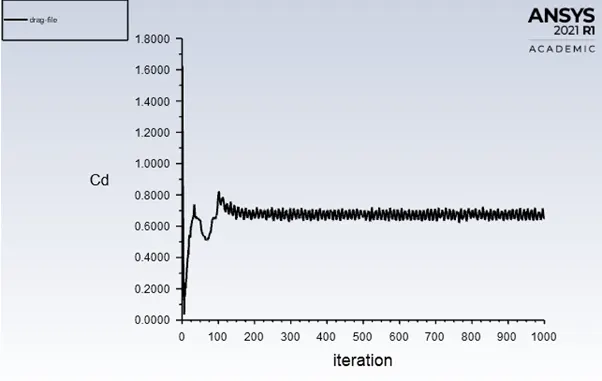
drag coefficient value:0.67
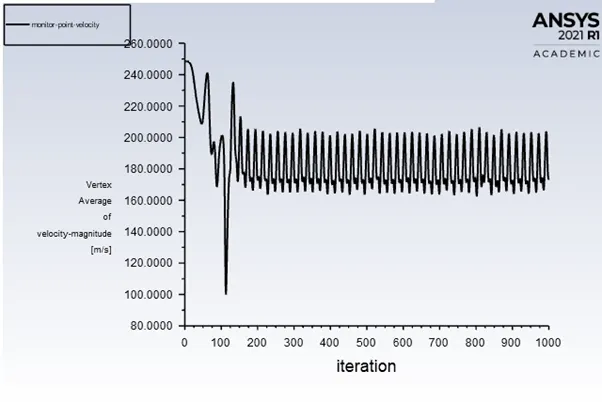
Vortex velocity average:
strouhal number:
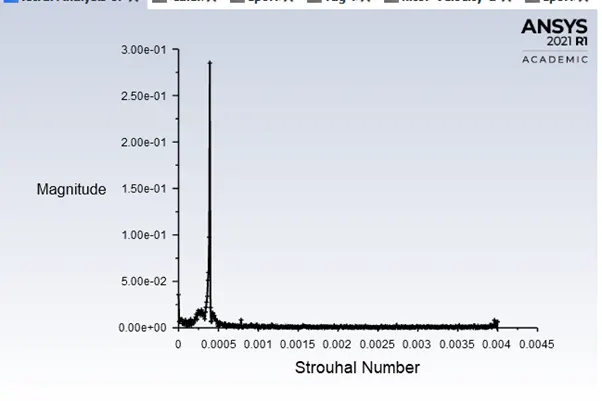
Strouhal number from list=3.9e-04
velocity contour:
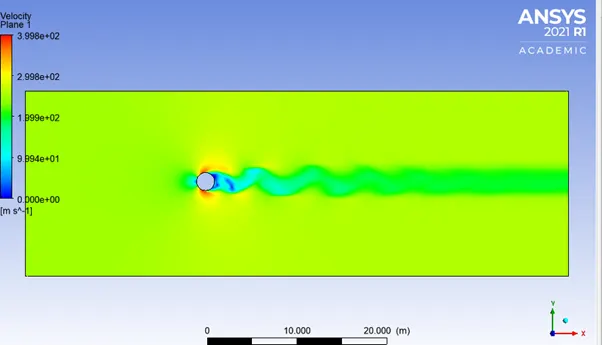
Case5 : Reynold number -100000, velocity 2500
Residual:
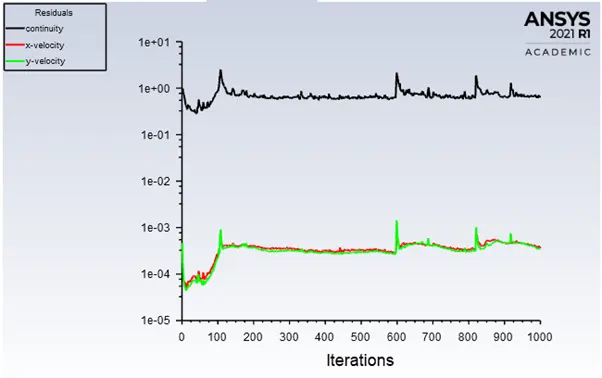
Drag coefficient:
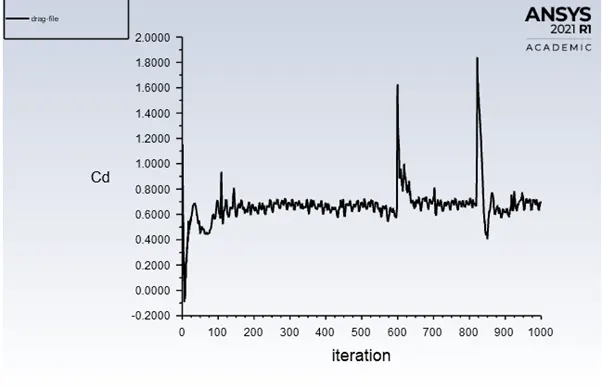
Drag coeff:=0.699
Lift coefficient:
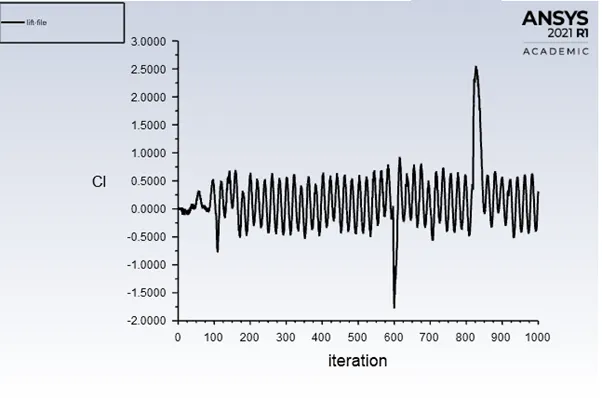
Lift coeff=0.33
Area weighted average for velocity:
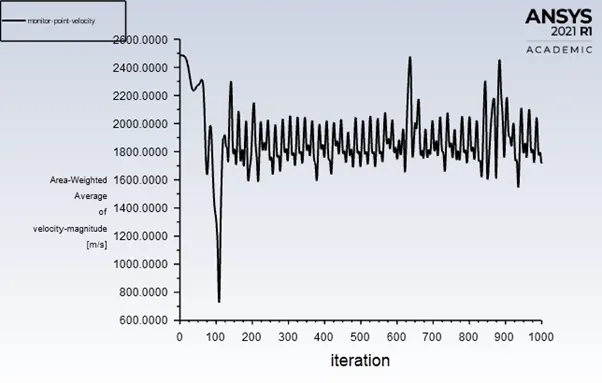
Strouhal number:
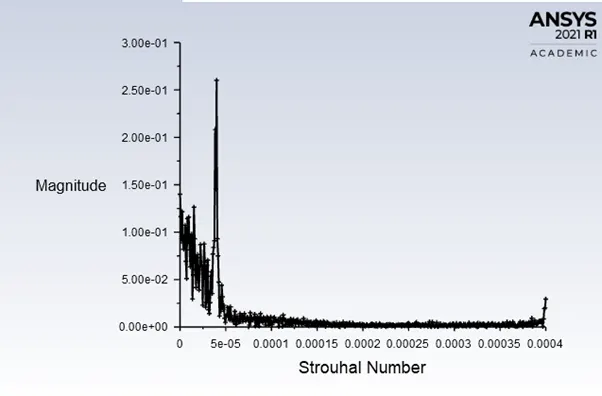
Strouhal number= 4e-05
Velocity contour:
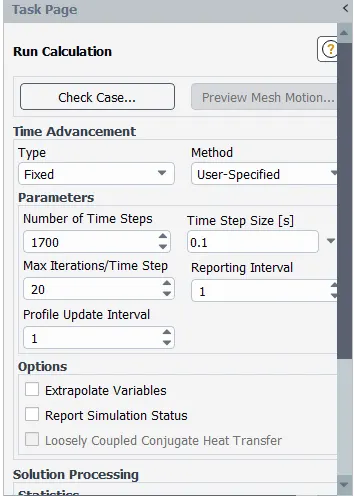
Transient Simulation:
Reynold number=100
velocity=2.5m/s
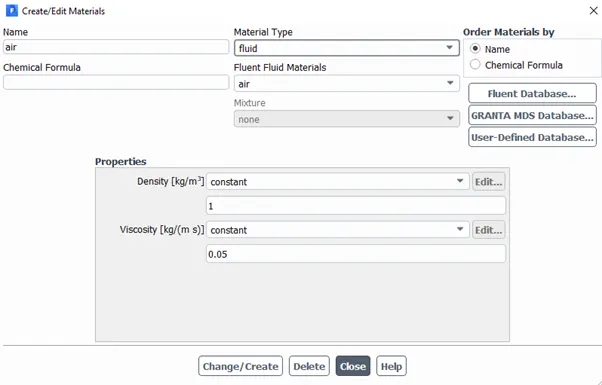
user material density-1,viscosity-0.05
Number of iterations-1700
Time step size-0.1 sec
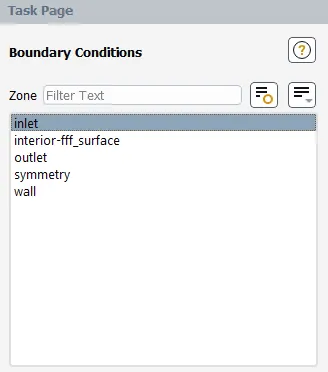
Setup:
Residual:
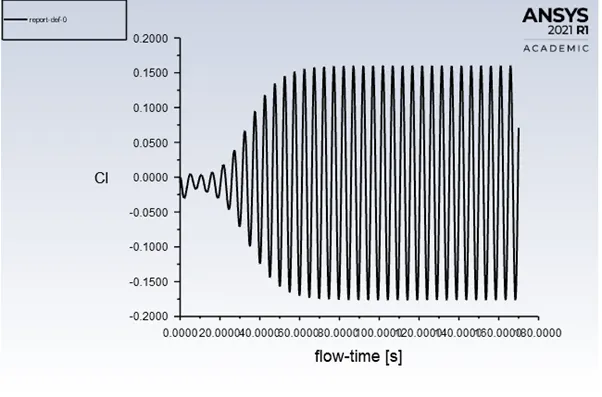
Lift Coefficient:
Value:
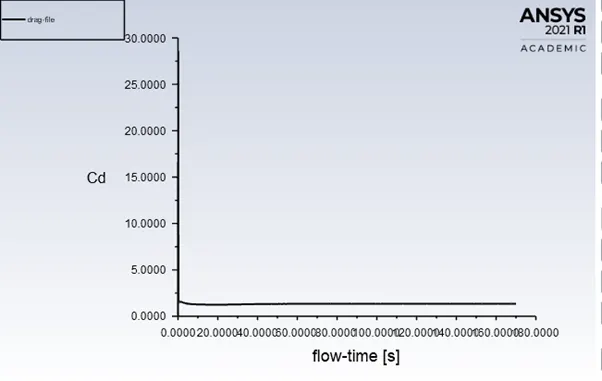
Drag Coefficient:
Value:0.67
Average weighted velocity:
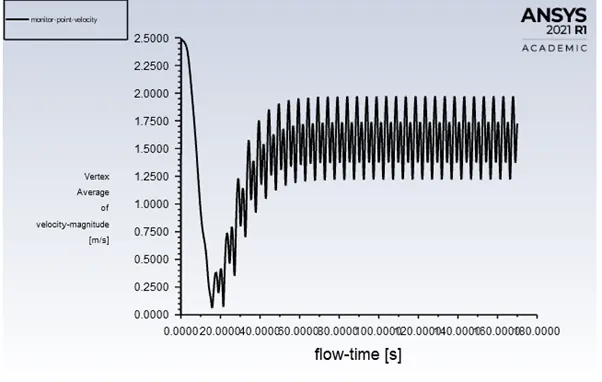
Velocity contour:
Strouhal number:0.3
Conclusion:
Effect of cd on reynold number:
For Re=10, drag coeffcient was3.3
No Vortex shedding observed.
Reynold number 100-100000 , the value of cd remains almost same as 0.67
Here vortex shedding is observed within this re range.
Material referred:https://www.sciencedirect.com/science/article/pii/S0307904X08000243