Week 2 - Flow over a Cylinder.
FLOW OVER CYLINDER
Objective
- Simulate flow over cylinder under steady and transient conditions and calculate the strouhal number at Reynolds number =100
- To find the effect of Reynolds number on coefficient of drag and lift
Theory
- A stationary fluid exerts only normal pressure forces on the surface of a body immersed in it. A moving fluid, however, also exerts tangential shear forces on the surface because of the no-slip condition caused by viscous effects. Both of these forces, in general, have components in the direction of flow, and thus the drag force is due to the combined effects of pressure and wall shear forces in the flow direction. The components of the pressure and wall shear forces in the direction normal to the flow tend to move the body in that direction, and their sum is called lift.
- When a fluid moves over a solid body, it exerts pressure forces normal to the surface and shear forces parallel to the surface of the body.The component of the resultant pressure and shear forces that acts in the flow direction is called the drag force (or just drag), and the component that acts normal to the flow direction is called the lift force (or just lift).
- The drag and lift forces depend on the density 𝜌 of the fluid, the upstream velocity V, and the size, shape, and orientation of the body, among other
things, it is more convenient to work with appropriate dimensionless numbers that represent the drag and lift characteristics of the body. These numbers are the drag coefficient CD, and the lift coefficient CL. and it is given by 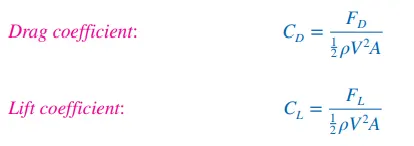
- where A is ordinarily the frontal area (the area projected on a plane normal to the direction of flow) of the body. In other words, A is the area seen by a person looking at the body from the direction of the approaching fluid. The frontal area of a cylinder of diameter D and length L, for example, is A =LD.
- Due to flow separation at relatively high Reynolds number there is a wake region behind the cylinder, at this region vertex shedding takes place and it is analysed under transient phenomenon, this vertex shedding oscillates at a frequency, this frequency is used to calculate the strouhal number (dimensionless number).
- ST = Frequency of sheeding * Diameter / Flow velocity
Simulation
- Geometry and boundary condition is setup according to below image
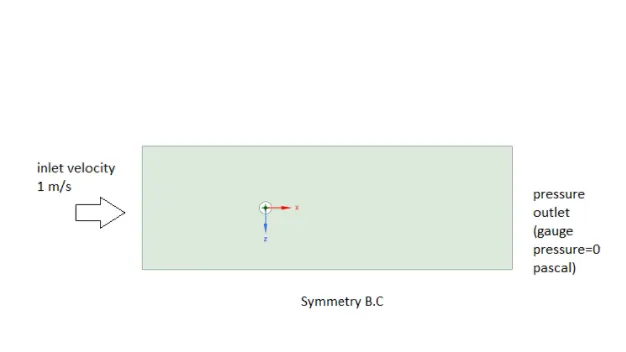
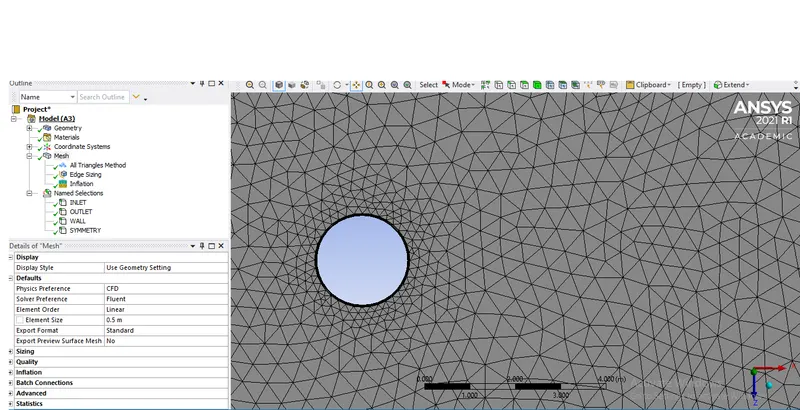
- Mesh is triangular dominant with an element size of 0.5m and sizing is done at cylinder surface to create a smooth cylinder wall and inflation layer is added to create a body-fitted mesh near the cylinder wall
- SIMPLE pressure-velocity based solver is used for the laminar flow, velocity is varied according to Reynolds number, fluid is defined with properties( density=1Kg/meter cube and dynamic viscosity 0.02 Kgmeter/ second square)
- Unsteady flow with time step 0.1 for 1000 times.
- Plots and animations are defined according to the requirement.
Results
Convergence
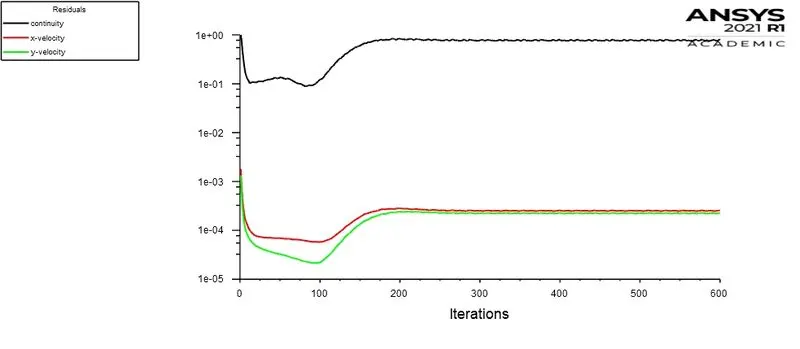
- For all the simulation followed in this challenge are checked for convergence using below residual plot
- As you can see the residual is almost constant after certain number of iteration indicating that solution is converged
PART I
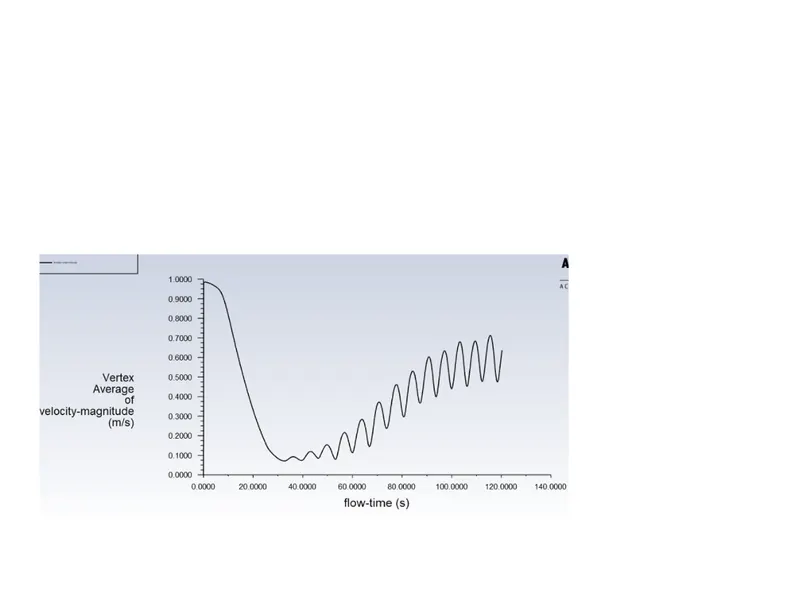
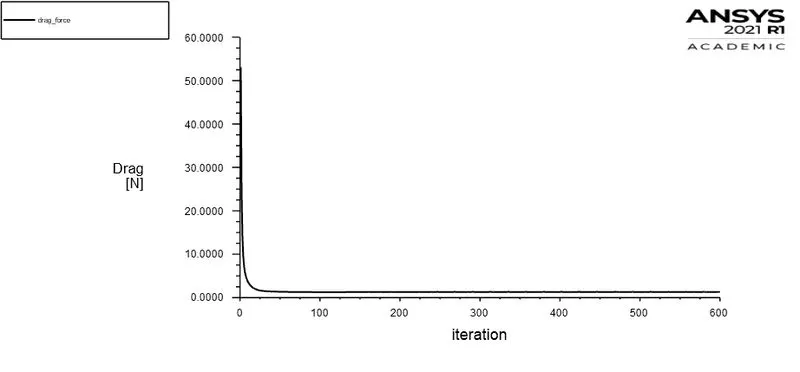
- strouhal number found to be 0.3
PART II
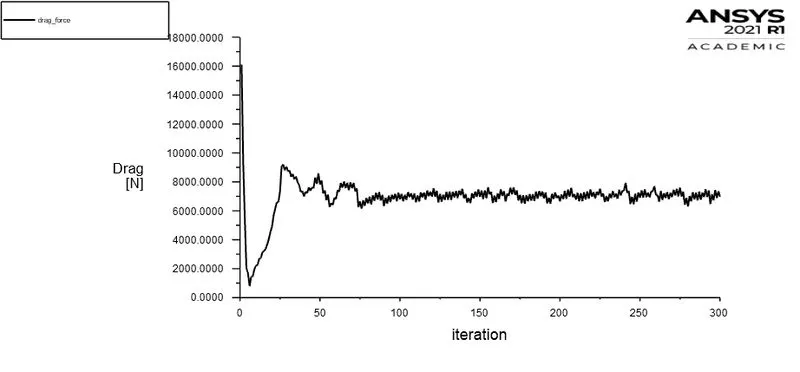
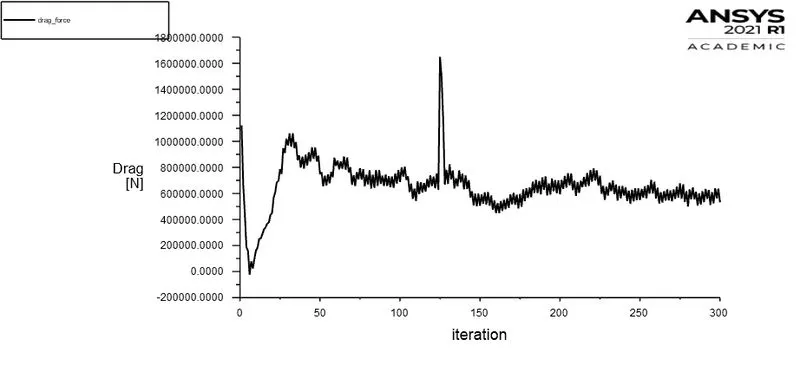
| Reynolds number | Lift force plot | Drag force plot |
| 10 | 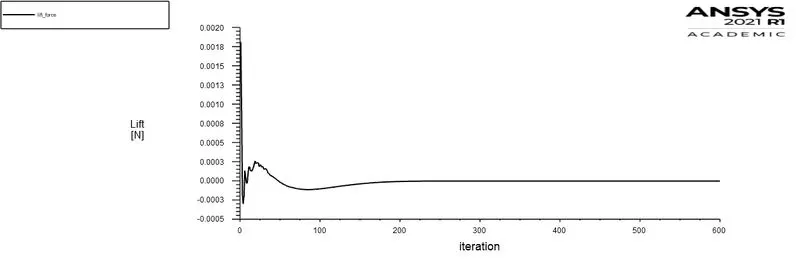 |
 |
| 100 | 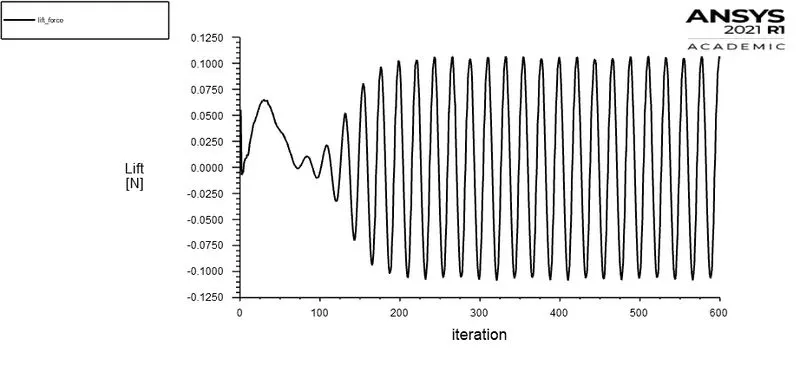 |
 |
| 1000 | 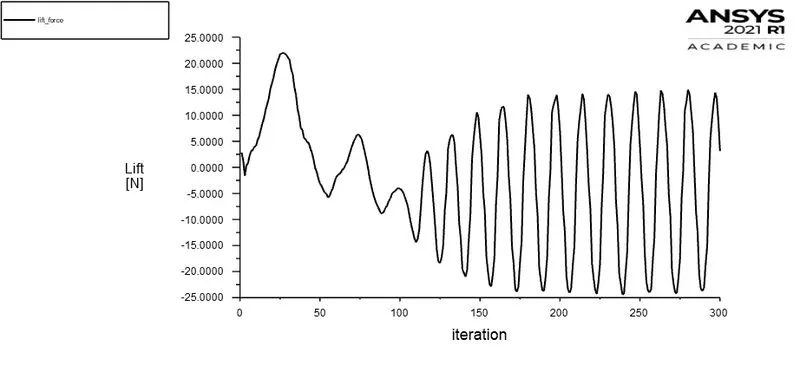 |
 |
| 10000 | 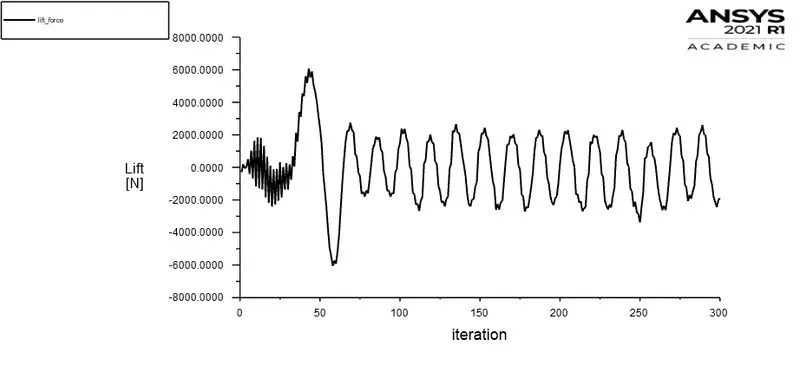 |
 |
| 100000 | 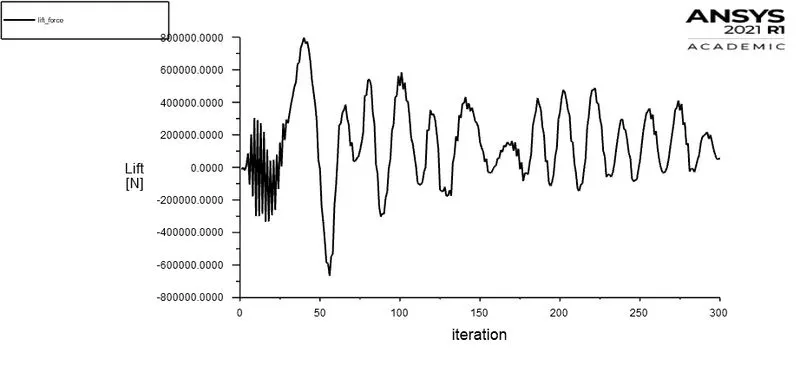 |
 |
| Reynolds number | Drag coeffecient | Lift coeffecient |
| 10 | 0 | 0 |
| 100 | 0.1 | 0.1 |
| 1000 | 0.5 | 0.15 |
| 10000 | 0.75 | 0.2 |
| 100000 | 0.75 | 0.45 |
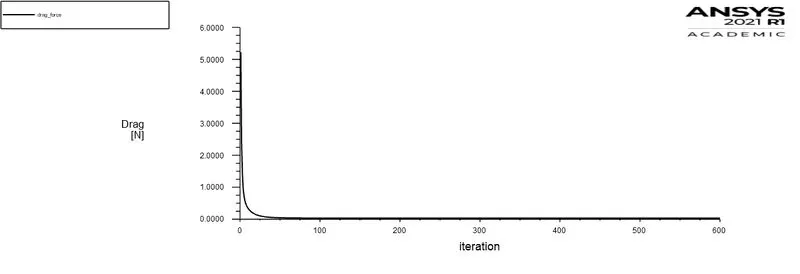
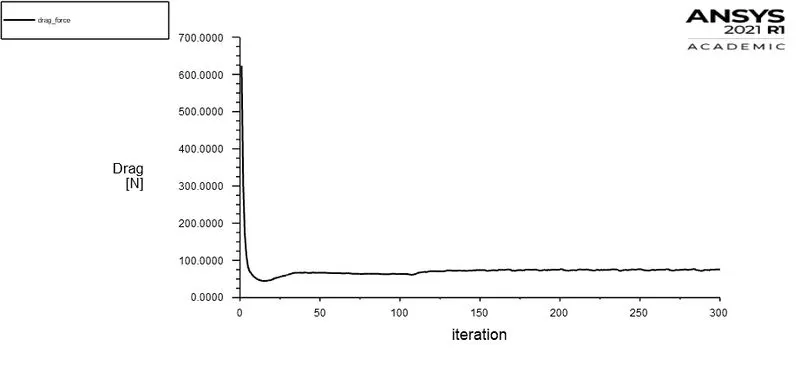
- As you can see from the above table as the reynolds number is incresing drag coeff and lift coefficient is also increasing
- At low reynolds number 10, fluid is almost behaved like stationary fluid
- At higher reynold number drag coeffecient approching constant value
Thank you