Week 2 - Converging diverging nozzle
Aim:-
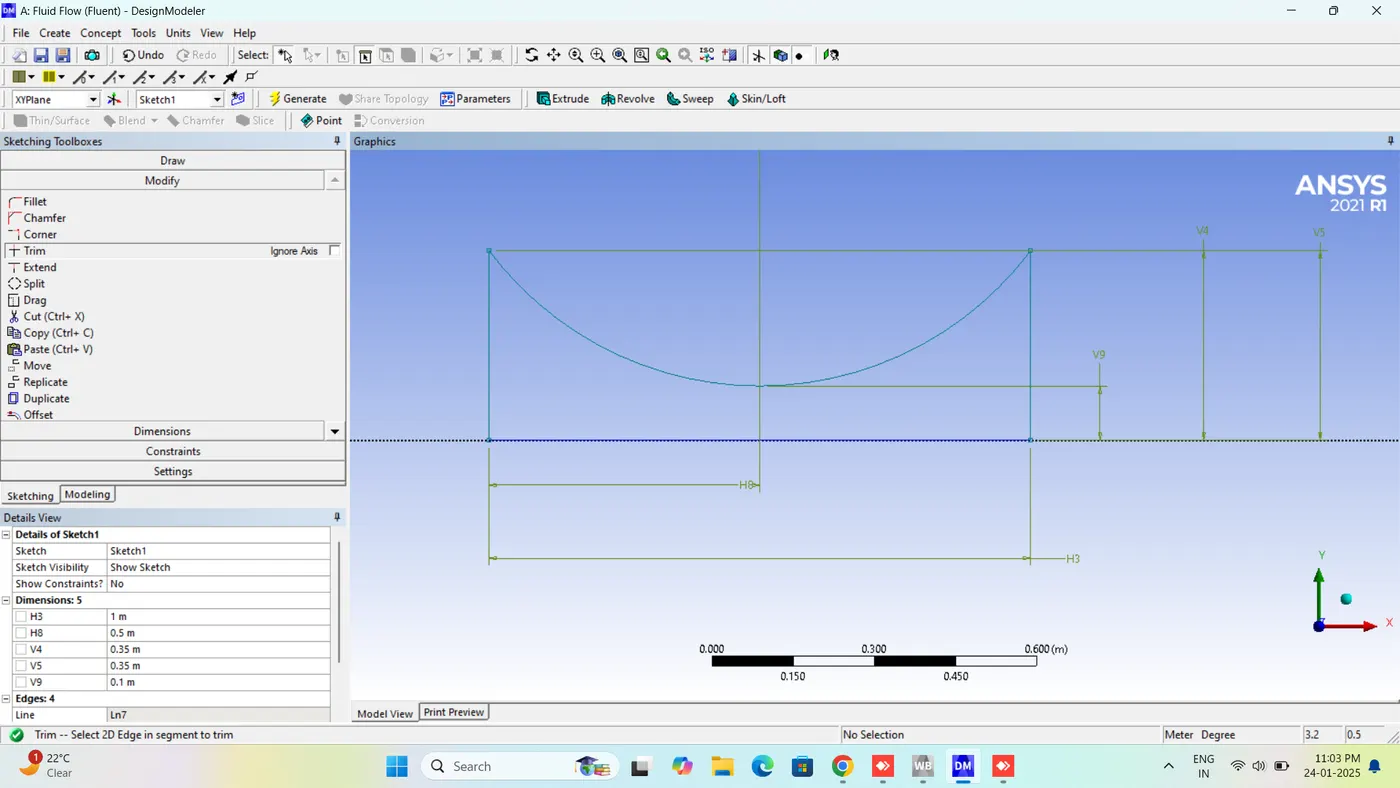
Consider the converging -diverging nozzle below with the dimensions.
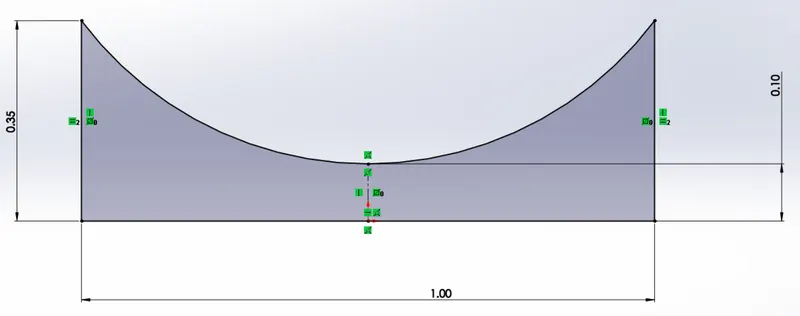
For the following boundary conditions,
At inlet ,pressure = 1 atm and Temperature = 300K.Thr outlet pressure = 0.027atm.
in the operating conditions, consider the reference pressure to be Zero.
Plot:
The pressure ,velocity and temperature variations across the domain
The variation of mach number across the domain and at which distance from the inlet does the flow become supersonic.
From the above derive variation , explain the variation of change in area on mach number on the given geometry in a few words.
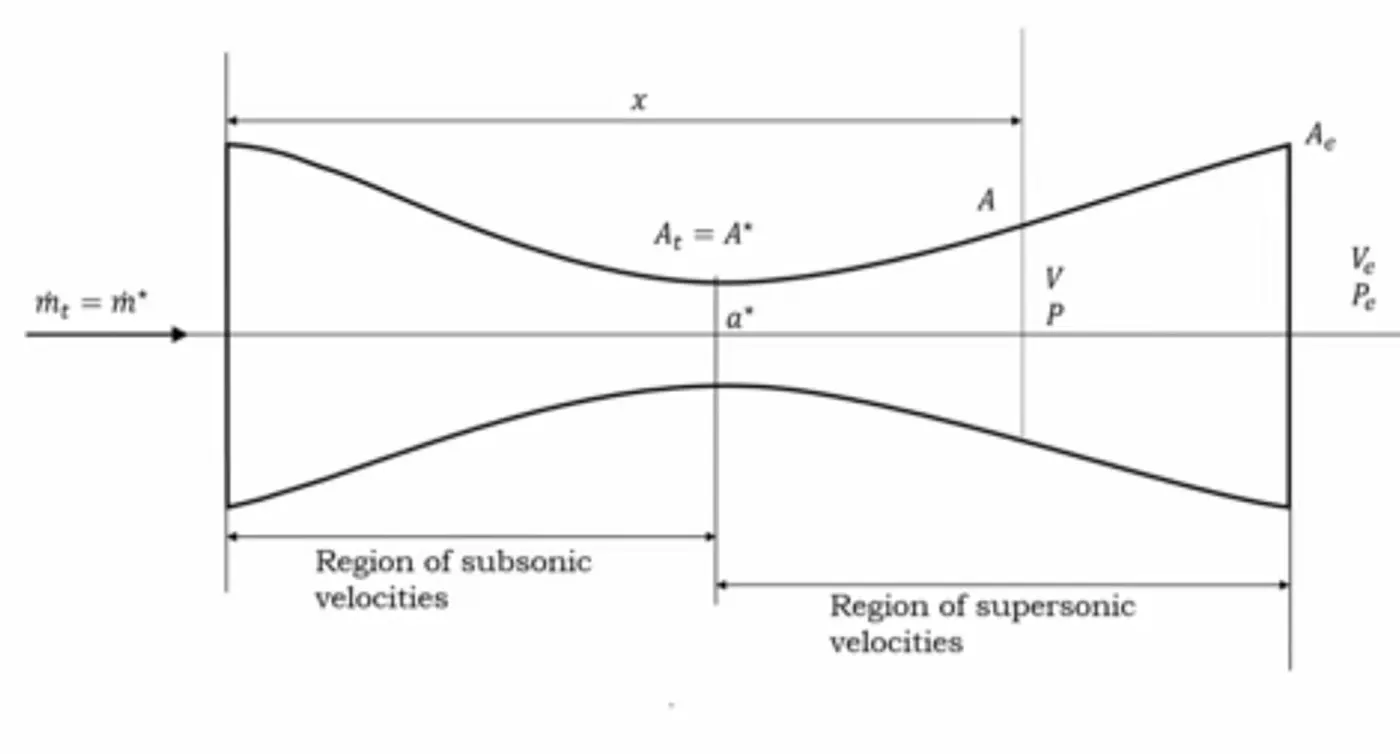
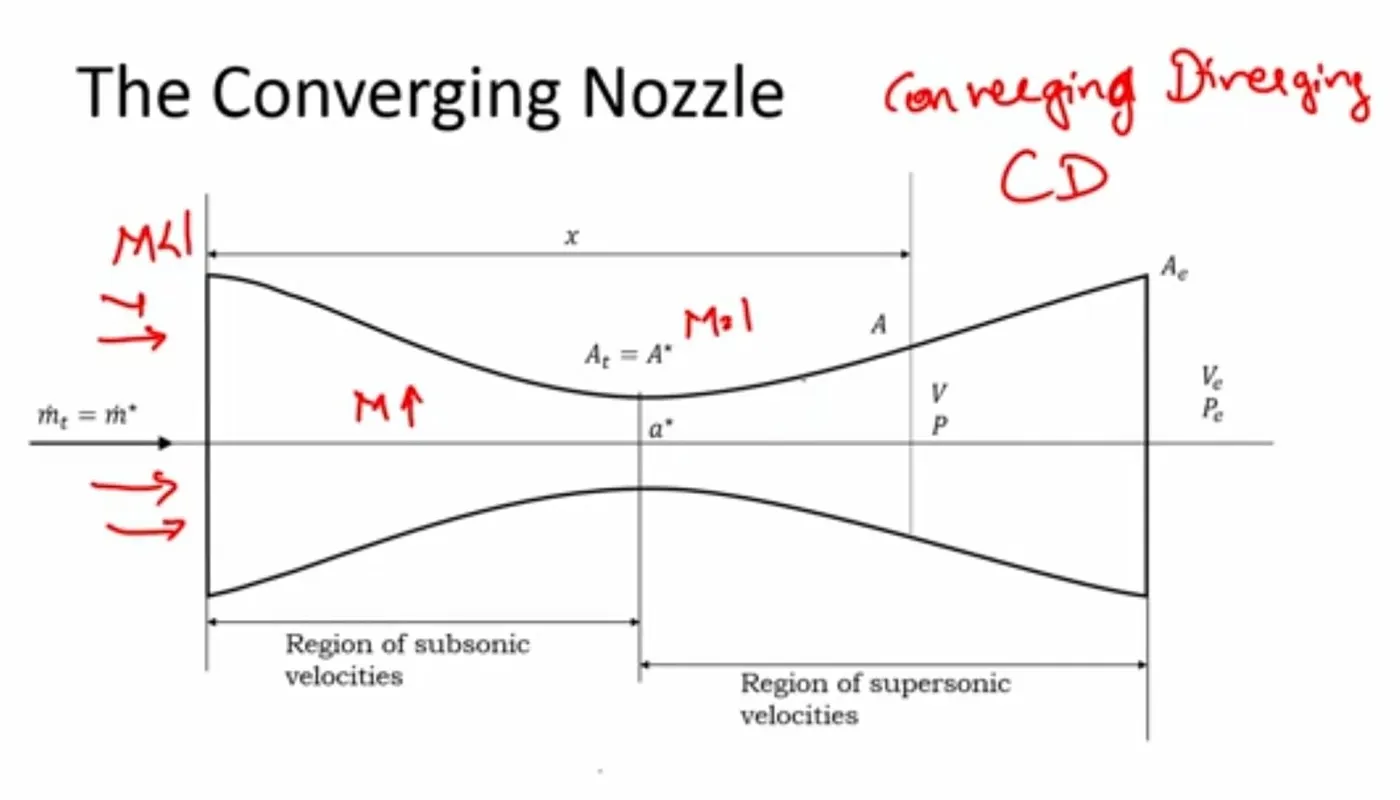
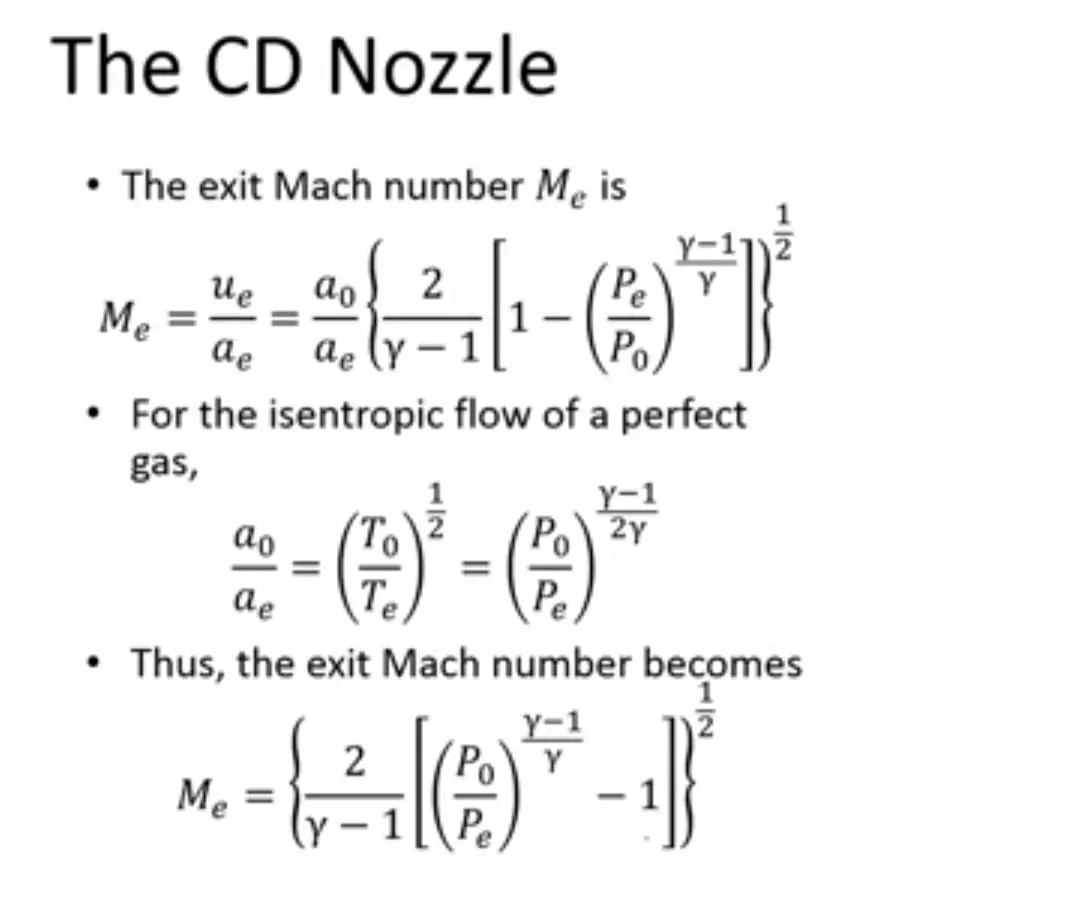
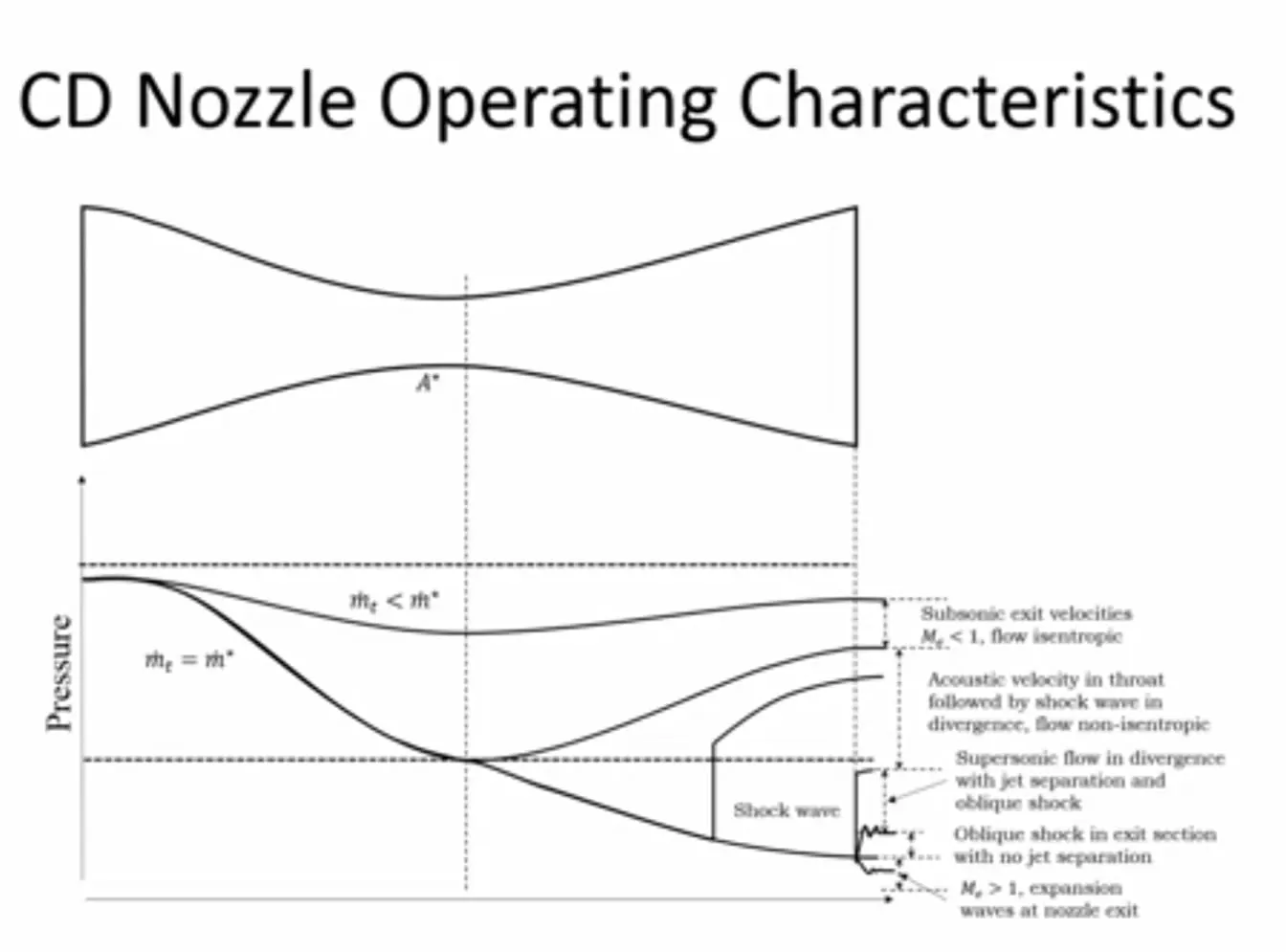
Key Components of a Nozzle
1. Inlet: The inlet is where the fluid enters the nozzle.
2. Throat: The throat is the narrowest part of the nozzle, where the fluid reaches its highest velocity.
3. Exit: The exit is where the fluid leaves the nozzle.
Working Principle of a Nozzle
1. Subsonic Flow: The fluid enters the nozzle through the inlet and accelerates as it flows through the converging section.
2. Choking: At the throat, the fluid reaches its sonic velocity (Mach 1), and the flow becomes choked.
3. Supersonic Flow: As the fluid exits the throat, it expands and accelerates further, becoming supersonic.
4. Expansion: The fluid continues to expand and accelerate as it flows through the diverging section of the nozzle.
5. Exit: The fluid exits the nozzle at high velocity and pressure.
Types of Nozzles
1. Convergent Nozzle: A nozzle with a converging section only.
2. Convergent-Divergent Nozzle: A nozzle with both converging and diverging sections.
3. De Laval Nozzle: A convergent-divergent nozzle used in rocket engines.
Applications of Nozzles
1. Rocket Engines: Nozzles are used to accelerate hot gases and generate thrust.
2. Jet Engines: Nozzles are used to accelerate exhaust gases and generate thrust.
3. Turbines: Nozzles are used to accelerate fluids and drive turbine blades.
4. Spray Nozzles: Nozzles are used to atomize liquids and create sprays.
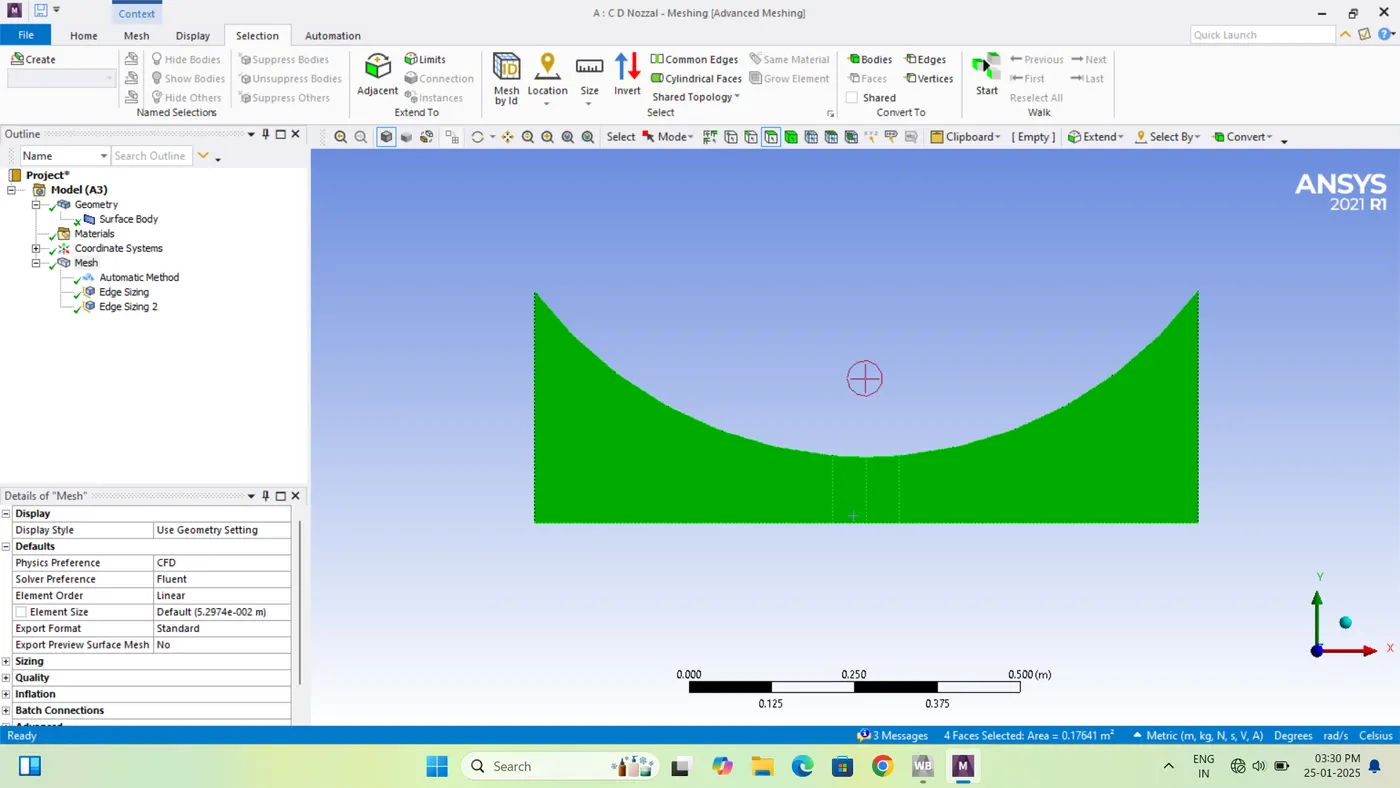
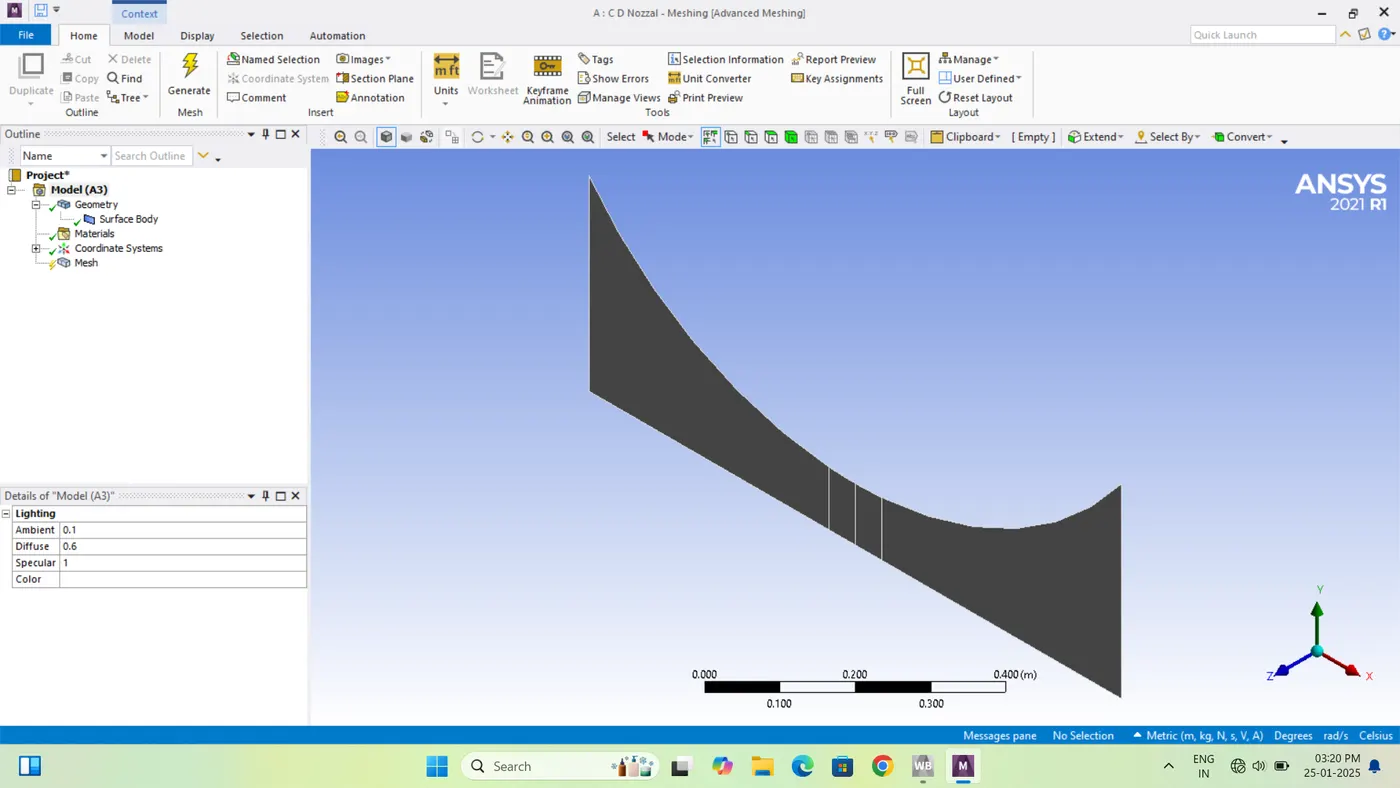
:- Open in workbench on the Space clime to draw the given dimension as show in the below fig
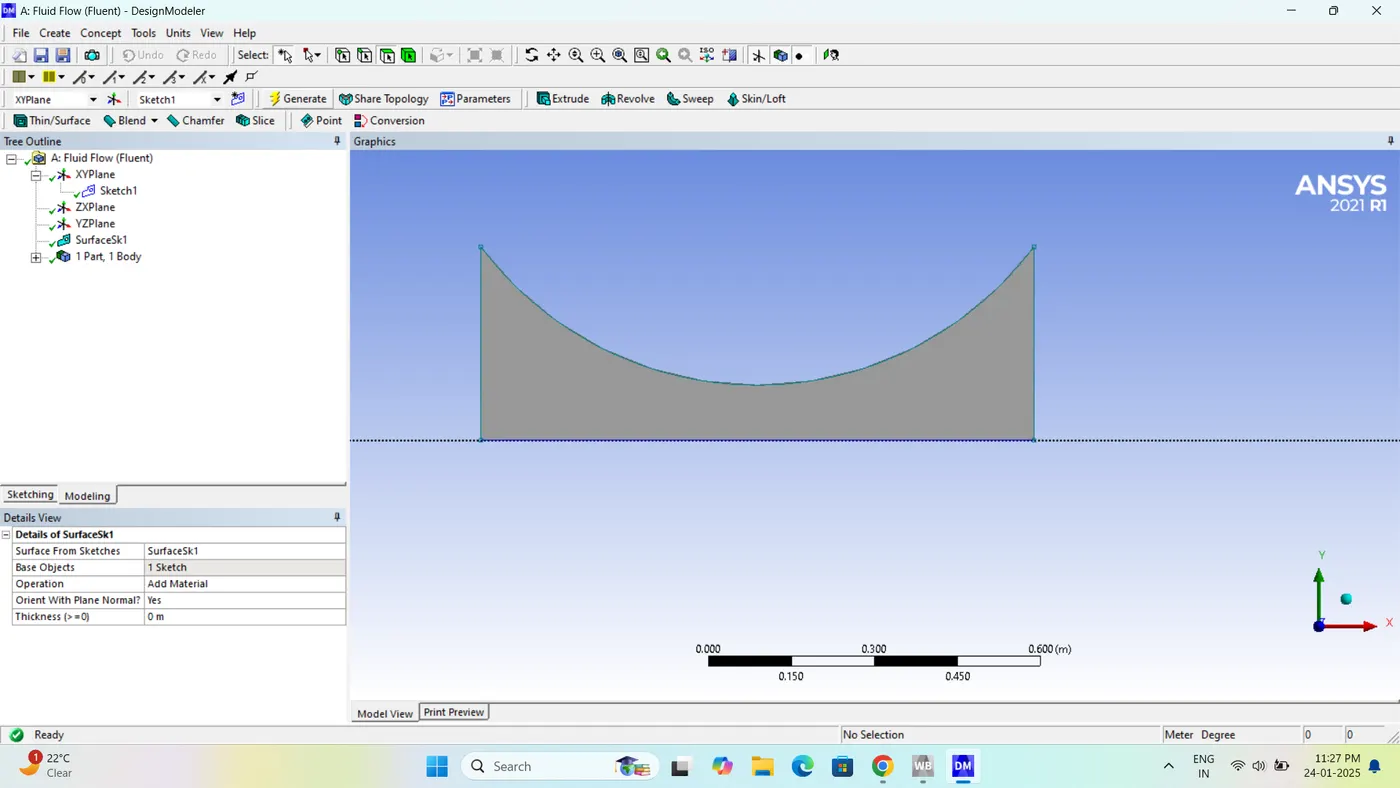
:- Sup-rating part
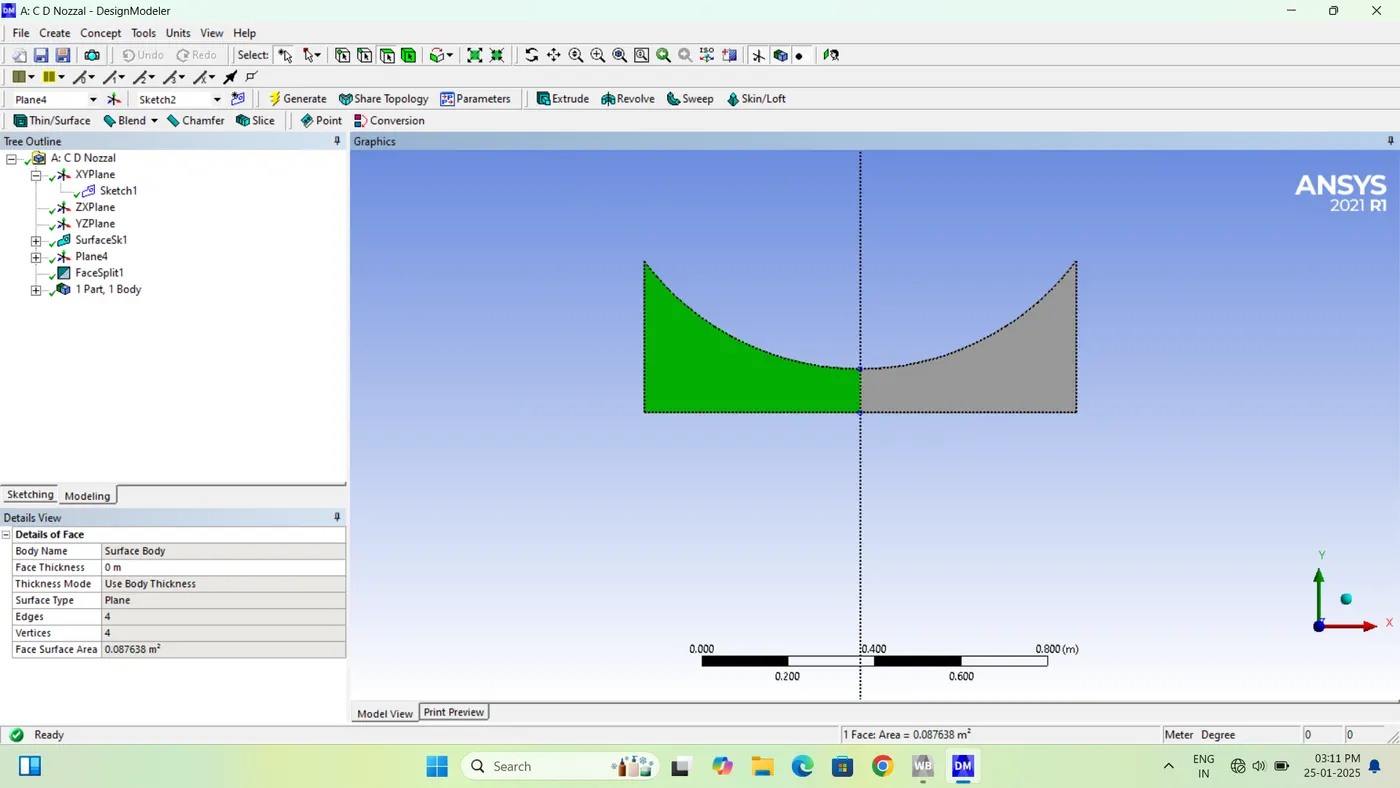
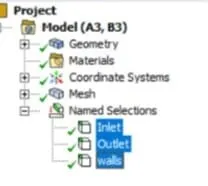
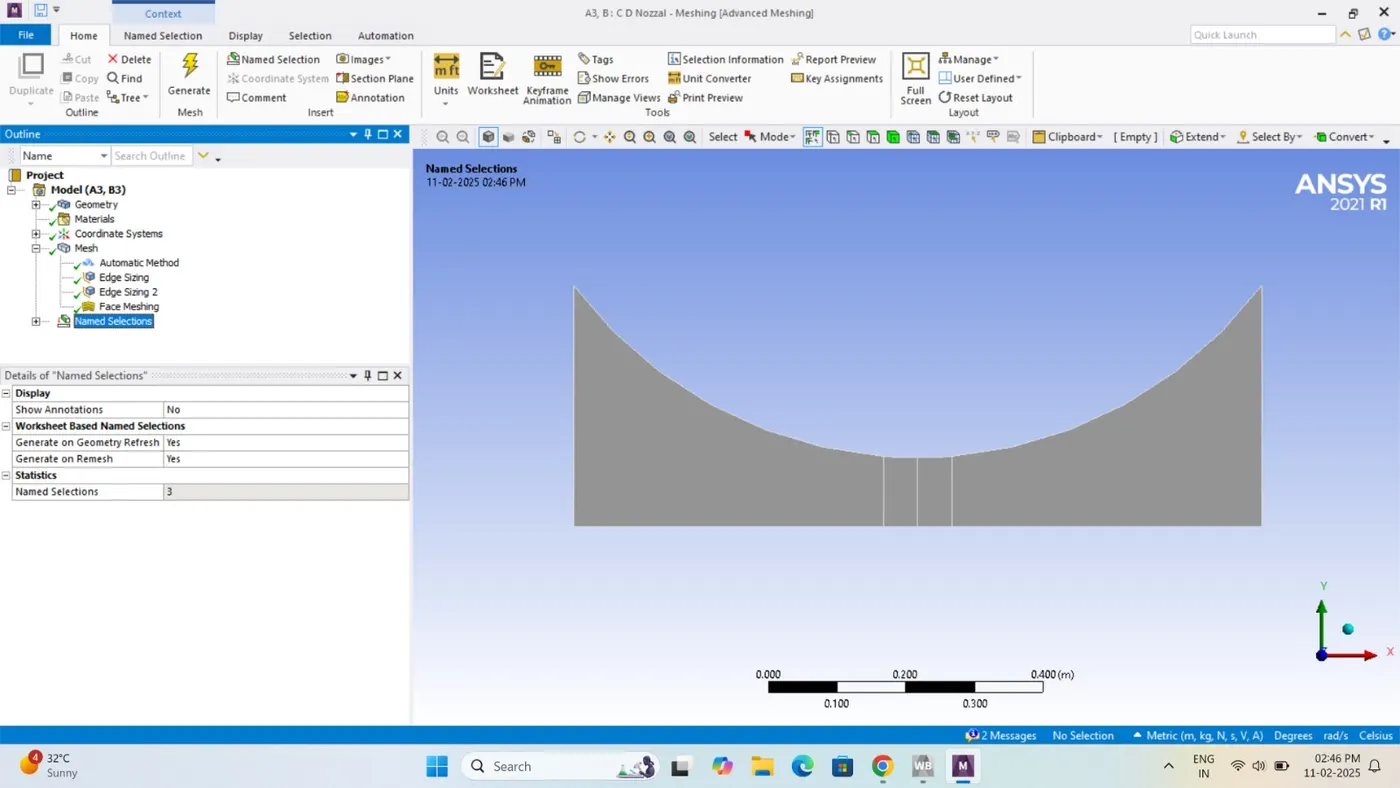
:- Name Selection
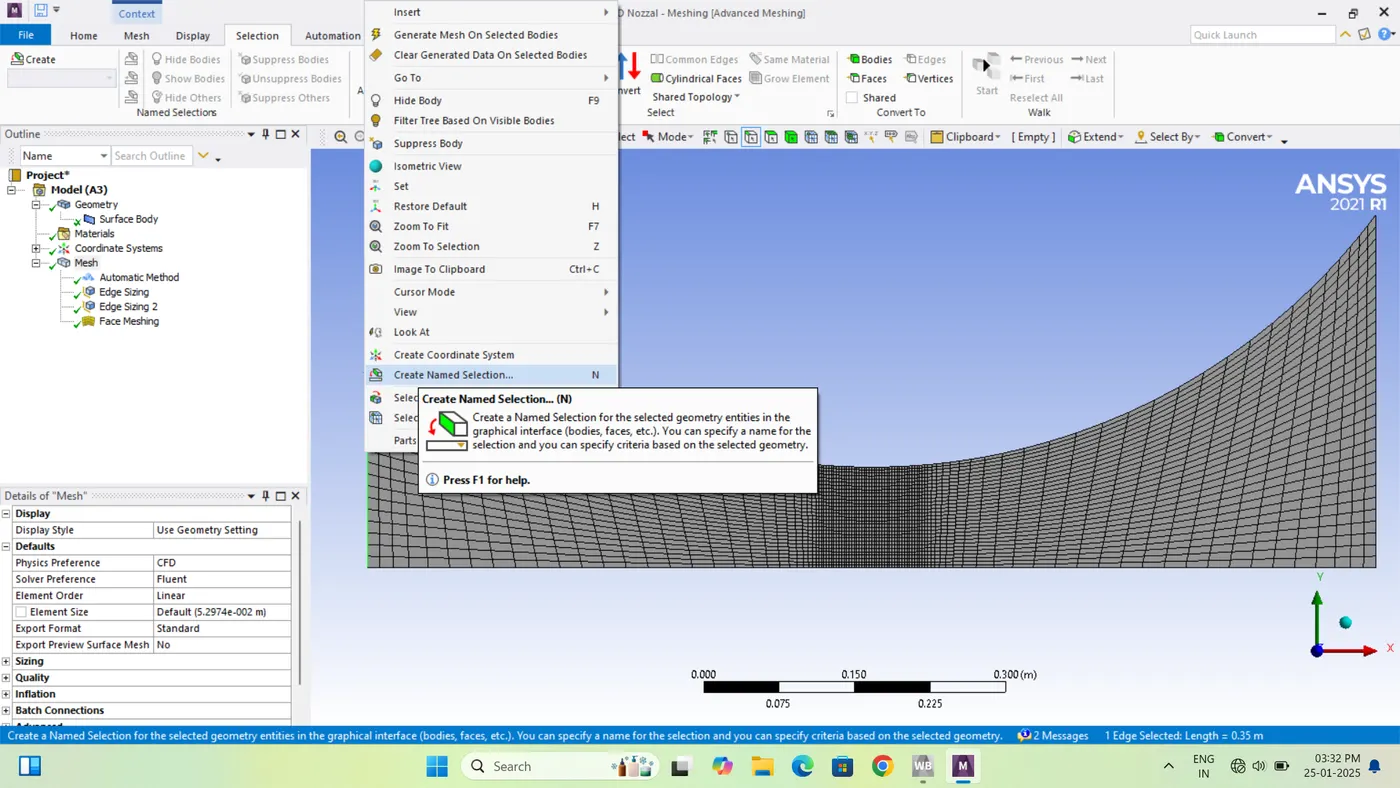
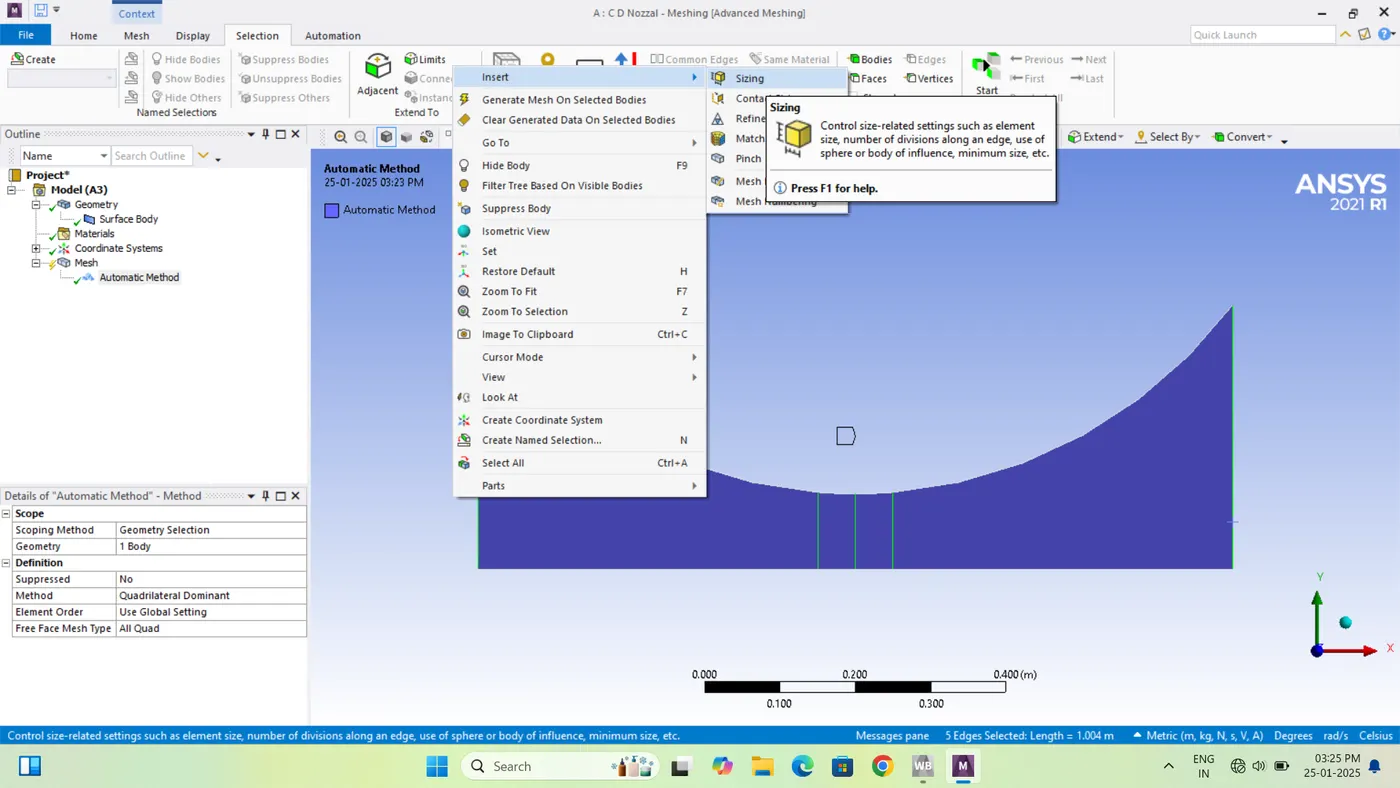
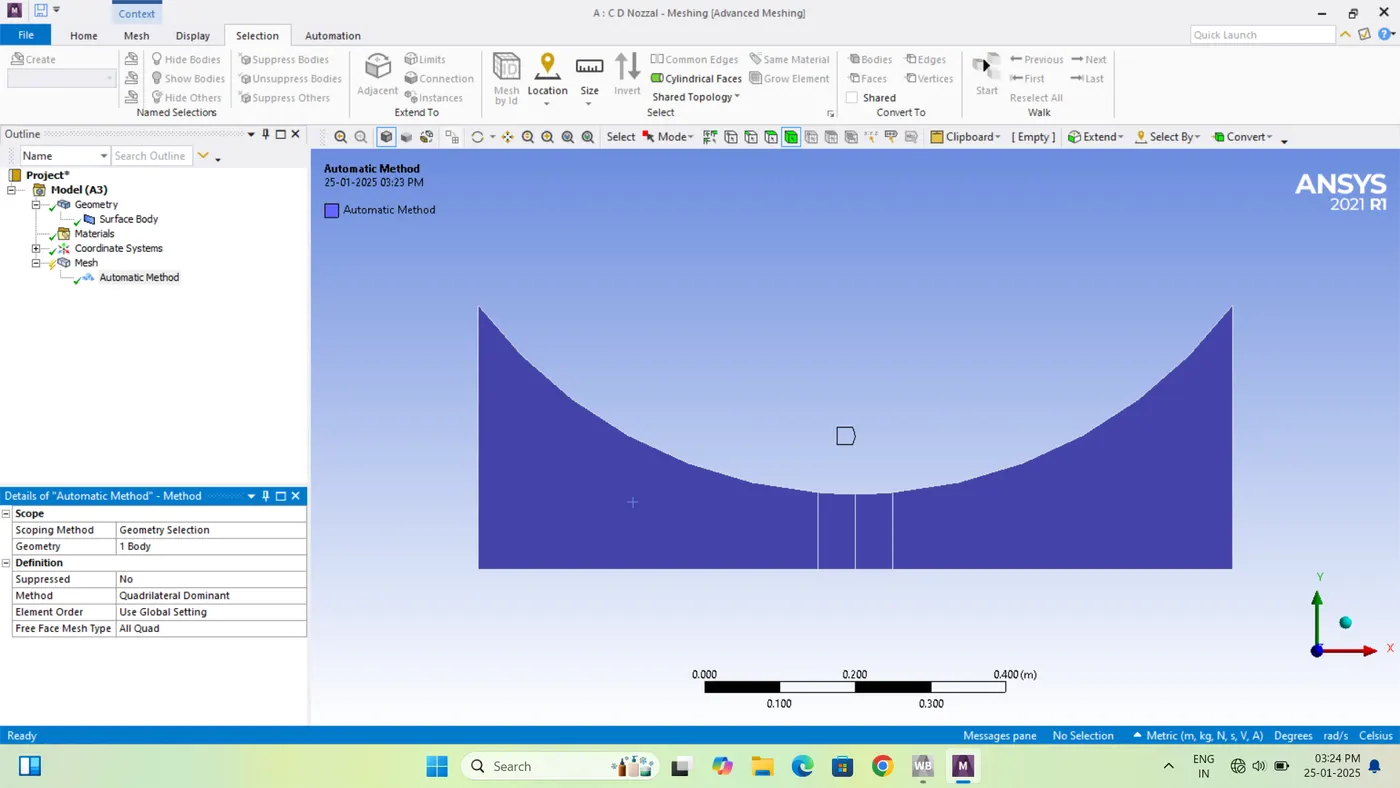
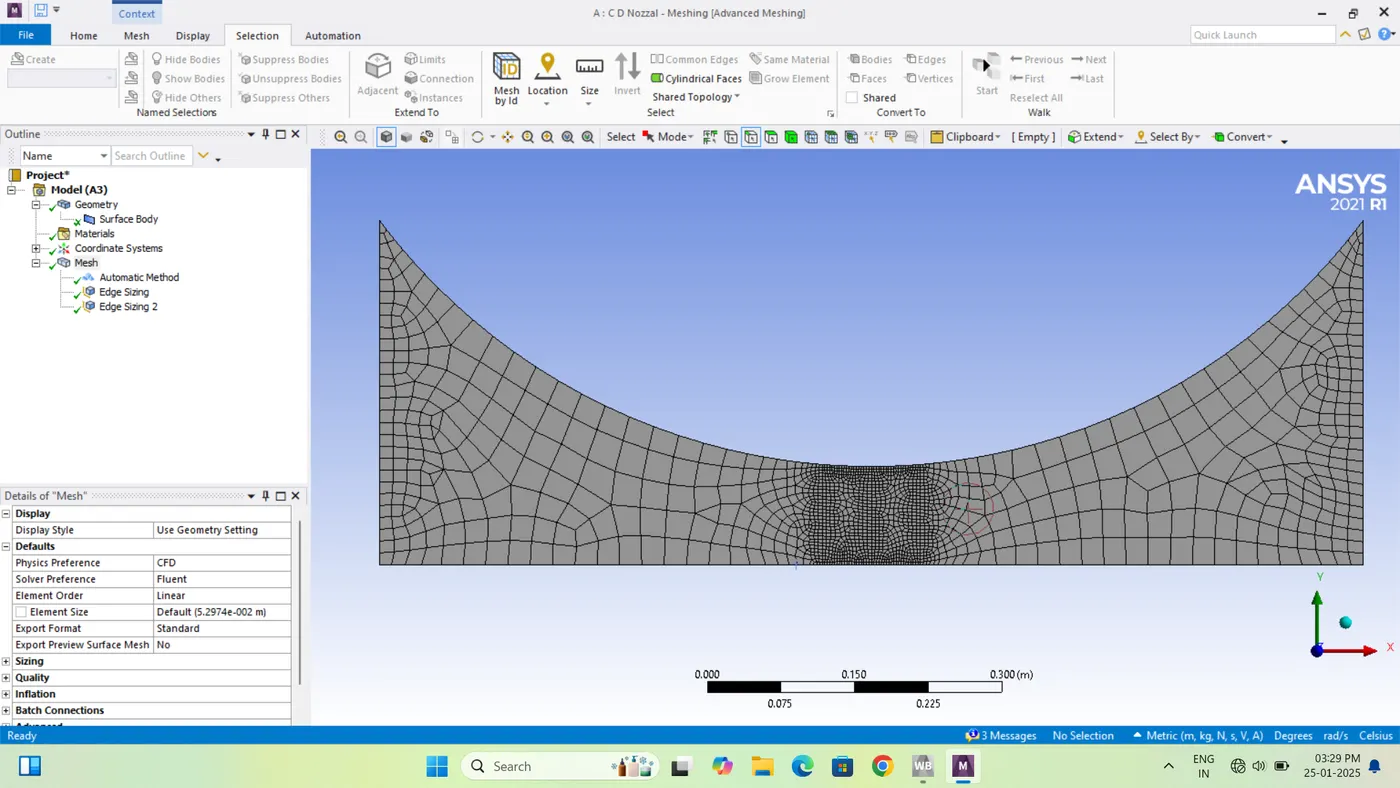
:-Meshing types
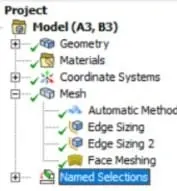
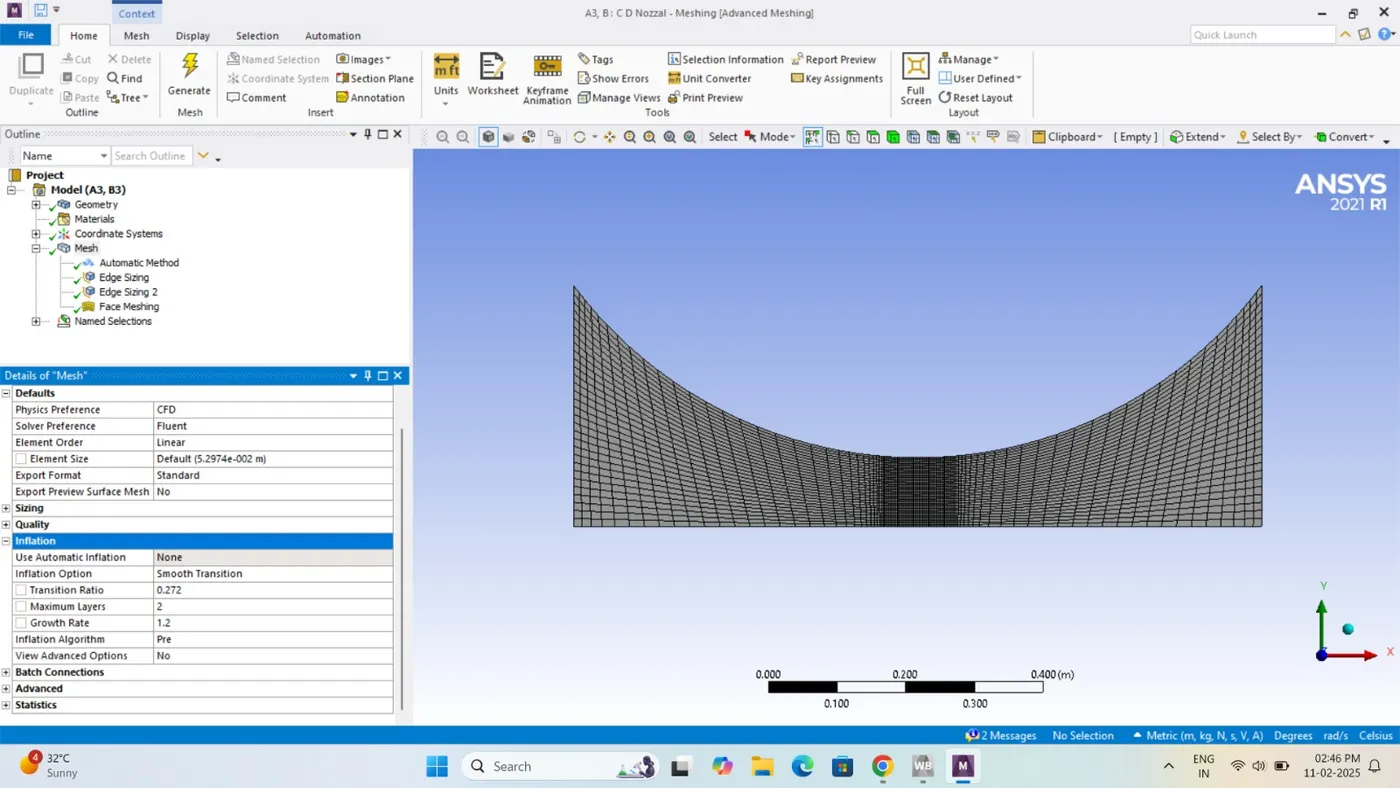
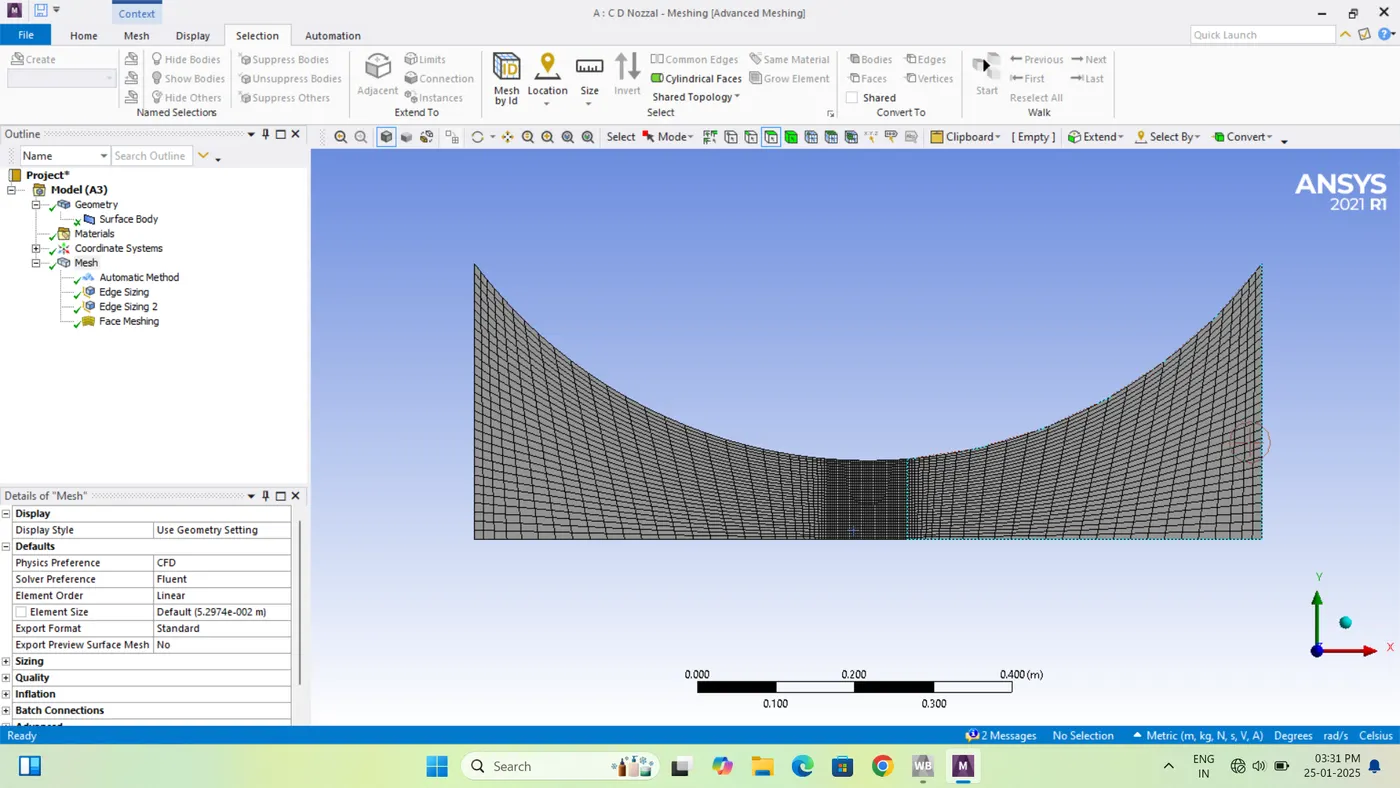
meshing type Automated, Edge size and Face Meshing
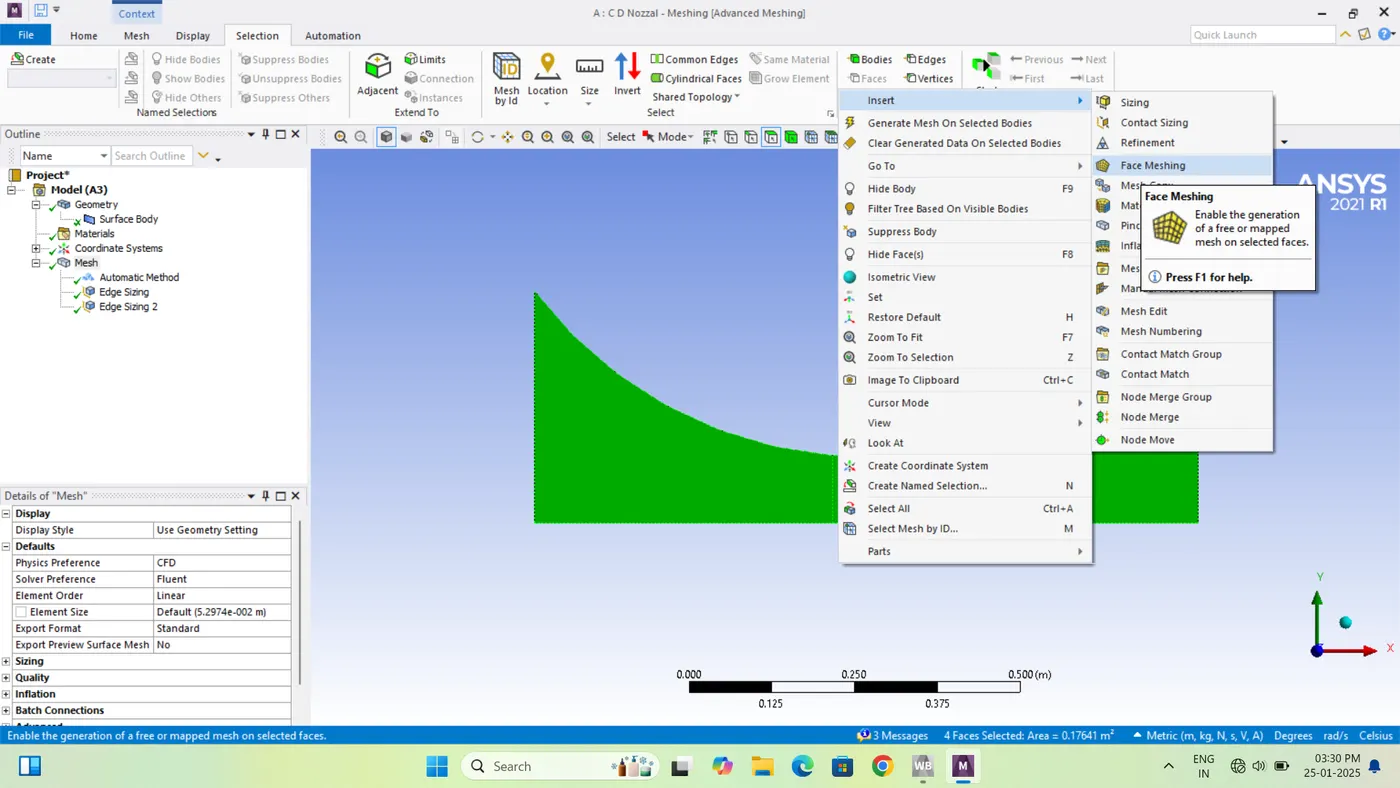
giving number of Divisions
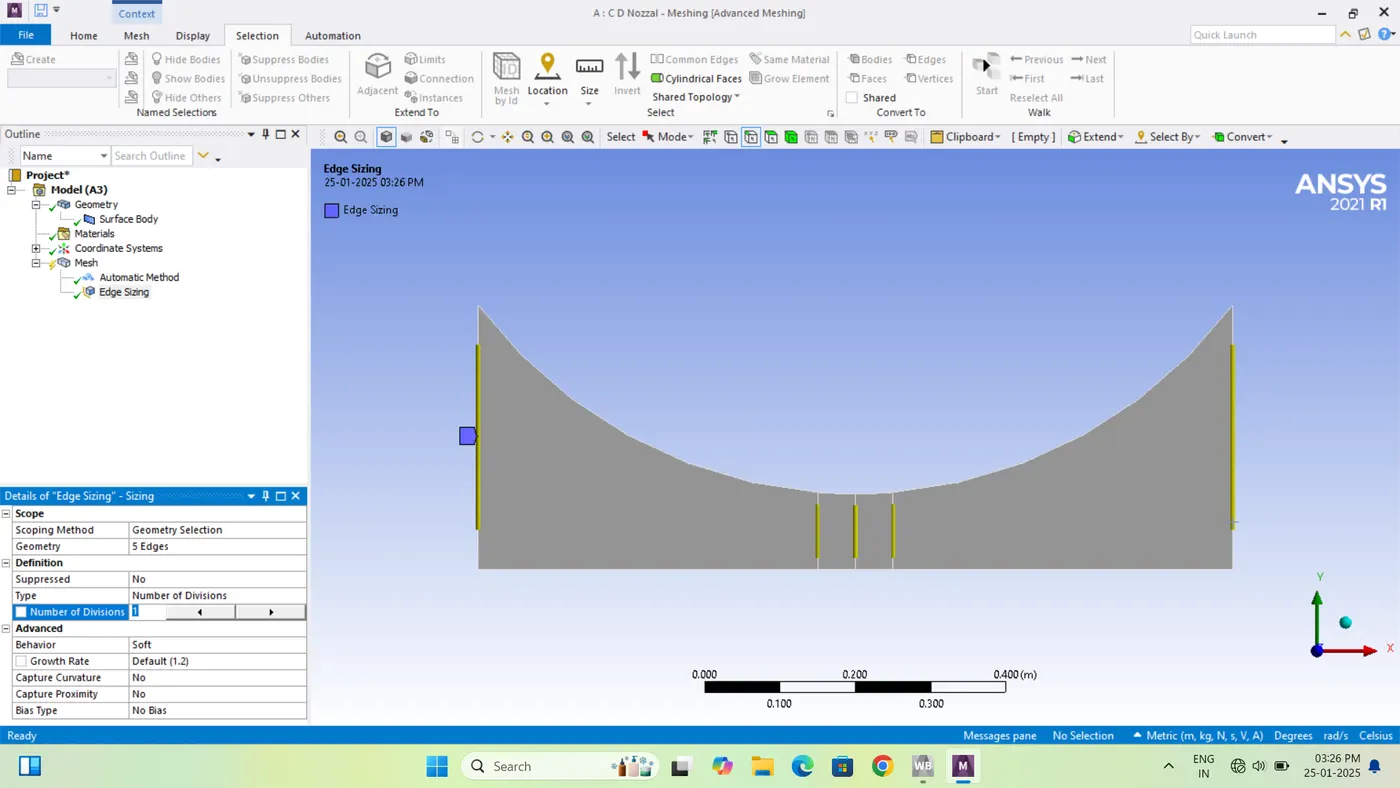
Meshing
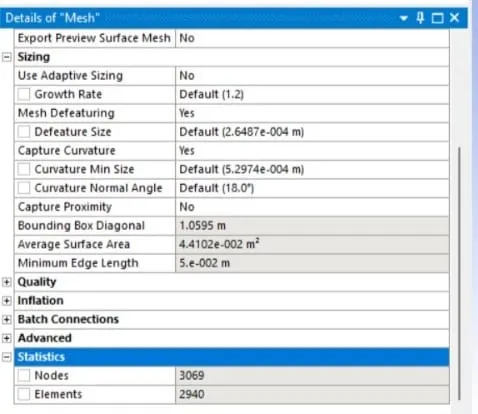
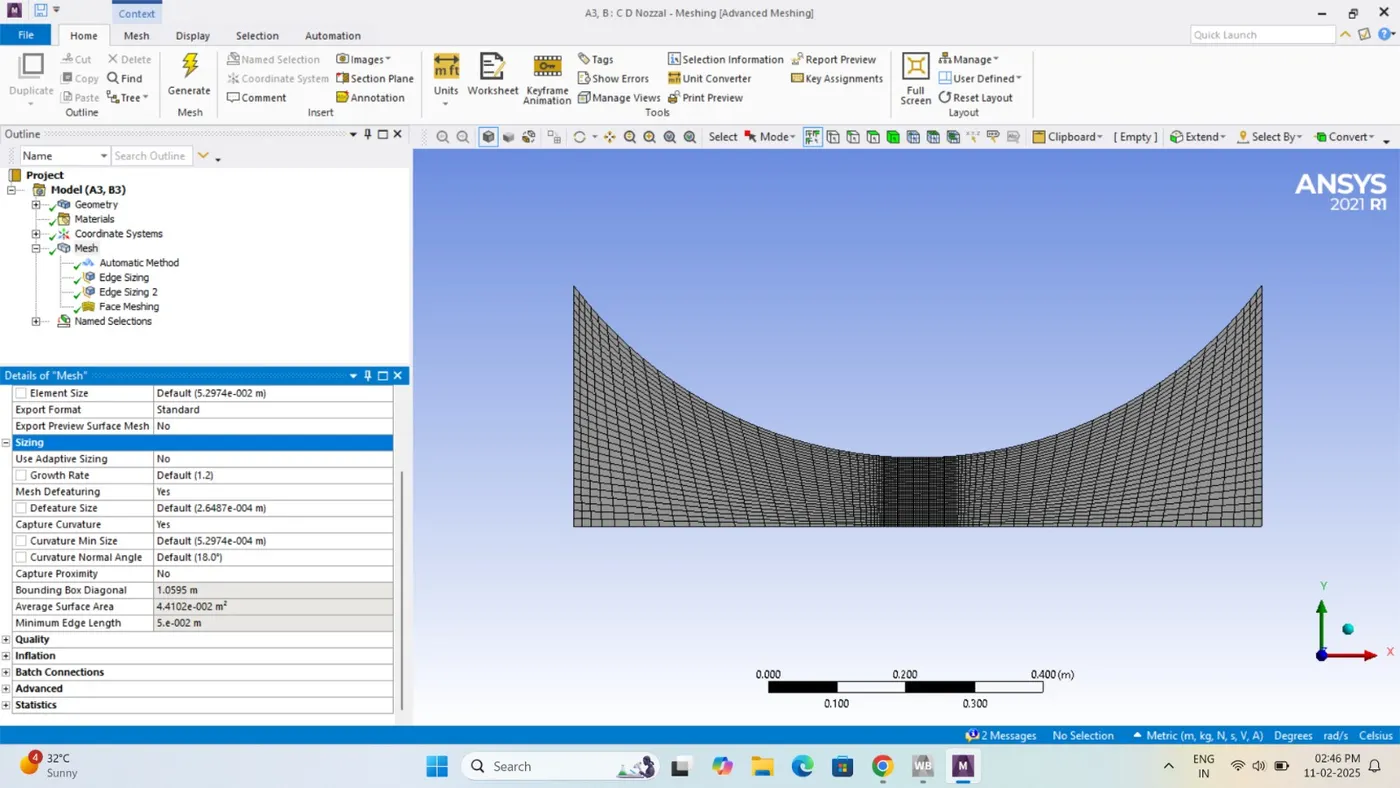
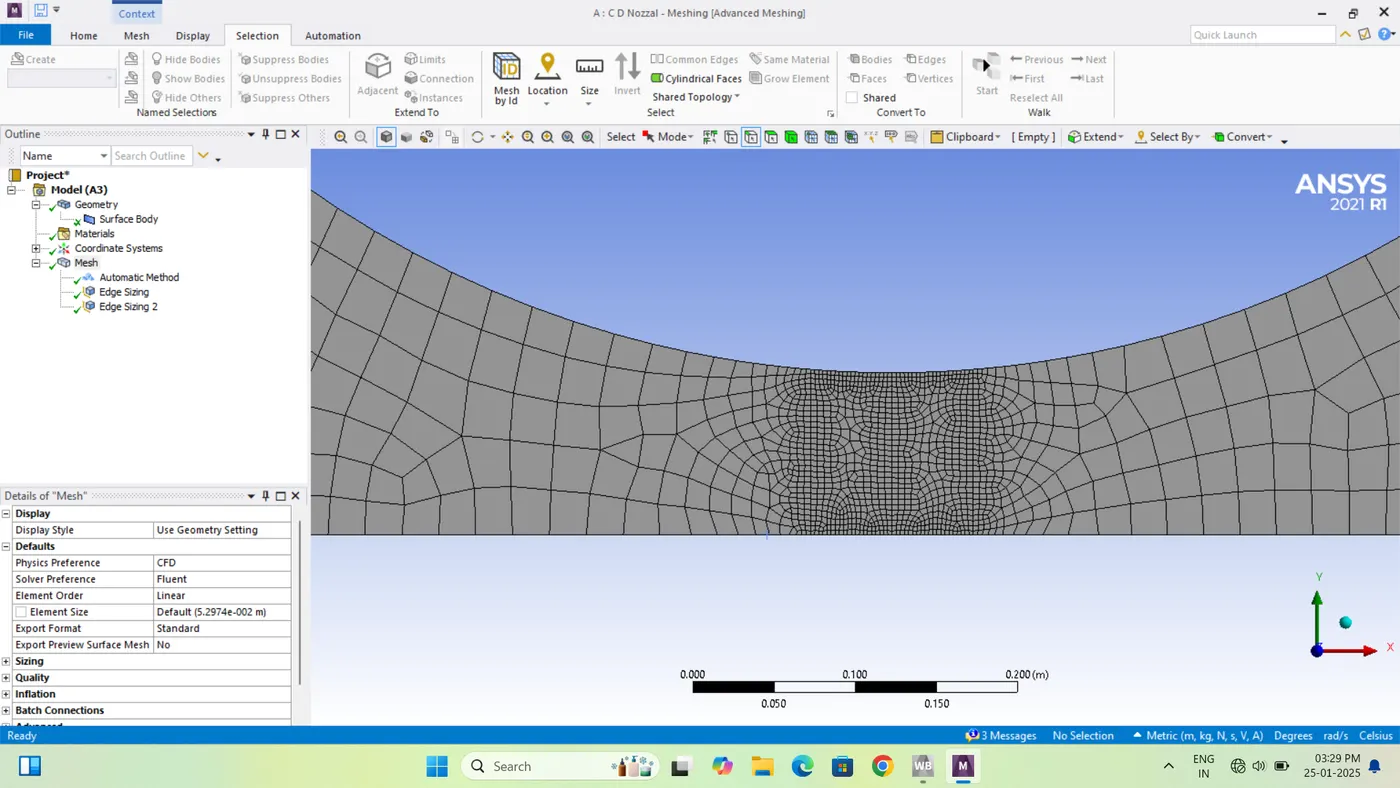
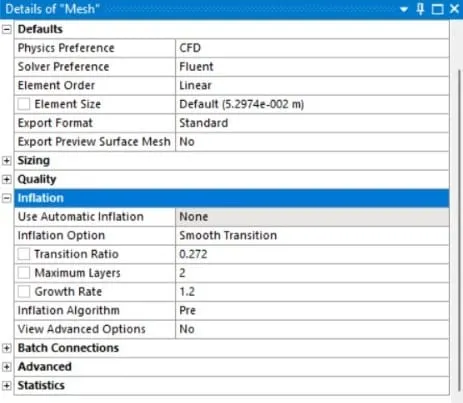
Inflation
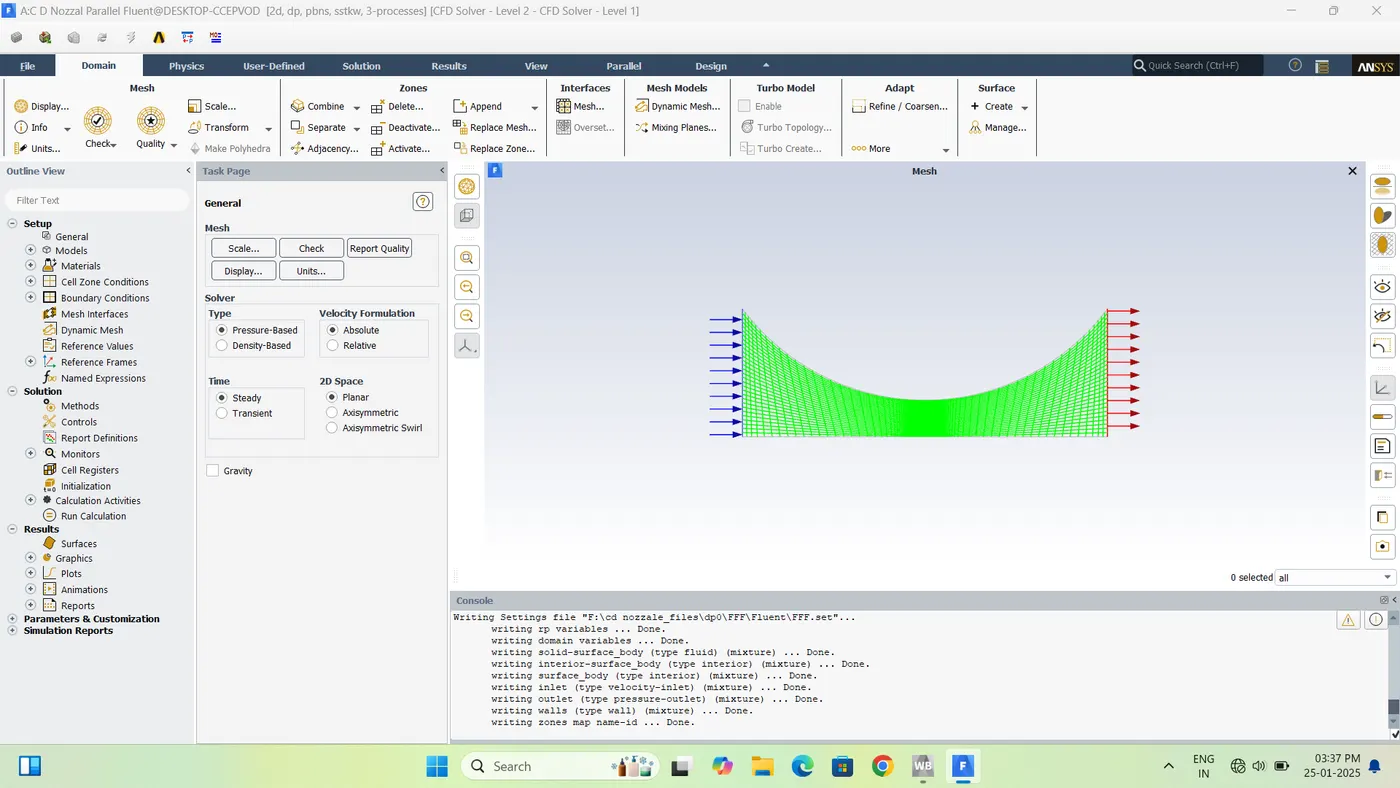
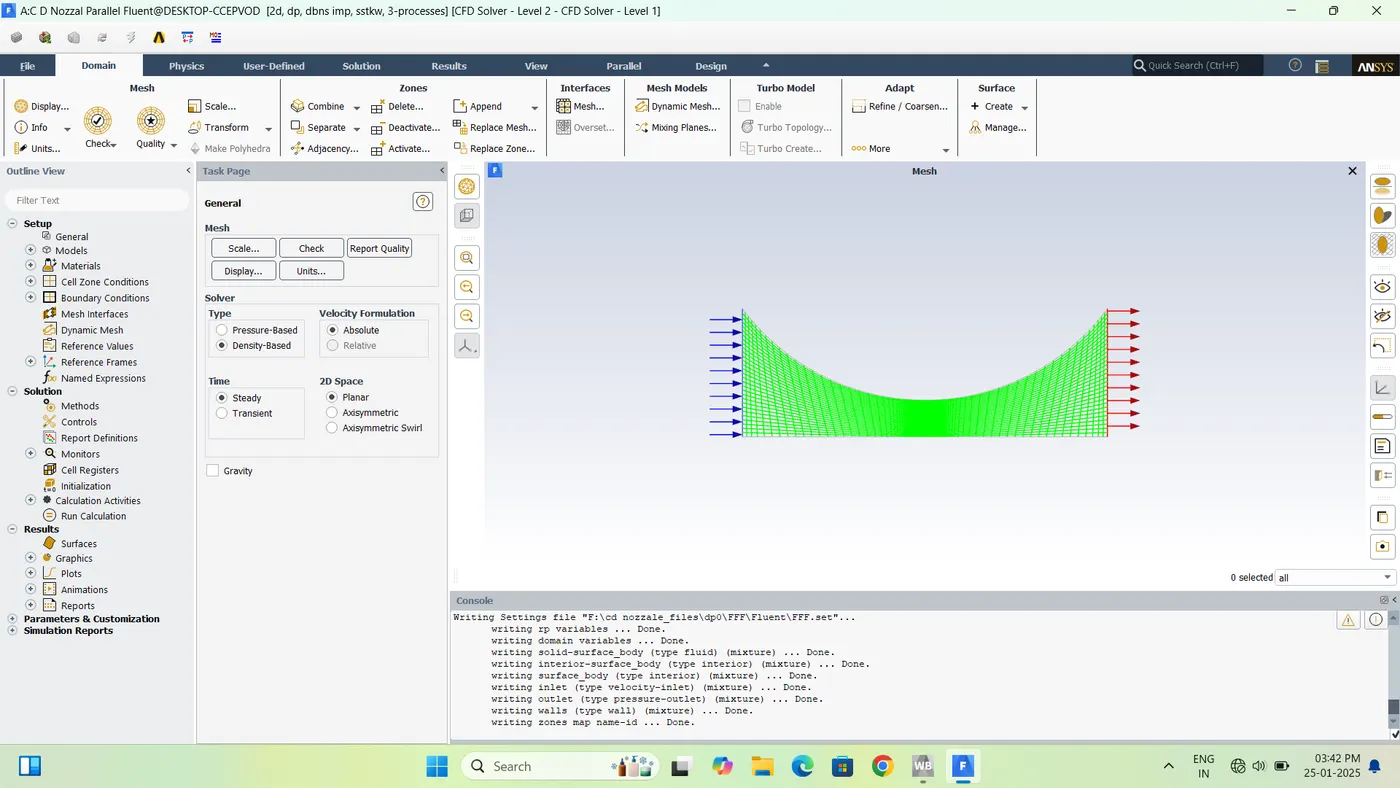
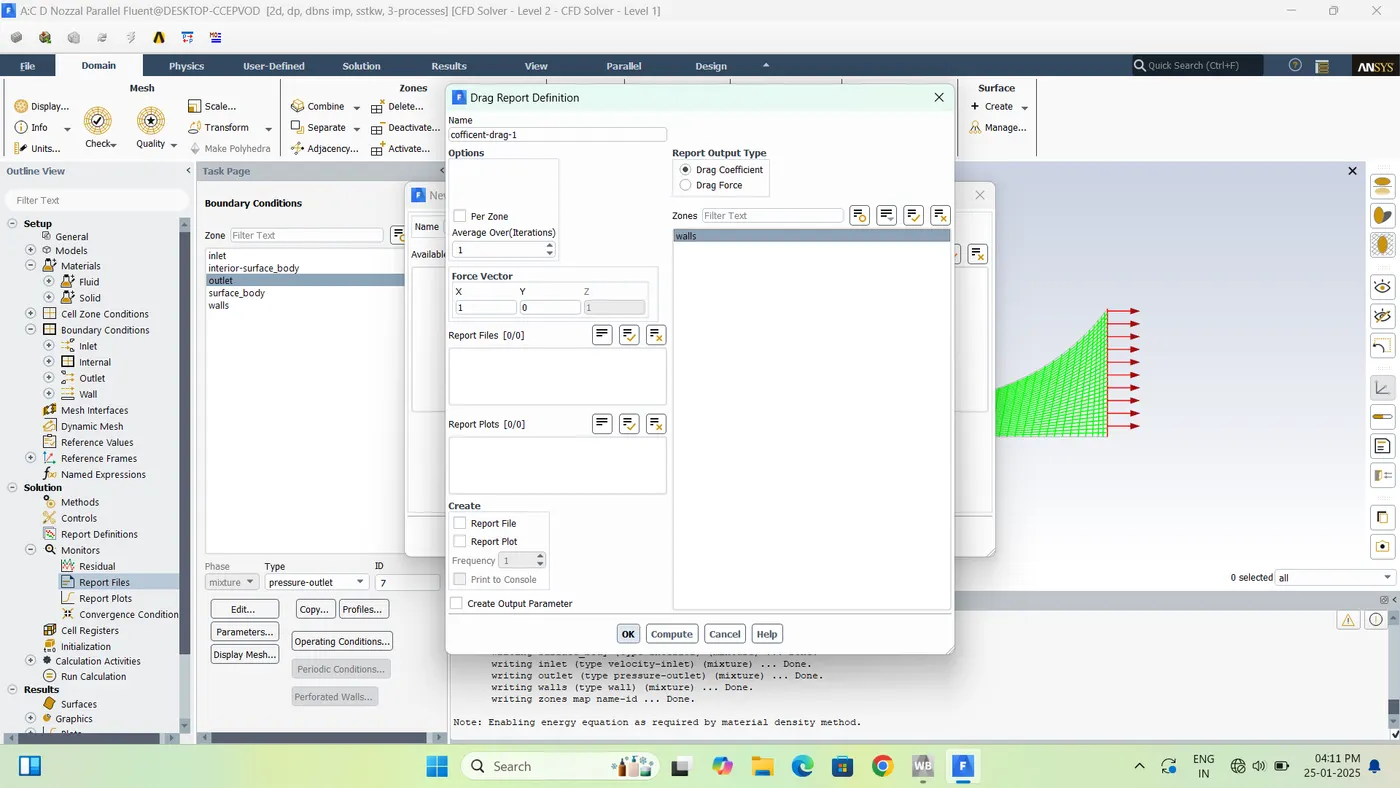
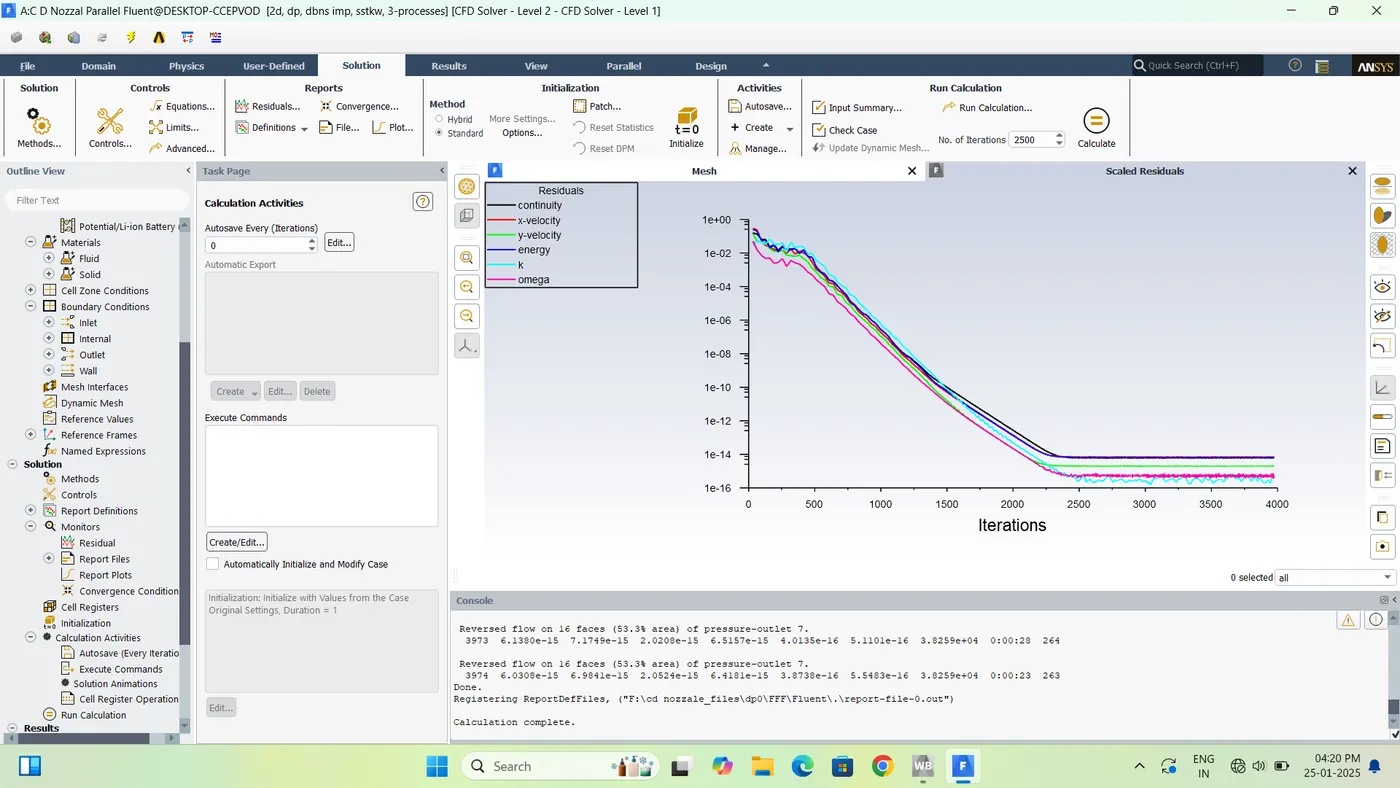
:- Residuals
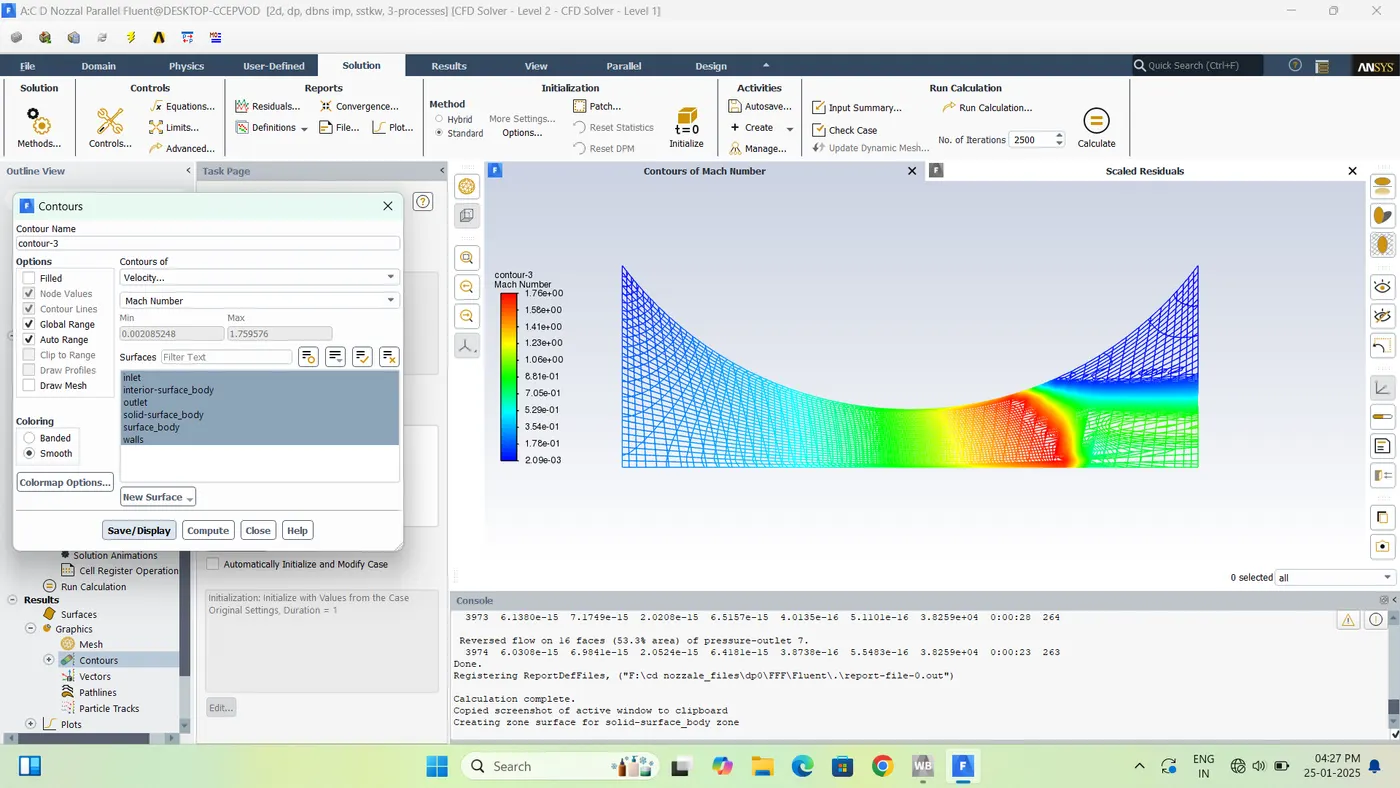
:-Pressure(pa)
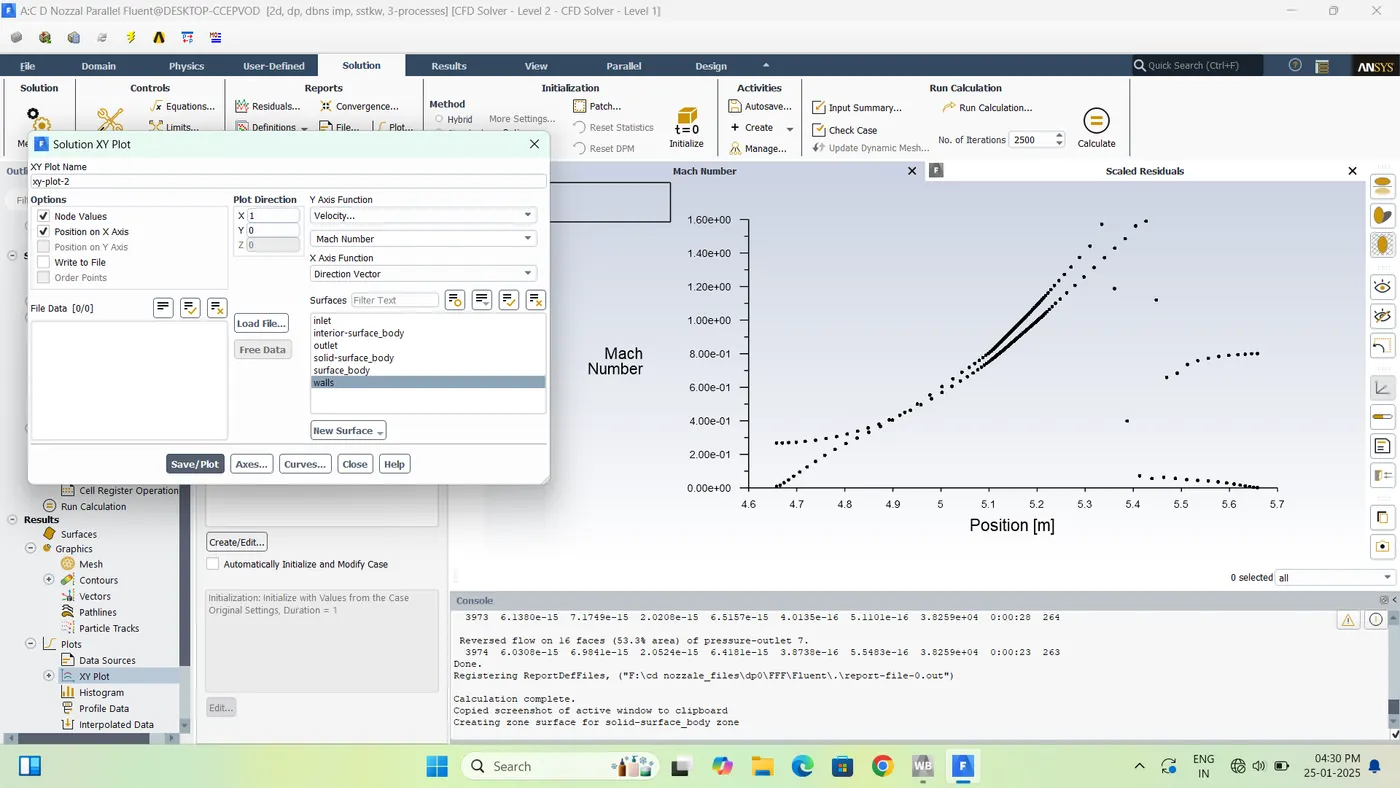
:- Mach Number
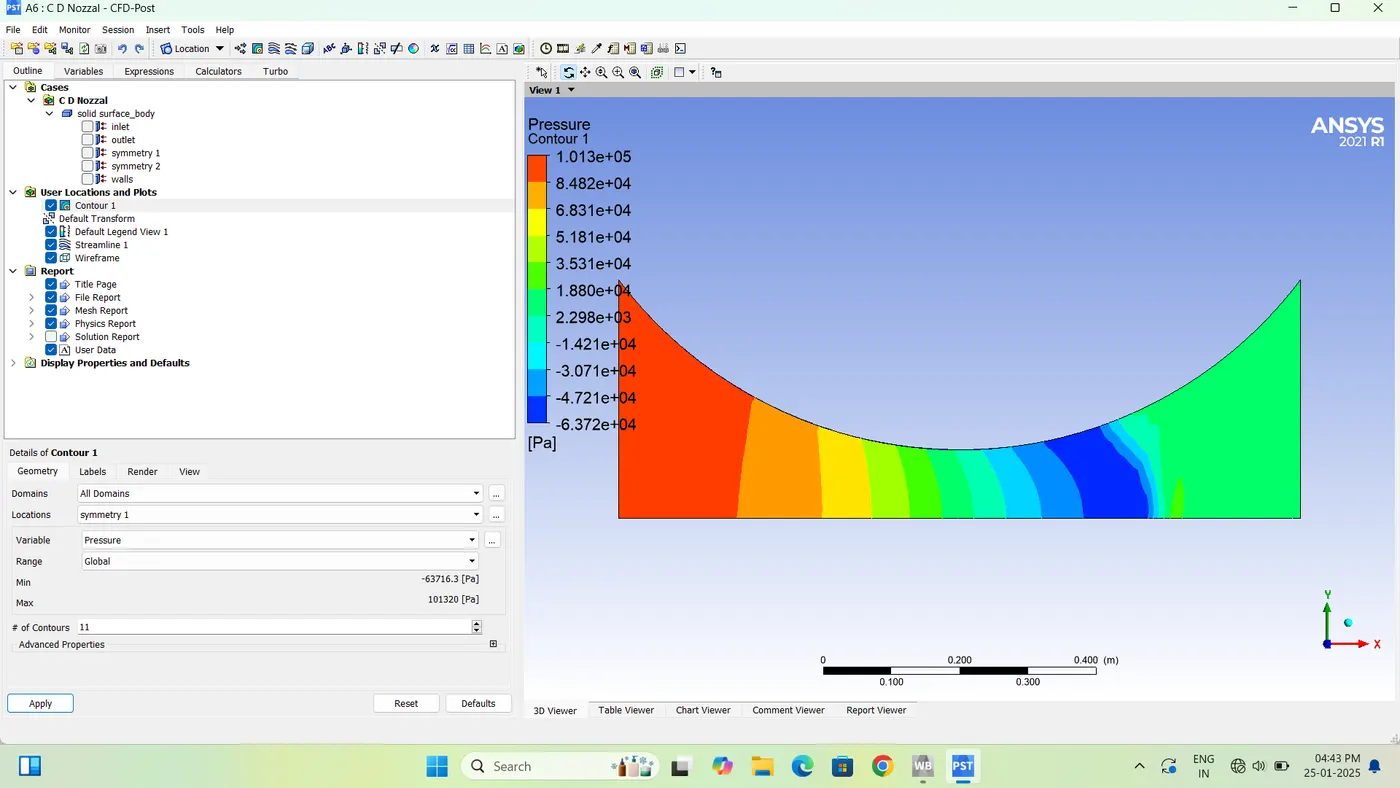
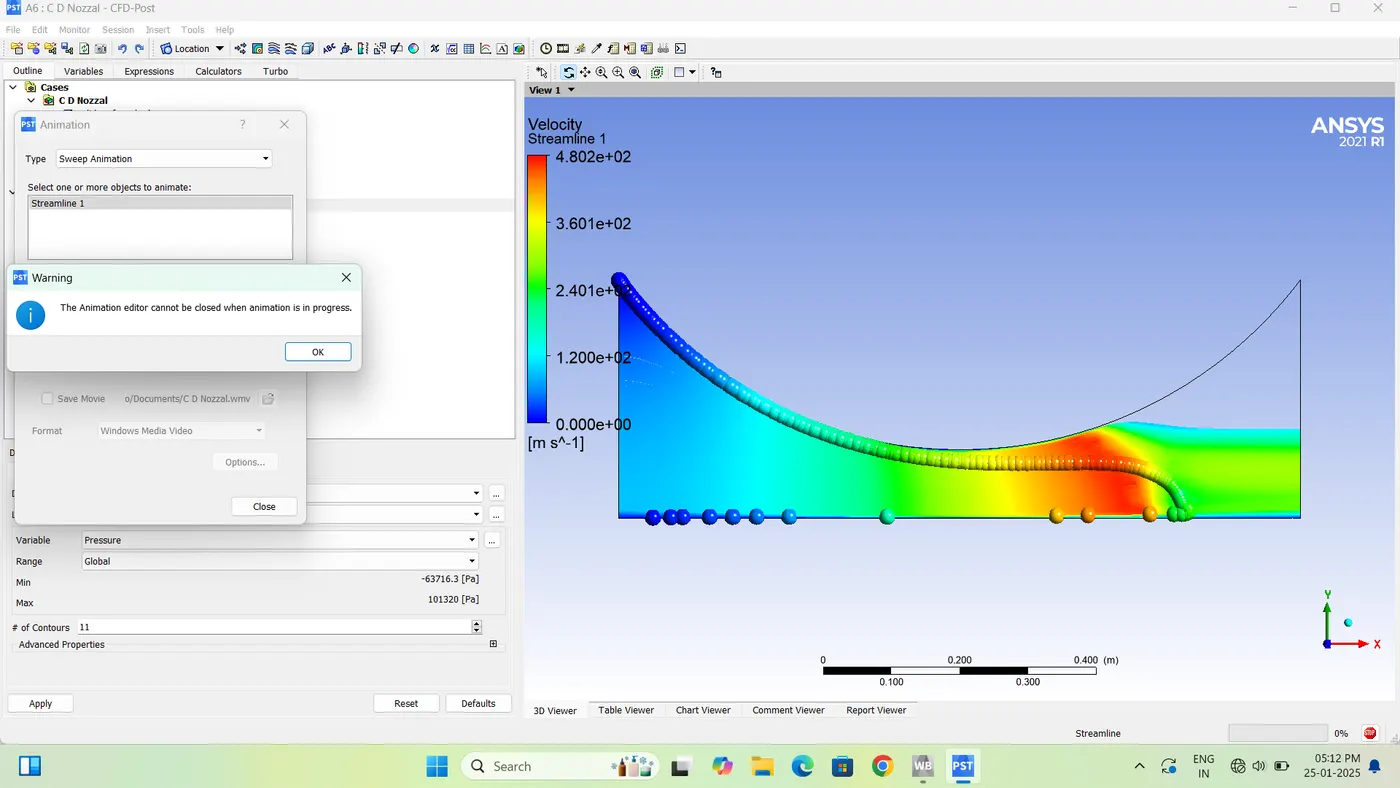
:- Creating Contour
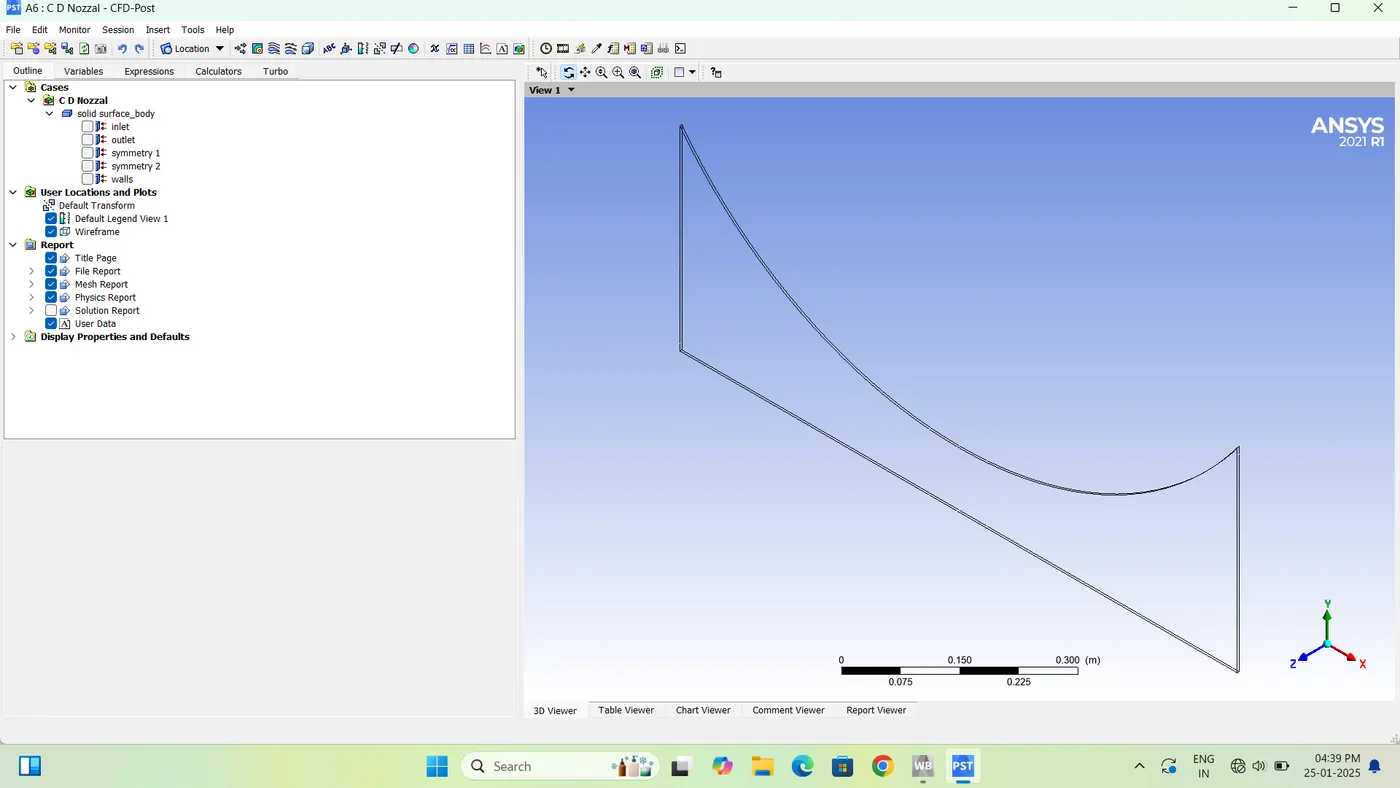
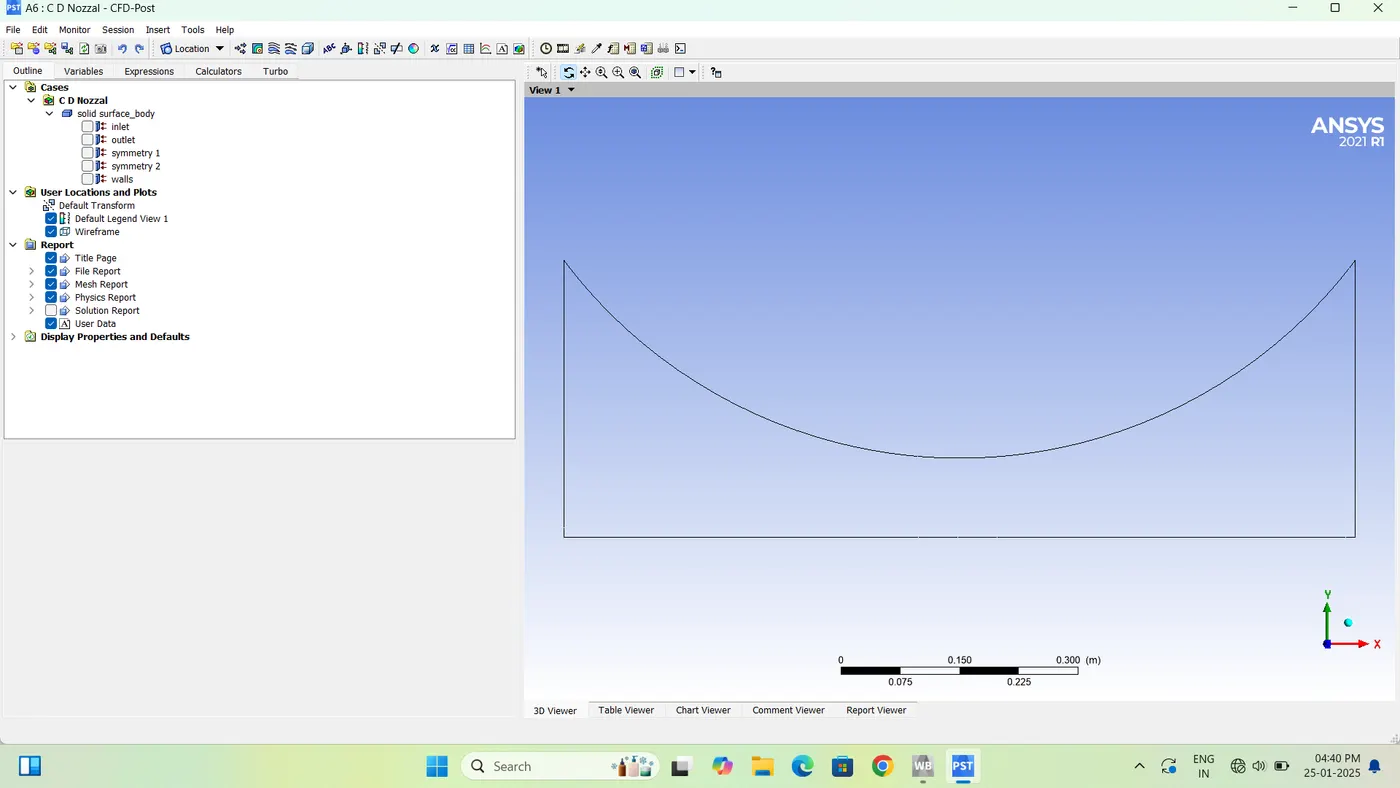
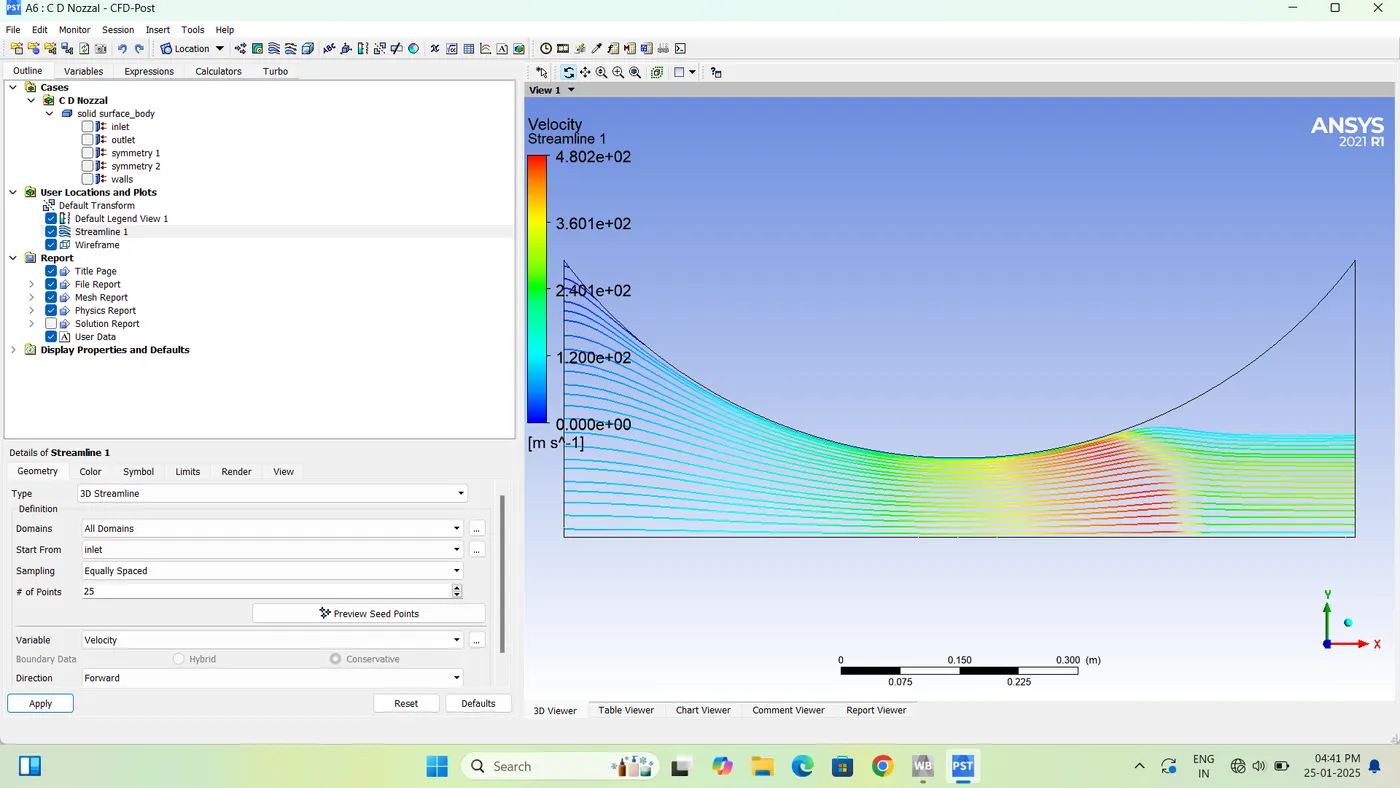
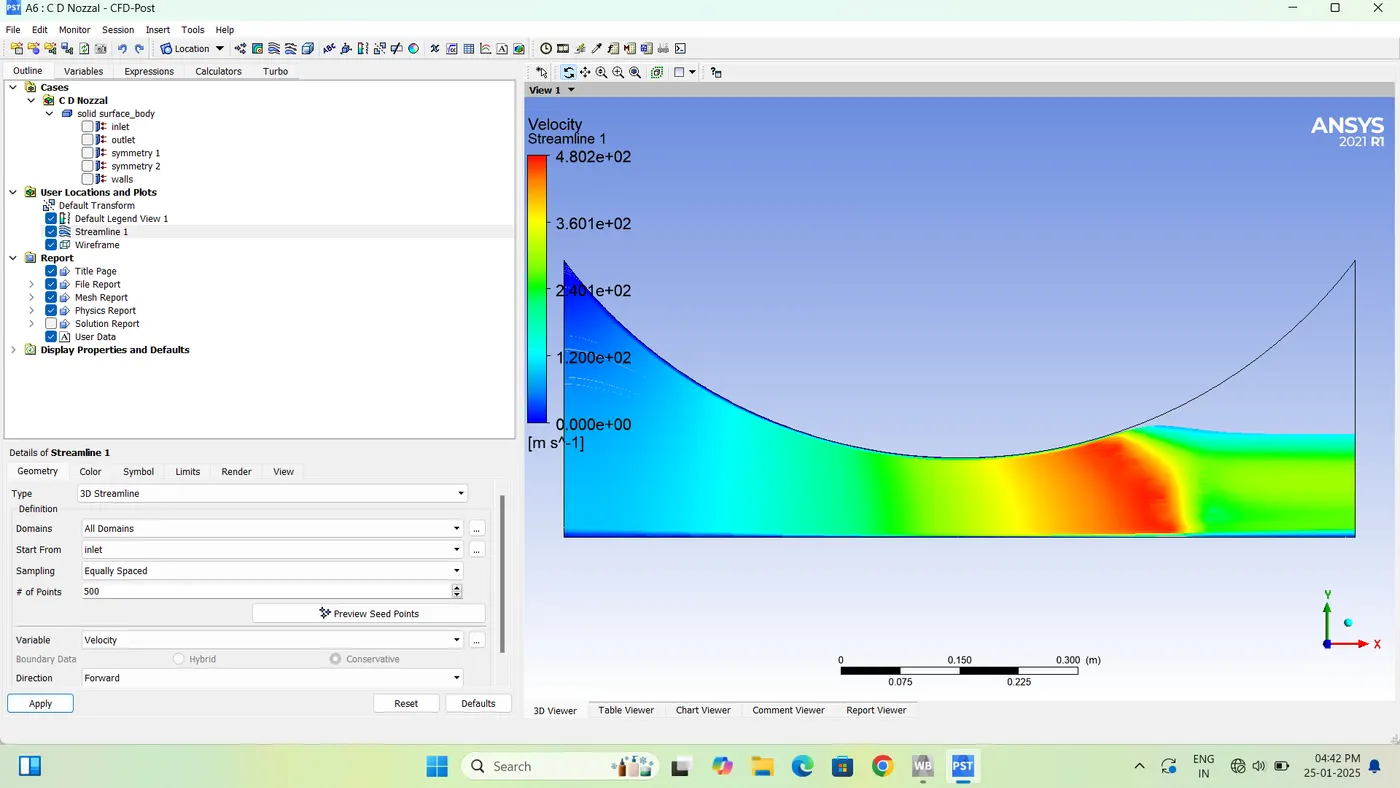
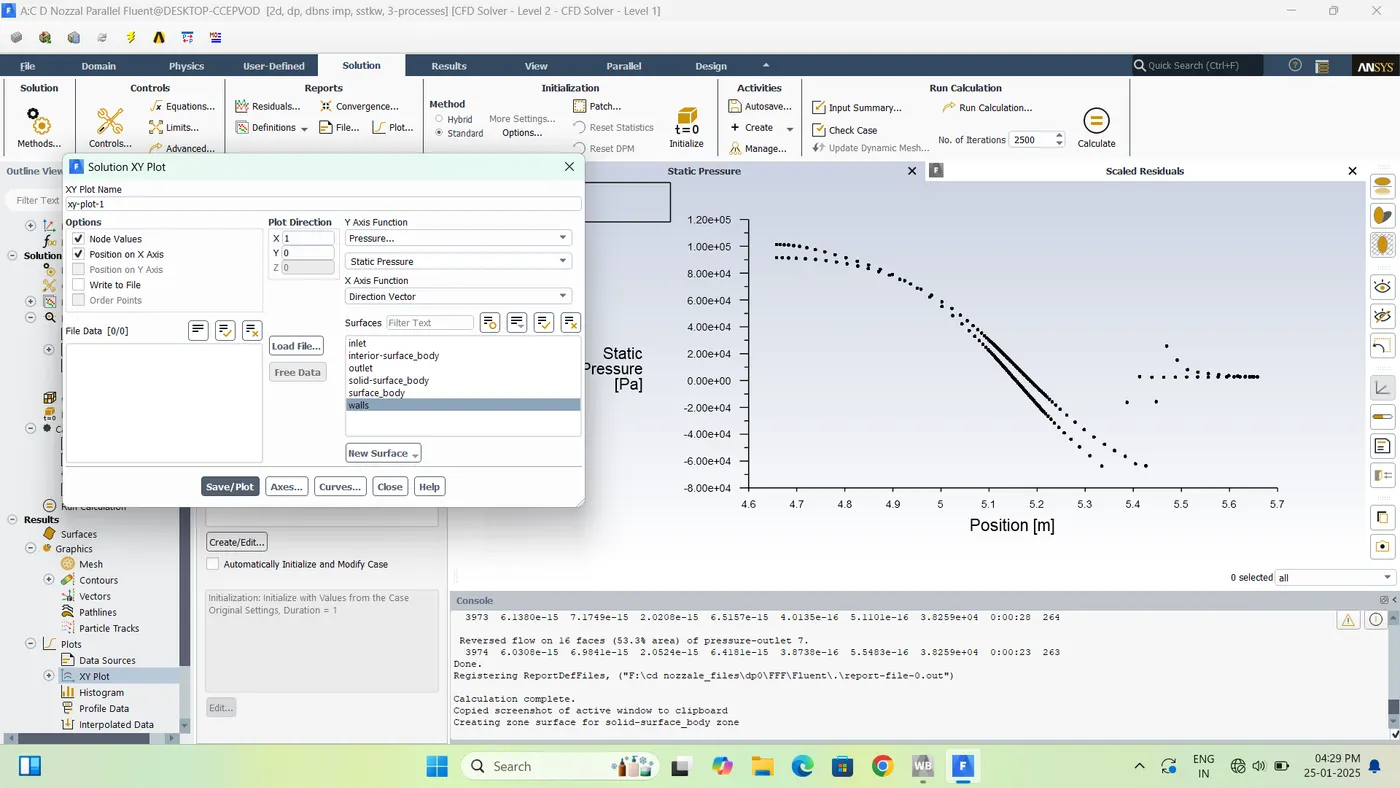
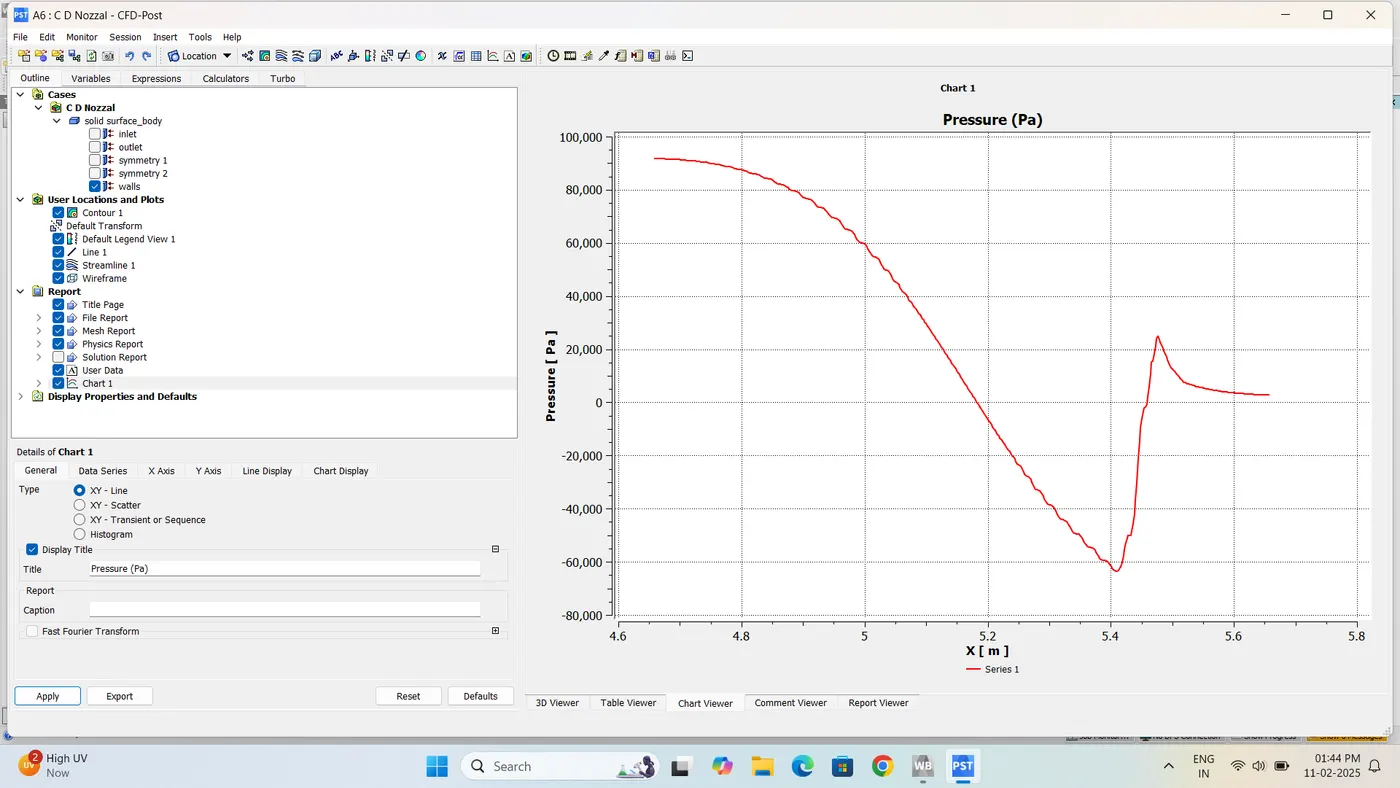
:-XY Plots Pressure
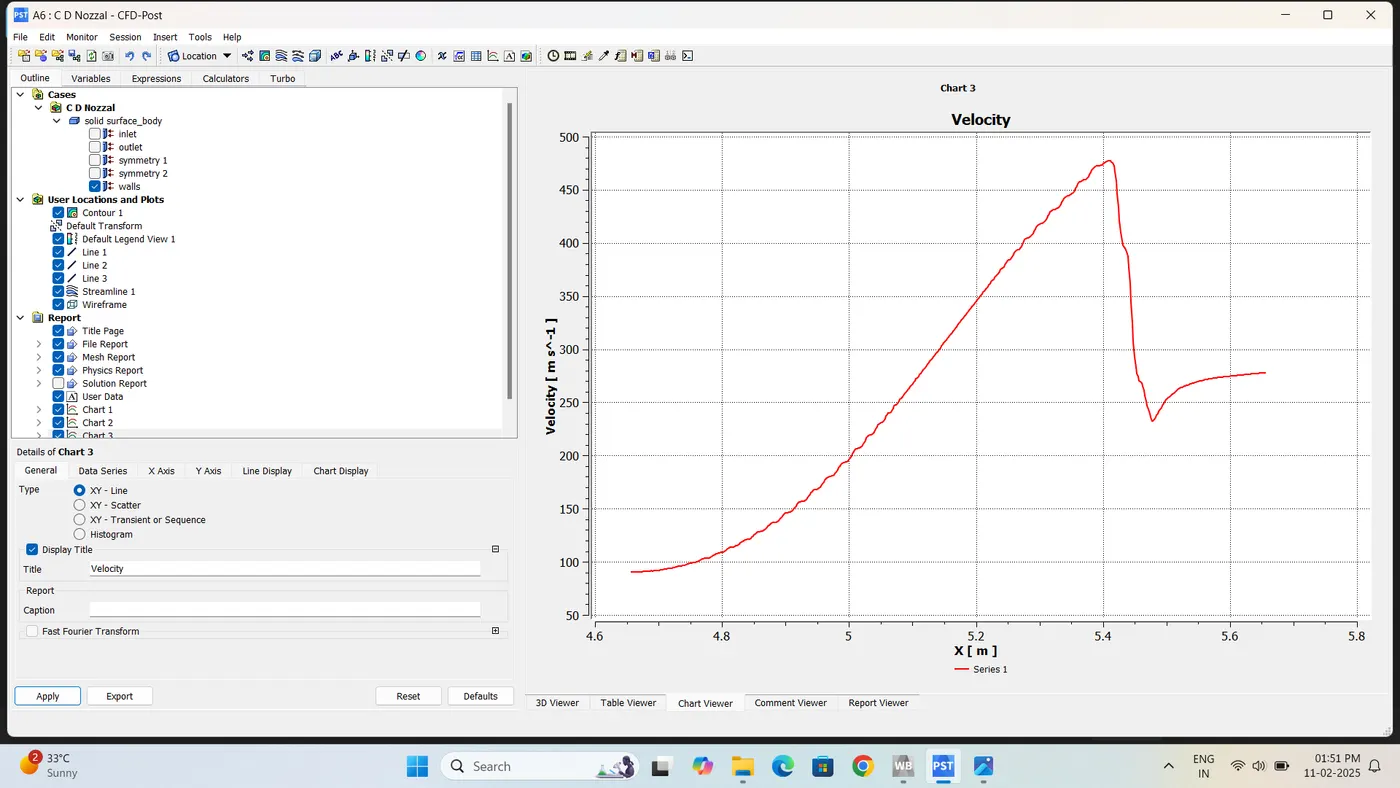
:-XY plots Velocity
Concluding Nozzle!
A concluding nozzle is a type of nozzle that is designed to optimize the expansion of a fluid, typically a gas, to maximize its velocity and minimize its pressure. The nozzle is designed to provide a smooth, continuous expansion of the fluid, allowing it to reach its maximum velocity at the exit.
Key Features of a Concluding Nozzle:
1. Contoured Shape: The nozzle has a contoured shape that provides a smooth, continuous expansion of the fluid.
2. Increasing Cross-Sectional Area: The nozzle's cross-sectional area increases along its length, allowing the fluid to expand and accelerate.
3. Optimized Exit Shape: The nozzle's exit shape is optimized to provide a smooth, uniform flow of the fluid at the exit.
Advantages of a Concluding Nozzle:
1. High Efficiency: Concluding nozzles can achieve high efficiency, with minimal energy loss due to friction or turbulence.
2. High Velocity: Concluding nozzles can produce high-velocity flows, making them suitable for applications such as rocket propulsion.
3. Low Pressure: Concluding nozzles can produce low-pressure flows, making them suitable for applications such as vacuum systems.
Applications of Concluding Nozzles:
1. Rocket Propulsion: Concluding nozzles are used in rocket propulsion systems to optimize the expansion of hot gases and produce high-velocity flows.
2. Vacuum Systems: Concluding nozzles are used in vacuum systems to produce low-pressure flows and optimize the expansion of gases.
3. Aerospace Engineering: Concluding nozzles are used in aerospace engineering applications, such as in the design of jet engines and wind tunnels.