Week 2 Challenge : Surface meshing on a Pressure valve
Aim: - To check for geometrical errors and perform Topology clean up. Mesh the model with 3 different mesh length and note the observations.
Procedure: -
- Initially we download the model and import it into the ANSA software by opening the (.ansa) file. This model has some topological errors which we have to solve.
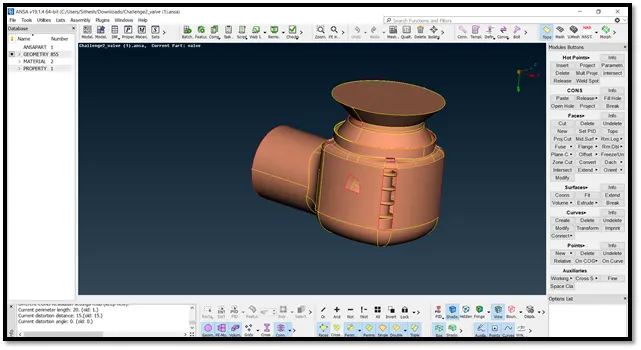
2. For that we add new faces by using ‘New’ option under Faces. We get 4 different options in New namely: - Existing Surf, Planar, Fitted and COONS. We can use any one of these options appropriately and create new faces to complete the model. Once completed, check for any geometrical errors using ‘Checks’ tab.
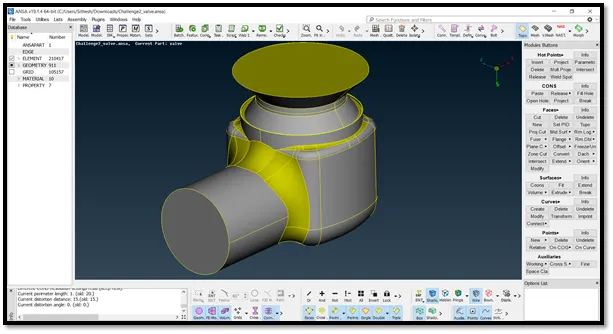
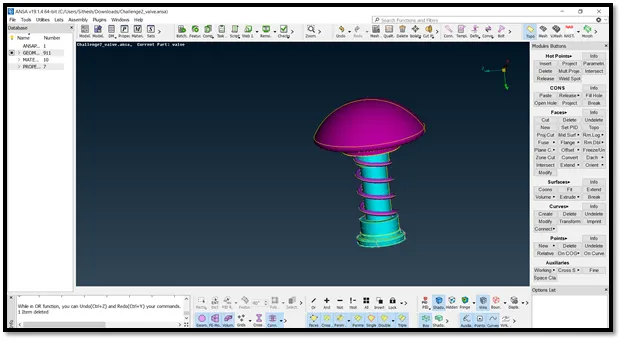
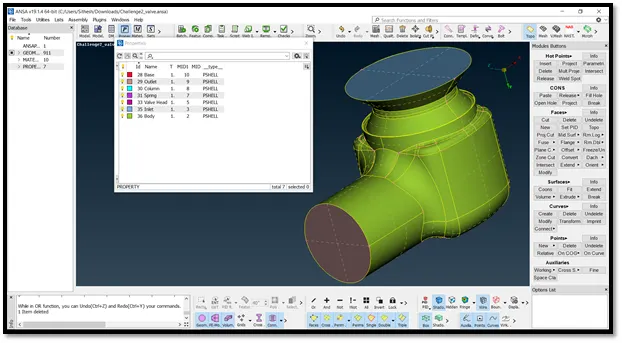
3. Now for the ease of working, we can create various PID for each part separately. This can be done by using ‘Property’ tab at top area.
4. We can create new PID with different part names and apply them to respective parts. Before applying the property, it is mandatory to change the view from Entities to PID in order to view the applied changes.
Meshing Procedure:
5. After this step we can start our meshing procedure. For any mesh, initial steps are the same.
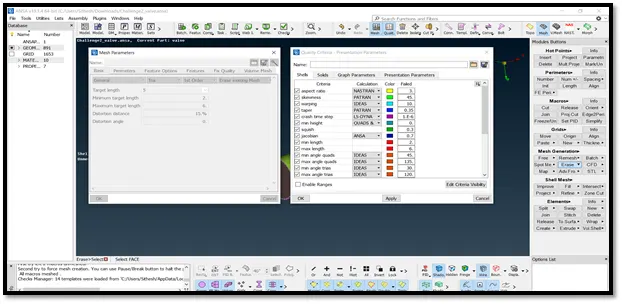
6. We first set the mesh length using Length option for both Perimeter and Macros. Then we use Mesh tab and set the target length, maximum and minimum mesh length respectively. Also, the mesh element is selected as Tria.
7. Next, we check the mesh quality from Quality tab and set maximum and minimum mesh length.
8. Finally, we choose any mesh type (Spot mesh in this case) and apply it to the complete model by box selection.
Case 1: - Target mesh length = 5mm
Parameters:
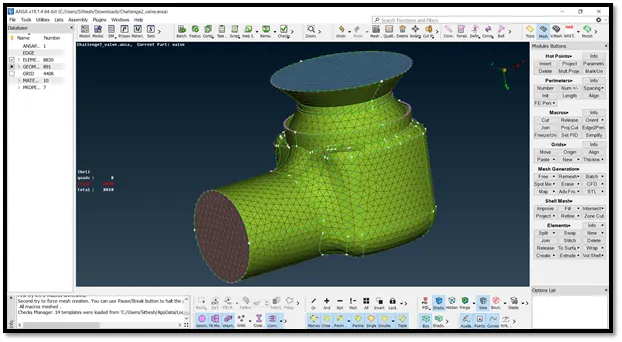
Final Model:
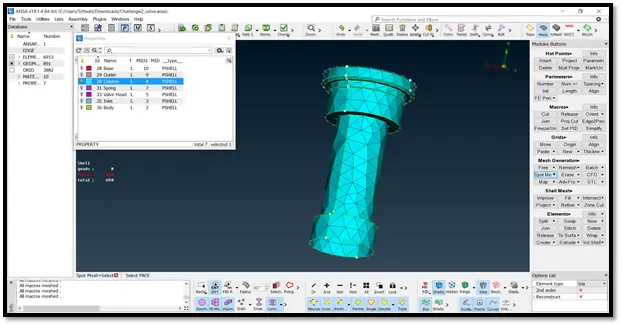
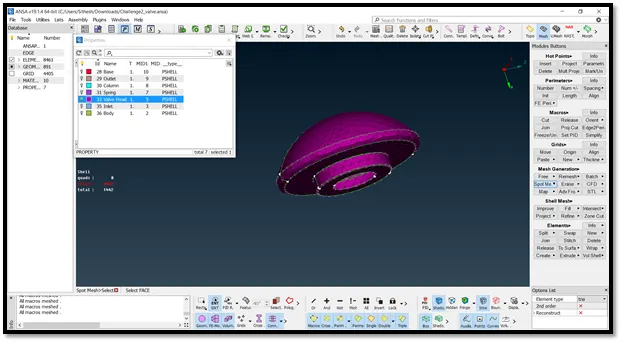
Inner Components:
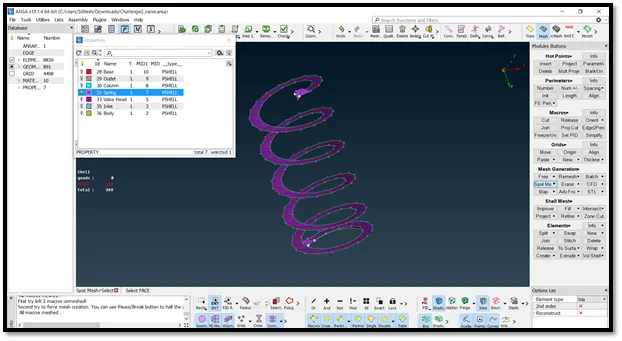
Case 2: - Target mesh length = 3mm
Final Model:
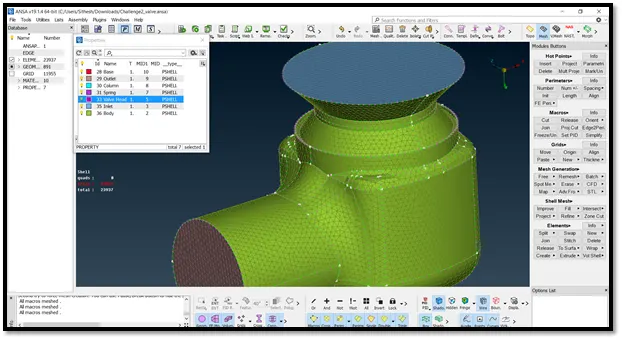
Inner Components:
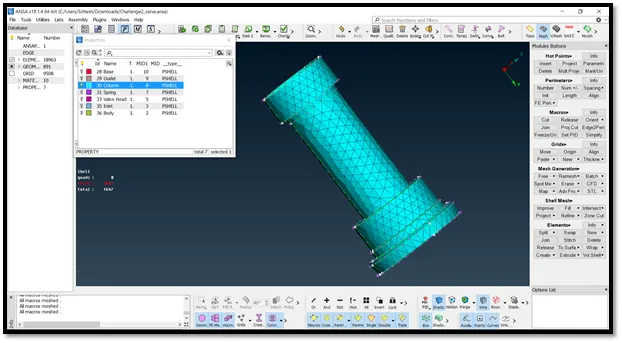
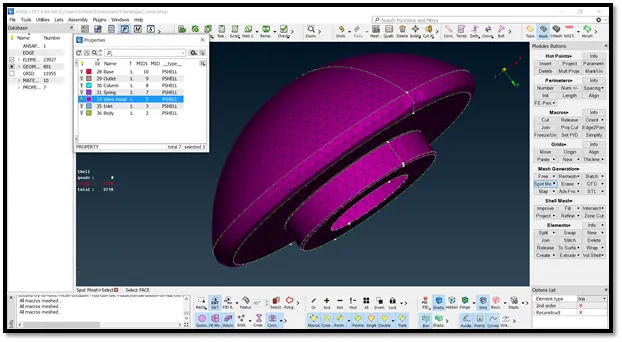
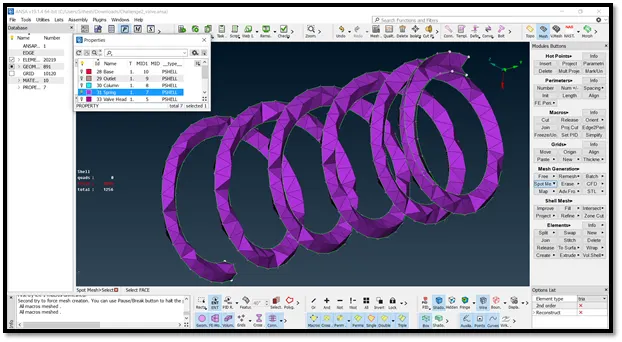
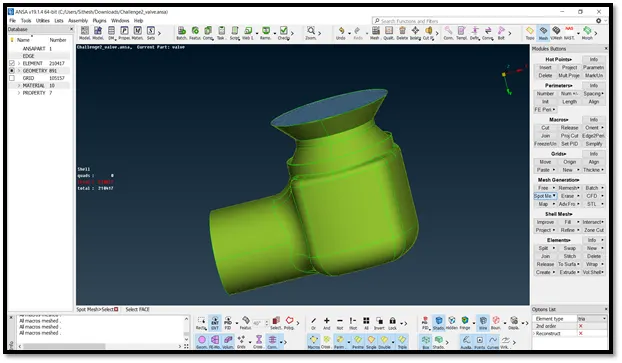
Case 3: - Target mesh length = 1mm
Final Model:
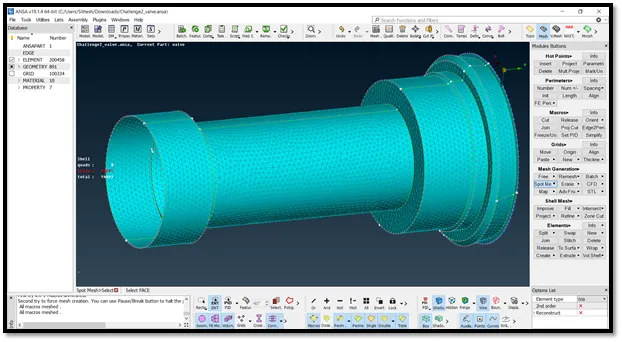
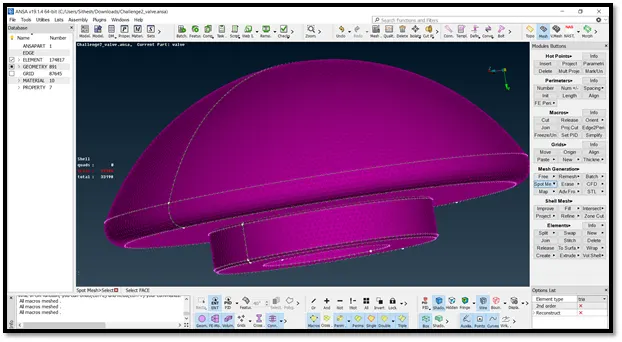
Inner Components:
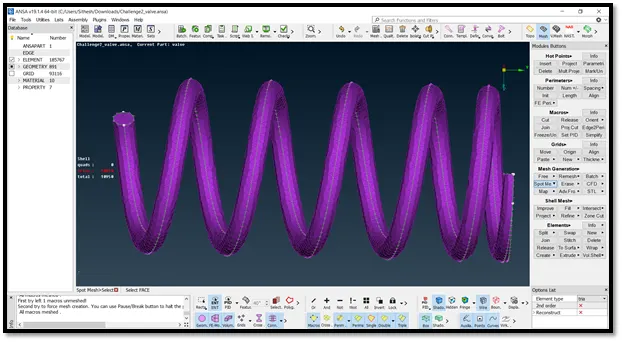
Observation:
We have meshed our model with 3 different mesh lengths and obtained the results. The following can be concluded:
- As the mesh length decreases, the number of elements increases and we get more refined meshed model.
- Mesh length also effects the parts with less surface area (Spring). For mesh length = 5, the mesh quality was very low because the surface length of spring was 3mm whereas for mesh length = 1, the mesh was perfect.
- For lower mesh lengths, we get more surface finish as compared to larger mesh lengths (visible in results).
- As the mesh length decreases, time required to process the mesh increases since more elements are involved.
Conclusion:
Thus we have successfully meshed the given model (Pressure Valve) with 3 different mesh lengths and displayed the results.