Week 2 Challenge : Surface meshing on a Pressure valve
Aim: To check for the geometrical errors and perform Topology cleanup accordingly. Further, mesh the model assigning different target lengths (1mm, 3 mm and 5 mm)as three different cases.
Procedure:
Geometrical errors:
- From Toolbar, select Checks>Geometry.
-
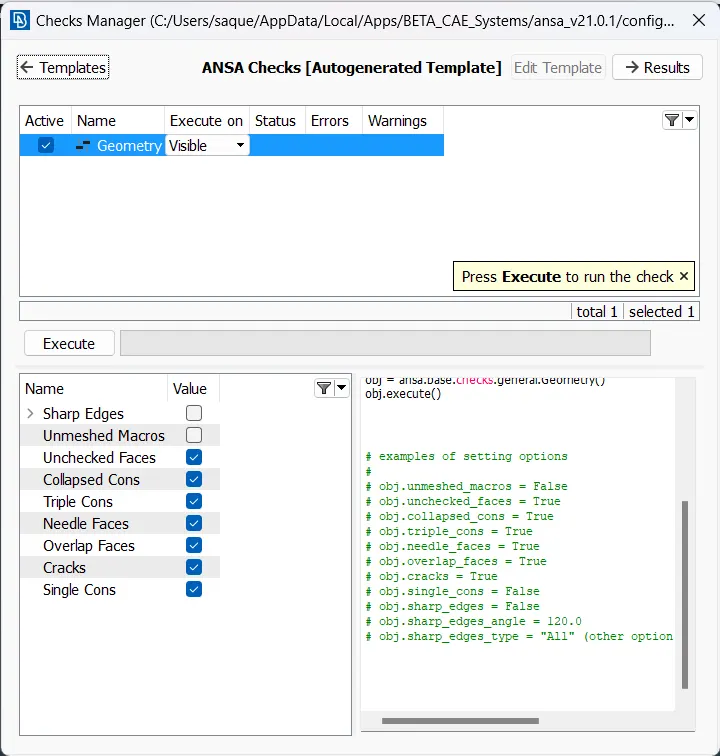
Geometry is used to locate geometrical problems of the model such as Unmeshed Macros, Unchecked Faces, Needle Faces, Collapsed Cons, Triple Cons, Overlaps and Cracks.
-
Under Auto generated tempelate, select all boxes except sharp edges and unmeshed Macros(will be dealt when meshing). Select Results.
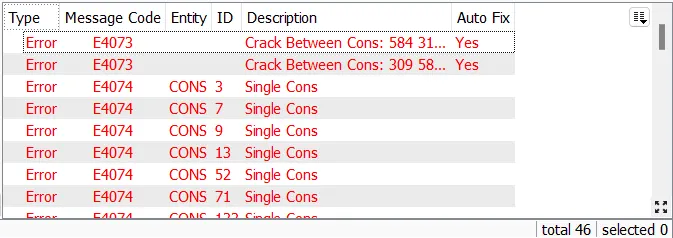
- A list of Geometrical errors are shown, rangoing from Single to double COONS.
Topology Clean Up:
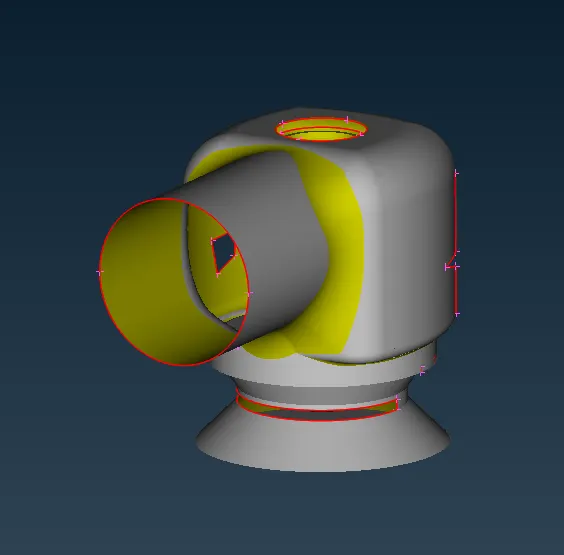
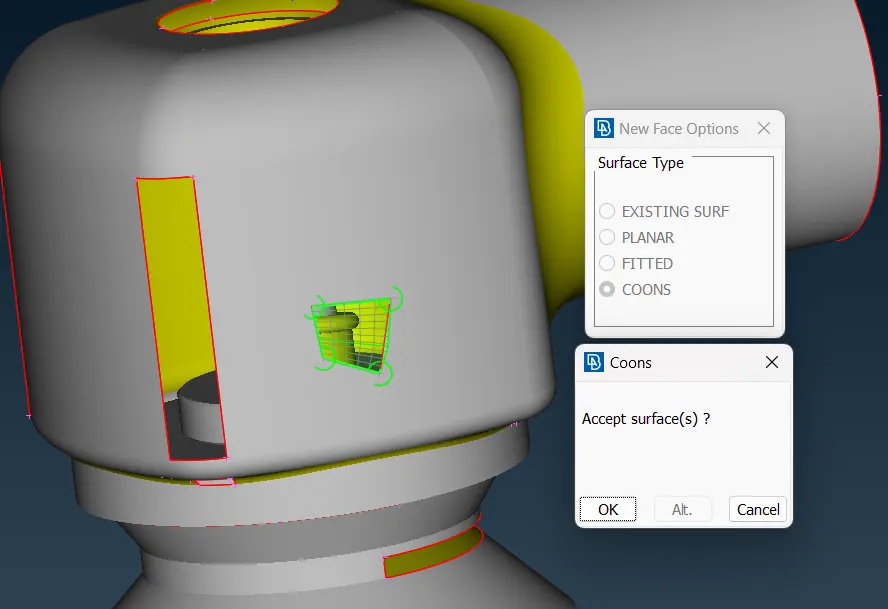
Surface Patch Up: After identifying the errors, the next sensible step would be to fix them and clean up the topology. The red lines highlights the sigle COON errors, Yellow highlights the double COONS.
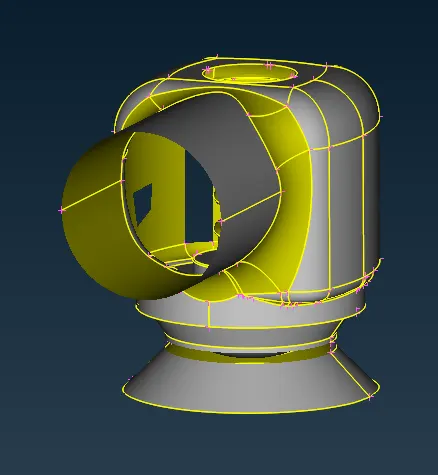
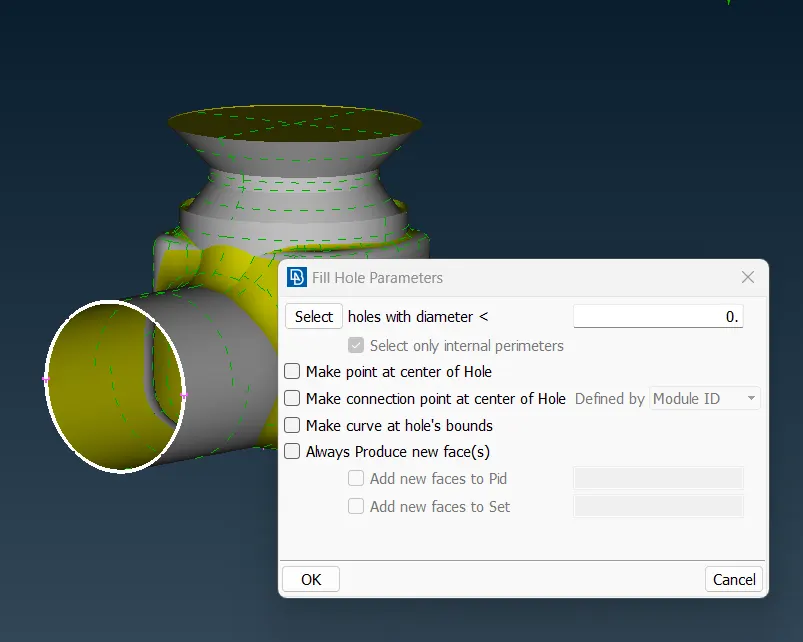
Start with Patching up the Single COONS first, Select New> COONS> middle Click. The Preview is shown before the surface is confirmed. Similarly, we patch up the entire Geometry with different Surface type according to their requirement.(eg. for curve we use fitted and not planar). Genrally for 3D models we don't see double COON as a problem. The triple COON in this case is actually required. therfore we wont be treating it as an error. For the circular lid, Fill hole> Select the entity.
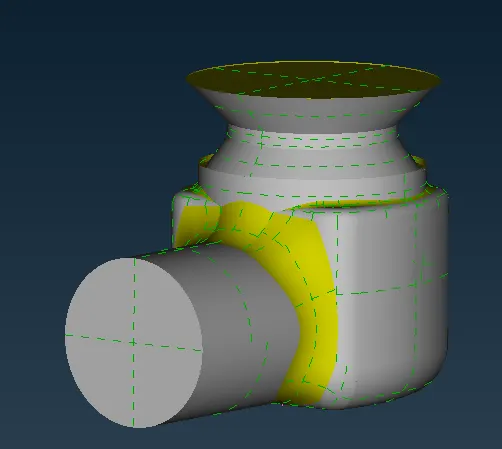
Geometry Sketch Clean Up: We delete the sketch lines that has length less than 5mm because the target length of our mesh varies from 1-5mm, which will interfere when we proceed to mesh the 3D model.
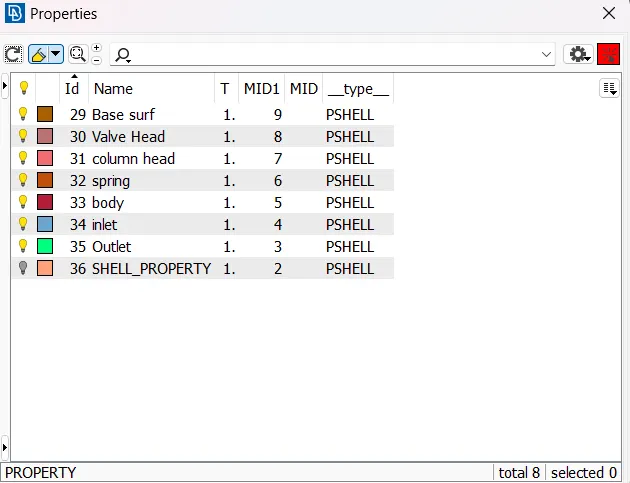
Assigning PID:
Meshing:
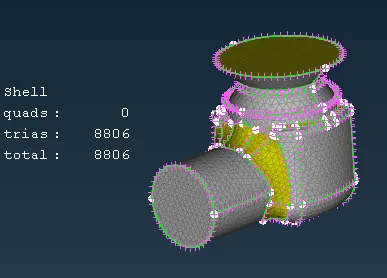
Mesh Parameter and quality setup: Choose target length as 5mm, 3mm and 1mm. In Mesh quality assign max and minimum length as (3,7), (2,5) and (0.5, 2). Also assigning element type as "Tria".
Surface Mesh: Using Spot mesh.
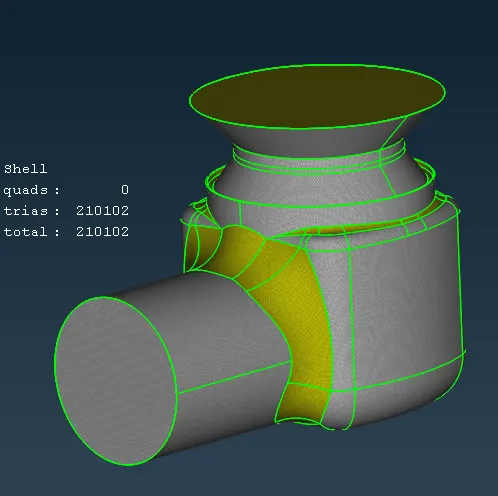
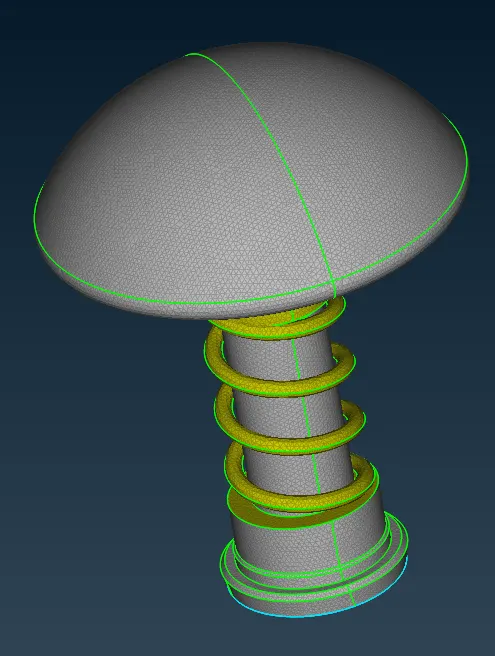
Case 1 (1mm)
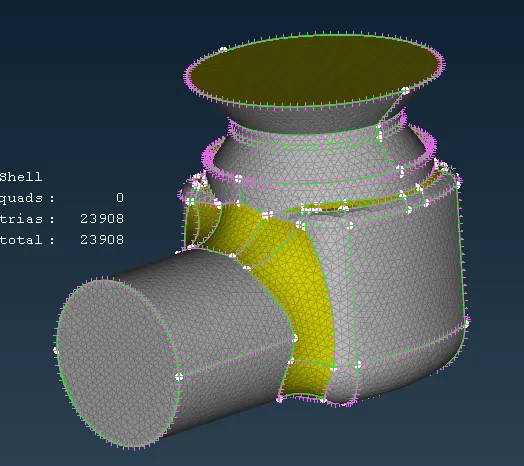
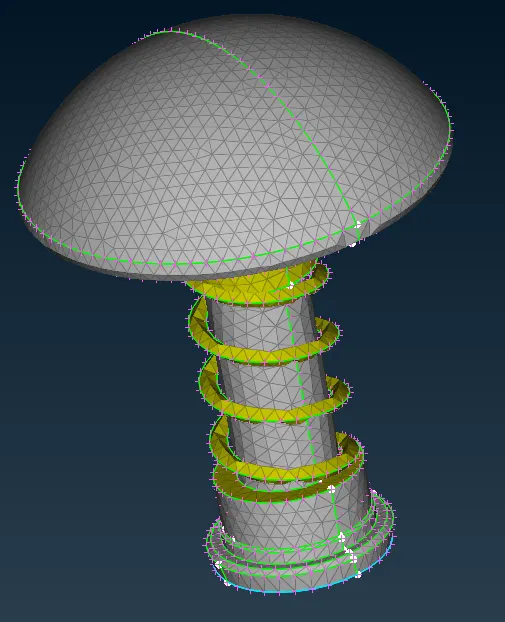
Case 2 (3mm)
Case 3 (5mm):
Learning Outcomes:
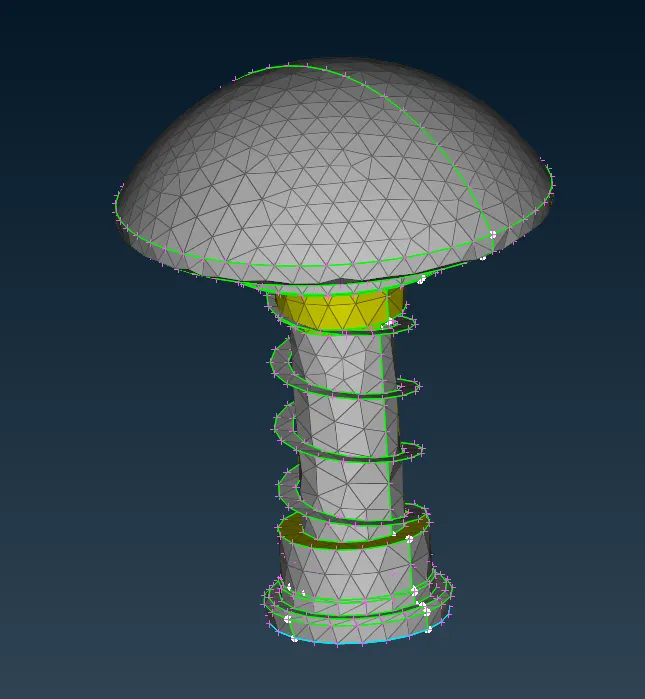
It can be seen that as we increase the target length the mesh formation is less refined as we can see and compare case 1 and case 3, the spring part of case is more defined since the target length delected is less than the diameter of spring.
Result:
We can see thatg the number of mesh cell increases and the surface mesh is more refined as we decrease the target length size.
Conclusion:
Therfore it is very important to keep the target length less than equal to the smallest surface of the model for the mesh to be properly defined for better post results. But also make sure the the target length is not very less, eben though the mesh will be unnecessarily refined it will occupy more storage space and computational time as well.