Week 2:- BiW Fixture Basics Challenge
1. What is the process of project execution activity ?
| Project Activities |
RFQ RECEVIED
1.1ST Spec Discussion Metting2.Offer Submission3.LOI/PO receipt4.Schedule Preparation5.BOM perparation6.Design Concept Preparation7.Customer Approval8.Detalling &Dwg Release9.Manfacturing/B OP Ordering 10.mec.Elec. Assy11.Quality inspection12.internal trail&testing 13.online trail 14.packaging 15.Dispatch 16.installation as per layout17.Trail &traning Customer 18.Buy off metting 19.Final handover
2. what is types of joning processes?
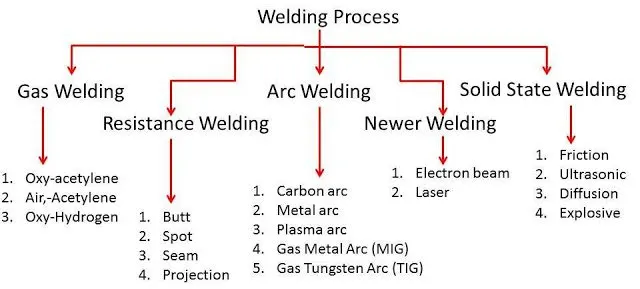
- Welding.
- Brazing.
- Soldering.
- Bonding.
- Nailing.
- Screwing.
- Bolting.
- Riveting.
Mechanical joining includes bolting, riveting, caulking, shrink fitting, and folding, all of which join workpieces by using mechanical energy. Metallurgical joining includes fusion welding, pressure welding and brazing/soldering which use different energies.
3.What is Resistance Welding & its application in the automotive sector?
Resistance Spot Welding: An economical joining process in sheet metal processing. Resistance Spot Welding (often just called spot welding) is a cost-effective joining technology that continues to be very popular in the automotive industry where high reproducibility and automation are essential criteria.
Resistance Spot Welding is a pressure welding process during which the sheets are pressed together locally with the help of fitted copper electrode welding guns.
Resistance Spot Welding: An economical joining process in sheet metal processing
Resistance Spot Welding (often just called spot welding) is a cost-effective joining technology that continues to be very popular in the automotive industry where high reproducibility and automation are essential criteria. An additional advantage is that, with a suitable choice of parameters, a high quality of joints can be obtained without being dependent on a welder’s ability.
Resistance Spot Welding is a pressure welding process. The sheets are pressed together locally with the help of fitted copper electrode welding guns that then have a current applied to them. As a result, Joule heating locally melts the joining partners at the junction resulting in a cohesive composite once the joint has solidified.
RSW technology: Widely spread
RSW technology is employed in manifold industries, such as:
- Transportation industries
- Automotive construction (body parts, frames, add-on parts such as doors & tailgates etc.)
- Commercial vehicles
- Rail vehicles
- Sheet metal forming industries
4. What is fusion welding & types of fusion welding with its application in the automotive sector?
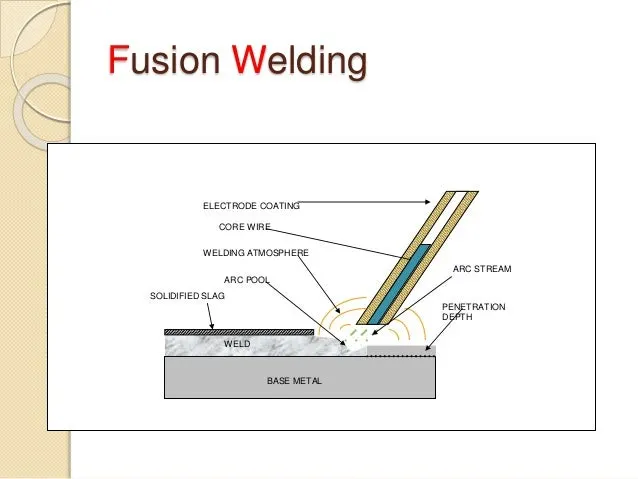
- Shielded Metal Arc Welding (SMAW), also known as manual metal arc welding (MMA or MMAW), flux shielded arc welding or stick welding. ...
- Plasma Arc Welding (PAW). ...
- Submerged Arc Welding (SAW). ...
- Flux Cored Arc Welding (FCAW).
5.What is the 3-2-1 principle?
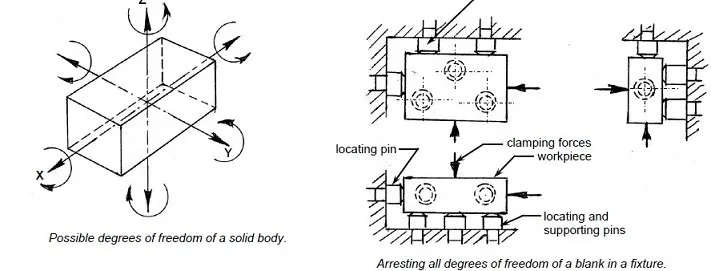
The 3-2-1 principle of location (six point location principle) is used to constrain the movement of workpiece along the three axes XX, YY, and ZZ. This is achieved by providing six locating points, 3 pins in base plate, 2 pins in vertical plane and 1 pin in a plane which is perpendicular to first two planes
3-2-1 Principle of Location used in Jig & Fixtures:
[1] It is also known as a six-pin or six-point location principle. In this, the three adjacent locating surfaces of the blank (workpiece) are resting against 3, 2, and 1 pin respectively, which prevent 9 degrees of freedom.
[2] The rest three degrees of freedom are arrested by three external forces usually provided directly by clamping.
- 3-2-1 Principle:
- In the automotive tooling industry you will hardly get any designer who does not know 3-2-1 principle.
- If the any part e.g steel block to be machined using milling machine;1st question the milling machine operator will think how I will hold the part.
- Operator will use the various clamp to hold the job to withstand the cutting forces.
- Ideally 3-2-1 principle is used to locate the job .
- What 3 means ?
- What 2 mean ?
- What 1 mean?
- Simple they represent the directions.
- Any part which has to be fixed during welding or during machining process has to be fixed. with this principle. Every object is having 6 degrees of freedom.
- 1) Translational movement along X -axis
- 2) Translational movement along Y-axis
- 3) Translational movement along Z-Axis
- 4) Rotational movement along X -axis
- 5) Rotational movement along Y-axis
- 6) Rotational movement along Z-Axis