Week -2
SIMULINK MODEL OF DOORBELL AND THERMISTOR
- AIM:
1. Make a Simulink model of Doorbell using a solenoid block with the following details:
In the above arrangement, when the switch is closed the electromagnet receives electrical power from the battery and pulls the metal arm to hit the bell producing sound.
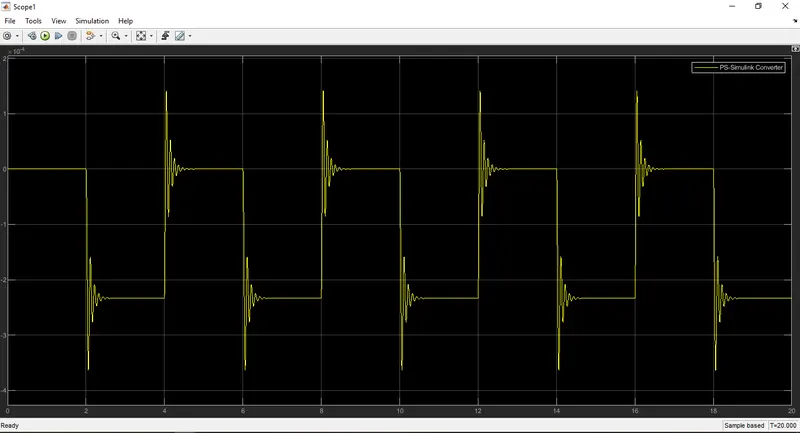
Create a situation where the switch is closed for 2 seconds and then released. Observe the physical movement of the plunger.
2. Use a thermistor to sense the temperature of a heater & turn on or turn off the fan as per the below conditions:
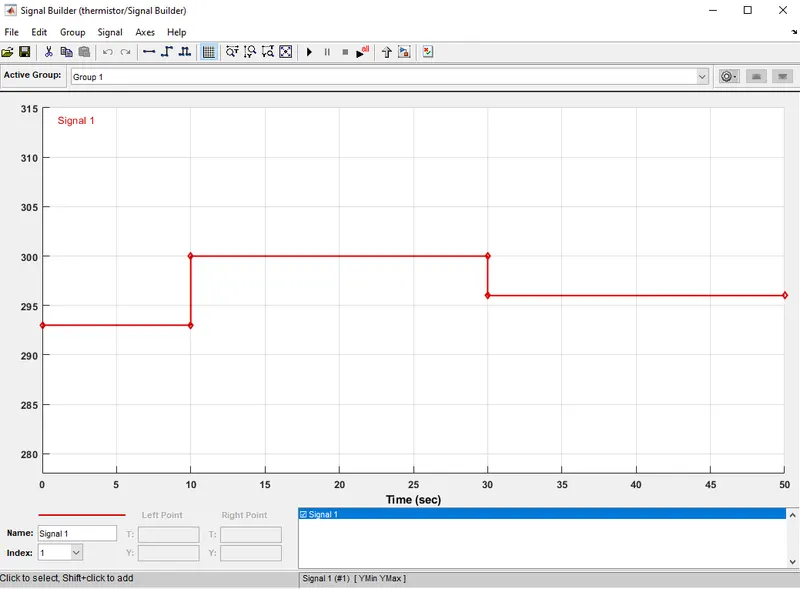
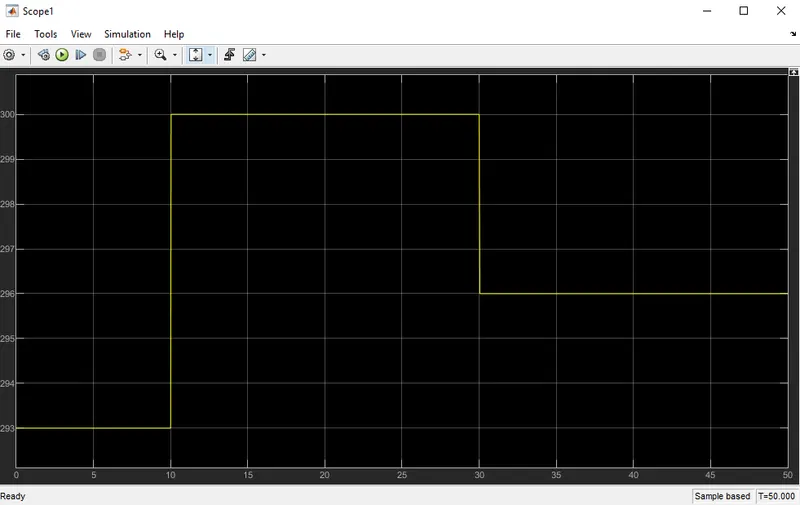
Temperature source: 20 °C from 0 to 10 seconds, 27 °C from 10 to 30 seconds, 23 °C from 30 to 50 seconds
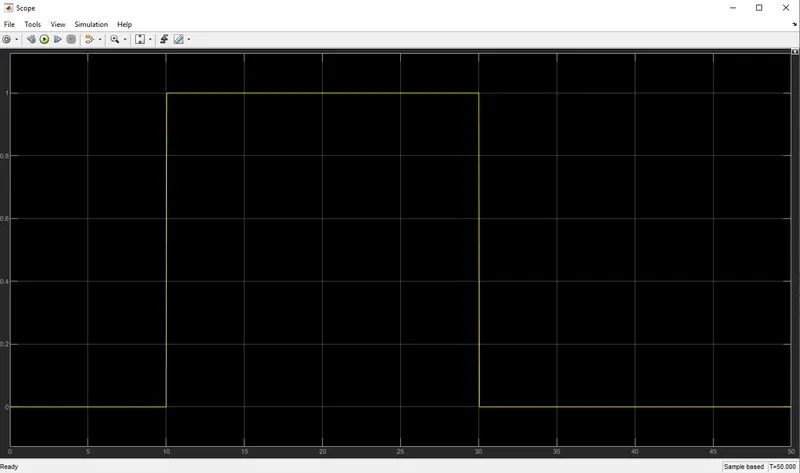
Fan conditions: ON if the temperature above 25 °C, OFF otherwise
- DOORBELL THEORY:
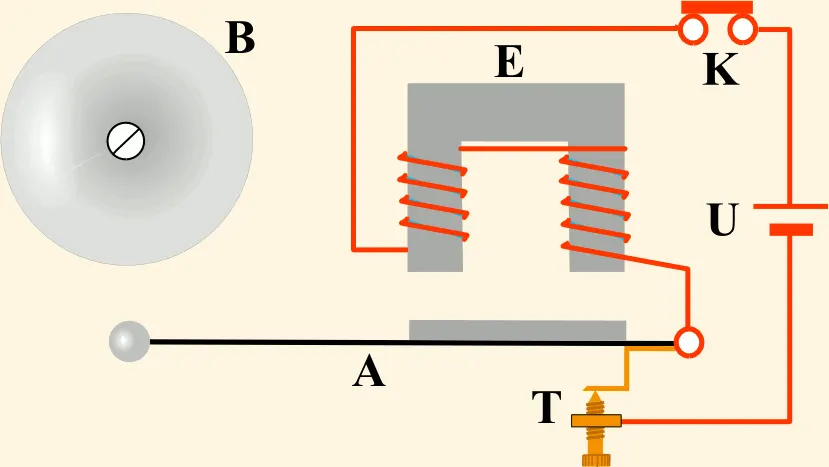
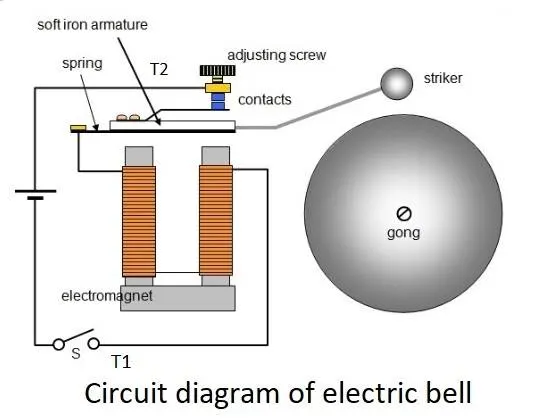
The most widely used form is the interrupter bell, which is a mechanical bell that produces a continuous sound when current is applied. See an animation, above. The bell or gong (B), which is often in the shape of a cup or half-sphere, is struck by a spring-loaded arm (A) with a metal ball on the end called a clapper, actuated by an electromagnet (E). In its rest position, the clapper is held away from the bell a short distance by its springy arm. When the switch (K) is closed, an electric current passes from the battery (U) through the winding of the electromagnet. It creates a magnetic field that attracts the iron arm of the clapper, pulling it over to give the bell a tap. This opens a pair of electrical contacts (T) attached to the clapper arm, interrupting the current to the electromagnet. The magnetic field of the electromagnet collapses, and the clapper springs away from the bell. This closes the contacts again, allowing the current to flow to the electromagnet again, so the magnet pulls the clapper over to strike the bell again. This cycle repeats rapidly, many times per second, resulting in a continuous ringing.
- SOLENOID THEORY:
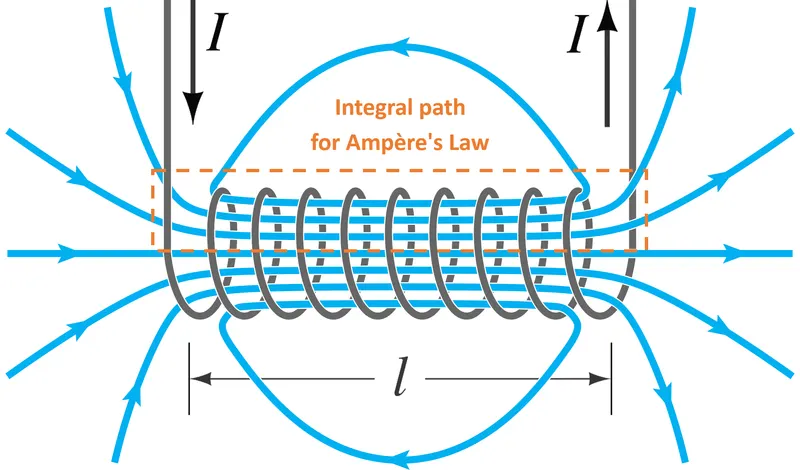
A solenoid is a type of electromagnet, the purpose of which is to generate a controlled magnetic field through a coil wound into a tightly packed helix. The coil can be arranged to produce a uniform magnetic field in a volume of space when an electric current is passed through it. The term solenoid was coined in 1823 by André-Marie Ampère to designate a helical coil.
In the study of electromagnetism, a solenoid is a coil whose length is substantially greater than its diameter. The helical coil of a solenoid does not necessarily need to revolve around a straight-line axis; for example, William Sturgeon's electromagnet of 1824 consisted of a solenoid bent into a horseshoe shape.
In engineering, the term may also refer to a variety of transducer devices that convert energy into linear motion. In simple terms, a solenoid converts electrical energy into mechanical work. The term is also often used to refer to a solenoid valve, an integrated device containing an electromechanical solenoid that actuates either a pneumatic or hydraulic valve, or a solenoid switch, which is a specific type of relay. that internally uses an electromechanical solenoid to operate an electrical switch; for example, an automobile starter solenoid or linear solenoid. Solenoid bolts, a type of electromechanical locking mechanism, also exist. In electromagnetic technology, a solenoid is an actuator assembly with a sliding ferromagnetic plunger inside the coil. Without power, the plunger extends for part of its length outside the coil; applying power pulls the plunger into the coil. Electromagnets with fixed cores are not considered solenoids.
- THERMISTOR THEORY:
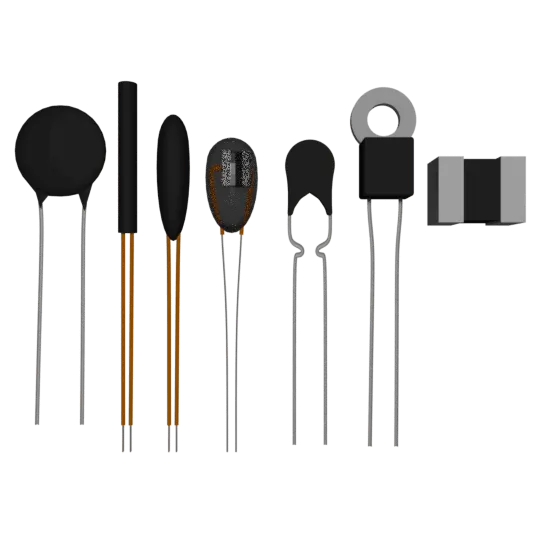
A thermistor is a resistance thermometer or a resistor whose resistance is dependent on temperature. The term is a combination of “thermal” and “resistor”. It is made of metallic oxides, pressed into a bead, disk, or cylindrical shape, and then encapsulated with an impermeable material such as epoxy or glass.
There are two types of thermistors: Negative Temperature Coefficient (NTC) and Positive Temperature Coefficient (PTC). With an NTC thermistor, when the temperature increases, resistance decreases. Conversely, when the temperature decreases, resistance increases. This type of thermistor is used the most.
A PTC thermistor works a little differently. When temperature increases, the resistance increases, and when temperature decreases, resistance decreases. This type of thermistor is generally used as a fuse.
Typically, a thermistor achieves high precision within a limited temperature range of about 50ºC around the target temperature. This range is dependent on the base resistance.
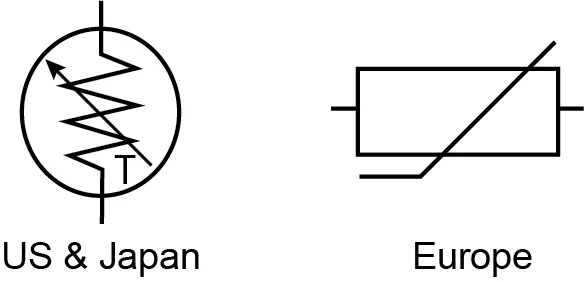
The thermistor symbols are:
- HOW DOES THE THERMISTOR “READ” TEMPERATURE?
A thermistor does not actually “read” anything, instead of the resistance of a thermistor changes with temperature. How much the resistance changes depends on the type of material used in the thermistor.
Unlike other sensors, thermistors are nonlinear, meaning the points on a graph representing the relationship between resistance and temperature will not form a straight line. The location of the line and how much it changes is determined by the construction of the thermistor. A typical thermistor graph looks like this:
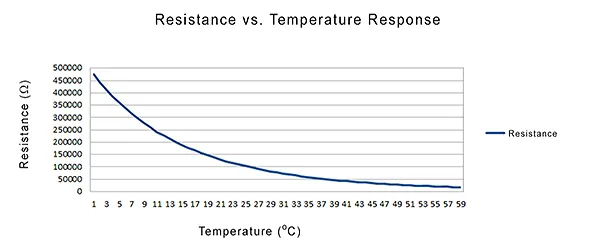
Figure 2: Resistance vs. Temperature
- Make a Simulink model of Doorbell using a solenoid block with the following details:
PROCEDURE:
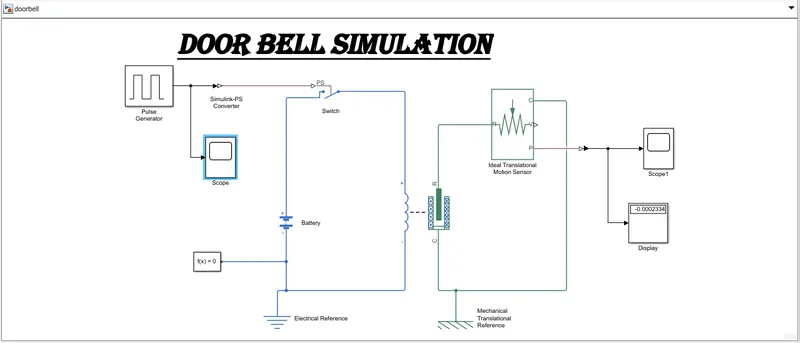
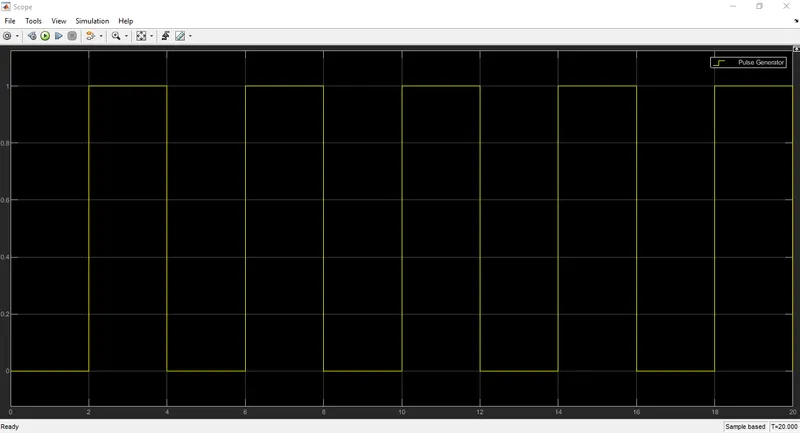
- First, the input is given with the help of a pulse generator, and it's connected to an electrical switch with the help of a Simulink-ps converter and the input is observed by connecting scope.
- Then the solver configuration block is connected to the switch.
- A battery block is defined as the voltage source.
- The battery is connected to an electrical switch and the switch is connected to the solenoid to complete the circuit.
- Then we give the block for solenoid and connect it to an ideal translational motion sensor to measure the translation motion of the solenoid, the translation motion of the bell is observed by connecting it to a scope with the help of the ps-Simulink converter.
- Electrical reference and mechanical translation reference connected as earthing.
- Stop time is given as 20 sec.
- The initial position of the ideal translational motion is given 0.
- PARAMETERS OF BLOCK:
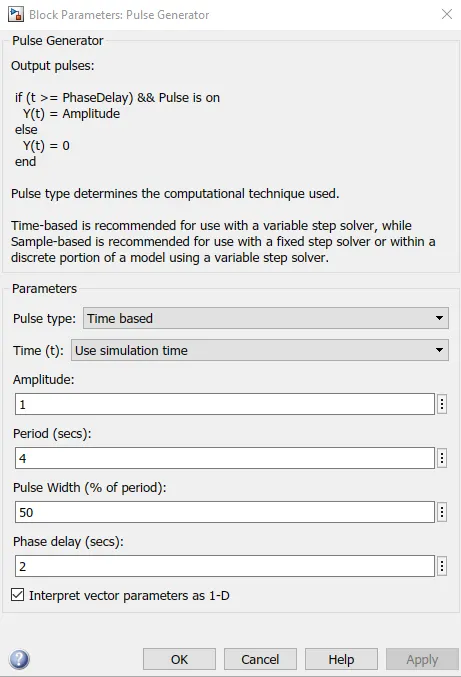
PULSE GENERATOR:
- INPUT SIGNAL:
- RESULTS:
2. Use a thermistor to sense the temperature of a heater & turn on or turn off the fan as per the below conditions:
PROCEDURE:
- A signal builder block was added while starting to model the circuit to provide the desired input. This block provides the temperature pulses to the thermistor to sense the temperature before passing on to the switching whether to turn on or off the fan, these input signals were manually provided in the Simulink block. The snapshot of the Signal builder block given below:
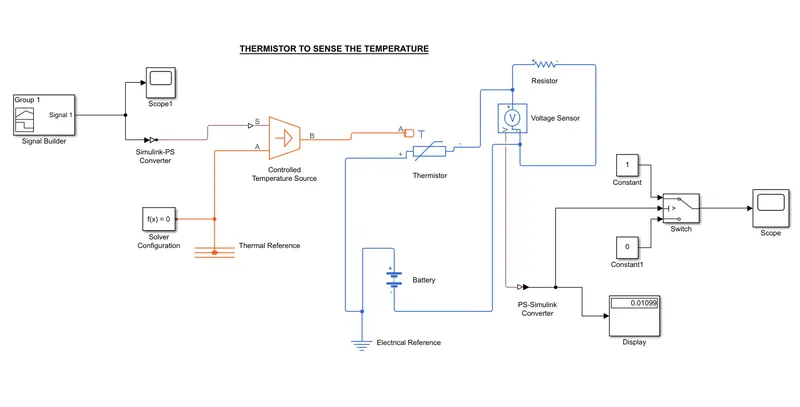
- A scope was attached to the circuit to observe the input signals to the circuit. Thereafter a Simulink to PS-converter was added to convert Simulink signals to physical signals.
- Thereafter, a controlled temperature source was added to the circuit as it is an ideal source of thermal energy that is powerful enough to maintain specified temperature difference across the source regardless of the heat flow consumed by the system. Port A was connected to the thermal reference, which represents a reference point to a thermal network where the temperature is equal to absolute zero.
- An NTC Thermistor was added after the controlled temperature source to the circuit where it is connected to port B of the controlled temperature source to port A of the thermistor.
- A resistor was added in series to the thermistor with a voltage sensor to sense the output variation of voltage coming from the thermistor. The voltage fluctuation can be noticed with the fluctuation of temperature coming from the signal builder block.
- A solver configuration block was added to this circuit.
- Stop time is given as 50 sec.
- Block diagram of the thermistor to sense the temperature of a heater & turn on or turn off the fan as per the below conditions:
- INPUT PROVIDED THROUGH SIGNAL BUILDER:
- RESULTS:
REFERENCES:
- https://en.wikipedia.org/wiki/Solenoid
- https://en.wikipedia.org/wiki/Thermistor
- https://en.wikipedia.org/wiki/Electric_bell