Week -2
Aim:-Make simulation model for doorbell using solenoid.
Given data :-
- In the above arrangement, when the switch is closed the electromagnet receives electrical power from the battery and pulls the metal arm to hit the bell producing sound.
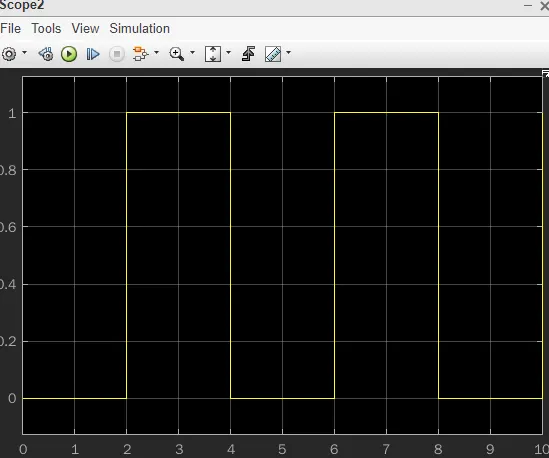
- the switch is closed for 2 seconds and then released.
Description :-
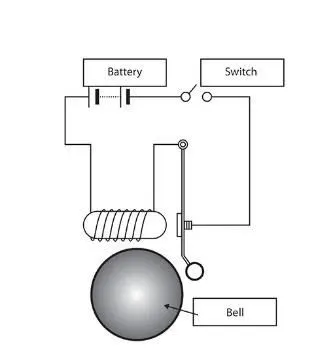
The Solenoid is a electromagnet. On passing current through the conducting wires a magnetic field is generated around it which attracts magnetic materials. This phenomenon is utilize in the bell When the switch of the bell is pressed the current flows through the circuit exciting the electromagnet and draging the plunger in the direction of metal portion. This construct a ringing sound.
Method:-
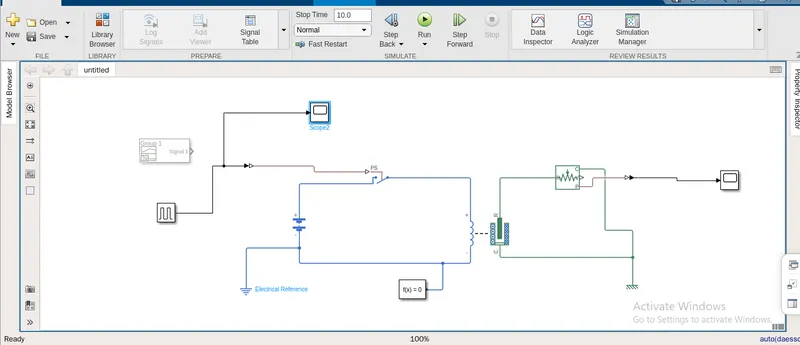
- By given diagram we seprated a nessesary Block like Pulse Generator,Switch,Battery, Solenoid,Simulink-PS Converter,PS-Simulink Converter,Ideal Translaional Motor Sensor,Mechanical Translation Reference,Scope,Electrical Reference,Mechanical Translation Reference.
- We have to 1st take Pulse generator and output of pulse generator is gives to the PS terminal of Switch .
- One terminal of Switch connected to the positive terminal of Battery and negative terminal of battery connected to the negative terminal of the solenoid and there we connect the Electrical reference and Solver configuration block.
- Another terminal of Switch connected to positive terminal of solenoid.
- Now we have to do 2nd side connection of solenoid.R point of Solenoid is connected to the Ideal Translational Motor Sensor and the C point of a Solenoid and Ideal Translational Motor Sensor to the Mechanical Translational Reference.
Conclusion :-
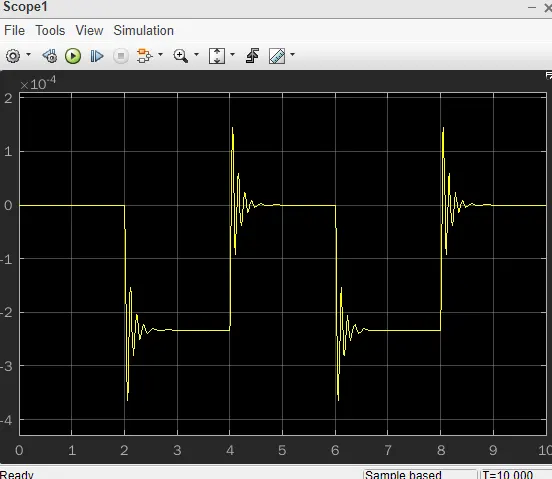
- Set input as time period for 2 seconds in the pulse generator to on & off the switch. When the switch is on the solenoid block accept electrical power from the battery and plunger goes from point R to point C to hit the bell & produce sound.
- Physical movement of the plunger is perceive by using translational motion sensor & physical output is transform into Simulink output model is shows in the scope. By decreasing the spring constant value and increasing the damping value vibrations will be decrease.
2)
Aim:- A thermistor is a resistance thermometer or a resistor whose resistance is dependent on temperature.
Condition:- 1)Temperature source: 20 °C from 0 to 10 seconds, 27 °C from 10 to 30 seconds, 23 °C from 30 to 50 seconds 2)Fan conditions: ON if the temperature above 25 °C, OFF otherwise.
Description:-
Thermistor is a device which calculate temperature, its function is based on the connection between resistance and temperature. Here in Simulink the thermistor block which is accessible is a positive temperature co-efficient thermistor. resistance of thermistor increases or decreases with respect to temperature. the output from the thermistor is literally in the form of voltage or current. The increase in voltage/ current indicates increase in temperature.
Simulink model explanation:-
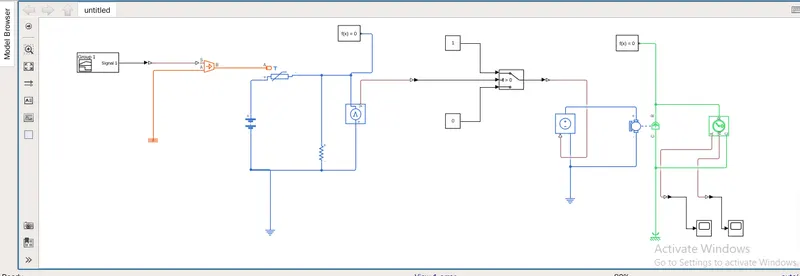
Signal building block is added to input the values as per given conditions.
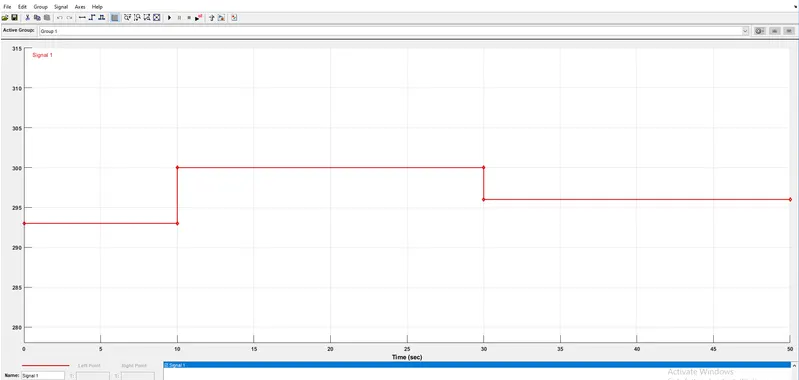
At point 1, time - O sec. to 10 fec. & Temperature = 293K.
At point 2, time = 10 sec. to 30 sec. & Temperature = 300K,
At point 3, time - 30 sec. to 50 sec. & Temperature = 296K.
Scope Output:-
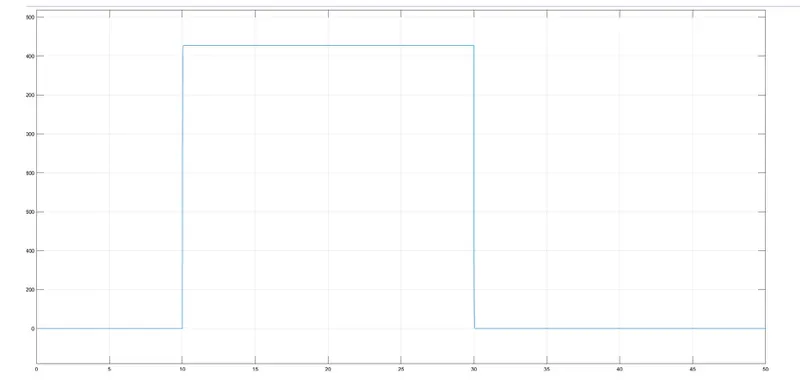
Scope1
Scope2
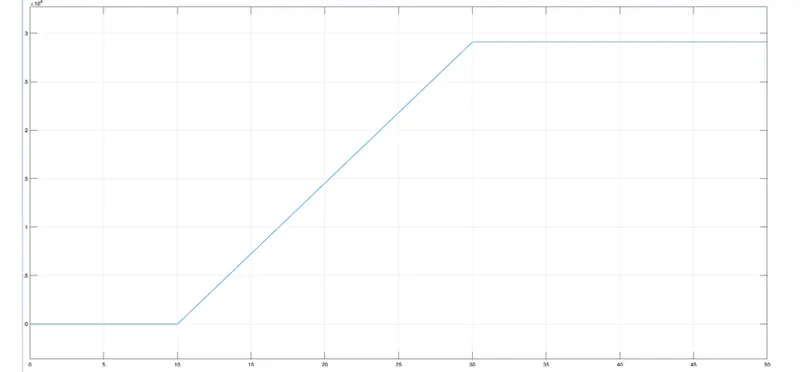
From 0-10 seconds fan is OFF because the temperature is 293K which is below 298K, after 10 seconds it goes to 300K, so fan will turn ON because temperature exceeds 298K after 30 seconds fan will turn OFF because temperature goes 296K less than 298 K.
Conclusion:- Thus, both the aim was attain successfully.Similar approach can be utilize for simulating other Physical Device using Simulink. Fan temperature was judgment by the thermistor in the Heater Model.