Week 14 challenge
Butterfly Valve assembly
Objective
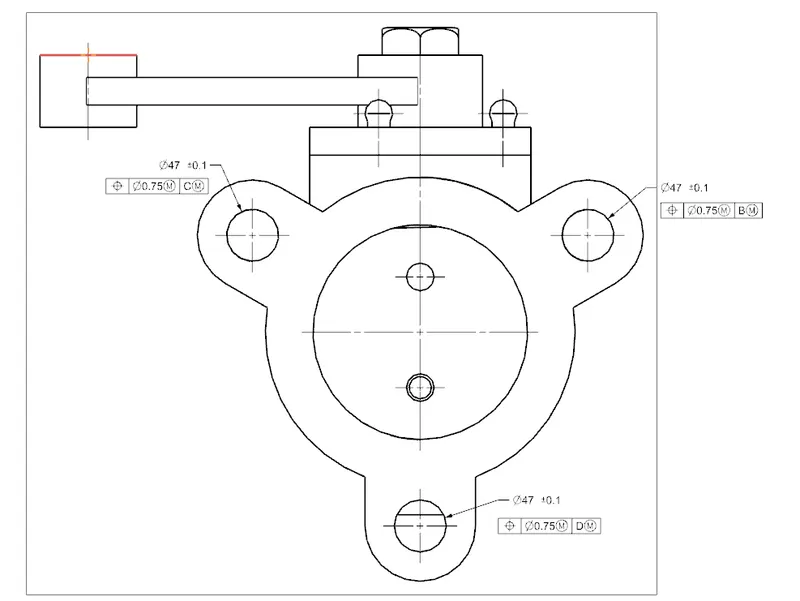
To assemble all the components in assembly workbench and implement the GD&T fundamental and Denote it on Drawing Sheet for the assembly using the NX Cad software.
Theory
Butterfly valves are a family of quarter-turn rotational motion valves that are used in pipelines to shut-off flow. It is often said that butterfly valves can be used to regulate the flow. However, we do not recommend doing this, as it can damage the valve disk and have a negative effect on the sealing properties.
Princple of operation
Operation is similar to that of a ball valve, which allows for quick shut off. Butterfly valves are generally favored because they cost less than other valve designs, and are lighter weight so they need less support. The disc is positioned in the center of the pipe. A rod passes through the disc to an actuator on the outside of the valve. Rotating the actuator turns the disc either parallel or perpendicular to the flow. Unlike a ball valve, the disc is always present within the flow, so it induces a pressure drop, even when open.
A butterfly valve is from a family of valves called quarter-turn valves. In operation, the valve is fully open or closed when the disc is rotated a quarter turn. The "butterfly" is a metal disc mounted on a rod. When the valve is closed, the disc is turned so that it completely blocks off the passageway. When the valve is fully open, the disc is rotated a quarter turn so that it allows an almost unrestricted passage of the fluid. The valve may also be opened incrementally to throttle flow.
There are different kinds of butterfly valves, each adapted for different pressures and different usage. The zero-offset butterfly valve, which uses the flexibility of rubber, has the lowest pressure rating. The high-performance double offset butterfly valve, used in slightly higher-pressure systems, is offset from the center line of the disc seat and body seal (offset one), and the center line of the bore (offset two). This creates a cam action during operation to lift the seat out of the seal resulting in less friction than is created in the zero offset design and decreases its tendency to wear. The valve best suited for high-pressure systems is the triple offset butterfly valve. In this valve, the disc seat contact axis is offset, which acts to virtually eliminate sliding contact between disc and seat. In the case of triple offset valves the seat is made of metal so that it can be machined such as to achieve a bubble-tight shut-off when in contact with the disc.
Different Types
- Concentric butterfly valves – this type of valve has a resilient rubber seat with a metal disc.
- Doubly-eccentric butterfly valves (high-performance butterfly valves or double-offset butterfly valves) – different type of materials is used for seat and disc.
- Triply-eccentric butterfly valves (triple-offset butterfly valves) – the seats are either laminated or solid metal seat design.
Parts used to create the assembly
1. Body
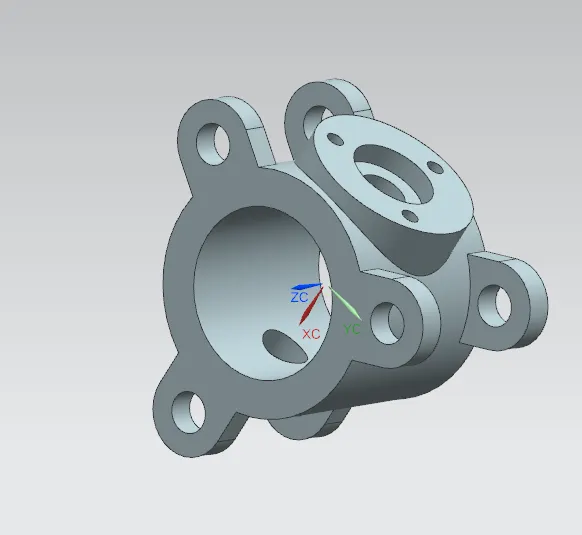
2.Shaft
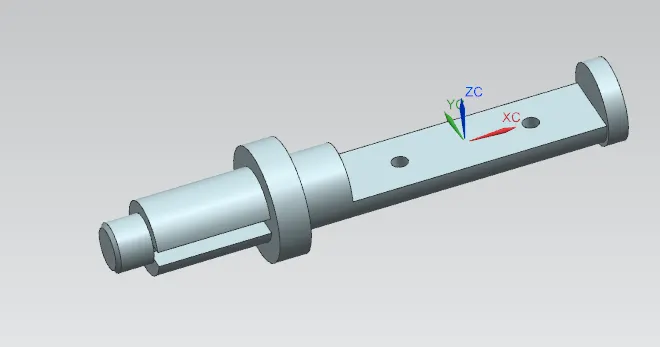
3.Disc
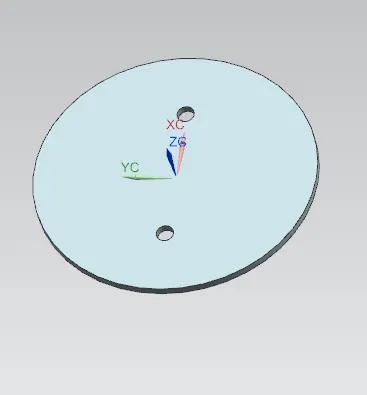
4.Retainer
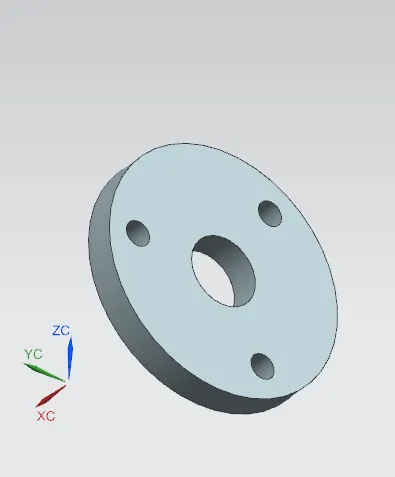
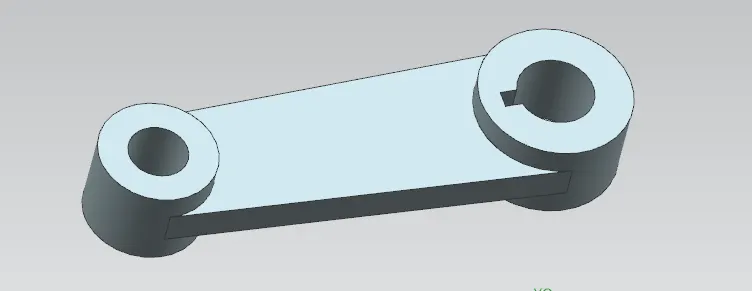
5.Lever
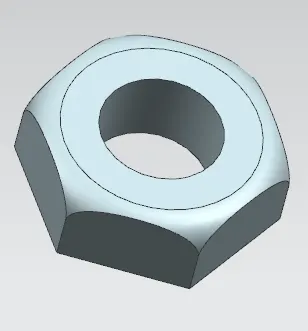
6.Nut
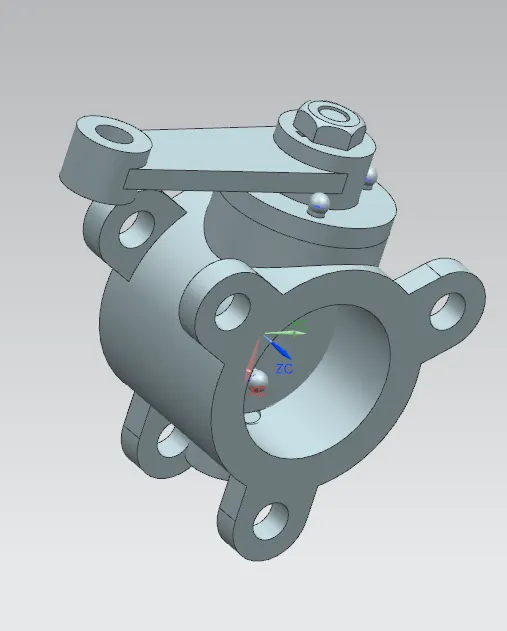
Assembly of Butterfly Valve
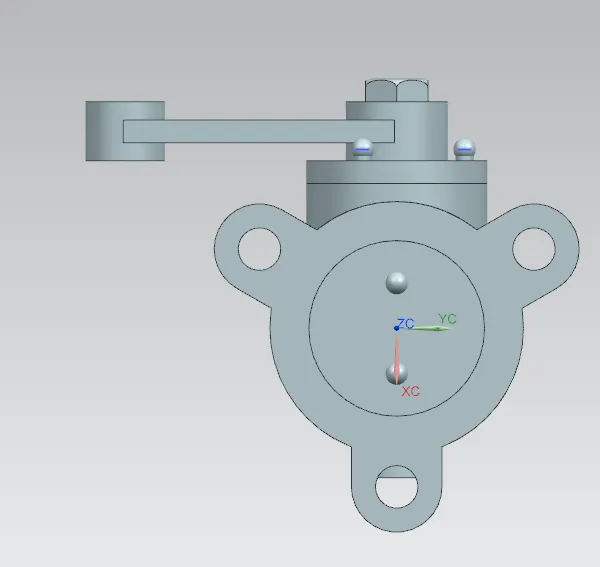
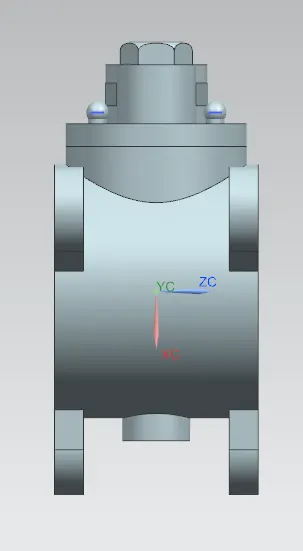
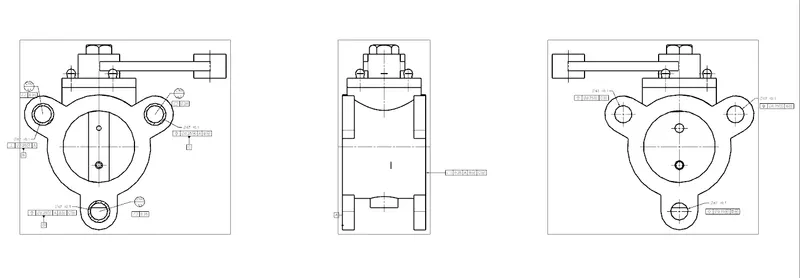
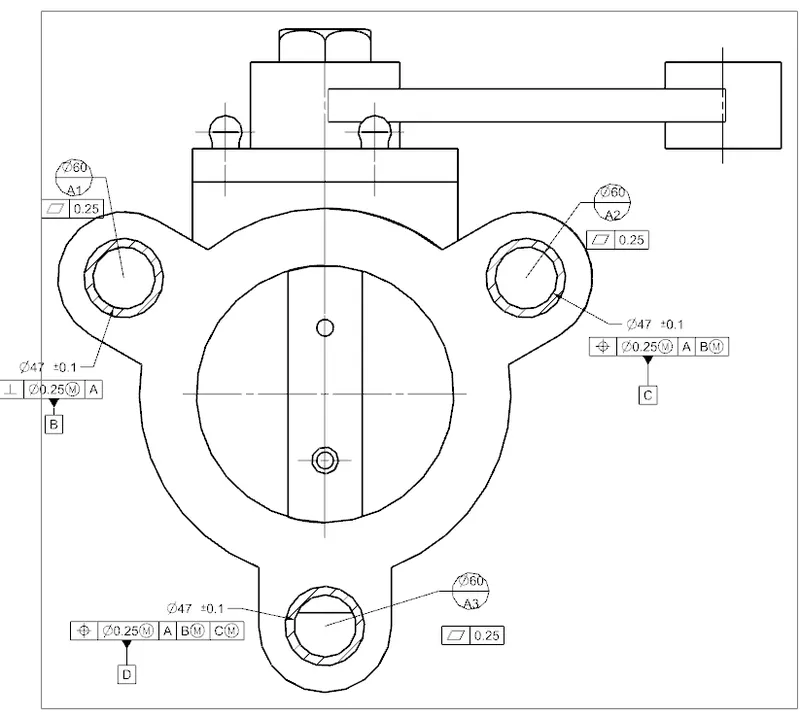
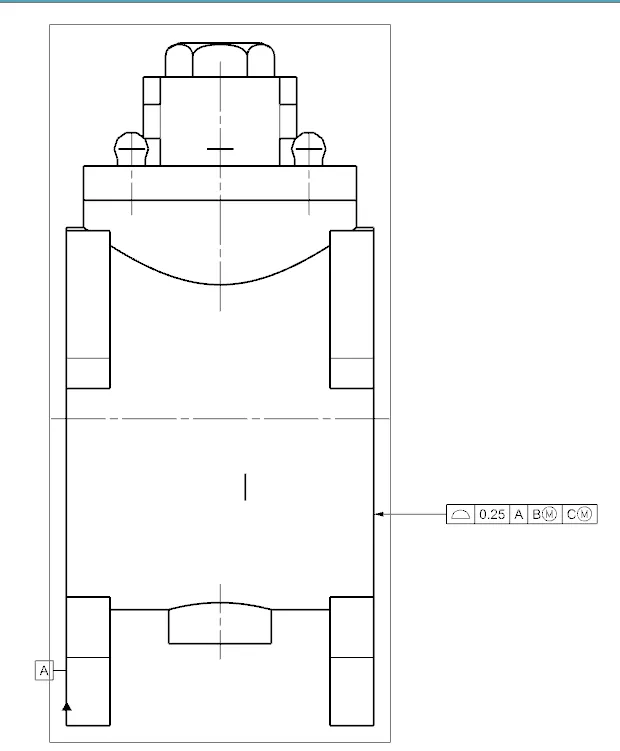
Result
Created the assembly of Butterfly valve and implemented the GD&T fundamental and Denote it on Drawing Sheet for the assembly using the NX Cad software.