Week 12- Final project
DESIGN OF DOOR TRIM PANEL
AIM:
To create a CAD model adhering to OEM and Tier 1 standards, utilizing the Class A surface, maintaining the specified nominal thickness as per master sections, and implementing an optimized attachment strategy to ensure manufacturability, structural integrity, and design feasibility.
INTRODUCTION:
Automotive interior trim:
It encompasses all the components
and materials used to improve the aesthetic appeal, comfort, and functionality
of a vehicle's interior. These trims are designed to create a visually cohesive
and ergonomic environment while protecting the interior surfaces and providing
tactile satisfaction for passengers.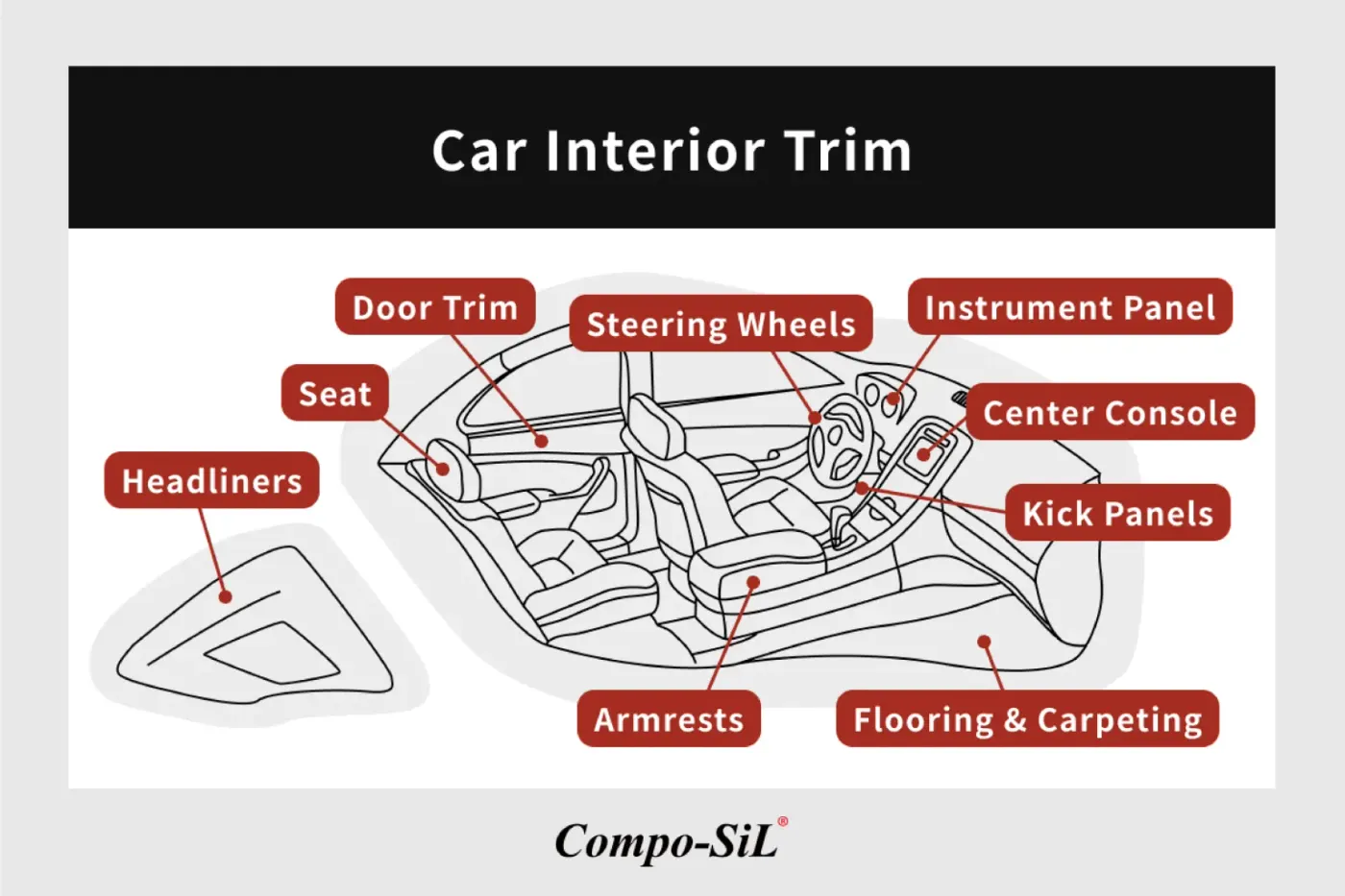
Figure from compo_-sil
Door Trim Panels:
a. Definition and Purpose:
Ø Door trim panels cover the internal framework of a vehicle door, enhancing protection, functionality, and aesthetics.
Ø They provide a comfortable resting surface for passengers and integrate various controls and features.
b. Features:
Ø Comfortable armrests to reduce fatigue.
Ø Housing for power window switches, door handles, and storage pockets.
Ø Integration of speaker grilles for audio systems.
Ø Decorative elements like stitching, ambient lighting, or metallic accents.
c. Materials Used:
Ø Surface Materials: Leather, fabric, vinyl, or molded plastics for durability and aesthetics.
Ø Padding: Foam layers for enhanced comfort and noise reduction.
Ø Decorative Components: Wood veneer, carbon fiber, or metal inserts for a premium look.
d. Functions:
Ø Protects the door’s structural components from damage.
Ø Reduces noise and vibration through insulation layers.
Ø Adds to the overall interior appeal with matching colors and textures.
e. Manufacturing Process:
Ø Injection Molding: Creates the base structure with precision.
Ø Foam Padding Application: Provides comfort and sound insulation.
Ø Surface Wrapping: Covers the panel with leather, vinyl, or fabric for a polished finish.
Ø Assembly: Integrates functional elements like switches and handles.
f. Design Considerations:
Ø Ergonomics: Ensures comfort and easy access to controls.
Ø Durability: Materials resist wear, UV exposure, and temperature changes.
Ø Safety: Designed to minimize sharp edges and improve crash performance.
Ø Aesthetics: Matches the interior’s overall theme and style.
Door trim panels combine functionality with style, ensuring a comfortable and visually appealing passenger experience.
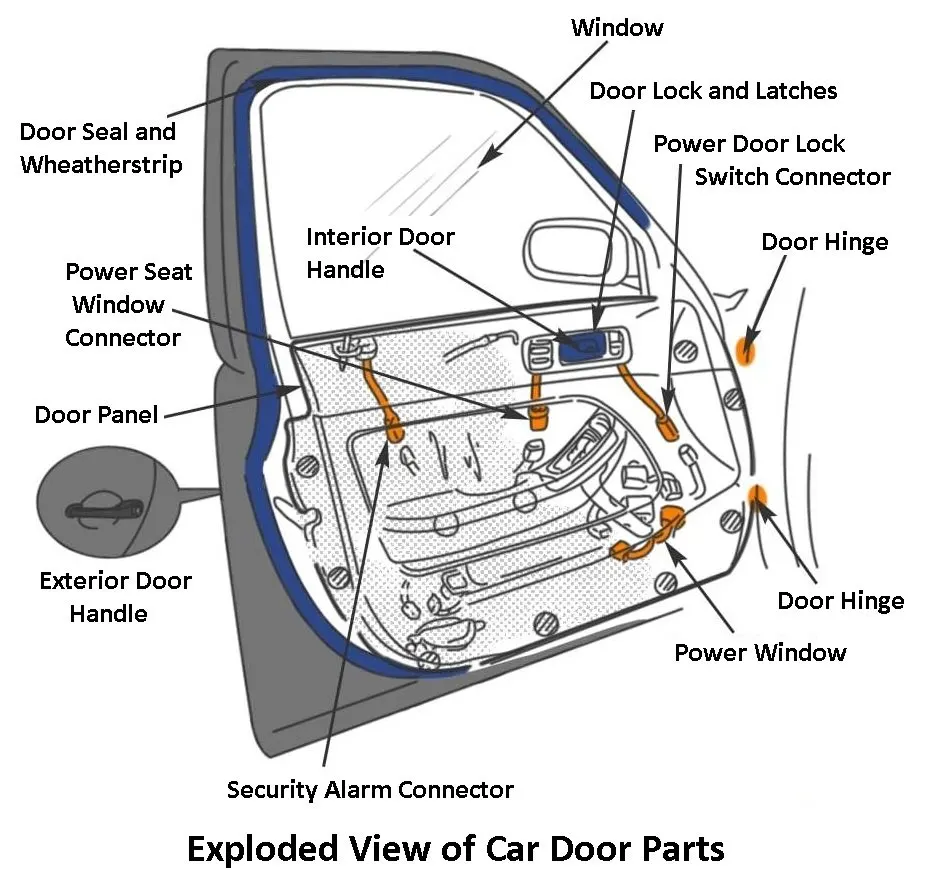
Fig from engineer post website
DESIGN OF DOOR TRIM COMPONENTS:
1. Lower Substrate
2. Map Pocket
3. Door Armrest
4. Bottle Holder
1. Lower Substrate
- Function: The foundational structure of the door trim panel, supporting all other components.
- Material: Lightweight and durable plastics like polypropylene (PP) or ABS.
- Design Considerations:
- Provides slots or clips for mounting additional components.
- Ensures structural integrity and noise insulation using foam or gaskets.
- Must align with the door's metal framework for a precise fit.
2. Map Pocket
- Function: Storage compartment for small items like maps or documents.
- Material: Molded plastic or thermoplastic elastomers (TPE).
- Design Considerations:
- Integrated seamlessly with the lower substrate.
- Adequate size to securely hold items without interfering with other features.
- Smooth edges for ergonomic access and safety.
3. Door Armrest
Ø Function: Provides ergonomic support and comfort for passengers’ arms.
Ø Material: Foam padding covered with leather, fabric, or vinyl.
Ø Design Considerations:
Ø Positioned at an ergonomic height for easy use.
Ø Soft-touch surface with durable materials to withstand wear.
Ø May include integrated features like control switches or storage compartments.
4. Bottle Holder
- Function: Secure storage space for water bottles or beverages.
- Material: Molded plastic with rubberized inserts to prevent slipping.
- Design Considerations:
- Positioned for easy accessibility.
- Designed to accommodate standard bottle sizes with anti-slip features.
- Includes drainage holes to manage spills or condensation.
These components collectively ensure functionality, comfort, and aesthetic appeal, making the door trim panel an integral part of a vehicle's interior design.
DESIGN GUIDELINES FOR DOOR TRIM PANEL :
General Steps
- View the part in all directions (X, Y, Z).
- Draw a reference line in the relevant direction (X, Y, Z) based on the part.
1. Lower Substrate
1. Create the tooling axis in the Y-direction based on the surface.
2. Create the B-class surface.
3. Create the C-class surface:
o If the edge surface is parallel to the tooling axis, create it on the reference surface.
o Otherwise, create it in the draft direction.
2. Door Arm Rest
1. Create the tooling axis in the Z-direction using the bisecting method.
2. Create the B-class surface.
3. Create the C-class surface:
o If the edge surface is parallel to the tooling axis, create it on the reference surface.
o Otherwise, create it in the draft direction.
3. Map Pocket
1. Create the tooling axis in the Y-direction based on the surface.
2. Create the B-class surface.
3. Create the C-class surface:
o If the edge surface is parallel to the tooling axis, create it on the reference surface.
o Otherwise, create it in the draft direction.
4. Bottle Holder
1. Create the tooling axis in the Y-direction using the bisecting method.
2. Create the B-class surface.
3. Create the C-class surface:
o If the edge surface is parallel to the tooling axis, create it on the reference surface.
o Otherwise, create it in the draft direction.
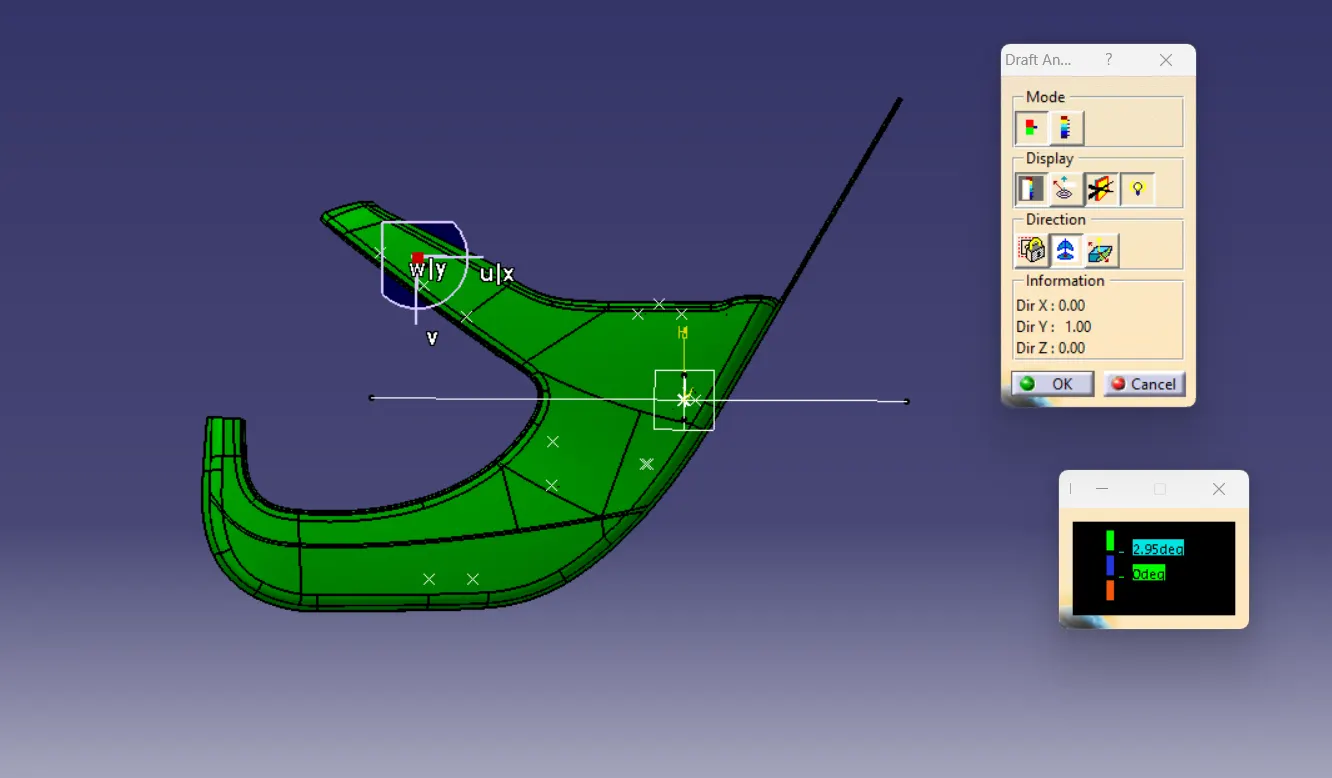
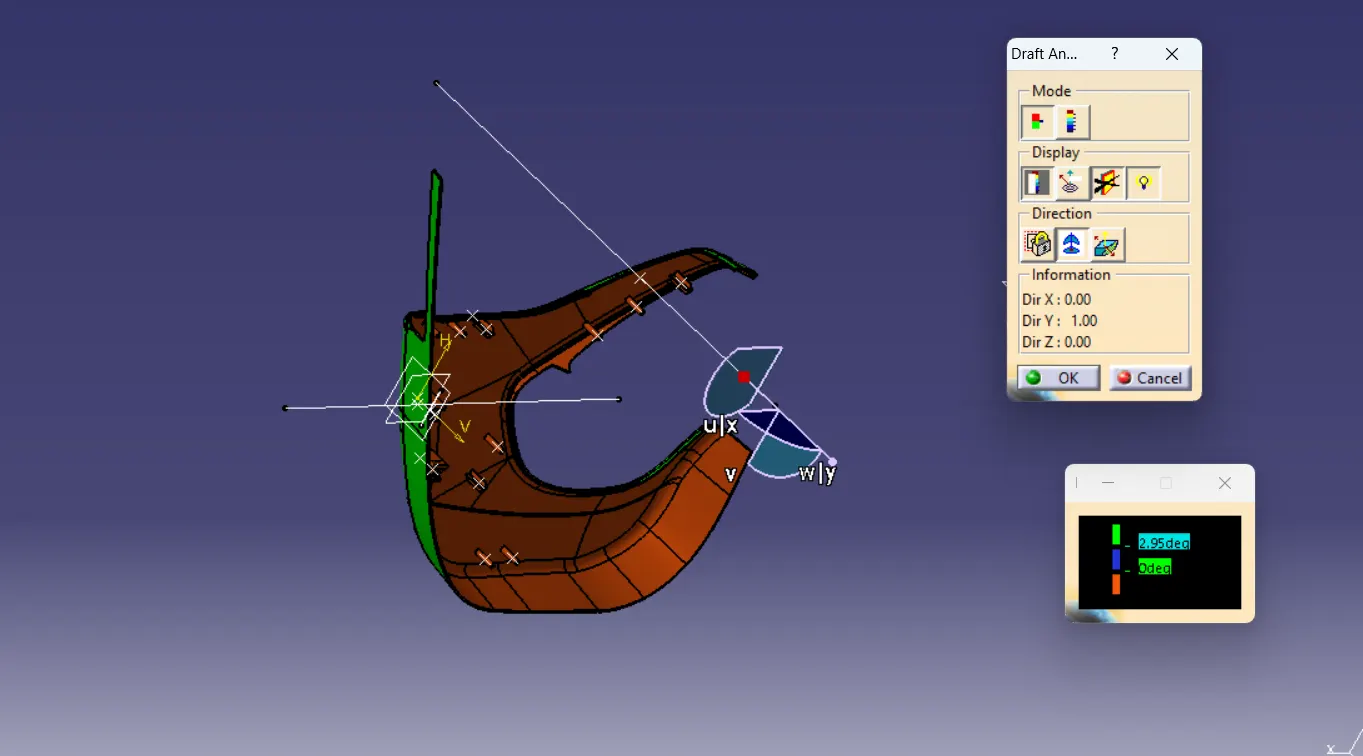
Draft Analysis
1. Maintain a draft angle of 3° for the door trim panel.
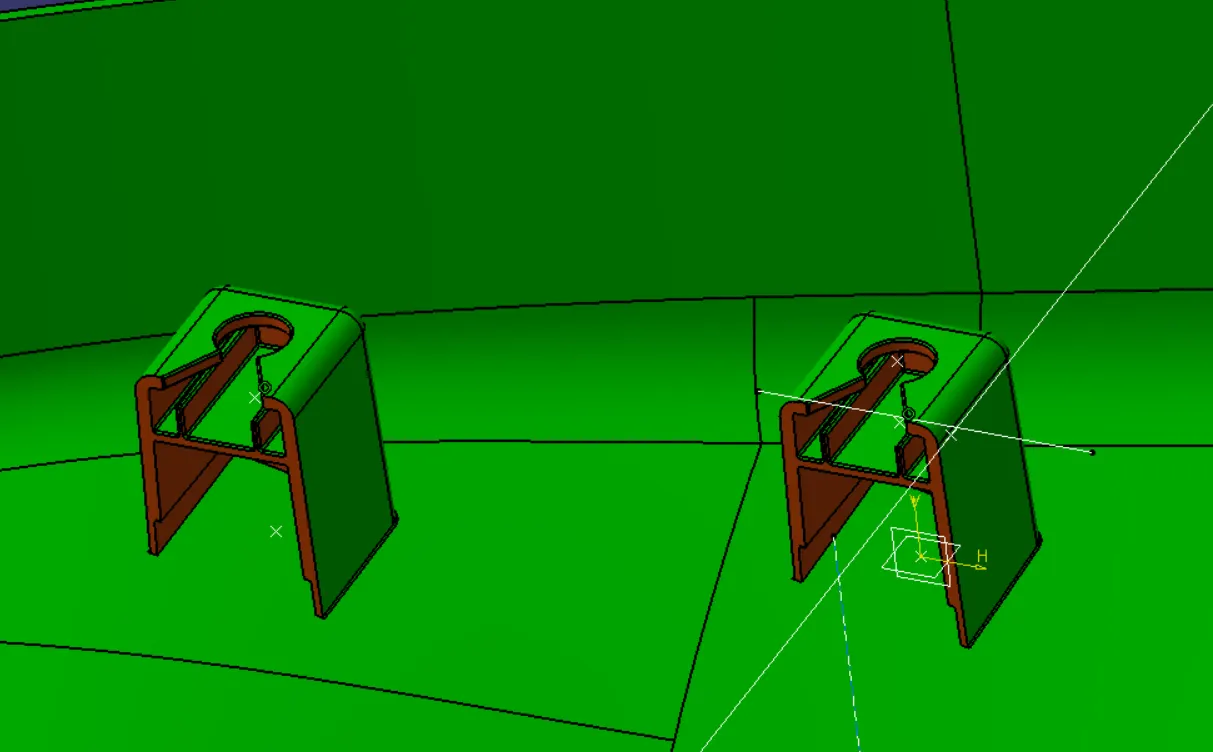
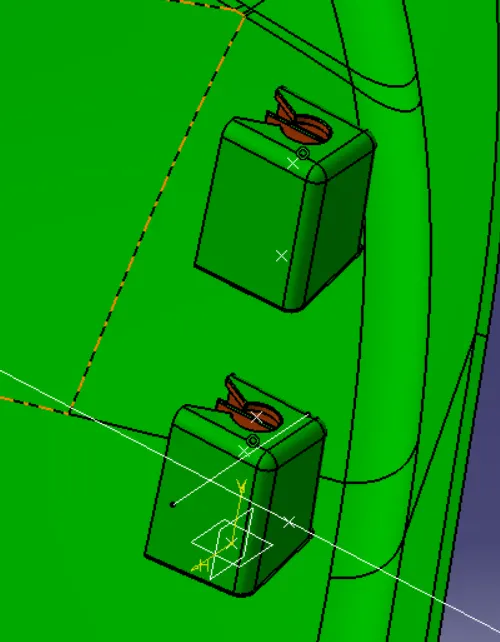
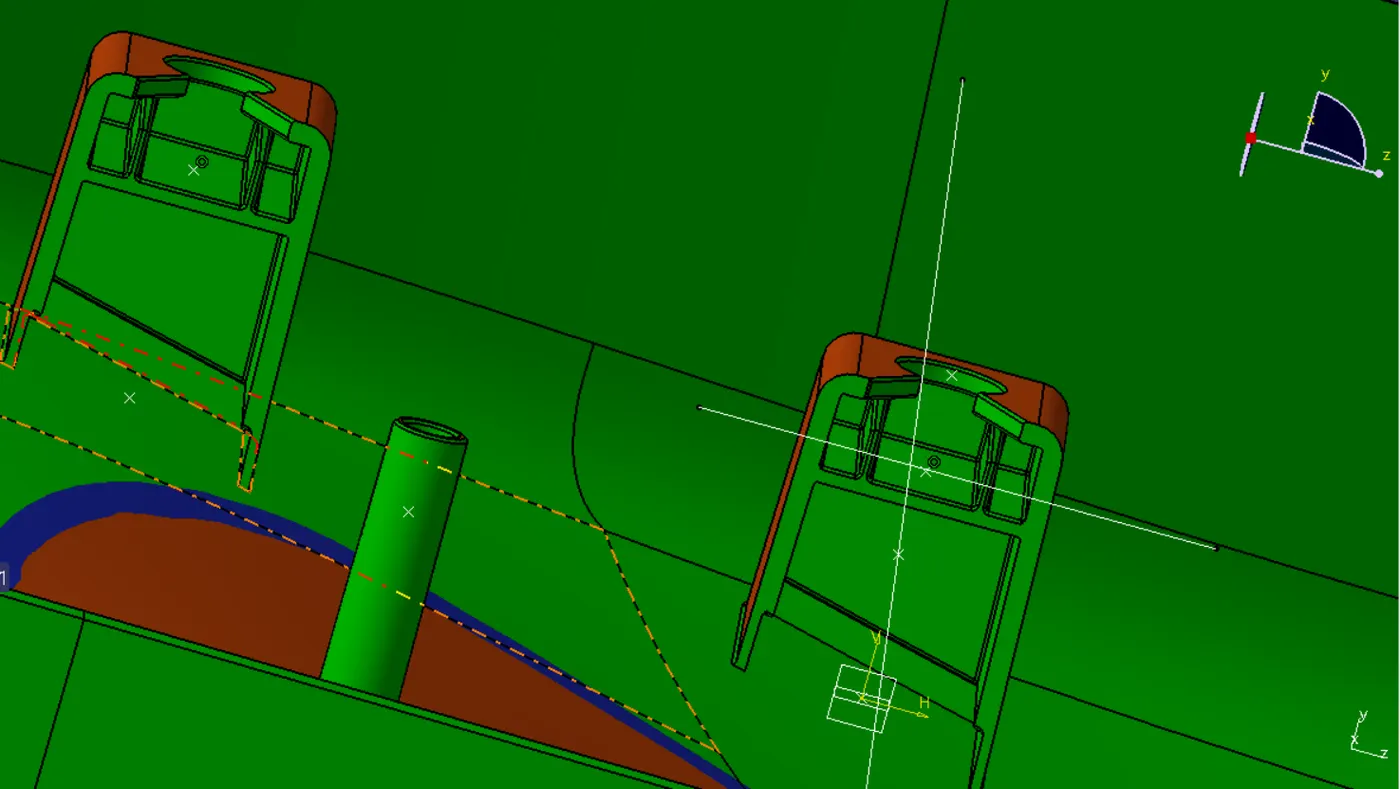
2. Maintain a draft angle of 0.5° for heat stakes and locators.
3. Maintain a draft angle of 1.5° for doghouses.
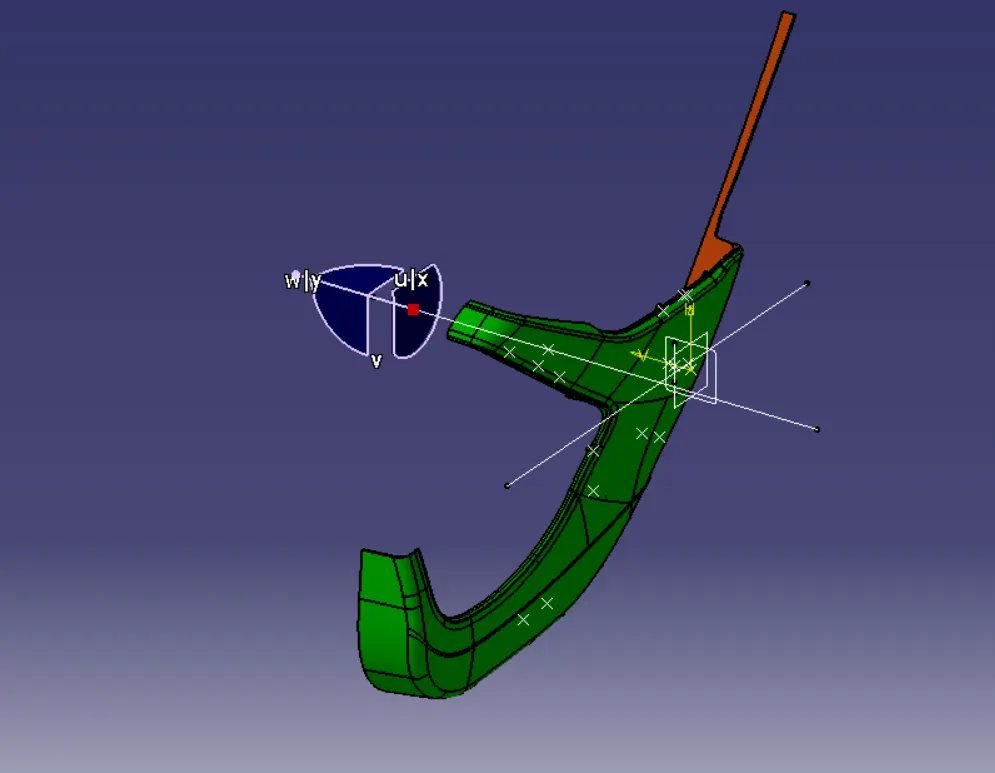
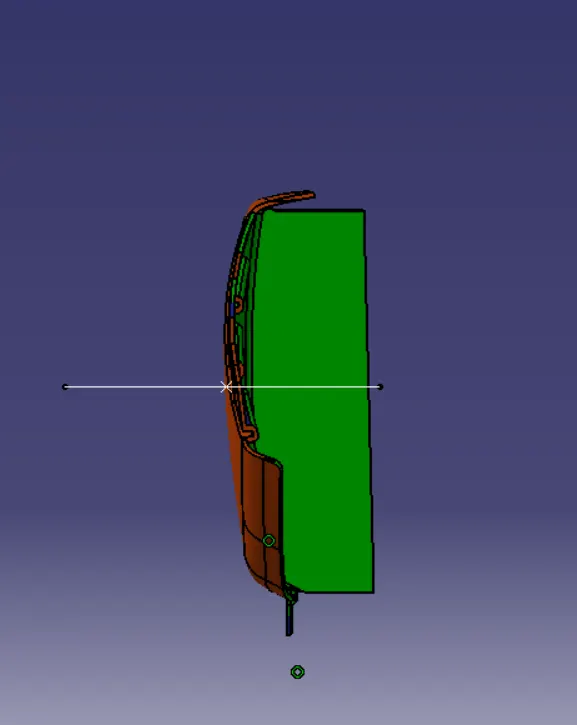
DRAFT ANALYSIS OF LOWER SUBTRATE:
A CLASS SURFACE
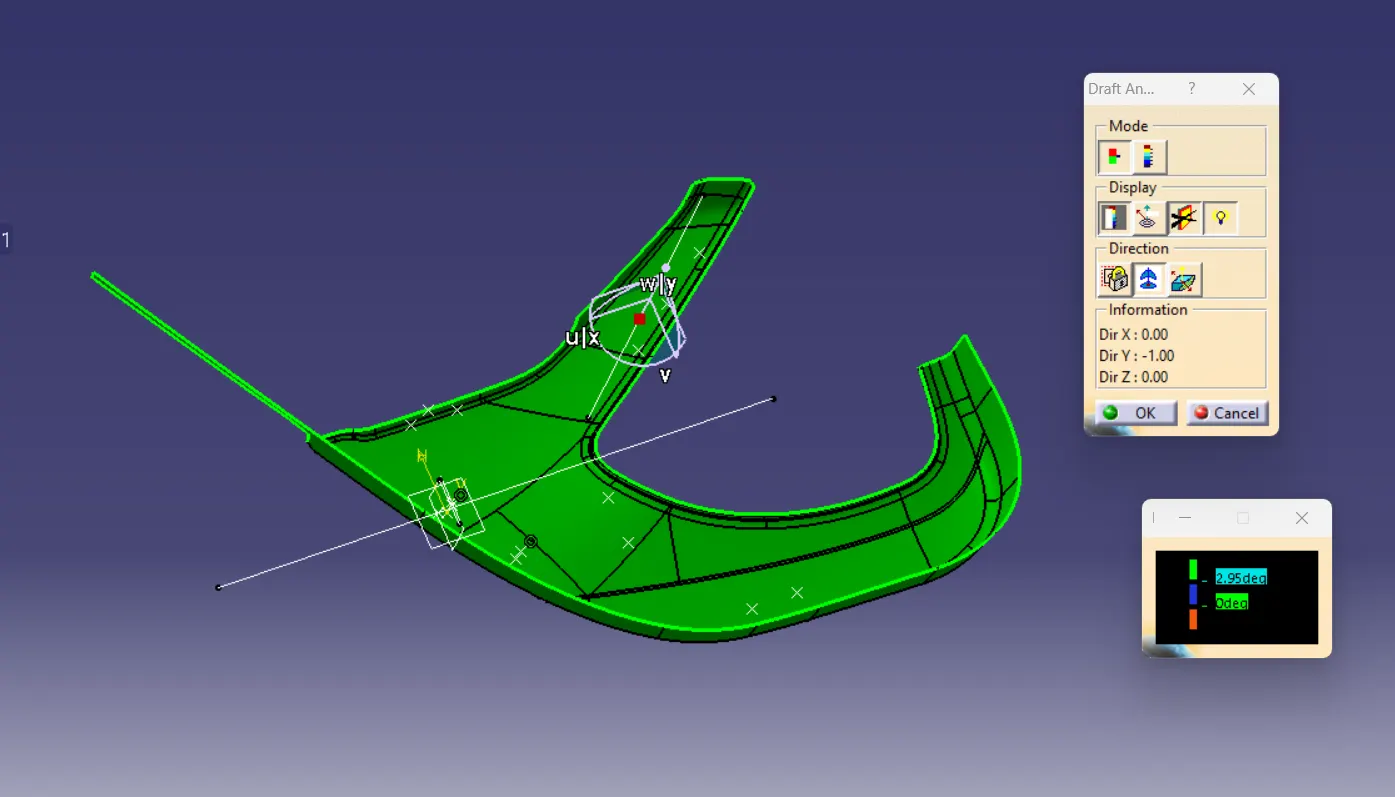
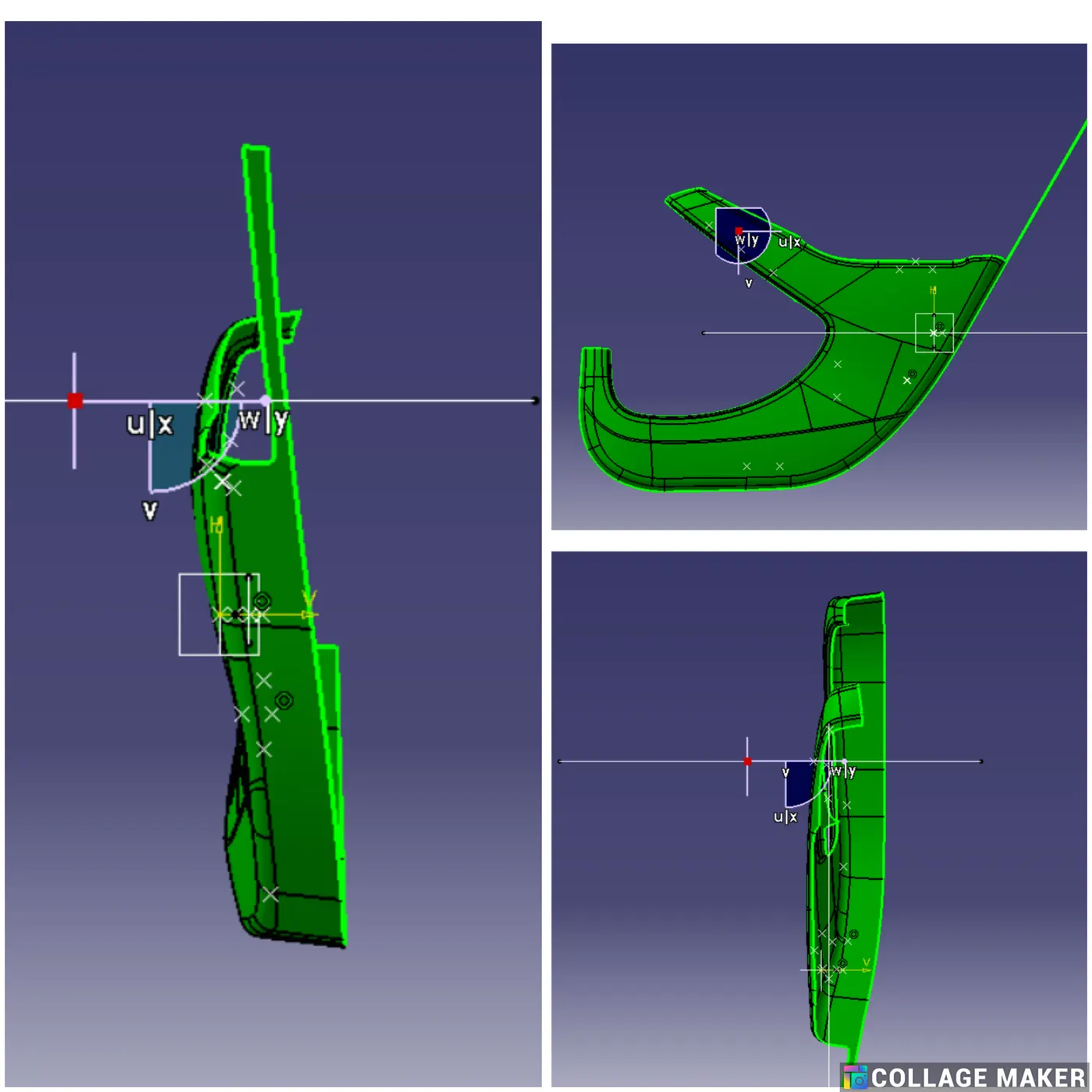
SOLID SURFACE:
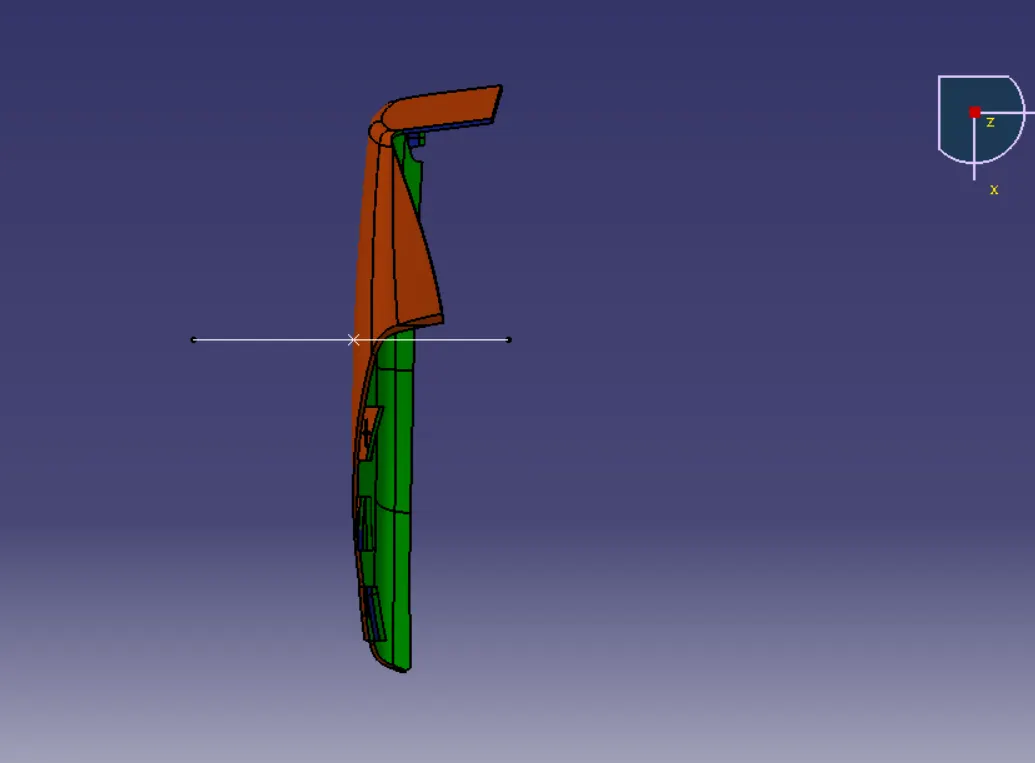
DRAFT ANALYSIS OF DOOR ARM REST:
A CLASS SURFACE
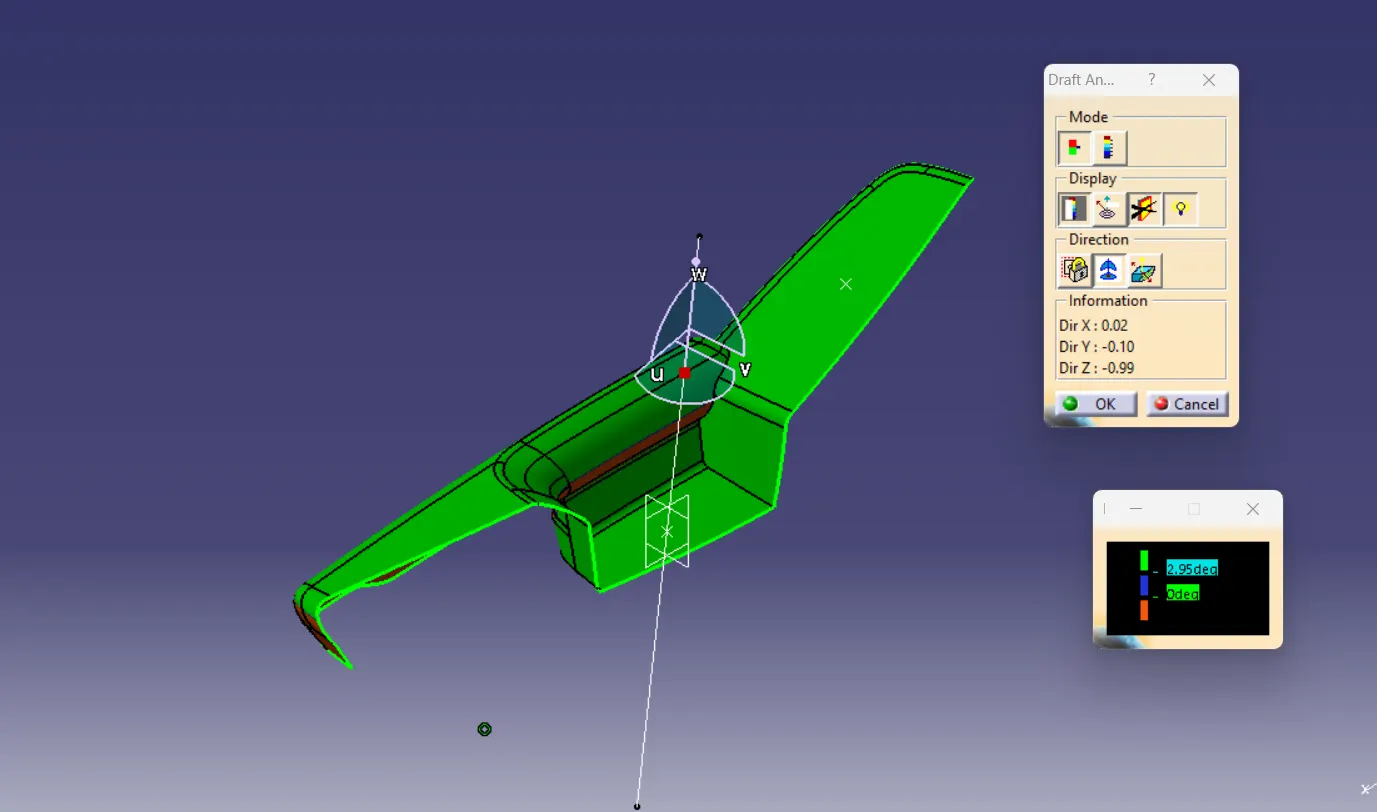
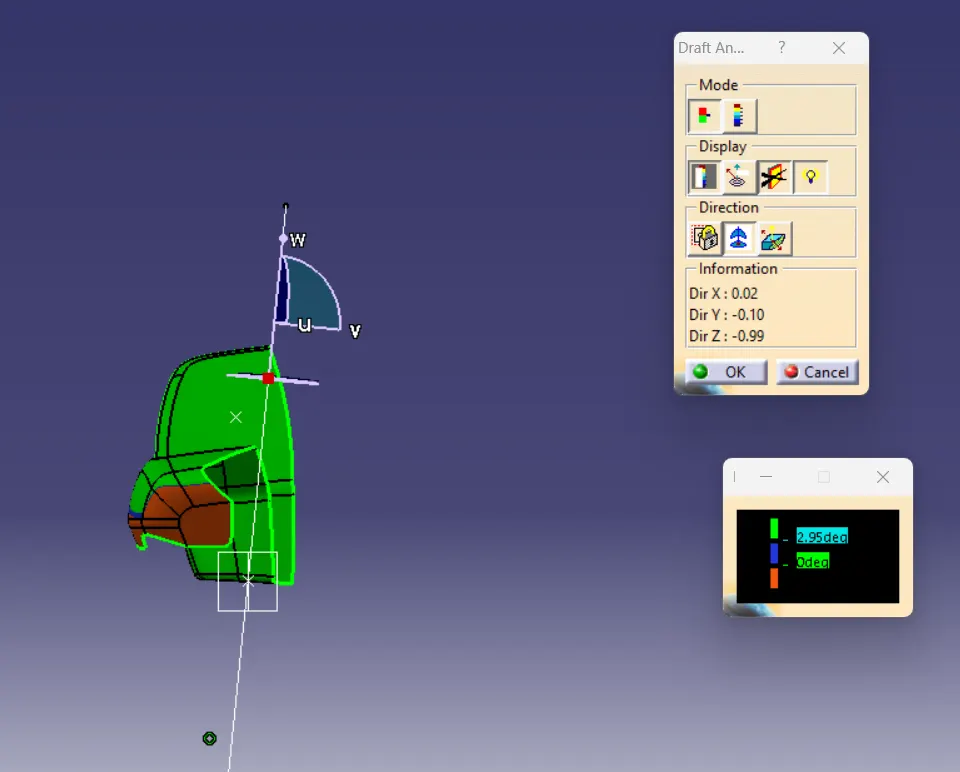
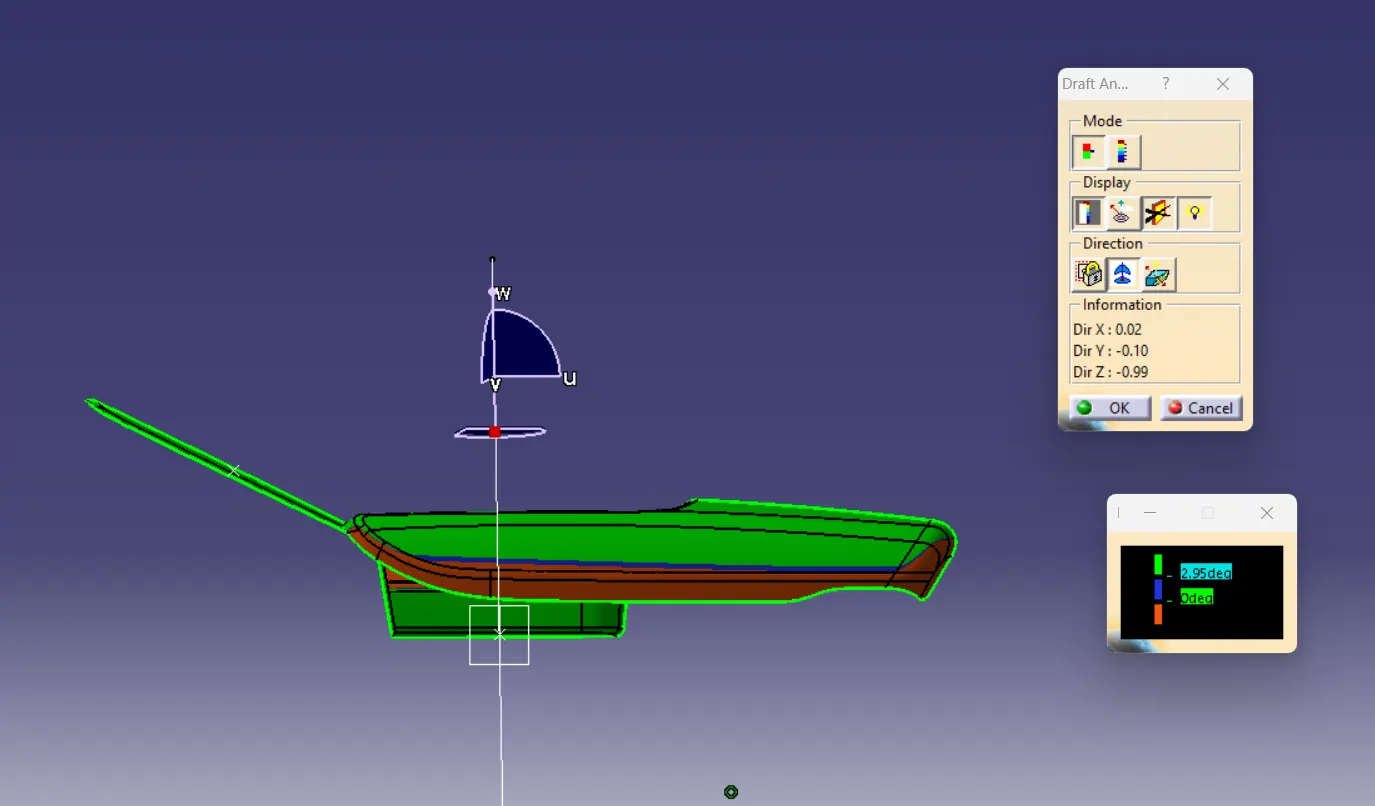
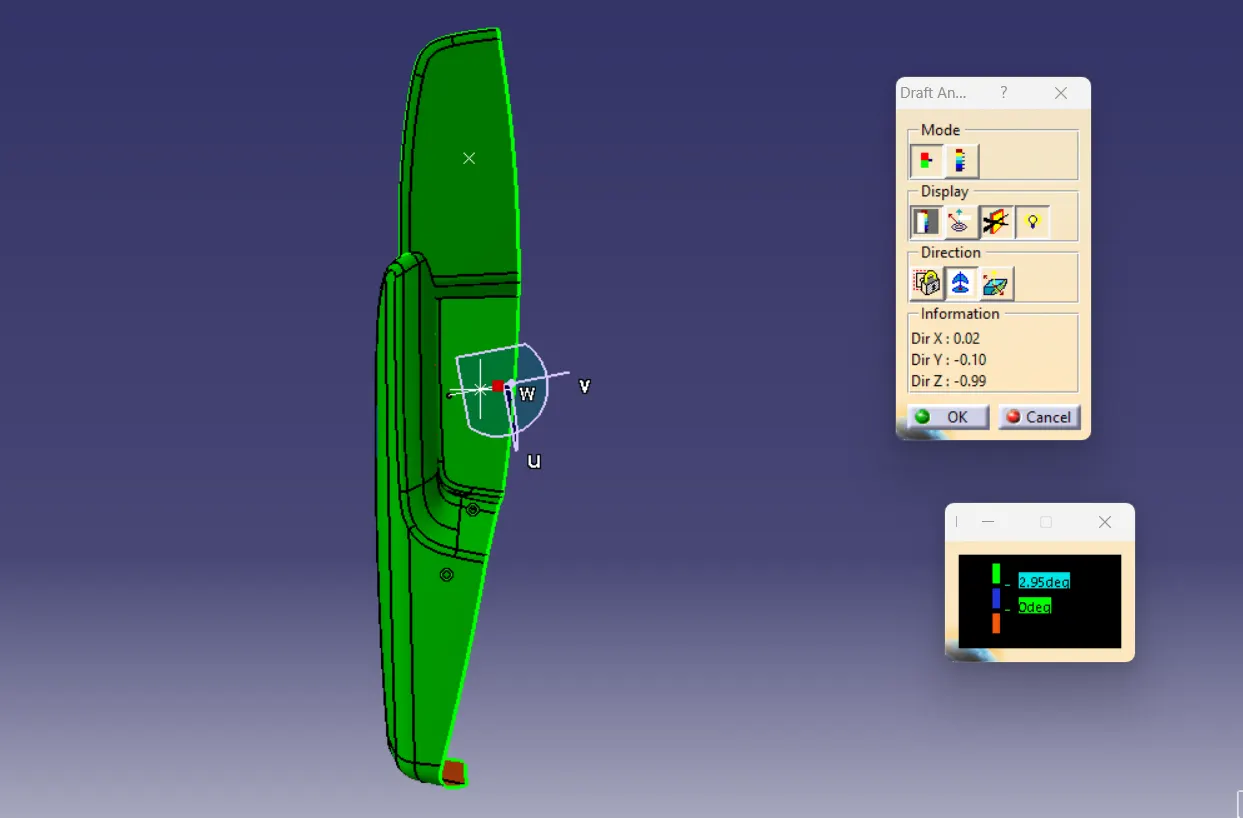
SOLID SURFACE
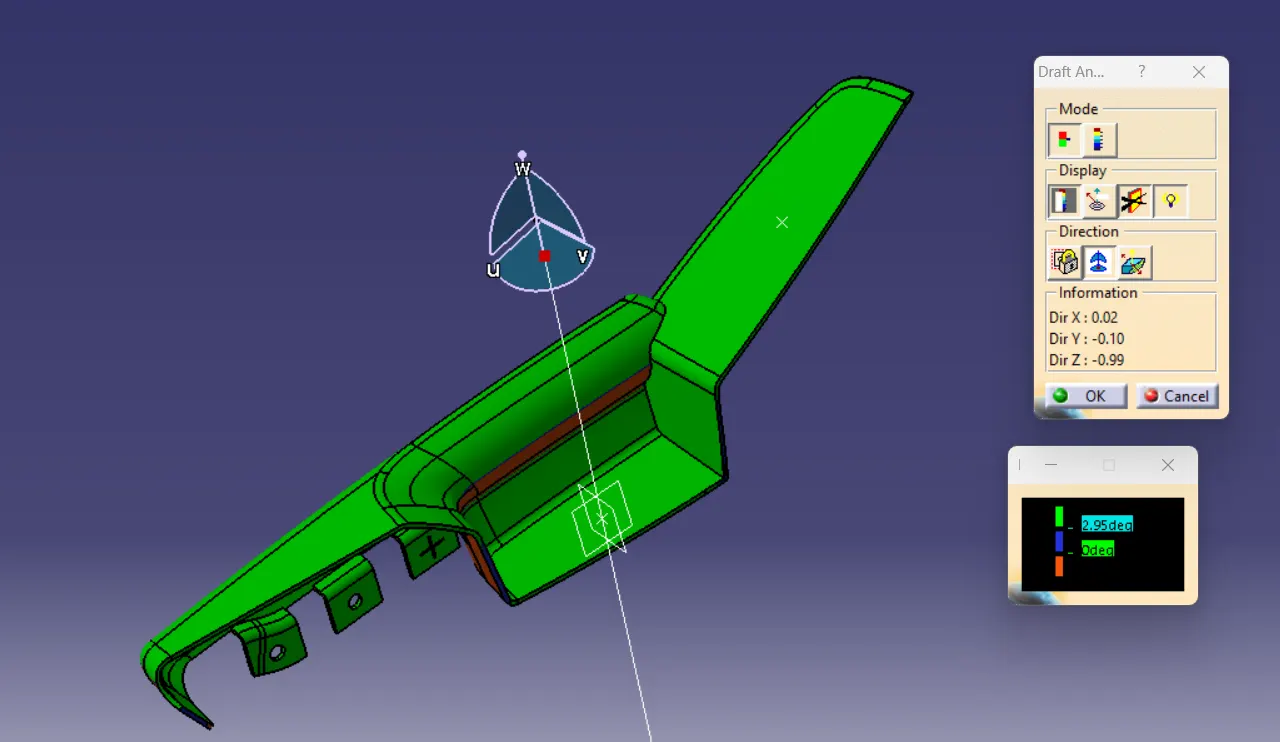
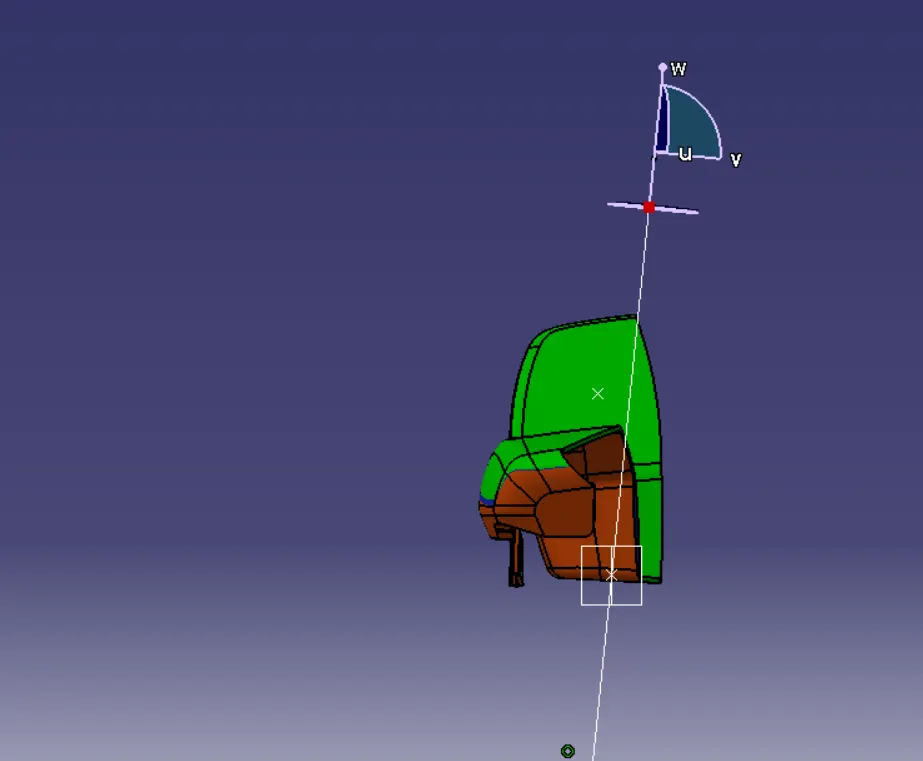
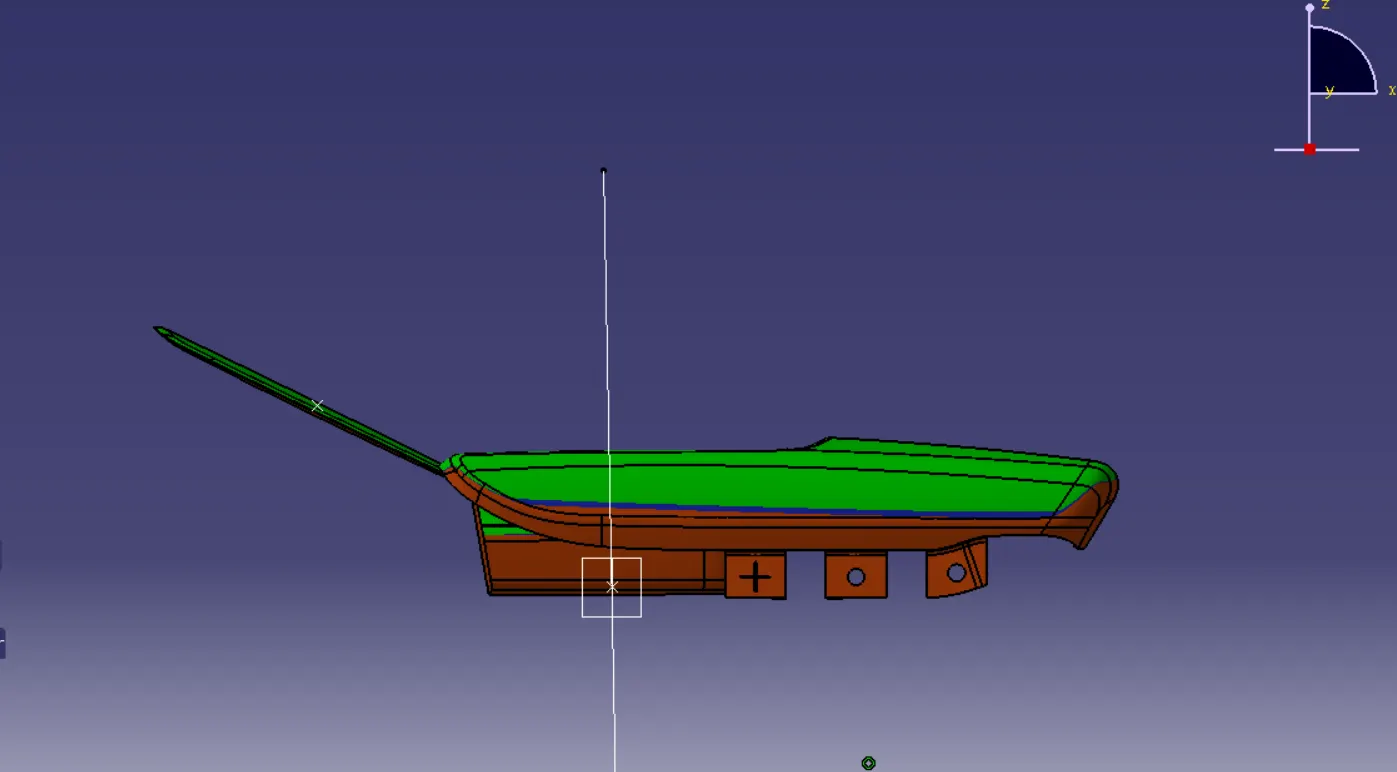
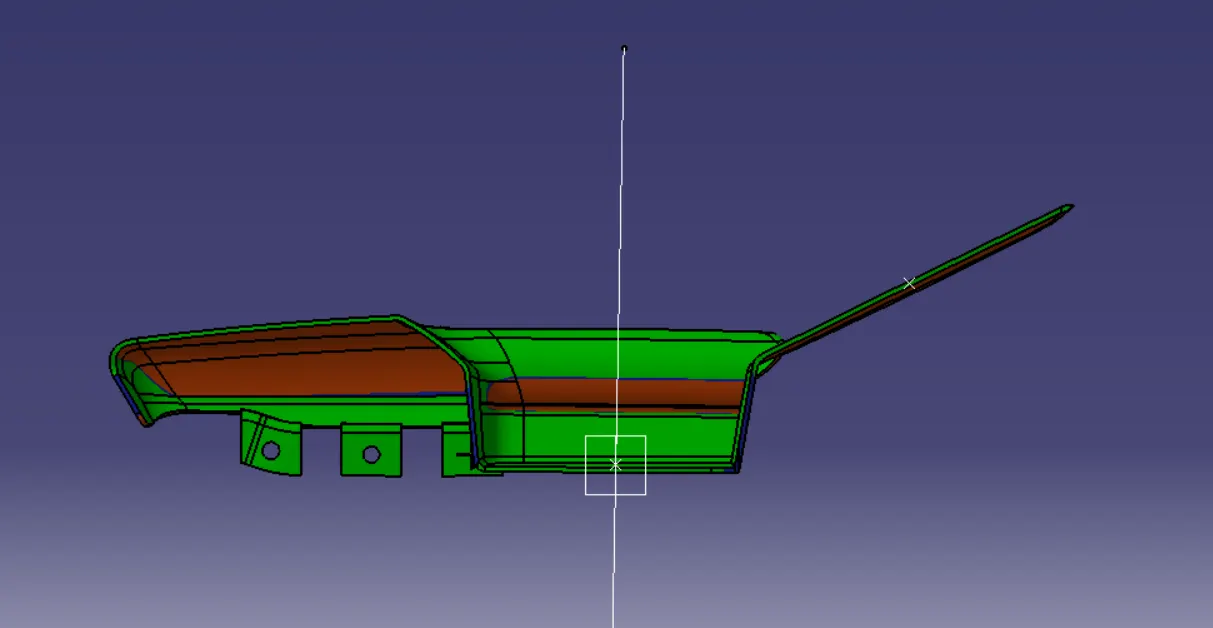
we have to put a side core for this.
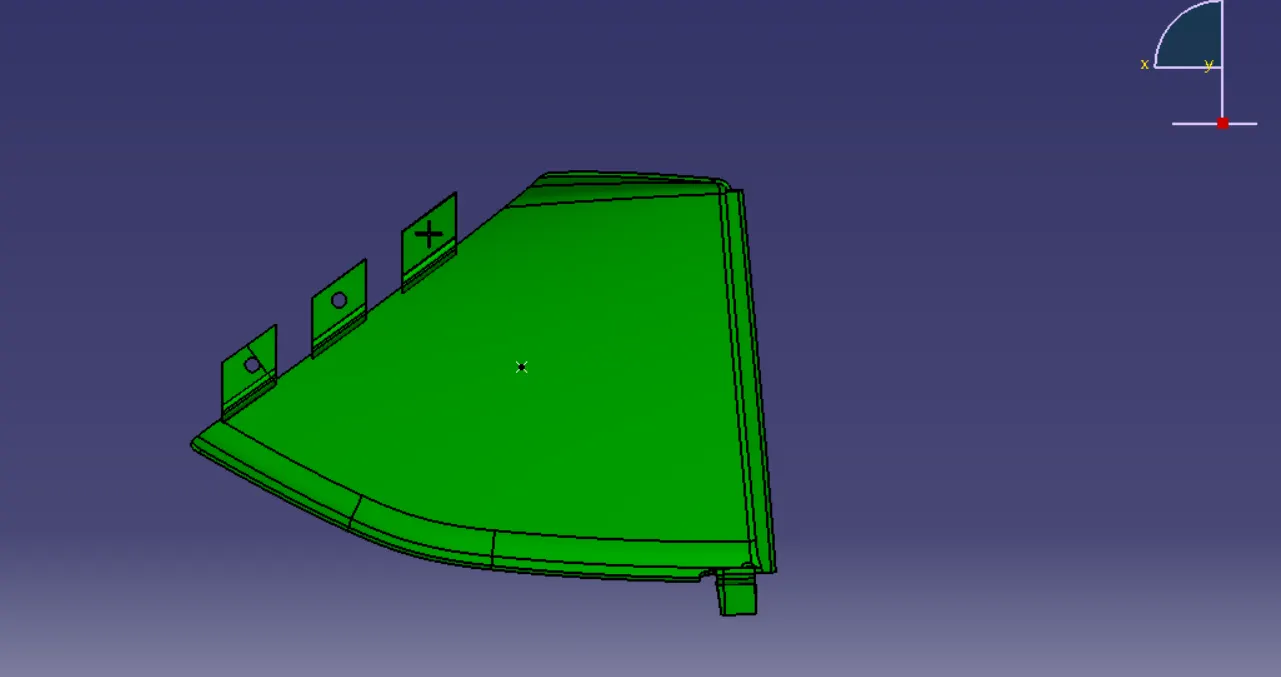
DRAFT ANALYSIS OF MAP POCKET:
A CLASS SURFACE
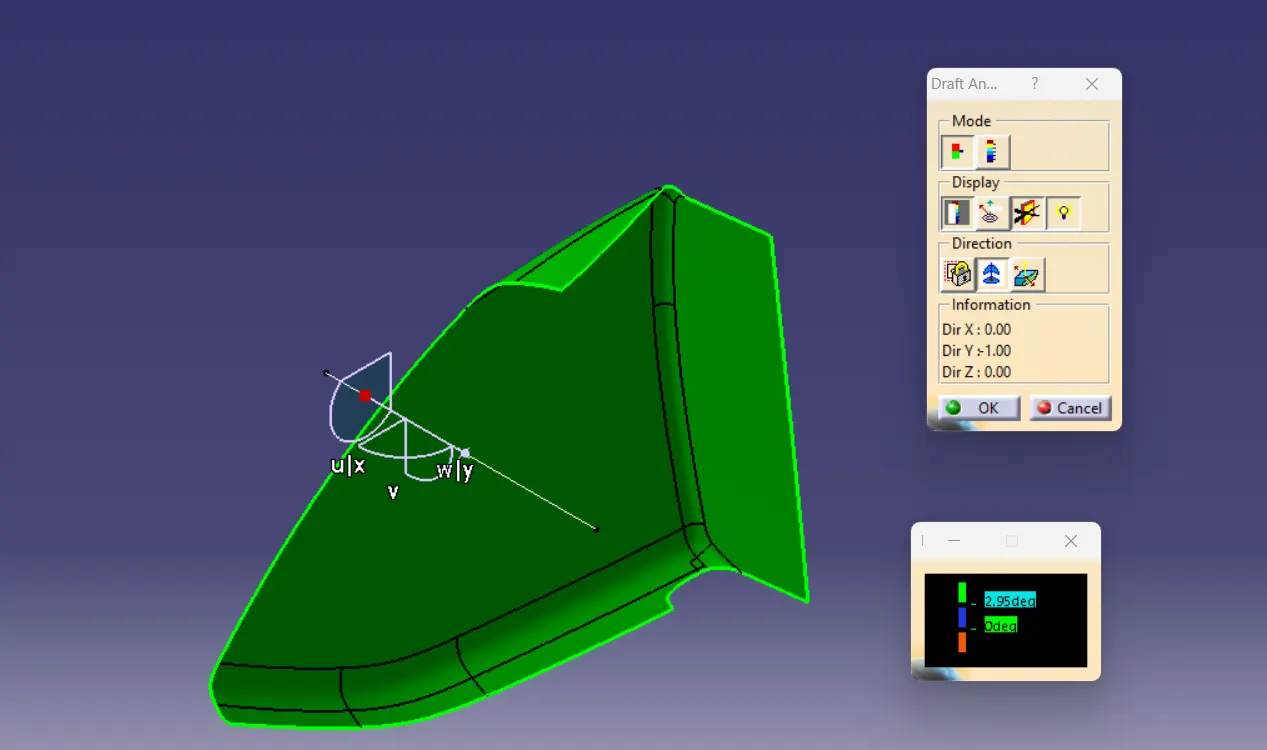
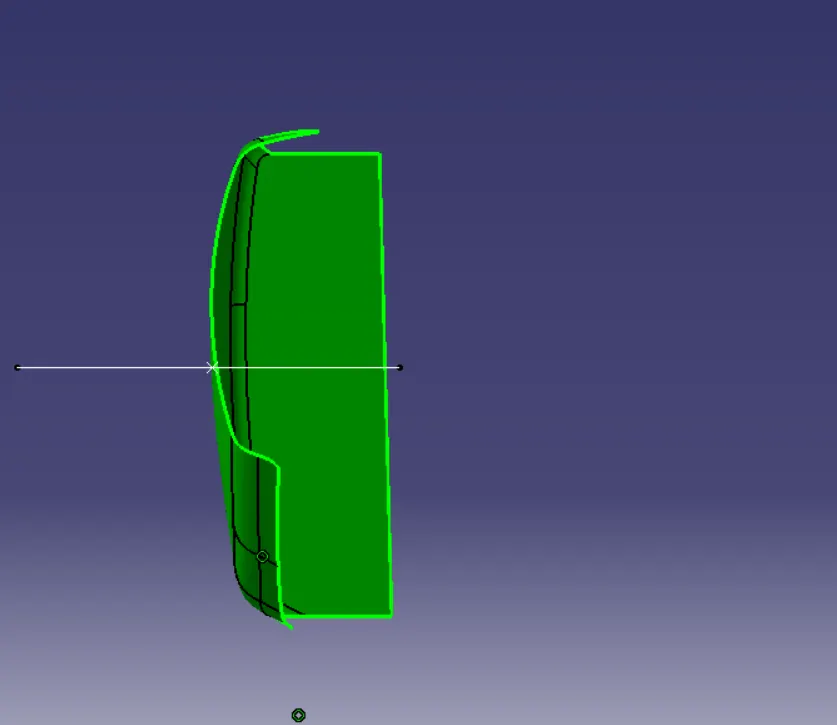
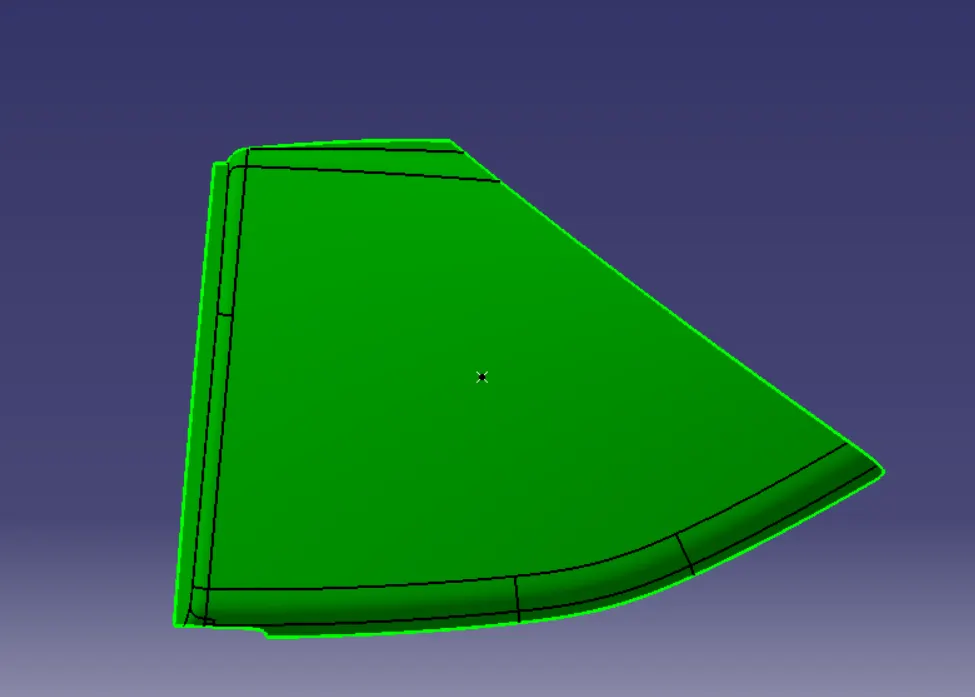
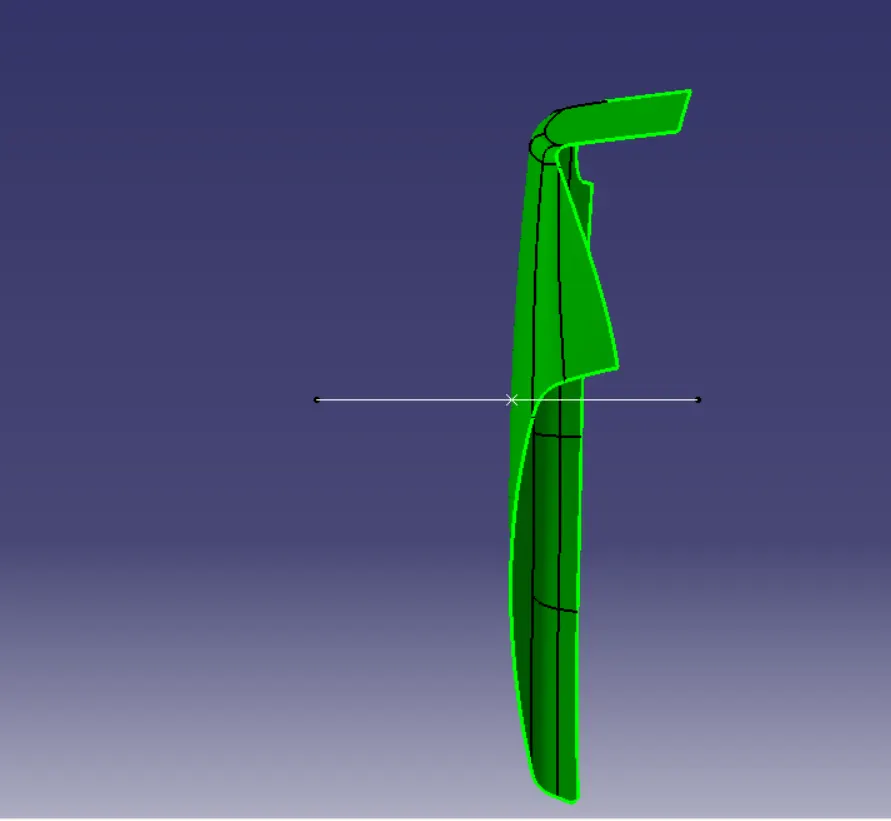
SOLID SURFACE
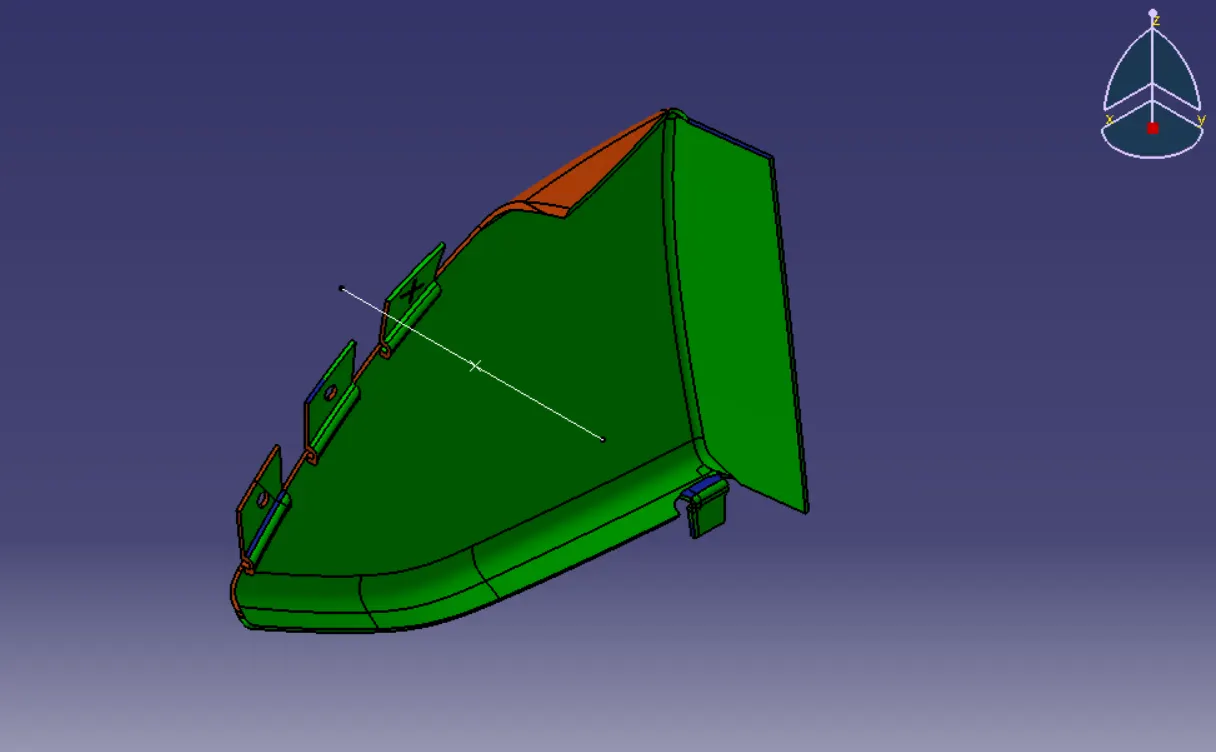
DRAFT ANALYSIS OF BOTTLE HOLDER:
A CLASS SURFACE
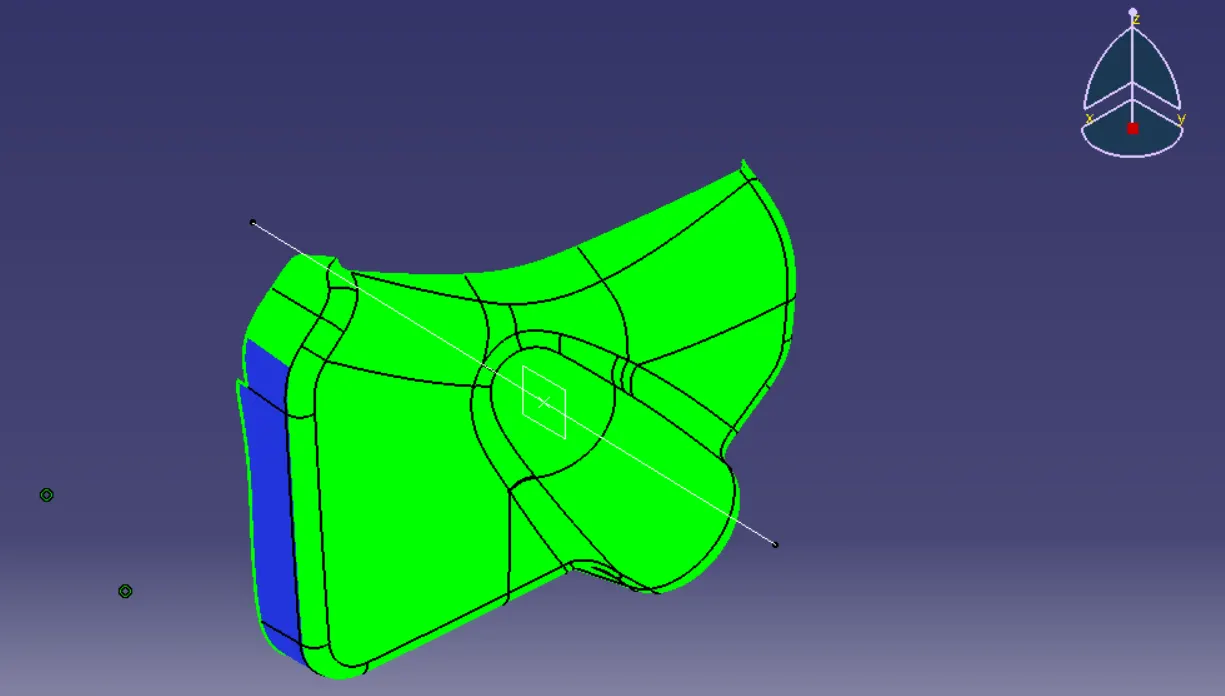
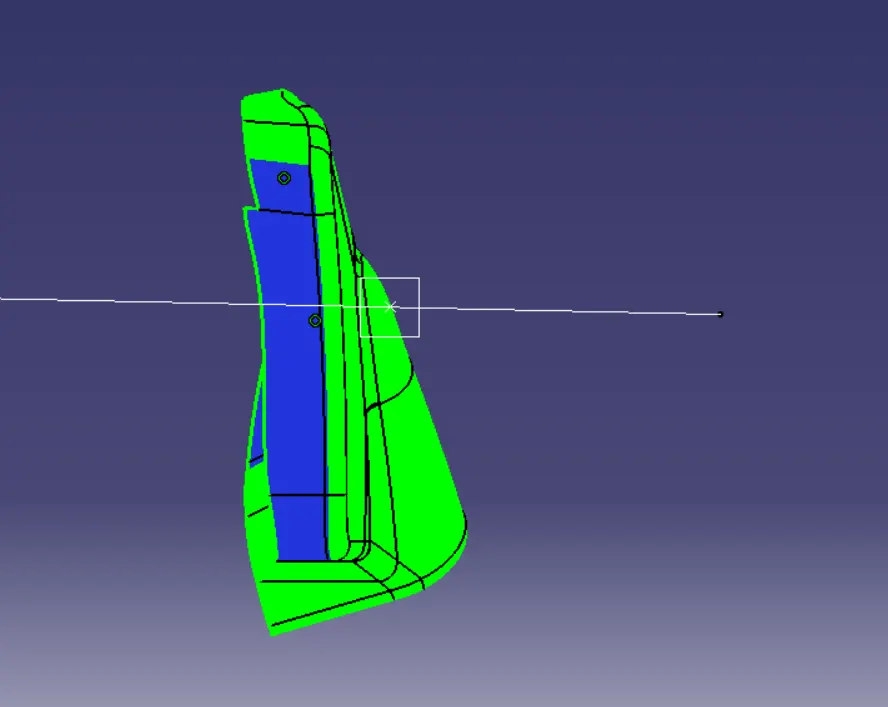
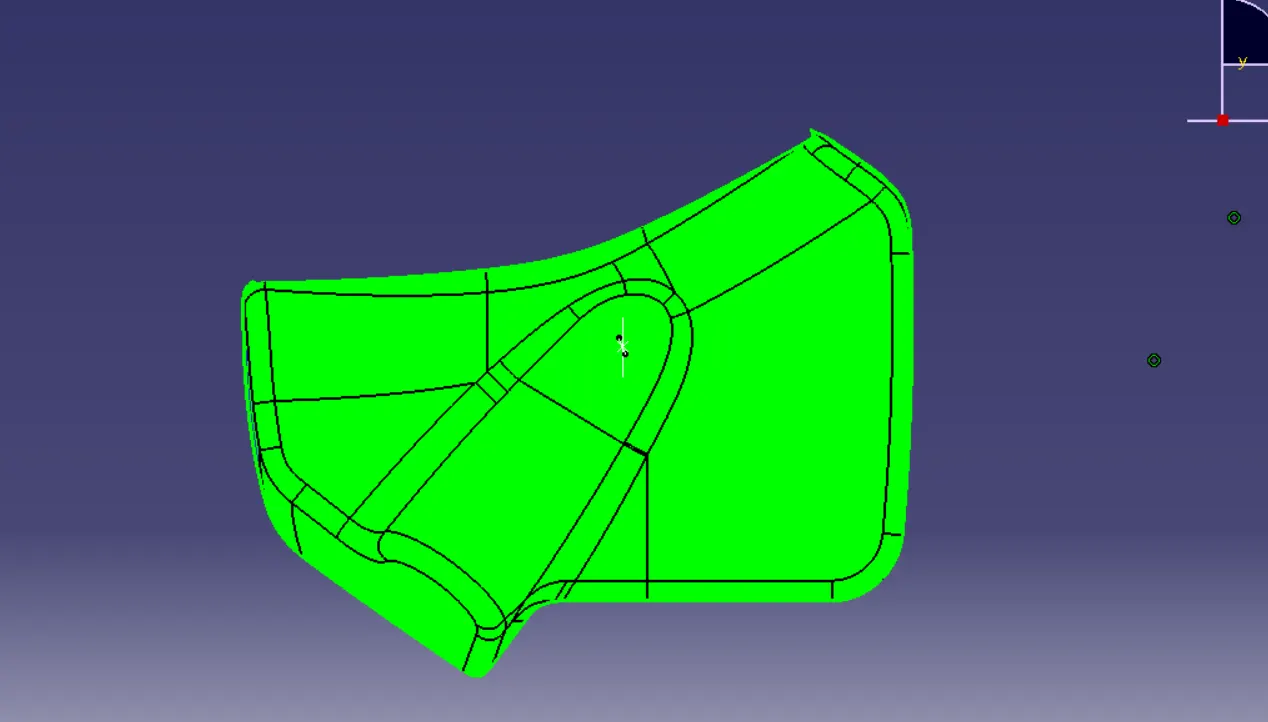
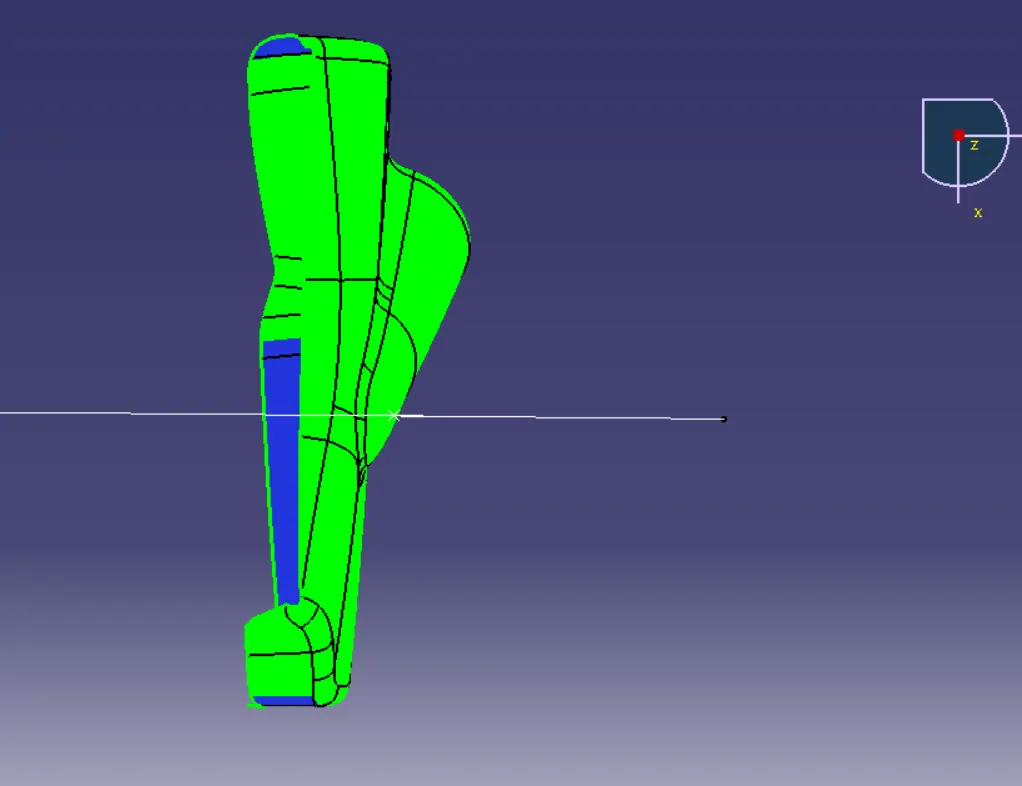
we have to use side core
minimum degree is 0.5
SOLID SURFACE:
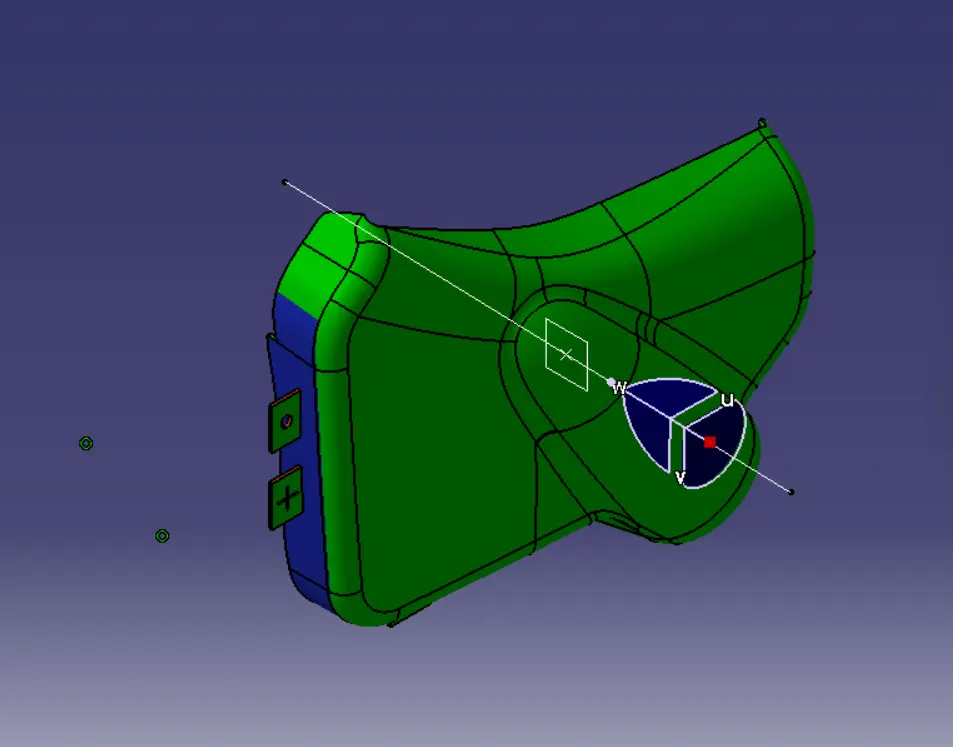
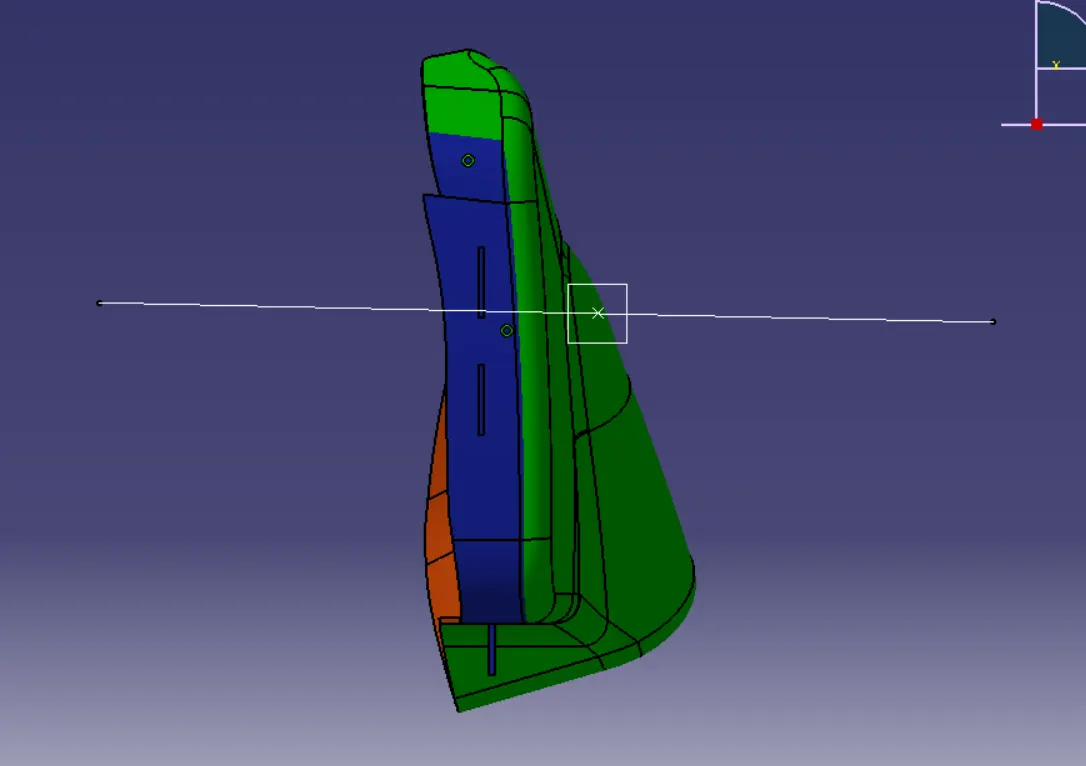
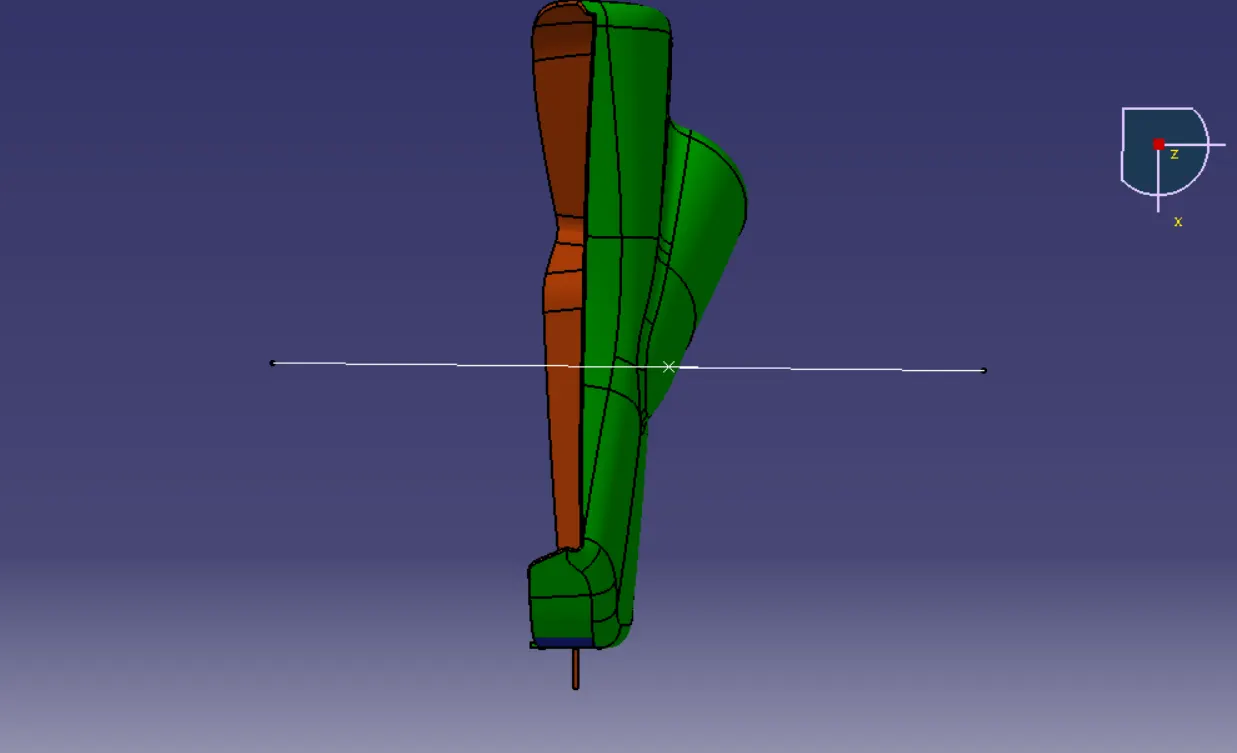
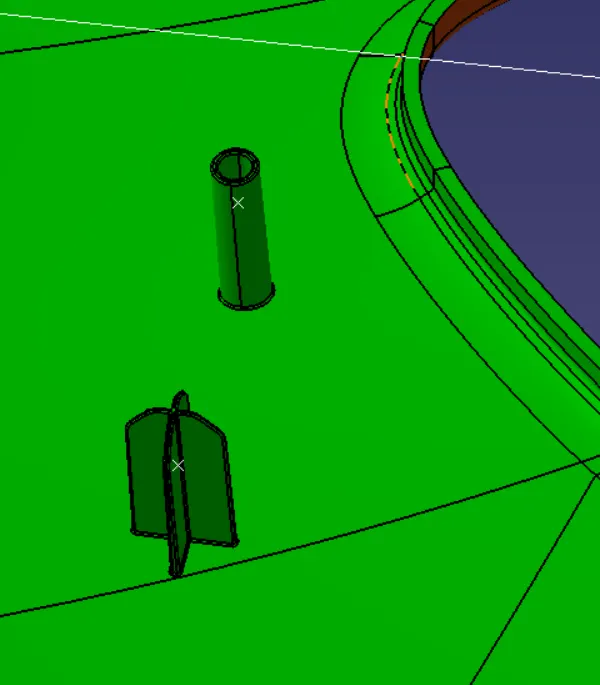
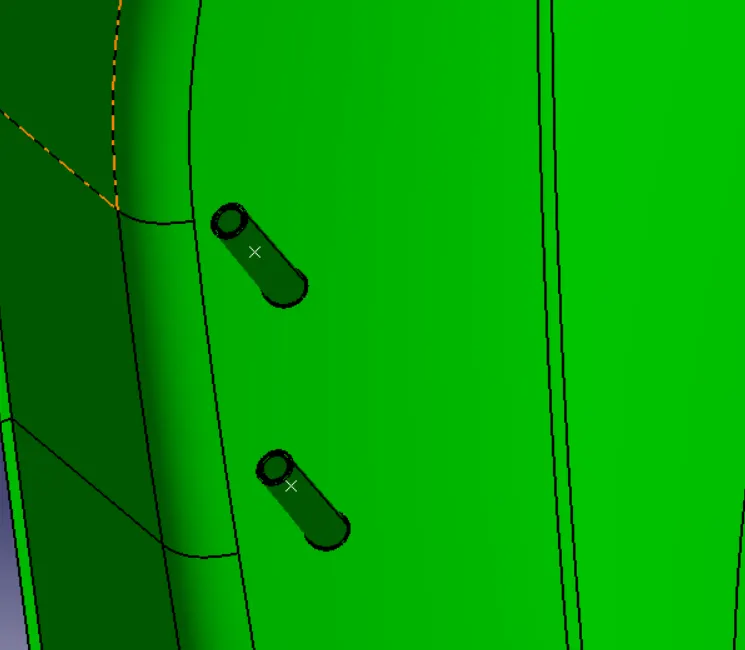
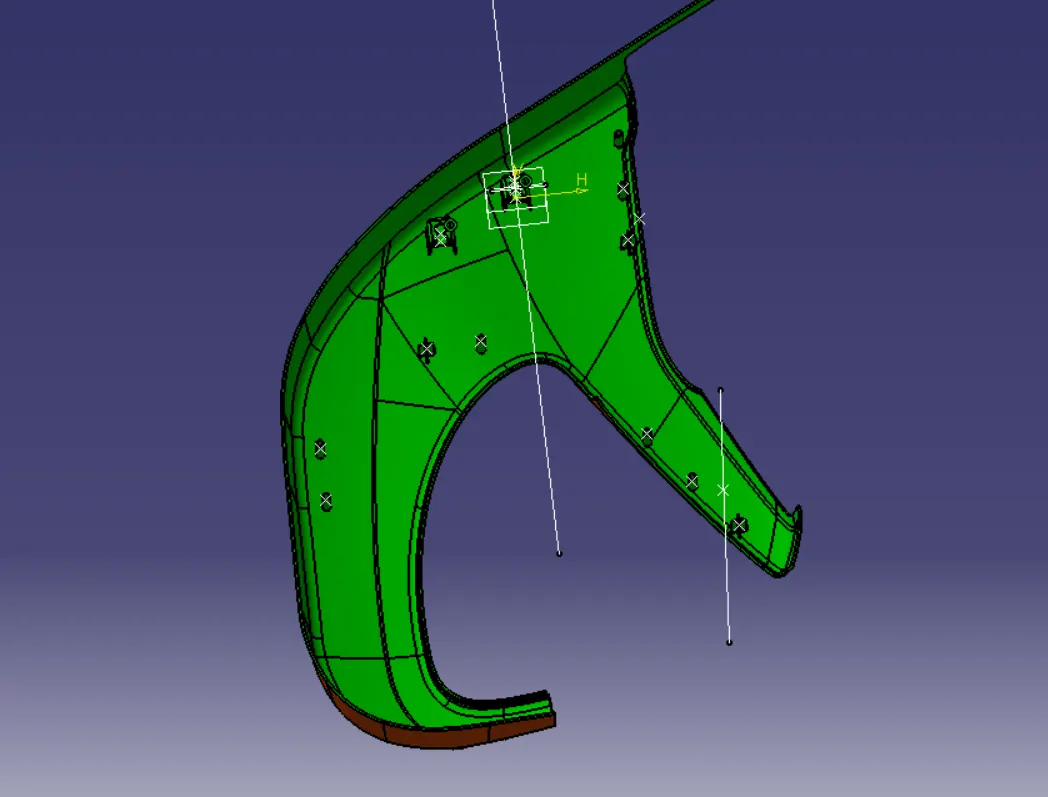
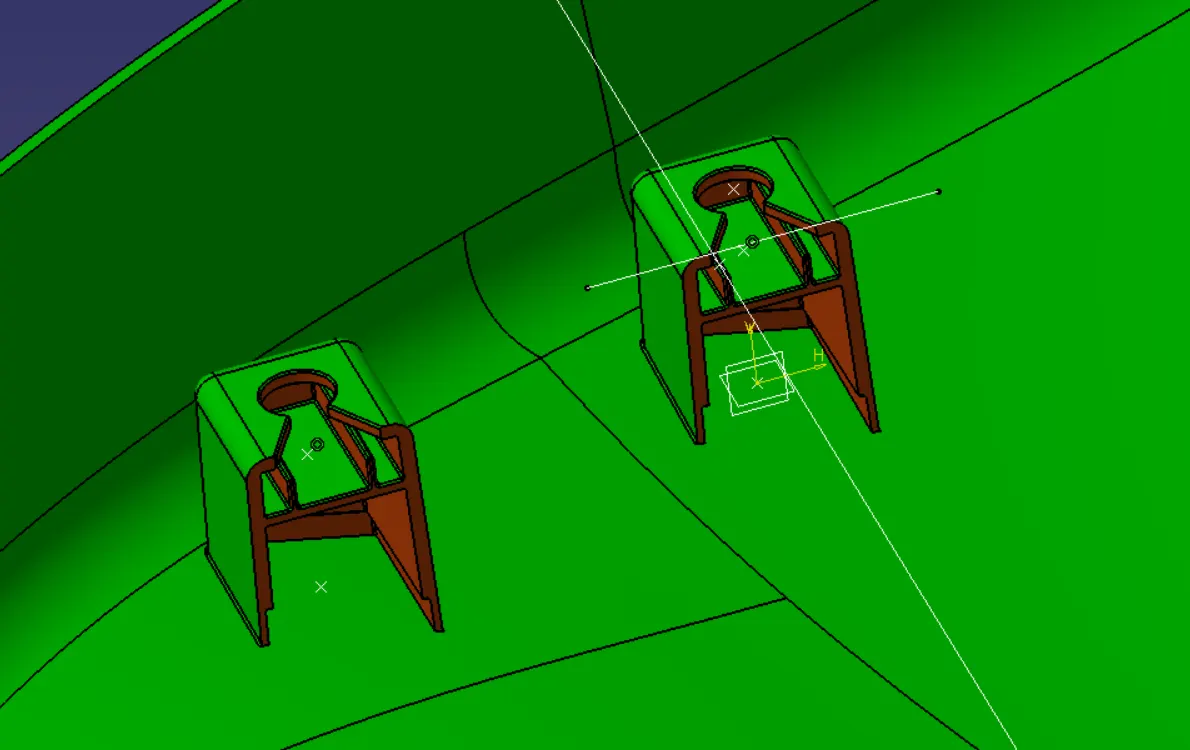
DRAFT ANALYSIS OF HEATSTAKES,LOCATOR AND DOGHOUSE:
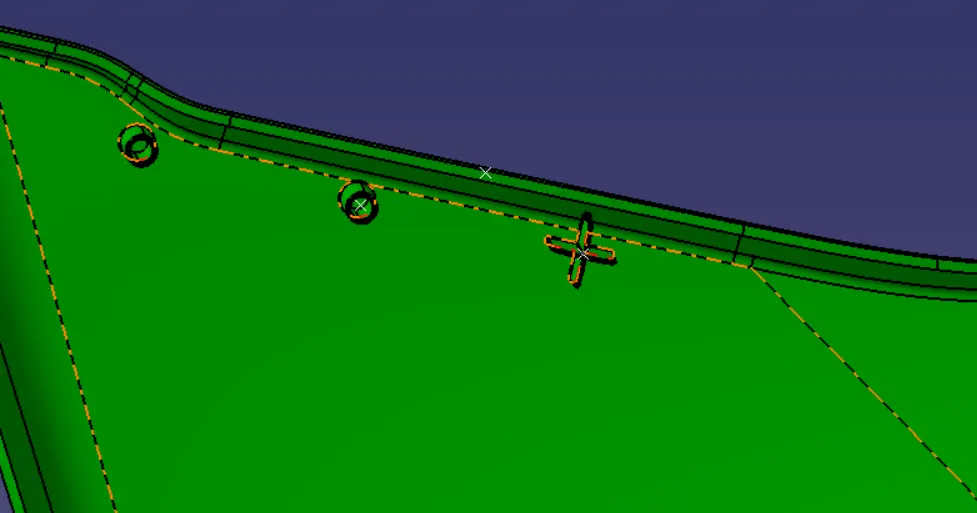
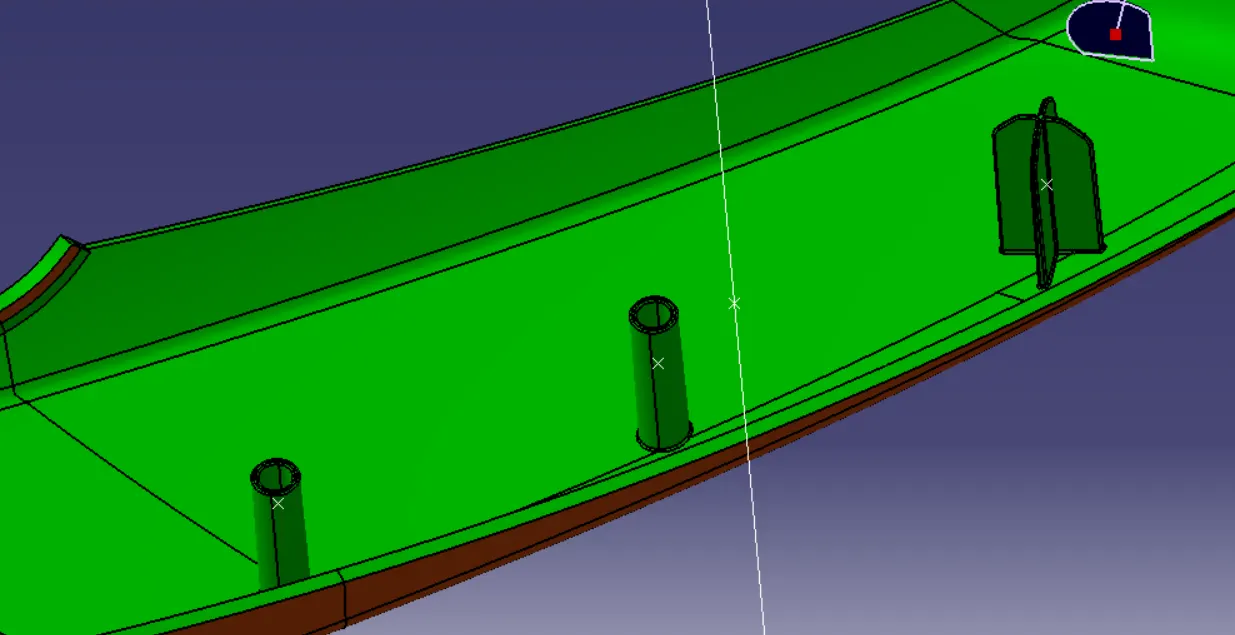
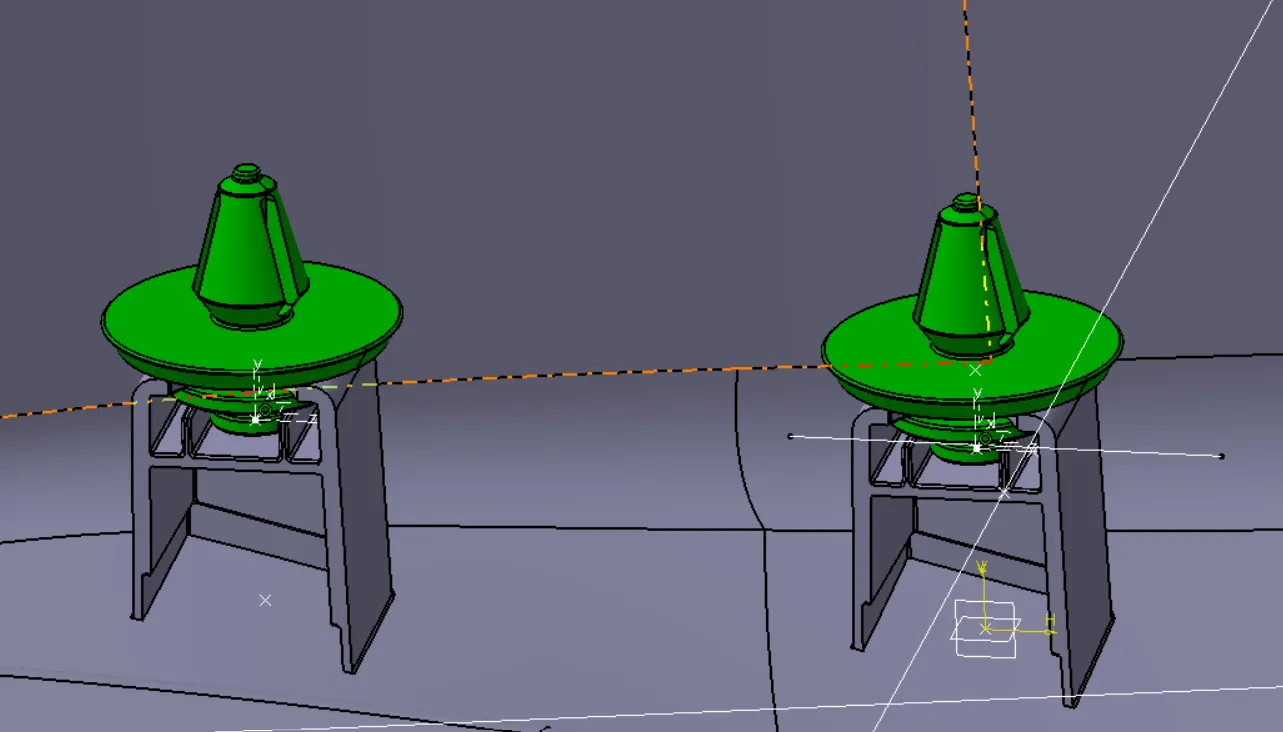
PIN ATTACHEMENT:
DOOR PANEL ATTACHEMENT:
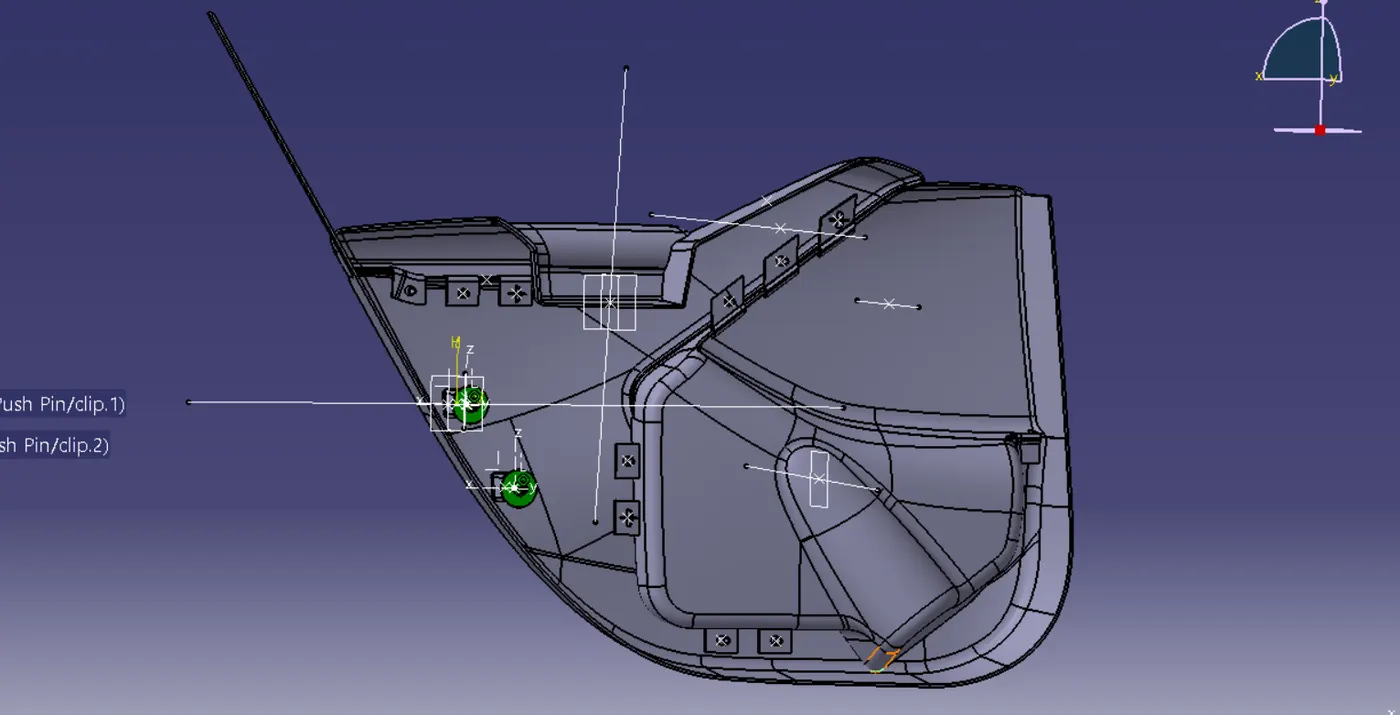
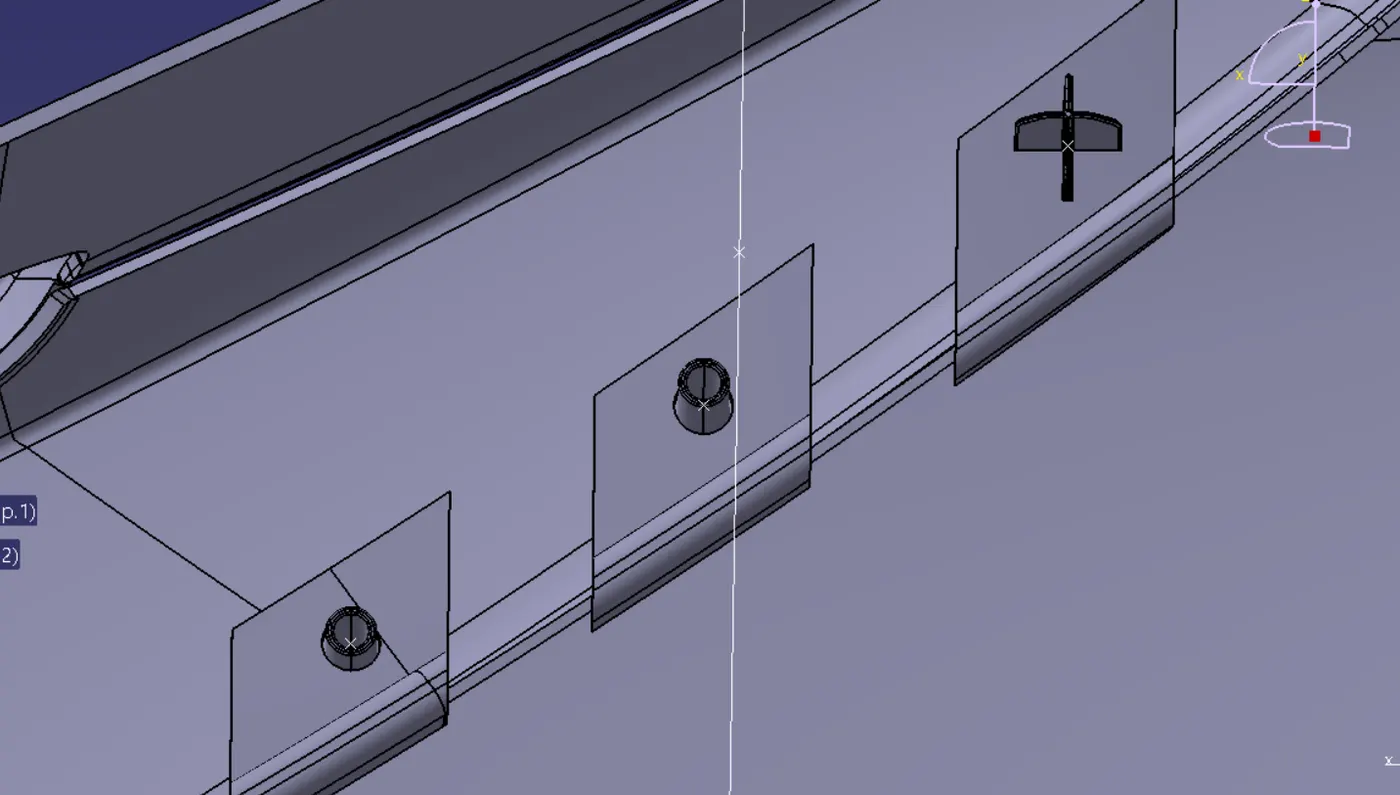
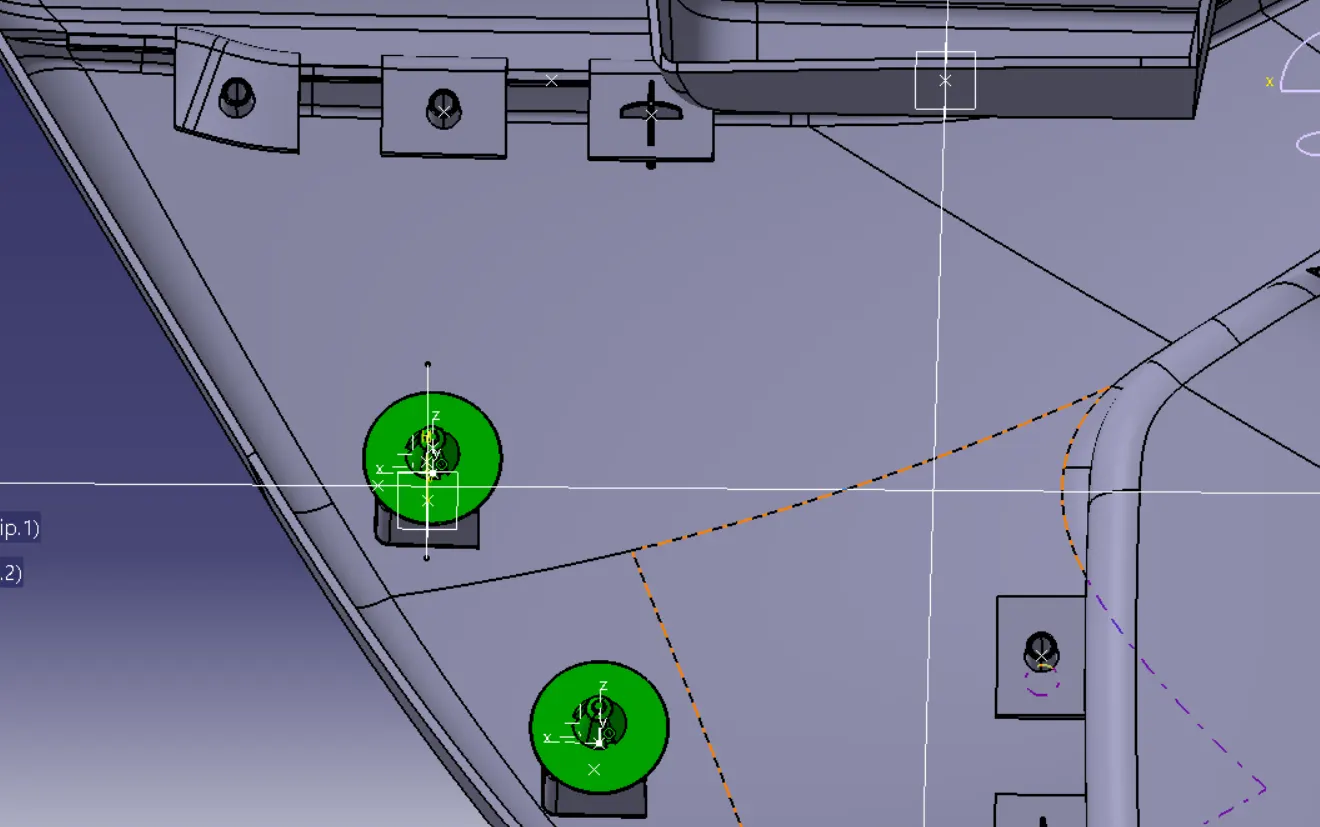
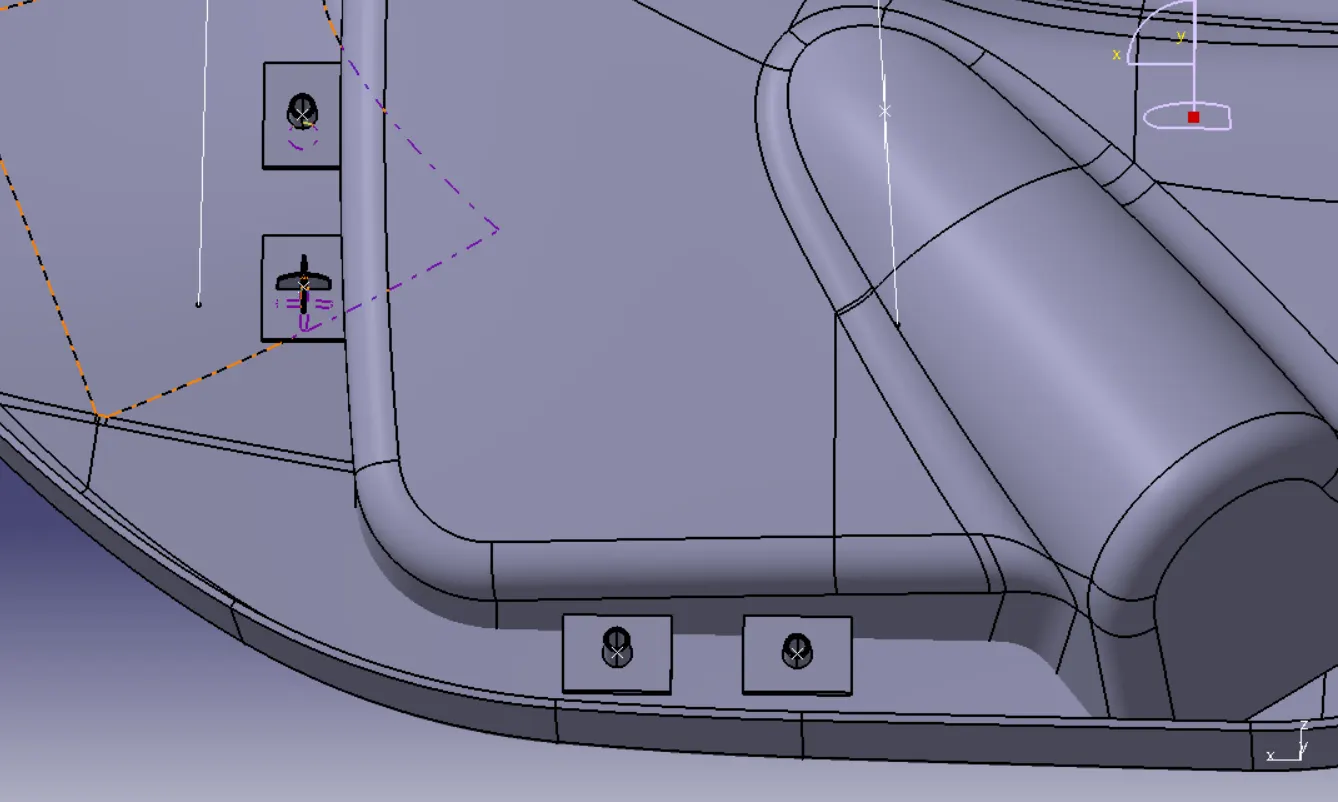
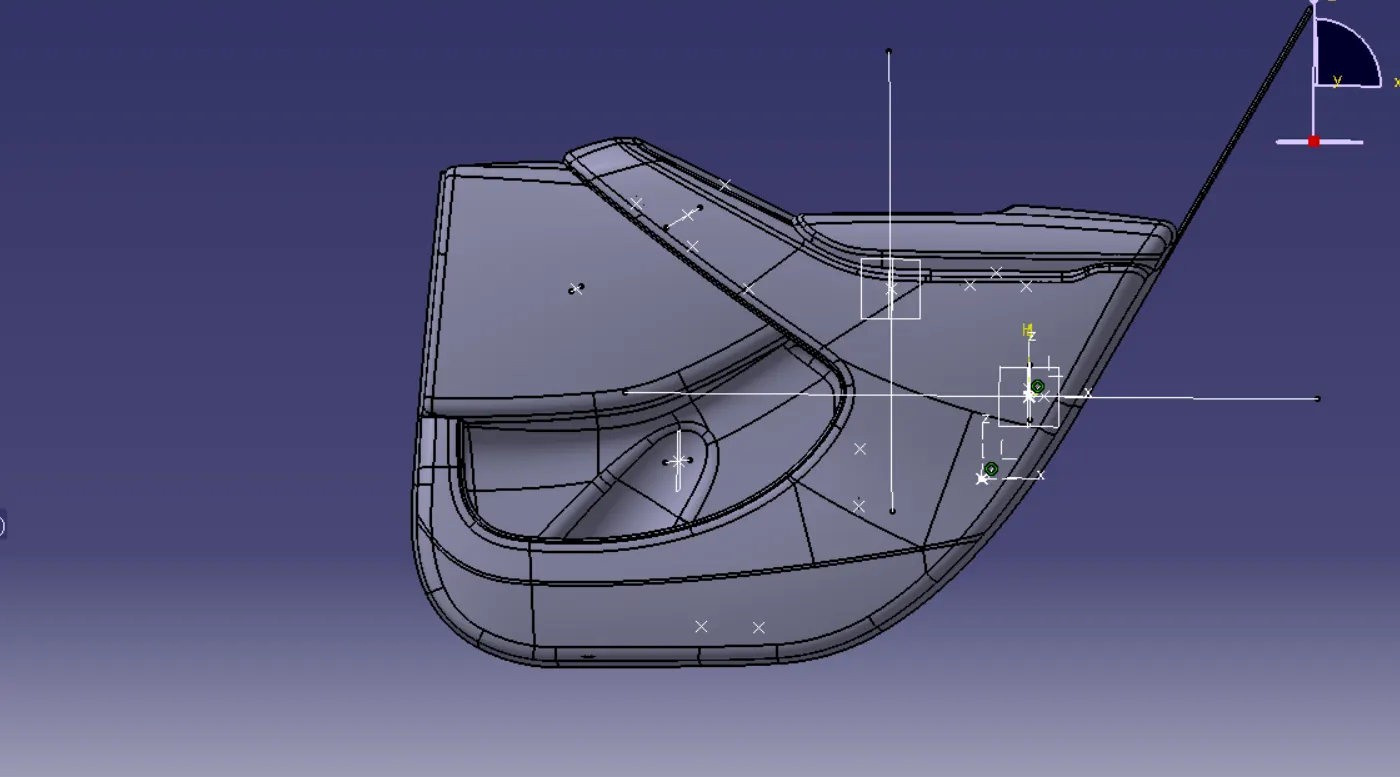
thus fore completed the door panel design.