Week 12- Final project
Door panel Design & Assembly
Aim:
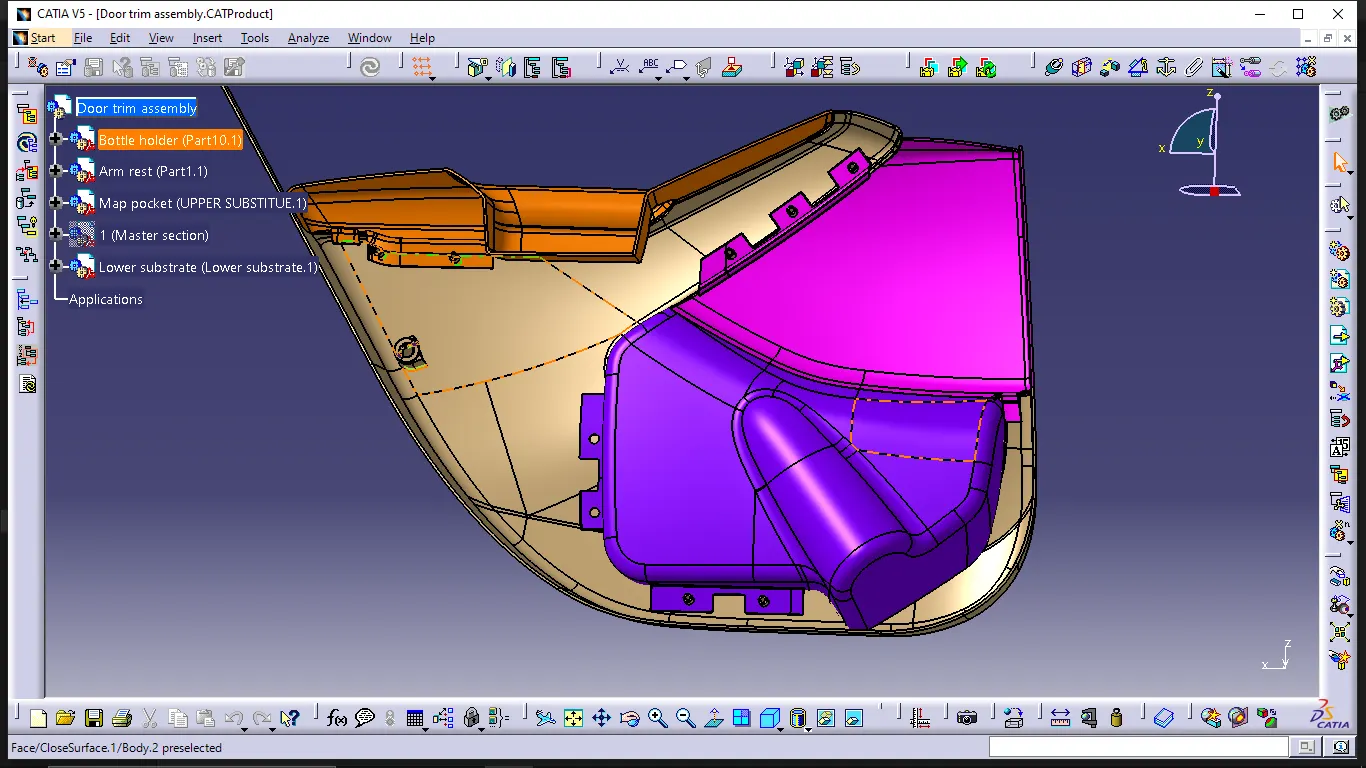
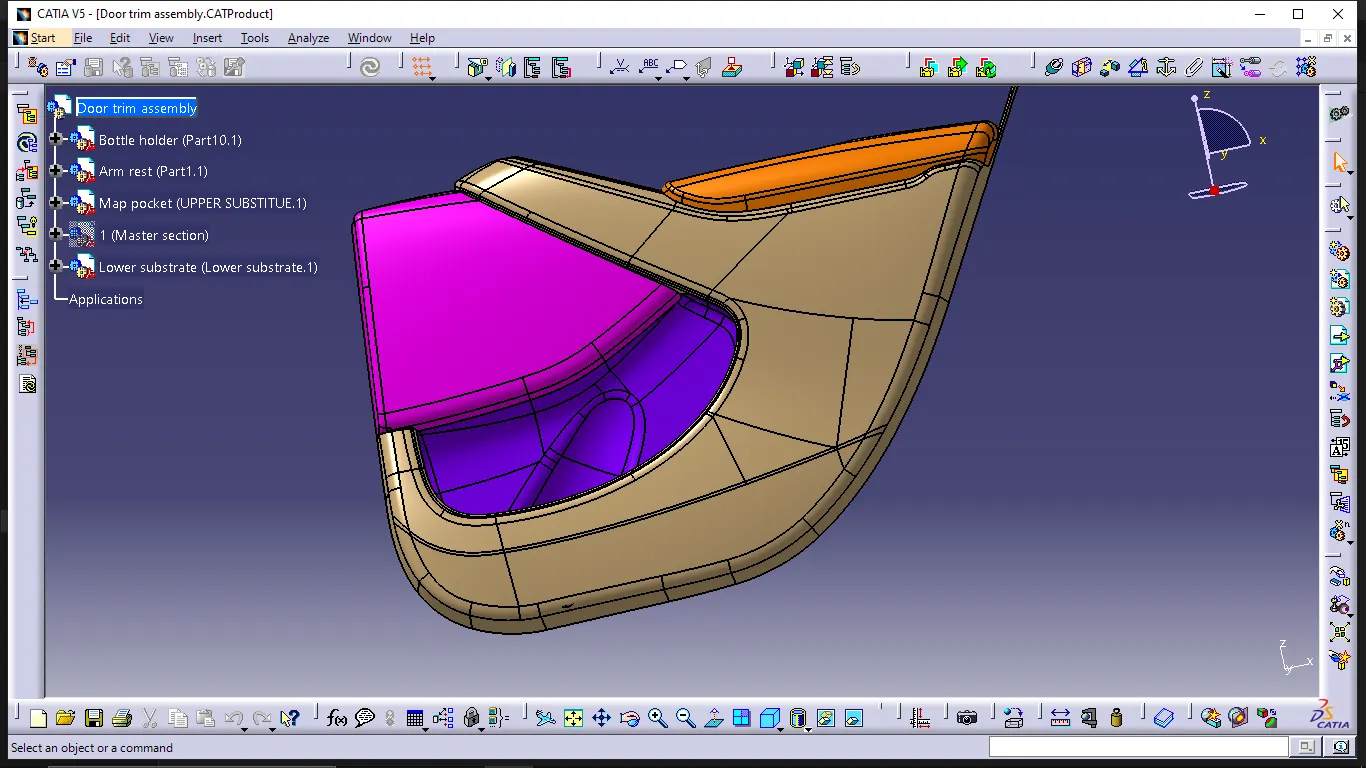
To design the door panel components by using given A surface and master section and the do the draft analysis on each components.Assemble the parts by using heatstake and creating dog houses.
1.Arm rest:
Objectives:
· Create a tooling axis by using intersection lines.
· Creation of class B surface by using extract and offset.
· Creation of class C surface by creating sweep from A surface and extrapolate from B surface.
· Creating a solid part by using of close surface.
· Creation of attachment feature.
· Draft analysis of Arm rest A surface and solid component
Introduction:
A Arm rest is one of the part of an automotive door which is used to resting the human arm. Every plastic components have a A,B,C surface. A surface is the basic surface. By using the A surface only, we can design the plastic components. B,C surface creating only by using of A surface. Tooling axis is very important to design a component. For draft tooling axis is essential. For C surface creation from B surface the sweep created by use of tooling axis.
Parameters:
Thickness of component - 2.5mm
Draft angle of component – 3o
Class A surface:
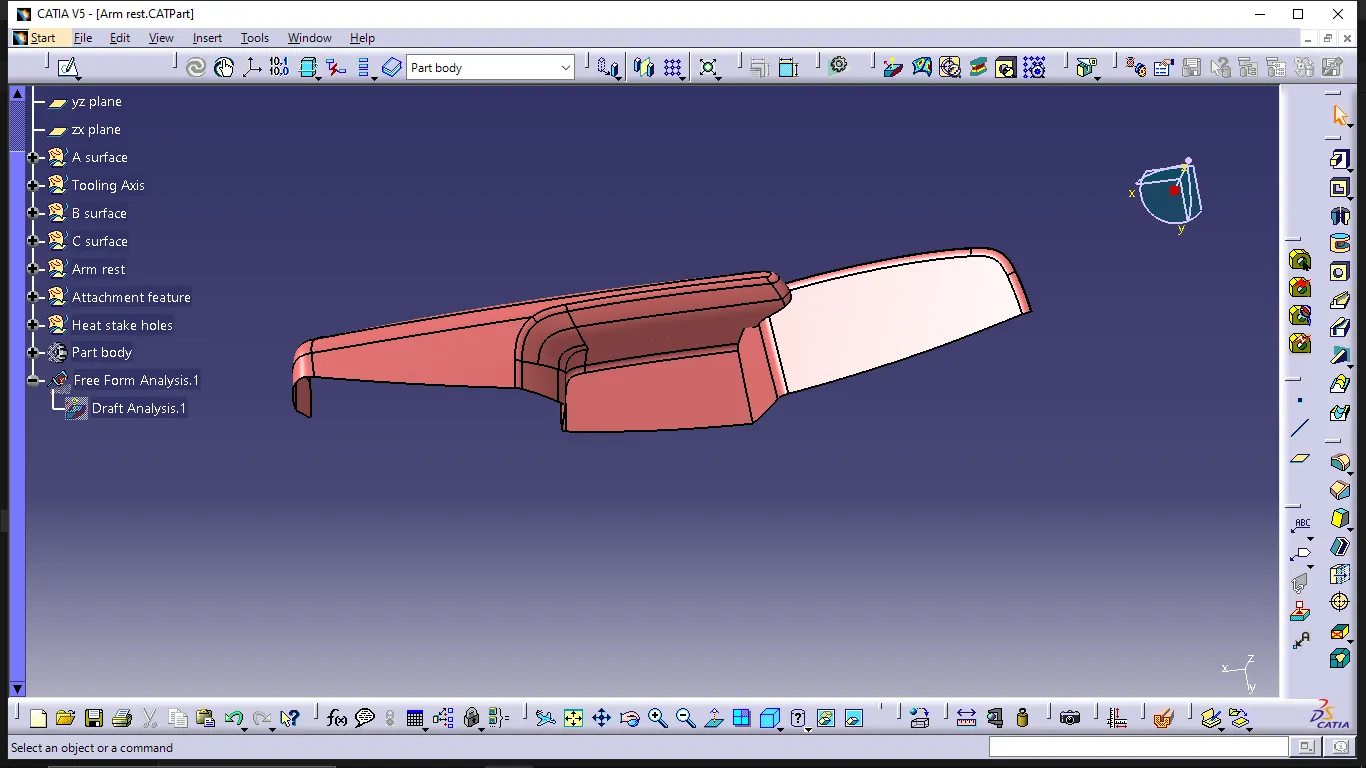
This picture shows the class A surface. First, we need to check the boundary. If it is not okay, then A surface needs to be modified.
Tooling Axis:
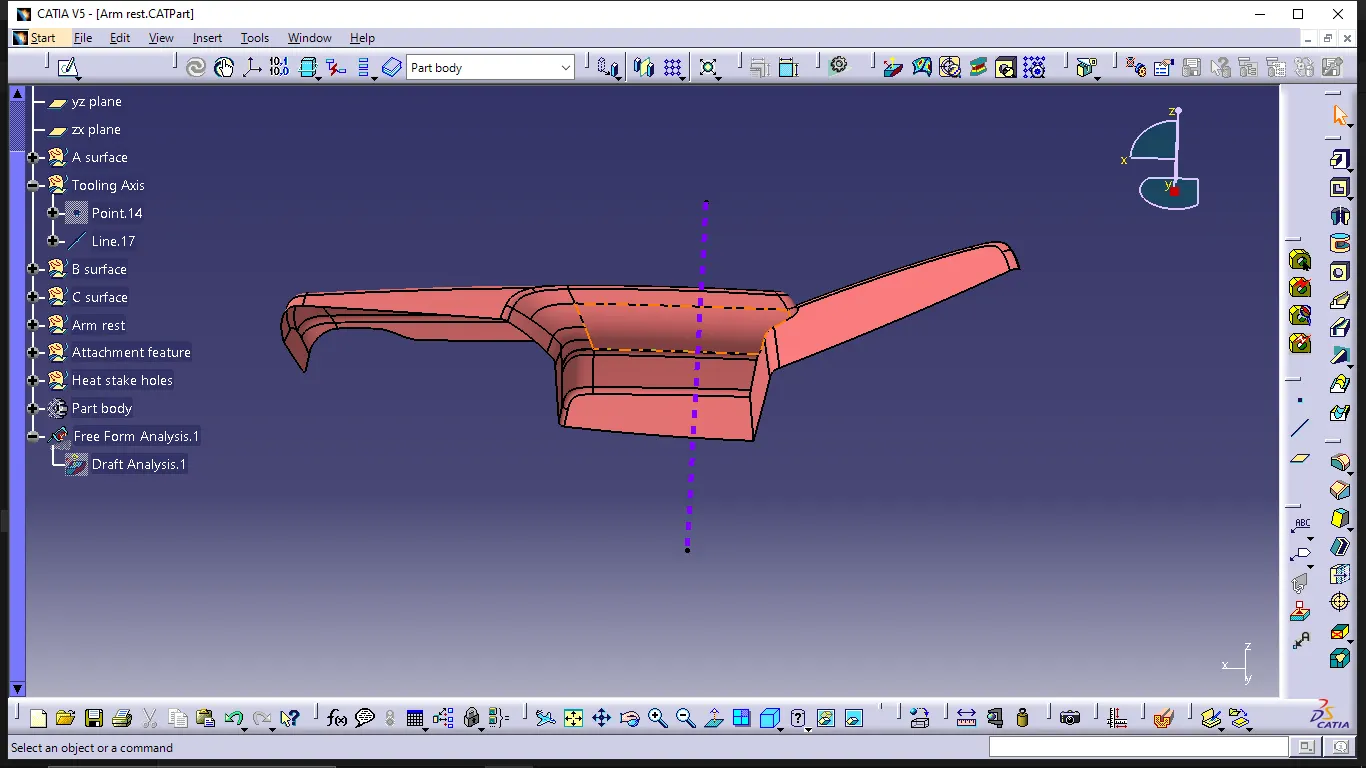
Tooling axis needs to be created by using of A surface by using intersection lines by bisecting method.
Draft Analysis of Class A surface:
Draft angle – 3deg.
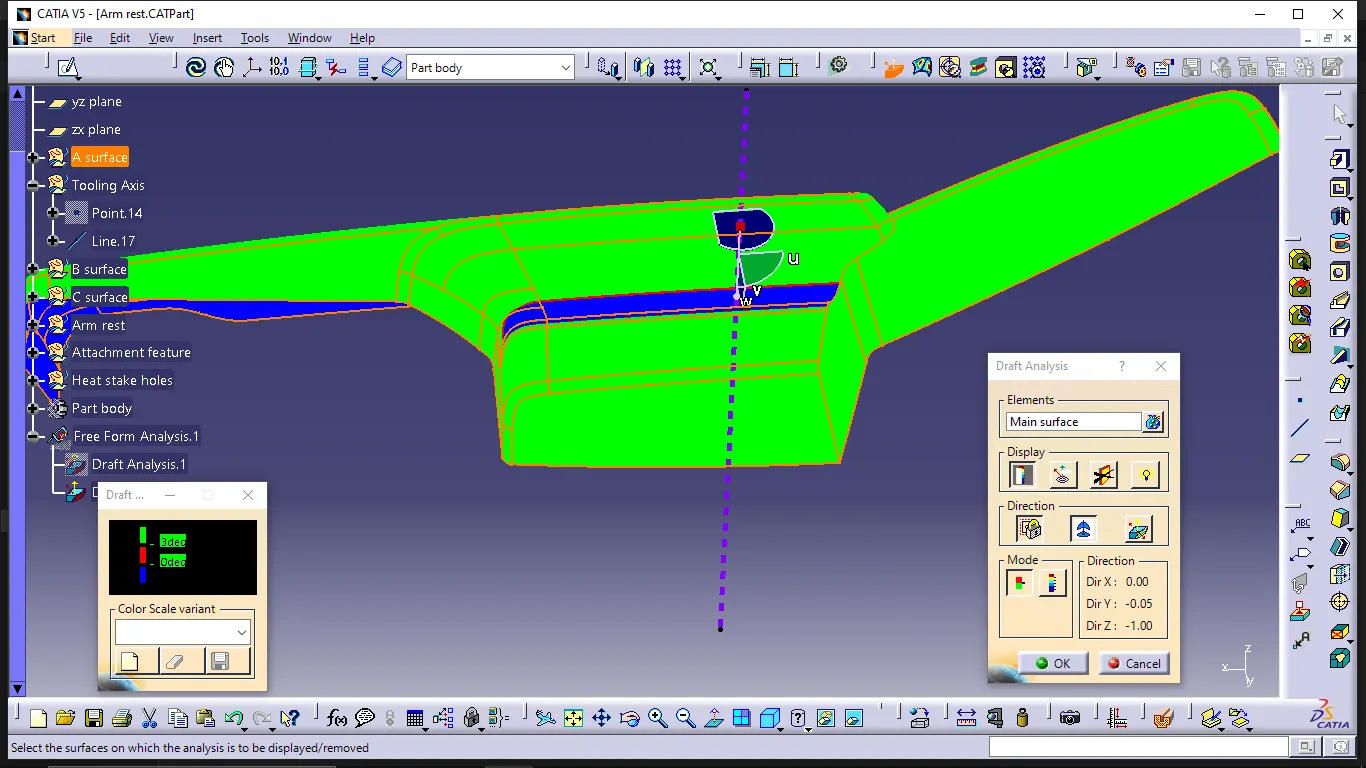
Class B surface:
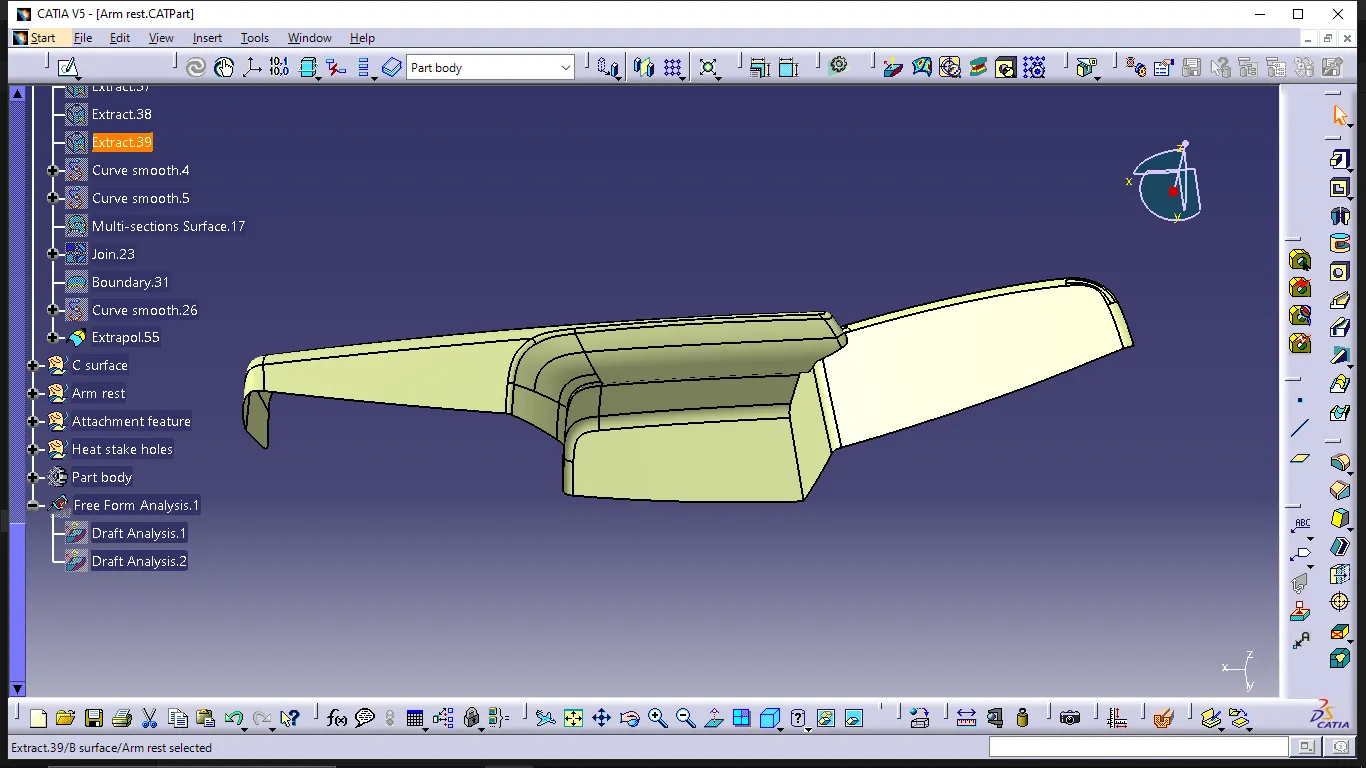
This picture shows a class B surface. This was created by extract and offset the A surface and splitting the extract surface. Finally extrapolate the component for making closed sheet to make solid.
Class C surface:
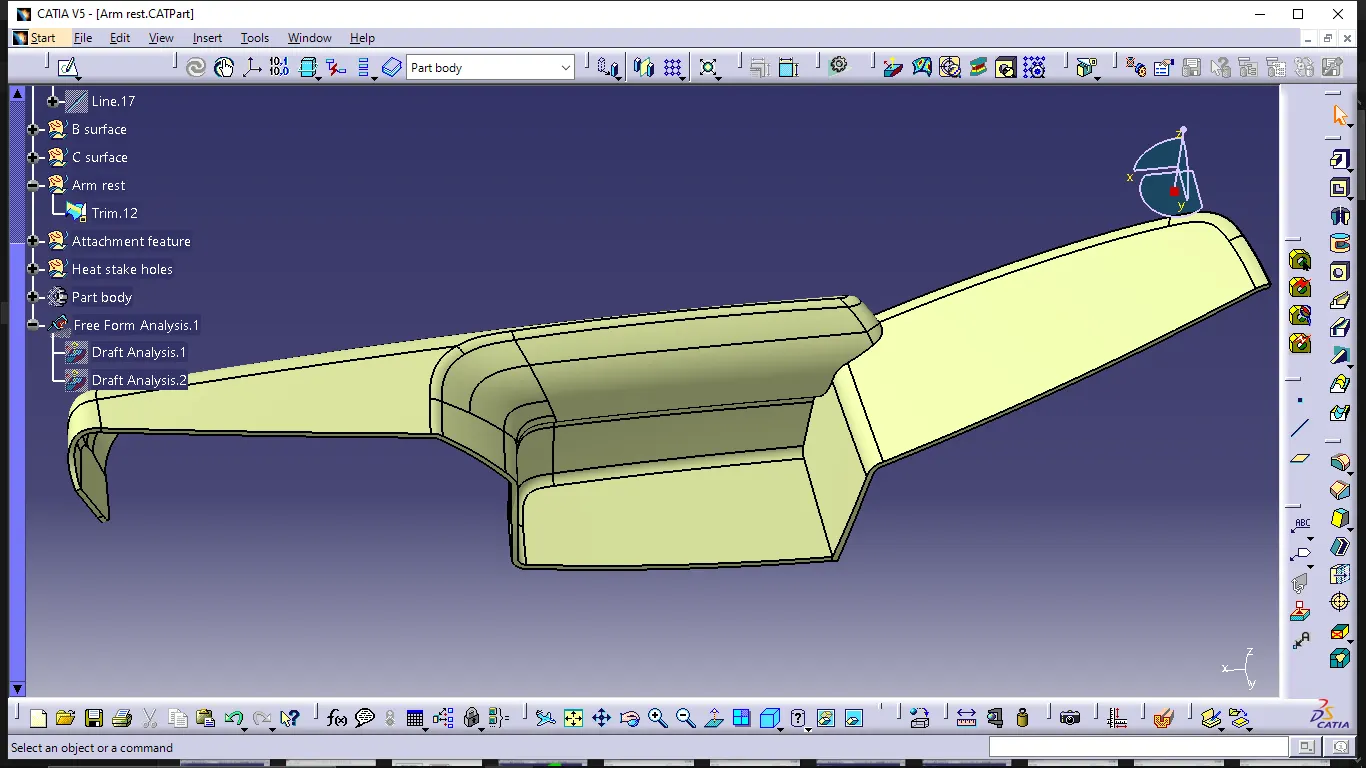
This picture shows the class C surface. This was created by use of creating sweep from A surface and trim with the B surface.
Solid Arm rest Component:
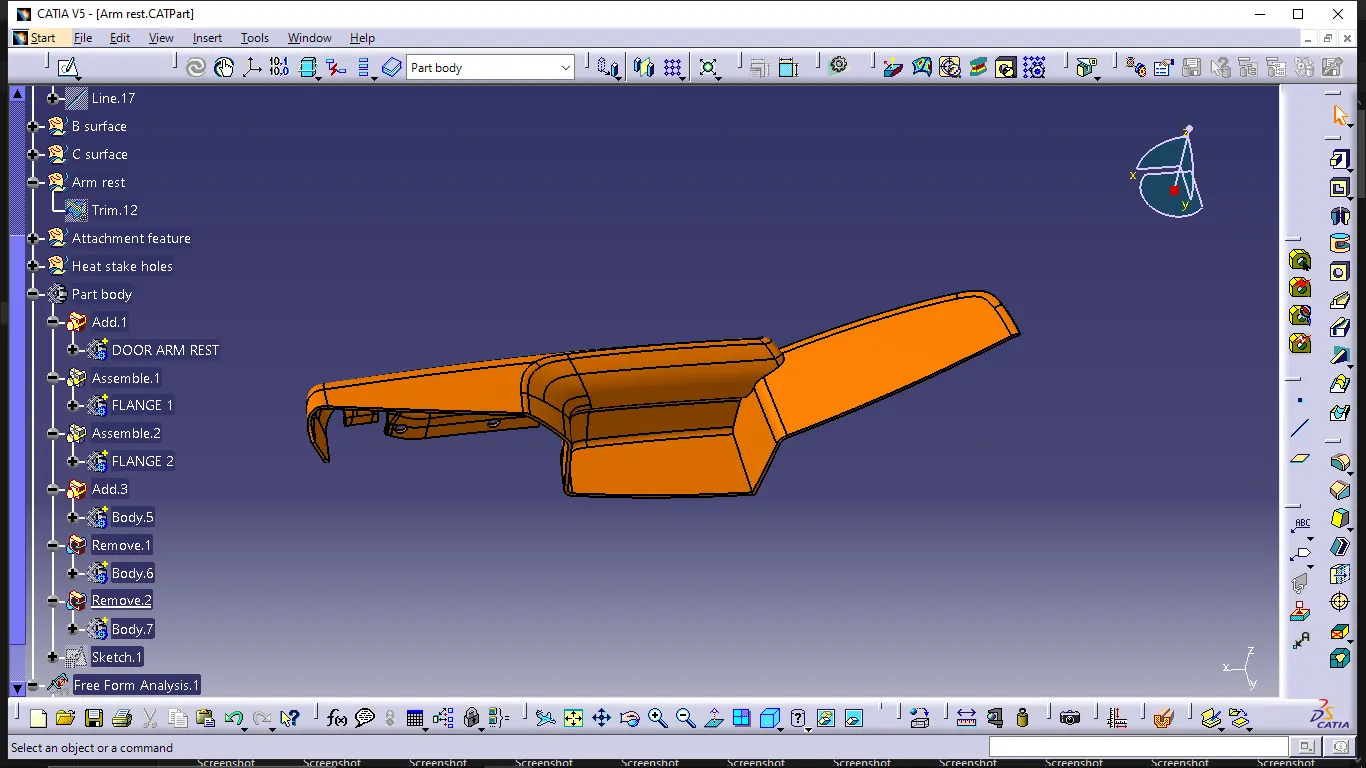
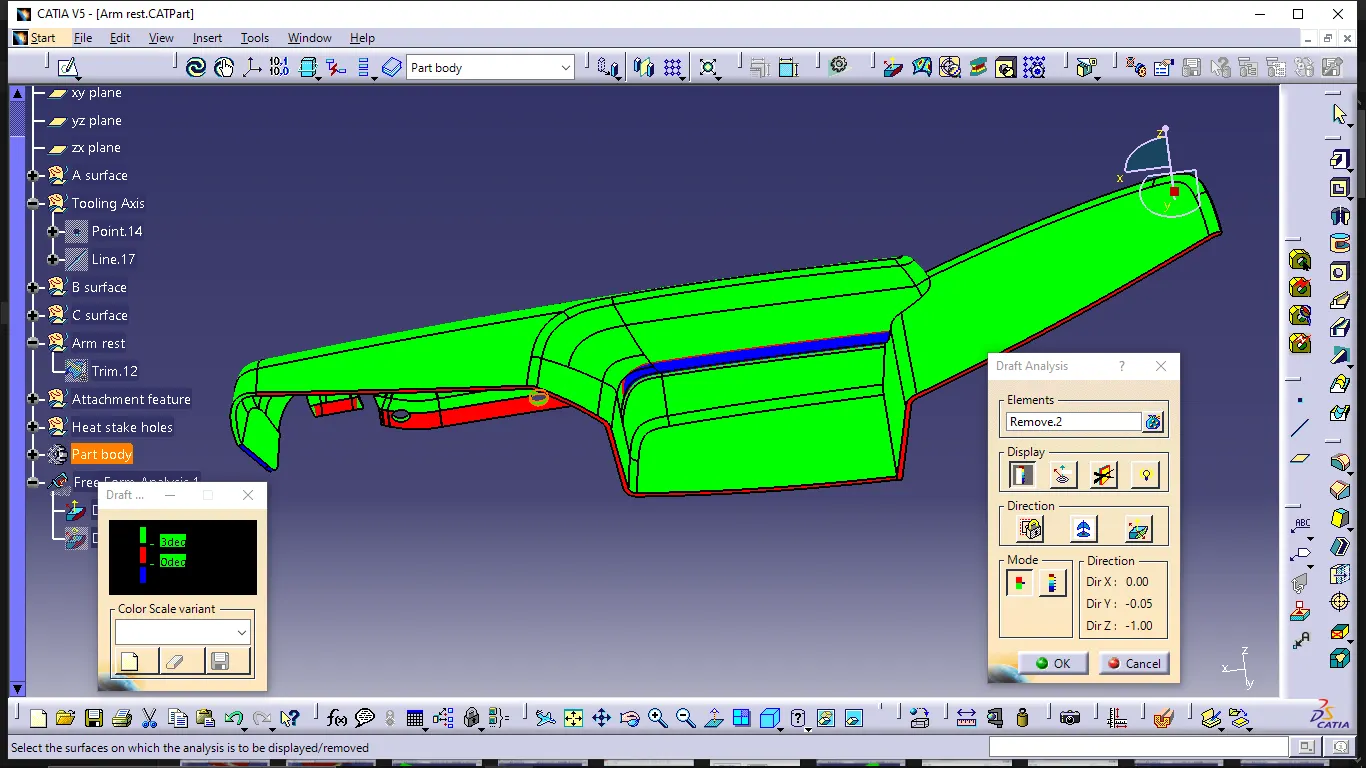
Draft analysis of an Arm rest:
2.Bottle holder:
Objectives:
· Create a tooling axis by using intersection lines.
· Creation of class B surface by using extract and offset.
· Creation of class C surface by creating sweep from A surface and extrapolate from B surface.
· Creating a solid part by using of close surface.
· Draft analysis of Bottle holder A surface and solid component
Introduction:
A Bottle holder is one of the part of an automotive door which is used to hold the water bottle. Every plastic components have a A,B,C surface. A surface is the basic surface. By using the A surface only, we can design the plastic components. B,C surface creating only by using of A surface. Tooling axis is very important to design a component. For draft tooling axis is essential. For C surface creation from B surface the sweep created by use of tooling axis.
Parameters:
Thickness of component - 2.5mm
Draft angle of component – 3o
Class A surface:
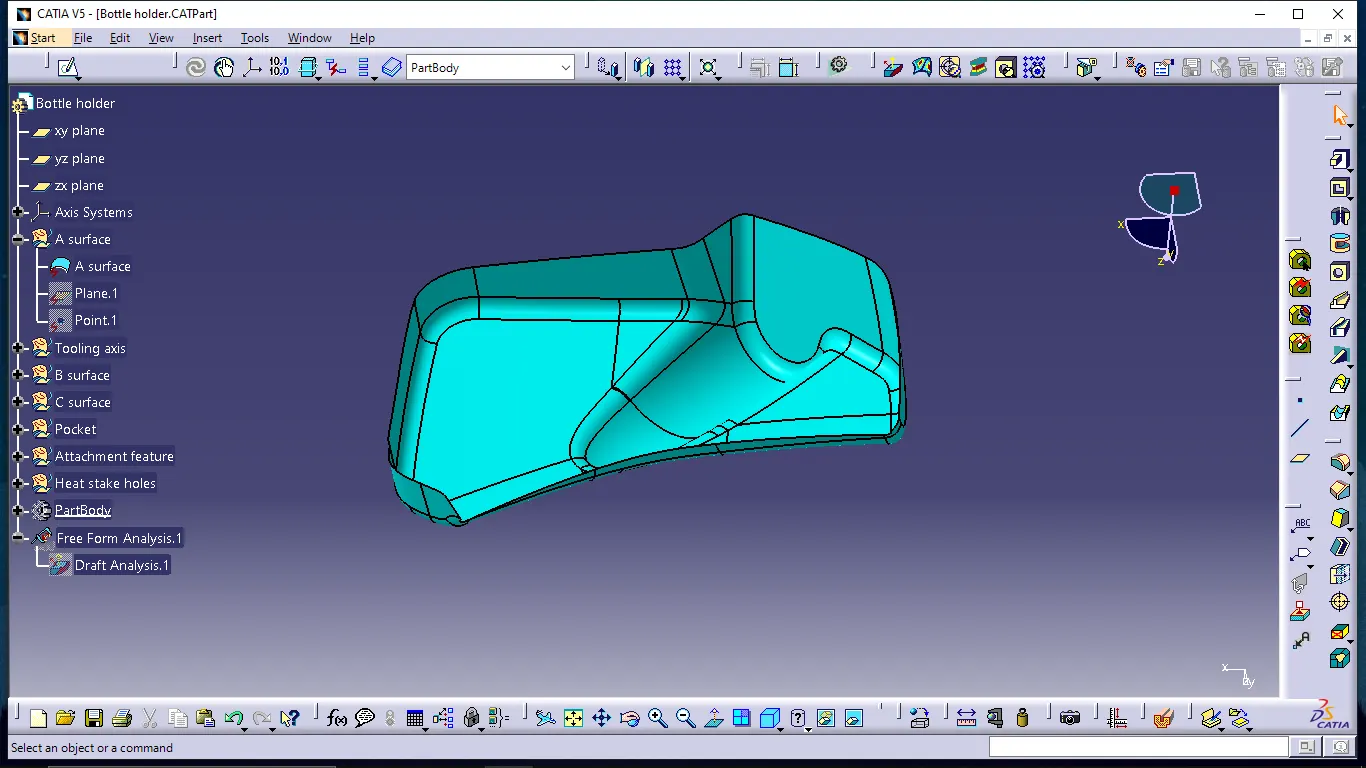
This picture shows the class A surface. First, we need to check the boundary. If it is not okay, then A surface needs to be modified.
Tooling Axis:
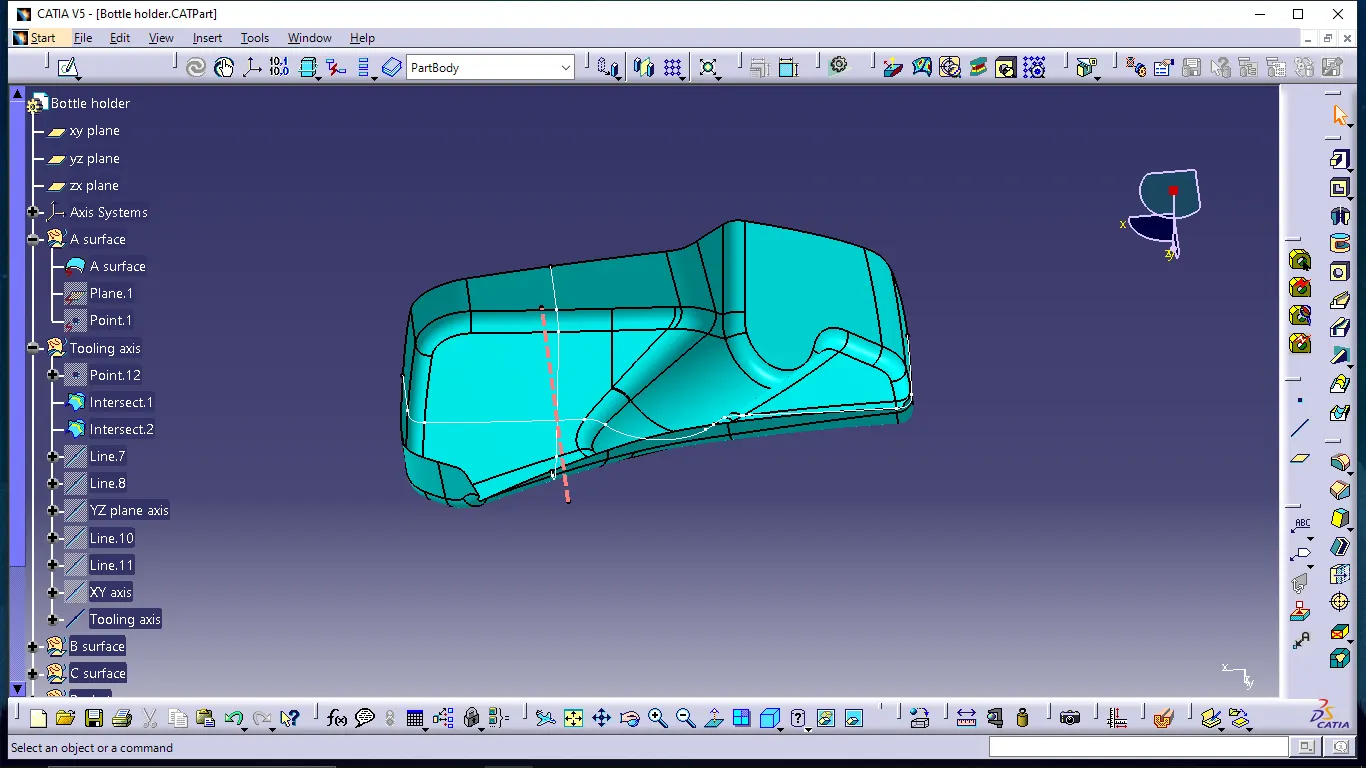
Tooling axis needs to be created by using of A surface by using intersection lines by bisecting method.
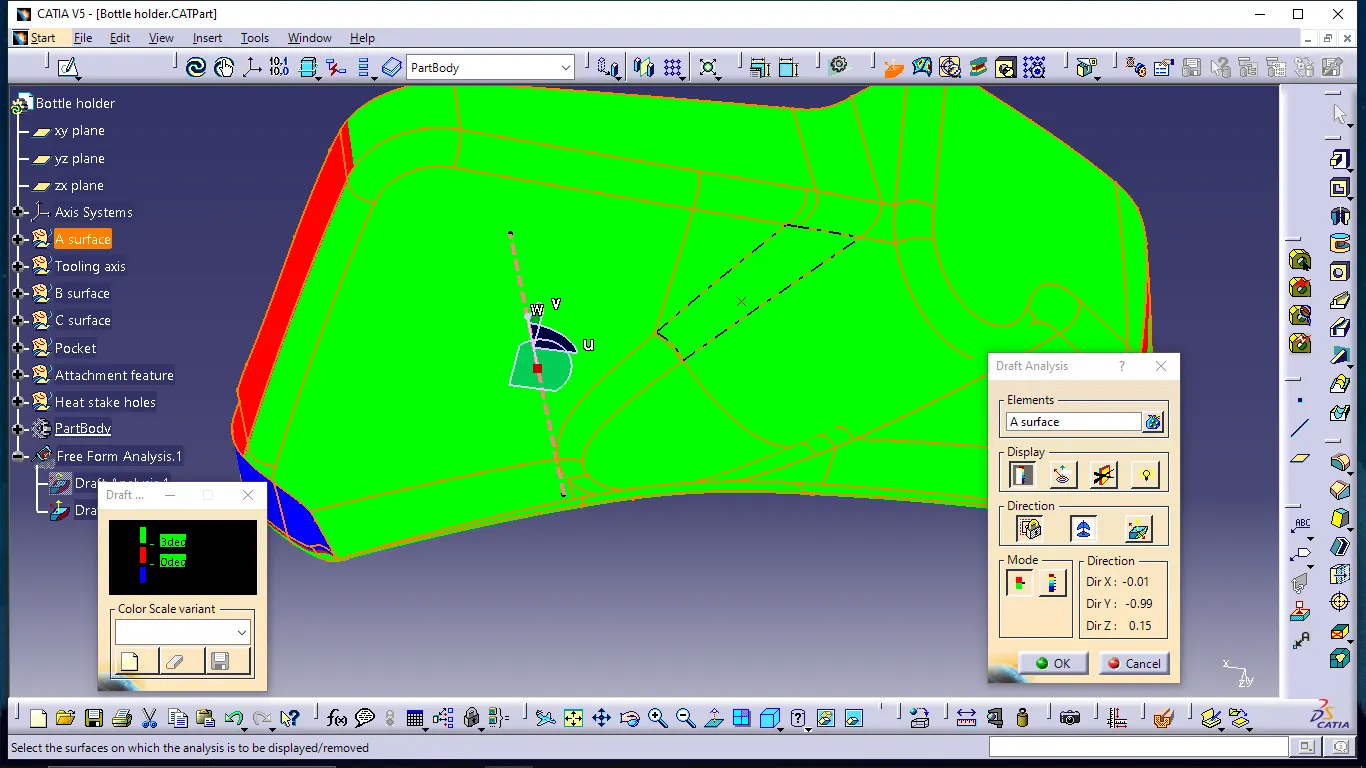
Draft Analysis of Class A surface:
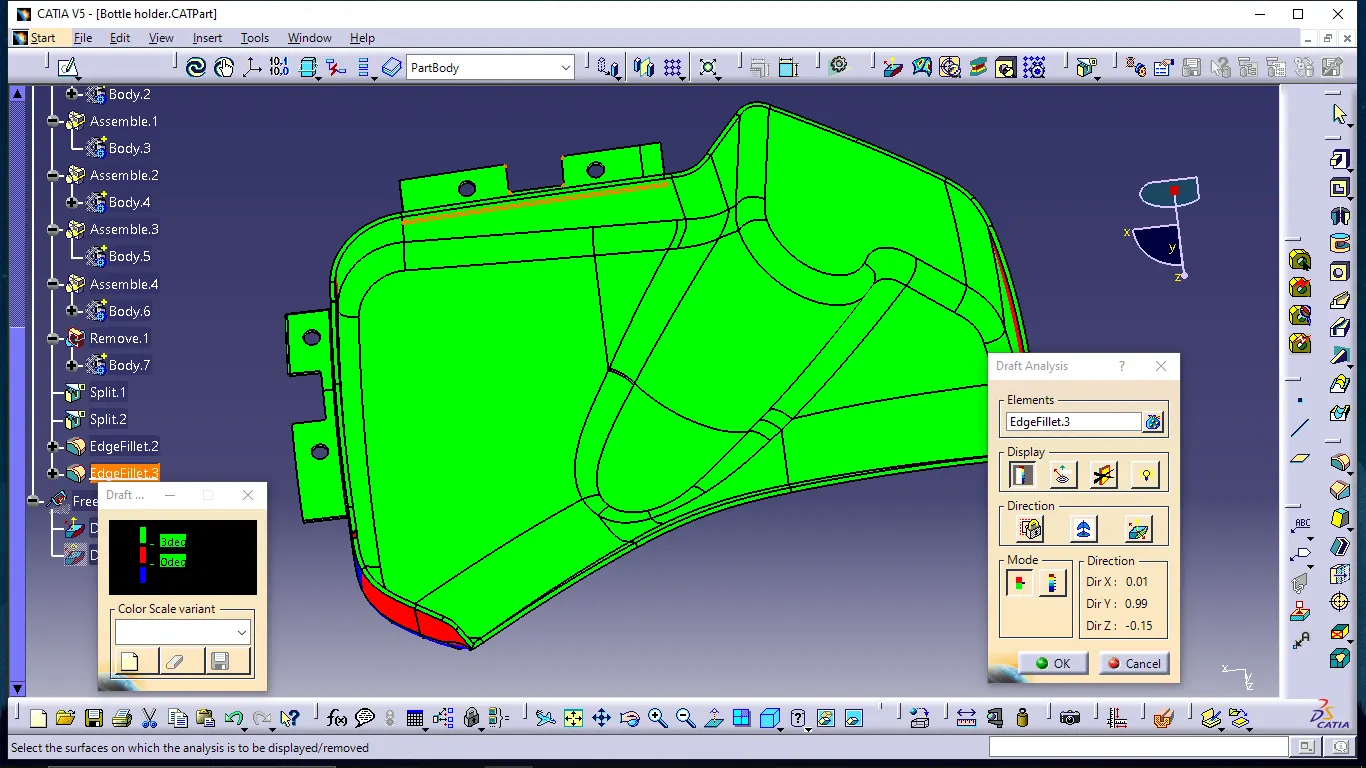
Draft angle – 3deg.
Class B surface:
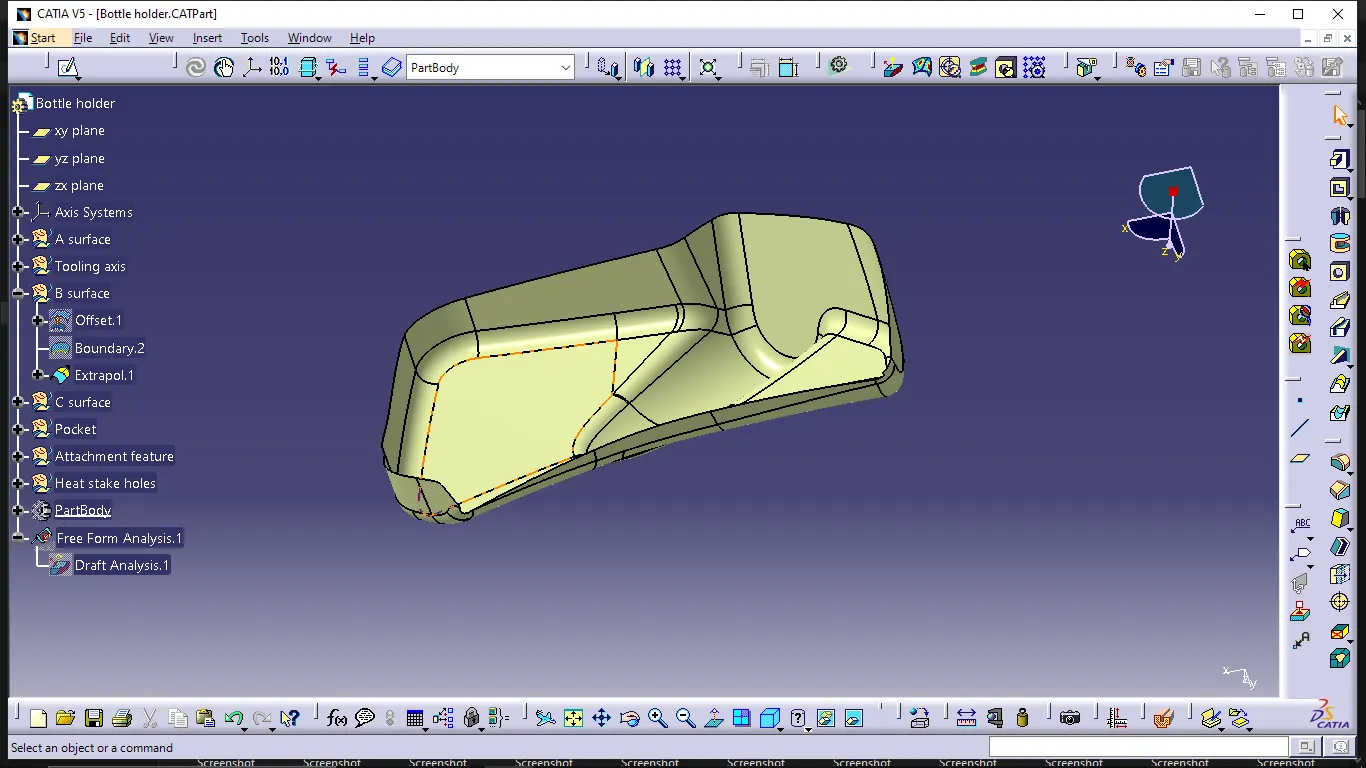
This picture shows a class B surface. This was created by extract and offset the A surface and splitting the extract surface. Finally extrapolate the component for making closed sheet to make solid.
Class C surface:
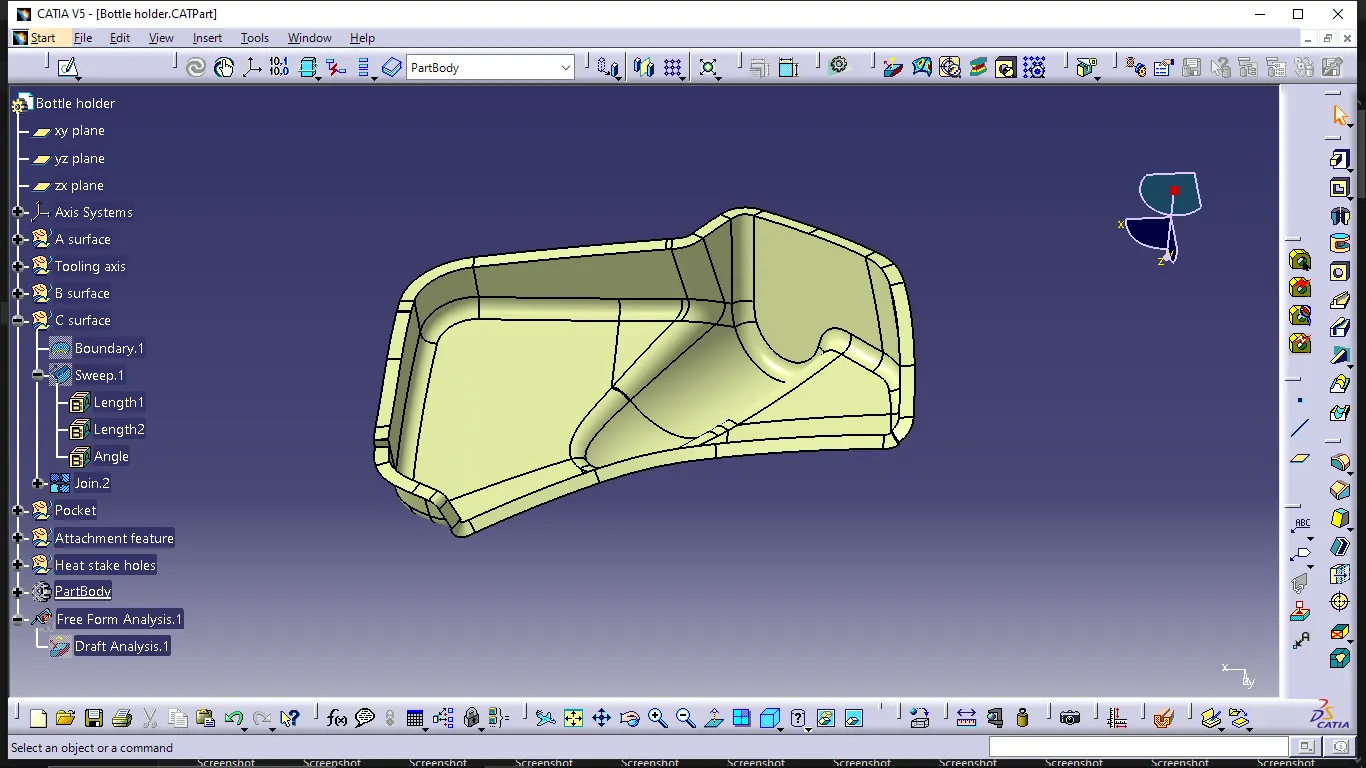
This picture shows the class C surface. This was created by use of creating sweep from A surface and trim with the B surface.
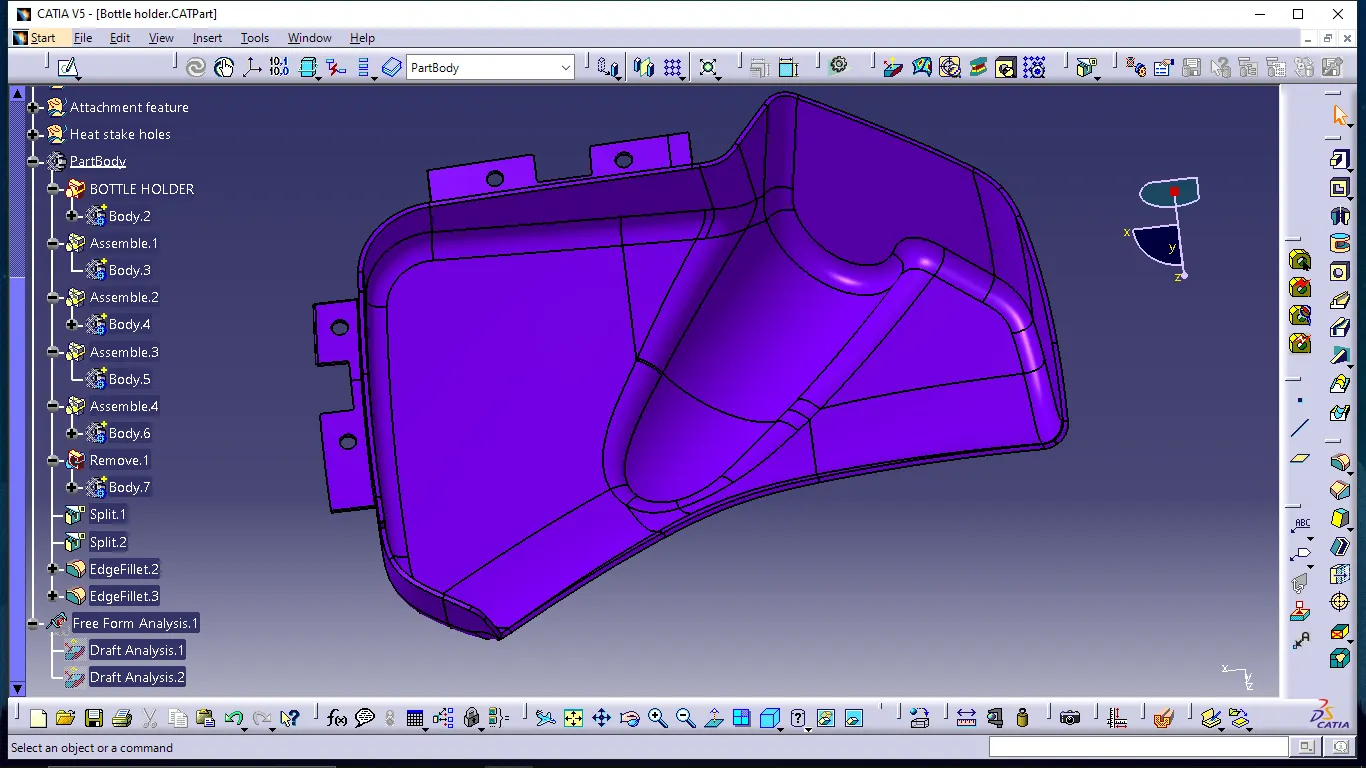
Solid Bottle holder Component:
Draft analysis of a Bottle holder:
3.Map pocket:
Objectives:
· Create a tooling axis by using intersection lines.
· Creation of class B surface by using extract and offset.
· Creation of class C surface by creating sweep from A surface and extrapolate from B surface.
· Creating a solid part by using of close surface.
· Draft analysis of Map pocket A surface and solid component
Introduction:
A Map pocket is one part of an automotive door which is used to keep any documents, papers, etc., Every plastic components have a A,B,C surface. A surface is the basic surface. By using the A surface only, we can design the plastic components. B,C surface creating only by using of A surface. Tooling axis is very important to design a component. For draft tooling axis is essential. For C surface creation from B surface the sweep created by use of tooling axis.
Parameters:
Thickness of component - 2.5mm
Draft angle of component – 3o
Class A surface:
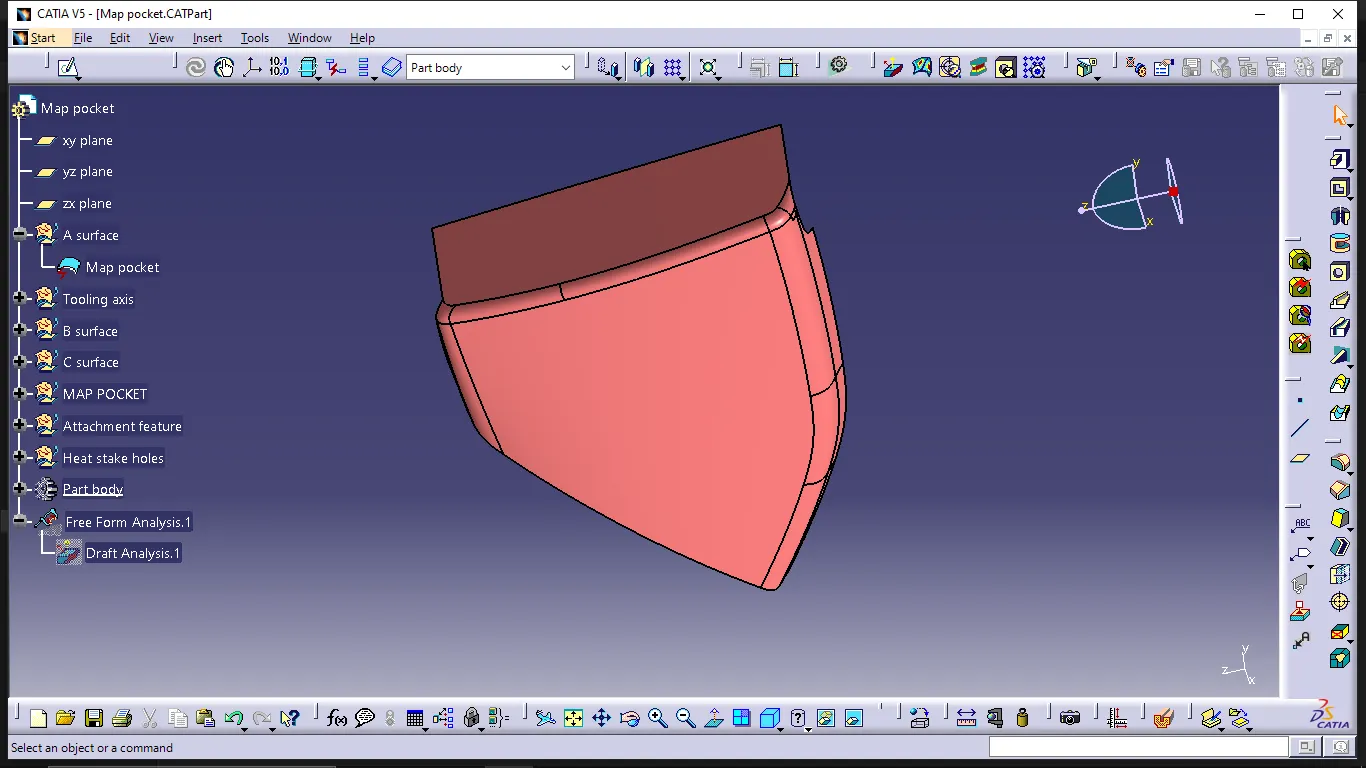
This picture shows the class A surface. First, we need to check the boundary. If it is not okay, then A surface needs to be modified.
Tooling Axis:
Tooling axis needs to be created by using of A surface by using intersection lines by bisecting method.
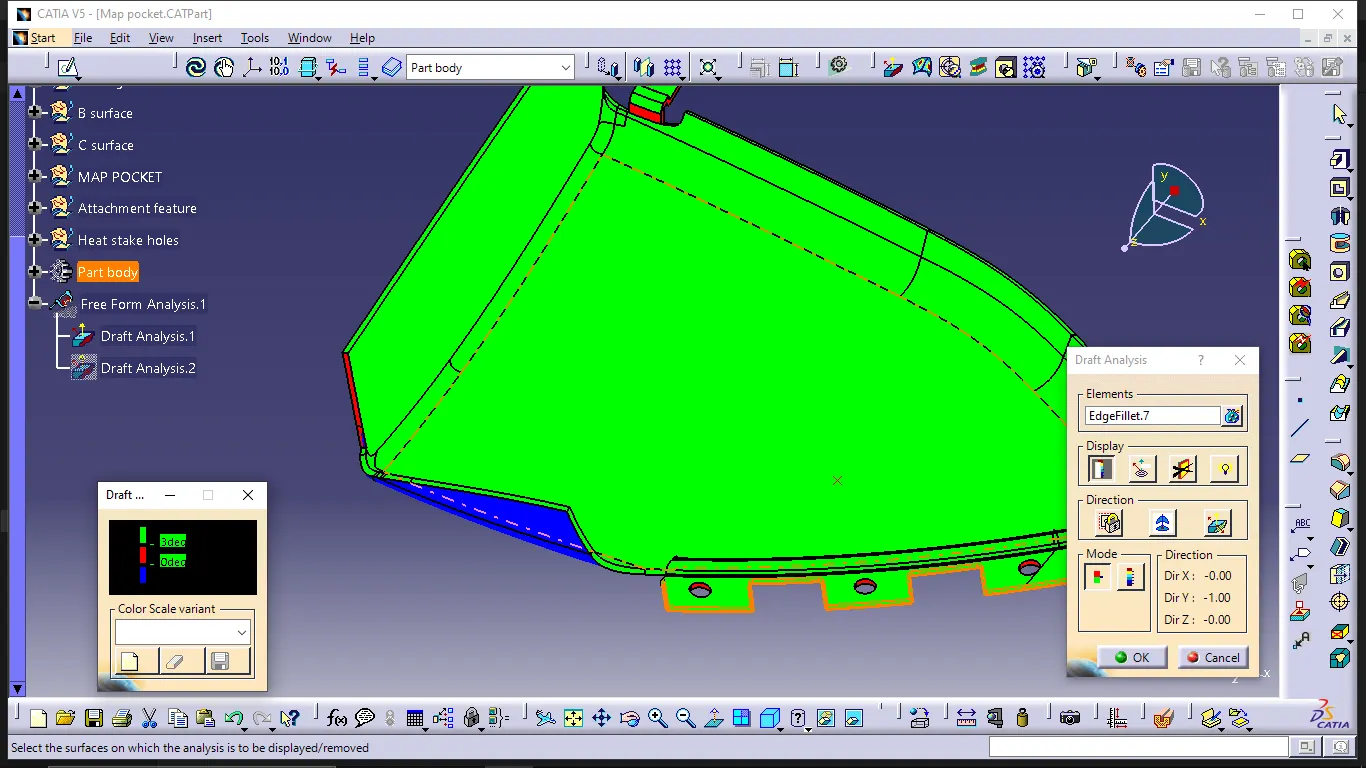
Draft Analysis of Class A surface:
Draft angle – 3deg.
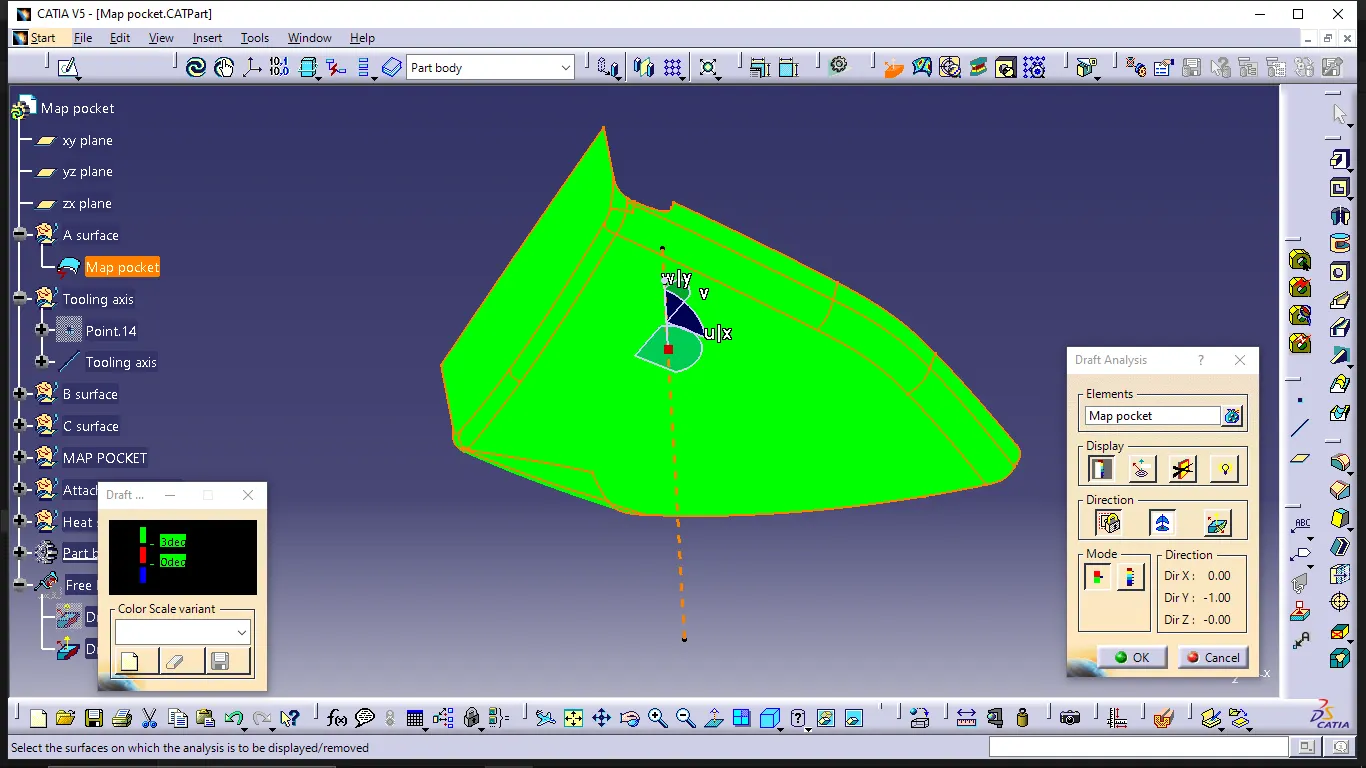
Class B surface:
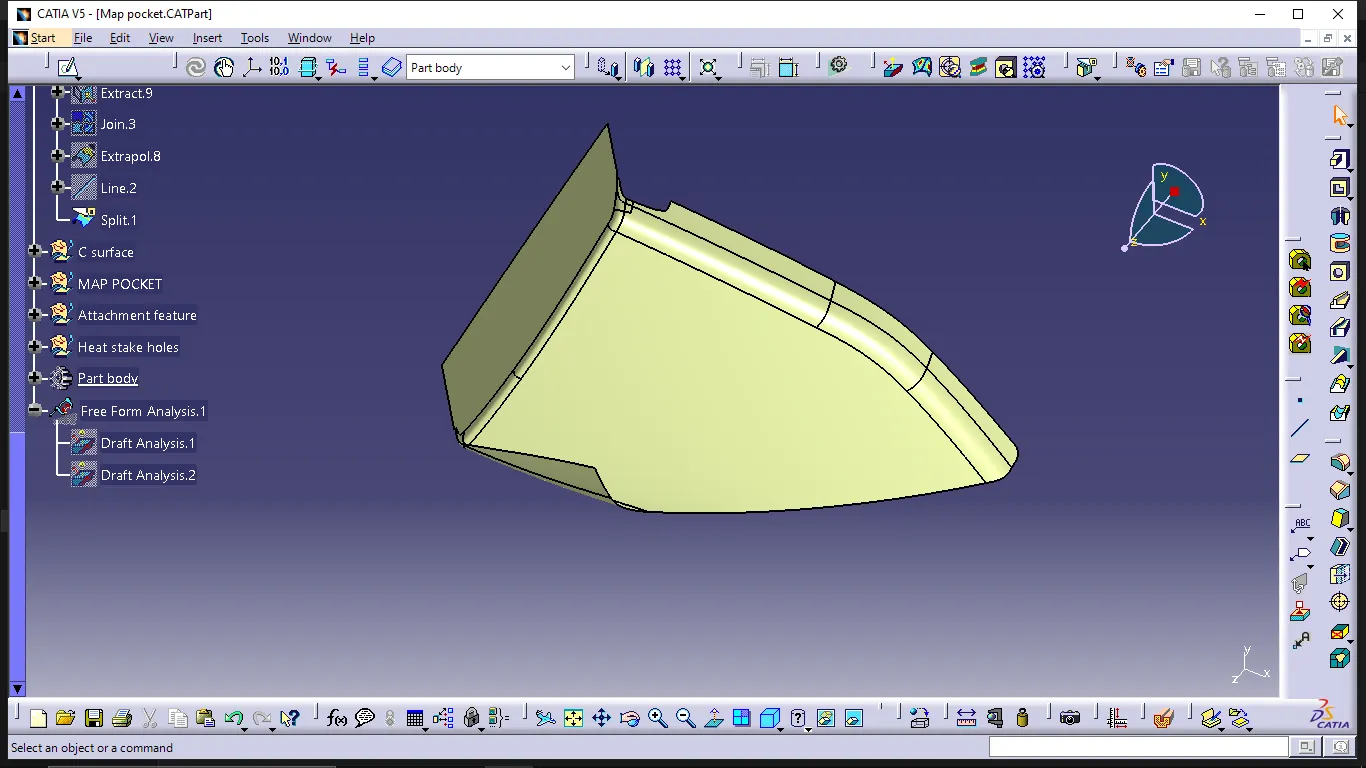
This picture shows a class B surface. This was created by extract and offset the A surface and splitting the extract surface. Finally extrapolate the component for making closed sheet to make solid.
Class C surface:
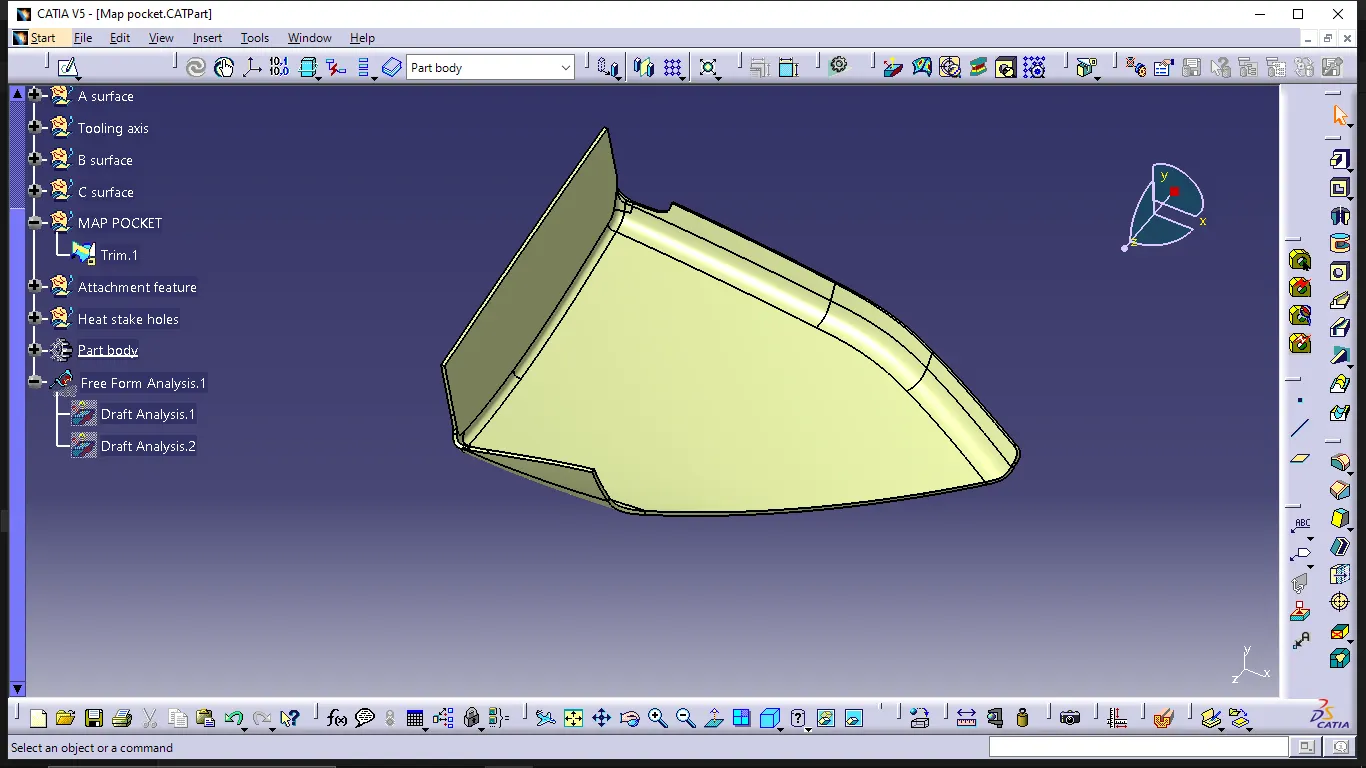
This picture shows the class C surface. This was created by use of creating sweep from A surface and trim with the B surface.
Solid Map pocket Component:
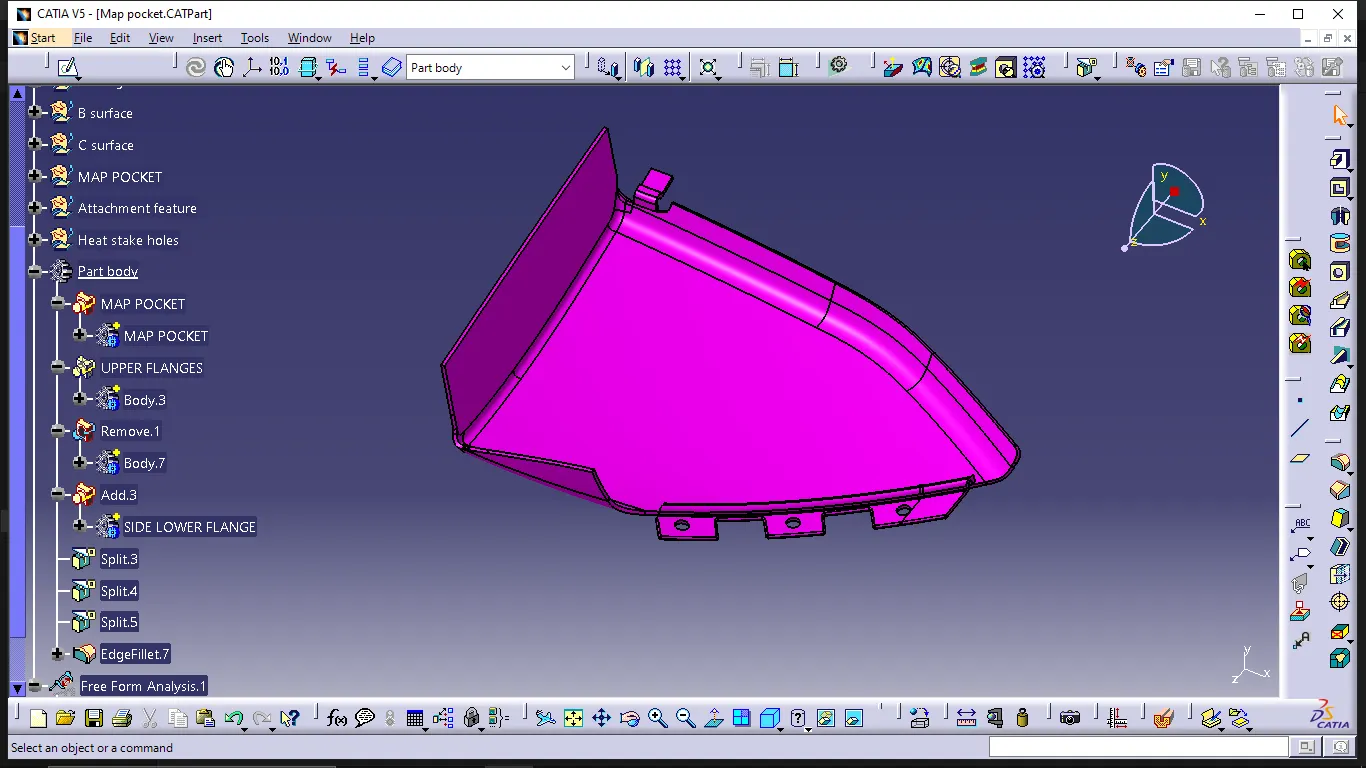
Draft analysis of a Map pocket:
4.Lower substrate:
Objectives:
· Create a tooling axis by using intersection lines.
· Creation of class B surface by using extract and offset.
· Creation of class C surface by creating sweep from A surface and extrapolate from B surface.
· Creating a solid part by using of close surface.
· Creation of dog houses and heat stakes.
· Draft analysis of Lower substrate A surface and solid component
Introduction:
A Lower substrate is one of the part of an automotive door. Every plastic components have a A,B,C surface. A surface is the basic surface. By using the A surface only, we can design the plastic components. B,C surface creating only by using of A surface. Tooling axis is very important to design a component. For draft tooling axis is essential. For C surface creation from B surface the sweep created by use of tooling axis.
Parameters:
Thickness of component - 2.5mm
Draft angle of component – 3o
Class A surface:
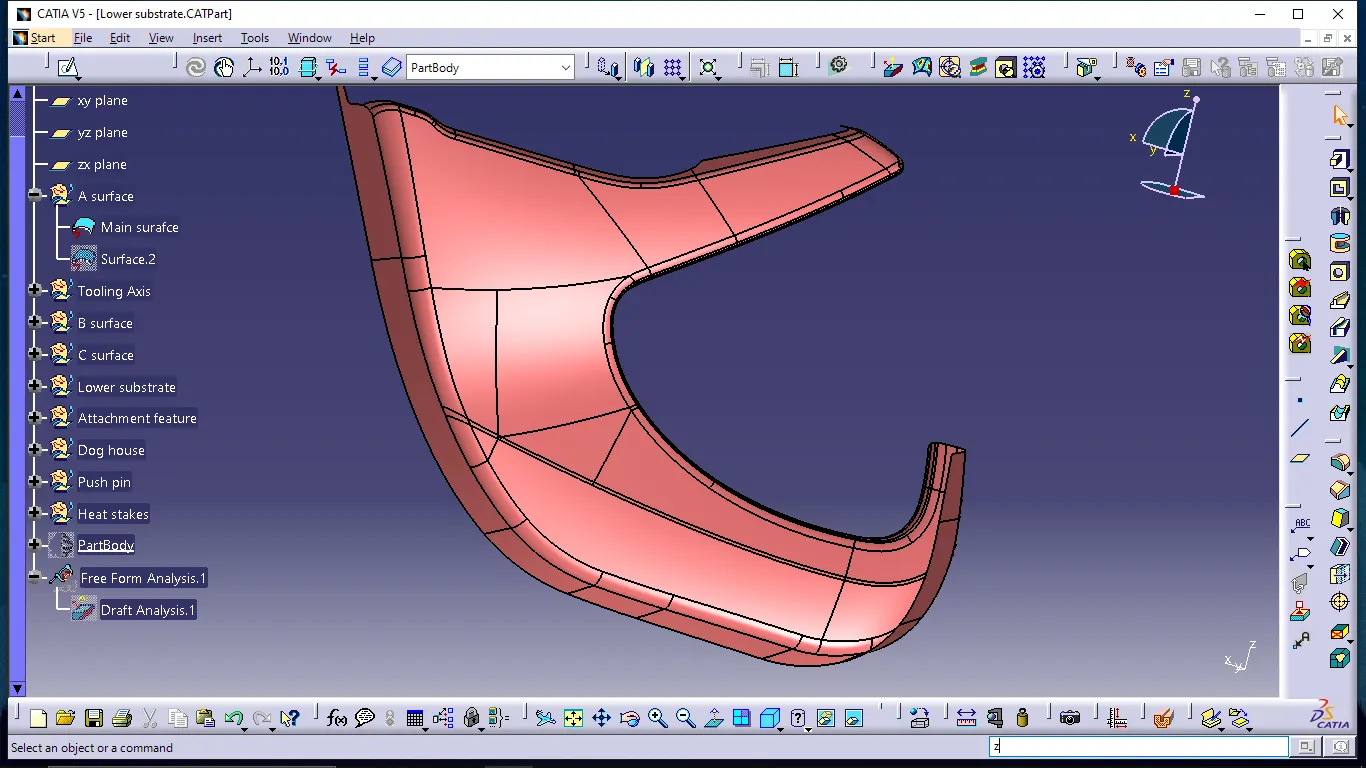
This picture shows the class A surface. First, we need to check the boundary. If it is not okay, then A surface needs to be modified.
Tooling Axis:
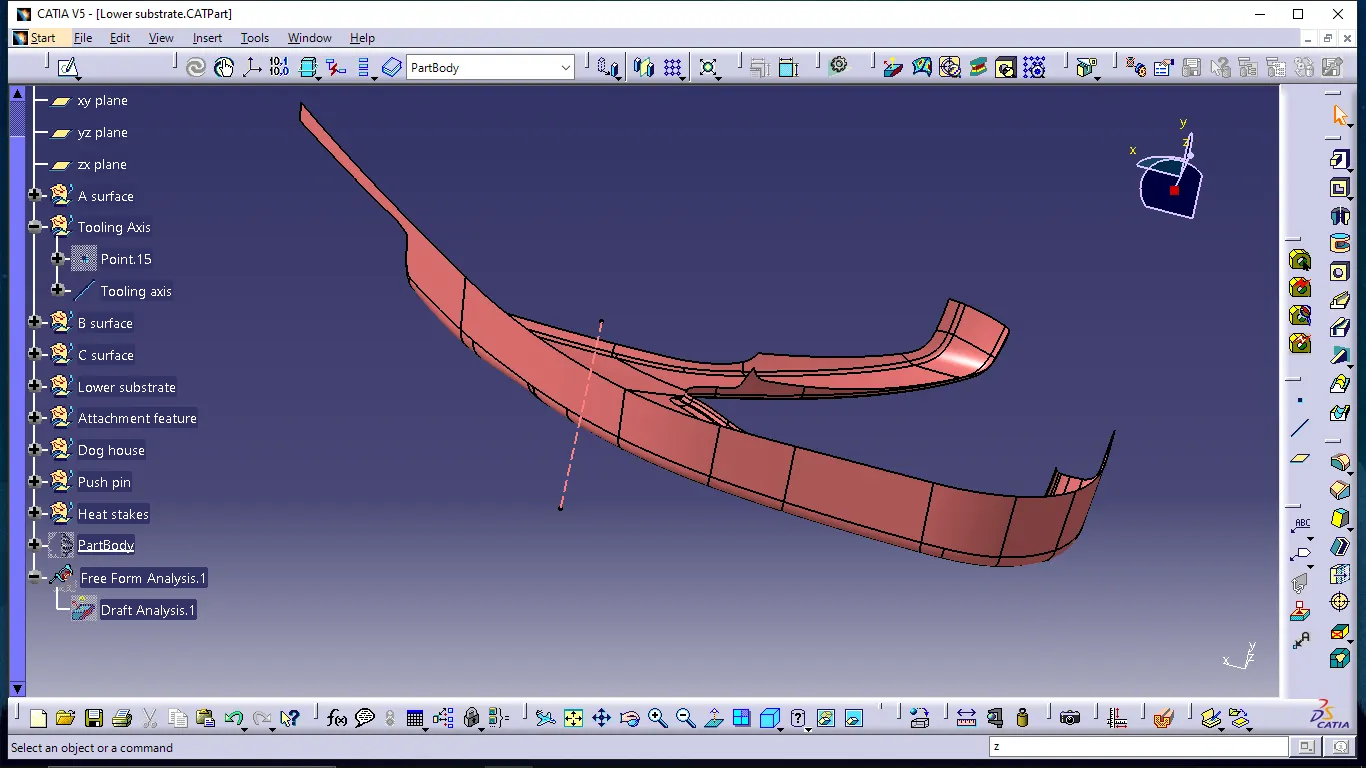
Tooling axis needs to be created by using of A surface by using intersection lines by bisecting method.
Draft Analysis of Class A surface:
Draft angle – 3deg.
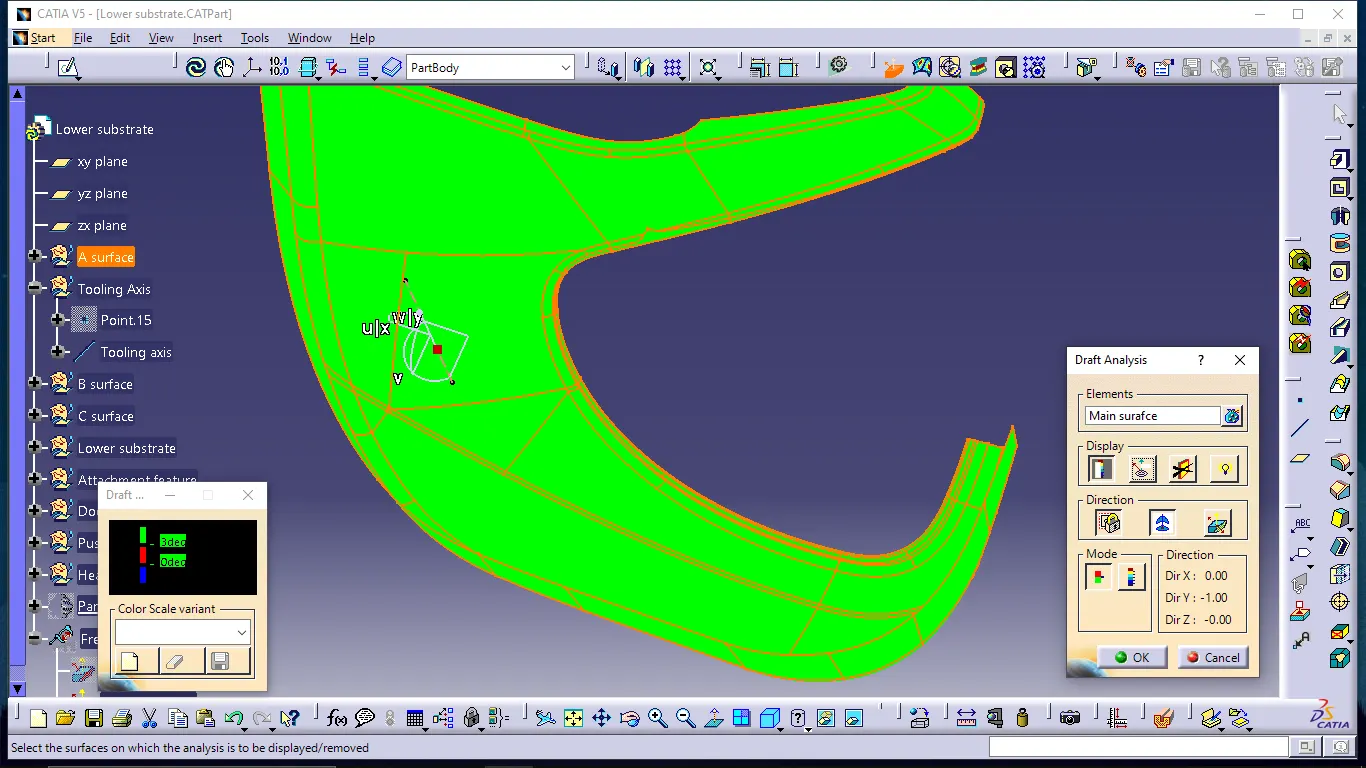
Class B surface:
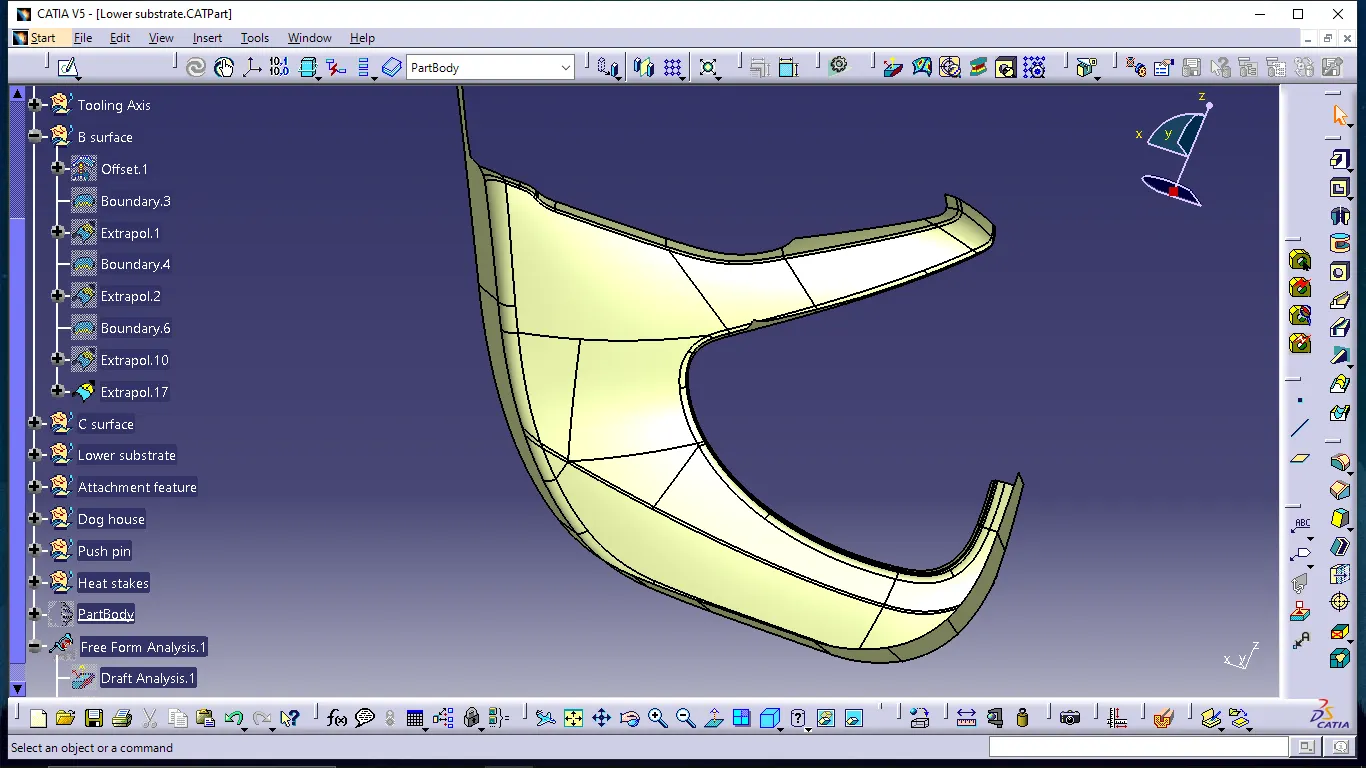
This picture shows a class B surface. This was created by extract and offset the A surface and splitting the extract surface. Finally extrapolate the component for making closed sheet to make solid.
Class C surface:
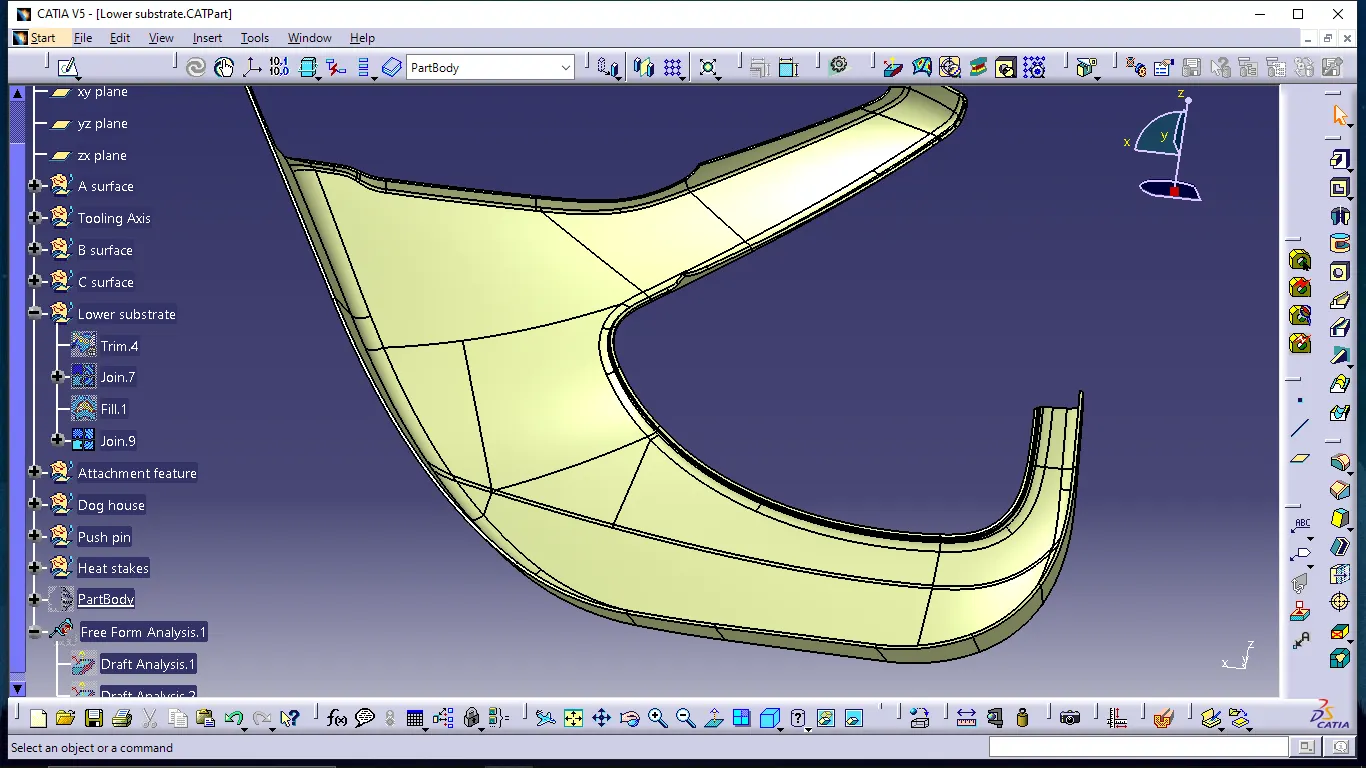
This picture shows the class C surface. This was created by use of creating sweep from A surface and trim with the B surface.
Solid Lower substrate Component:
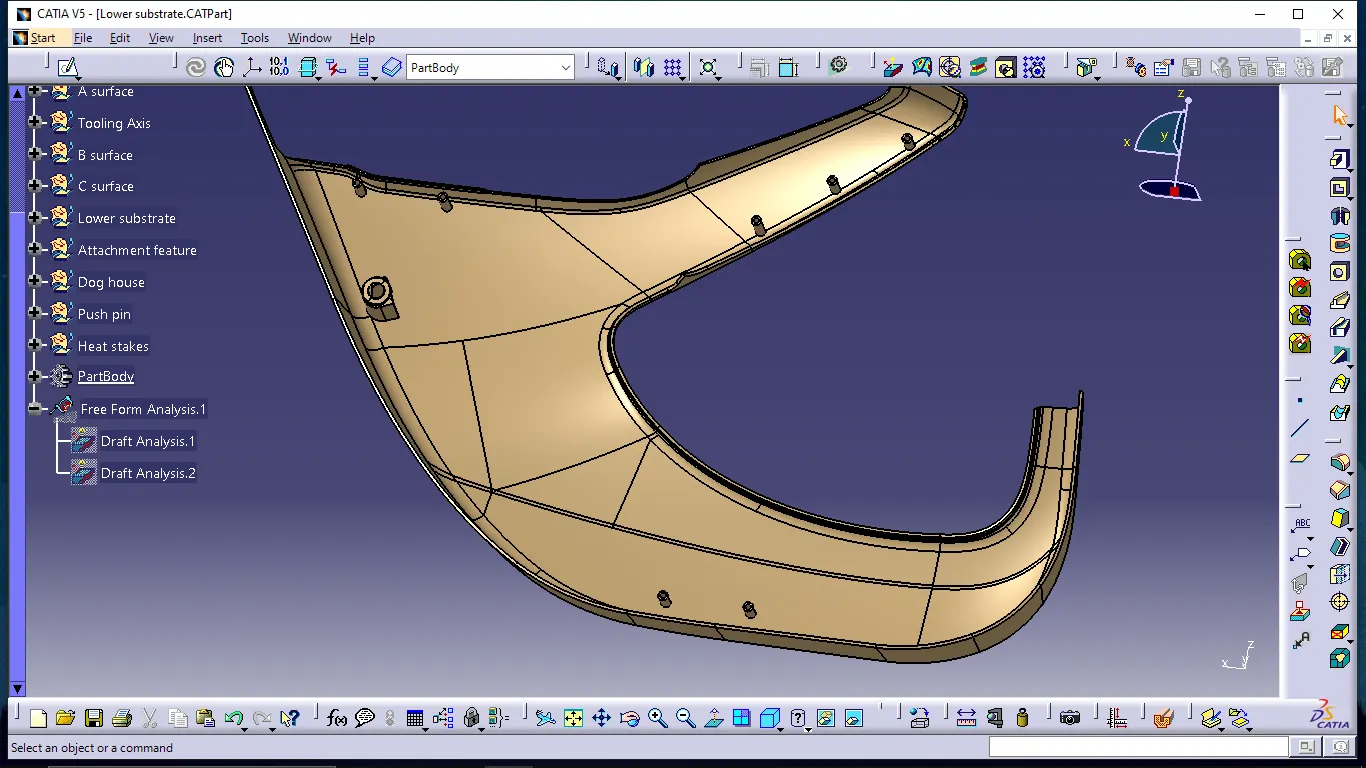
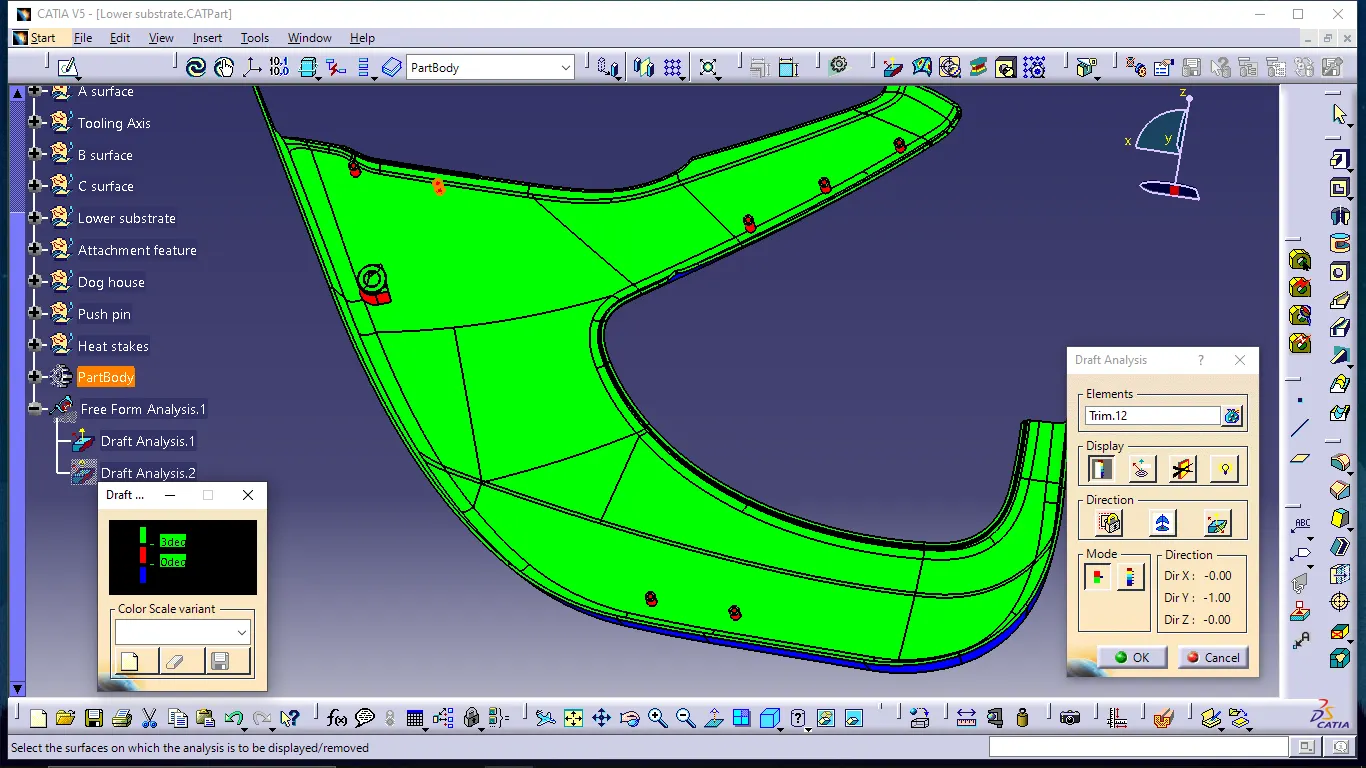
Draft analysis of a Lower substrate:
5.Assembly
Heat stake:
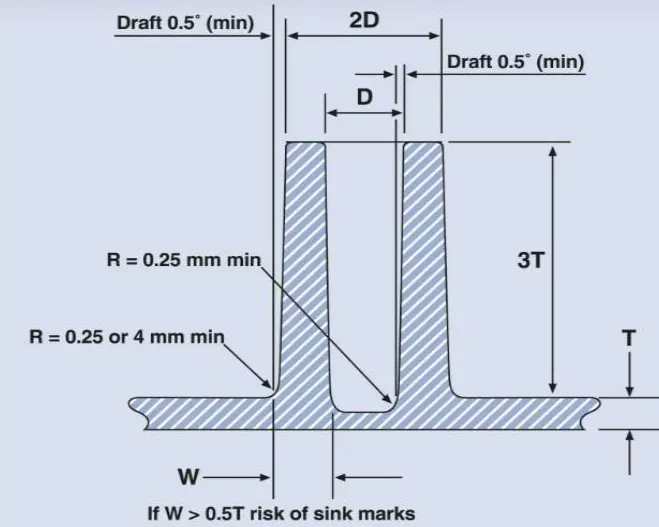
Heat staking also known as thermoplastic staking is the process of joining two dissimilar materials together. In heat staking we use local heating and cooling to raise the temperature of plastic components and allow plastic reforming to be carried out. This reforming can be used in a wide variety of applications.
Dog house:
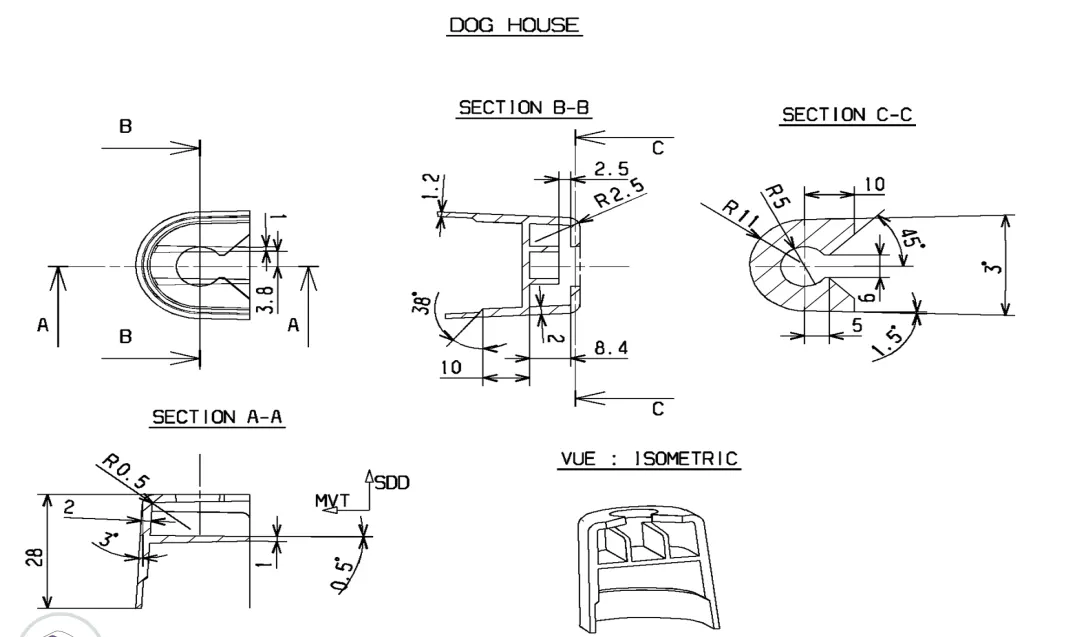
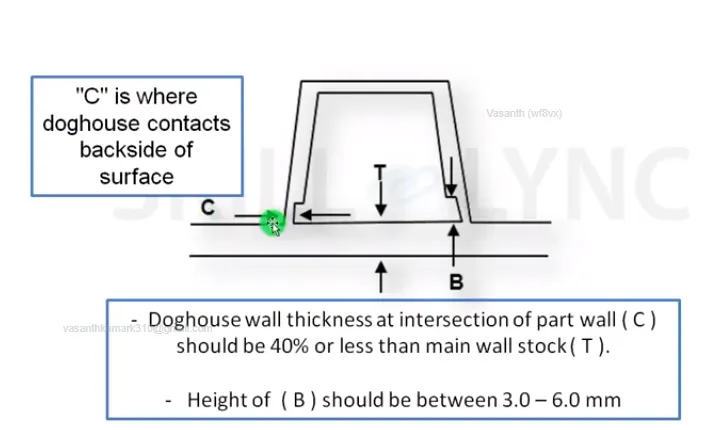
Doghouse is an engineering element used in the creation of plastic trim. Dog kennels are a supporting element. To increase their strength, other engineering features like snaps, locators, etc.,
Push pin:
Push pin pliers are a type of automotive pliers with a unique set of jaws for getting under the center pin of a push clip to grab and pull it off and unlock the rivet. Push clip pliers come in different styles and shapes but they all work the same way.
Door panel assembly: