week-11 Joint creation and Demonstration
AIM:
To create the various type of joints with reference to the LS Dyna user Manual. The type of joints that are demonstrated with the help pf manual are
1. Revolute Joints
2. Spherical Joints
3. Cylindrical Joints
4. Transational Joints.
EXPLANATION:
JOINTS:
- A Joint is a pair of two elements which permit relative motion, when any two links or elements are connected in such a way that their relative motion is completely constrained forming a kinematic pair.
- Higher pairs (Cam and Follower) of Kinematic pairs are those which has a pair in motion that represents a line or point contact between two elements and Lowest pairs has a pair in motion that has surface contact between the two elements (Sliding and Turning Pairs).
- Sliding pair has two elements sliding in motion releative to each other. E.g. Piston and Cylinder
- When one element is free to roll over from the other element, it forms a rolling pair. E.g. Road roller rolling along the surface
- In Spherical pair, one link is constrained to swivel in or about fixed point. E.g. A ball and a Socket
- when two elements are connected such that one element revolves around the other it forms a turning pair. E.g. Pivot Joint.
REVOLUTE JOINT:
- A Fixed and movable plate has been created by using a 4N Shell entity with the element size of 5mm.
- Thickness of 1.5mm is applied to the elements with the element formulation of 2
- Rigid Material MAT20 is used for both the movable and fixed joints
The values of Density=7.8e-6 kg/mm3 , E= 2.1E5 N/mm2, poisson ratio is 0.3
- In revoulte joint, the part node should be co-incident such that p1 having 1,2 nodes and p2 having 3,4 means the node number 1,3 and 2,4 should be conincident
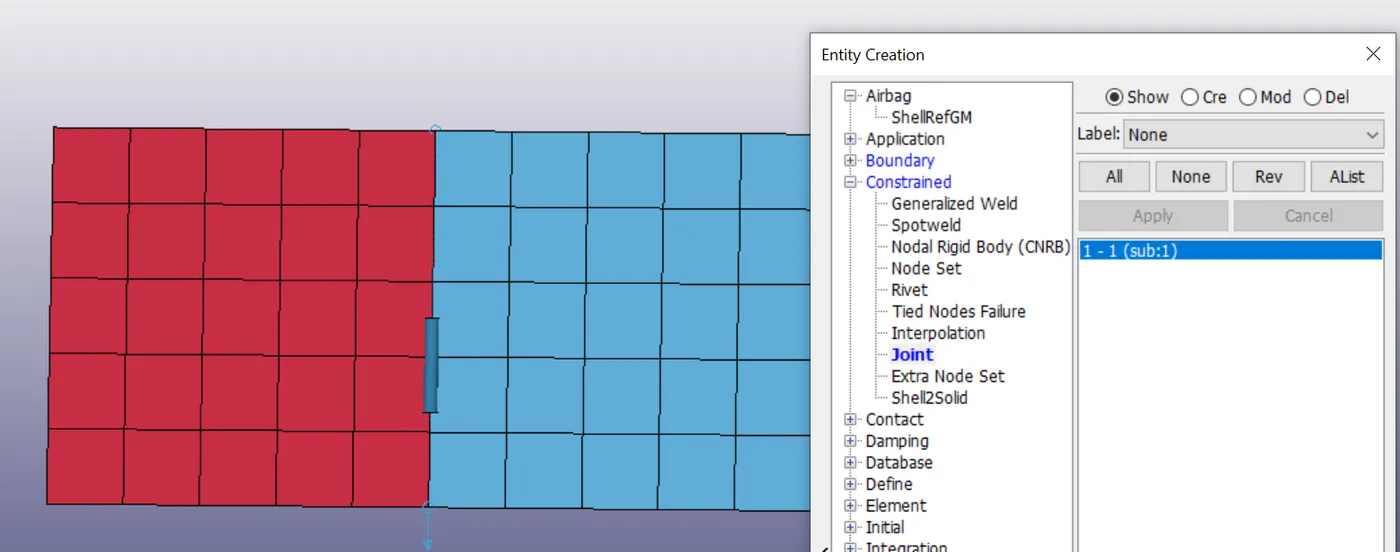
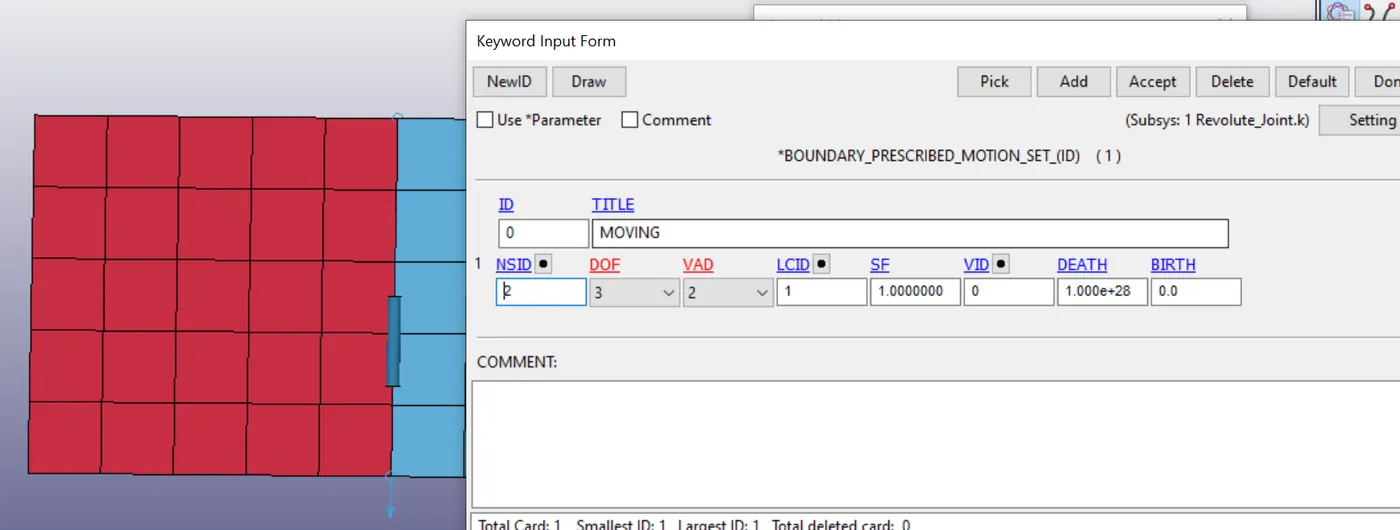
- While creating the boundary, all parts of DOF is completely locked and moving parts id 1DOF translational based on Golbal co-ordinate sysytem, so that the rotation and translation around XYZ is 1
- To define motion, VAD is set around 2 and basic control cards like end time and time steps have been given to run the simulation.
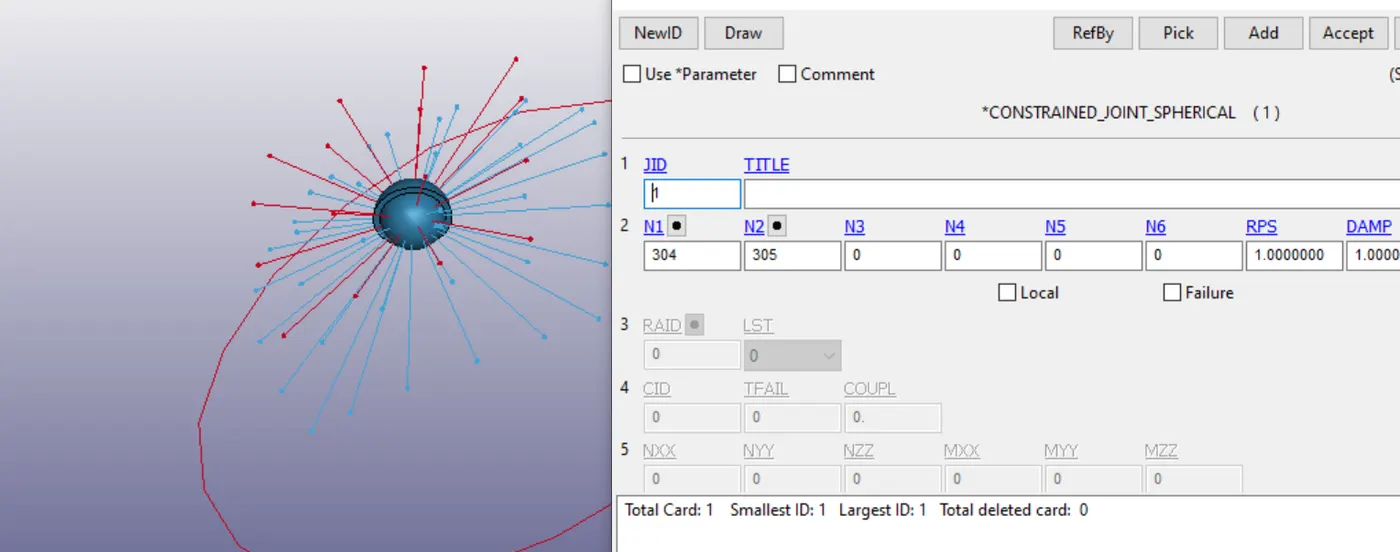
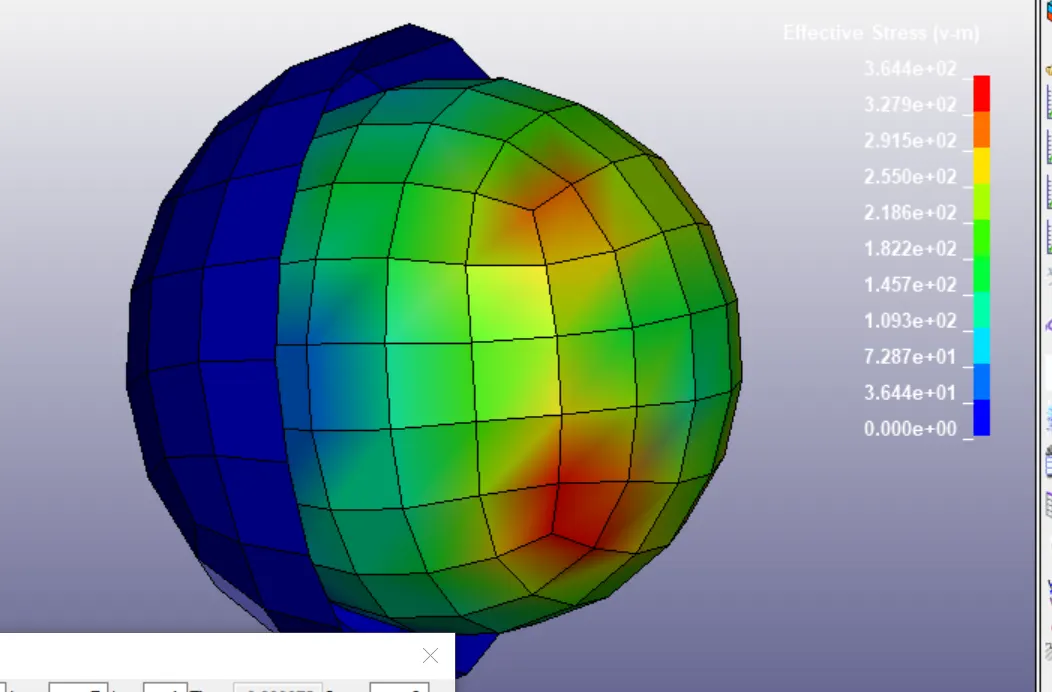
SPHERICAL JOINTS:
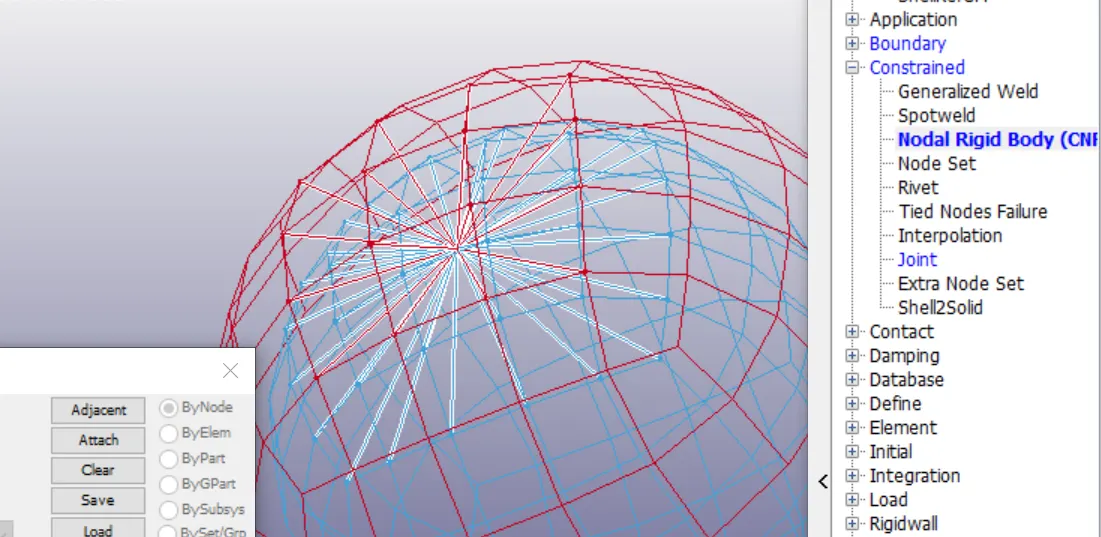
- The type of constraint applied in spherical load, changes when compared to the revolute joint wherein all other inputs remain the same. Both the joints should be made coincident.
CYLINDRICAL JOINTS:
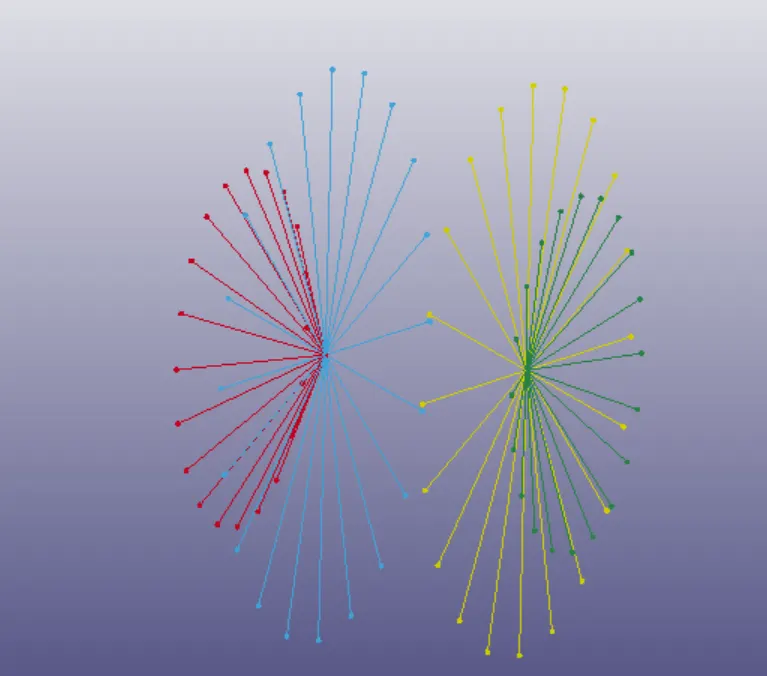
- the constraints may change but the joints which allow both rotational and translational remains fixed in cylindrical joints.
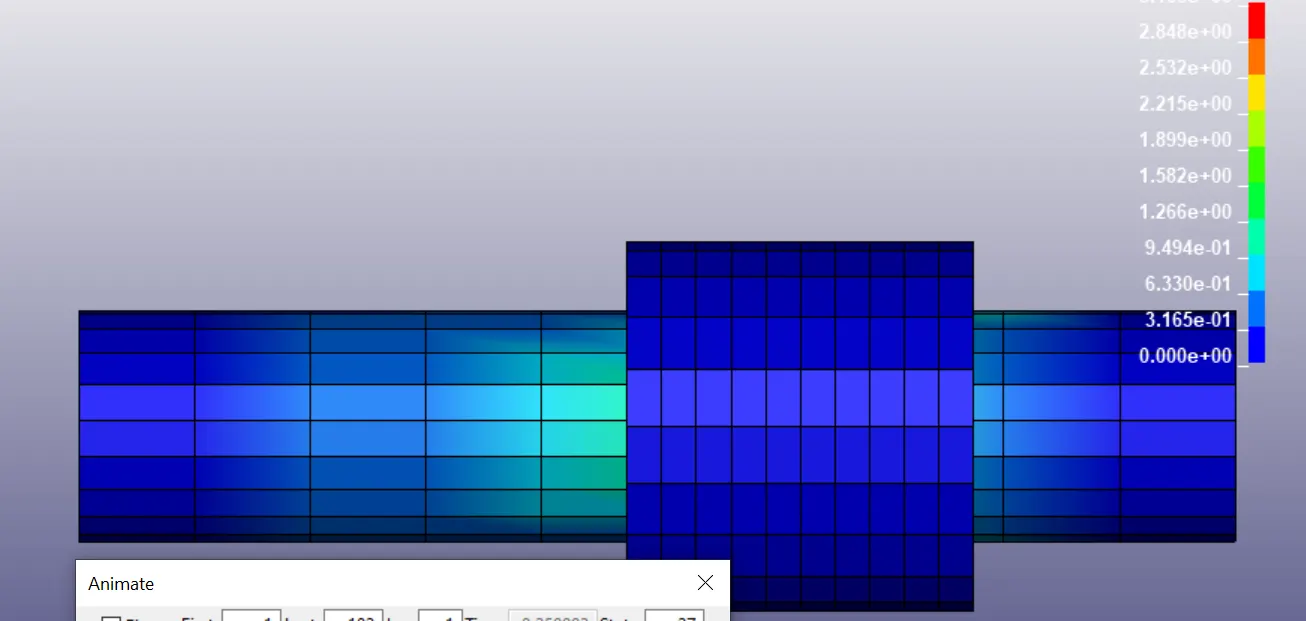
TRANSATIONAL_JOINTS:
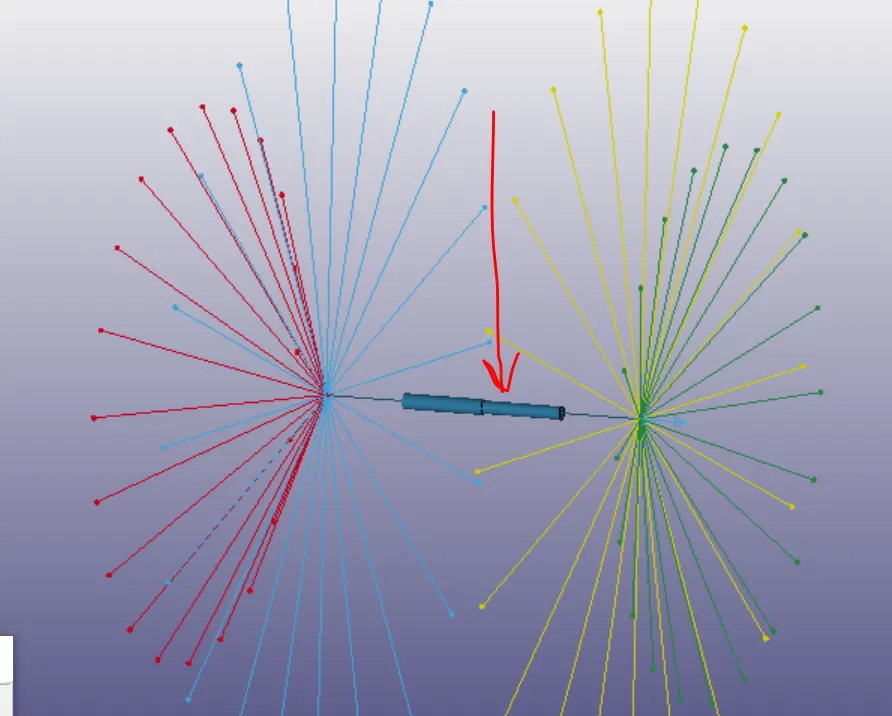
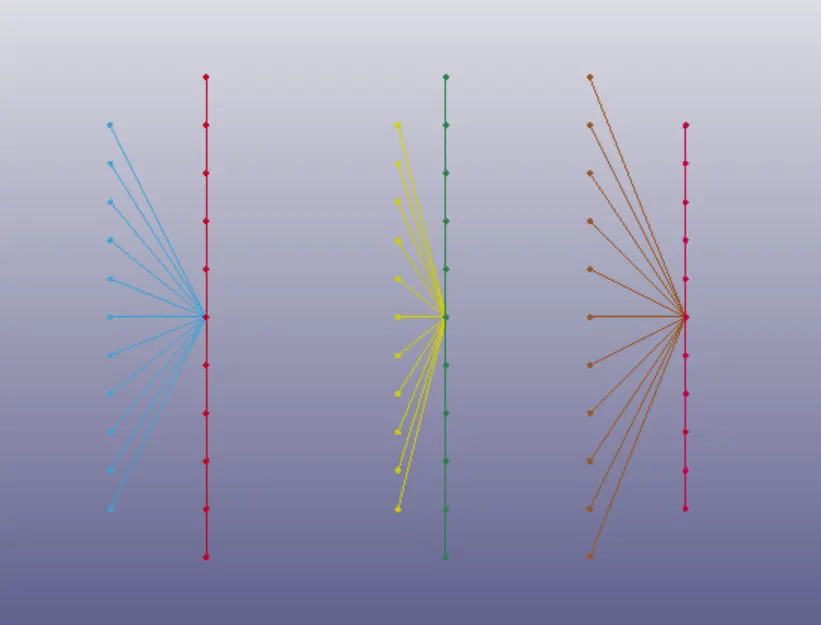
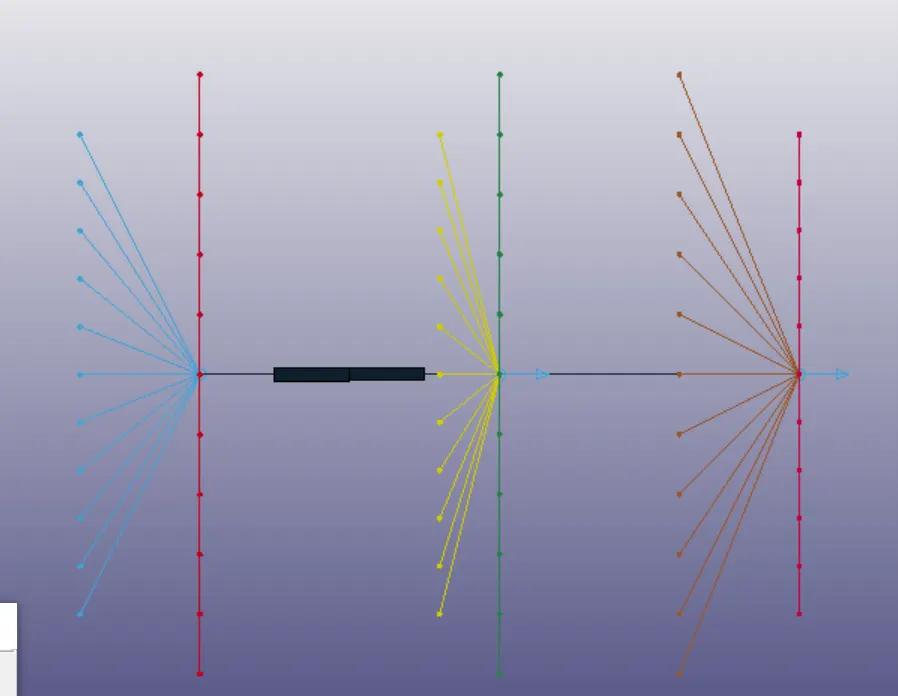
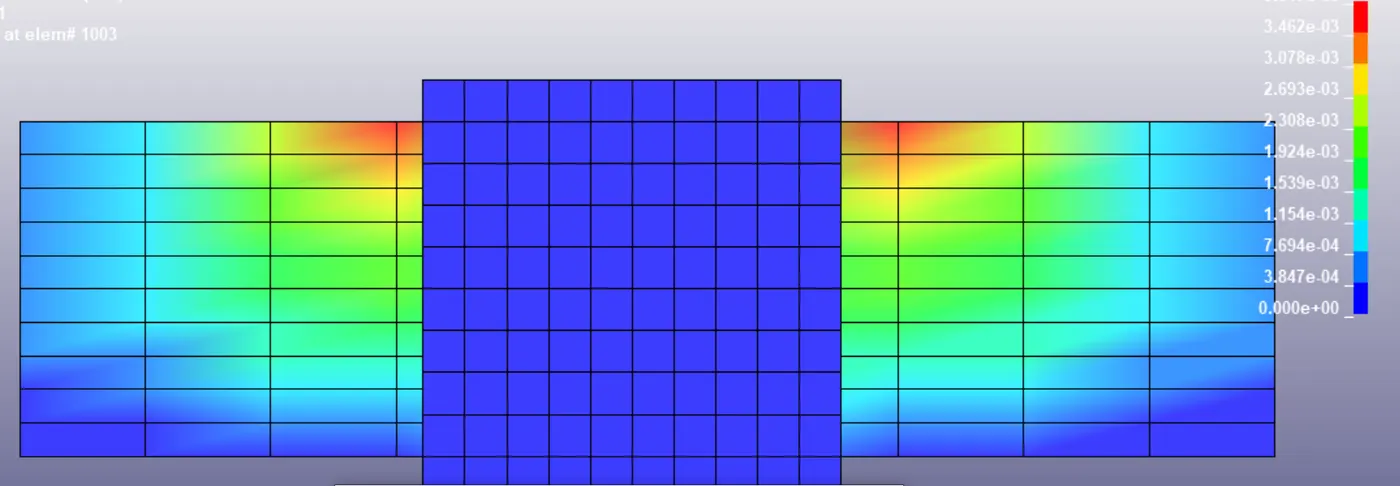
It differs from other joints in the way that the constraint may change but it still allows translational motion.
CONCLUSION:
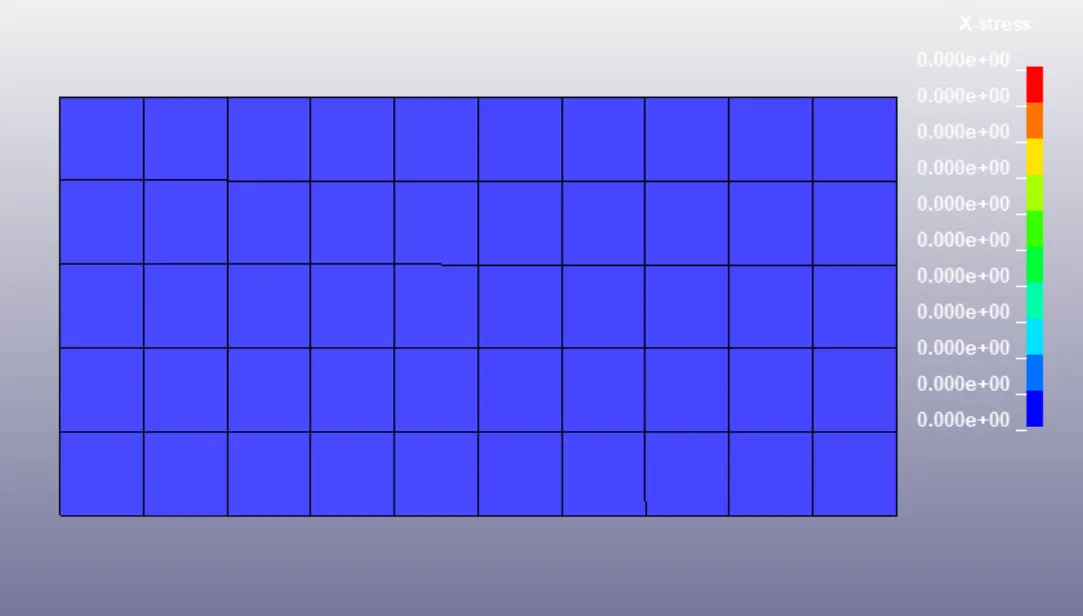
The joints were demonstrated and simulation were attached for validation.