Week 11: Hot Aisle Cold Aisle Containment for Data Center
AIM: To set the case set up and run the simulation of Hot Aisle and Cold Aisle Containment of Data Centre of Server Room.
Introduction to Heat transfer:
- Heat transfer is the branch of thermal science that focused on the generation of heat and transfer of heat between physical systems.
- Physical, the process of heat transfer describes the transmit of thermal energy due to temperature difference.
- There are three modes of heat transfer such as conduction, convection, and radiation. Depending on the application heat transfer can be dominated by only one mode or all three modes plays an important role.
Application of Heat transfer:
There is the countless application of heat transfer across all industries out of which some as follows:
- HVAC
- Heat exchanger
- Electronic cooling
- Boiler
- Solar panel
- Power plant
Geometry:
The pre-modeled geometry was imported into Converge and the geometry was inspected for surface error or other errors. After fixing all the errors & the boundaries were flagged & case was set up.
Hot Aisle and Cold Aisle Containment of Data Centre of Server Room
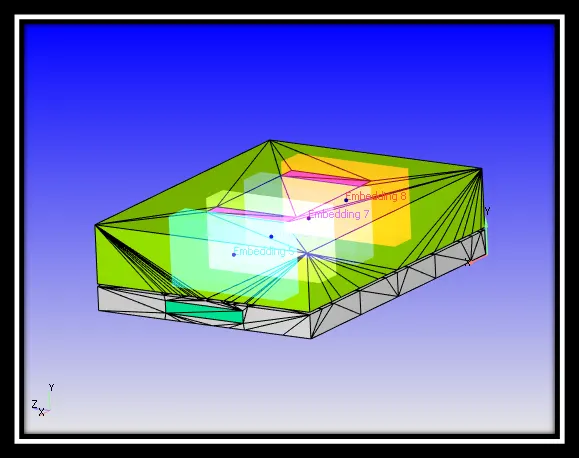
Working:
- We live in a computer age. We search for information on the internet. We reserve e-tickets for airline travel and get our boarding passes on the computer. Stocks are traded on computers and people use online banking. When we use the credit card, the transaction is instantaneously verified and approved. All major retail merchants offer online shopping. Large companies have their inventory, purchase order, invoices, and all accounting computerized. Medical records are stored on the computer. We use email and text messaging to communicate with others. The modern computer is the small computer that communicates with the rest of the world. Whereas the visible transaction takes place at the “point of sale” on a personal computer or a small device, the whole mechanism can function only if all the relevant data is held in one place and processed at a very high speed. Therefore, behind the small visible devices are large and powerful computer servers, located in one place. For a credit card or stock trading company, it is common to have large room housing over 2000 server racks. Such a huge computer is called a “data center”. It has become an essential part of any modern-day large business.
- The most important requirement for a data center is its uninterrupted, zero-downtime operation. For uninterrupted operation, two things are crucial: power and cooling. Uninterrupted power is assured by having several backup sources of power that can automatically bring online as soon as a power failure is detected. Cooling is a more complex issue.
- Each server rack in a data center consumes electrical energy and dissipates a large amount of heat in the range of 2-20kW. For the electronics to function properly, it needs to be cooled and kept at an acceptable temperature level. Overheating may cause the equipment to malfunction, melt or burn, but more commonly, safety devices on the server racks will detect high temperatures and shut down the equipment. It is this interruption that presents a serious problem for a data center and needs to be prevented.
- A down-flow air conditioning unit is placed on the raised floor. It draws the hot air in the room into its top face and supplies cold air from its bottom into the under-floor space. Such an air conditioner is called Computer Room Air Conditioner (CRAC) by the data center community. The cold under-floor air enters the above floor space through perforated tiles that are placed at the foot of the server racks. The racks, in turn, draw in this air through their front face and exhaust hot air from the rear face. The hot air finally returns to the top of the air conditioning. unit (CRAC).
Case Setup:
- Application: General Flow
- Solver: Transient solver
- Simulation Type: GAS
- FluidMaterial: Air
- Species: H2O & N2
- Solid Material: ALUMINIUM
- Simulation mode: Full hydrodynamic
Simulation time parameters:
- Start time:0 sec
- End time:0..75 sec
Region & Initialization:
In this step, we have created a region of the fluid.
Physical Model
Turbulence model:k_e-epsilon
Source model:
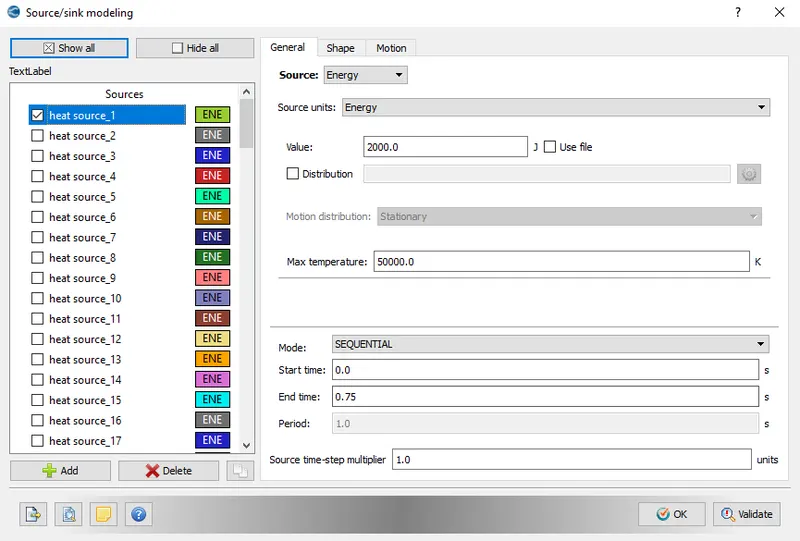
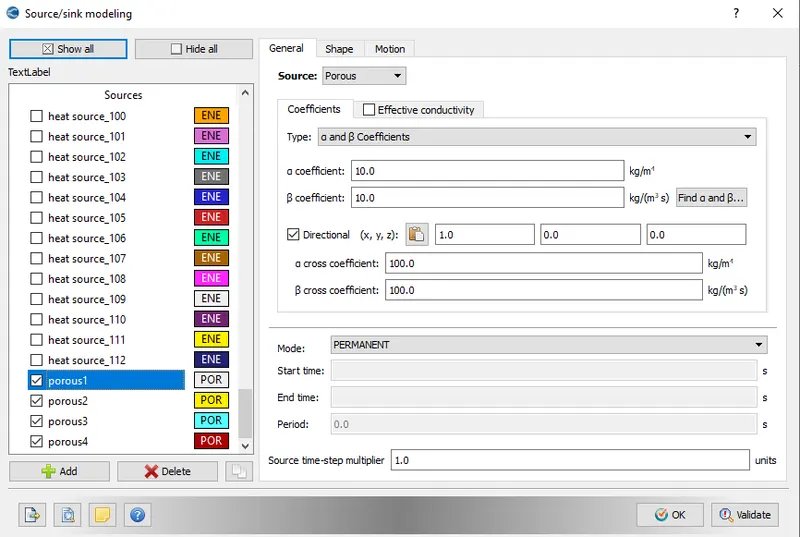
Porous Source:
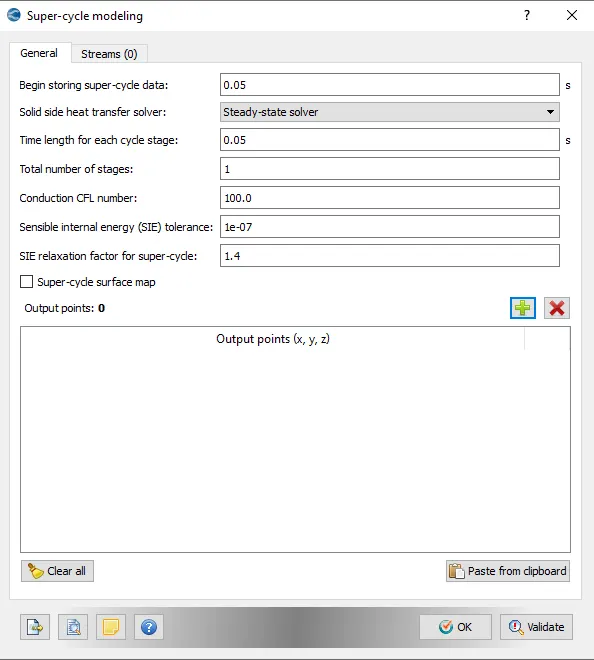
Supercycling:
Grid Control:
- Element size:dx, dy & dz =0.1m
Fixed Embedding
- Fixed embedding is a method that is used to refine the mesh at a particular area.
- In our case, we are more concerned about the area near the Impeller, so for this, we need a more refined mesh for that we used a fixed embedding method.
- Converge uses the below formula to refine the mesh:
- Refined mesh=`frac{Base grid}{2^n}`
CASE SETUP:
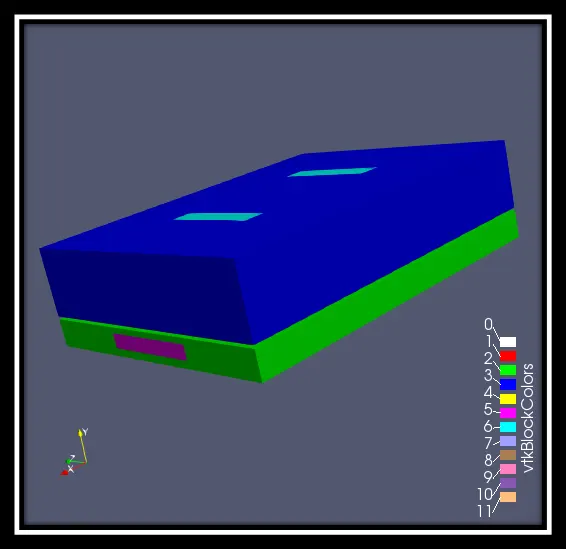
Here in this simulation process, ALUMINIUM is selected for the solid simulation. In run parameters, transient mode is selected for solver and the simulation mode is full hydrodynamic. The gas flow solver will be compressible. In Navier Strokes solver, density based is selected.
In time parameters,
End time: 0.75 sec
Initial time step: 1e-09 sec
Min time step: 1e-09 sec
Max time step: 1.0 sec
In boundary condition:
Plenum walls: Wall motion type- Stationary
Surface movement- FIXED
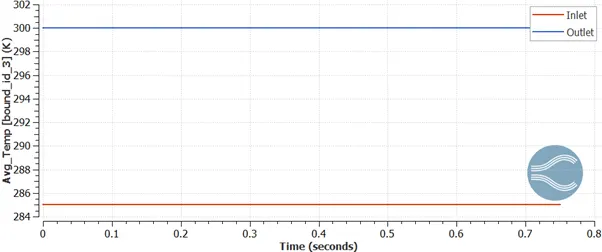
Temperature- 285 K
Server walls: Wall motion type- Stationary
Surface movement- FIXED
Temperature- 300 K
Inlet 1 (BOUNDARY ID-3): Pressure- Zero gradient
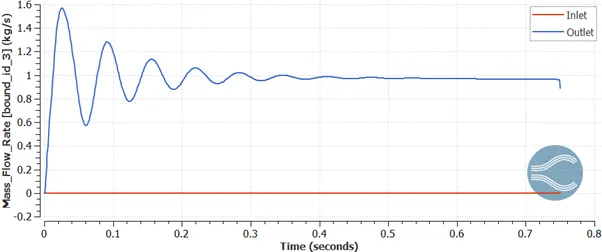
Velocity- 0.0029 kg/s
Temperature- 285 K
Inlet 2 (BOUNDARY ID-4): Pressure- Zero gradient
Velocity- 0.0029 kg/s
Temperature- 300 K
Outlet (BOUNDARYID-5): Pressure- 101325 Pa
Velocity- Zero gradient
Temperature- 300 K
Cabinet: Wall motion type- Stationary
Forward side (server region) - Velocity- Law of wall
Temperature- Law of wall
Reverse side (solid) – Velocity- No slip
Temperature- Specified Value
In events,
|
Region A |
Region B |
|
|
Plenum region |
Server region |
OPEN |
In physical models,
Turbulence model: RNG k-ε
Source/sink modeling: Source- Energy
Source units- Energy
Value- 2000 J
Max temperature- 50000 K
Mode- SEQUENTIAL
End time- 0.75 sec
In grid control,
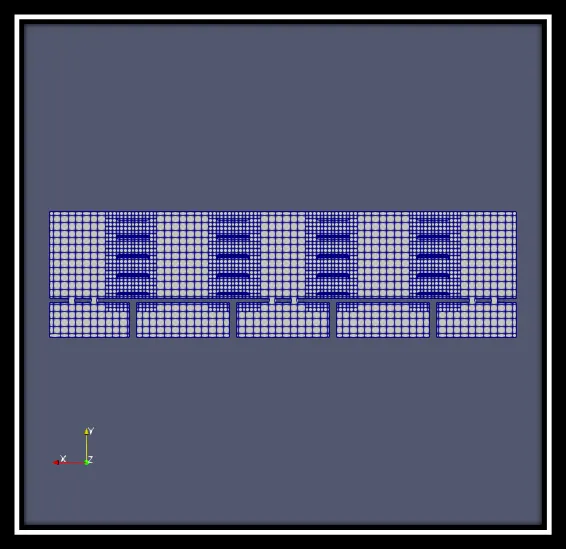
Base grid: dx - 0.1m
dy - 0.1m
dz - 0.1m
Surface with edges:
Pressure contours:
Pressure contours: https://www.youtube.com/watch?v=wy_A80if0jU
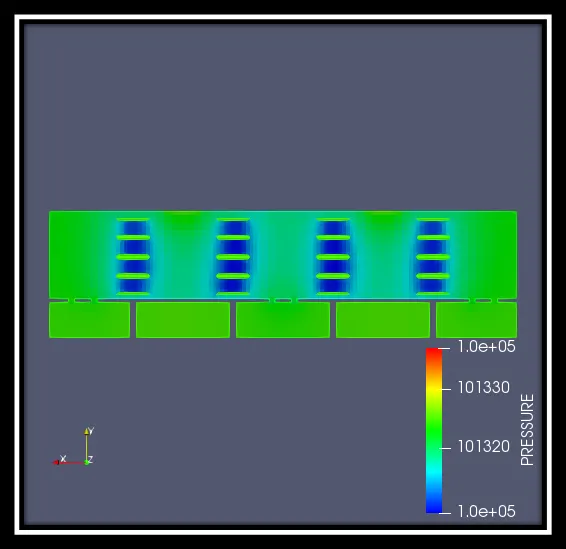
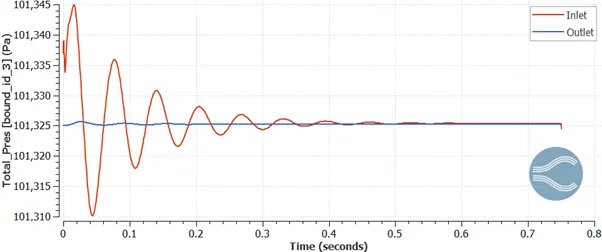
At the beginning, the cold air enters into the plenum region where the pressure is at a very high level. When the cold air enters into the server room pressure gradually decreases by binding with the hot air and then it goes out through the outlet port and the pressure comes to a very low point.
Velocity contours:
Velocity contours: https://www.youtube.com/watch?v=GnuowfETipM
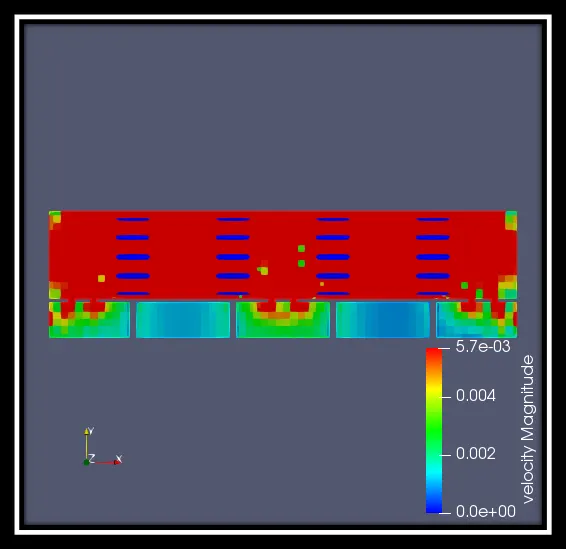
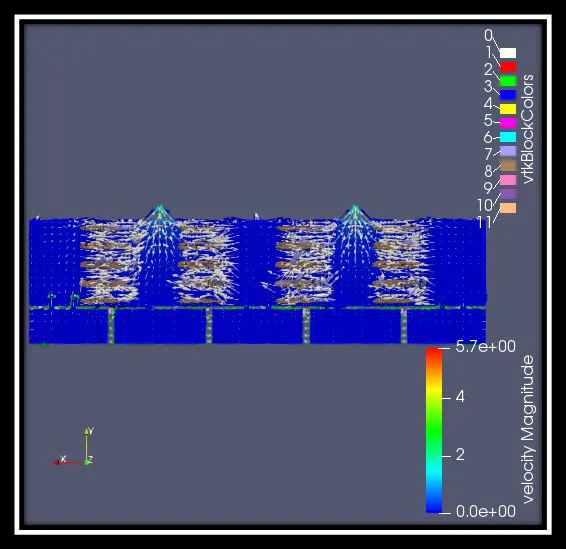
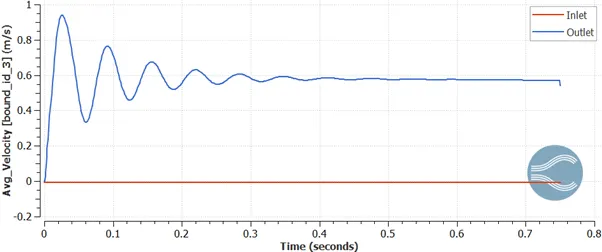
Here, the velocity at the initial stage where the cold air is in plenum region will be at a low point. Then, when the air enters into the server room the velocity will gradually increase and in the plenum region the velocity will come to zero point.
Temperature contours:
Temperature contours: https://www.youtube.com/watch?v=fPqsaLWdzyE
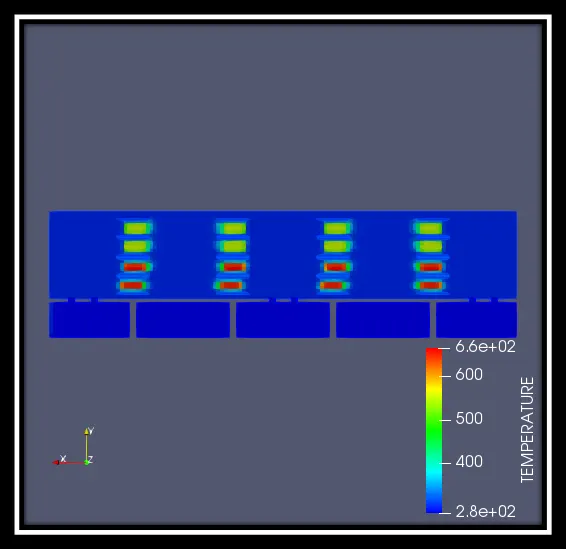
The hot air which is emitted from the server will be at a high temp and the cold air coming from the plenum region to server room through perforated tiles mixes with the hot air which tends to decrease the temp and then it gets away through the outlet port.
Density contours:
Density contours: https://www.youtube.com/watch?v=pGnYRrOIaJA
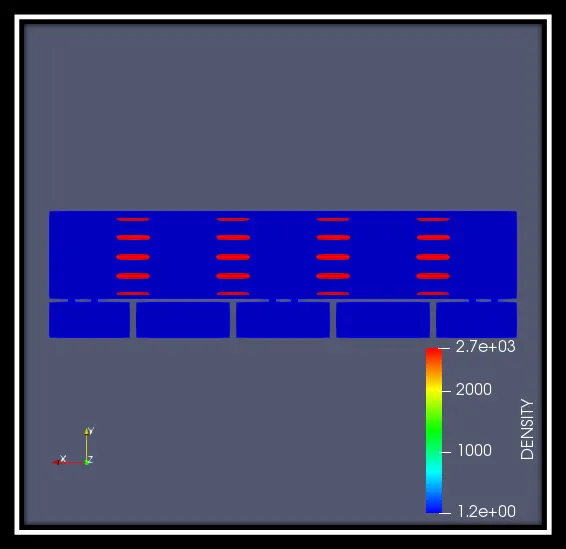
Here, you can see that density is inversely proportional to temperature. When there is a high temp the density will be less and when there is a low temp the density will be high.
Mass flow rate:
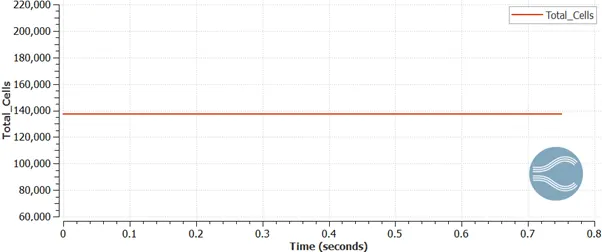
Total cell count:
CONCLUSION:
So, the simulation process for hot aisle and cold aisle containment for data centre is done and the results have been shown above.