Week 11 - Final project
- Development of a Door Trim panel
Creation of CAD model considering following inputs as like in OEM and tier1 companies
- a) Class A surface
- b) Nominal thickness : Refer master sections
- c) Attachment strategy :
Find a attachment strategy for the door panel complete work.
Use Push pin with Dog house for Lower substrate – Door panel attachment
Use heat stakes for part to part attachment
INPUTS
- class A surface of the door arm rest MAP pocket , Bottle holder and lower substrate.
- master sectoin for the attachment features.
- push clips for the assembly.
OBJECTIVES
- Analysis the class A and performing necessary modification to obtain the modification class A surface.
- creating the tooling axis for all the components.
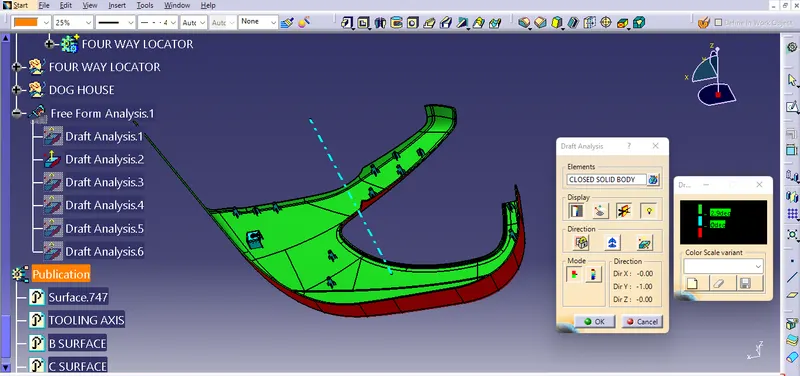
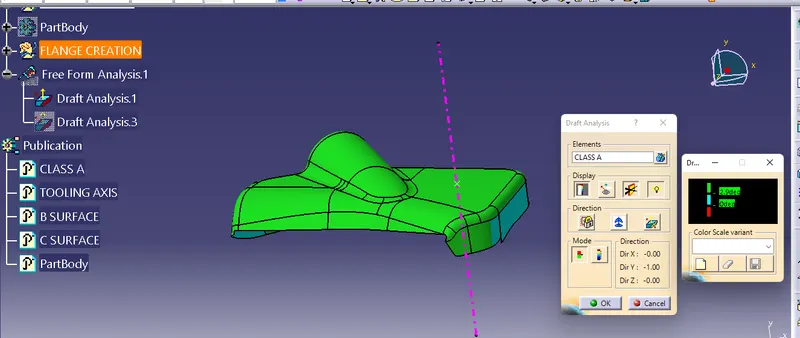
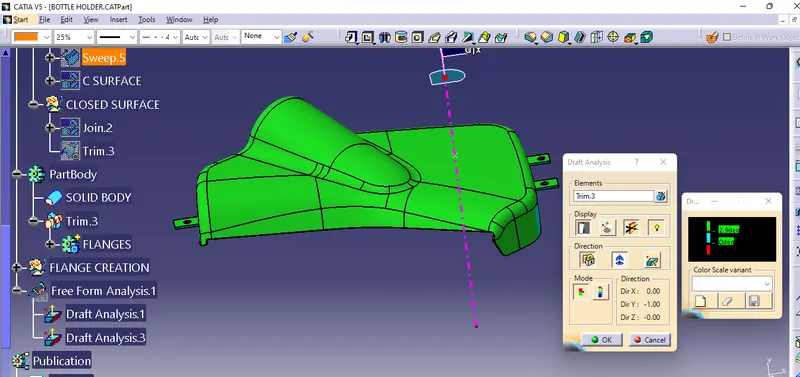
- performing draft analysis of class A surface.
- creating the class B surface with the help of surface workbench.
- creating thr class C surface with necessary draft.
- trimming the class A , B and C surface for obtaining the final trim for all the components.
- creating the closed body for all the components.
- creating the attachments on the lower substrate for all assembly like DOG HOUSE , HEAT STAKES And RIBS.
- creating the flanges on the other three components for the assembly purpose.
- creating the side core tooling axis.
- performing the vigrous draft analysis and make sure all parts are clearing with positive and required draft.
- assembly of the push pins over the dog house in assembly workbench.
CLASS A SURFACE
- CLASS A is term used in specifically in automotives design it describes the final production surface data for the aesthetic parts of the car.
- CLASS A represents the craft work end of the design process creating the main surface shapes to describe the vehicle is the primary design activity .
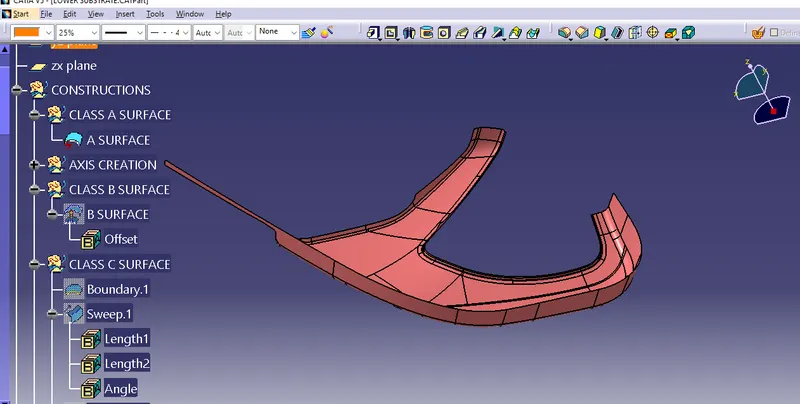
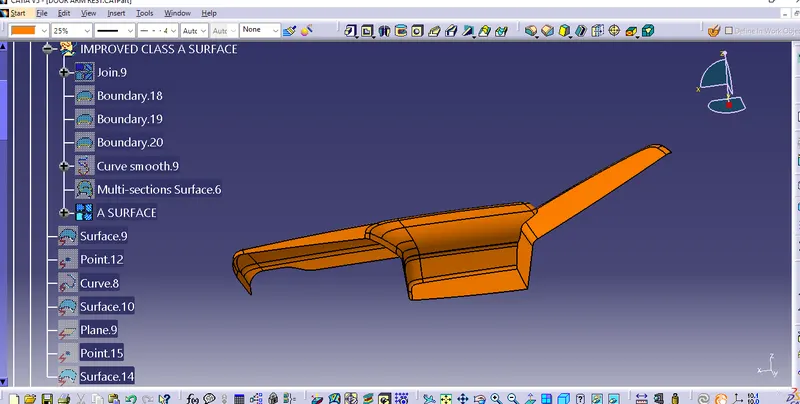
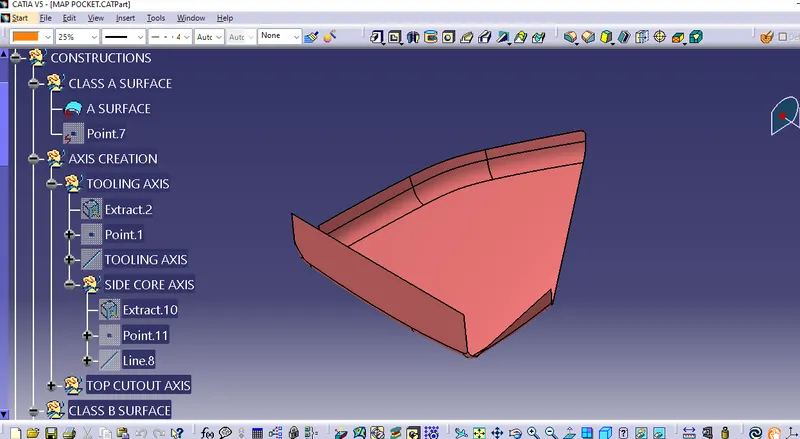
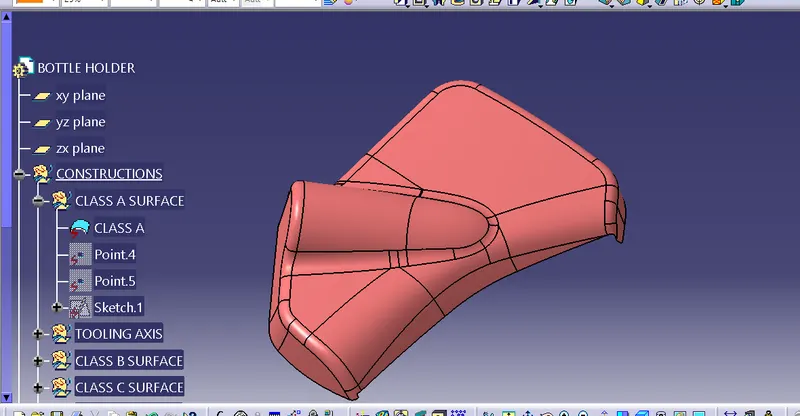
here we have four class A surface as in inputs
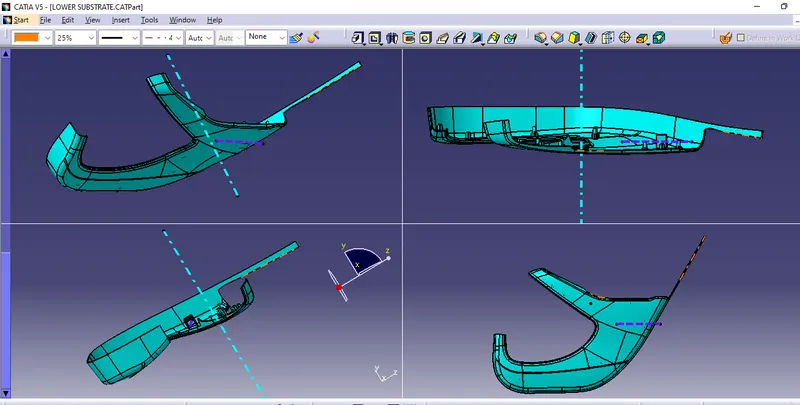
1.LOWER SUBSTRATE
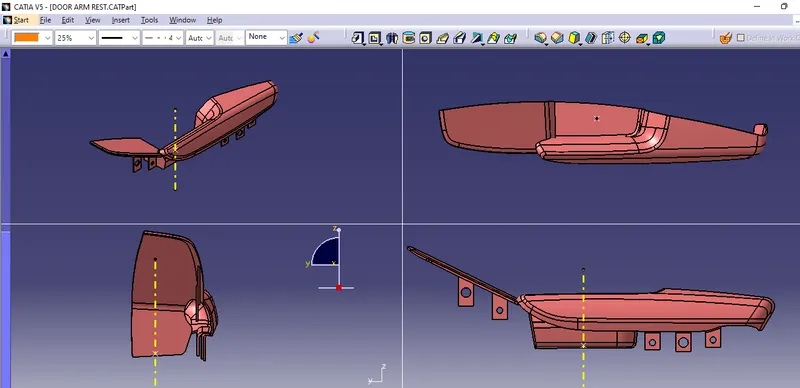
2.DOOR ARM REST
3.MAP POCKE
4.BOTTLE HOLDER
TOOLING AXIS CREATION
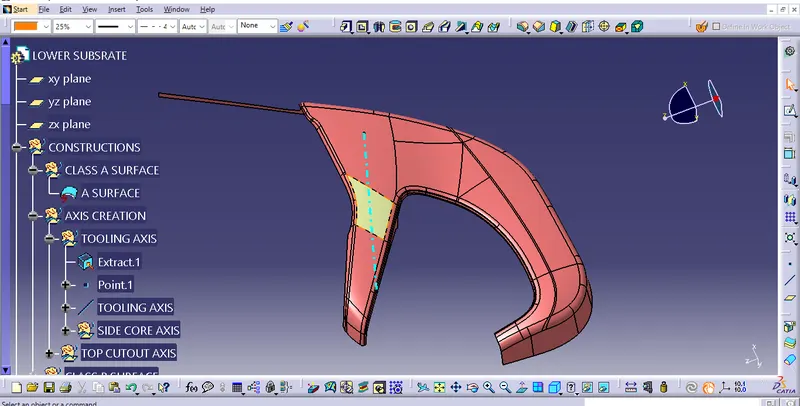
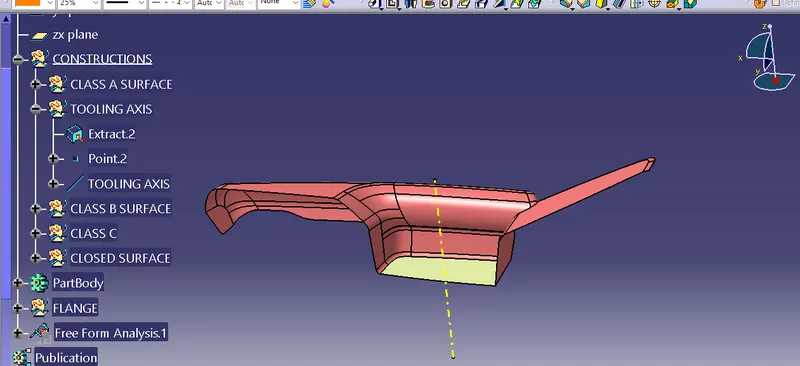
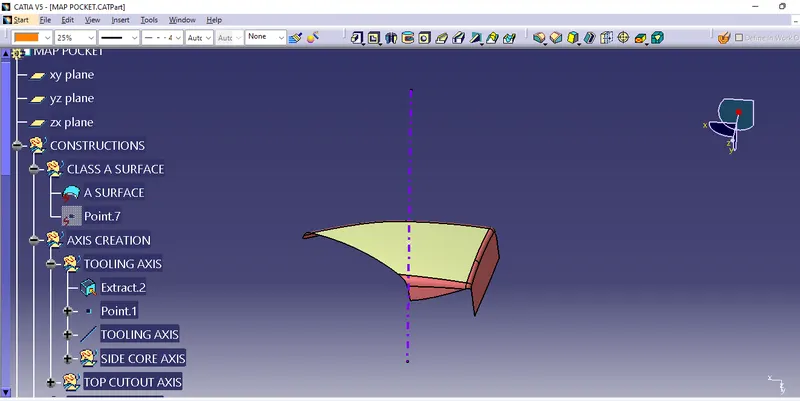
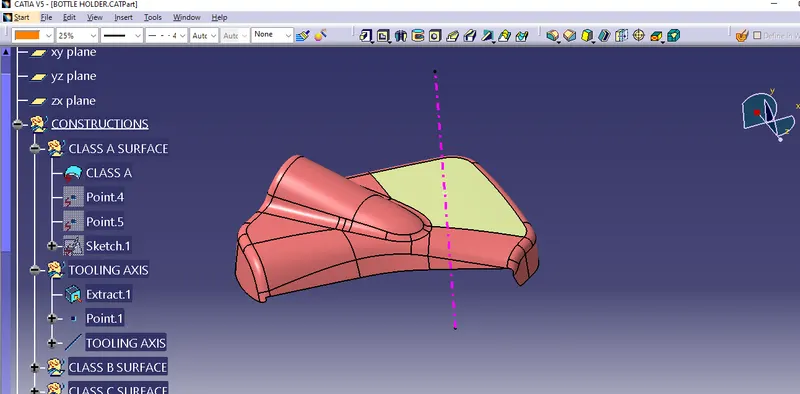
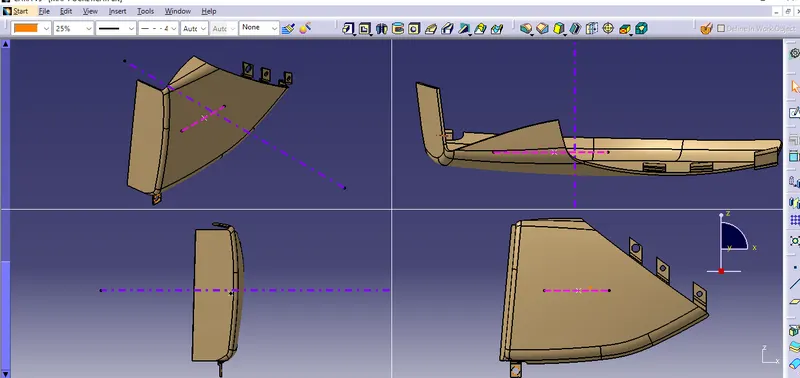
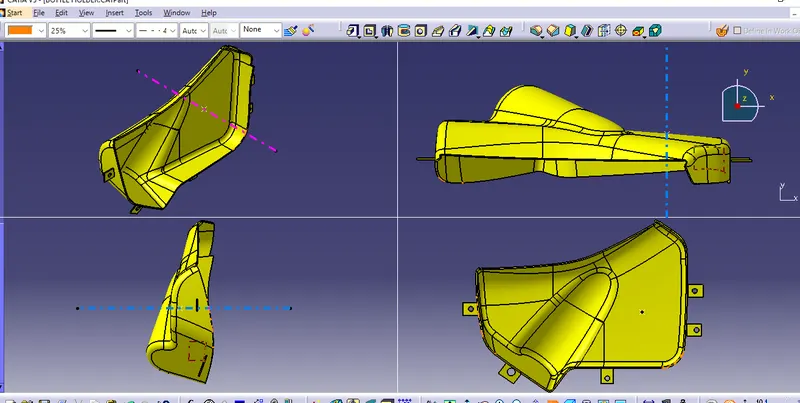
- Tooling axis plays important role in plastic product manufacturing and designing , this axis decide the direction in which mould is going to work while production of the component.
- the main focus while deciding the tooling axis is clearing the component in the moulding in the same axis with minimum use of the side core for produing the component, the side core of the component.
- the particular component X ,Y and Z can be the possible direction for the tooling axis .
- you must specify the axis system by creating the point on the surface.
1.LOWER SUBSTRATE TOOLING AXIS CREATION
2.DOOR ARM REST TOOLING AXIS CREATION
3.MAP POCKET TOOLING AXIS CREATION
4.BOTTLE HOLDER TOOLING AXIS CREATION
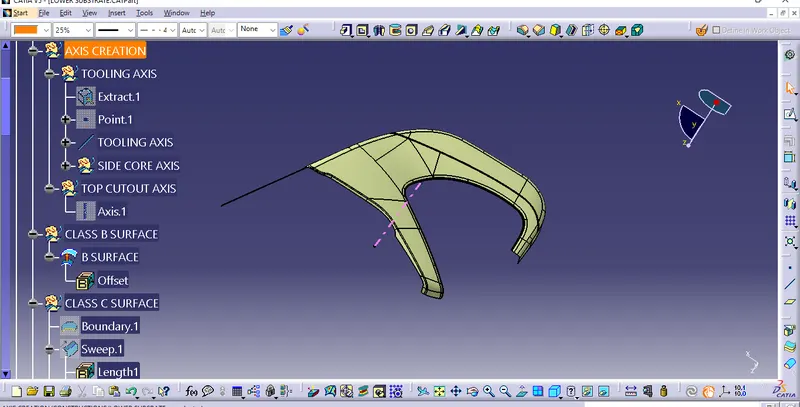
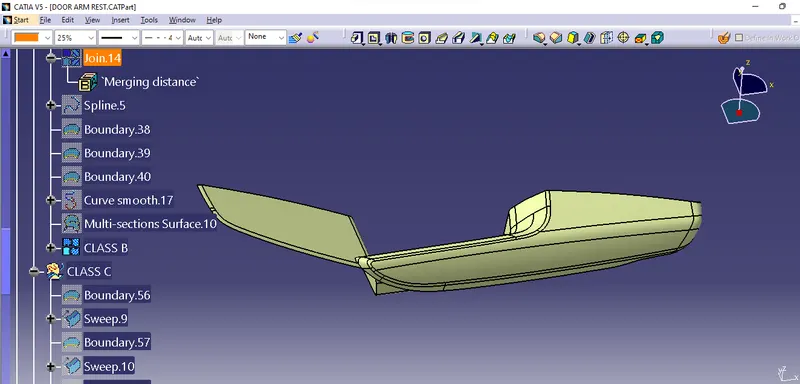
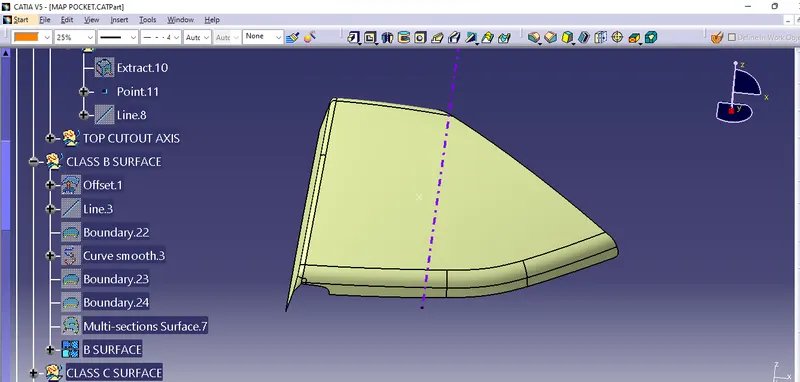
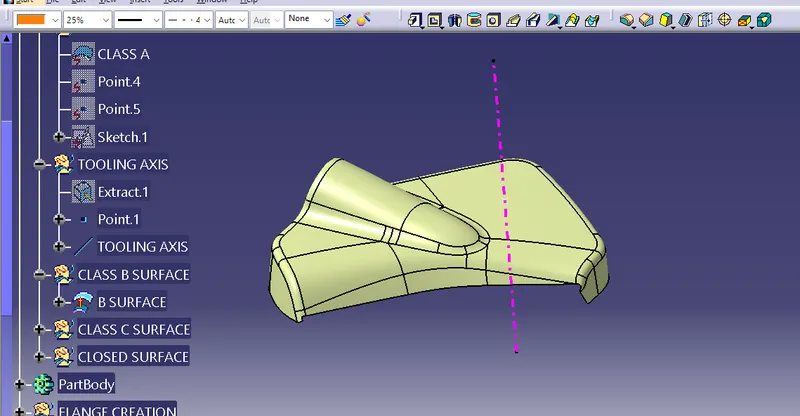
CREATING THE CLASS B SURFACE
- Class b surface is the surface which is created with the help of class A surface as the refernce.
- The class B surface is the surface where all the necessary attachment and supprorts of the component is made .
- the main parts without the edge fillets .
1.LOWER SUBSTRATE B SURFACE
2.DOOR ARM REST B SURFACE
3.MAP POCKET B SURFACE
4. BOTTLE HOLDER B SURFACE
CREATION OF THE CLASS C SURFACE
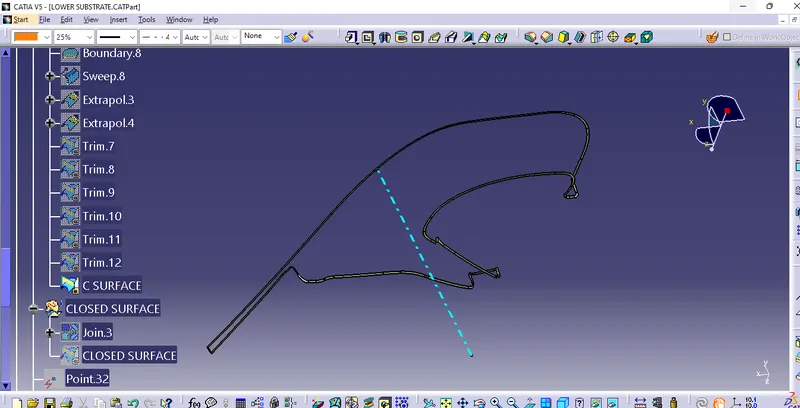
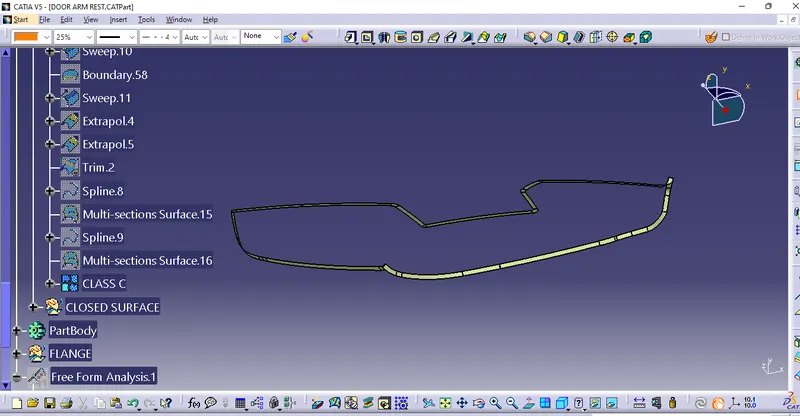
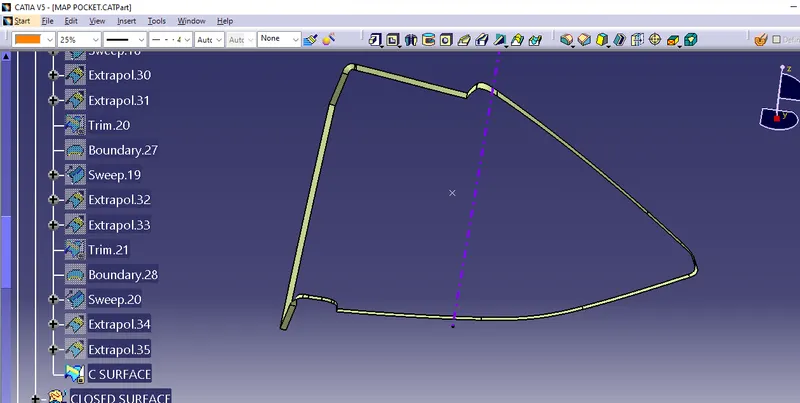
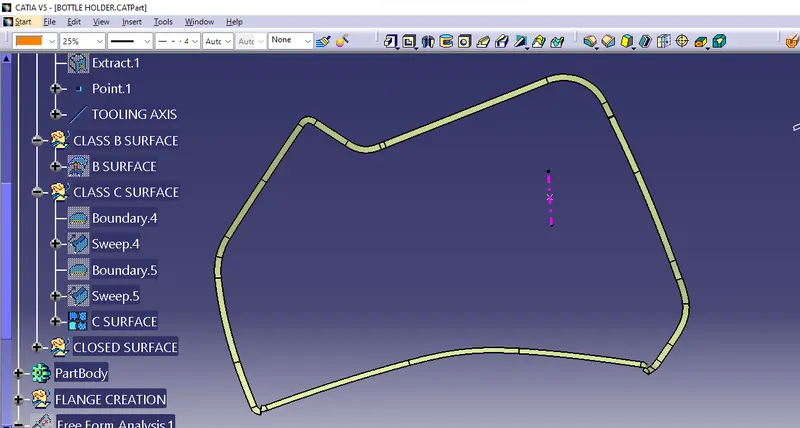
- The class c surface is the surface which is created provide thickness the class A surface with the help of class B surface
- the class c surface is the middle portion of the class A and class B surfaces.
- the class c surface is created with the help of sweep command in surface workbench.
- the sweep is joined with class A surface to obtain the class c surface.
- the final trim is obtained by trimming the class B surface with the joined class C and class A surfaces.
- the final check to ensure proper closed of the surface with the boundary command.
1.LOWER SUBSTRATE C SURFACE
2.DOOR ARM REST C SURFACE
3.MAP POCKET C SURFACE
4.BOTTLE HOLDER C SURFACE
CREATING THE ATTACHMENT FRATURES FOLLOWING THE MASTER SECTION
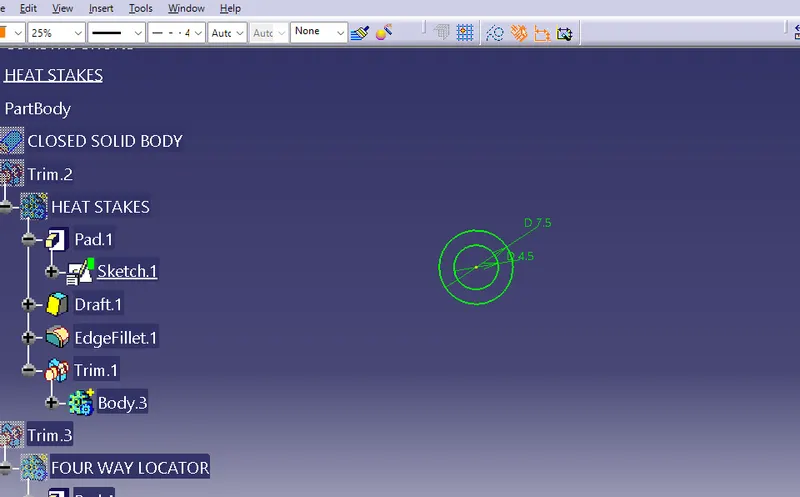
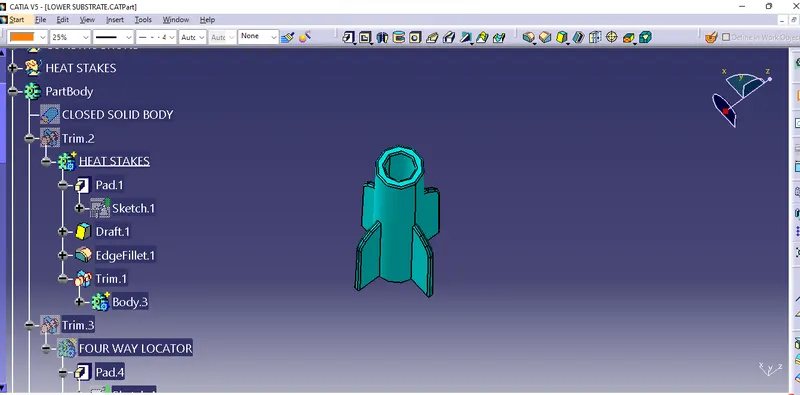
HEAT STAKES
- Heat staking is a pulsed heat process to join two or more parts out of which one at least is made of plastic .
- simillar and dissimillar materials may be joined . metal to metal , plastic to plastic, metal to plastic .
- local heating resulting in nodamage to surrounding materials.
RIBs
- The ribs provide economical stiffnesss and strength to the part without increasing the over all thickness of the part.
- the ribs are used as locating and arresting in the assembly as locators.
- guids for mating the tilted head lamps.
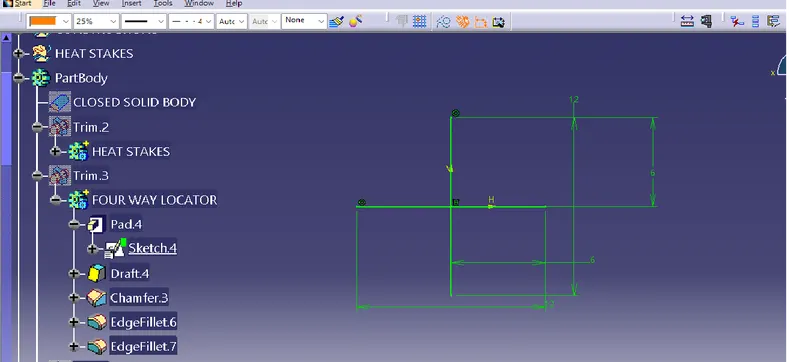
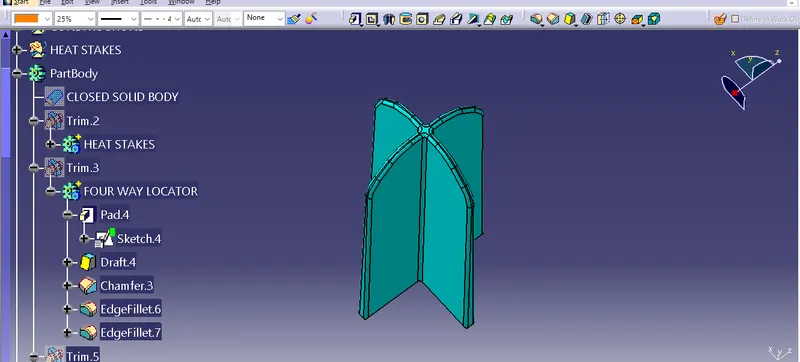
FOUR WAY LOCATORS
- Locator provide easy alignment to the parts which are mating with each other.
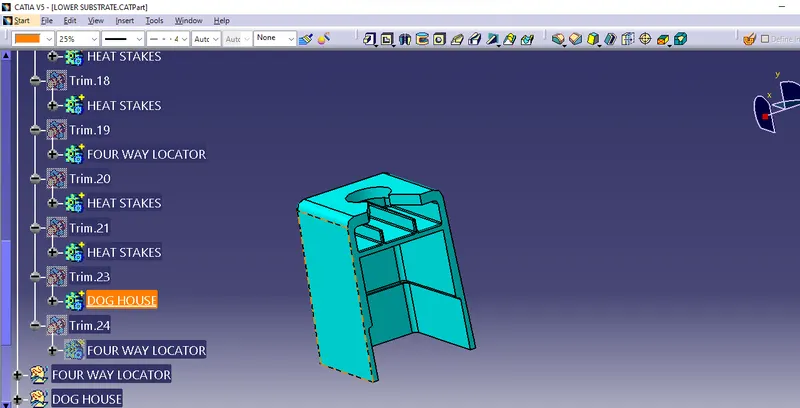
DOG HOUSE
- dog house is the attachment feature which helps you to assemble things at certain heights and also resolve the plastic defects.
- dog house is an engineering feature used in the plastic trim design which helps to remove sink marks formed on class A surface while creating attachment feature on class B surface .
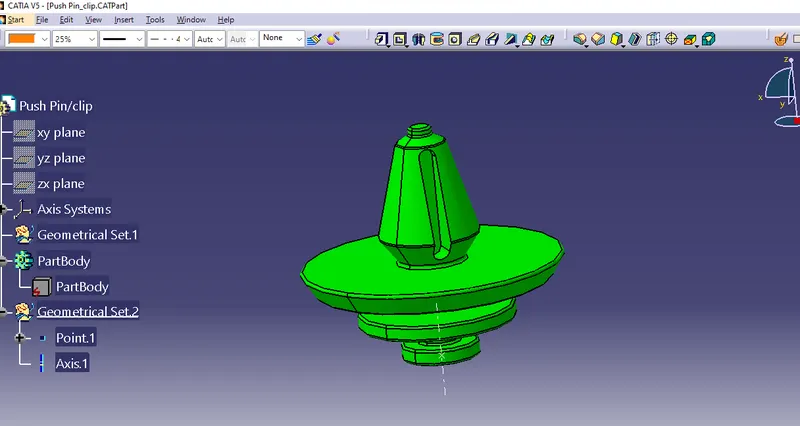
PUSH PIN
- These pins are used for the assembly purpose.
- these pins are guided into the sheat metal body .
- the pin is assembled over the dog house on one side and other sheet metal.
FLANGES ON THE COMPONENT
- These flanges will be build on the components for the fitment purpose with lower substrate.
- the hole at center will be guided along the heat stakes
- later top portion of the heat stake will be melted over it
- the flange should rest on the supporting ribs on side.
DRAFT ANALYSIS
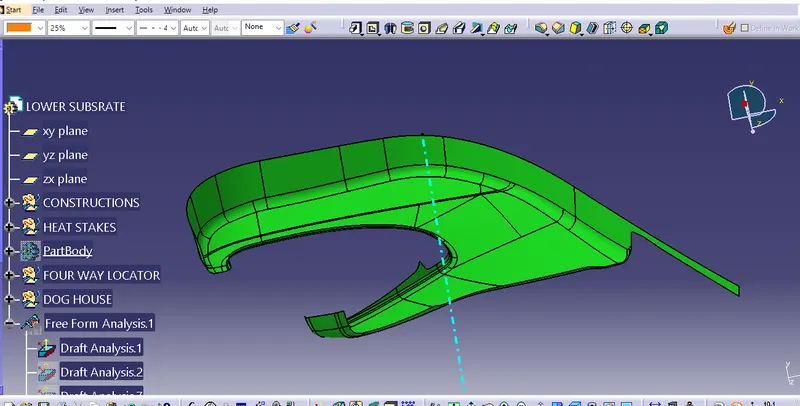
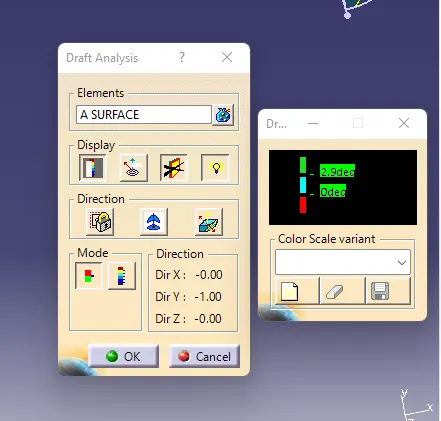
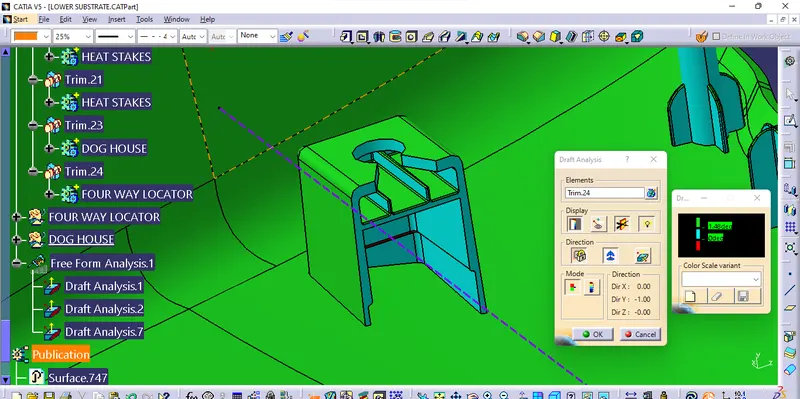
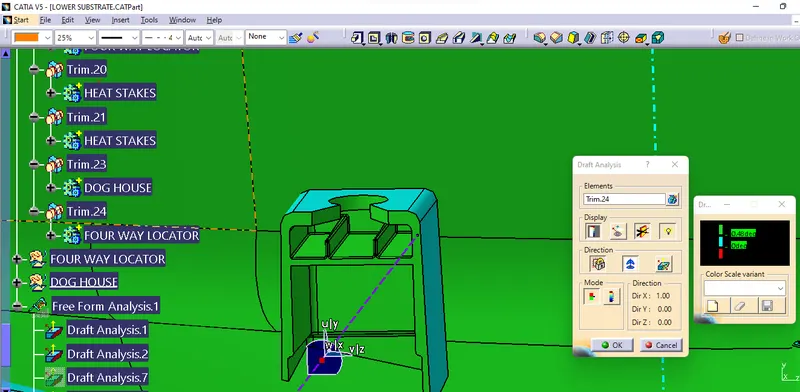
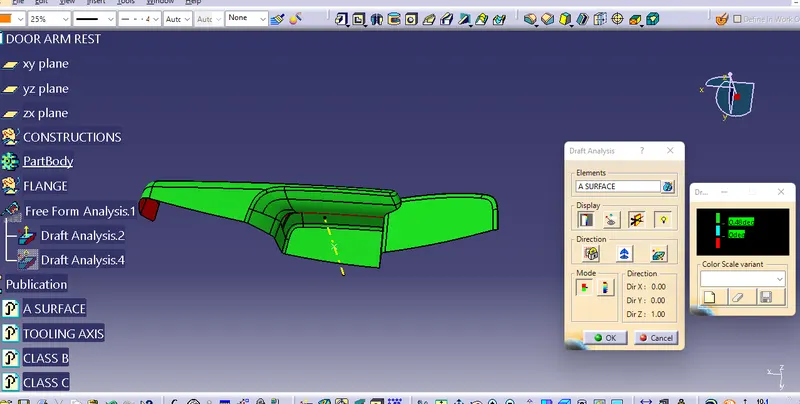
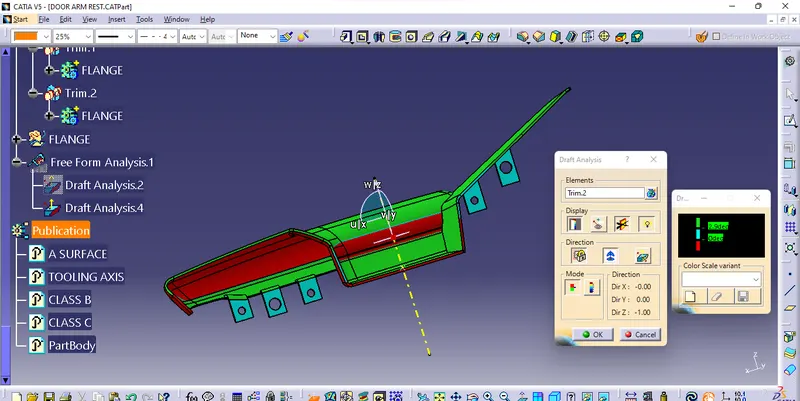
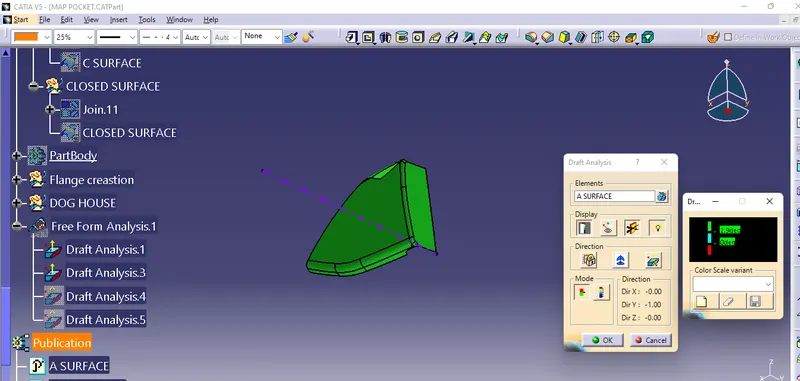
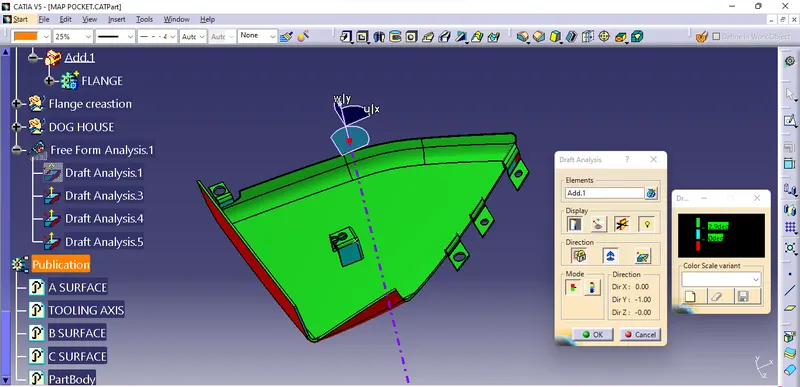
- It is performed to check the manufacturing feasibilty of a component or part, in plastic manufacturing process we generally provide 3 degrees draft and 0.5 degree draft in critical conditions. To perform draft analysis first tooling axis was created by taking a point on surface and line was created in the direction in which part will form easily with provided draft.
- The draft analysis is done to ensure that the draft in permeasible with the design consideration.
- the draft analysis is done by changing the visualization made to customize and select shading as material .
- draft analysis attachment feature 0.5 deg.
1.LOWER SUBSTRATE DRAFT ANALYSIS
2.DOOR ARM REST DRAFT ANALYSIS
3.MAP POCKET DRAFT ANALYSIS
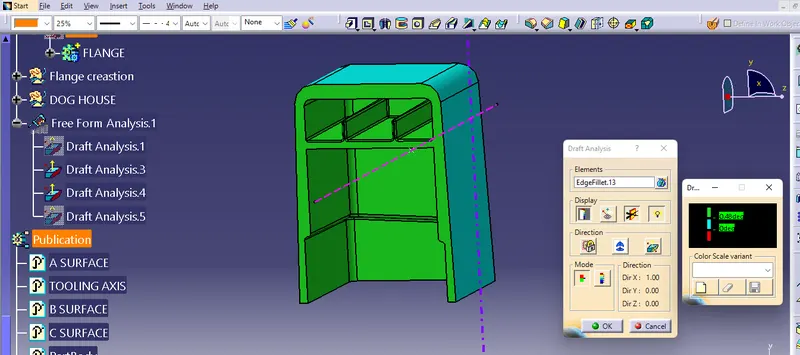
4.BOTTLE HOLDER DRAFT ANALYSIS
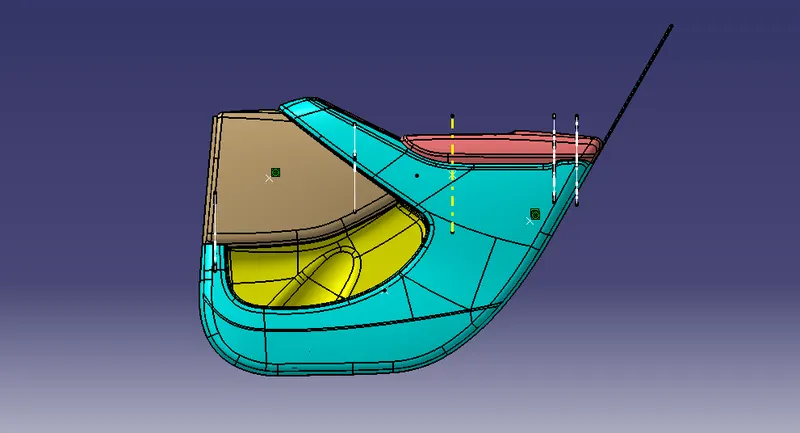
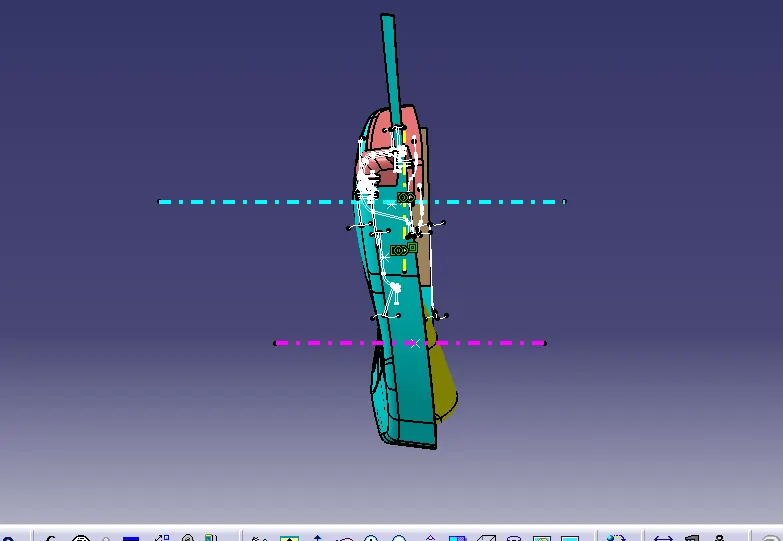
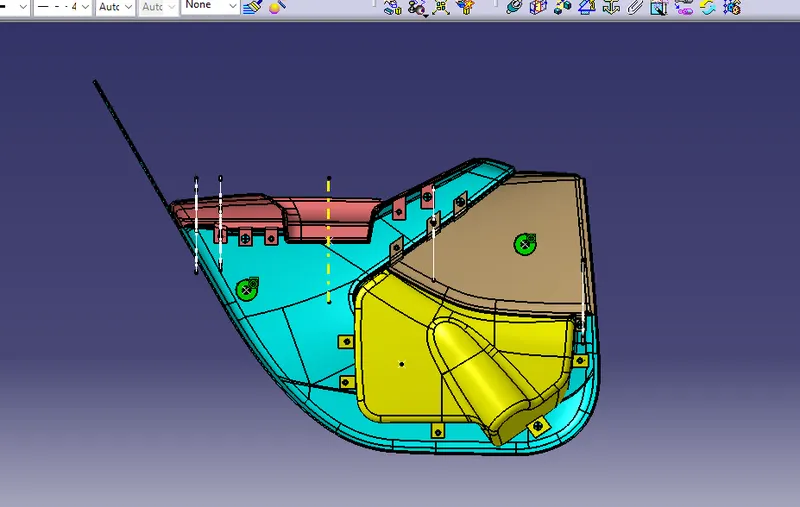
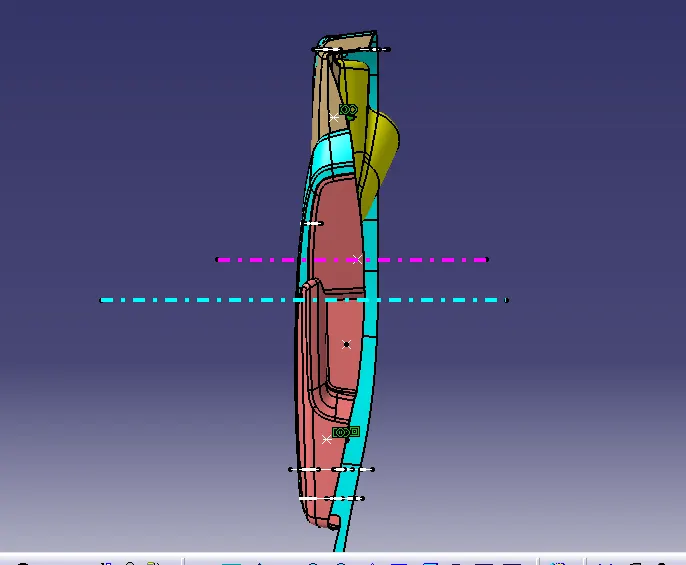
ISOMETRIC VIEWS
TREE STRUCTURE
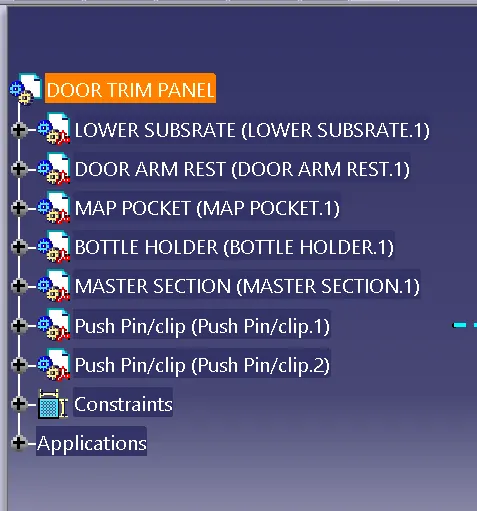
CONCLUSION
- Design door trims through master section development and perform draft analysis has been succesfully created considering the design rules as mationed in the given data.