Week 11 Car Crash simulation
AIM :
To Perform the Explicit Dynamics Simulation for Car Crash on the wall by using ANSYS Work bench.
OBJECTIVES :
Adding & Assigning the required materials for the model.
Applying the symmetry & Connections.
Discretize the model.
Set up the analysis setting and applying the boundary condition.
Run the Parametric study for different thickness.
Extracting the required outputs according to the requirements.
INTRODUCTION :
A Crash Simulation is a virtual recreation of a destructive crash test of a car or a highway guard rail system using a computer simulation in order to examine the level of safety of the car and its occupants. Crash simulations are used by automakers during computer aided engineering (CAE) analysis for crashworthiness in the computer aided design (CAD) process of modelling new cars. During a car simulations, the kinetic energy or energy of motion, that a vehicle has before the impact is transformed into deformation energy mostly by plastic deformation (Plasticity) of the car body material (Body in white) at the end of the impact.
Types of testing preferred :
Frontal Impact Test
Side Impact Test
Rear Impact Test
PROCEDURE FOR OBTAINING THE OBJECTIVES :
I) CAD Model :
A Car Body & Wall are given from design team. We have to import that model file via in geometry selection module. Make sure have to check the imported model file in the Ansys Space Claim, a model looks fine there's no geometrical errors are presented on it.
Once, a model is imported properly, it has been looks like as shown in below image.
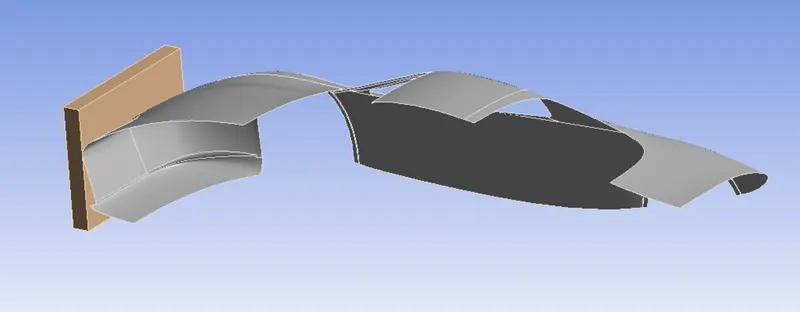
After opening the Mechanical model, necessarily have to provide the thickness for the car body surface. Initially, we have to provide thickness value like 0.3 mm.
II) Material Adding & Assigning :
In this case, we gonna use two different material which are Structural steel & Stainless Steel Non Linear.
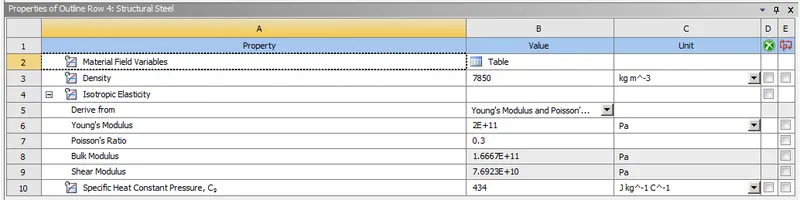
By default, a structural steel is added in the material list.
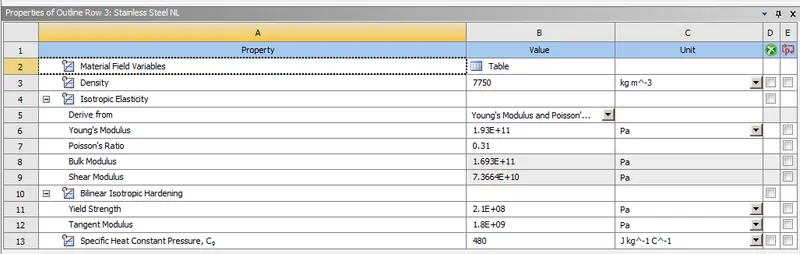
But, a stainless steel nonlinear material is not found in the material list. So, we have to add the respective material from the engineering data sources.
In order to add the material, first open the "Engineering data source" & then followingly open the "General Non linear Materials". From that, we can find the material which is "Stainless steel Non linear" material. By using Add feature, we can able to add it.
Structural Steel :
A Structural Steel material is used for Wall component.
Stainless Steel Non Linear :
A Stainless steel Non linear material is used for Car Body Component.
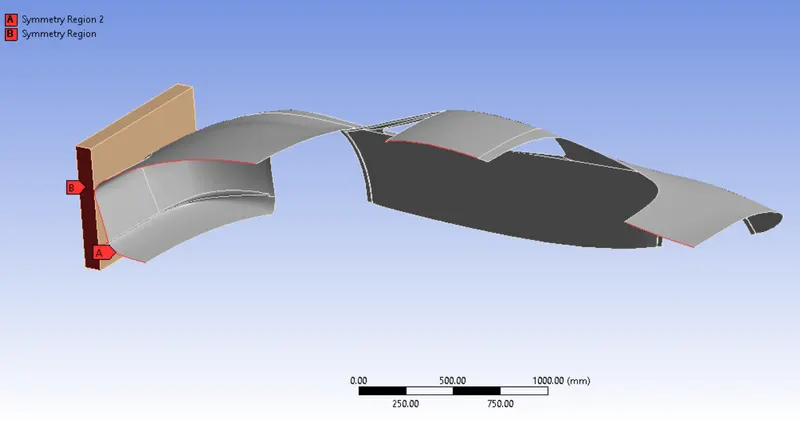
III) Symmetry :
We have to symmetry the model about the X axis for both wall body & car body by using symmetry option like as shown in below image
IV) Connections :
By Default, Ansys had been created the "Body Intersecting" between the component which is set to be "Frictionless" as a type of definition.
If two or more individual components are available, So that the Body Intersecting connection is created by software itself.
V) Meshing :
Basically, To divide the entire model into infinitesimal control volume, that frame work is called Meshing. This process is called Discritization. This FEM is widely used for solving partial differential equation in different physical field such as Structural problem, Heat transfer problem, Fluid flow problem, Electro magnetic Analysis & Acoustics Analysis.
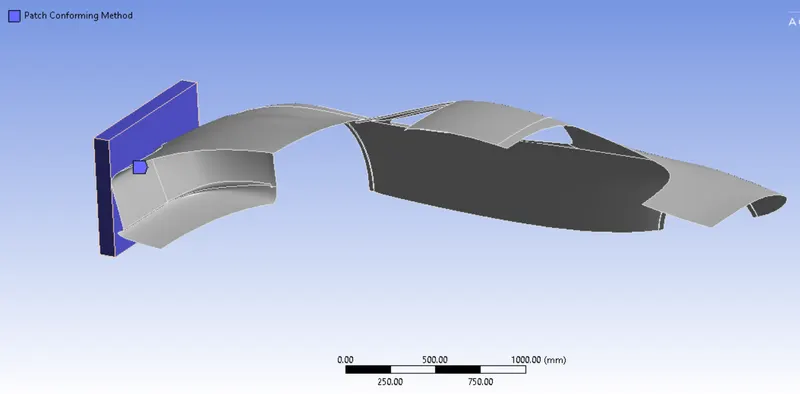
Patch Conforming Method :
Select the wall body with body filter selection, choose the method as Tetrahedrons & then keep "Patch Conforming Method" as a algorithms and then click to meshing.
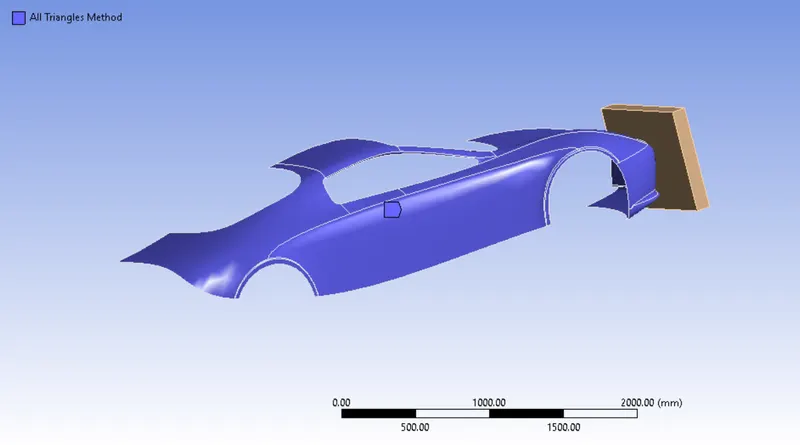
All Triangles Method :
Select the whole car body surface, change into "Triangular" instead of "Quadrilateral Dominant" and then click to proceed for meshing.
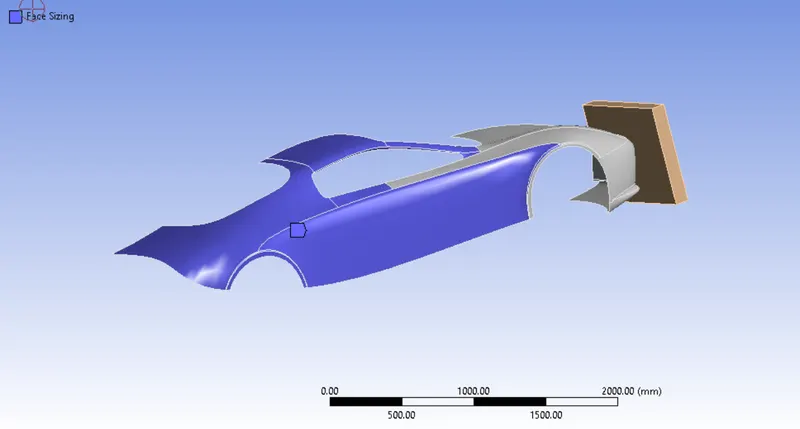
Face Sizing :
Select the faces properly where the faces are not touching to the wall body while performing the simulation.
Make sure increase the size of element for which reduce the computational time & space storage as well.
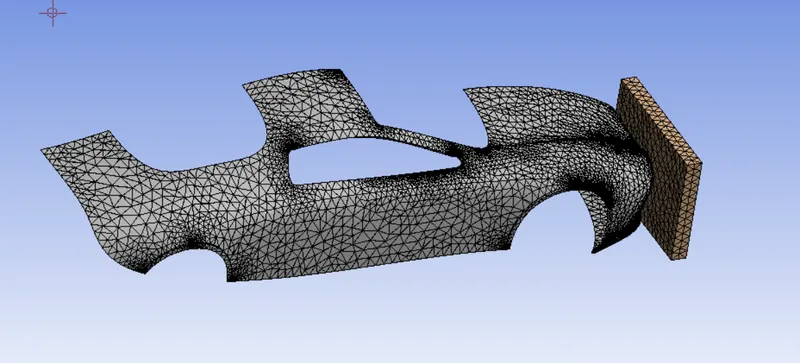
Number of Nodes = 10860
Number of Elements = 22600
A Car Body surface is meshed with tria elements.
A Wall Body Surface is meshed with Tetrahedral Elements.
After done the meshing on the model, it will be looks like as shown in below image.
VI) Analysis Settings :
Number of Steps = 1
Load step type is "Explicit Time Integration"
End Time = 0.01 sec
Maximum Energy error = 0.1
Initial, Minimum & Maximum time steps are set to be "Program Controlled", it has to find optimum time step value.
Time Step Safety factor = 0.9
And remaining option are keep as it is.
Boundary Condition :
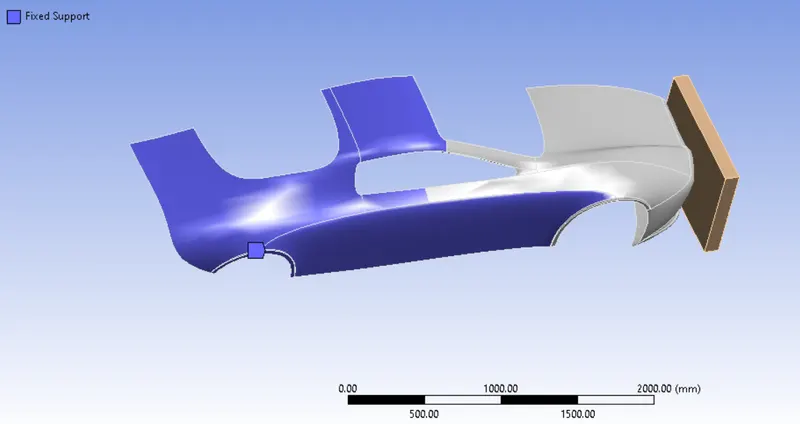
Fixed Support :
While hitting the wall on the car body, a car body should be stationary.
Select the faces like as shown in below image & then applying fixed support on it.
Displacement :
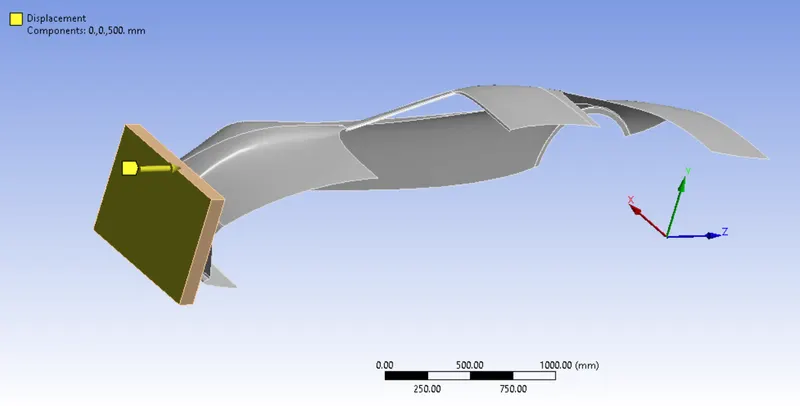
Select the wall face, provide the displacement value for only positive z direction at the magnitude of 500 mm.
VII) Parametric Study :
Enable the Parametric study option for car body surface thickness. Once we could enabled that option, thenafter we can able to see the parametric study which is shown from the workbench.
For the Baseline simulation, we have to provide the value of thickness which is 0.3 mm. Make sure, have to enabled all output parameter which we want for each simulation.
Add the number of design points which we want & then provide the thickness value which are 0.6 & 1 mm apart from base line simulation value which is 0.3 mm
Make sure, have to enabled the Retain option before going to run the simulation.

RESULTS :
CASE 1
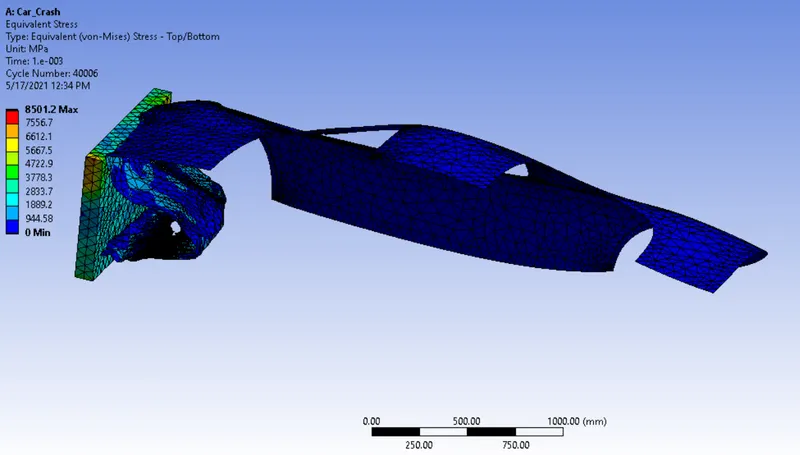
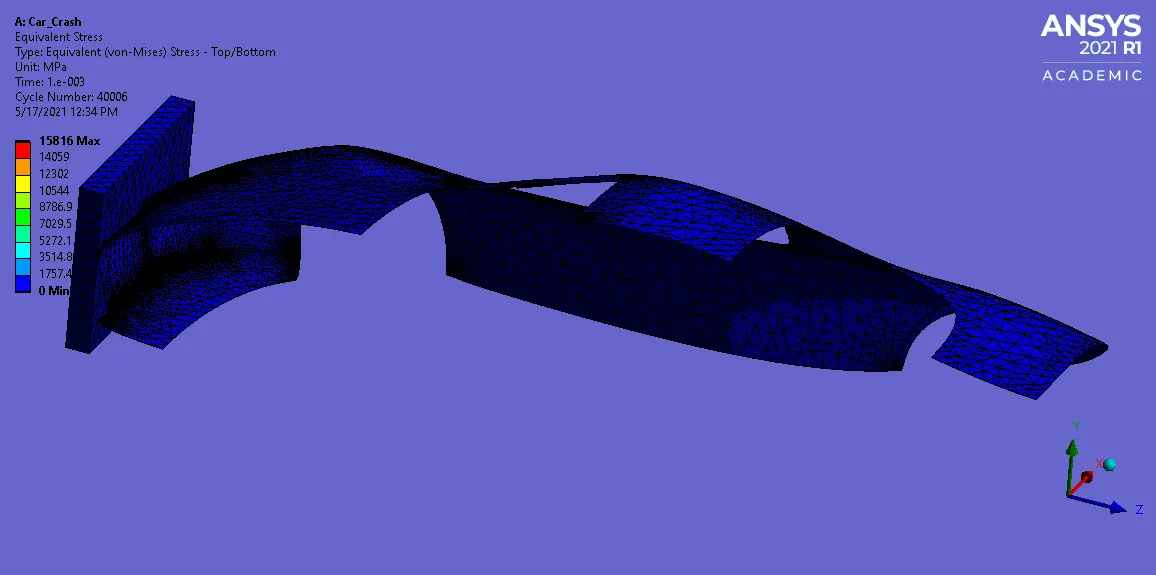
Equivalent Stress :
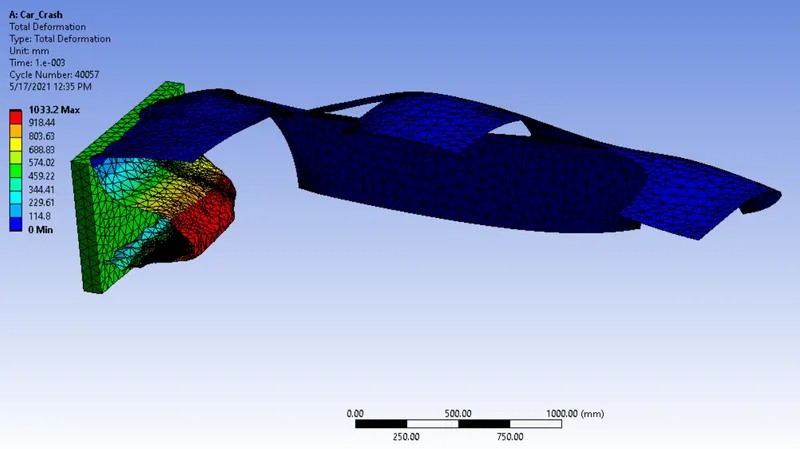
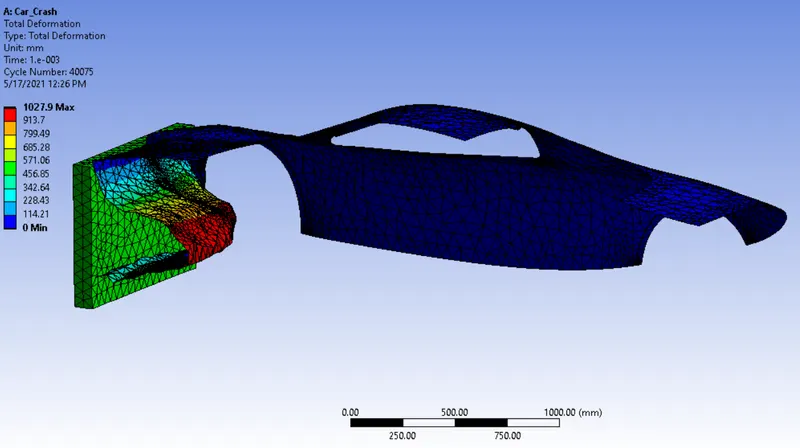
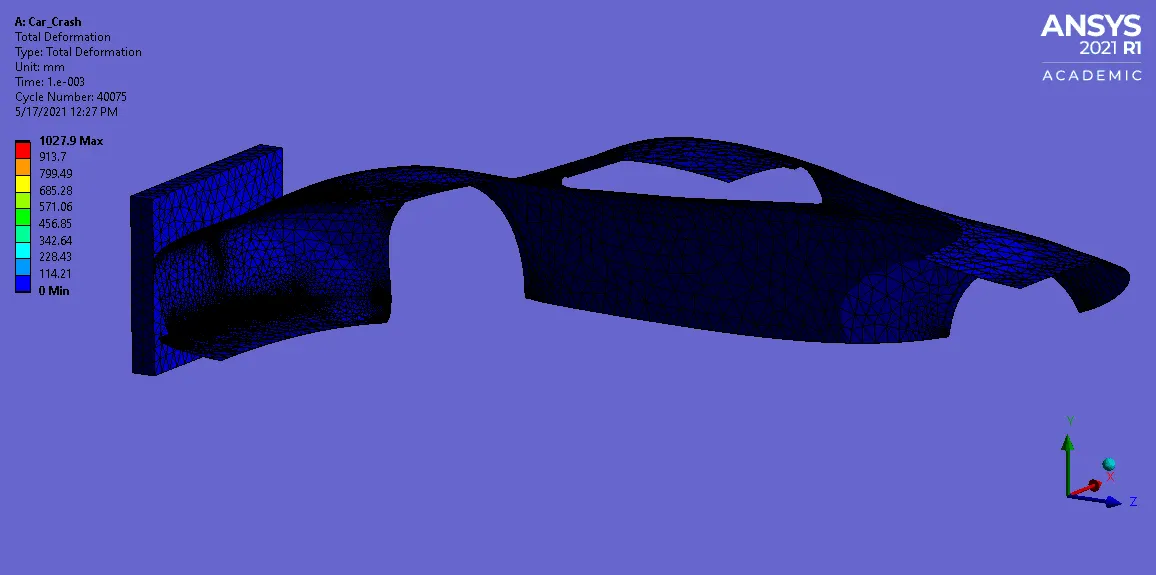
Total Deformation :
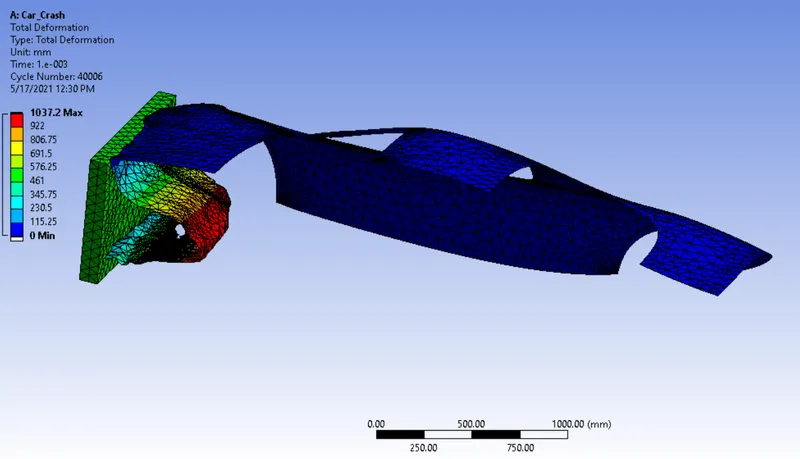
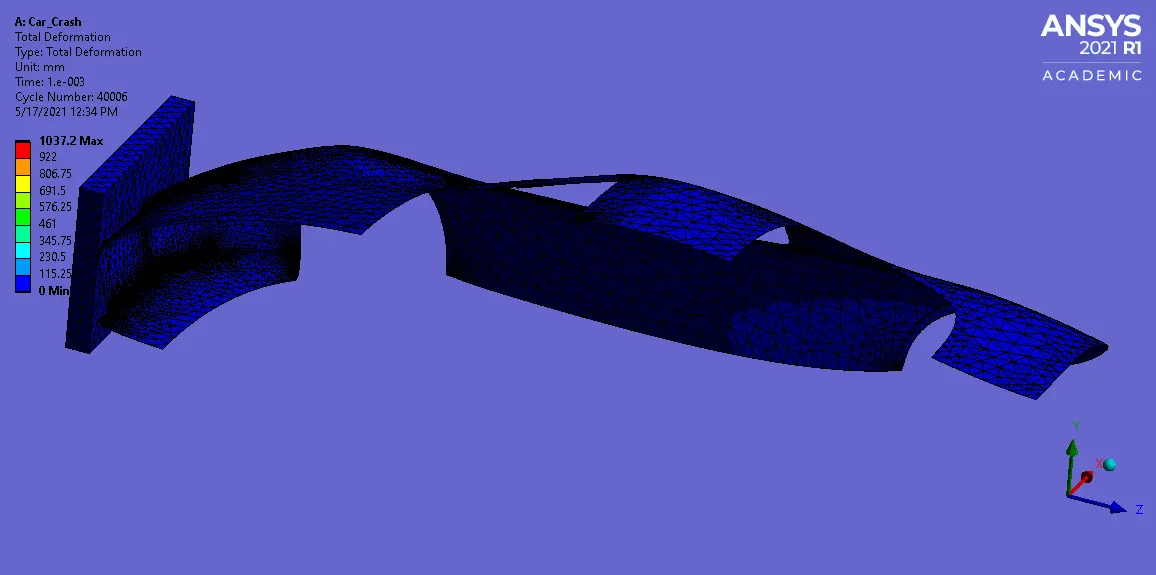
CASE 2
Equivalent Stress :
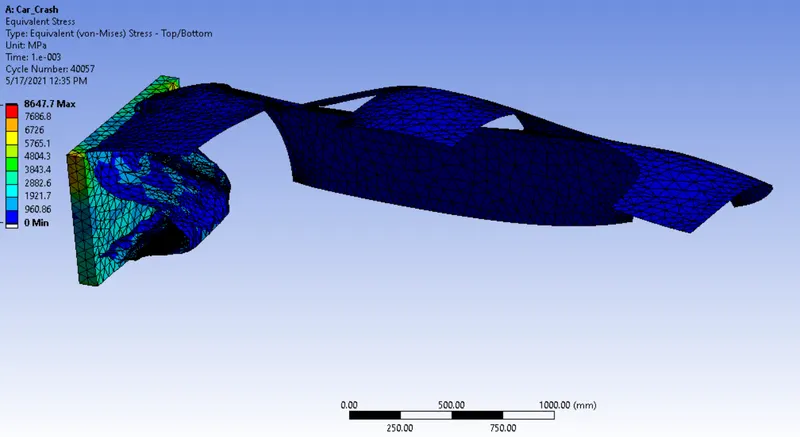
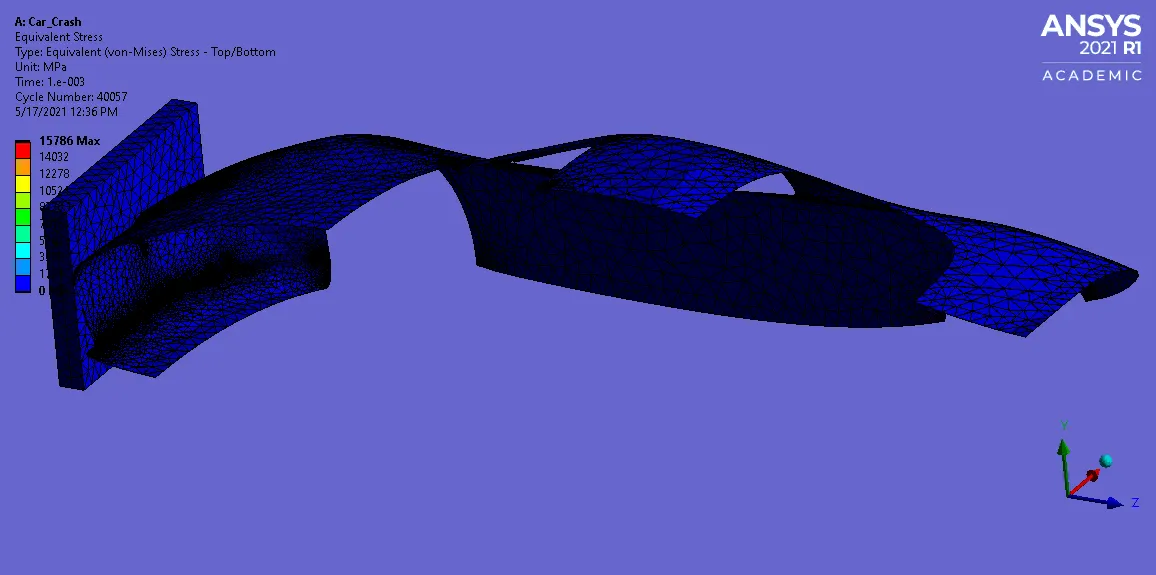
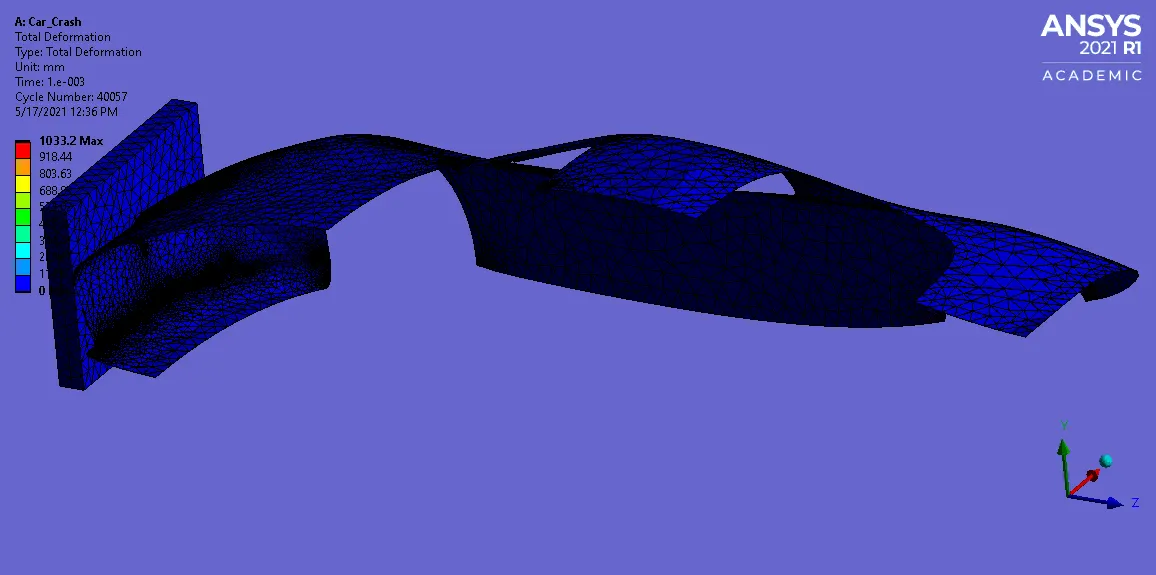
Total Deformation :
CASE 3
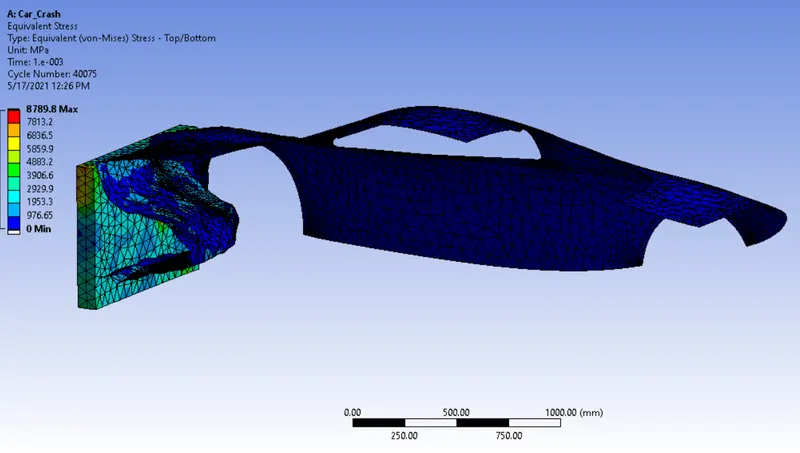
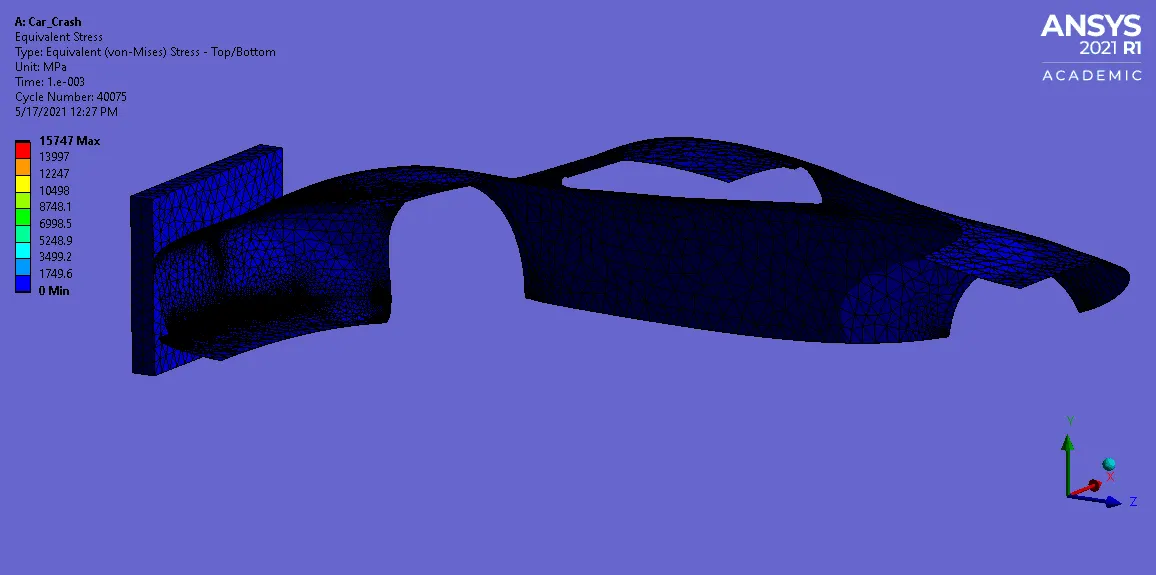
Equivalent Stress :
Total Deformation :
CONCLUSION :
| Cases \ Field Variables | Thickness in mm | Equivalent Stress in Mpa | Total Deformation in mm |
| Case 1 | 0.3 | 8501.2 | 1037.2 |
| Case 2 | 0.6 | 8647.7 | 1033.2 |
| Case 3 | 1 | 8789.8 | 1027.9 |
A Maximum stress is directly proportional to thickness of the car body surface.
A Total Deformation is inversely proportional to thickness of the car body surface.
Learning Outcome :
I Learnt How to perform the Parametric Study.
I Learnt How to perform the meshing by using All Triangle method algorithms.
I Learnt How to bulid the case setup for car crash simulation.