(ANSYS_P10) _Car Crash simulation
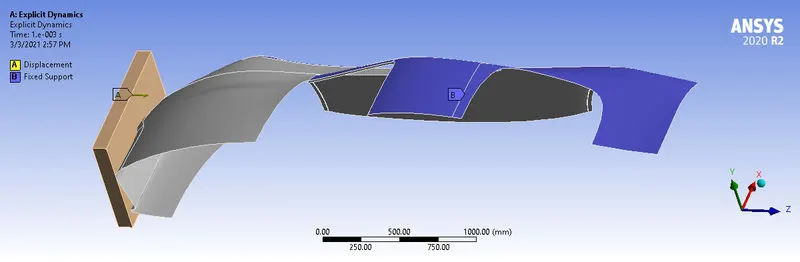
OBJECTIVE:Perform a Explicit dynamics analysis of a wall crushing a car body in ANSYS Workbench.
TASK
- For this challenge, I would have to perform a parametric study using 3 different values of thickness for the car body.
- Analyse the total deformation and Equivalent stresses acting on the model.
CONNECTIONS
- No contacts are defined in explicit analysis.
- We just assign frictionless contact to all bodies in Body Interactions.
MATERIAL
Stainless steel NL (Car Body)
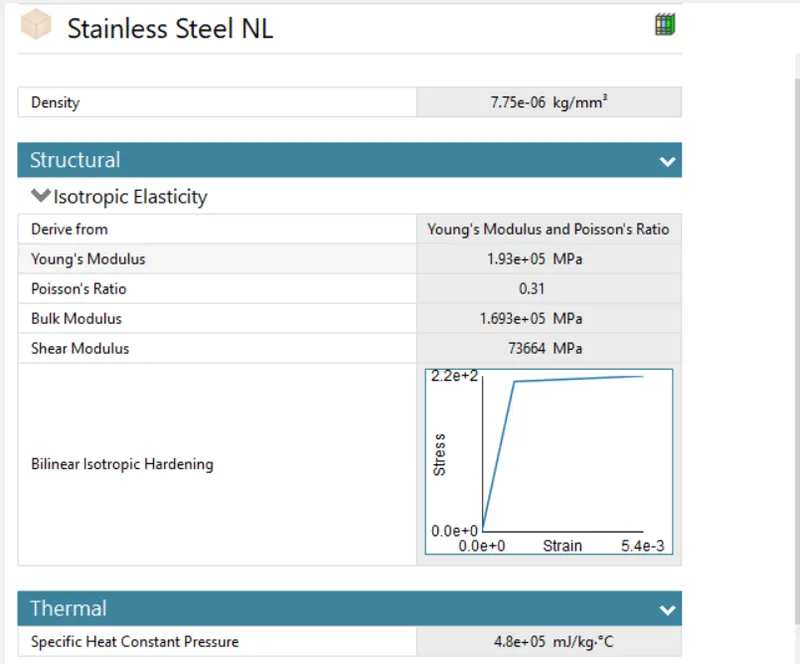
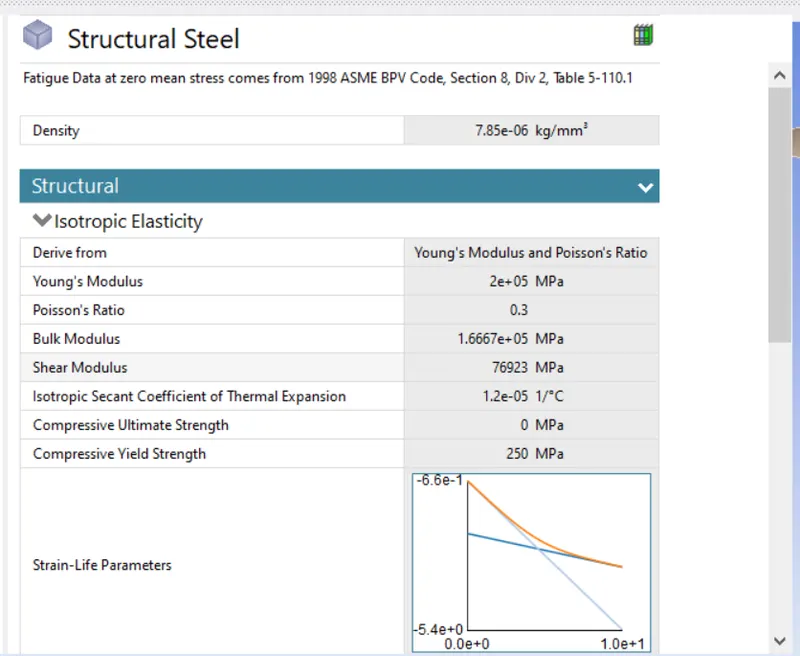
Structural steel (Wall)
SYMMETRY
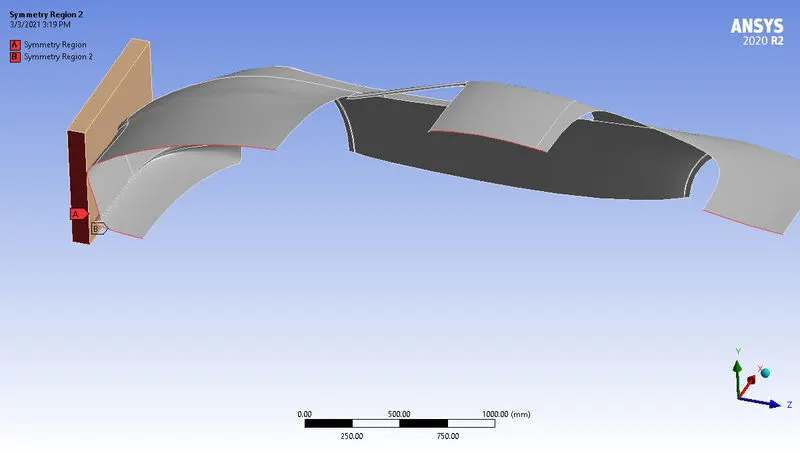
In order to simulate realistic results and reducing computational power , the geometry is halfed and symmetry is applied in the module.
This is done by creating symmetic regions and selecting all faces which are symmetic.
MESHING
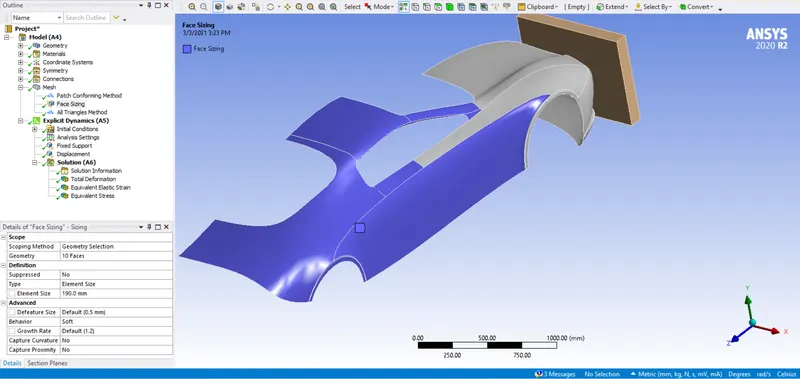
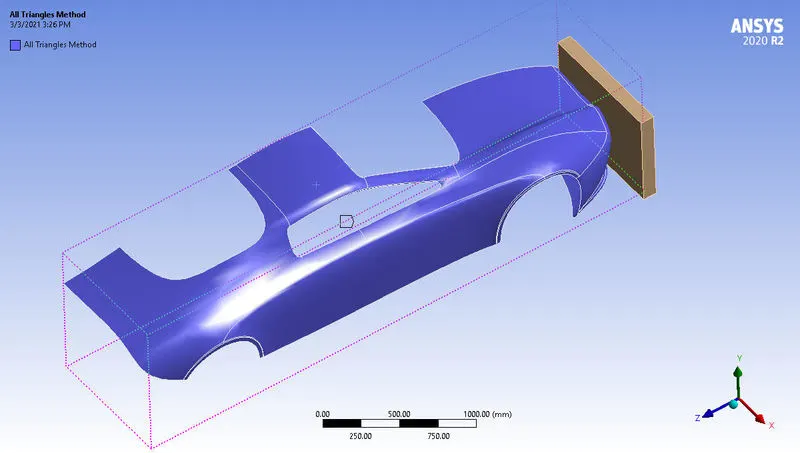
- A patch conforming method is defined with tetrahedron elements
- A face sizing of 190 mm is selected dor all the faces which would not come into contact with the wall
- All triangles method is selected for the whole car body
ANALYSIS SETTING
- End time : 0.001s
- Maximum number of cycles :100000000
- Energy error limit : 0.1
BOUNDARY CONDITIONS
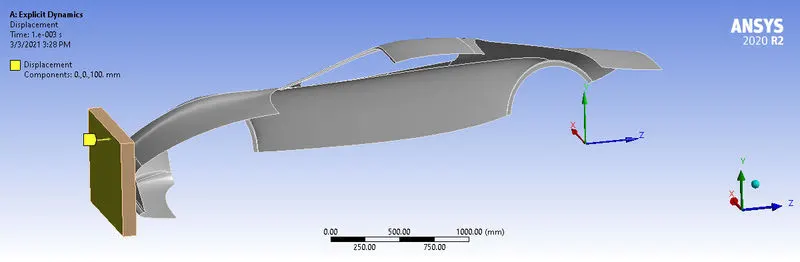
- A displacement is assigned to the wall (100mm)
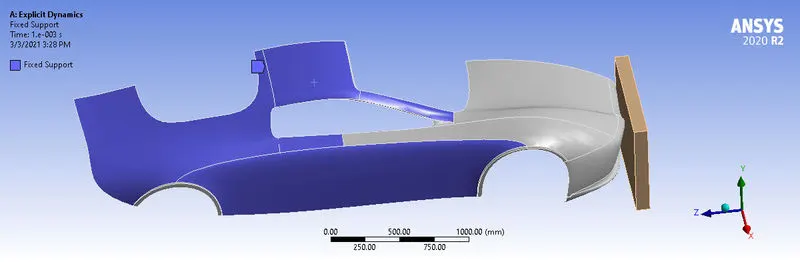
- The surface of the car body is fixed
OUTPUT REQUEST
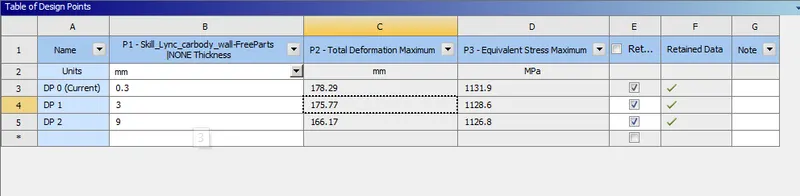
By specifying a parametric parameter for thickness of the car body,
3 different thickness is assigned and a parametric study is done on the deformation and stress developed.
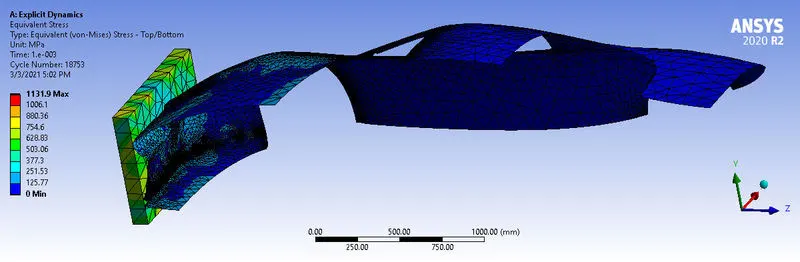
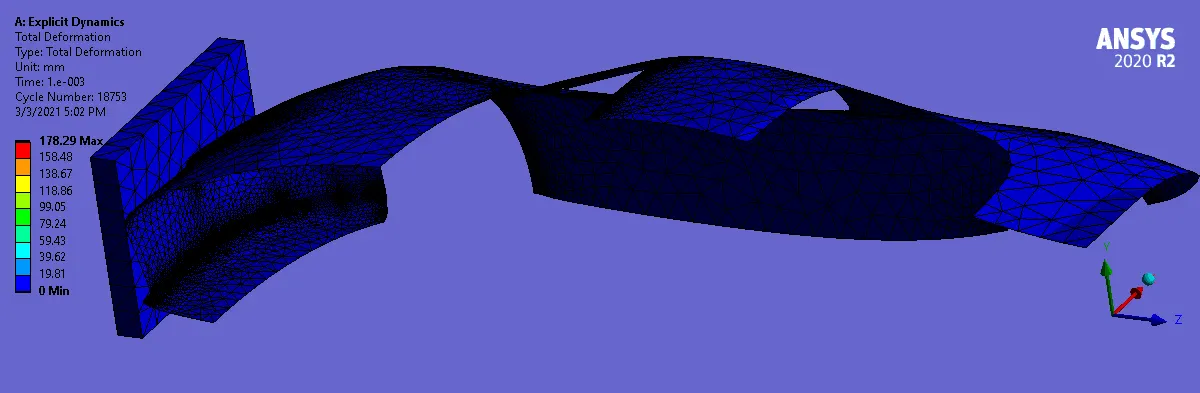
THICKNESS - 0.3 mm
Equivalent stress (1131.9)
Total deformation (178.29)
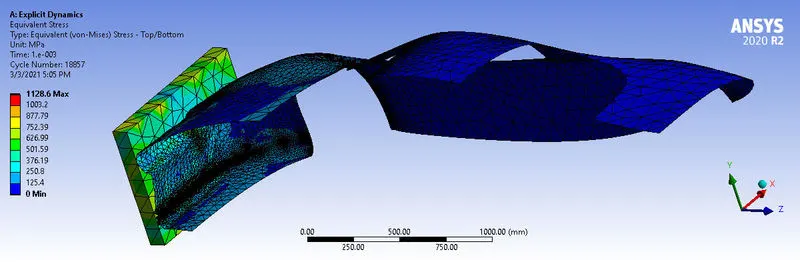
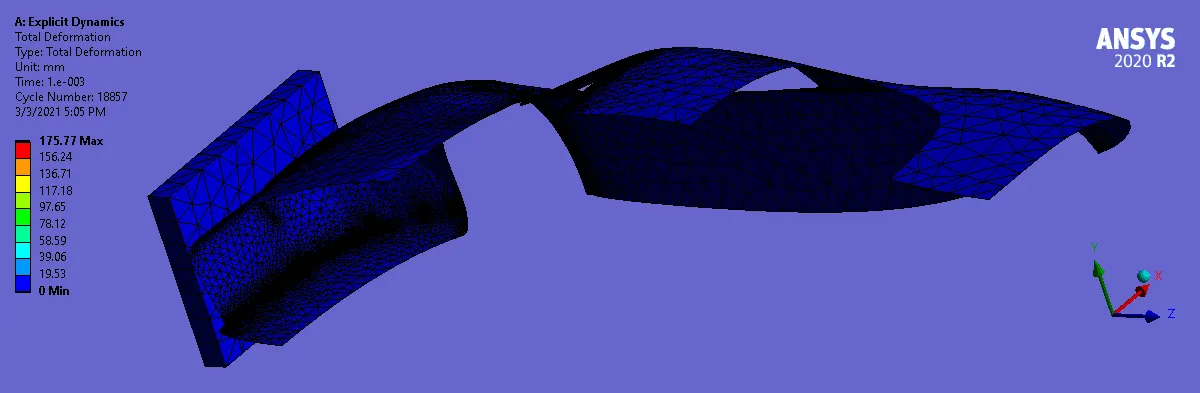
THICKNESS - 3 mm
Equivalent stress (1128.6)
Total deformation (175.77)
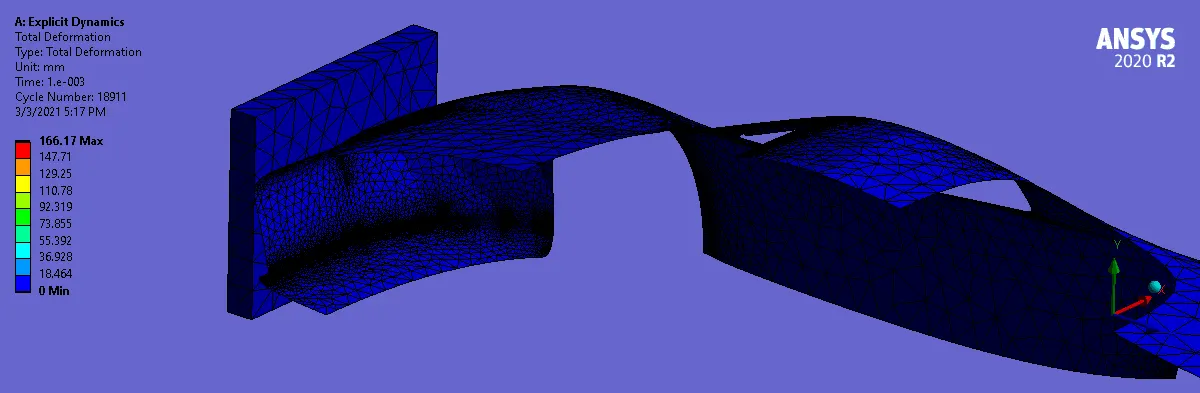
THICKNESS - 9 mm
Equivalent stress (1126.8)
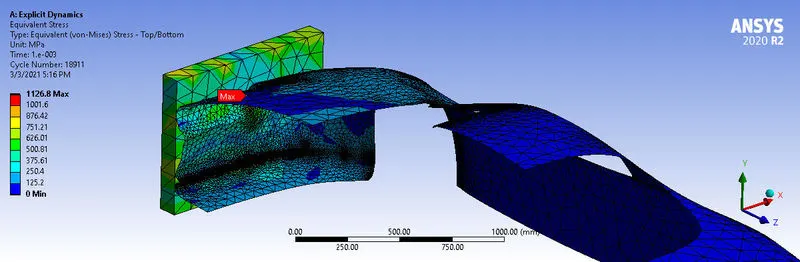
Total deformation (166.17)
DISCUSSION
It has been observed from the parametric data collected that, the higher the thickness of the car body the lesser the deformation and the lesser the maximum stresses developed . This means that increasing the thickness of the car body increases the stiffness of the body. The more stiffness , the more resistance to deformation .The lower the deformation , the lower the stresses developed.
The parametric results is seen below.
CONCLUSION
This task was simulated succesfully and the effect a wall crushing a car body was analysed and deduced.
https://drive.google.com/drive/folders/1gr7mvudbY0Lycn1E18ryyuI7x_j5tQ1M?usp=sharing