Week 10 Thermal Management
AIM:- Thermal Management
Object:- Prepare a report summarizing thermal management techniques for electric car battery pack.
Introduction:-
All electronic device and circuitry generate excess heat and thus require thermal management to improve reliability and prevent premature failure. The amount of heat output is equal to the power input, if there are no other energy interactions. There are several techniques for cooling including various styles of heat sinks, thermoelectric cooler, forced air systems and fans, heat pipes, and others. In cases of extreme low environmental temperatures, it may actually be necessary to heat the electronic components to achieve satisfactory operation.
A battery pack thermal management system for use in an electric car. The battery pack thermal management system includes a plurality of thermistors connected to a plurality of cells of a battery pack. A battery monitor board is connected to the thermistors. The system also includes a manifold and a plurality of cooling tubes connected to the manifold. A tube seal plug is arranged over an end of the cooling tube and an end fitting is arranged on an end of the cooling tube. The thermal management system will cool the battery pack to predetermined temperatures to increase the longevity of the battery pack within the electric vehicle.
Effect of high Temperature in Battery pack-
Battery temperature is the primary factor affecting the performance and life of the battery pack. Idealy, li-ion battries should operate between 25 degree and 40 degree for optimum performance and life.
The energy storage and cycle life of the cell can be reduced significantly when the cell is operated at temperature above 40 degree celcius or below 0 degree celcius.
High temperatures promot of the solid electrolyte interface layer and increase the internal resistance, which would cause significant reduction in the power delivery.
under extreme condition the separator will melt, causing and internal short circuit which can potentially lead to thermal runway of the cell.
In the other hand the capacity will be decreased if the battery is operated at temperatures below 0 degree celcius and lithiun plating during discharge will occure.
While higher temperaturea can be tolerated temporarily, if the temperature is greater than 60 degree celcius for a prolonged period with the battery fully charged, there is a risk that the batteries may rupture, explode or catch fire due to thermal runway.
battery temperature and uniformity have a strong influence on the availability of the charging and discharging power, cell balancing and charge acceptance during regenerative braking.
A large variation of temperature in a battery can lead to different cells charging and discharging at different rates and lead to electrically unbalanced cells and reduce the performance of the battery pack.
Furthermore, the self discharging rate will also be affected over a long period of time and can lead to a reduction in the effective operational state of charge.
Need for an Thermal Management in a Battery pack:-
Electric Vehicles (EVs) are projected as the most sustainable solutions for future transportation. EVs have many advantages over conventional hydrocarbon internal combustion engines including energy efficiency, environmental friendliness, noiselessness and less dependence on fossil fuels.
However, there are also many challenges which are mainly related to the battery pack, such as battery cost, driving range, reliability, safety, battery capacity, cycle life, and recharge time.
The performance of EVs is greatly dependent on the battery pack.
Temperatures of the cells in a battery pack need to be maintained within its optimum operating temperature range in order to achieve maximum performance, safety and reliability under various operating conditions.
Poor thermal management will affect the charging and discharging power, cycle life, cell balancing, capacity and fast charging capability of the battery pack.
Hence, a thermal management system is needed in order to enhance the performance and to extend the life cycle of the battery pack.
In this study, the effects of temperature on the Li-ion battery are investigated. Heat generated by LiFePO 4 pouch cell was characterized using an EV accelerating rate calorimeter. Computational fluid dynamic analyses were carried out to investigate the performance of a liquid cooling system for a battery pack. The numerical simulations showed promising results and the design of the battery pack thermal management system was sufficient to ensure that the cells operated within their temperature limits.
Thermal Management Techniques for Electric Vehicle's Battery Pack:-
Similar to conventional ICE vehicles, a battery pack in EVs or HEVs also needs a cooling system. An EV battery pack comprises cell modules, interconnects power management system and thermal management system.
Different types of cooling system will influence the performance and cost of the battery pack thermal management system.
There are three common battery thermal management method used today-
1. Air Cooling
2. Liquid Cooling
3. Phase change material(PCM), Heat pipe or combination of them.
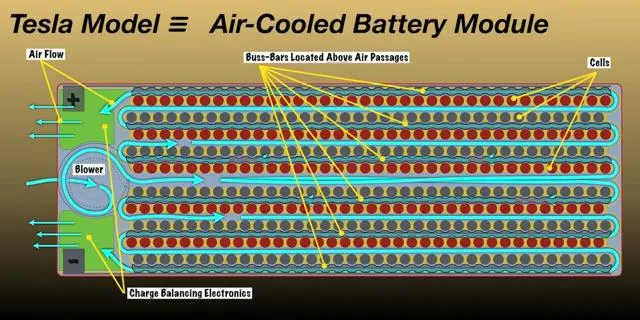
1. Air Cooling:- Air cooling uses the principle of convection to transfer heat away from the battery pack. As air runs over the surface, it will carry away the heat emitted by the pack. Air cooling is simple and easy, but not very efficient and relatively crude compared to liquid cooling. Air cooling is used in earlier versions of electric cars, such as the Nissan Leaf. As electric cars are now being used more commonly, safety issues have arisen with purely air-cooled battery packs, particularly in hot climates. Other car manufacturers, such as Tesla, insist that liquid cooling is the safest method.
2. Liquid Cooling System:- Liquid coolants have higher heat conductivity and heat capacity (ability to store heat in the form of energy in its bonds) than air, and therefore performs very effectively and owns advantages like compact structure and ease of arrangement. Out of these options, liquid coolants will deliver the best performance for maintaining a battery pack in the correct temperature range and uniformity. Liquid cooling systems have their own share of safety issues related to leaking and disposal, as glycol can be dangerous for the environment if handled improperly. These systems are currently used by Tesla, Jaguar, and BMW, to name a few.
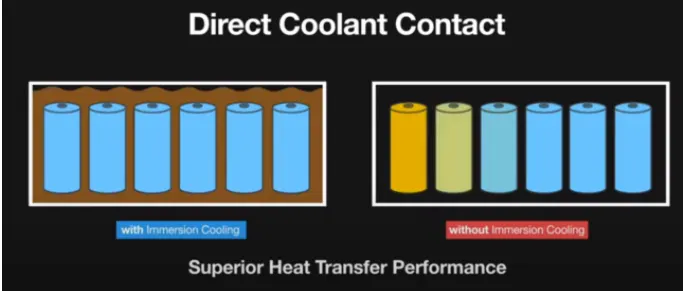
Immersion Cooling system:- An emerging option for managing the temperature is dielectric liquid immersion, widely knows as a leading cooling technology in the data center industry. GRC and Engineering Fluids are two leading suppliers of liquid immersion technology. The objective of the approach is to trim the extreme temperatures the battery with a high specific heat fluid is safe around electronic components. Tow phase immersion cooling is a popular option for battery thermal management, but because it needs to operate at the saturation temperature, two phase immersion has limited operating window for a given heat transfer rate. Single phase immersion had a broader range pf applicability, and drastically extends the amount of time the battery takes to soak to extreme ambient temperatures. The high heat capacity also enables smaller components, helping the mass challange and dielectric fluids are available in environmentally friendly chemistry.
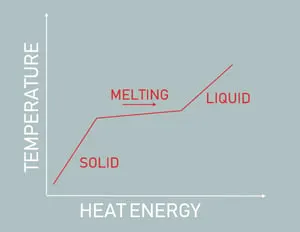
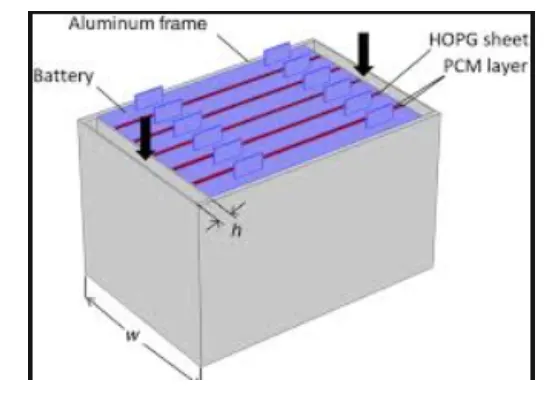
3. Phase change material(PCM), Heat pipe or combination of them:- Phase change material absorbs heat energy by changing state from solid to liquid. While changing phase, the material can absorb large amounts of heat with little change in temperature. Phase change material cooling systems can meet the cooling requirements of the battery pack, however the volume change that occurs during a phase change restricts its application. Also, phase change material can only absorb heat generated, not transfer it away, which means that it won’t be able to reduce overall temperature as well as other systems. Although not favorable for use in vehicles, phase change materials can be useful for improving thermal perfomance in buildings by reducing internal temperature fluctuations and reducing peak cooling loads.
Advantages of Such Arrangement
1. Direct cell to cell contact enhance heat transfer.
2. Helps improve pack thermal uniformity.
3. Helps protect against cell to cell thermal runway.
4. Potentiall enables high charge/ discharge rates.