Week 10 - Simulating Combustion of Natural Gas.
Simulating Combustion of Natural Gas
Objectives:
Perform a combustion simulation on the combustor model and plot the variation of the mass fraction of the different species in the simulation using line probes at different locations of the combustor. Also, add water content in the fuel from 5% to 30% by mole and observe the effect of it on the results.
Combustor:
A combustor is a component or area of a gas turbine, ramjet, or scramjet engine where combustion takes place. It is also known as a burner, combustion chamber, or flame holder. In a gas turbine engine, the combustor or combustion chamber is fed high-pressure air by the compression system.
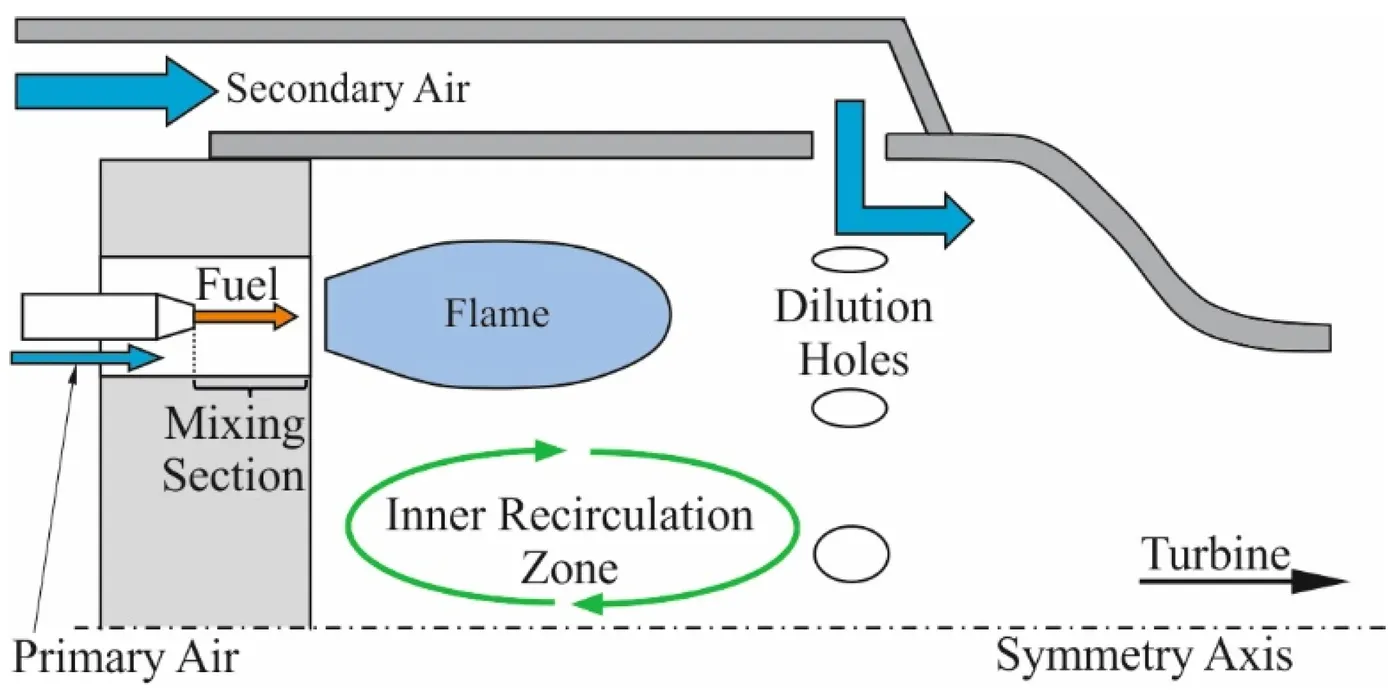
For this study, a 2D cross-section of the combustor with one air inlet and fuel inlet is considered.
Geometry:
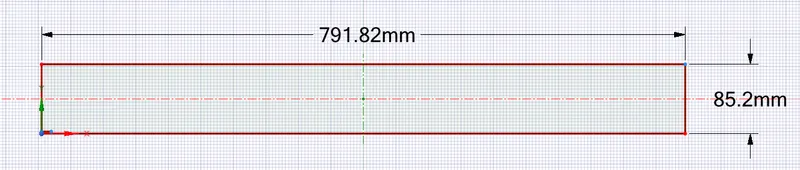
Dimensions of the combustor are as follows.
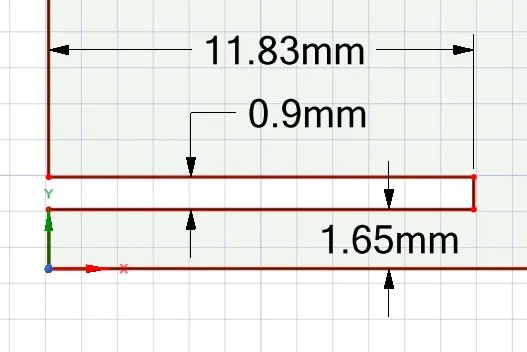
The below dimension of 1.65mm * 11.83mm is for the fuel inlet.
Mesh:
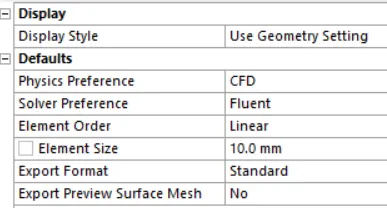
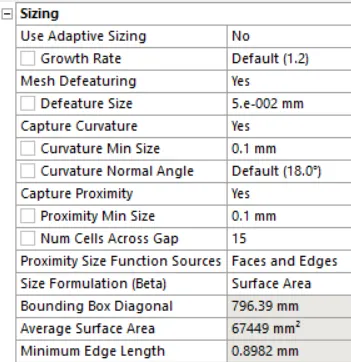
The geometry is meshed with the following settings.
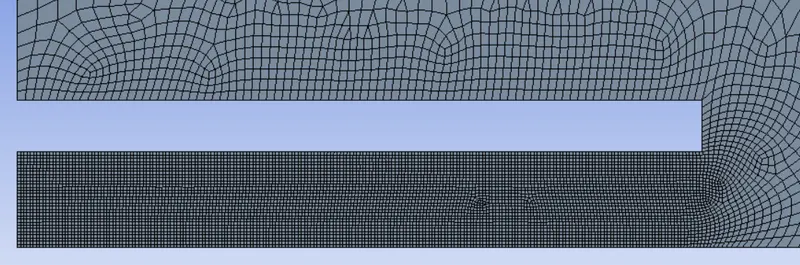
Mesh is generated with 16690 elements and it is as follows;

Proximity Capture is enabled and 15 cells across the gap are applied, which is further refined with a level 1 refinement making it 30 cells across the fuel inlet.
Below is the mesh generated with captured proximity of 15 cells in the gap refined further with level 1 refinement (30 cells in total).
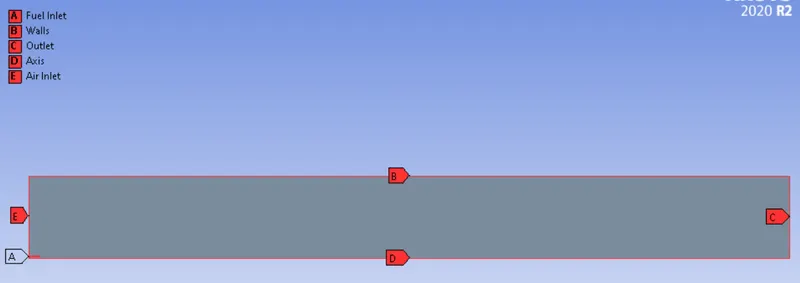
The geometry is further designated with the named selections as below;
Simulation Setup:
Solver Type: Pressure-based Steady State
2D Space: Axisymmetric
Viscous Model: Standard k-epsilon 2 equation with Standard wall functions
Energy Equation: ON
Species Model: Species Transport with Volumetric reactions, Inlet Diffusion
Mixture Material: Fluent database (methane-air-2step)
Turbulence Chemistry Interaction: Eddy-Dissipation
NOx Model: ON Thermal and Fuel NOx
Soot Model: 1-step model with CH4 as Fuel and O2 as Oxidant
Boundary Conditions:
Fuel Inlet: Velocity 18m/s, Temperature 300K, Species CH4:1 and H20:0
Air Inlet: Velocity 0.5m/s, Temperature 300K, Species O2:0.23
The above inlet conditions are coupled with a Pressure Outlet condition.
General equation for any Hydrocarbon based Stoichiometric combustion:

Here x=1 and y=4 (Methane)
Results:
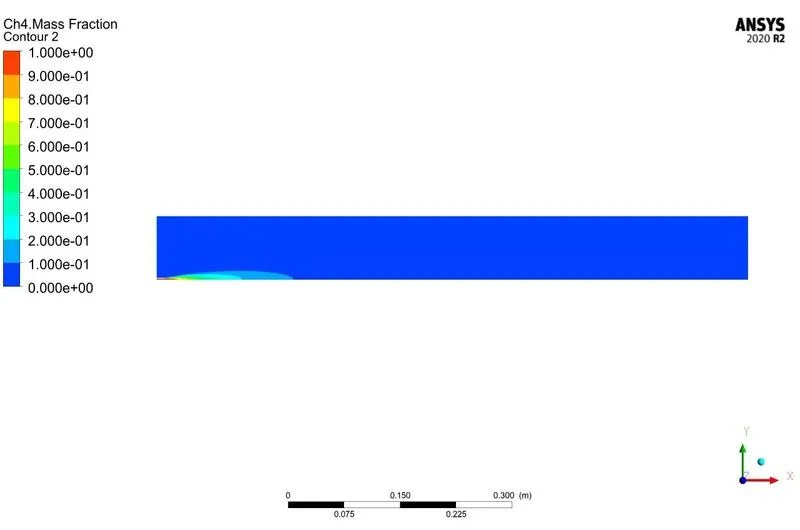
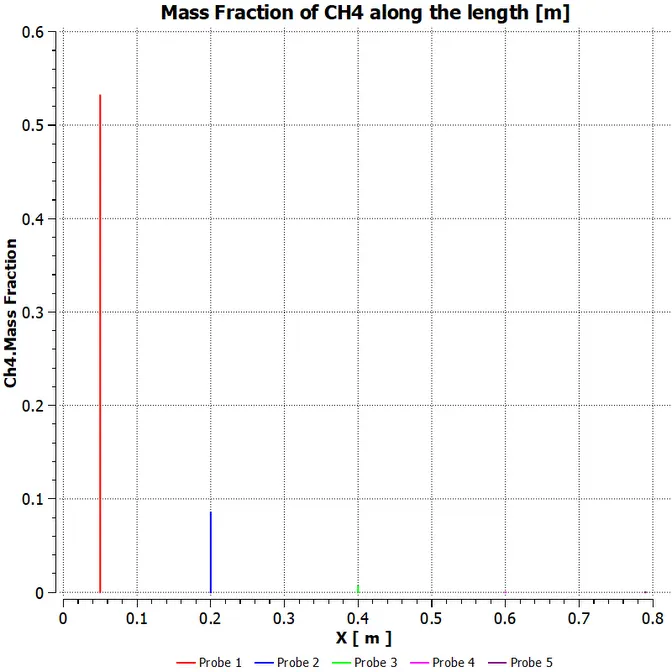
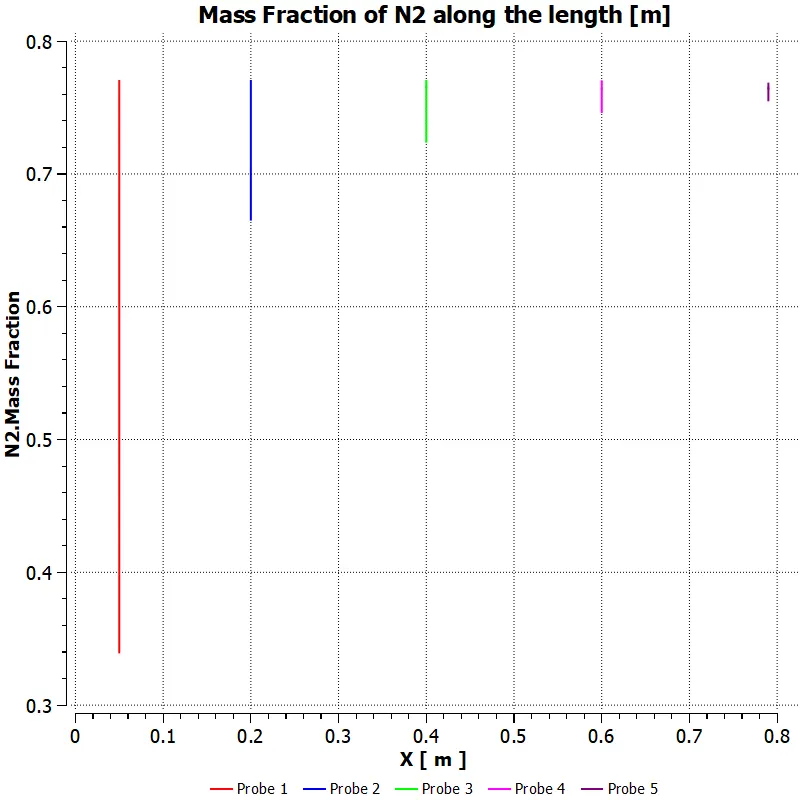
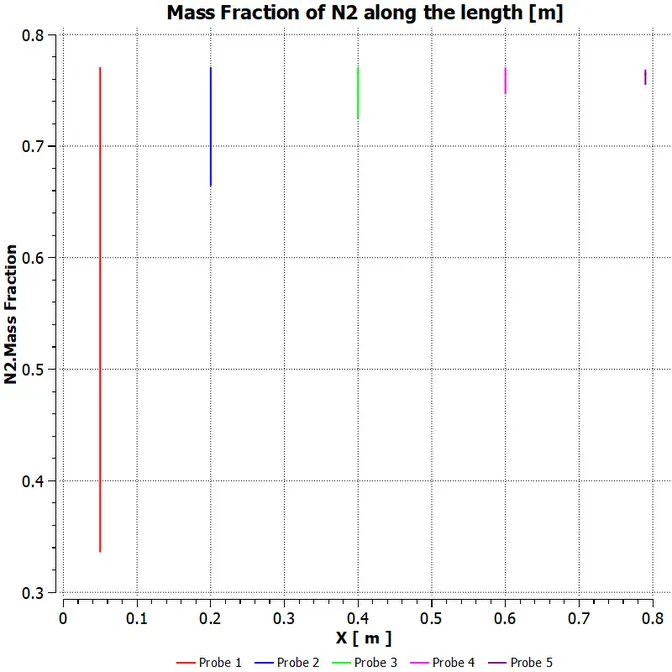
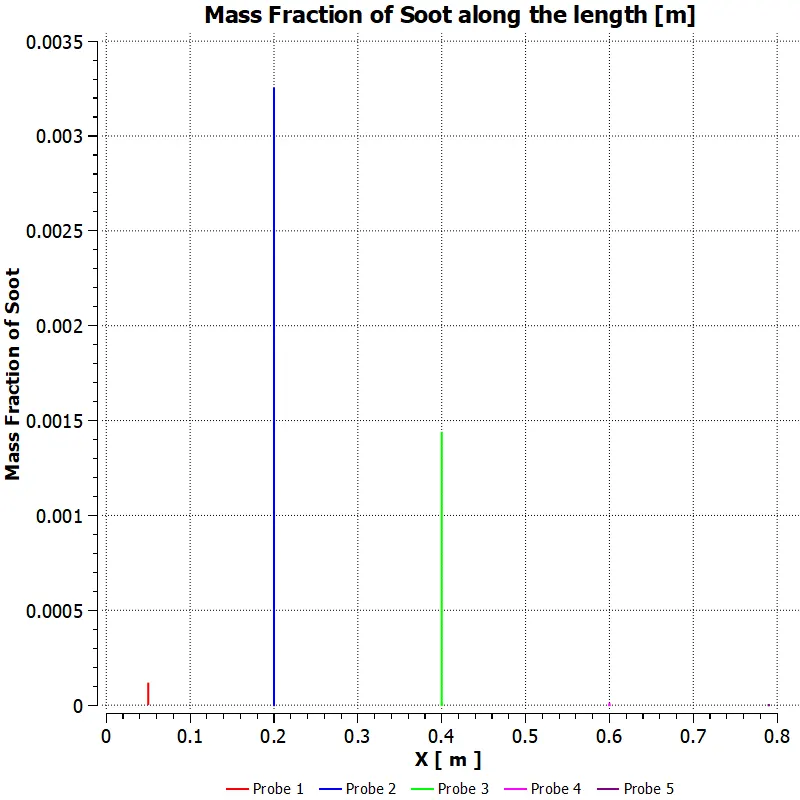
Five probes P1, P2, ... P5 has been created as follows;

Case 1: CH4:1, H2O:0
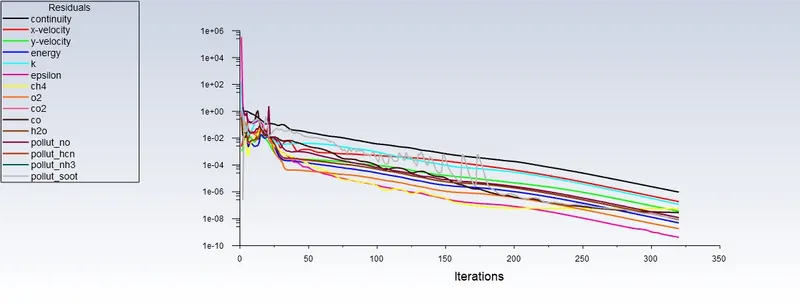
Residuals:
- CH4 Mass Fraction:
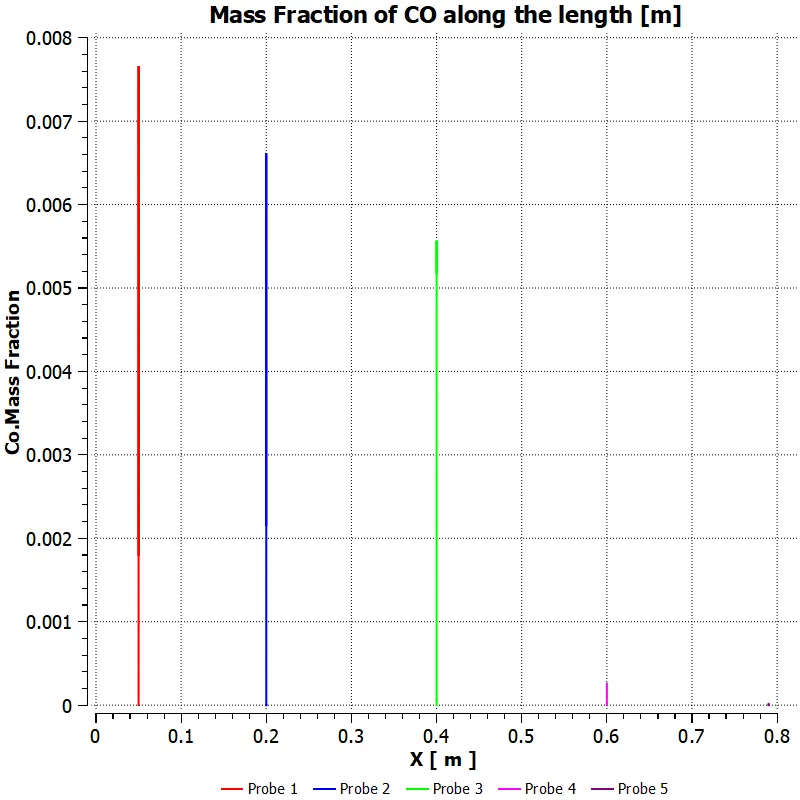
- CO Mass Fraction:
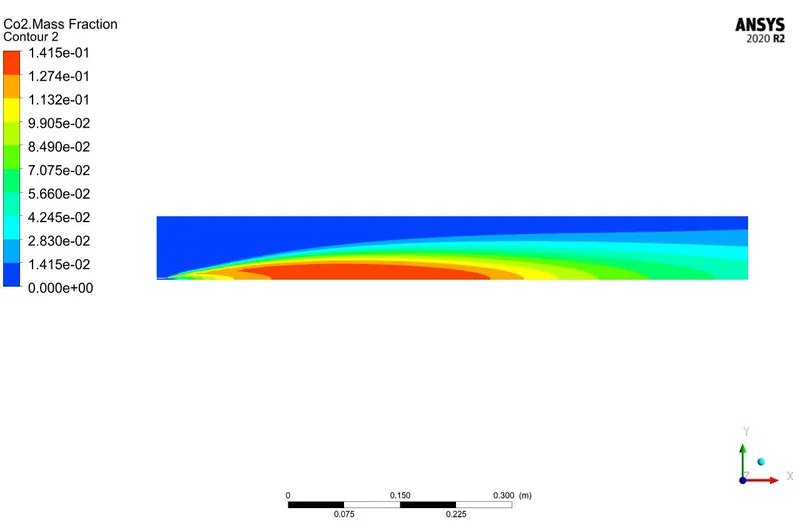
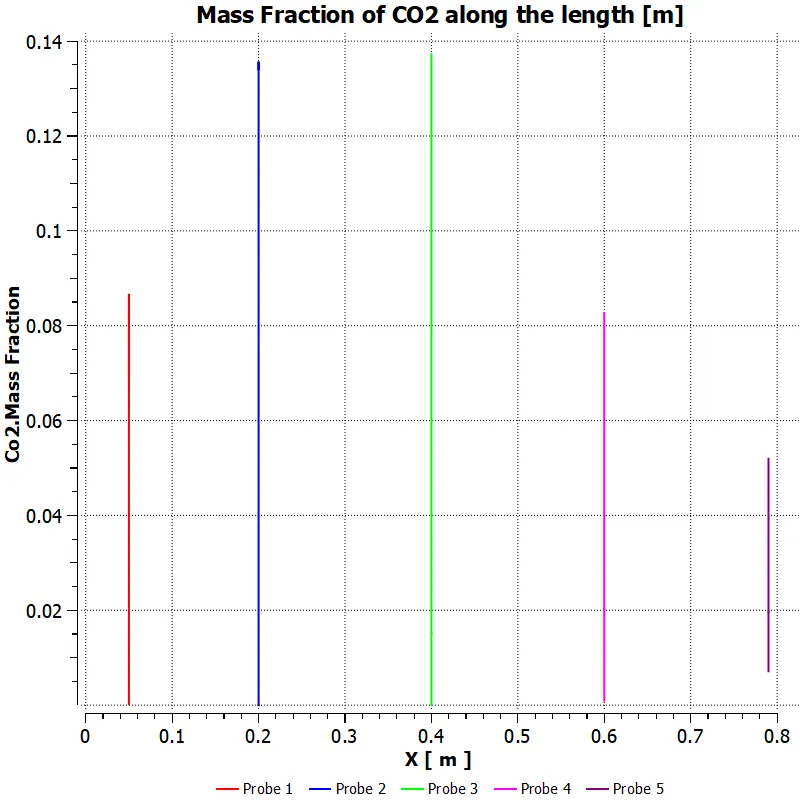
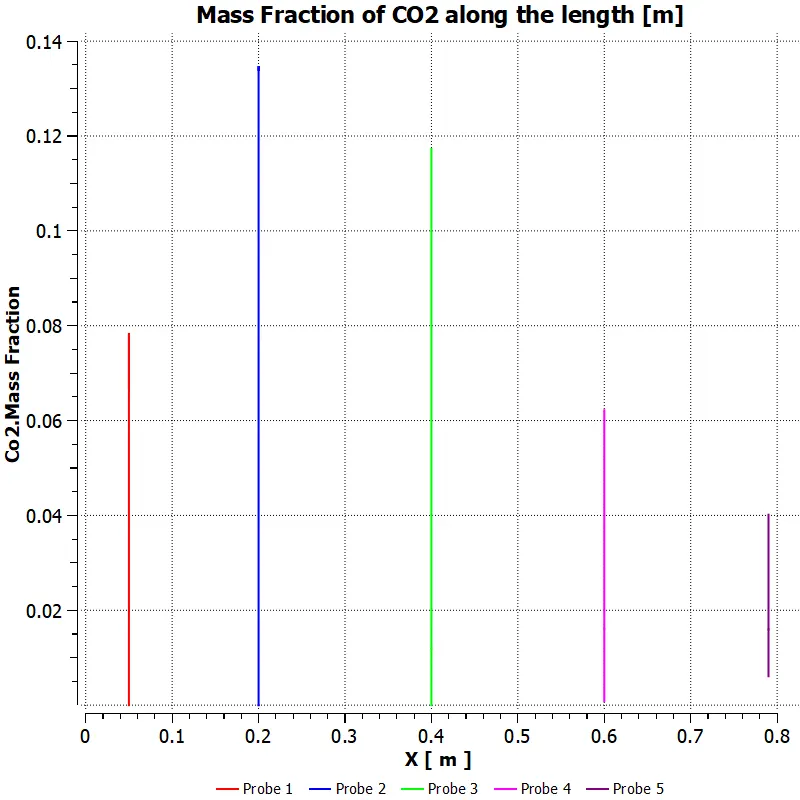
- CO2 Mass Fraction:
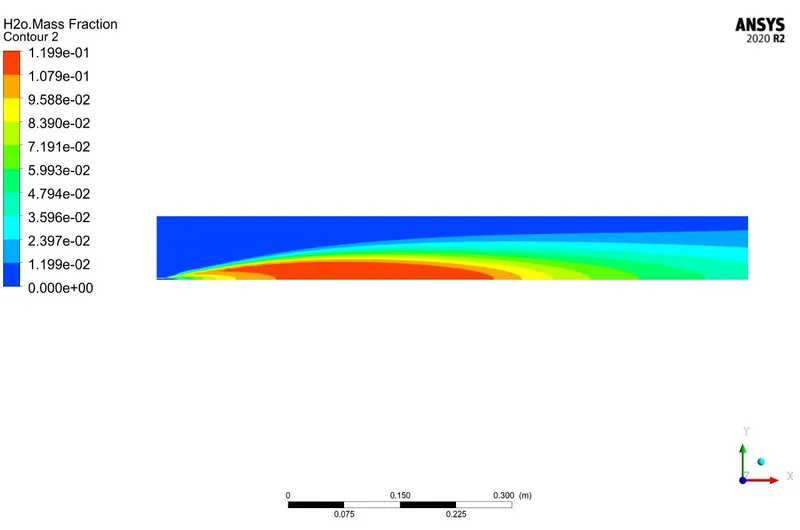
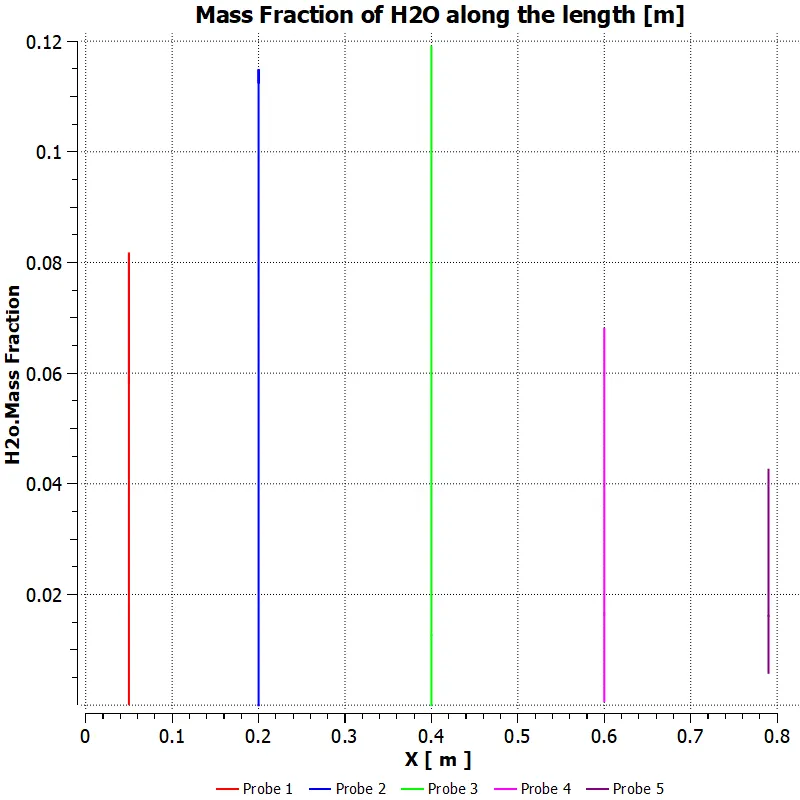
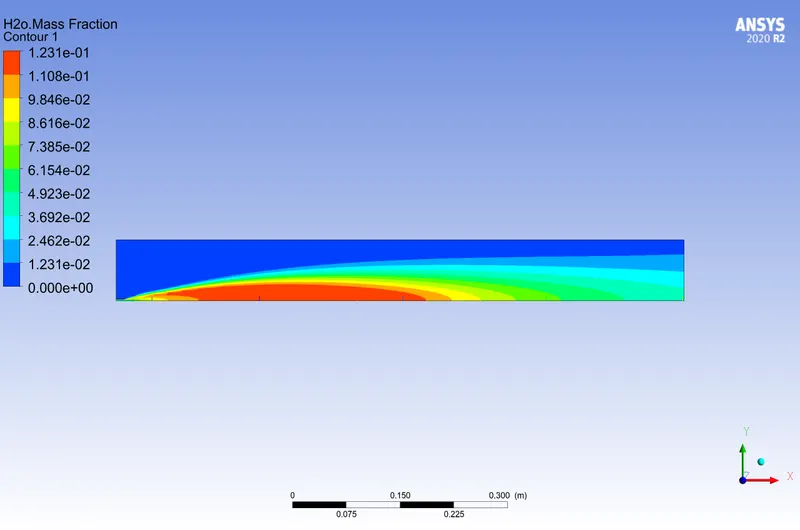
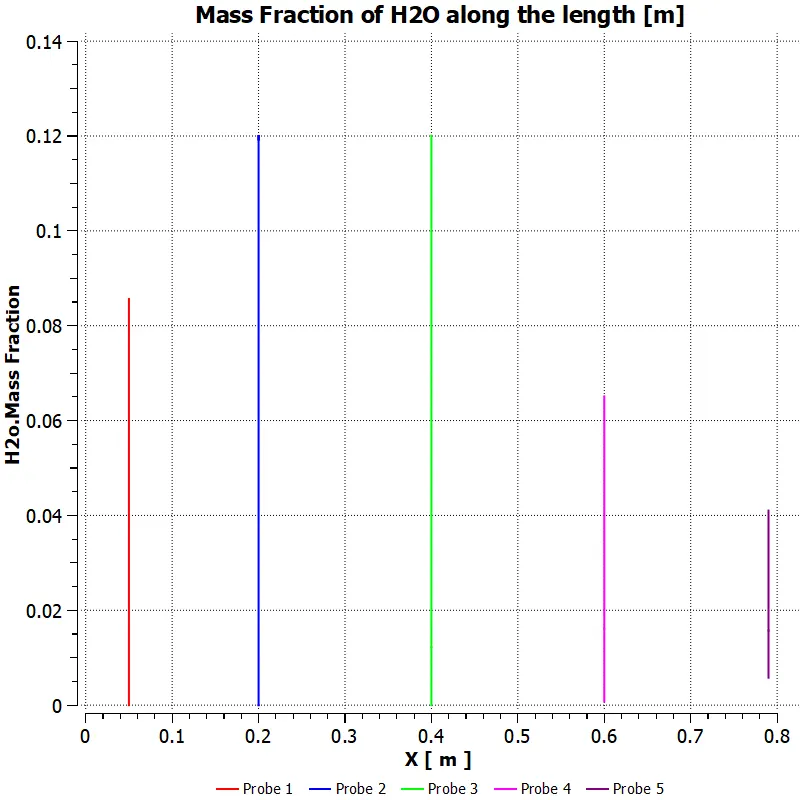
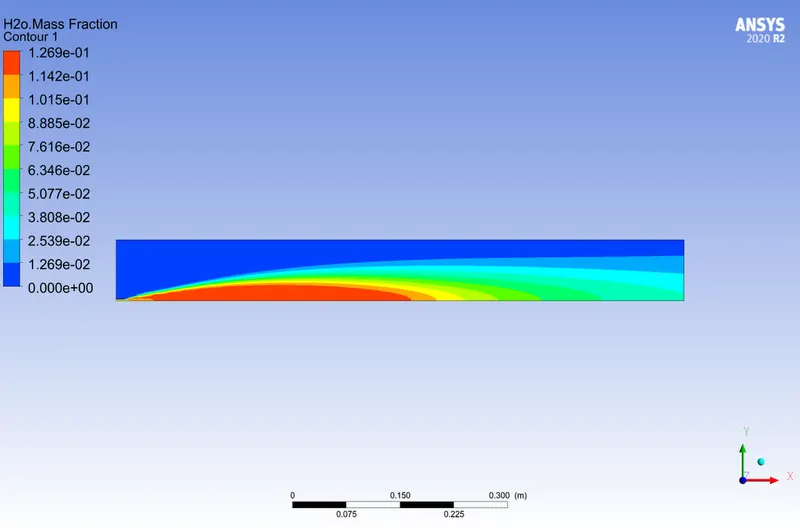
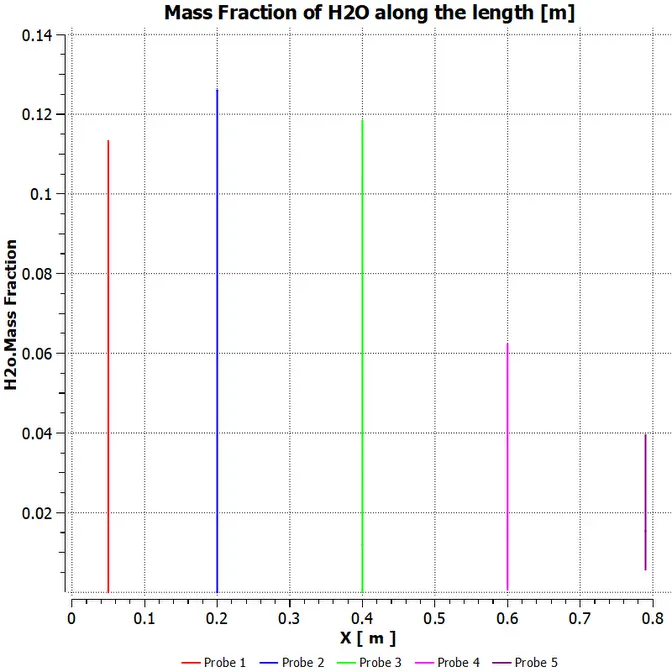
- H2O Mass Fraction:
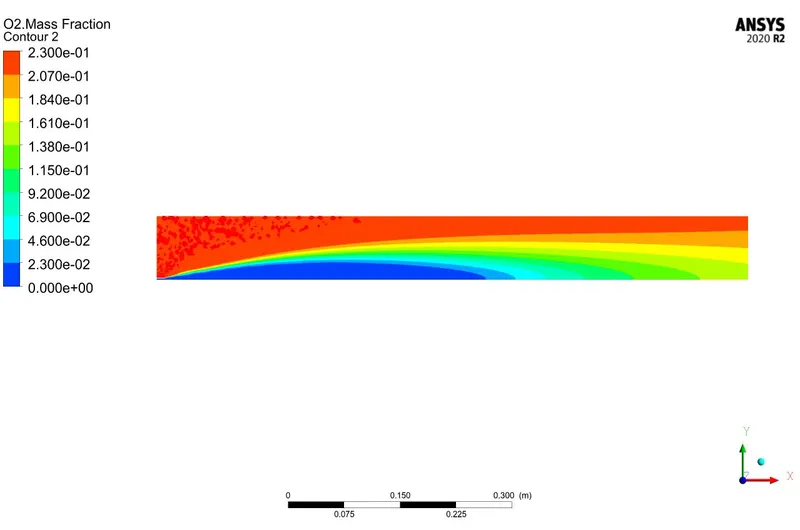
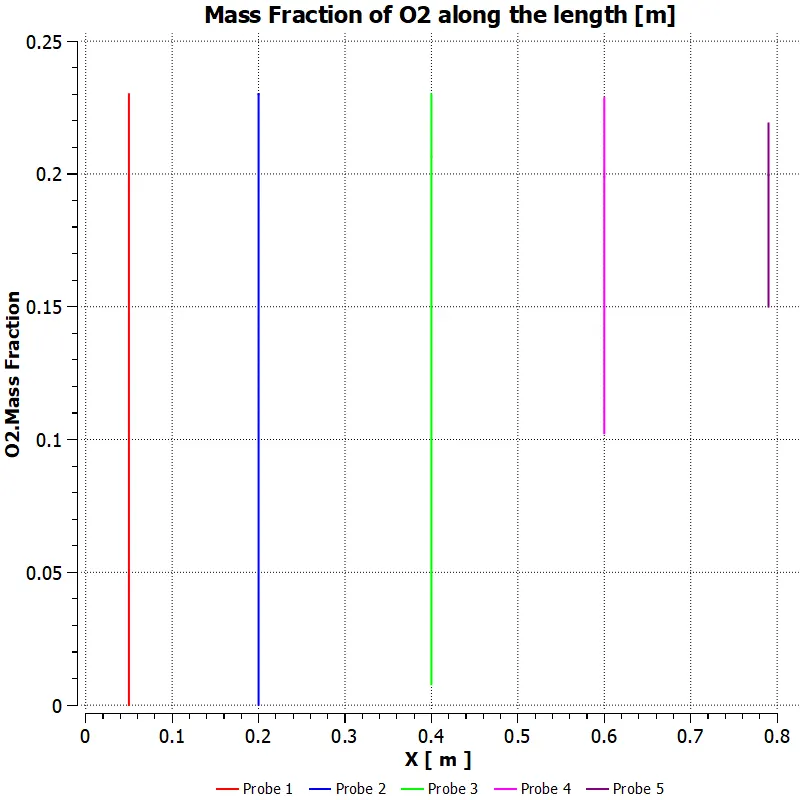
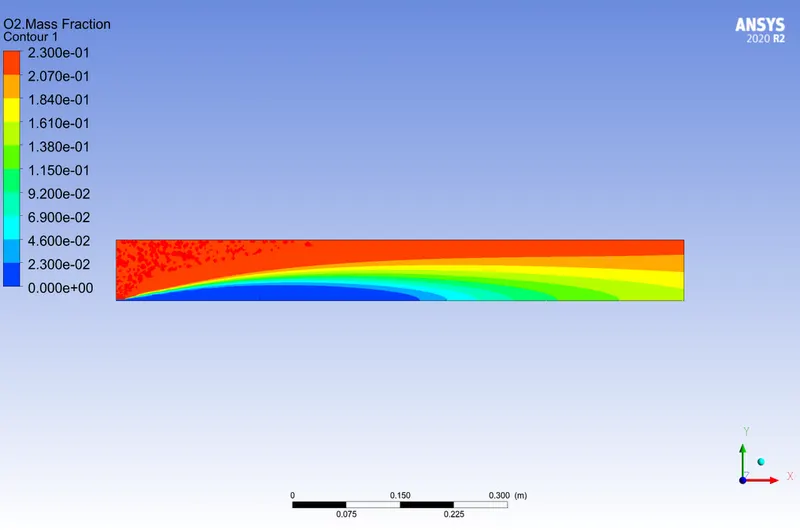
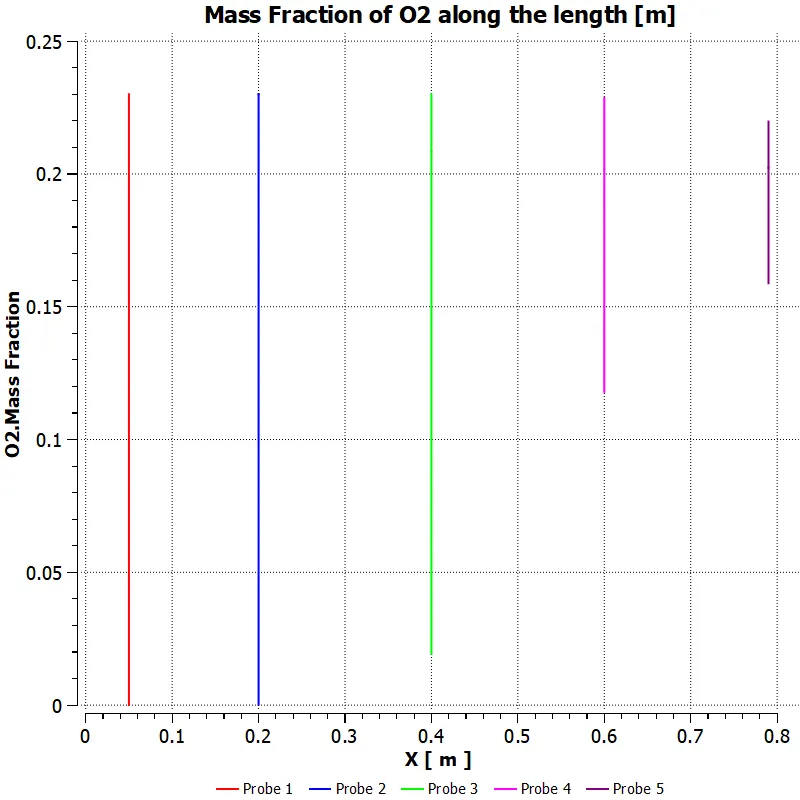
- O2 Mass Fraction:
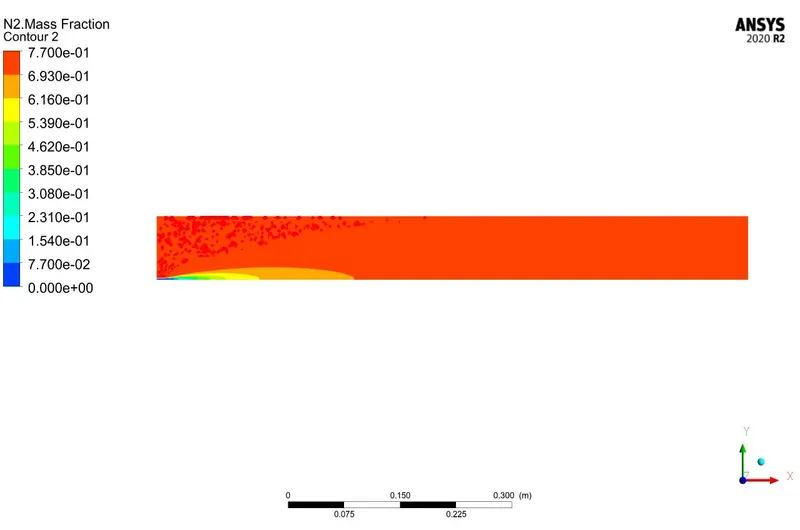
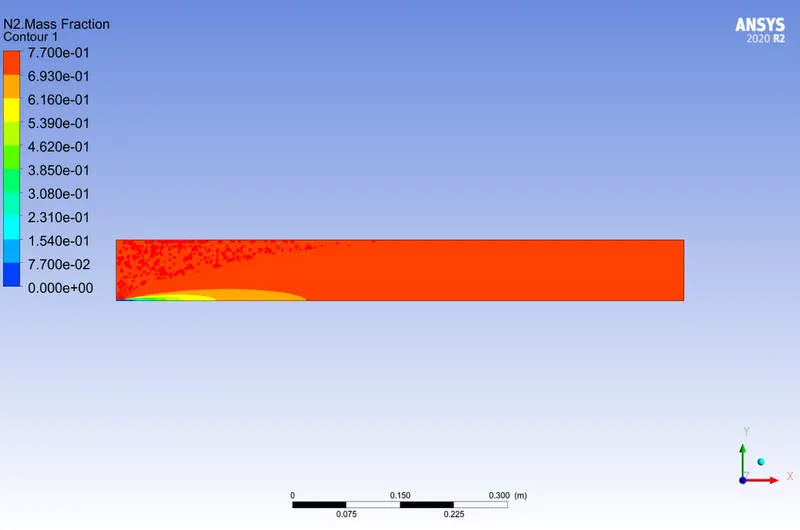
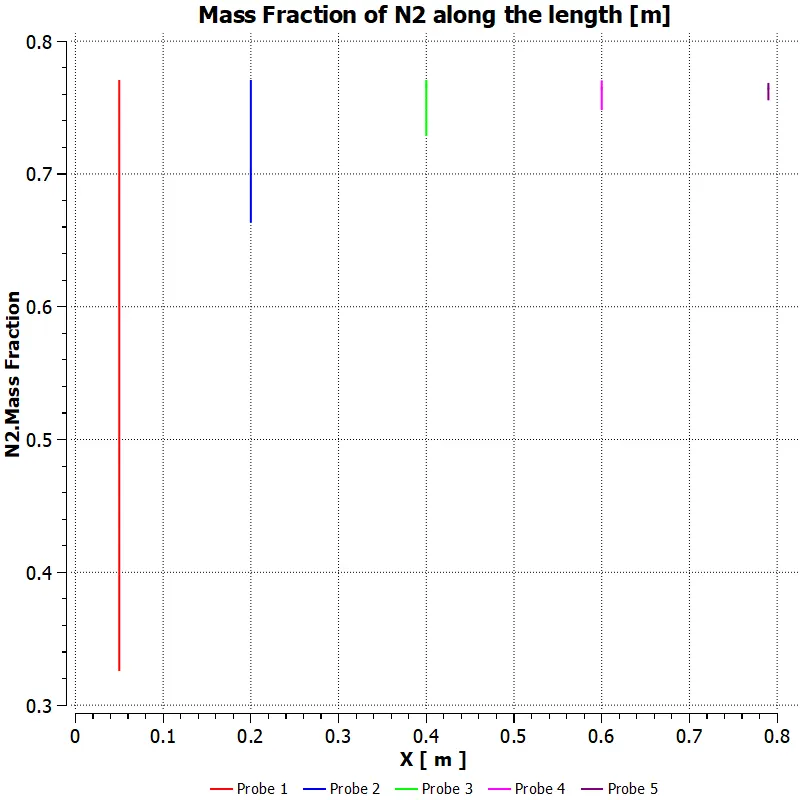
- N2 Mass Fraction:
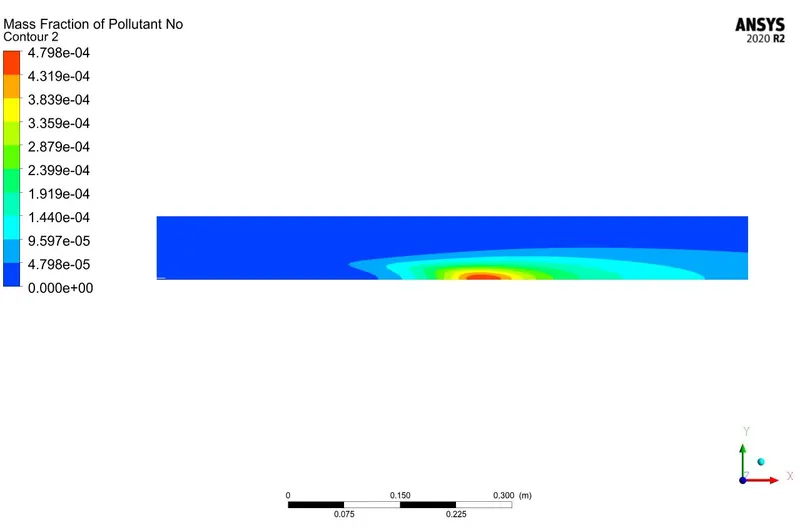
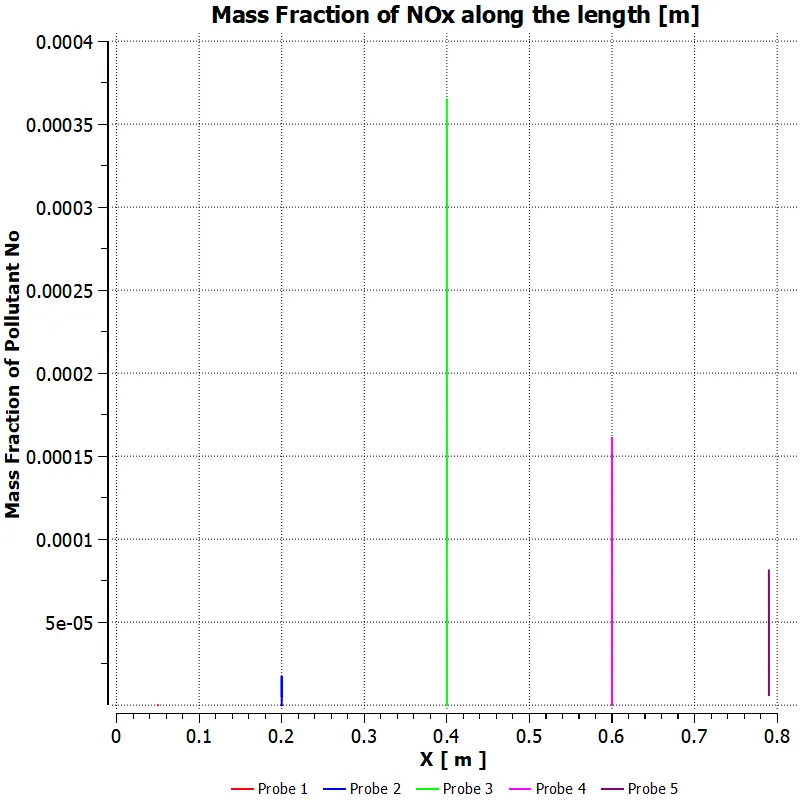
- NOx Mass Fraction:
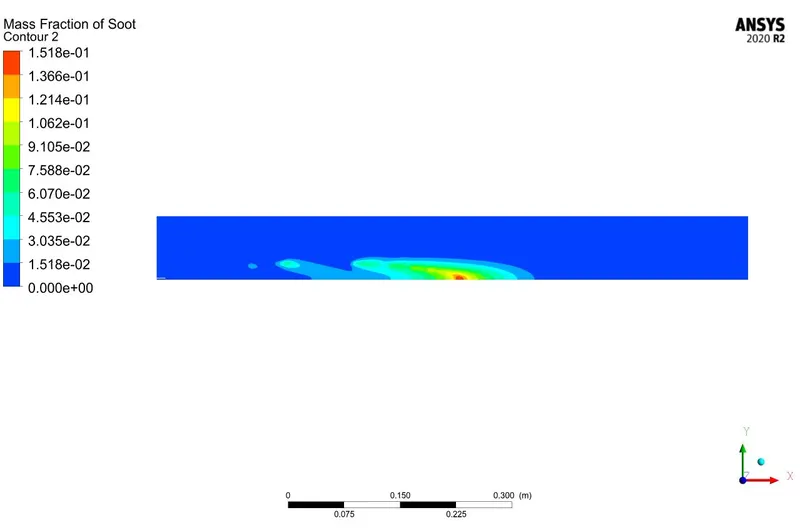
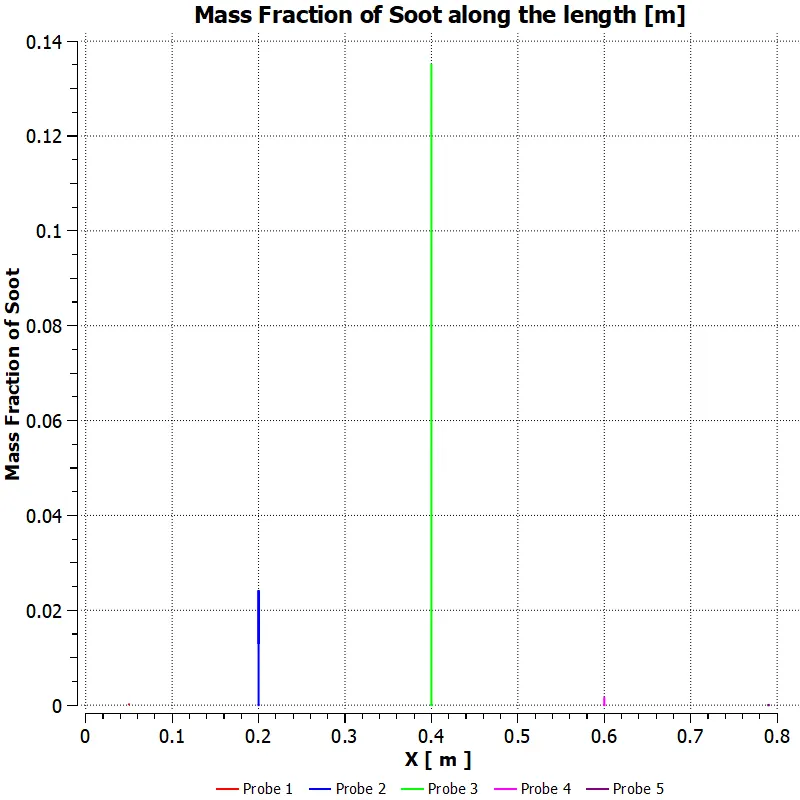
- Soot Mass Fraction:
Case 2: CH4:0.95, H2O:0.05
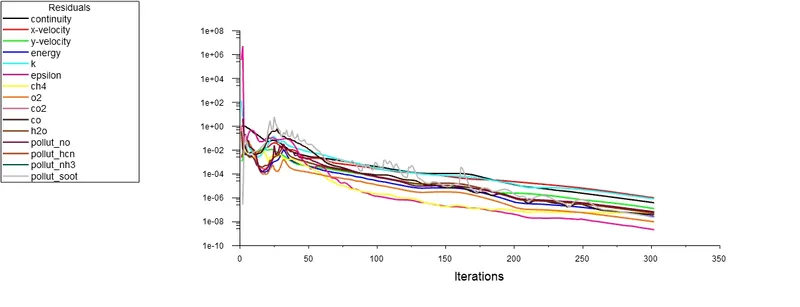
Residuals:
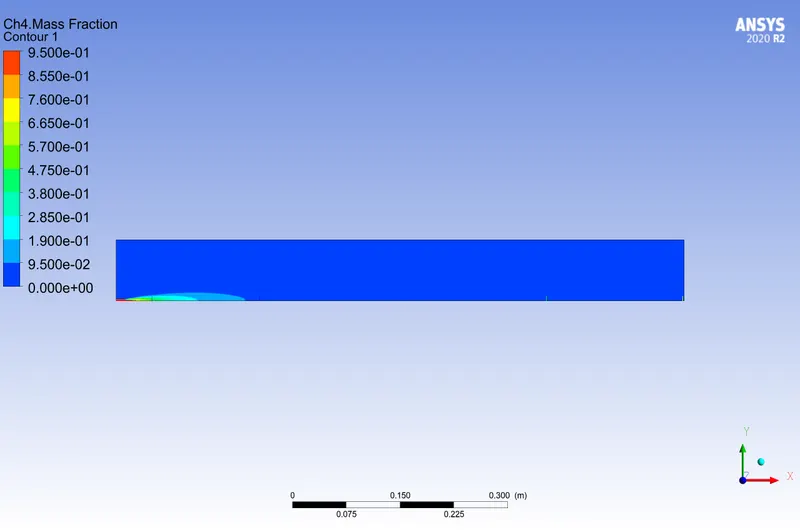
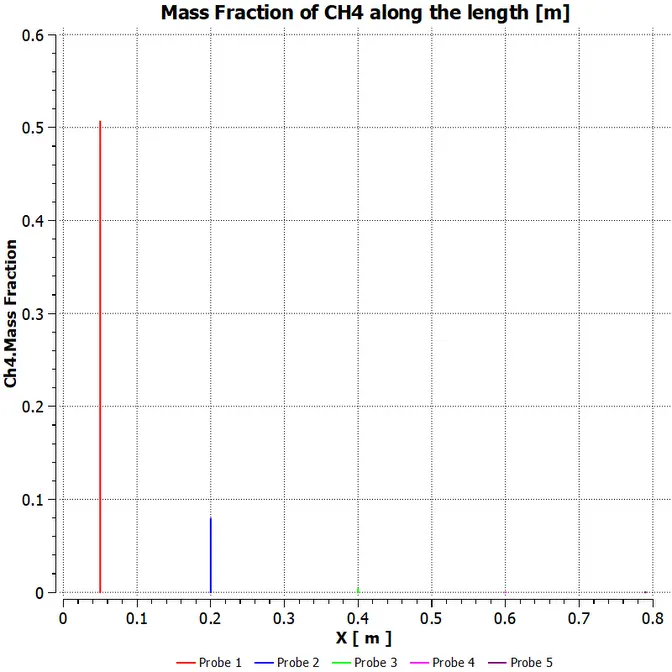
- CH4 Mass Fraction:
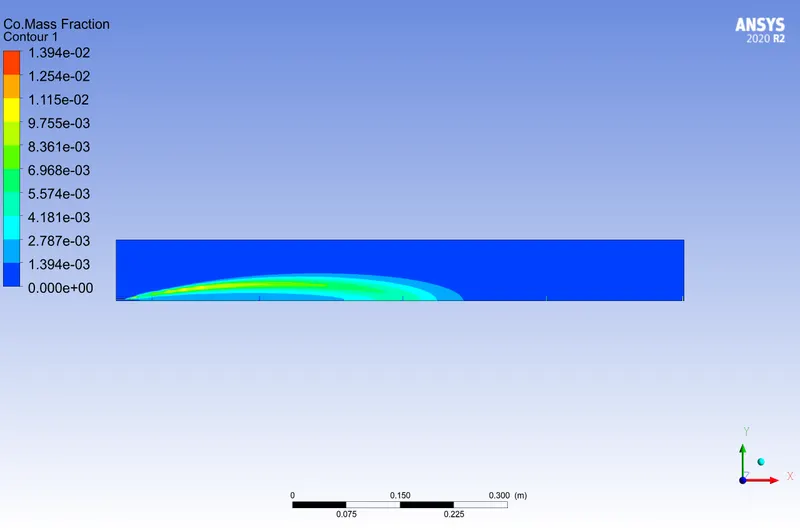
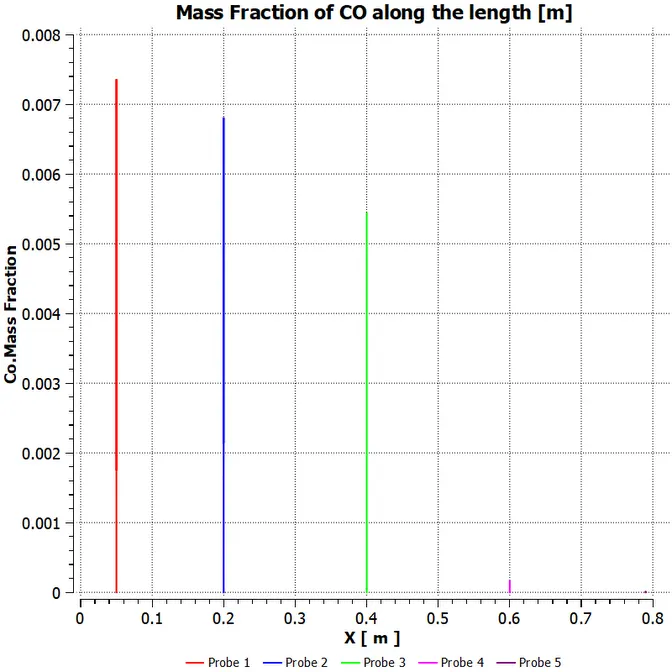
- CO Mass Fraction:
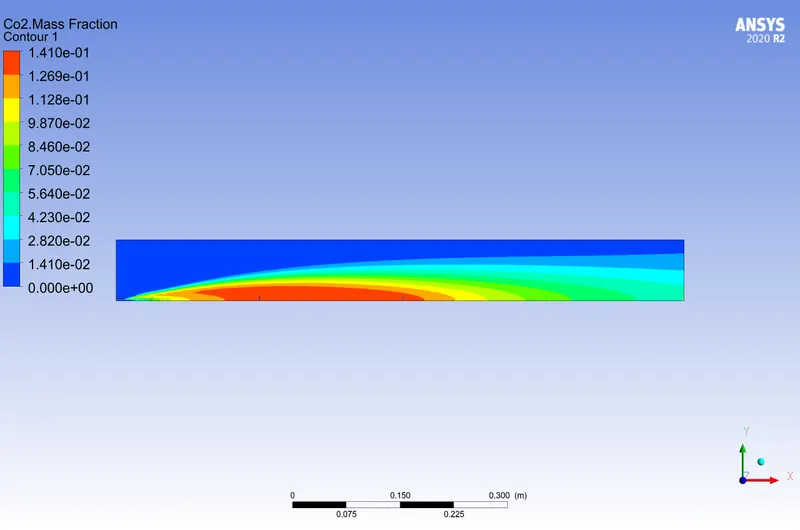
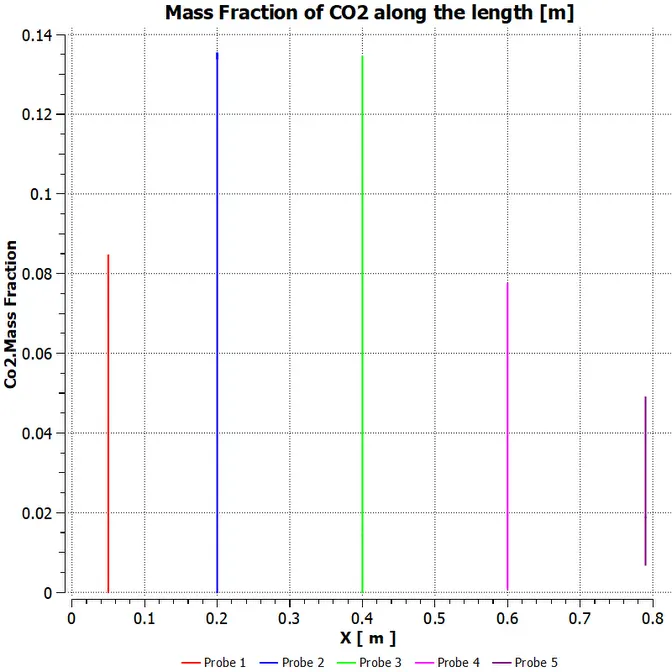
- CO2 Mass Fraction:
- H2O Mass Fraction:
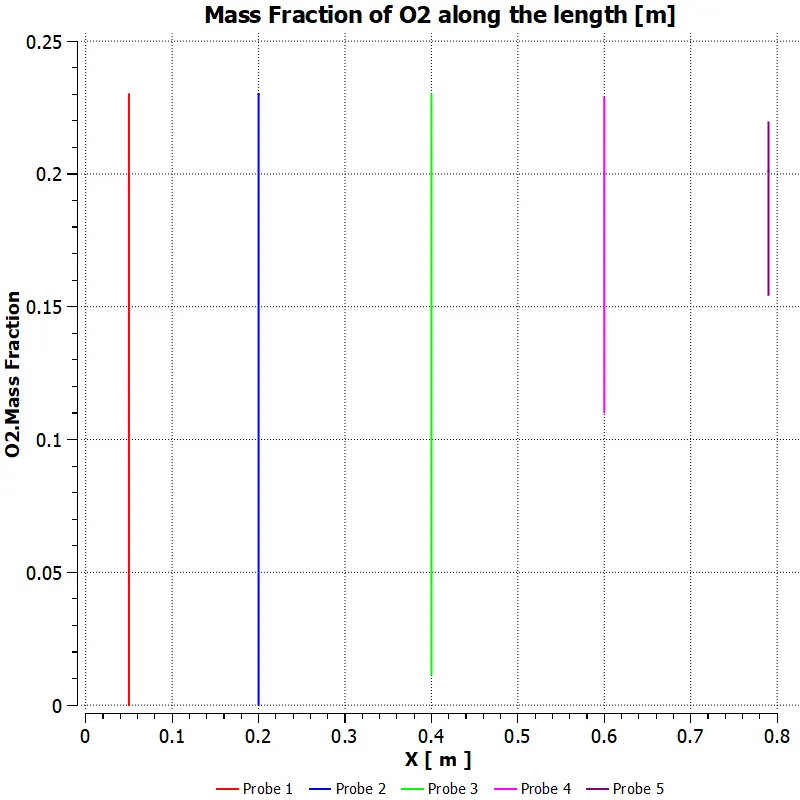
- O2 Mass Fraction:
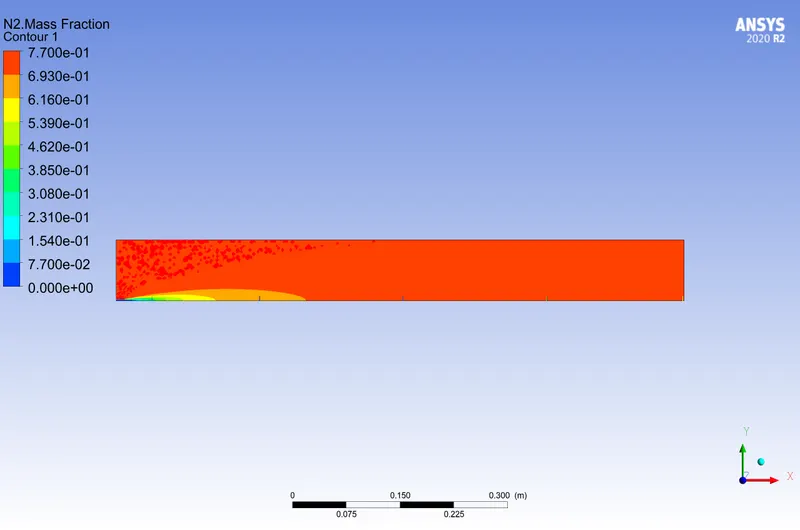
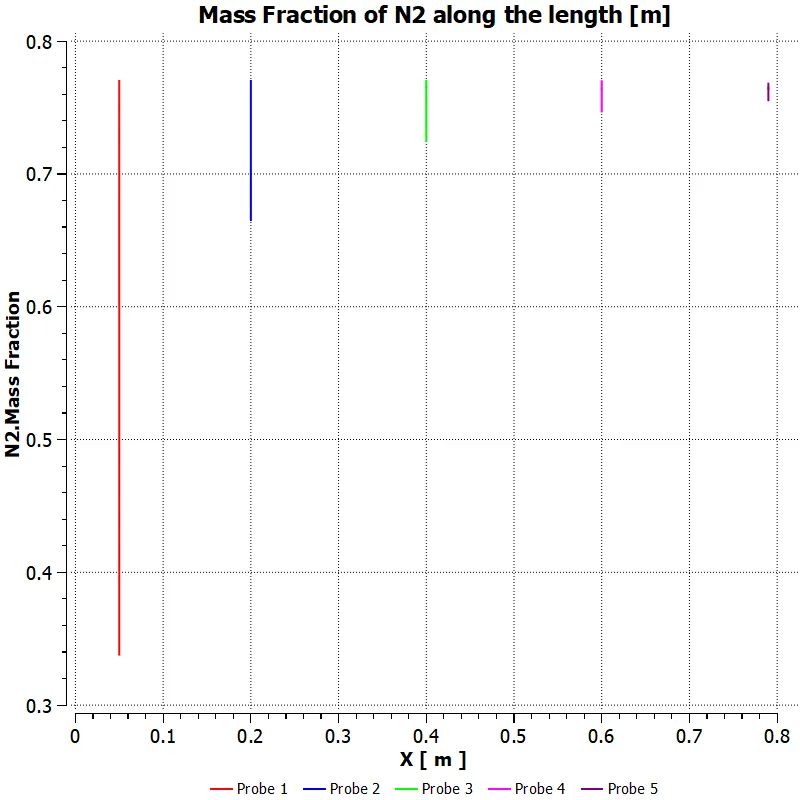
- N2 Mass Fraction:
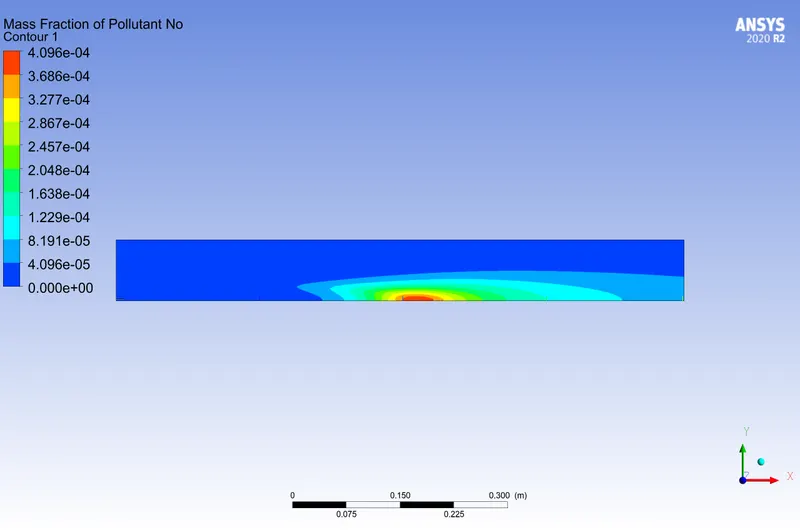
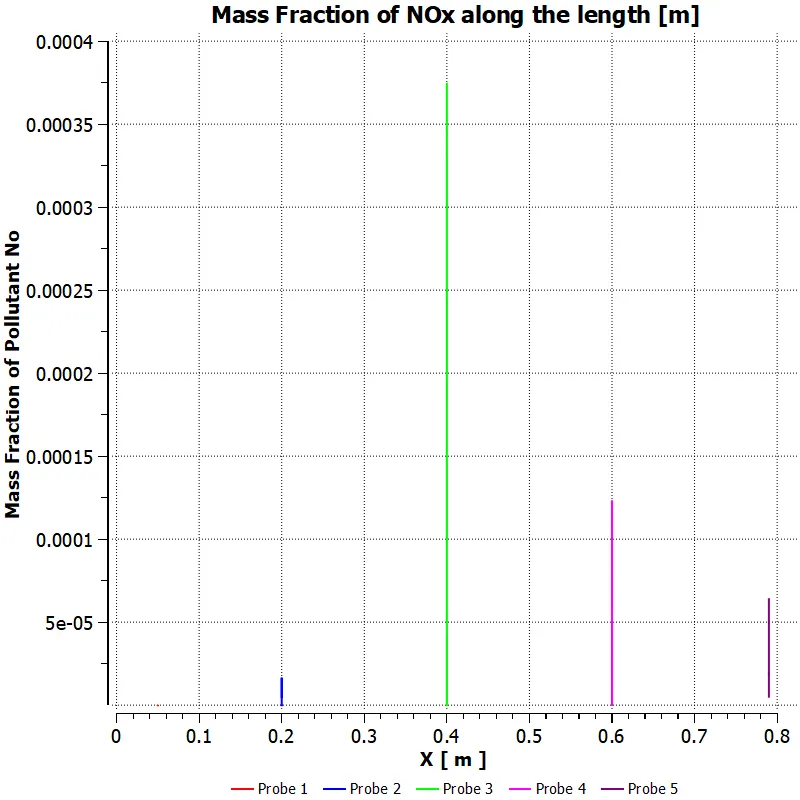
- NOx Mass Fraction:
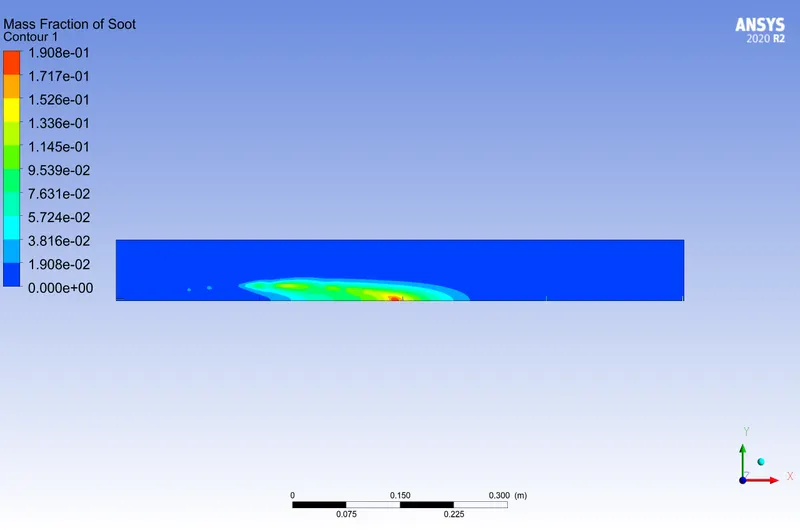
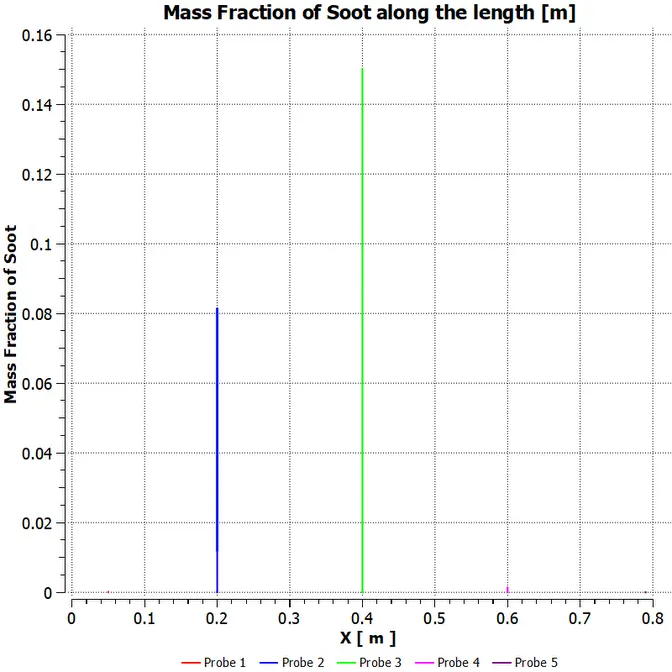
- Soot Mass Fraction:
Case 3: CH4:0.90, H2O:0.1
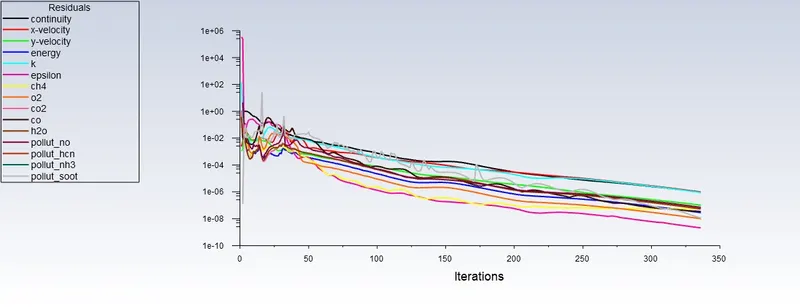
Residuals:
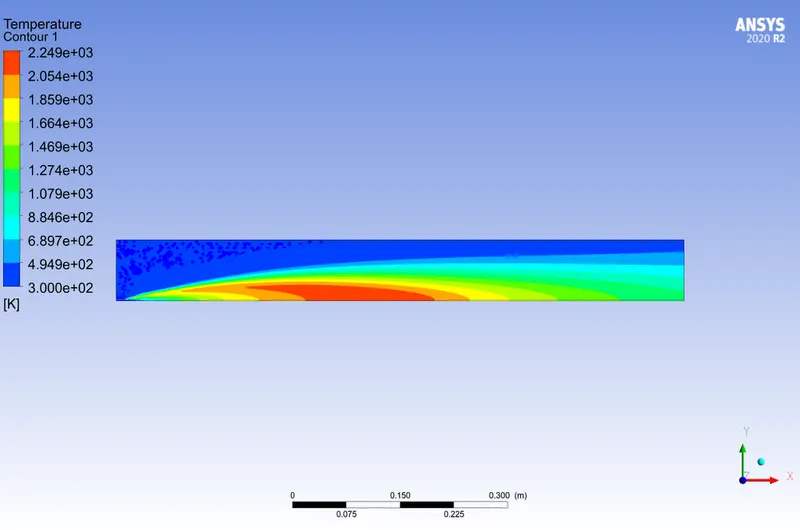
- CH4 Mass Fraction:
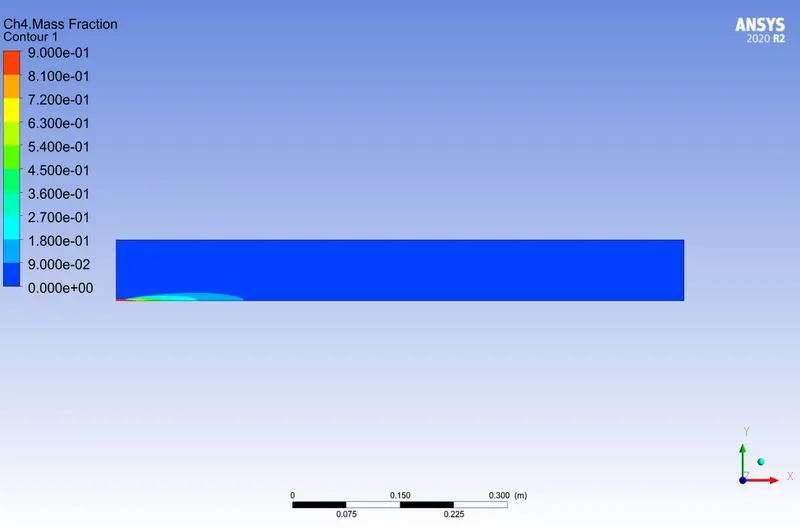
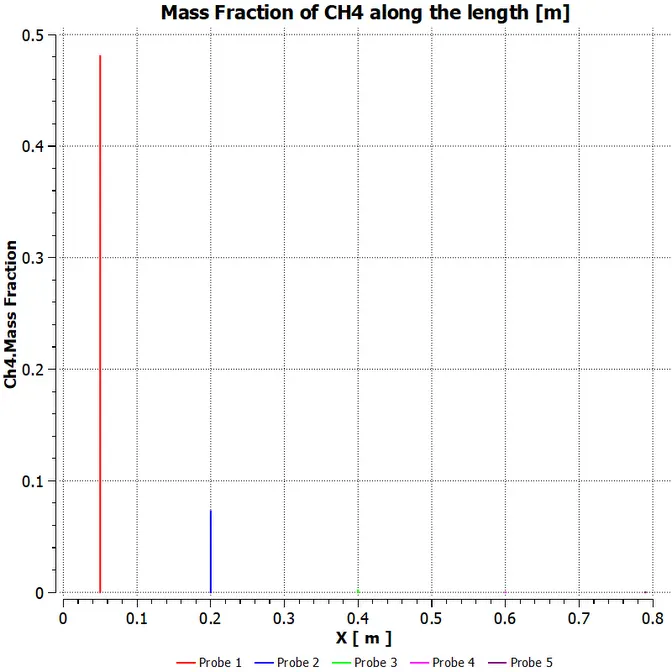
- CO Mass Fraction:
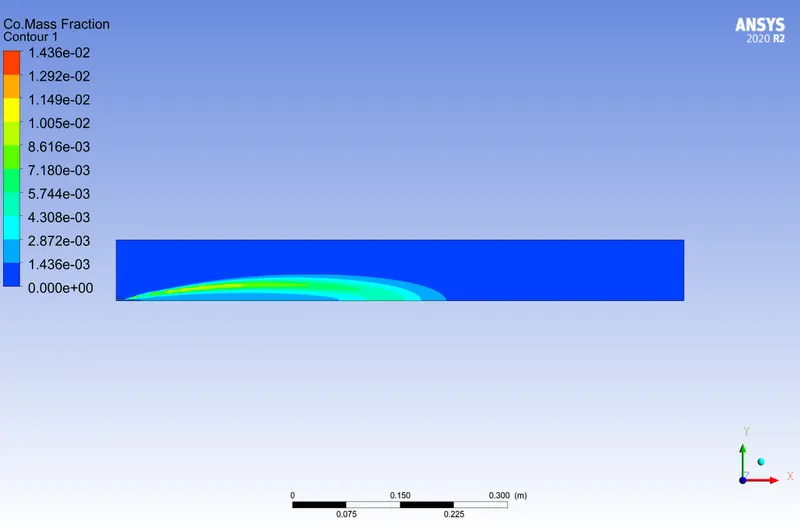
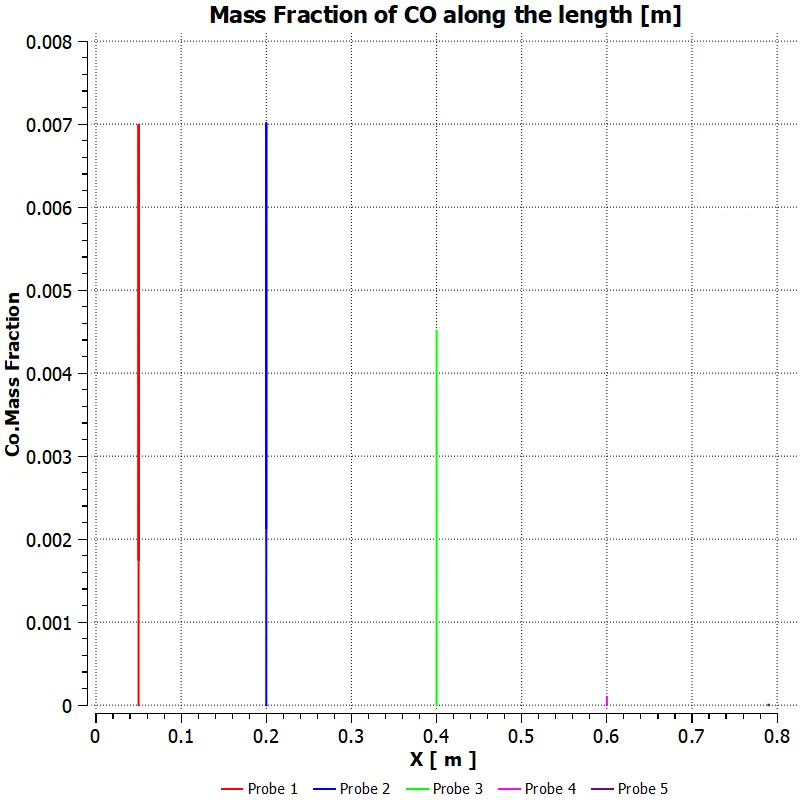
- CO2 Mass Fraction:
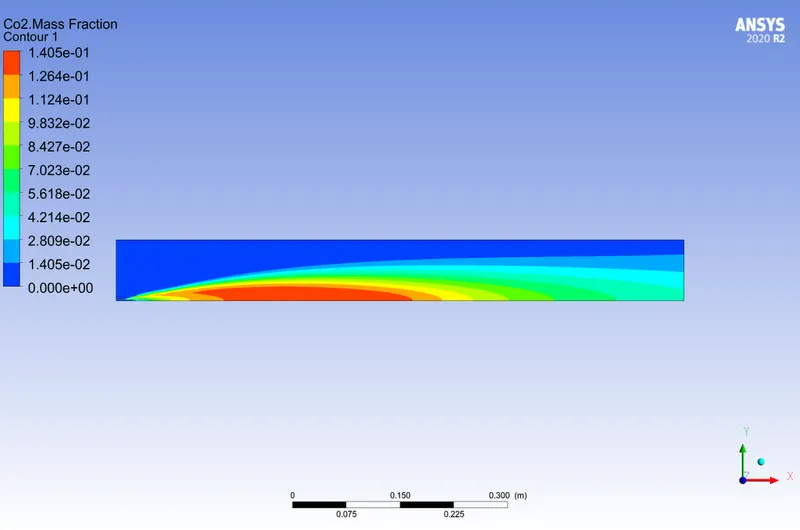
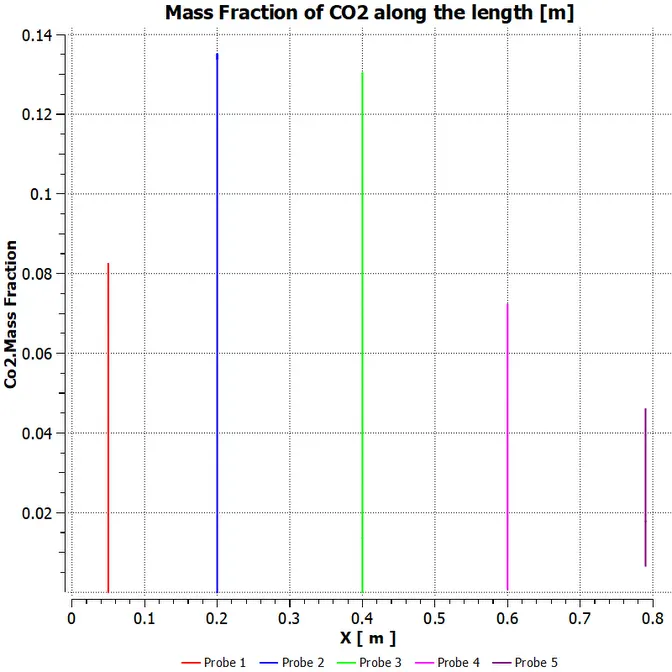
- O2 Mass Fraction:
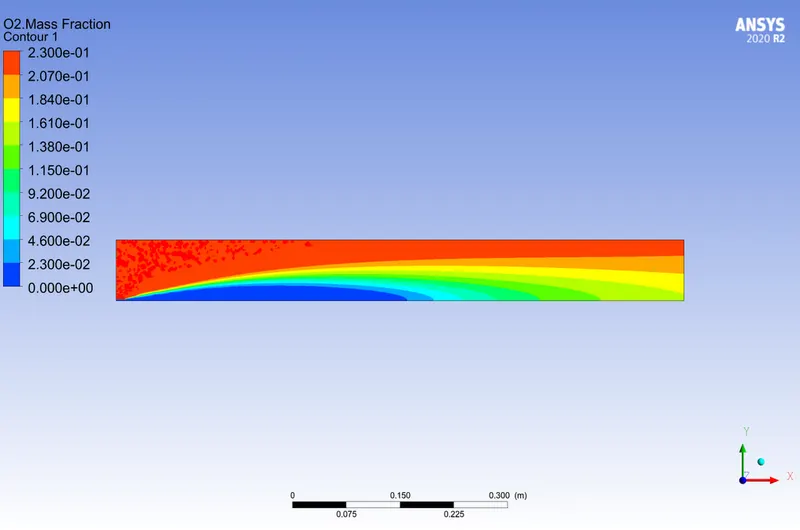
- H2O Mass Fraction:
- N2 Mass Fraction:
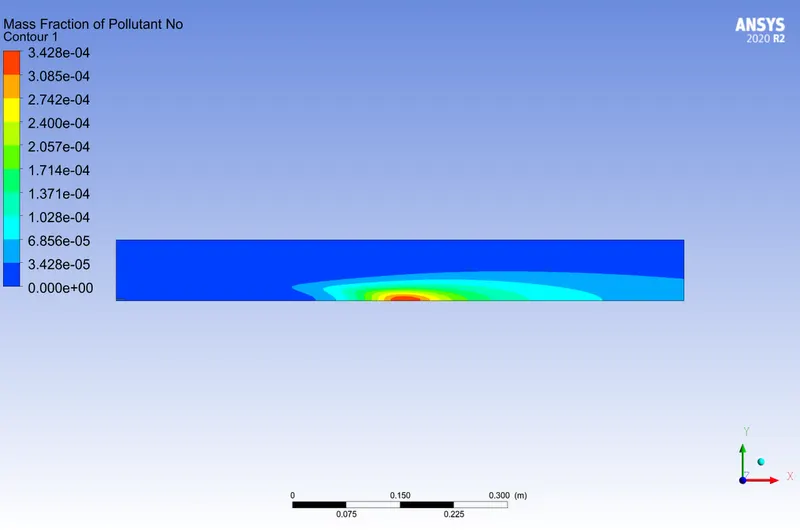
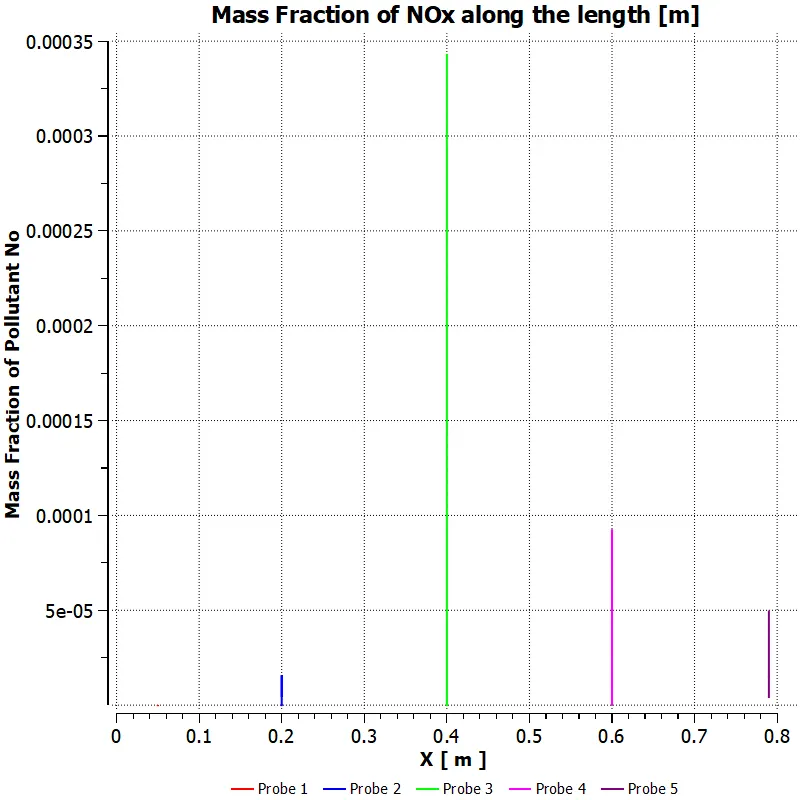
- NOx Mass Fraction:
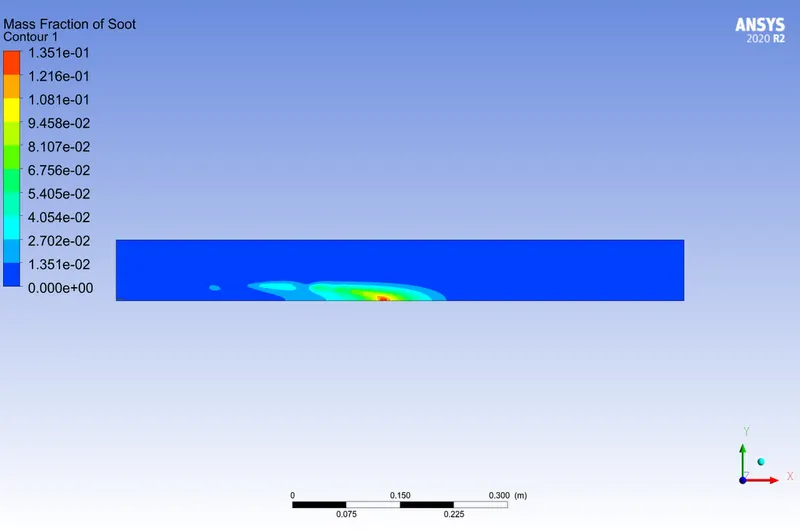
- Soot Mass Fraction:
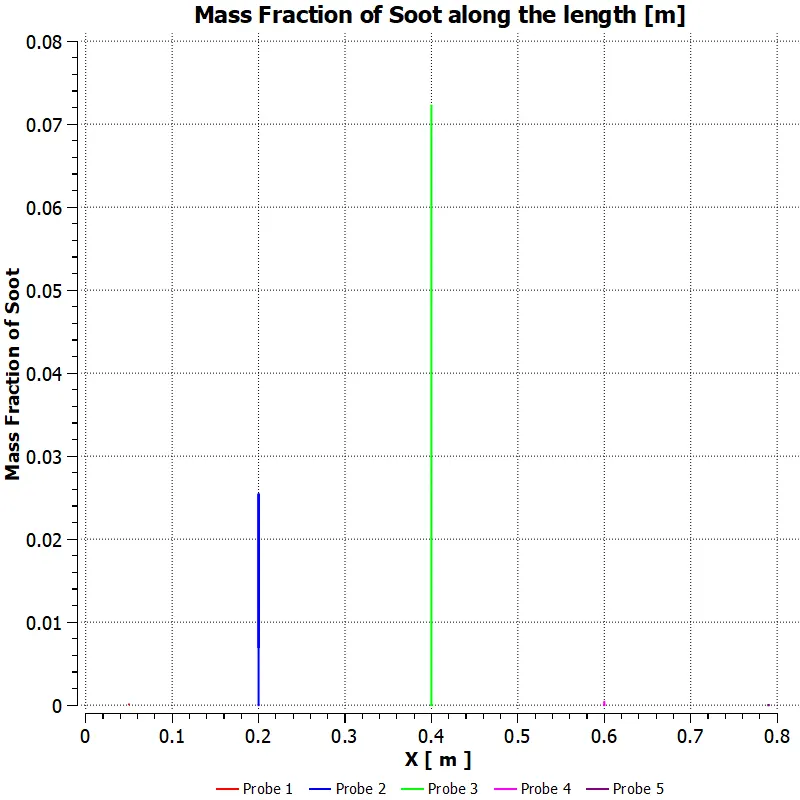
Case 4: CH4:0.80, H2O:0.2
Residuals:
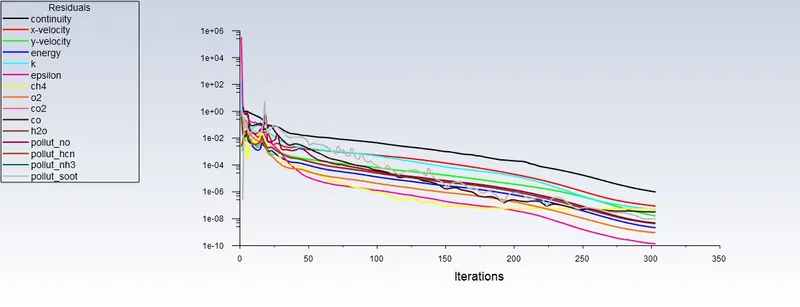
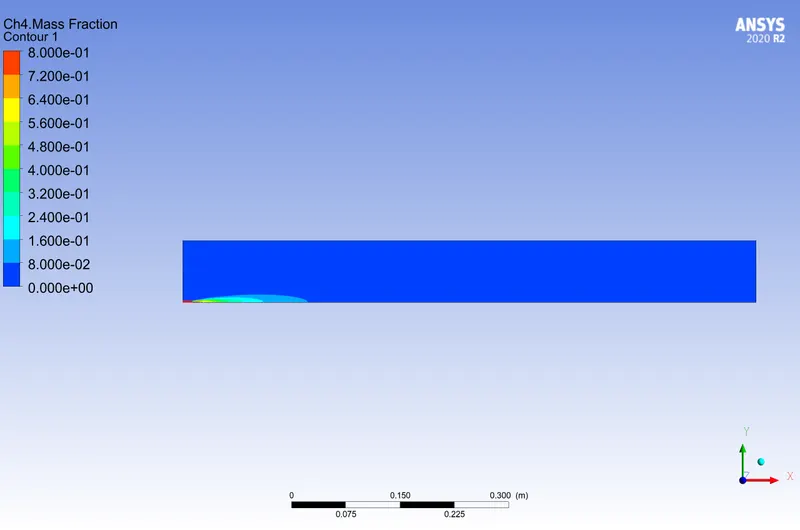
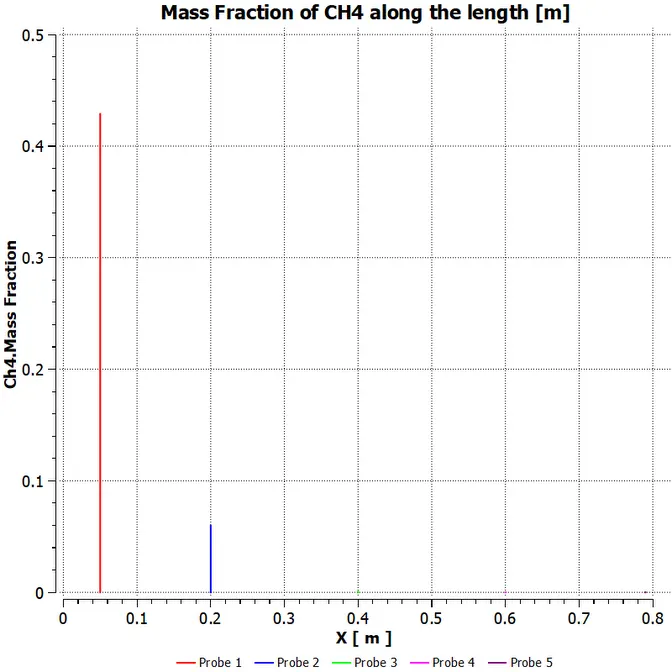
- CH4 Mass Fraction:
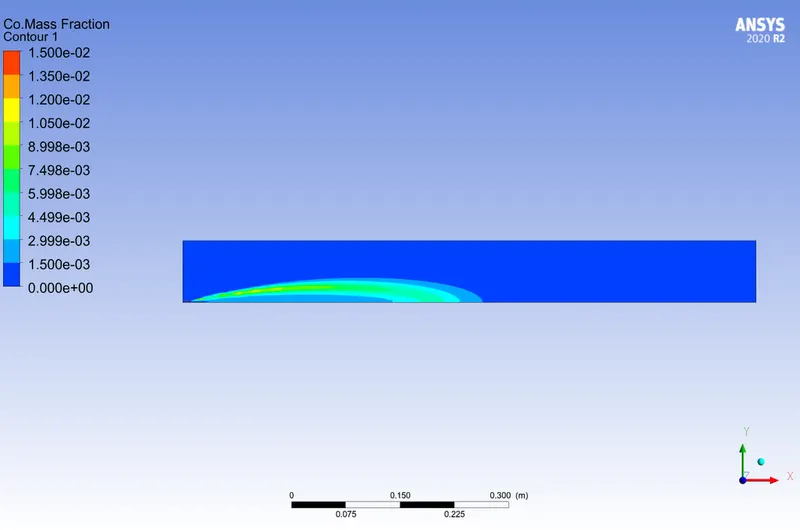
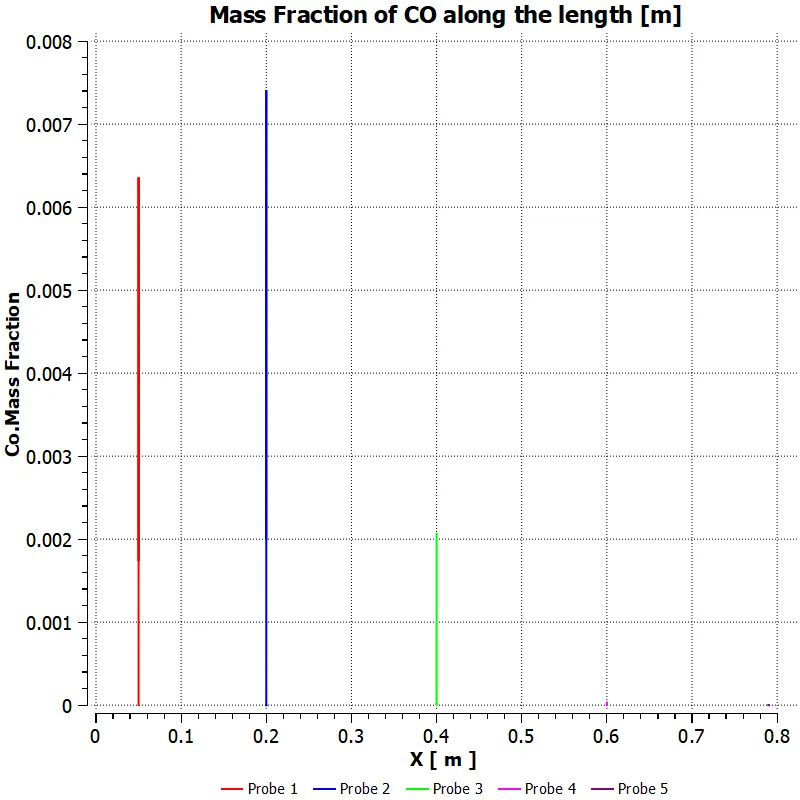
- CO Mass Fraction:
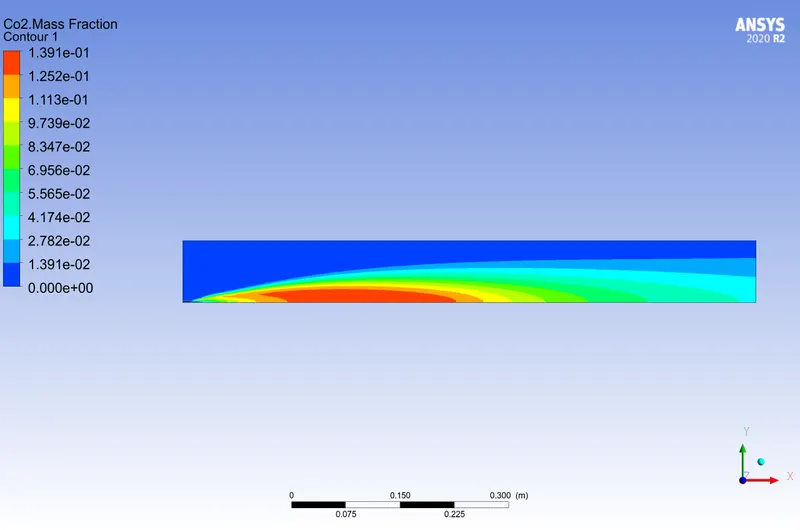
- CO2 Mass Fraction:
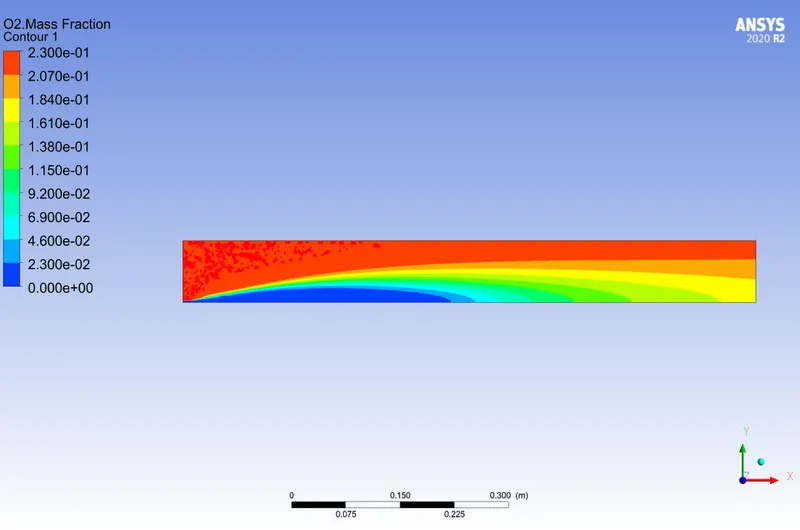
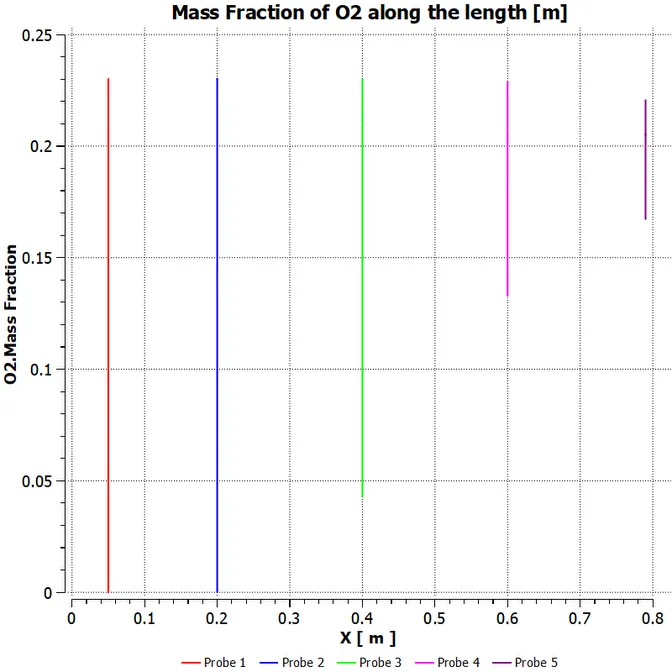
- O2 Mass Fraction:
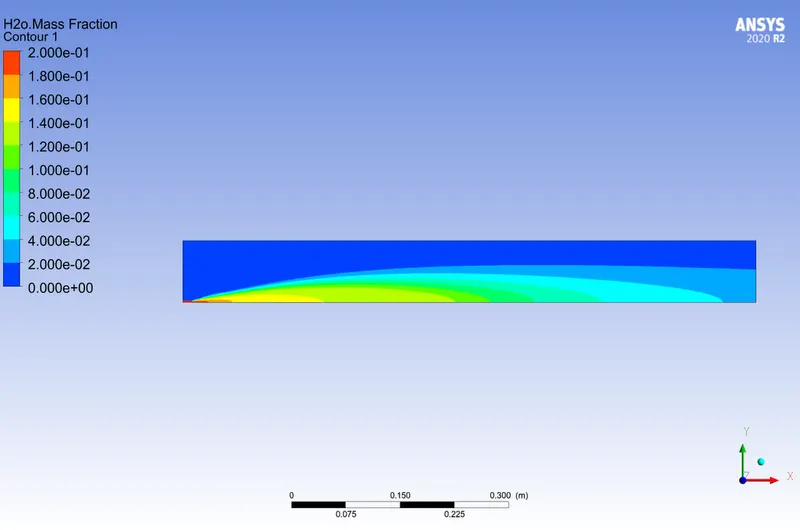
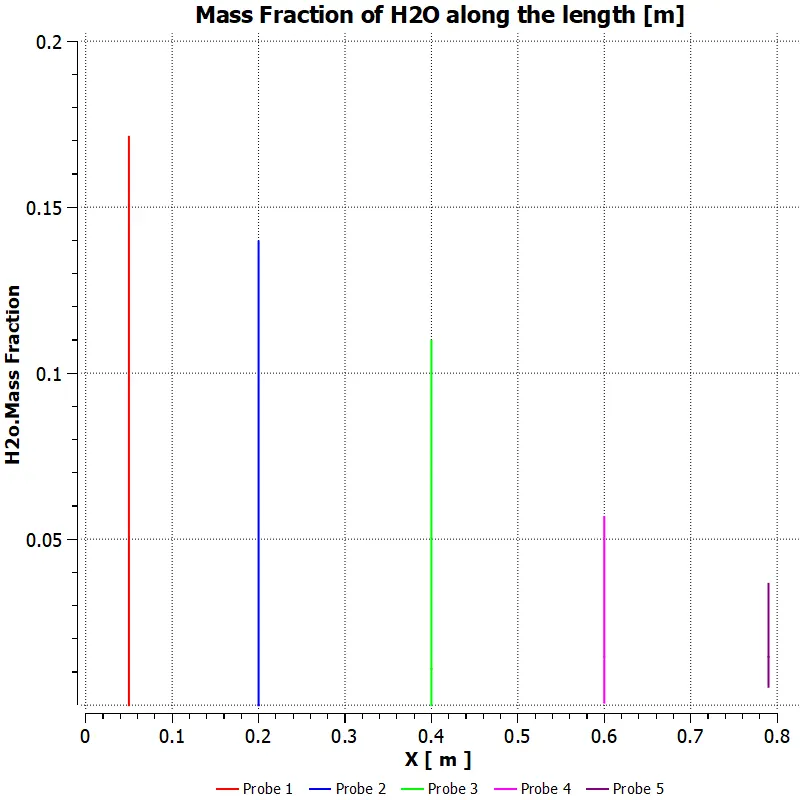
- H2O Mass Fraction:
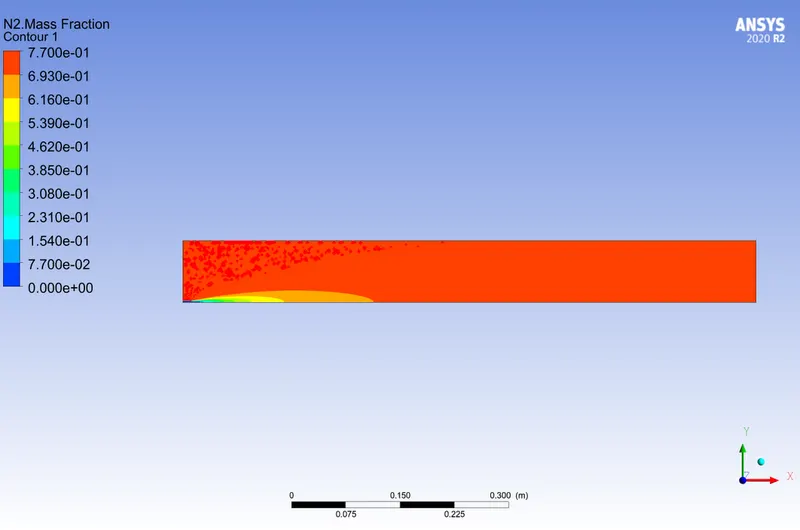
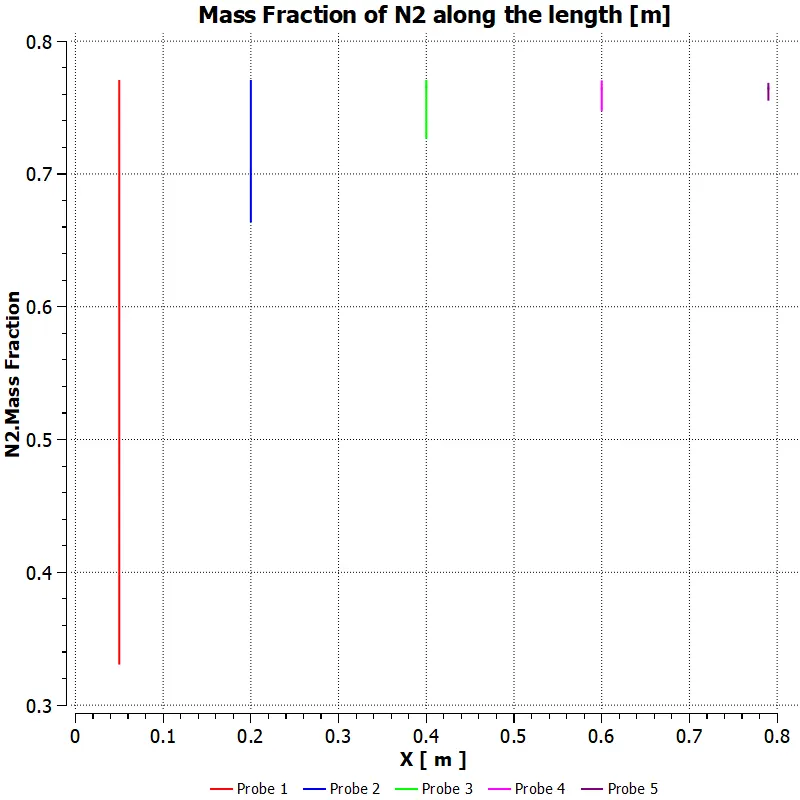
- N2 Mass Fraction:
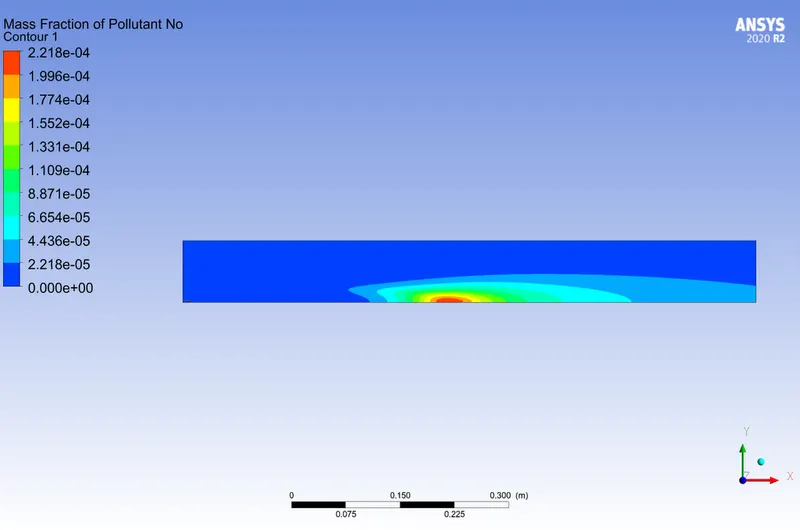
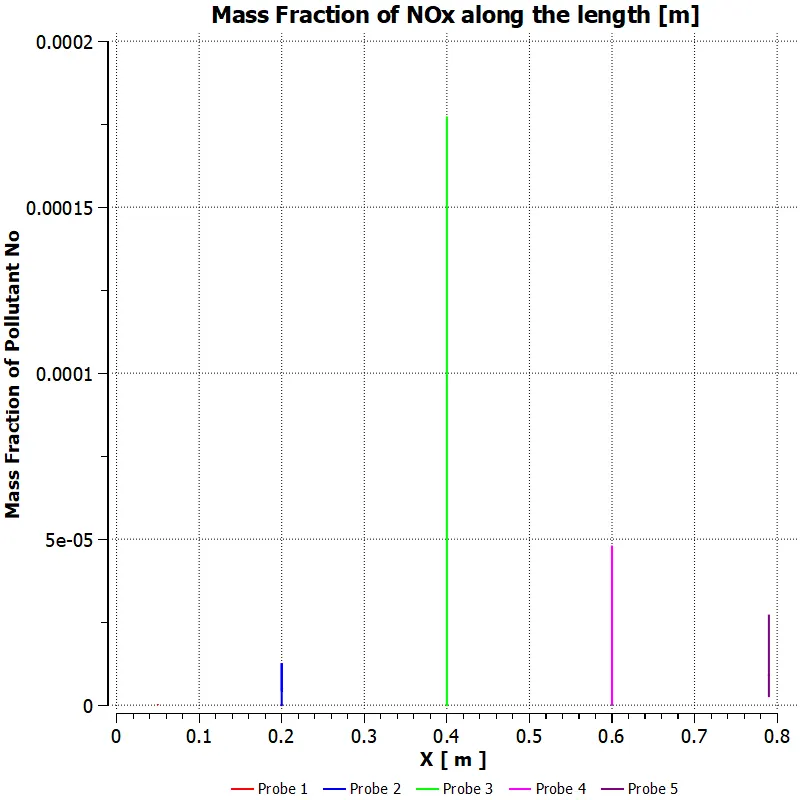
- NOx Mass Fraction:
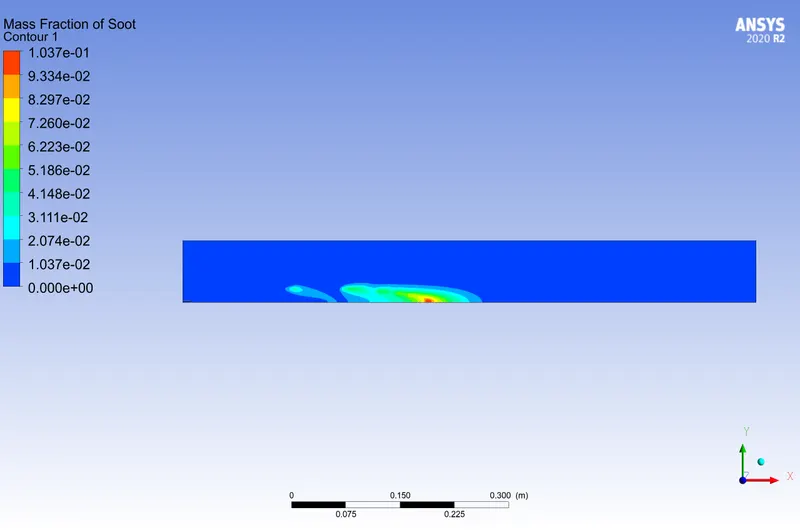
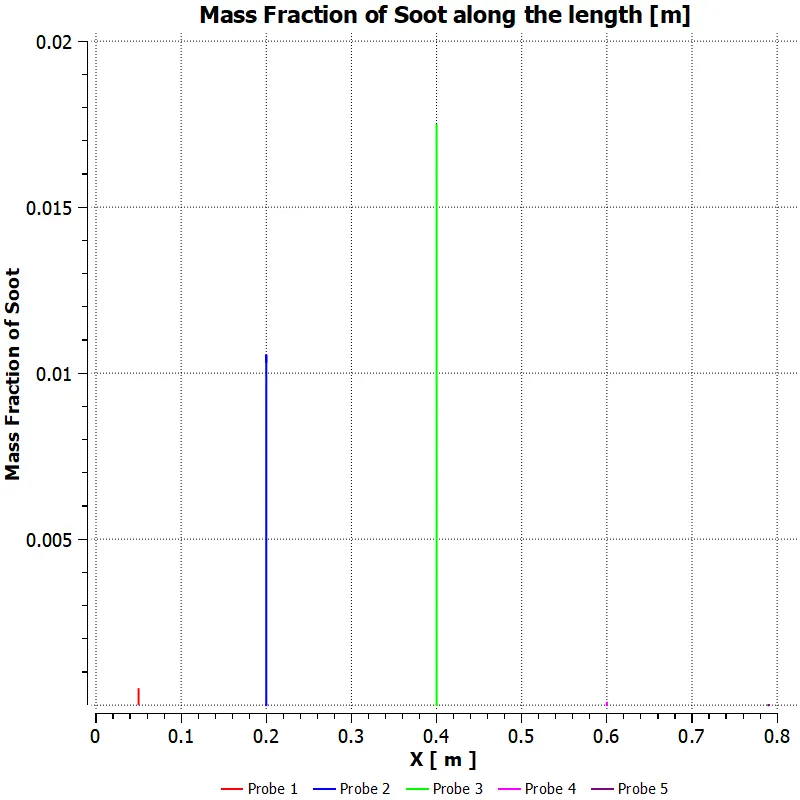
- Soot Mass Fraction:
Case 5: CH4:0.70, H2O:0.3
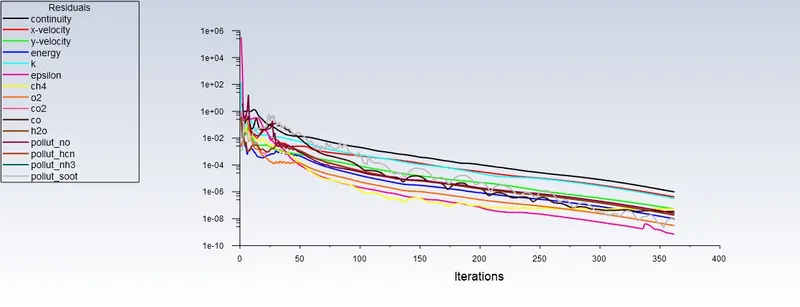
Residuals:
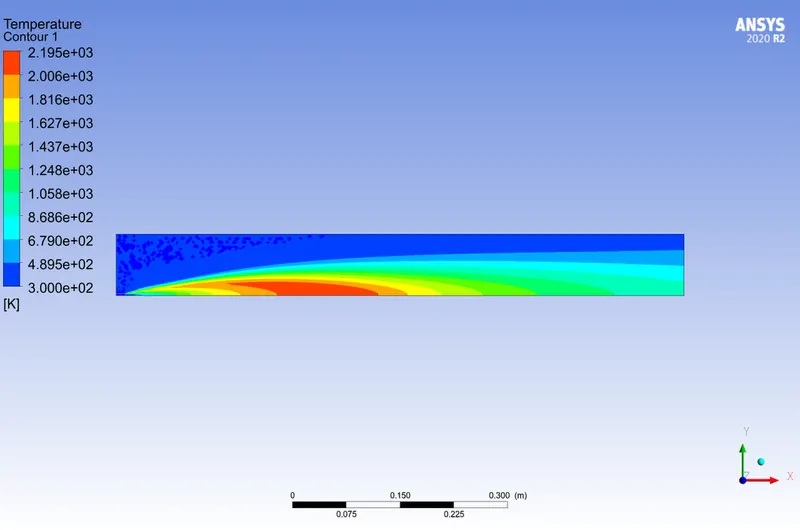
- CH4 Mass Fraction:
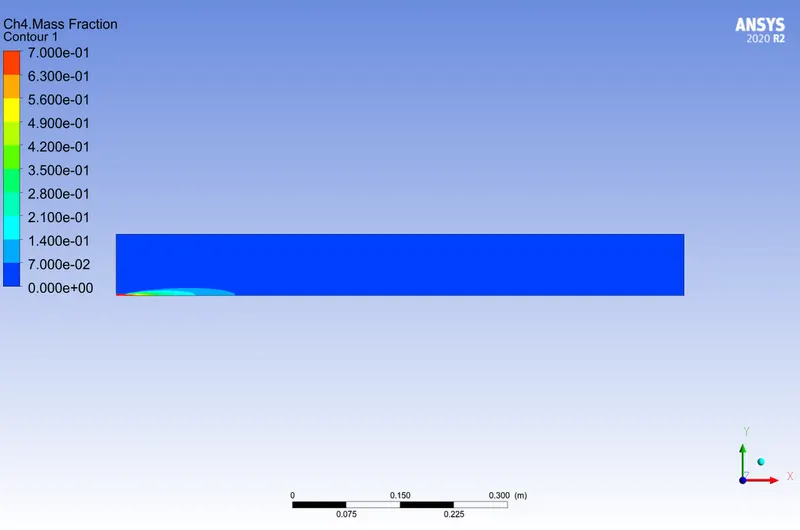
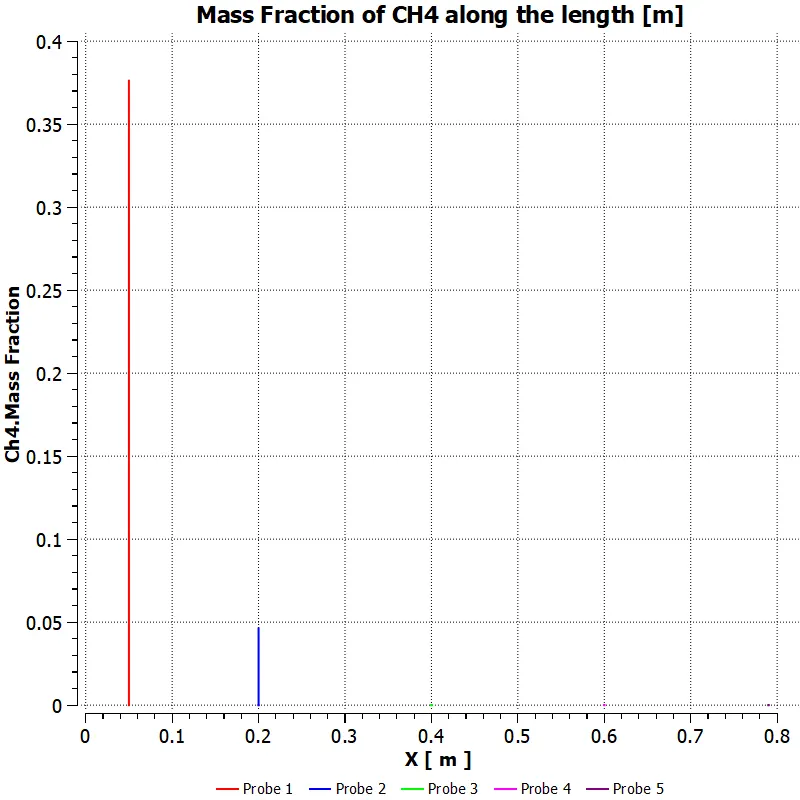
- CO Mass Fraction:
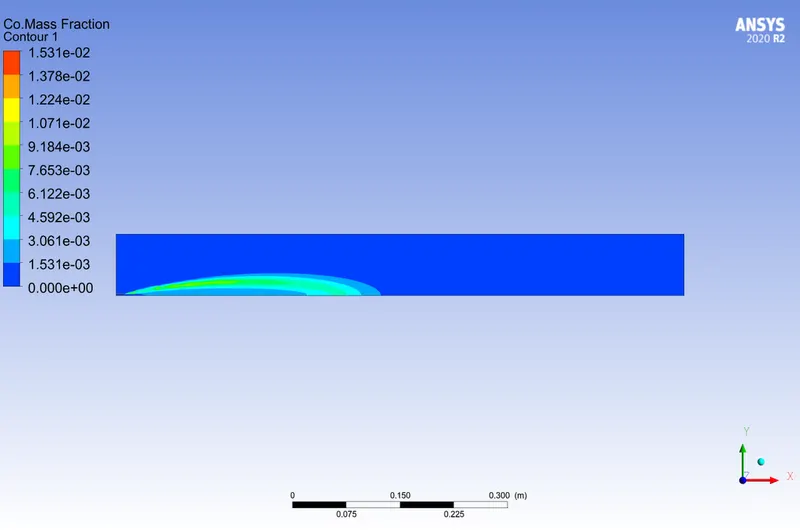
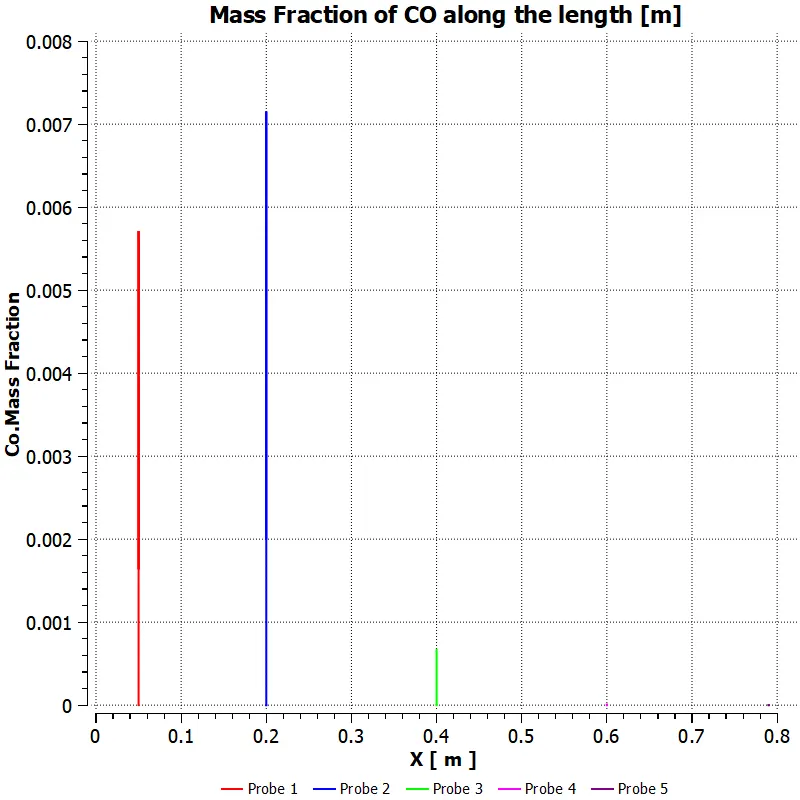
- CO2 Mass Fraction:
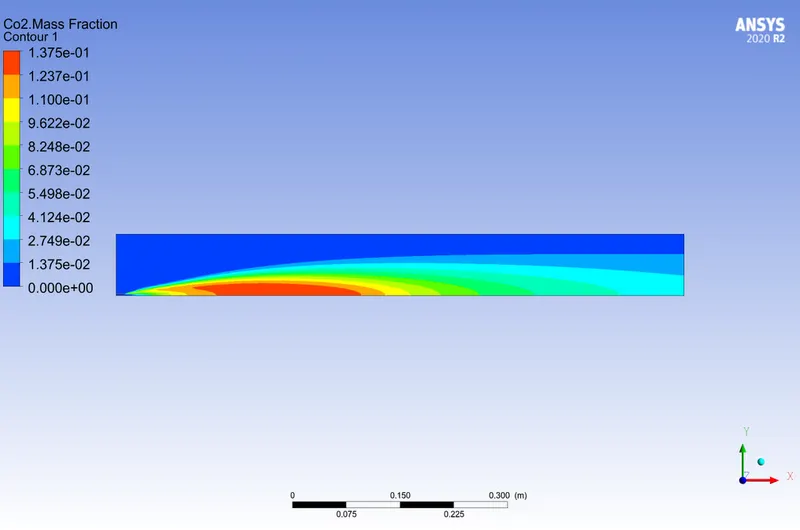
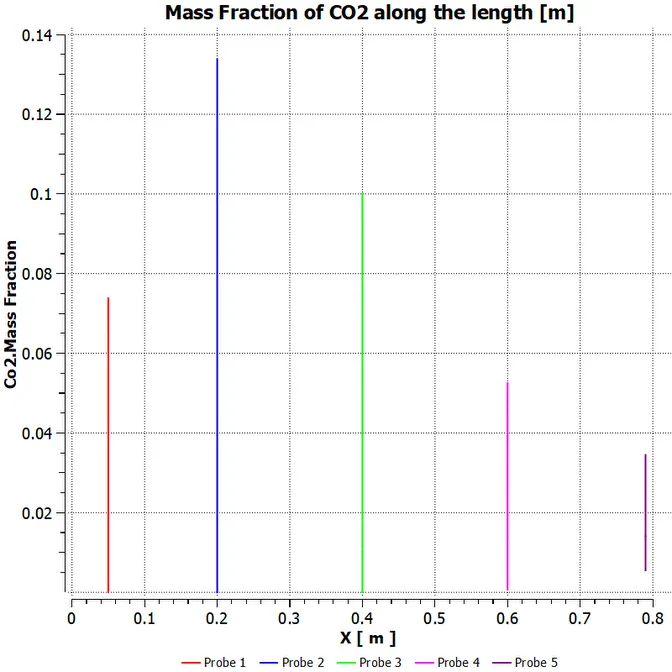
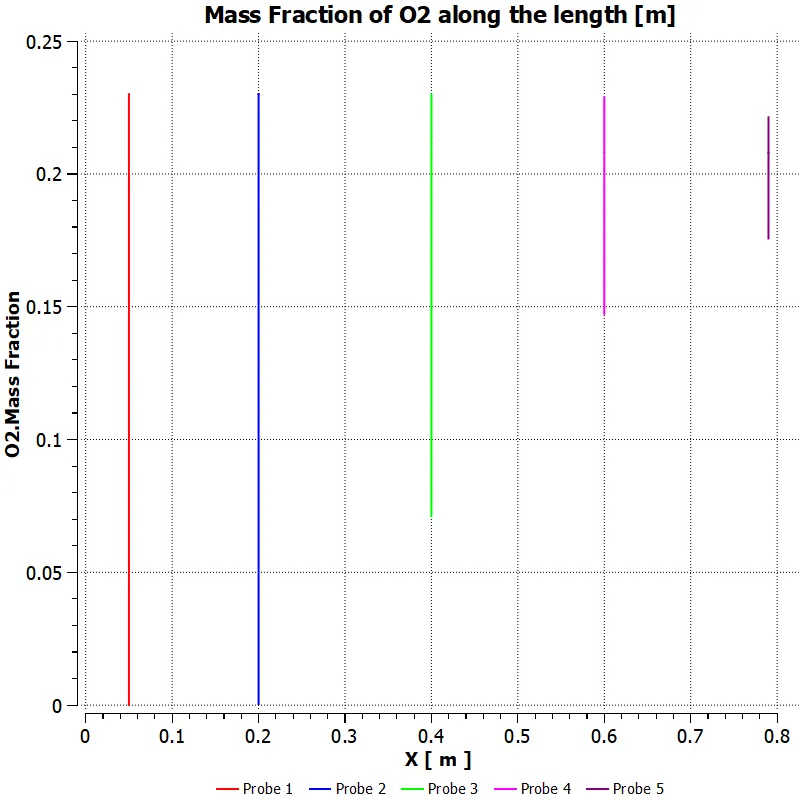
- O2 Mass Fraction:
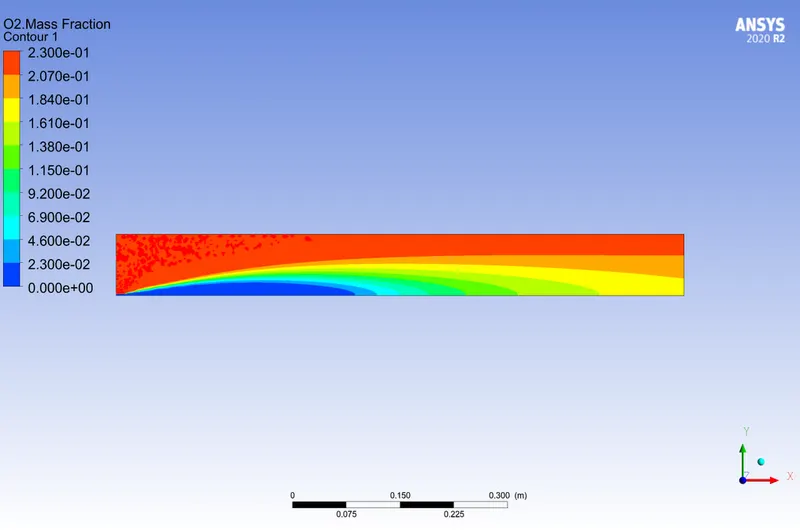
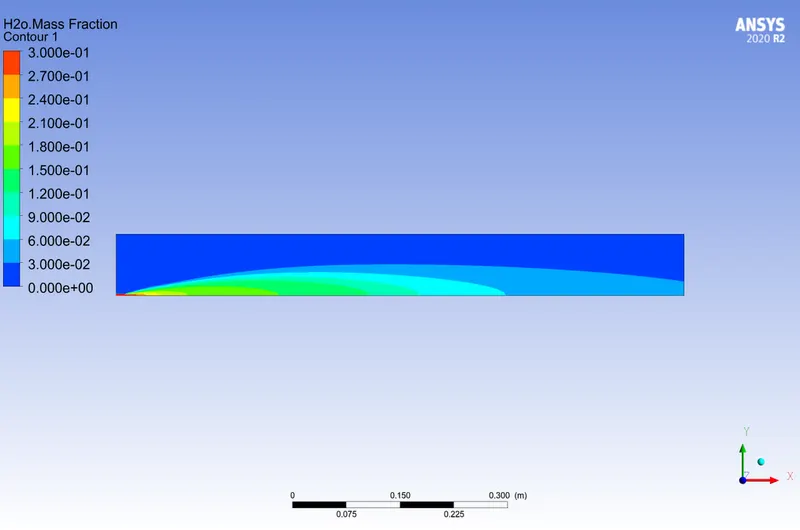
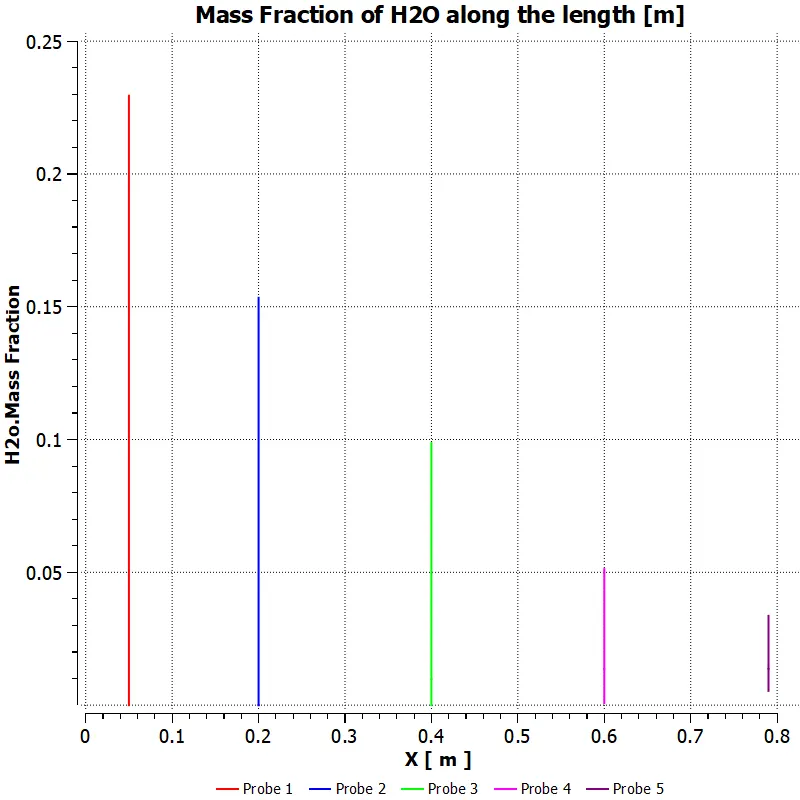
- H2O Mass Fraction:
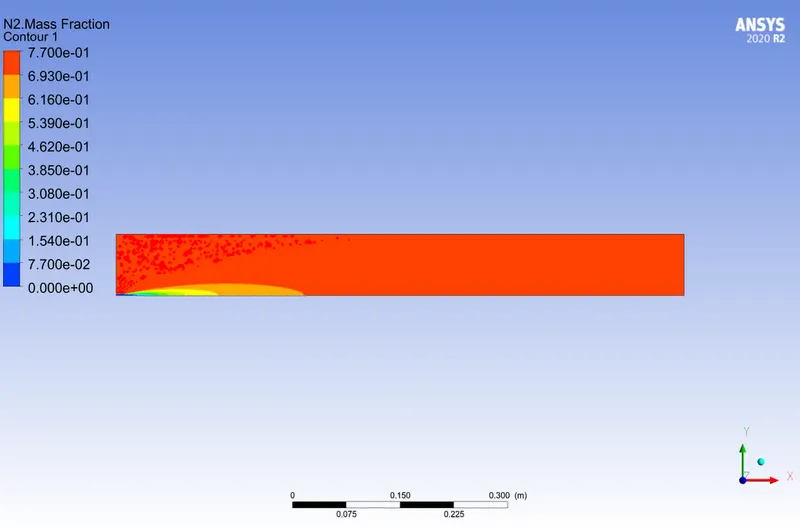
- N2 Mass Fraction:
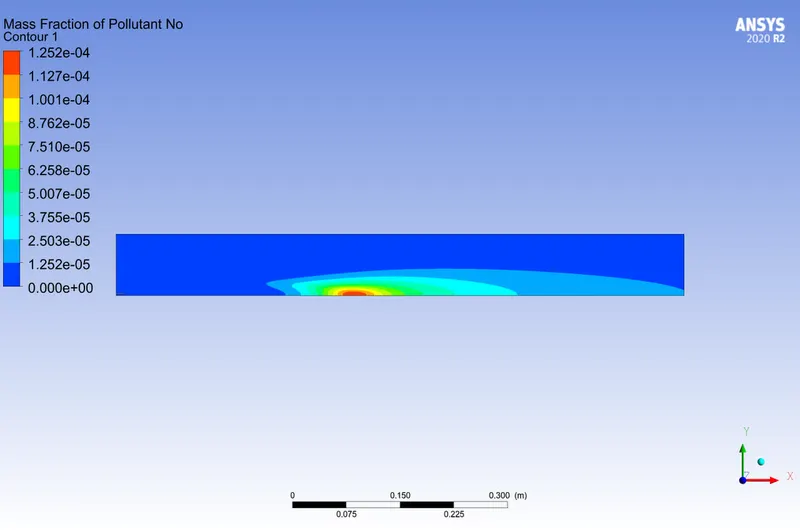
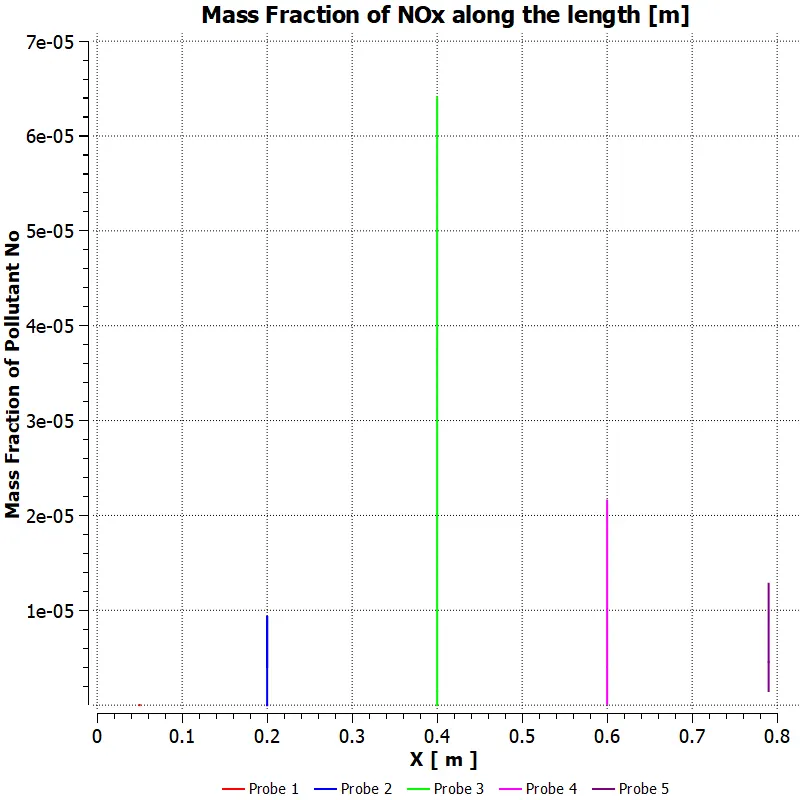
- NOx Mass Fraction:
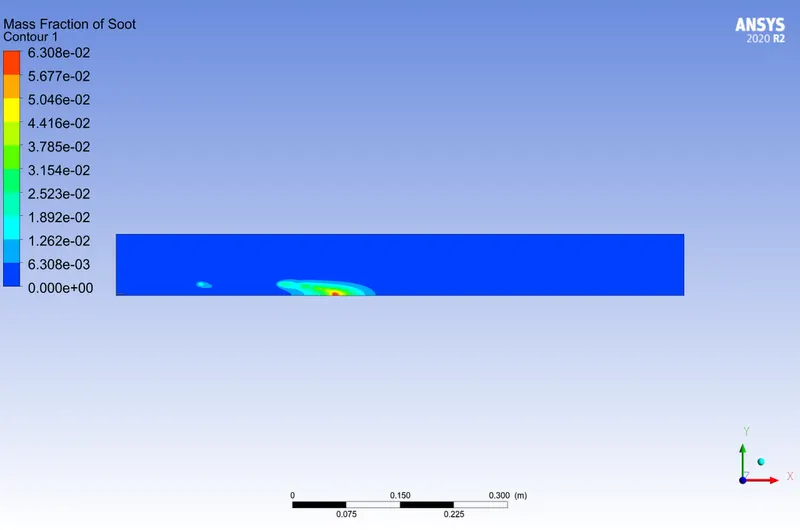
- Soot Mass Fraction:
Inferences:
Throughout this study, mass fractions of CH4 and H2O are varied to analyze the variation in mass fractions of other resultant species.
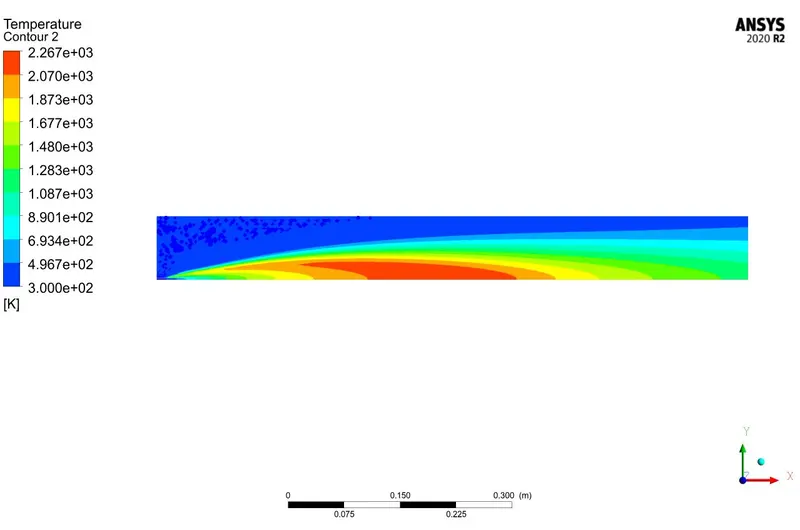
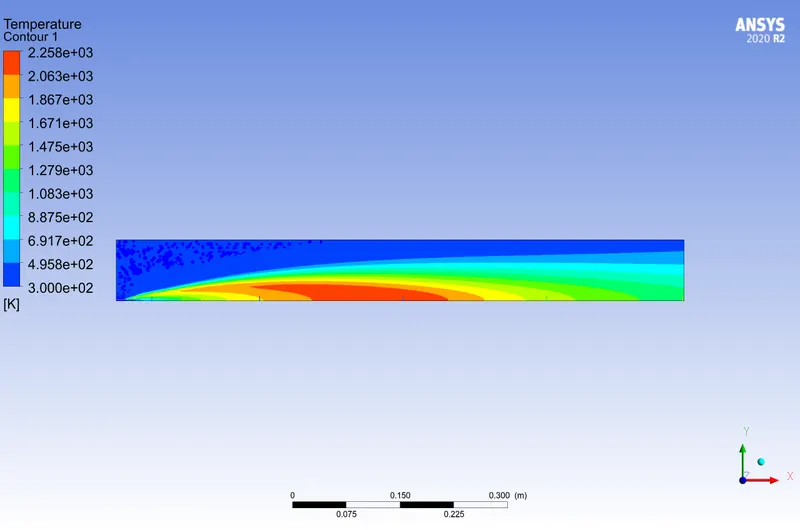
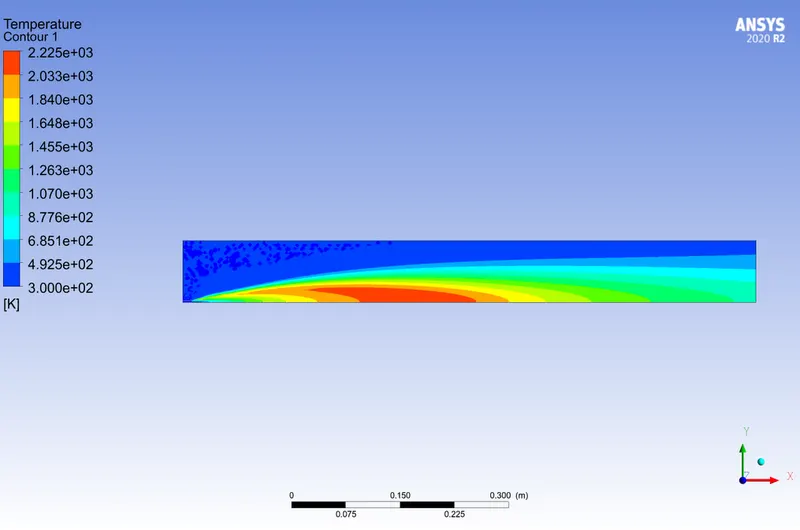
- The Max. Temperature has been reduced from 2267K to 2195K with an increase in water up to 30%. This is at the expense of a decrease in Fuel proportion.
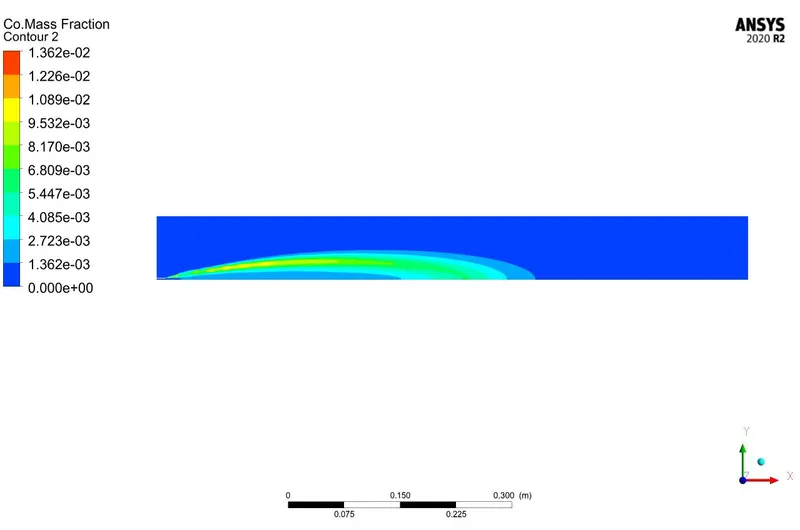
- CO, NOx, and Soot are the major contributors to pollution. CO gets increased from 0.0136 to 0.0153 mass fractions with the increase of water content. This is due to incomplete combustion.
- NOx gets reduced from 0.0004798 to 0.0001252 mass fractions with the increase in water content. The reduction of NOx by the addition of water is due to a decrease in Temperature.
- Soot also gets reduced from 0.1518 to 0.0630 mass fraction. The reason for the reduction in Soot is also the same as NOx, which is a decrease in Temperature.
In conclusion, the addition of H2O results in a decrease in the Temperature of the overall reaction, which further decreases the production of NOx and Soot. This desirable result is yielded at the expense of an increase in CO due to incomplete combustion.