Week 10: Project 1 - FULL HYDRO case set up (PFI)
Aim :
This is the Part 2 of the Port Fuel Injection Project. In Part 1, we have done No Hydro Simulation of PFI System. In this part, our main objective is to incorporate Injectors, Spray, Combustion, and Energy Source modeling and then observe the plots related to the simulation.
Moreover, with the inputs provided in the challenge description, find out the following
1. What is the compression ratio of this engine?
2. Why do we need a wall heat transfer model? Why can't we predict the wall temperature from the CFD simulation?
3. Calculate the combustion efficiency of this engine
4. use the engine performance calculator, to determine the power and torque for this engine.
5. What is the significance of ca10, ca50 and ca90?
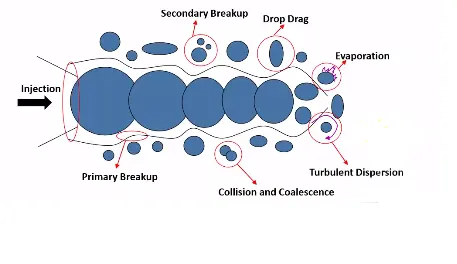
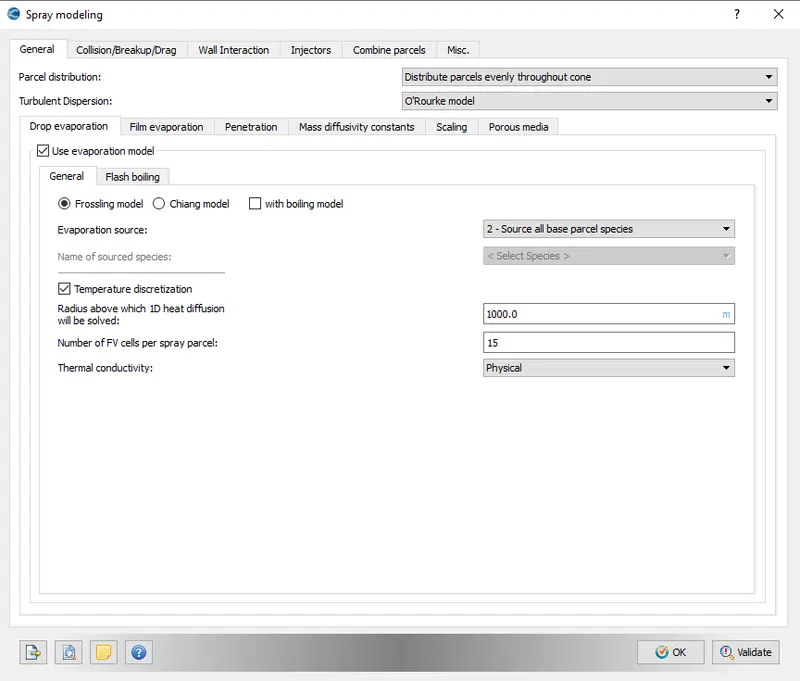
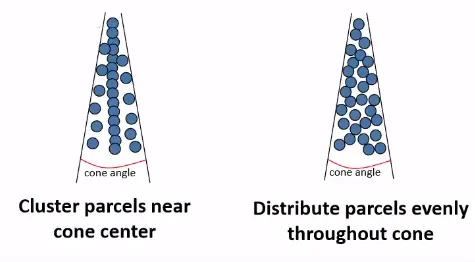
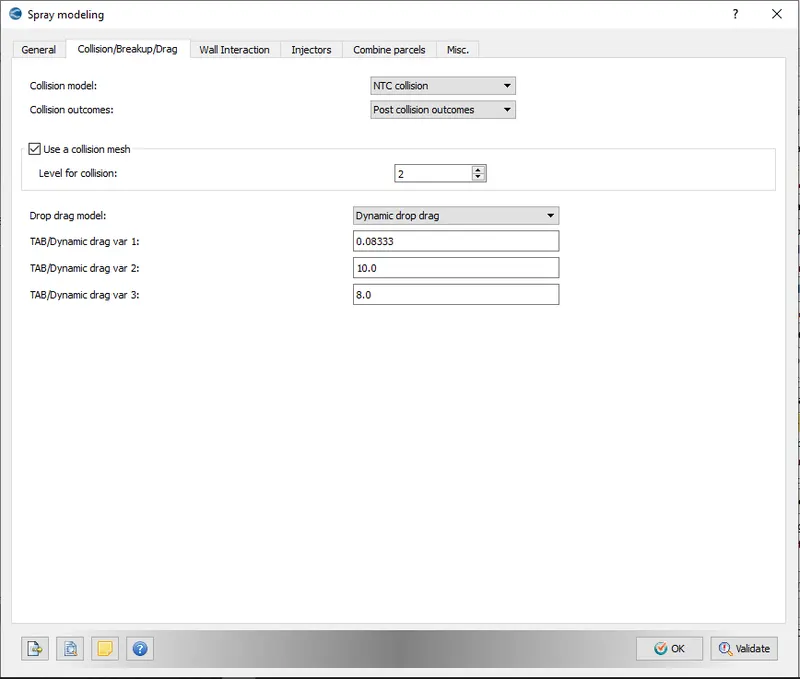
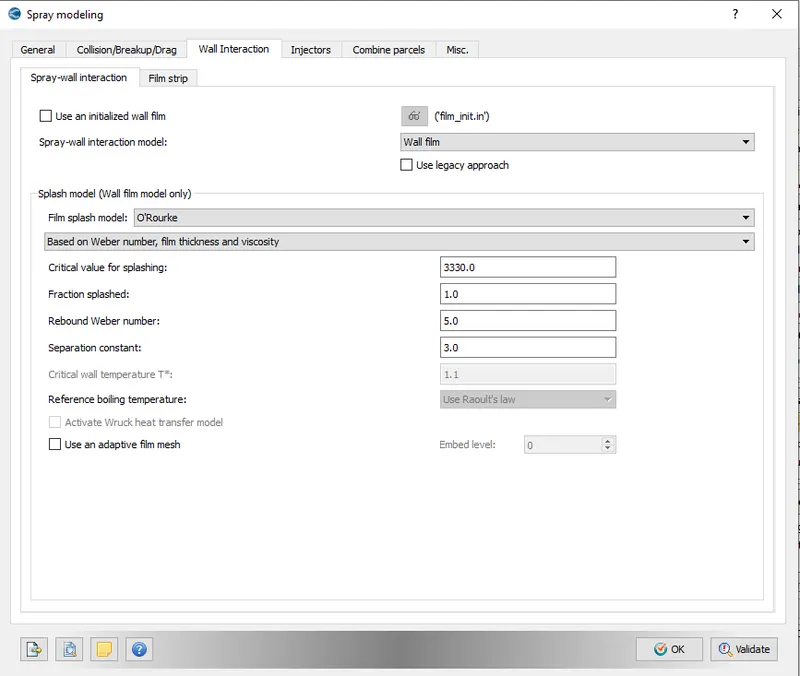
Spray Modeling:
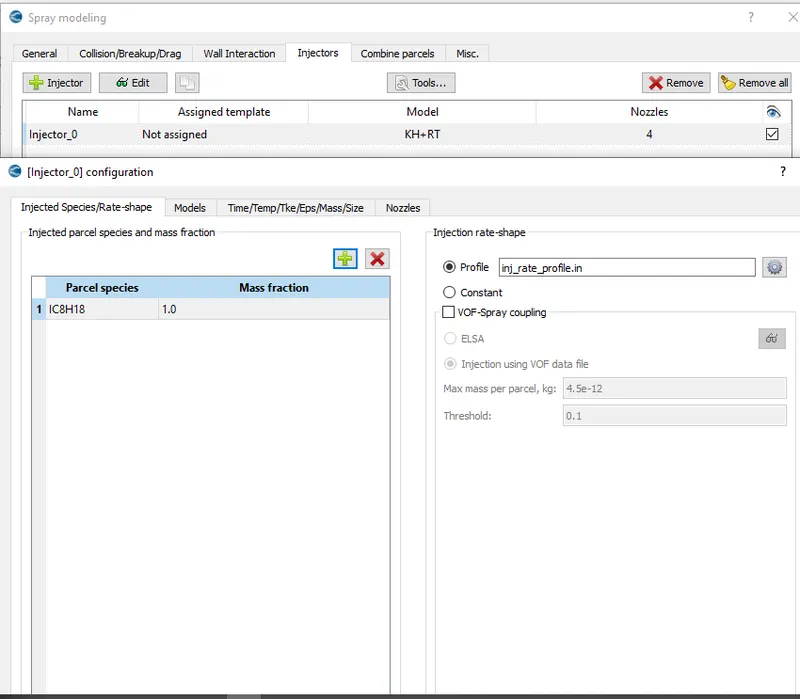
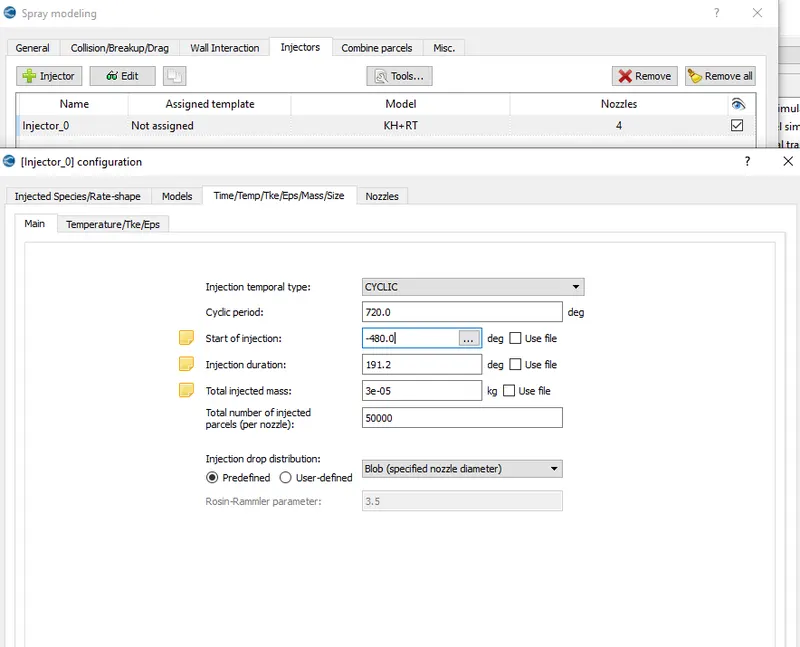
Injector Properties:
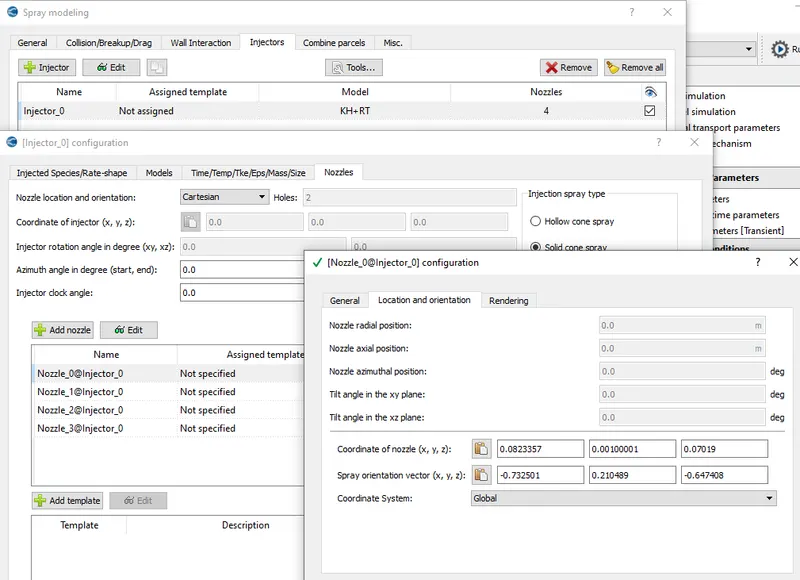
Injector Location:
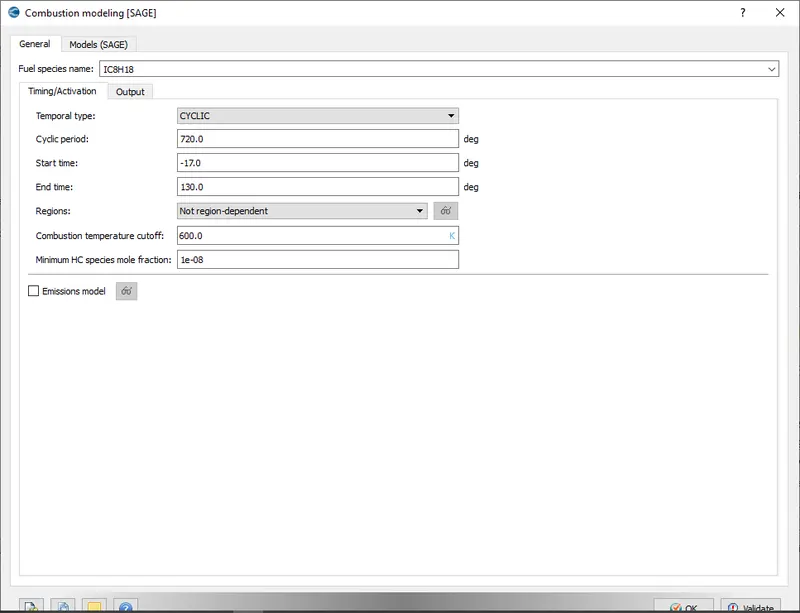
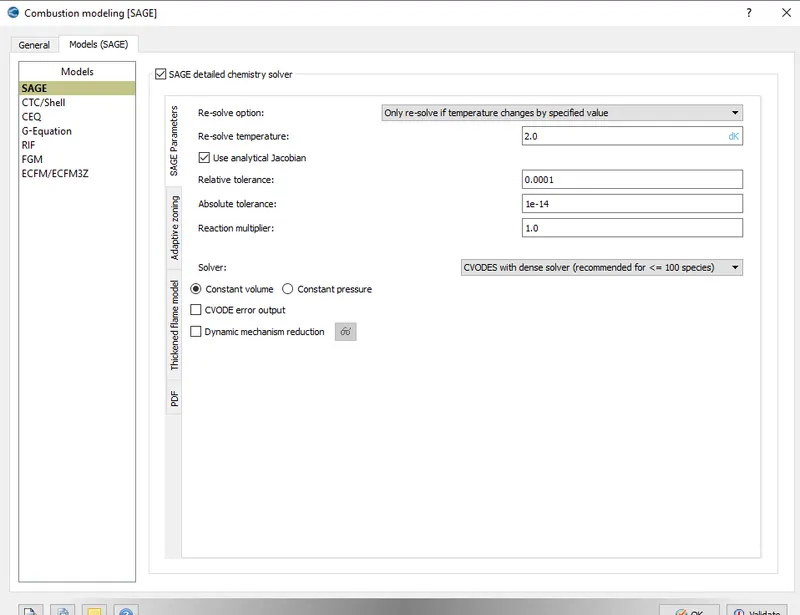
Combustion Modeling:
Sage solver uses the local conditions to calculate reaction rates based on the principles of chemical kinetics.
We are basically calculating rate of change of species concentration based on the arhenius rate equation.
Mesh:
Base Mesh: 4 mm
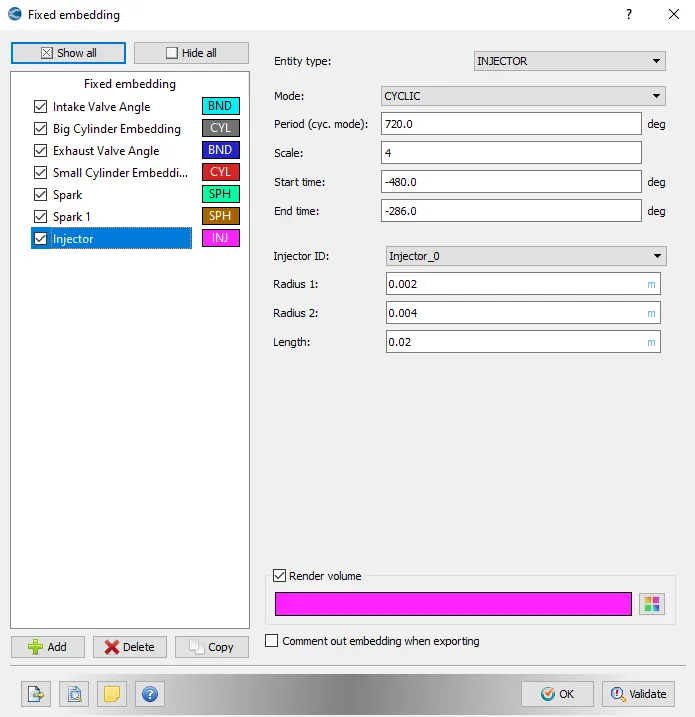
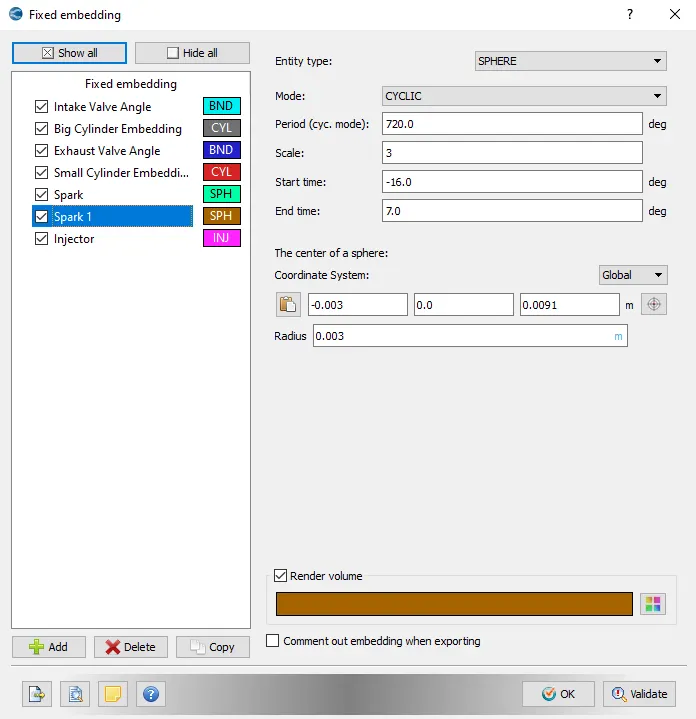
Embedding:
Different types of embedding is selected for different regions;
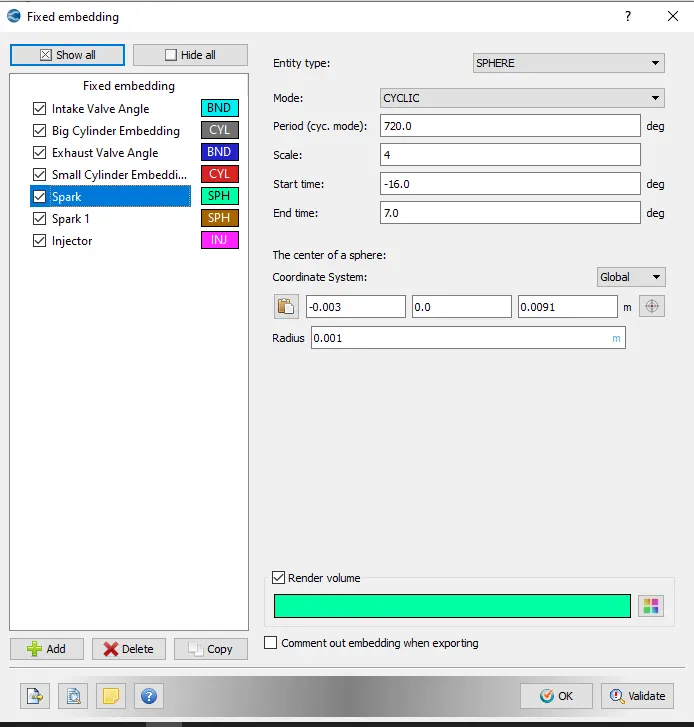
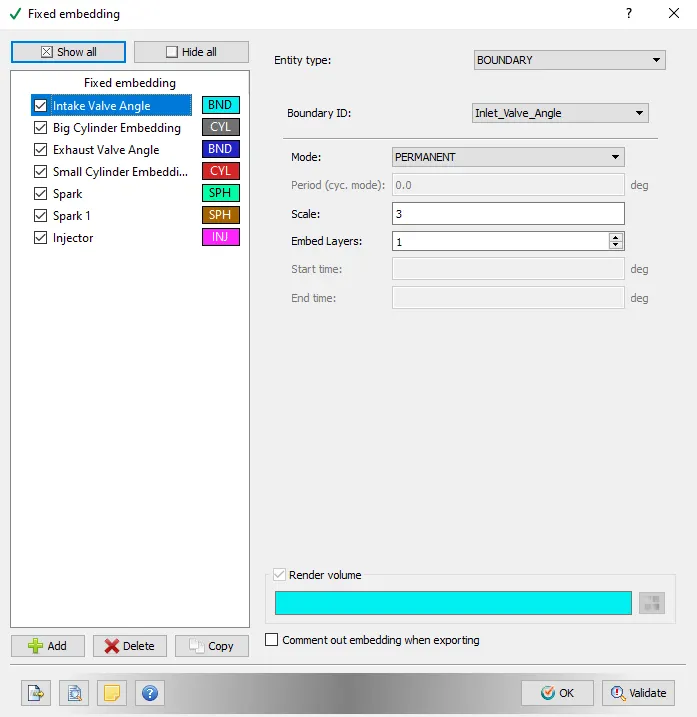
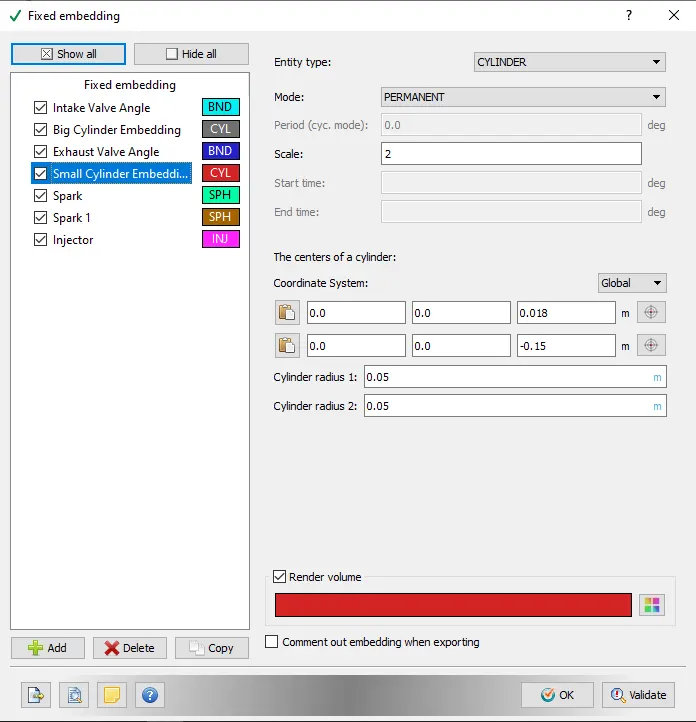
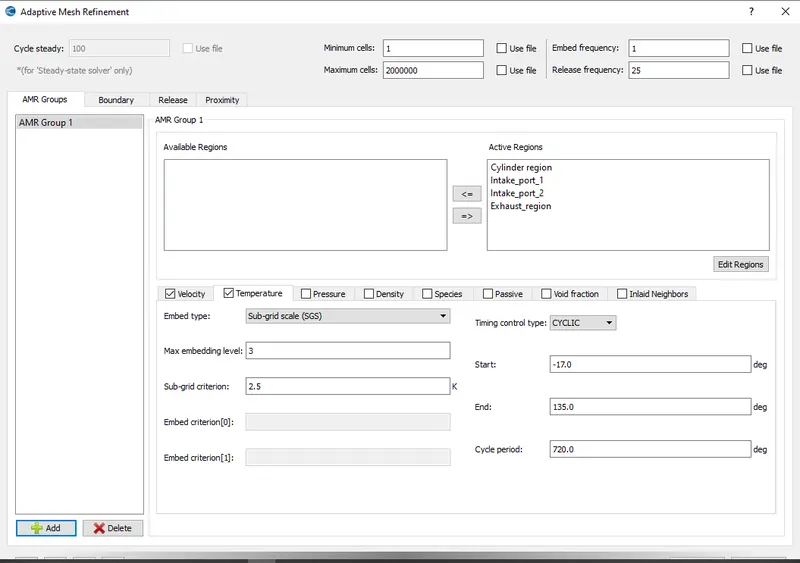
AMR:
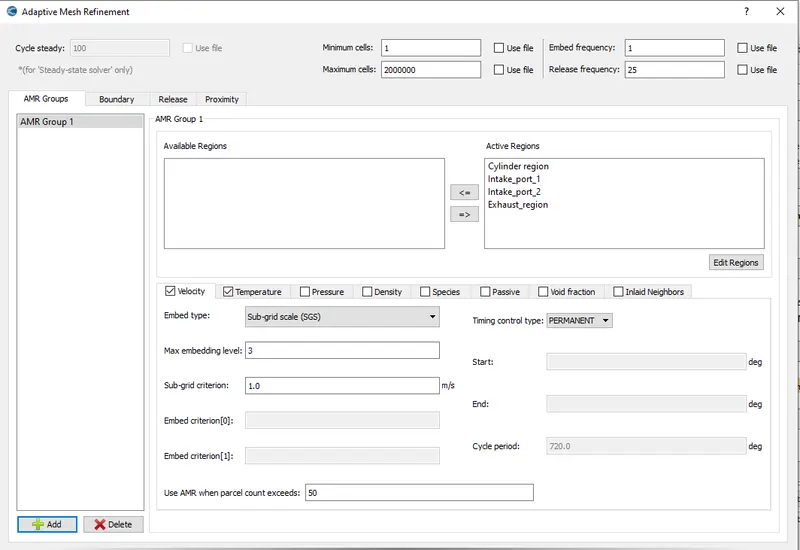
1. What is the compression ratio of this engine?
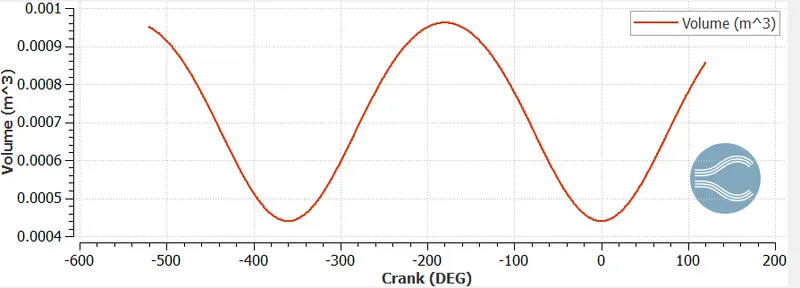
Compression Ratio=Maximum Value/ Minimum Value=0.001401408/0.000439563=3.188
2. Why do we need a wall heat transfer model? Why can't we predict the wall temperature from the CFD simulation?
CFD simulation involves solving Navier Stocks Equations. Whereas solving CHT problems involves more than one medium i.e. solids and fluids. Thermodynamic data related to species is provided but no information regarding the solid engine surface is used to predict heat transfer through the solid boundaries.
Hence, heat transfer model is used.
3. Calculate the combustion efficiency of this engine
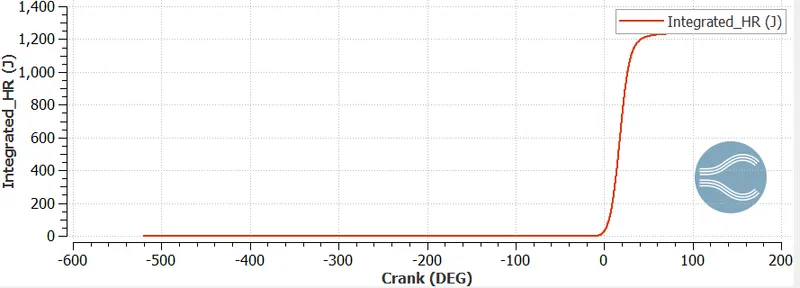
Total Energy Content of fuel= Calorific Value * Fuel Mass per Cycle= 44 MJ * 3*`10^(-5)`=1320 J
Combustion Efficiency = Total Heat Release/ Total Energy Content of fuel= 1240/1320=0.939=93.9 %
4. use the engine performance calculator, to determine the power and torque for this engine.
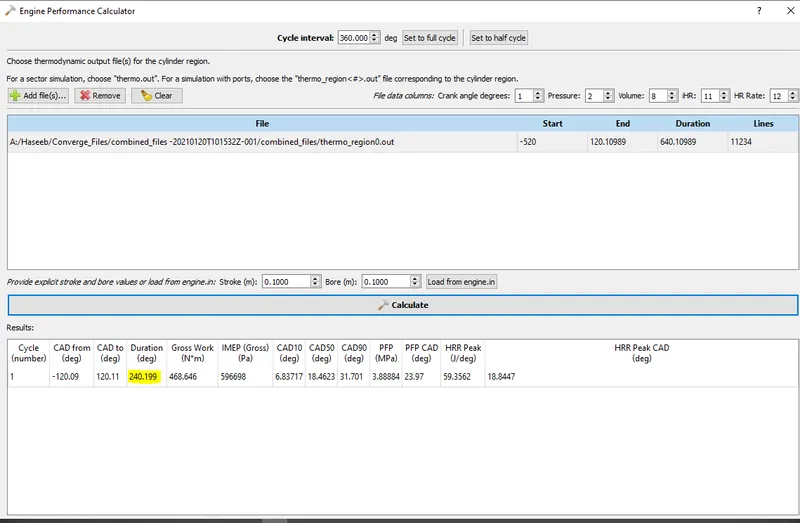
From Engine Performance Calculator:
Work=468.646 J
N=3000 rpm or 50 rps
Time for one degree of rotation= 1/(50*360)=5.55*`10^-5`
Time for 240.199 degree of rotation = 0.0133
Power=468.646 J /0.0133 s = 35 kW
Power(P) = (2*π*N*T)/60
T=111.7 Nm
5. What is the significance of ca10, ca50 and ca90?
CA10= Cummulative Heat Release reaches 10%= Start of ignition (In diesel engine)
CA50= Cummulative Heat Release reaches 50%= End of Premixed Combustion (In diesel engine)
CA90= Cummulative Heat Release reaches 90%
The greater the difference between CA50 and CA10 the higher would be the combustion duration.
Animation: