Week - 10 Hyperelastic Material Models
Hyperelastic Material Models,
Objectives,
In this project, the given material data used to assign the hyperelastic material cards in Ls-Dyna. Then, calculate the Mooney Rivlin and Ogden material constants and compare both using stress and strain data from a dogbone specimen tensile test with 100% strain.
Procedure,
An elastic material is a linear material. This means that stress varies linearly concerning strain. This material model is accurate for many material models, such as paper, metal, and wood, as long as the deformation is very small. Hyperelastic materials are designed for modeling rubber or rubber-like materials in which the elastic deformation can be extremely large. Hyperelastic materials use something called a strain energy density function to derive the relationship between stress and strain. This allows them to model the relationship between stress and strain accurately even when the strain is between 100% to 700%, depending on the exact hyperelastic model that is used. Various material models like Mooney Rivlin, Ogden, Yeoh, etc these models used this material.
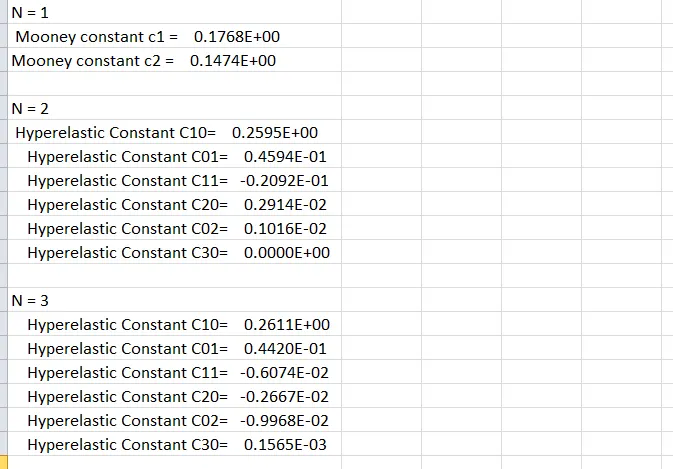
1. Import the dogbone specimen into the Ls Pre-post, define the engineering stress-strain curve on the MAT_77 HYPERELASTIC RUBBER material card, and assign the hyperelastic parameters(density, Poisson's ratio) in this card. Then, N(Number of constants to solve=1,2,3) value define the different power of material model considered. These values are called Mooney Rivlin constants its can be extracted from the d3hsp file.
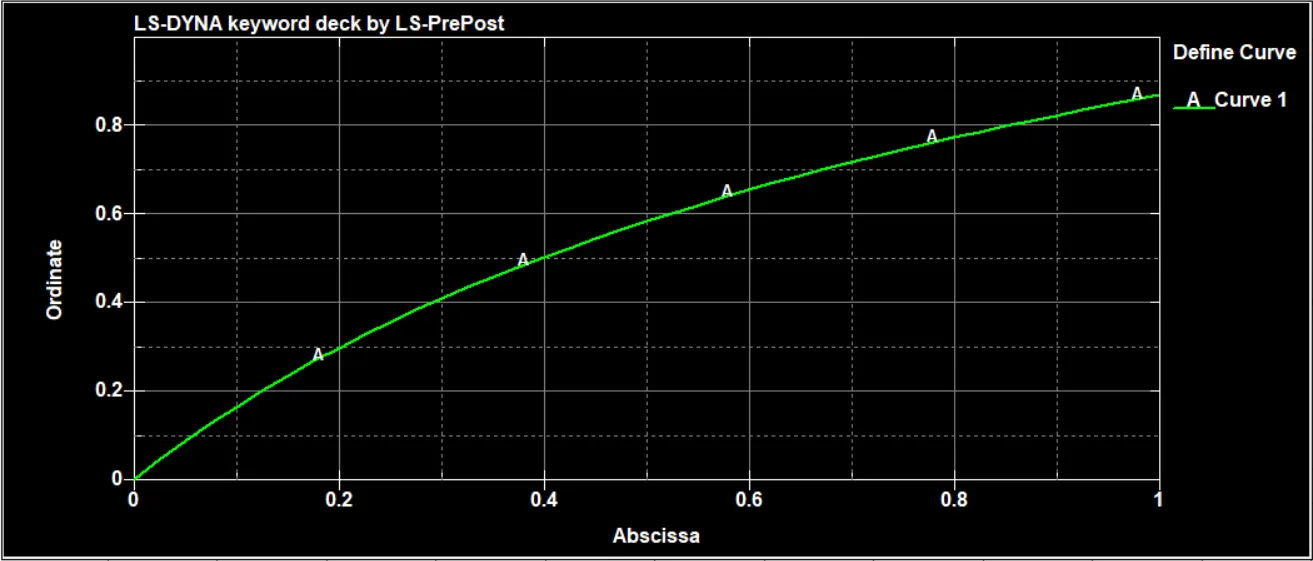
Fig. Stress-Strain Curve
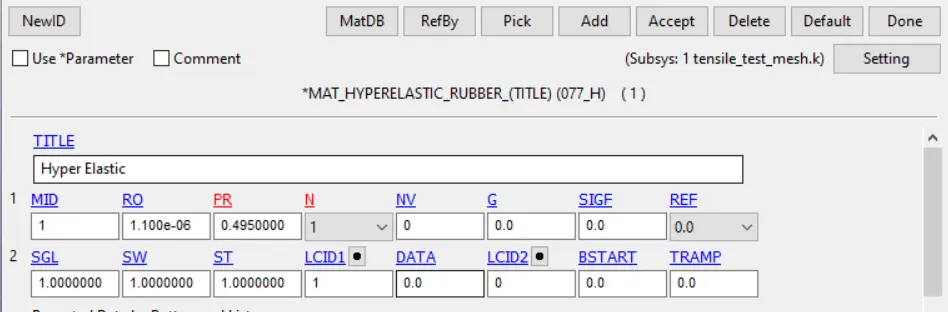
Fig. Material Creation
2. Create the section card on SECTION_SHELL with ELFORM 2 and selected with a thickness of 1.5 mm. After that, this material card and section card assigned to the part.
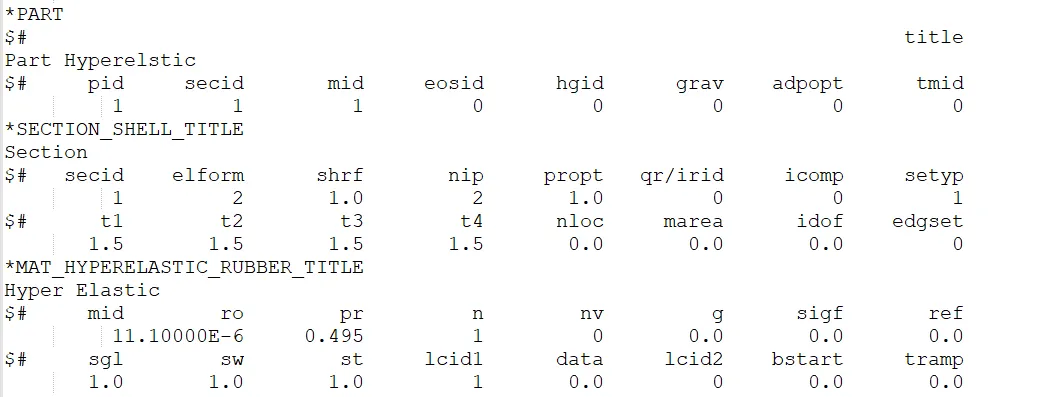
Fig. Section and material cart assign to the part
3. Simulating the uniaxial tensile test, create the two boundary conditions on the specimen due to one of the free ends of the specimen and the other at the center points of the specimen. Create the BOUNDARY_PRESCRIBED_MOTION_SET done by using a curve. Displacement required is equal to the length of the specimen.
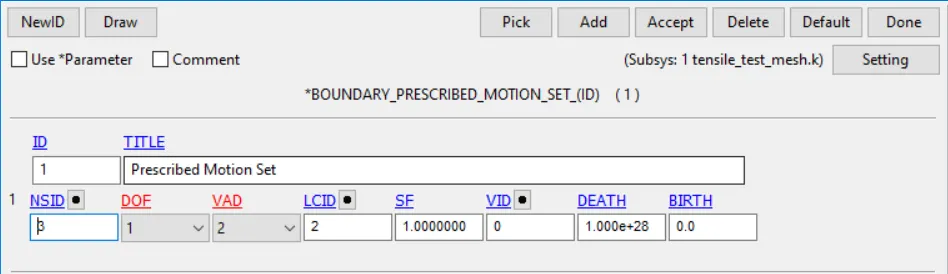
Fig. Prescribed motion set
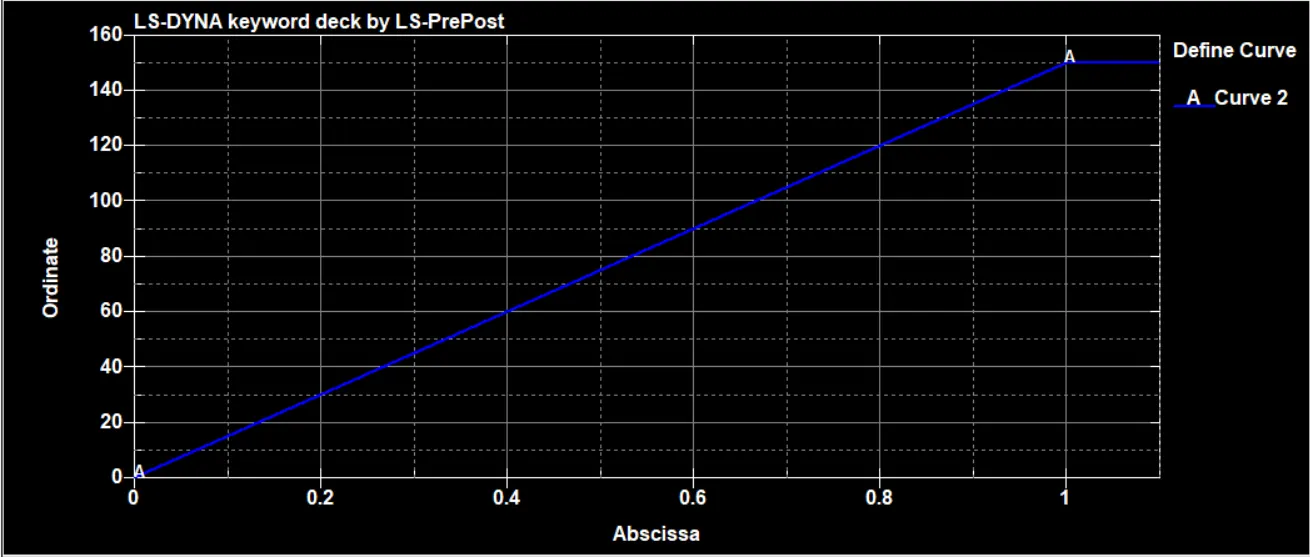
Fig. Displacement Curve
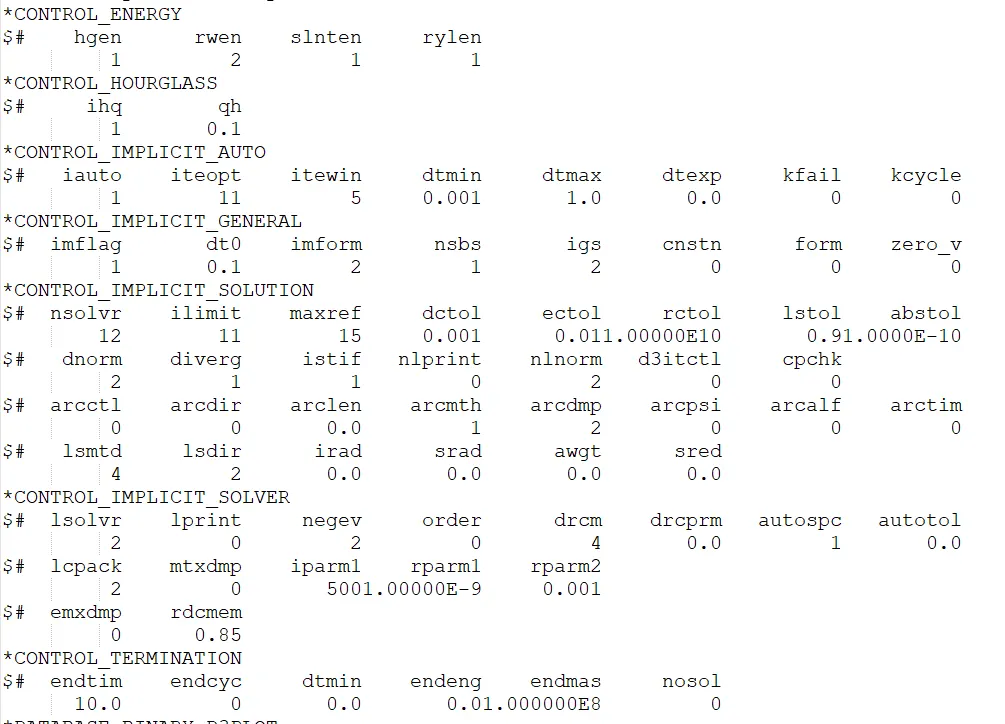
4. This case proceeds with the implicit simulation method, so we use the CONTROL_IMPLICIT_GENERAL, CONTROL_IMPLICIT_AUTO, CONTROL_IMPLICIT_SIMULATION, CONTROL_IMPLICIT_SOLVER to define the solver type and time step info. D3PLOT took the output of the simulation.
Results,
Constants,
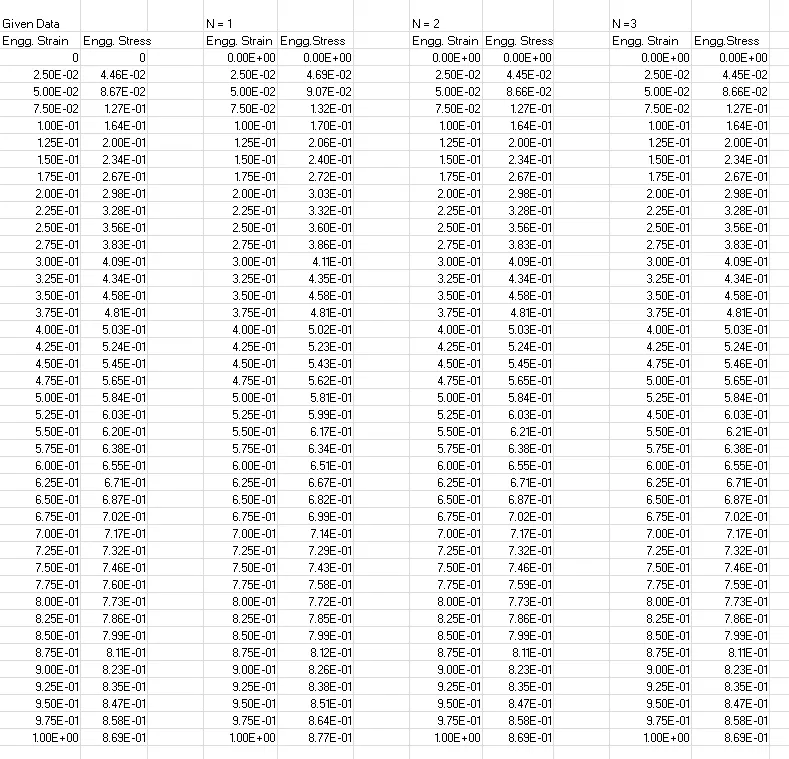
These constants values are getting from the D3hsp file then, took the extension data and train values are converted to the engineering strain and engineering stress using these formulas.
Engineering Strain = 1- Extension data
Engineering Stress = True stress/(1+Engineering Strain)
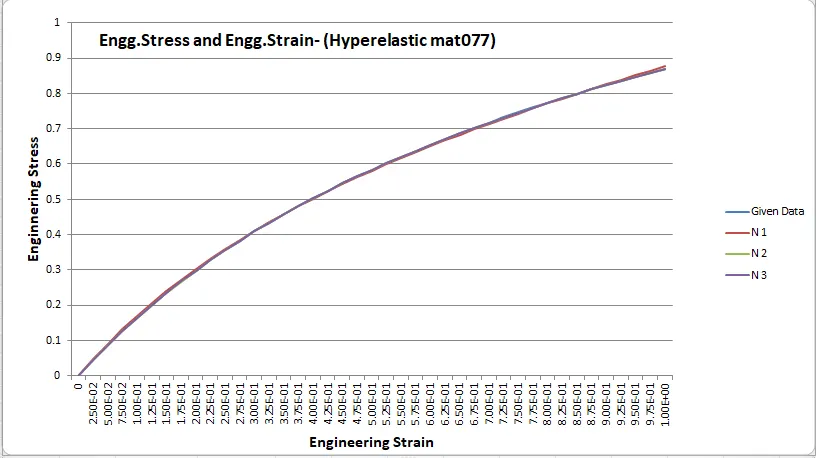
Engg.Stress vs Engg. Strain
Engineering stress and Engineering Strain values compared with the original stress-strain values for material with excel sheet.
Ogden material,
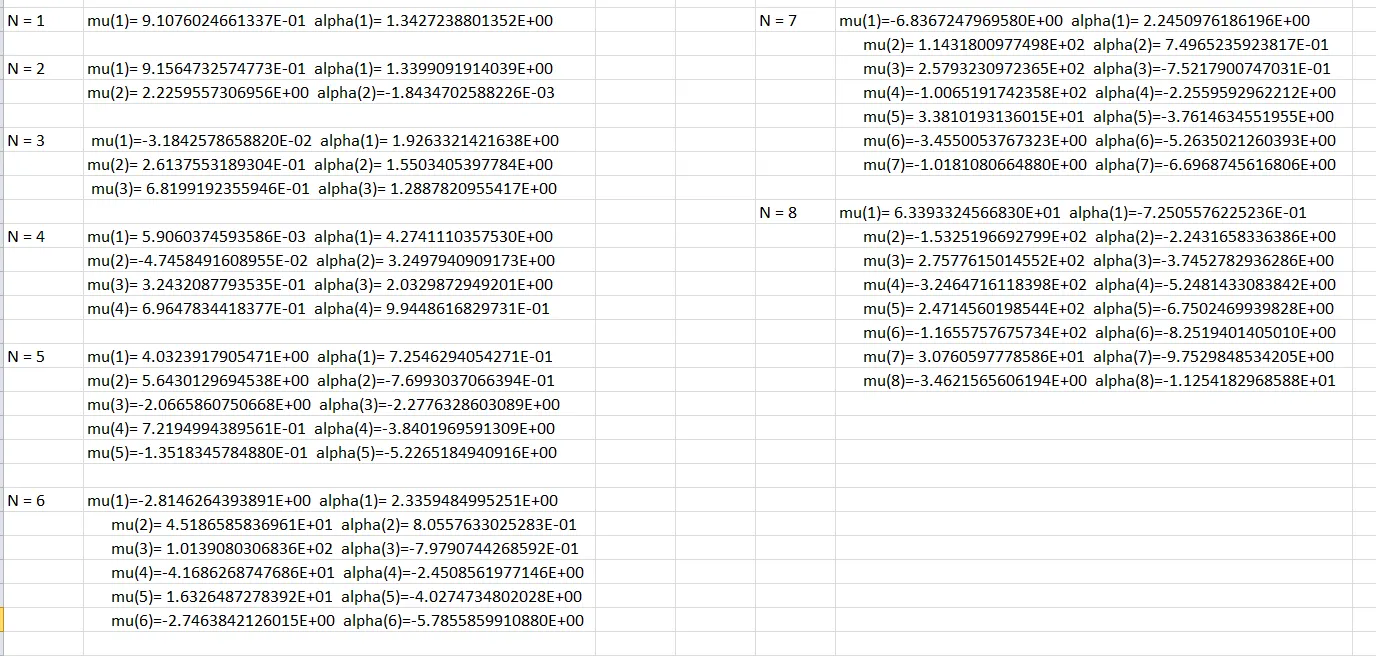
The same procedure to be followed for the Ogden material but the material card change to MAT077_O_OGDEN_RUBBER. There are 8 values of N(number of Constance to solve) and their Constance is Alpha and Mu.
Constance,
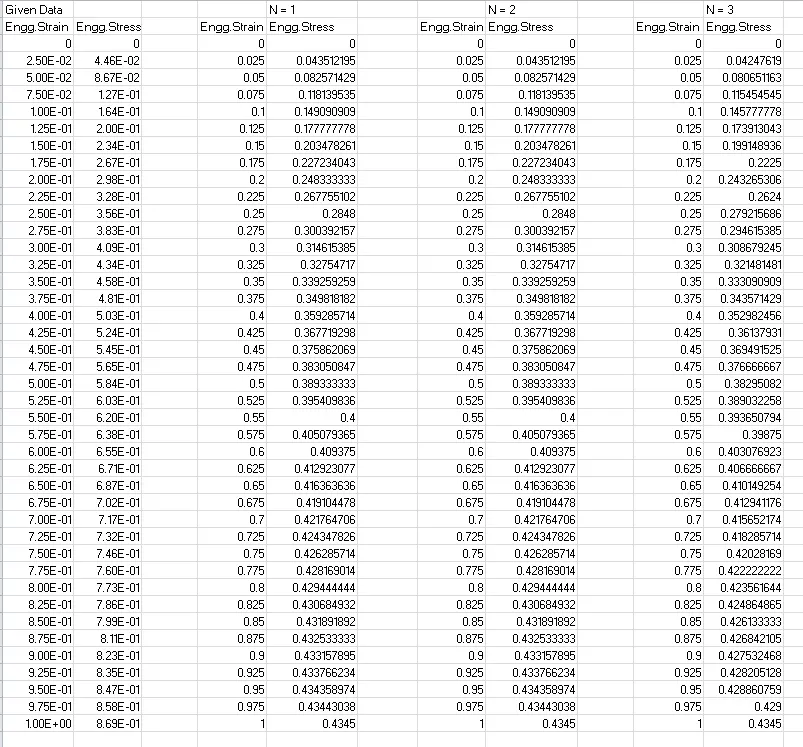
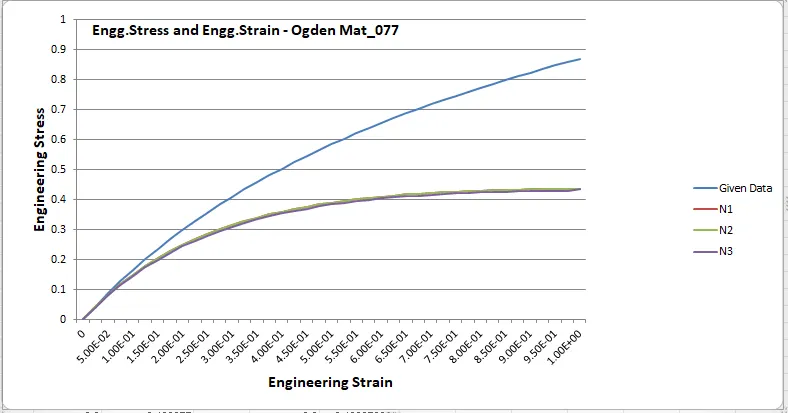
Engg.Stress vs Engg. Strain,
Here, compared only three values, N = 1, 2, 3.
Conclusion,
This assignment helps full to know about the non-linear hyperelastic material modeling and how to convert the data to engineering stress and strain. Mooney Rivlin is a 2nd order polynomial their N values convert to the parameter then it will be extracted fro the D3hsp file. It shows the different material constant values, in Ls-Dyna shows the force form fit and from the input, extension, and stress. this value is used to validate it.