Week 10 Bullet penetrating a Bucket Challenge
BULLET PENETRATING A BUCKET
OBJECTIVE:
To perform an explicit dynamic analysis of a bullet impacting and possibly penetrating a bucket-like component at a defined velocity and thereby to study the equivalent stress, strain and total deformation that occurred in the bucket model
The same analysis is performed in 3 different cases, in each case, the bucket is modeled with different nonlinear materials - Aluminium alloy NL, Titanium alloy NL, and Copper alloy NL while the material for the bullet remains the same in all 3 cases as Tantalum
PROCEDURE:
- Create a new explicit dynamic simulation
- Import Aluminium alloy NL, Titanium alloy NL, and Copper alloy NL materials from general nonlinear materials module as the desired material for the bucket components
- Import the geometry model from spaceclaim GUI
- Then the model module of explicit dynamics is again updated.
- Open the model in ansys mechanical module.
Material assignment
Bullet - Tantalum
Bucket - case 1=Aluminium alloy NL
case 2 = Titanium alloy NL
case 3 = Copper alloy NL
Contacts
Delete unnecessary contacts since contact forces wont be studied
However, set a body interaction defined for all bodies for the dynamic analysis
Mesh
Let the global sizing be default based on the geometry dimensions
Create an edge sizing for the ends of the bucket and set the target length to 6mm
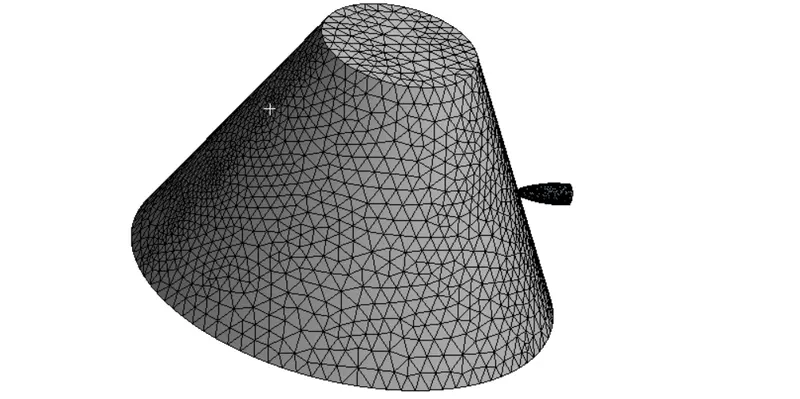
Loading and boundary conditions
Set the end time of the simulation to 0.01s
Since this is not a transient analysis, the velocity of the bullet will not change wrt time rather it will travel at a constant velocity of 1.3E+5 mm/s.
At this speed, it is assumed that the bullet will penetrate the bucket.
Keep the bucket fixed at the lower portion.
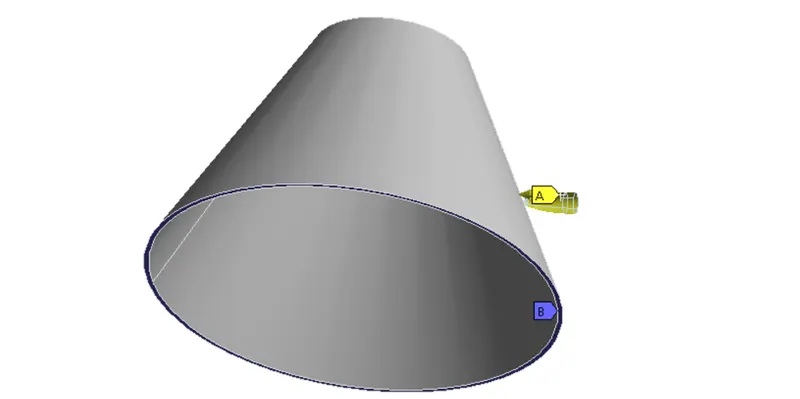
RESULTS:
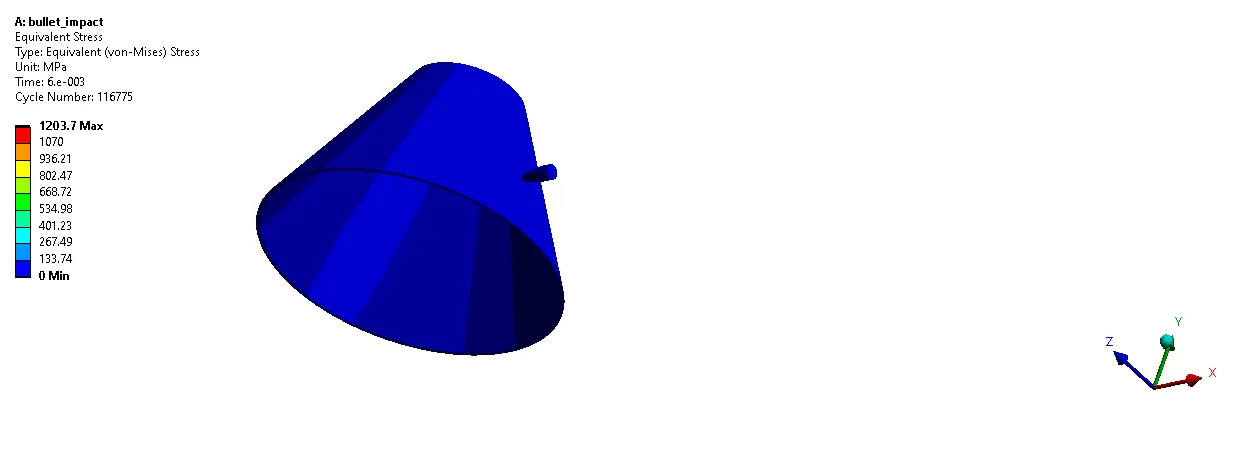
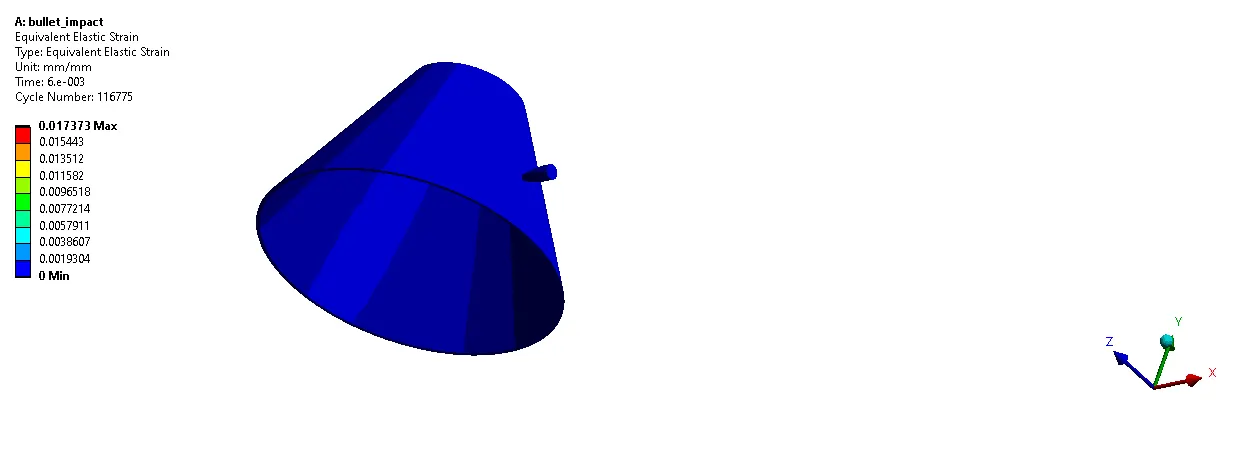
CASE 1: Al alloy NL
Equivalent stress
Equivalent strain
Total deformation
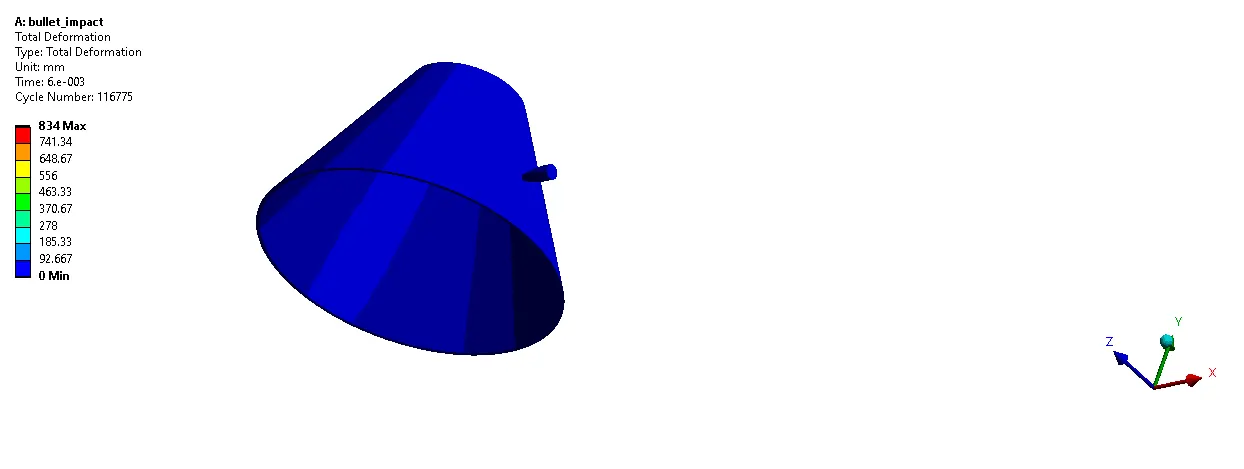
CASE 2: Ti alloy NL
Equivalent stress
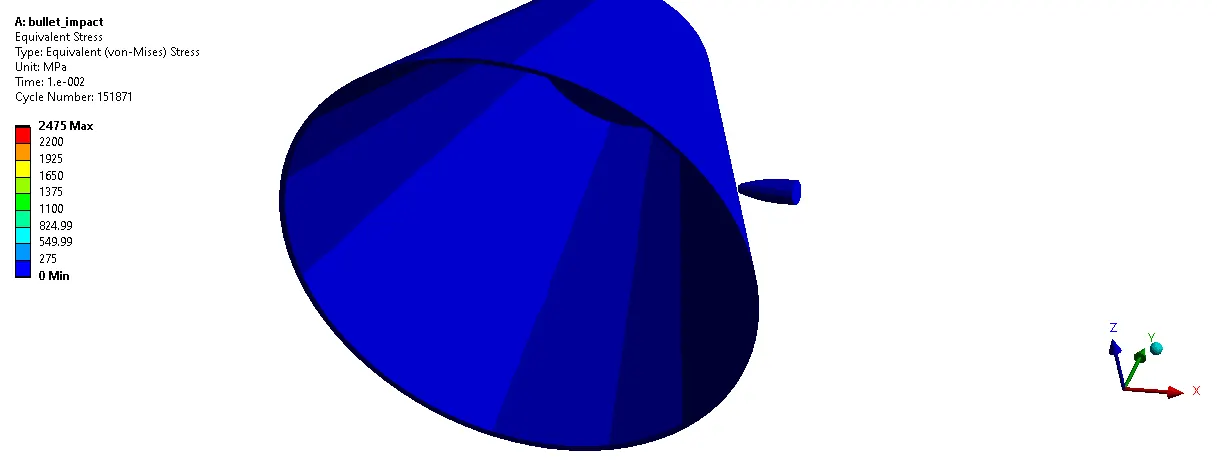
Equivalent strain
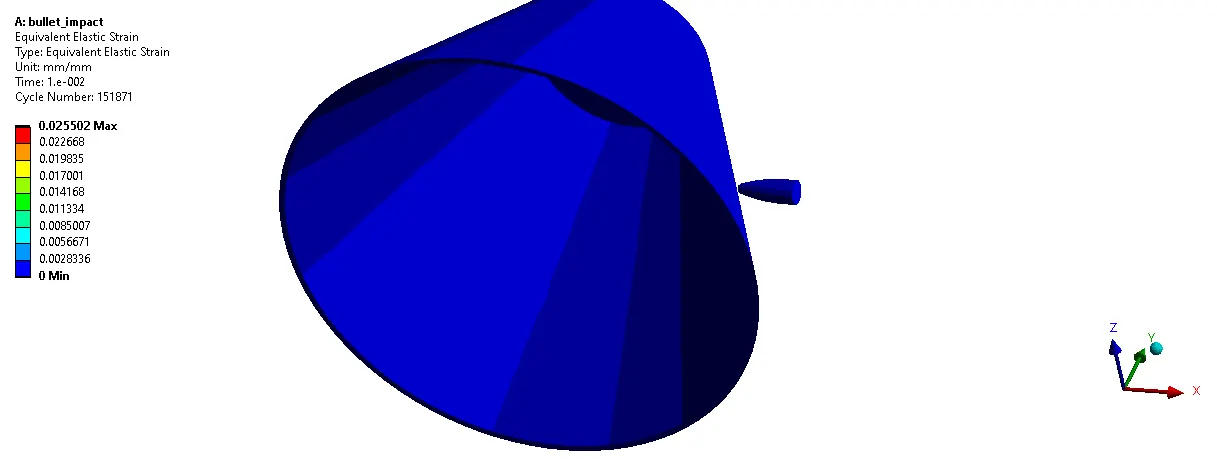
Total deformation
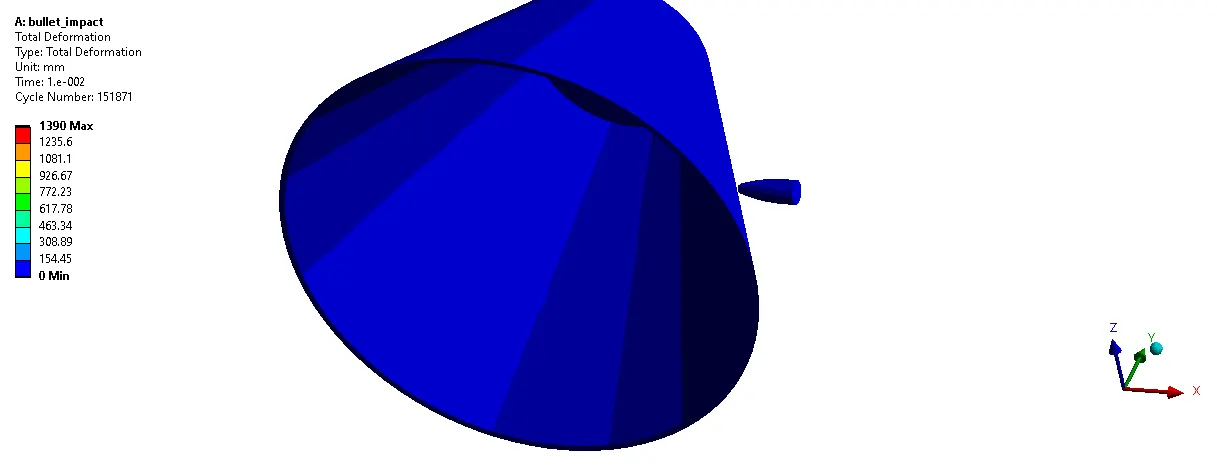
CASE 3: Cu alloy NL
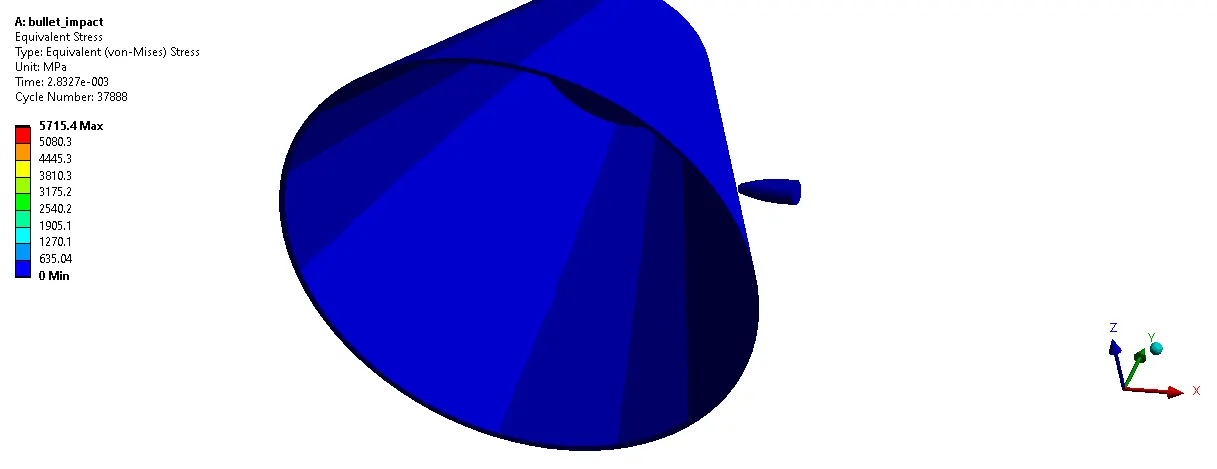
Equivalent stress
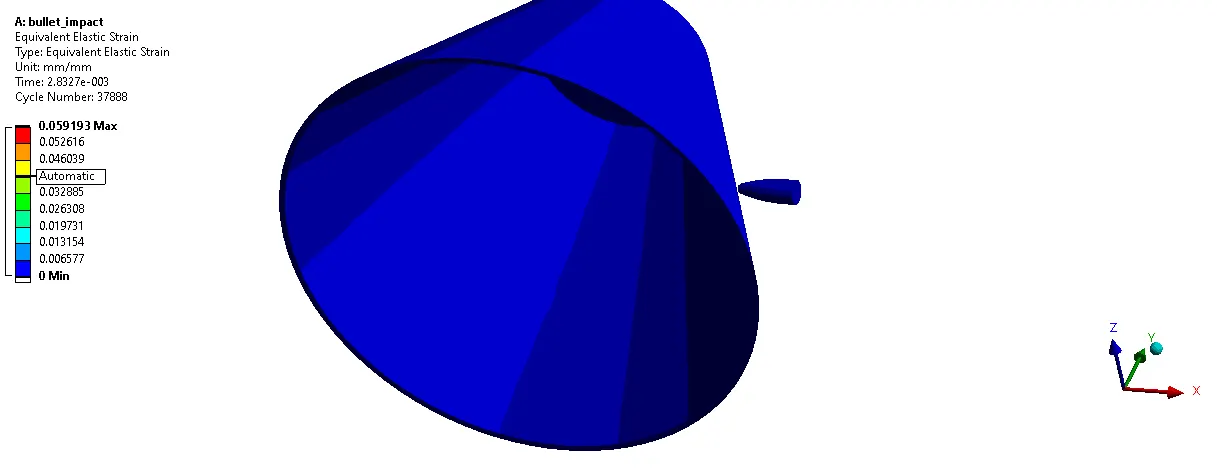
Equivalent strain
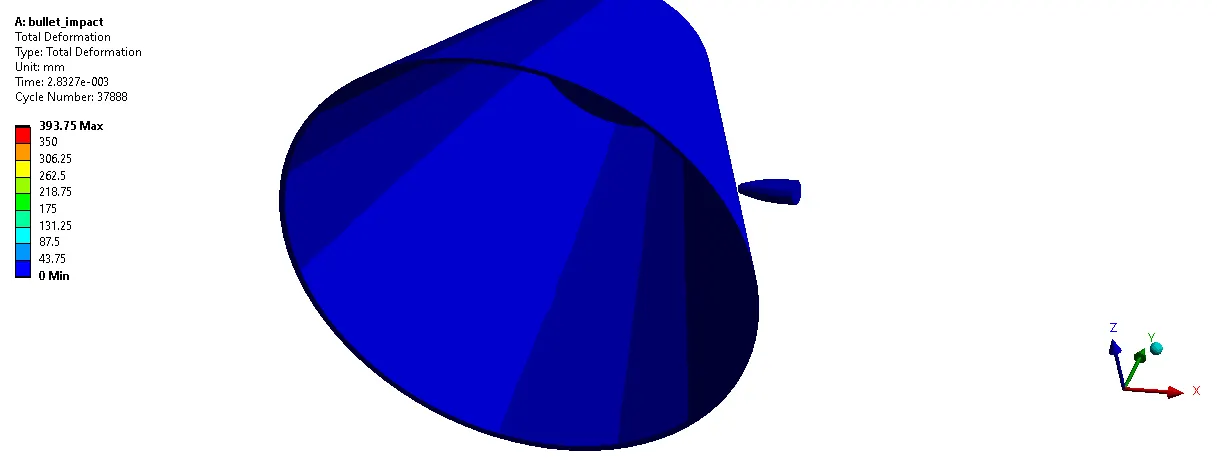
Total deformation
CONCLUSION
From the above results, we can observe that there is a significant difference in stress, strain and deformation values in all 3 cases. This is because all 3 materials have very different material properties.
We can observe that the titanium alloy offered the most resistance to the impact hence a large stress is developed at the contact region with the least deformation among all three cases, this is due to that fact that the yield and ultimate tensile strength of titanium is significantly higer compared to Cu or Al alloy materials.