Week 10 Bullet penetrating a Bucket Challenge
AIM: - PERFORM A SIMULATION OF A BULLET PENETRATING INTO A BUCKET.
Objectives:
Perform the simulation for three different Non-linear materials for the Bucket:
A) Aluminium Alloy NL
B) Stainless Steel NL
C) Titanium Alloy NL
The analysis is conducted using the Explicit Dynamics analysis of the Ansys Workbench.
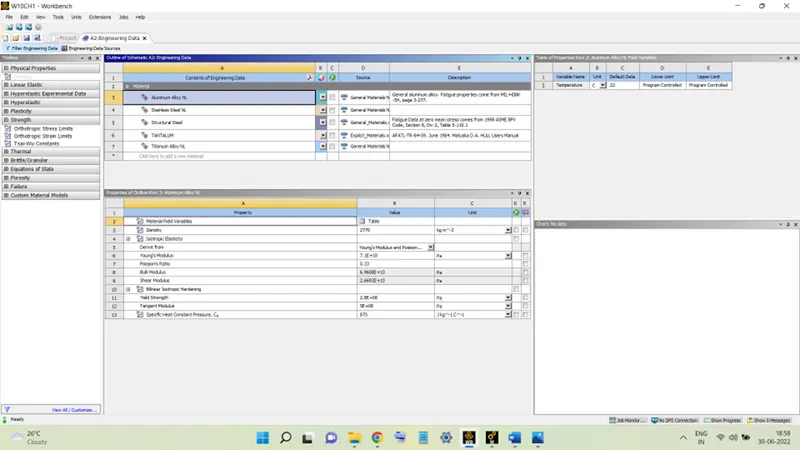
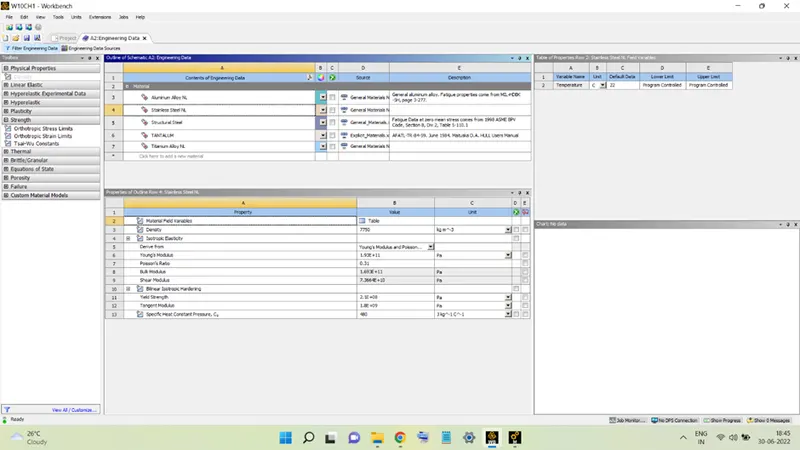
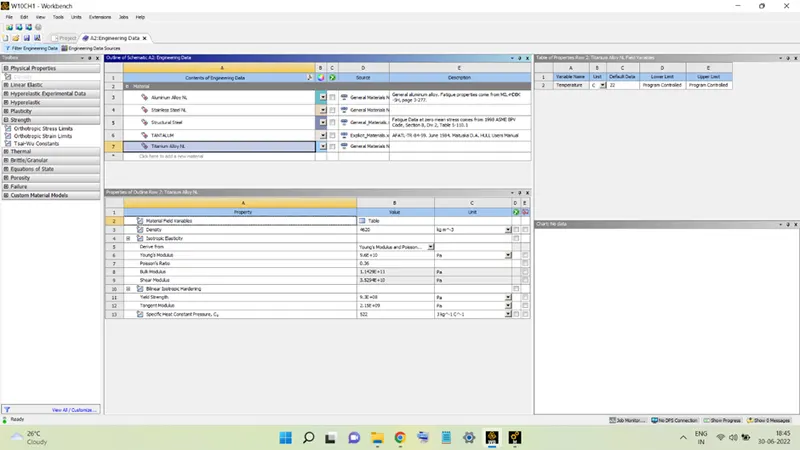
The necessary materials, for the analysis, were loaded in the project from the Explicit Materials library and General Non-Linear Materials library present in the Engineering Data Sources. The properties of the various materials to be used are:
Material for the BULLET: TANTALUM
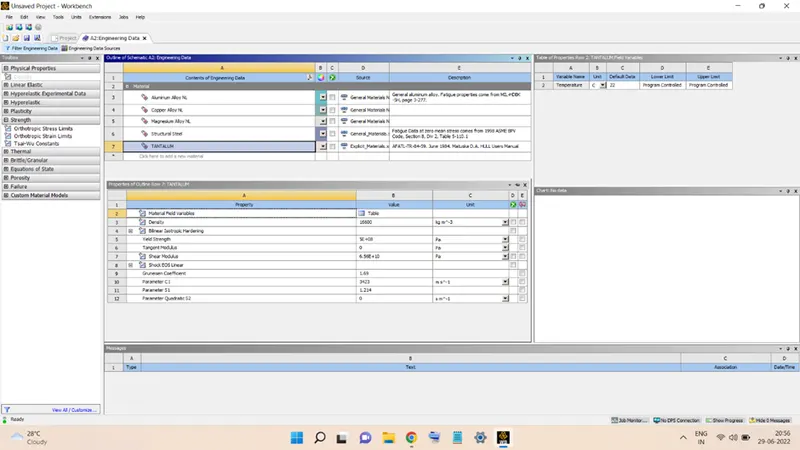
Materials for the BUCKET are:
Aluminium Alloy NL
Stainless Steel NL
Titanium Alloy NL
import the geometry into the project and double-click on Geometry to open it in SpaceClaim.
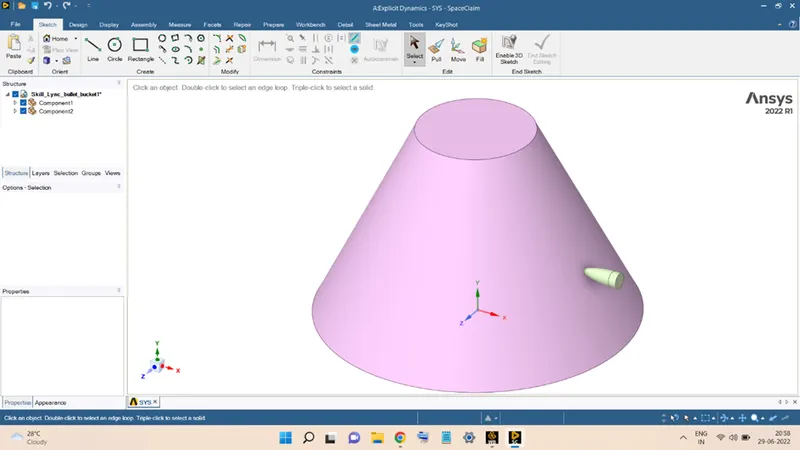
Right-click on Model and select Edit to load the model in the Mechanical Module. In the module, the following steps were followed to set up the model for the analysis:
Both parts were renamed the BUCKET and BULLET respectively. The BULLET behavior was set to Rigid.
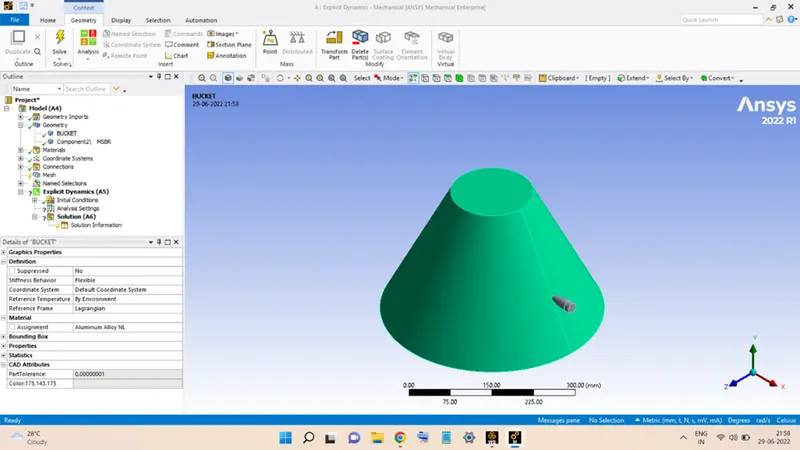
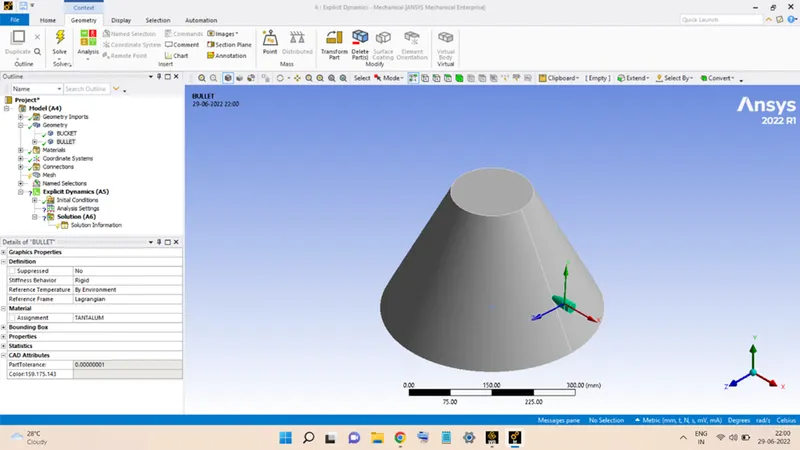
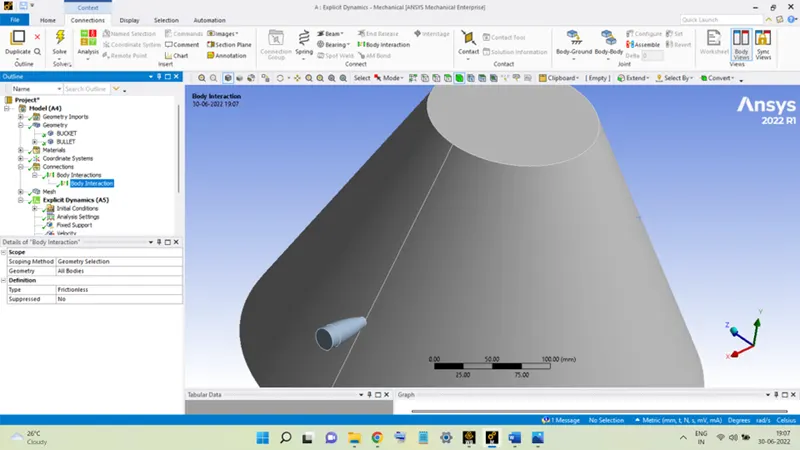
All the pre-defined contacts present in the model were deleted and the Body Interactions were taken to be Frictionless.
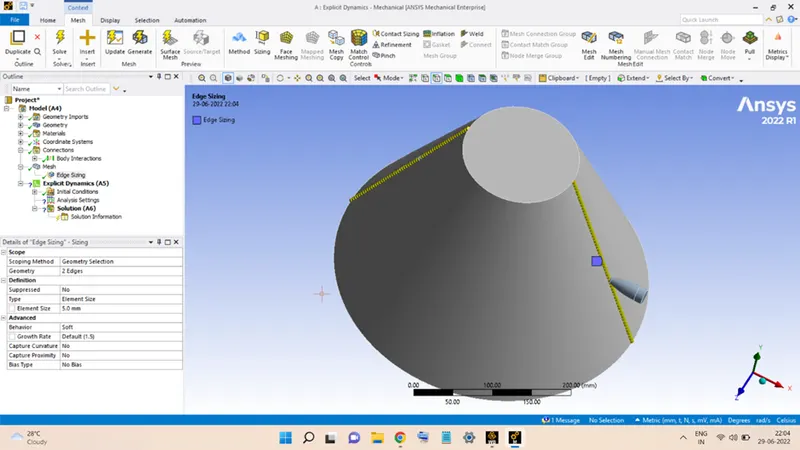
The BUCKET was meshed using Edge Sizing with the Element Size equal to 5 mm.
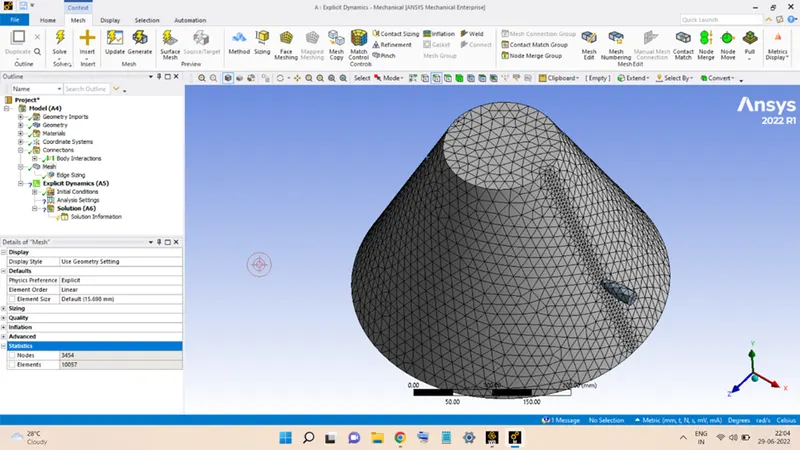
The meshed model looked like this:
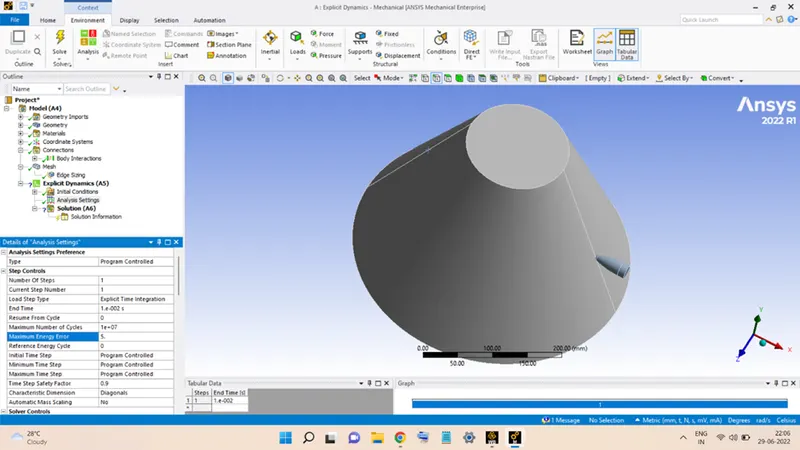
In the analysis Settings, the End Time was given as 0.01 sec.
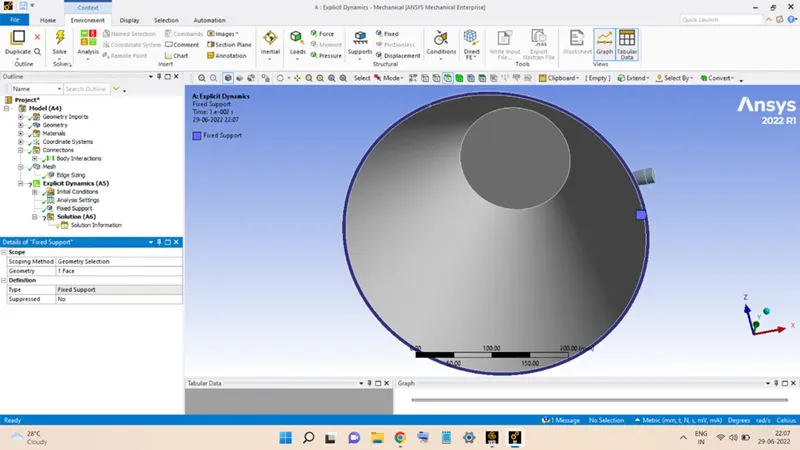
The bottom surface of the BUCKET was fixed for the analysis.
The BULLET was given a velocity of 139 m/sec along the negative Y-Axis, as shown below:
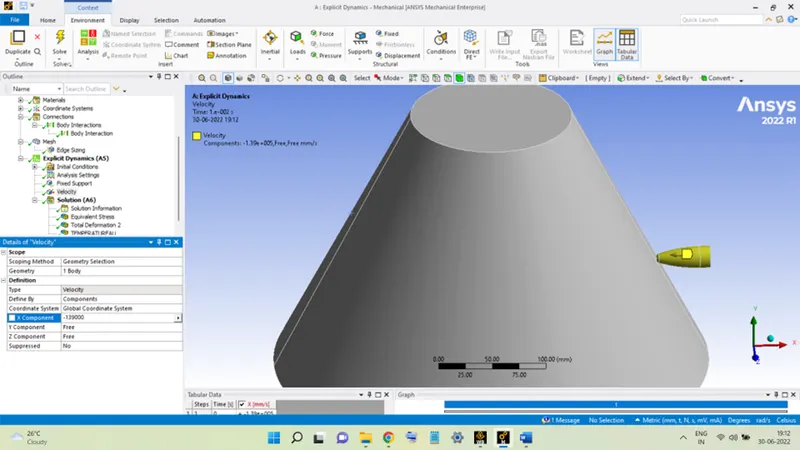
This completes the analysis setup, the analysis is then carried out for three different BUCKET materials, and the results of those analyses are as follows:
RESULTS
CASE 1: BUCKET OF ALUMINIUM ALLOY NL
Stress:
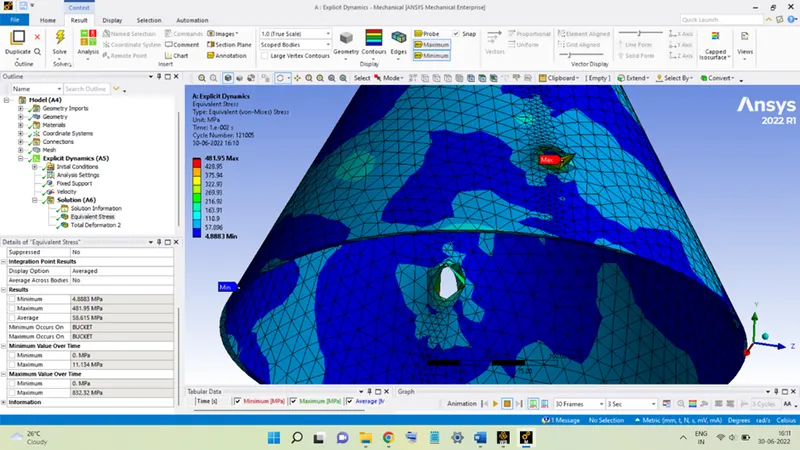
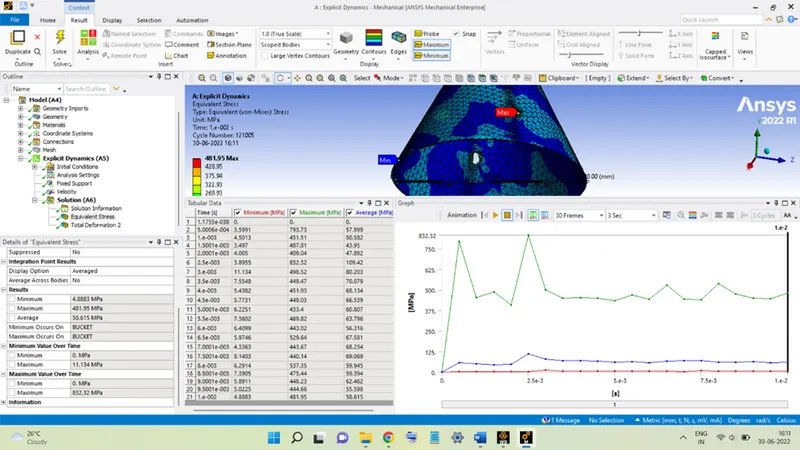
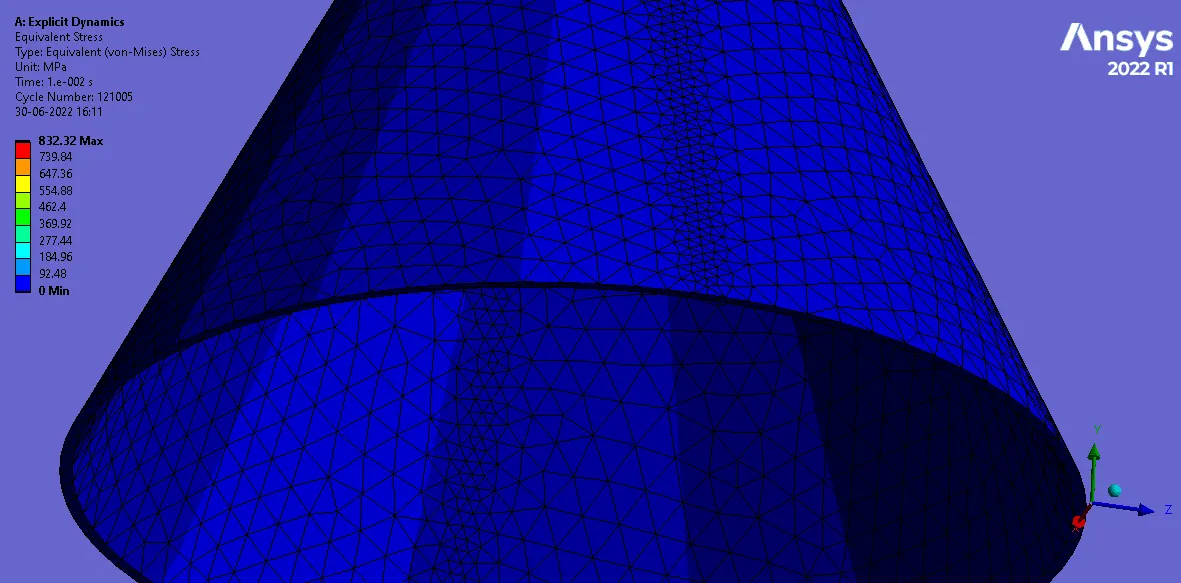
The variation of the stress developed in the BUCKET during the simulation can be seen in the figures above. In the graph, the two peaks are the showing the point at which the BULLET pierces the BUCKET material.
The maximum stress is seen when the BULLET is moving through the second hole of the BUCKET and its value is equal to 832.32 MPa.
Deformation of BUCKET:
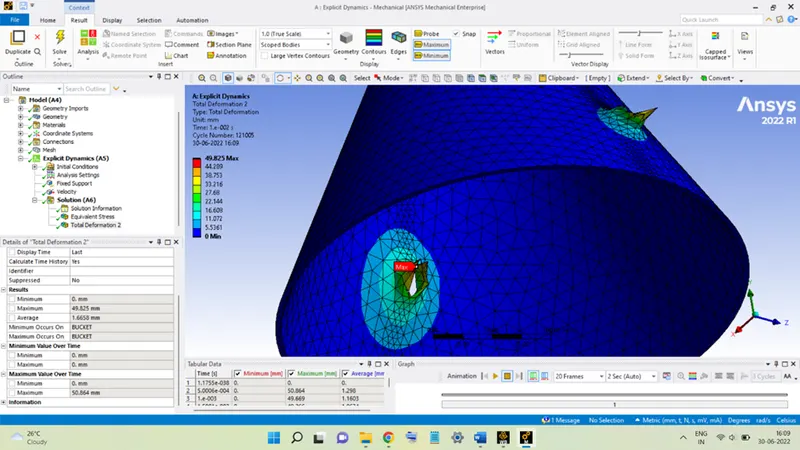
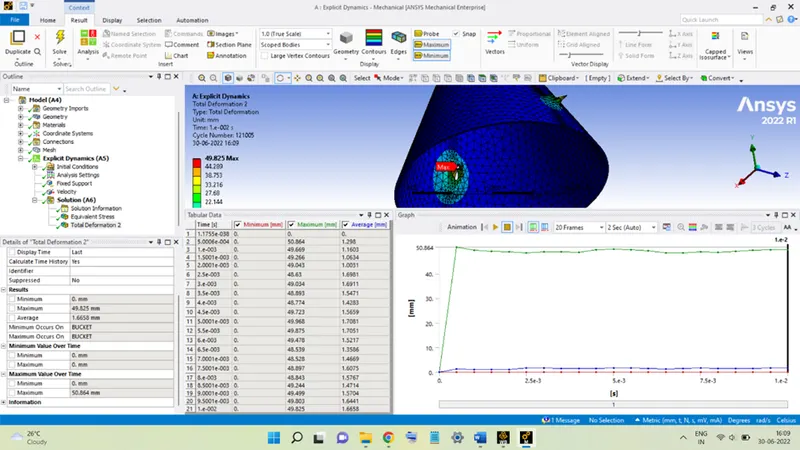
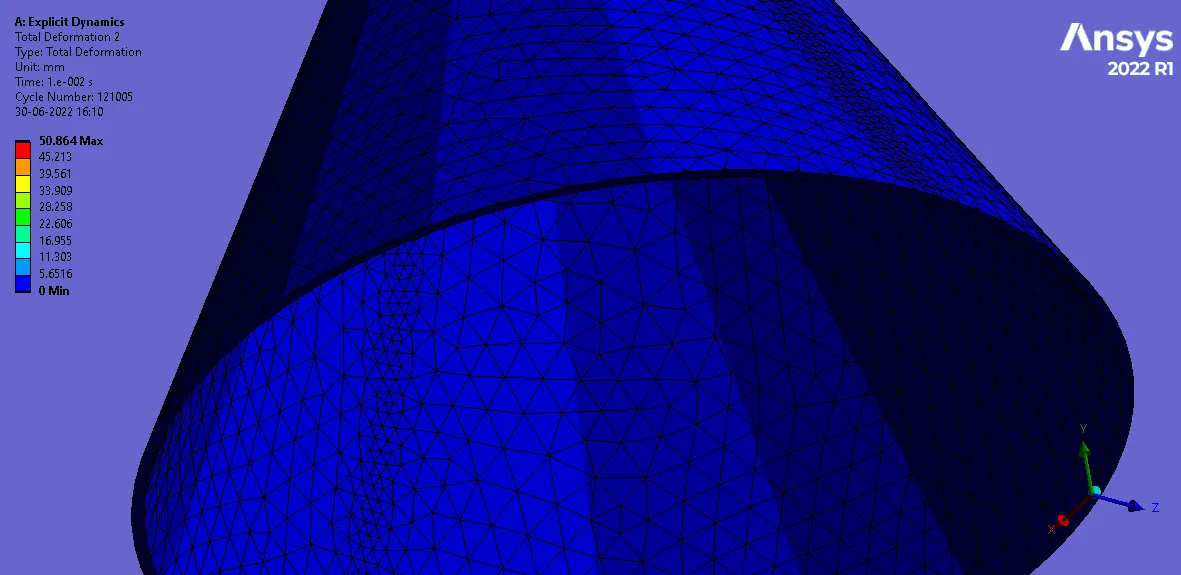
The deformation occurring in the BUCKET during the penetration is shown above. The deformation is seen to be concentrated near the regions where penetration has occurred, the maximum deformation is seen near the first hole equal to 50.864 mm.
Temperature:
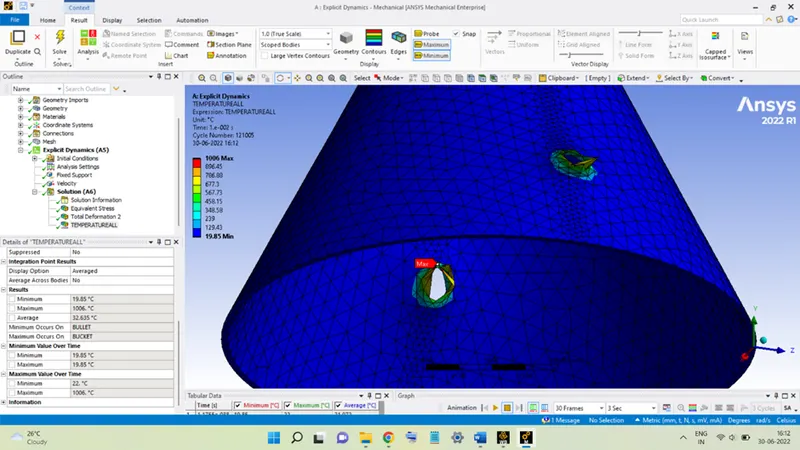
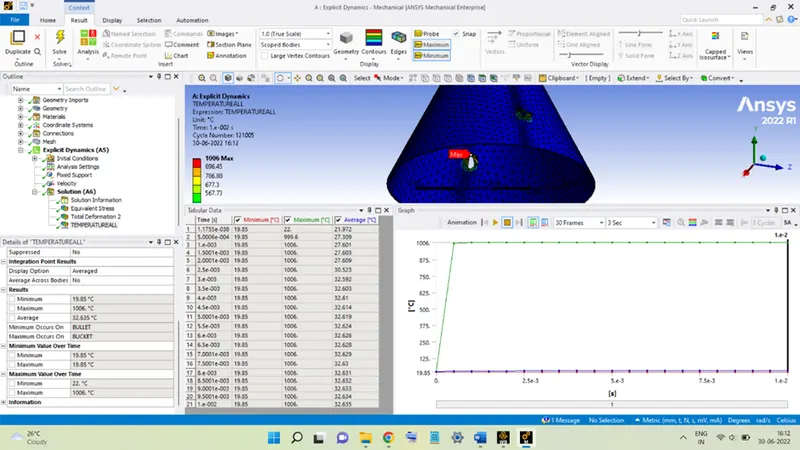
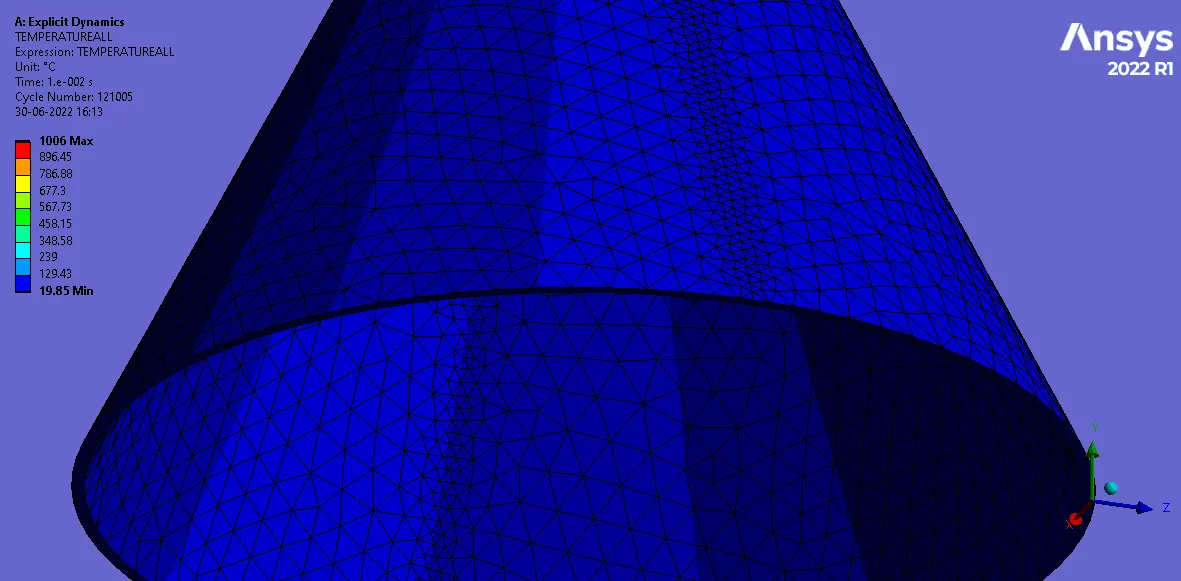
The temperature near both the holes rises because of the release and transfer of the energies during the penetration. The temperature is maximum near the first hole equal to 1006oC.
CASE 2: BUCKET OF STAINLESS-STEEL NL
Stress:
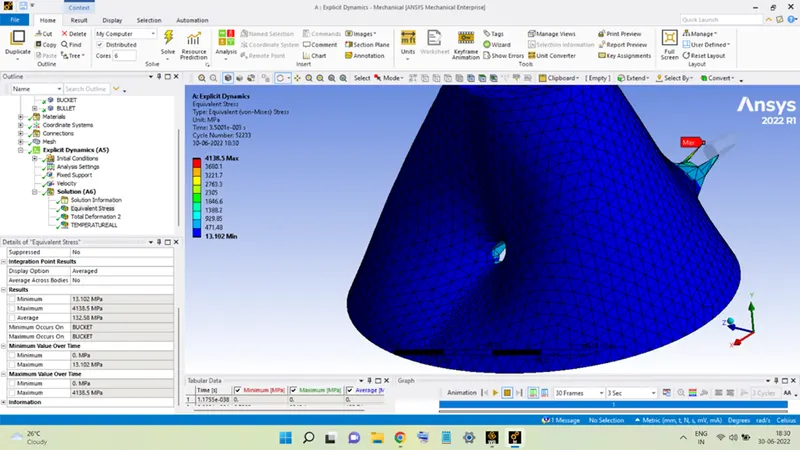
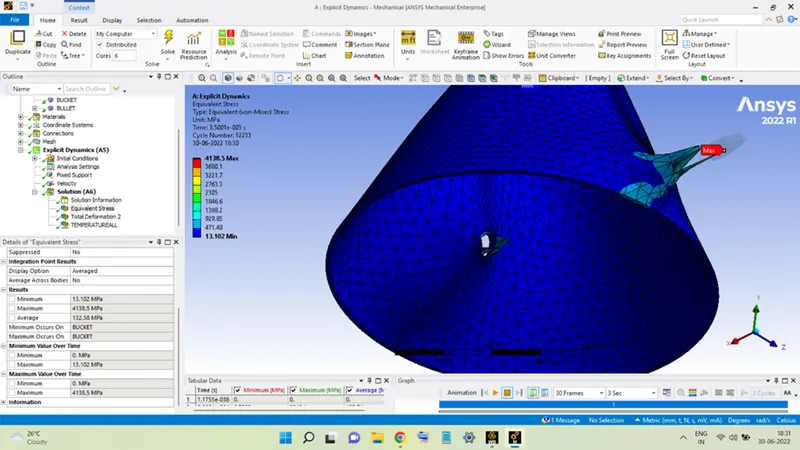
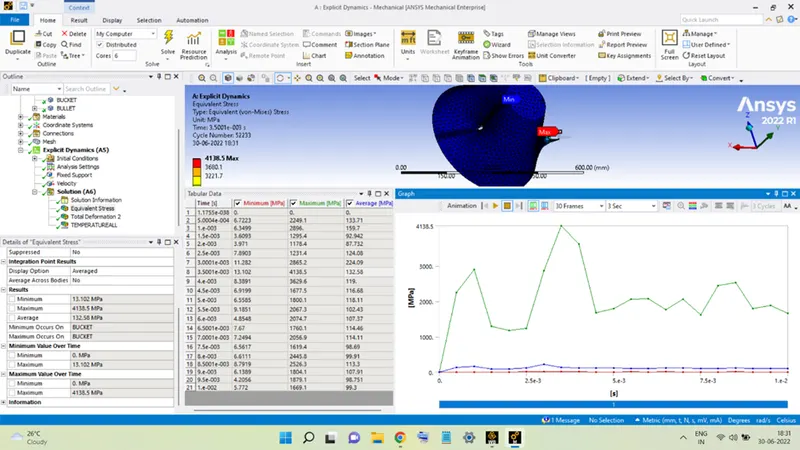
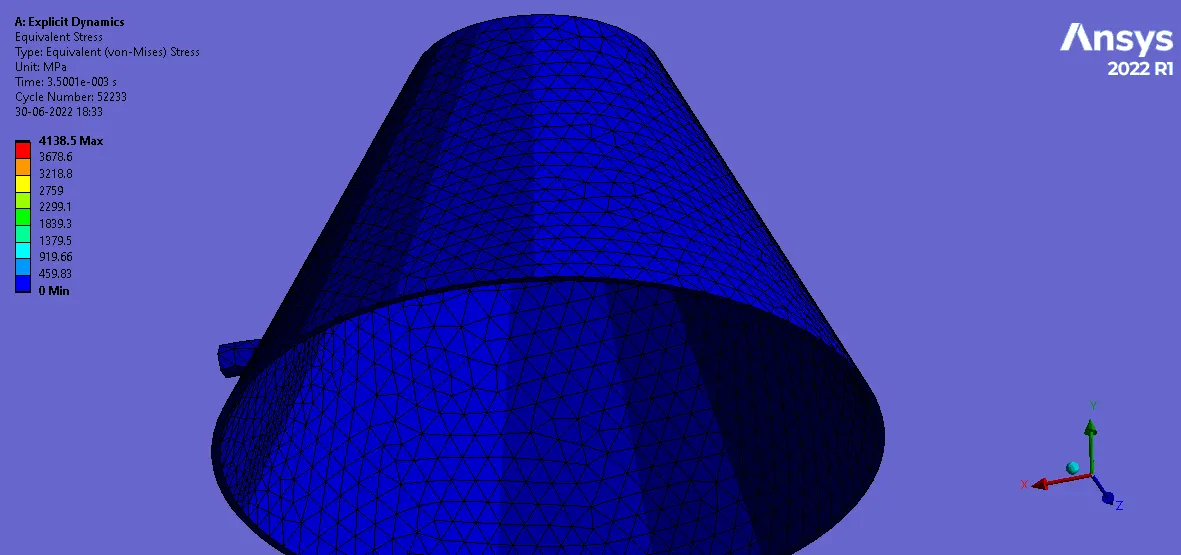
The variation of the stress developed in the BUCKET during the simulation can be seen in the figures above. In the graph, the two peaks are the showing the point at which the BULLET pierces the BUCKET material.
The maximum stress is seen when the BULLET is moving through the second hole of the BUCKET and its value is equal to 4138.5 MPa.
The stress values for this material are higher compared to the previous one.
Deformation of BUCKET:
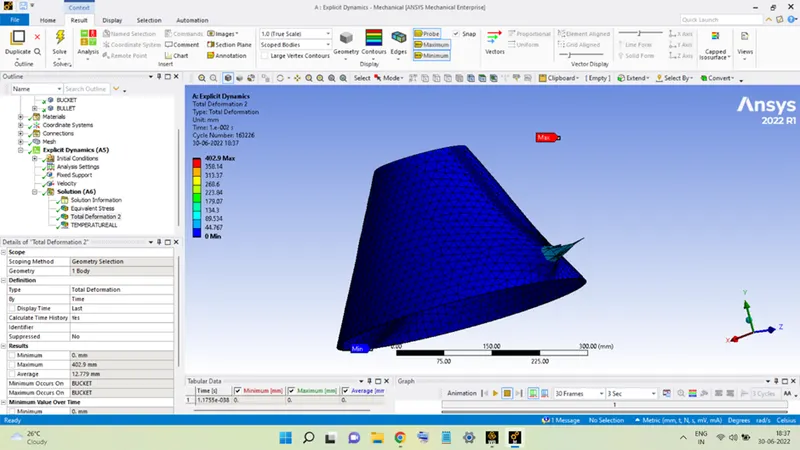
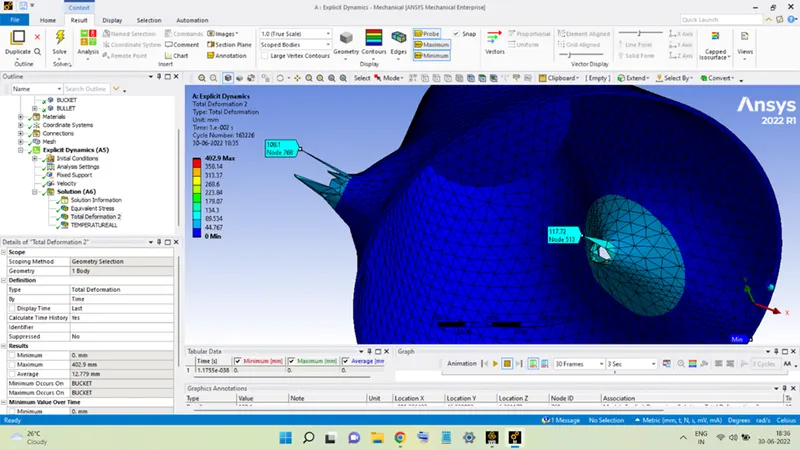
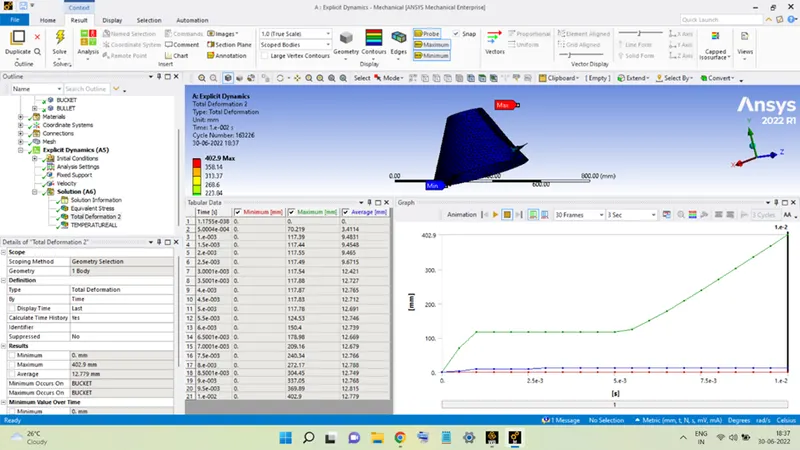
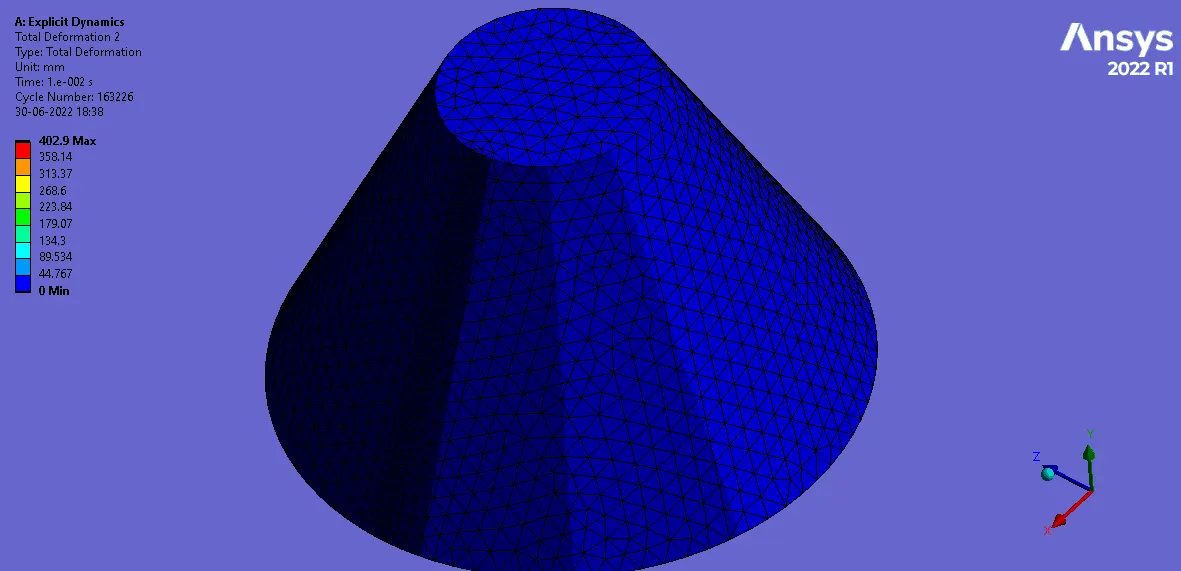
The deformation of BUCKET during the penetration can be seen in the above figures. It is observed that elements got separated from the main body of the BUCKET in this case.
The first hole elements are seen to be deformed the most (shown by the probes) with a magnitude equal to 117.72 mm.
It is also observed that the BULLET exit point from the BUCKET is slightly lower than the entry point, implying the trajectory of the BULLET was changed due to interactions of the BUCKET material with the BULLET during the operation.
Temperature:
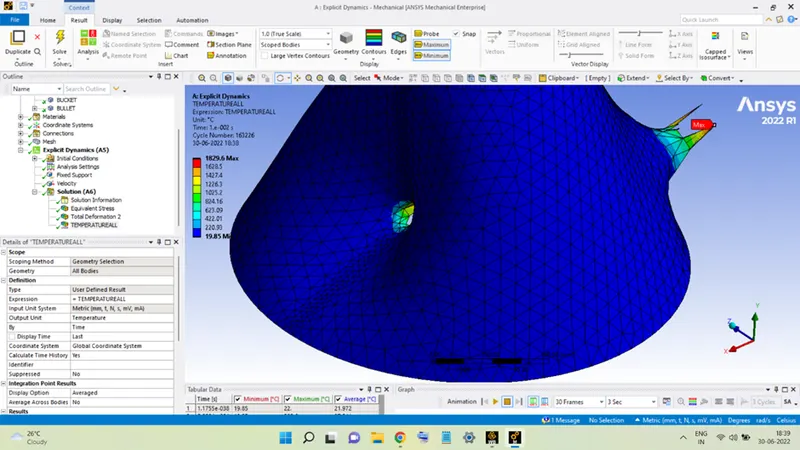
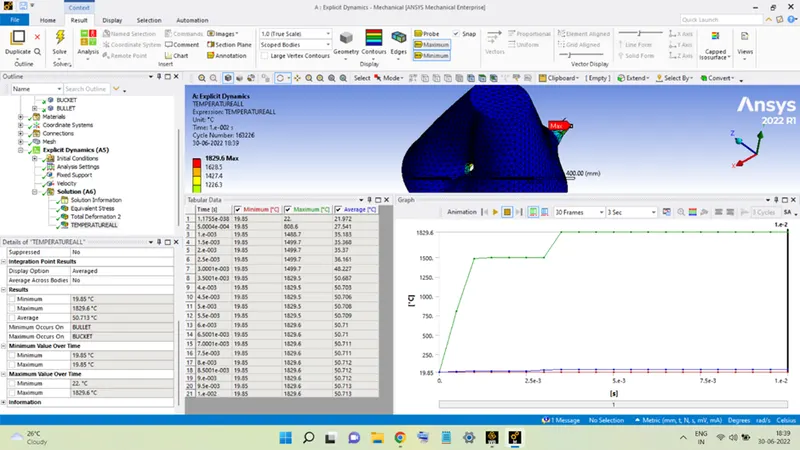
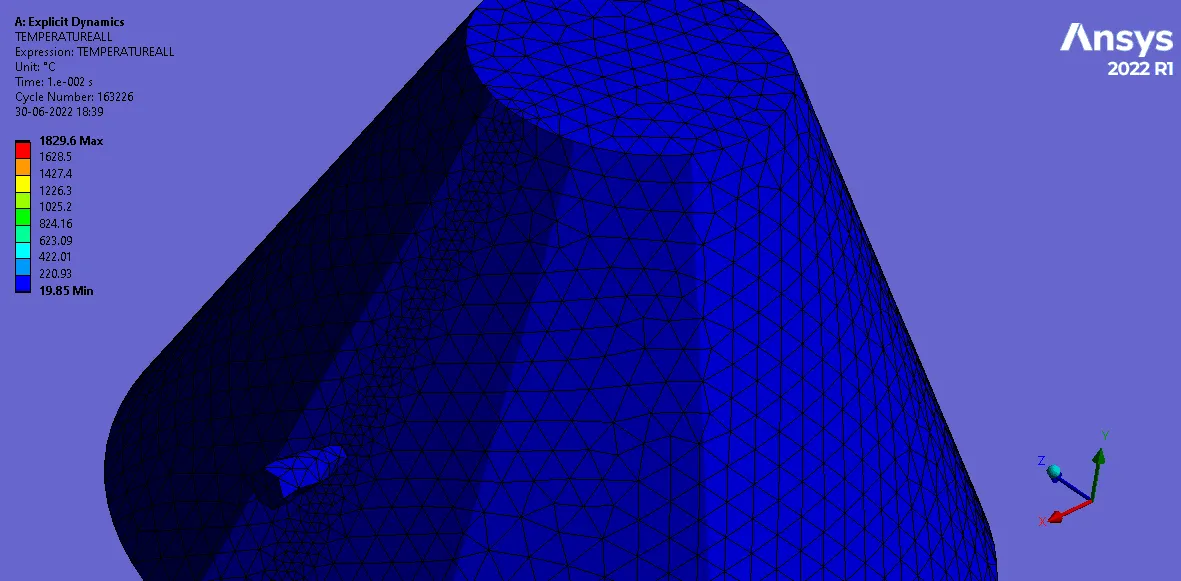
The temperature near the two holes rises up, as shown in the above figures. The two slopes in the graph show the creation of the two holes by the BULLET on the respective BUCKET surfaces. The maximum temperature recorded is equal to 1829.6oC.
CASE 3: BUCKET OF TITANIUM ALLOY NL
Stress:
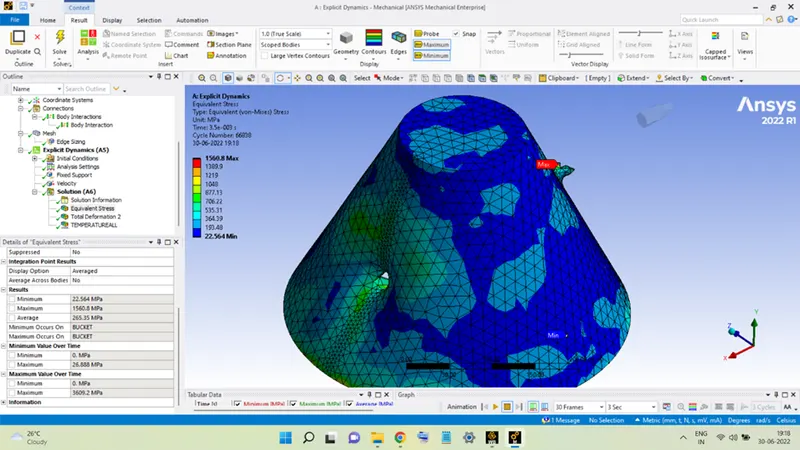
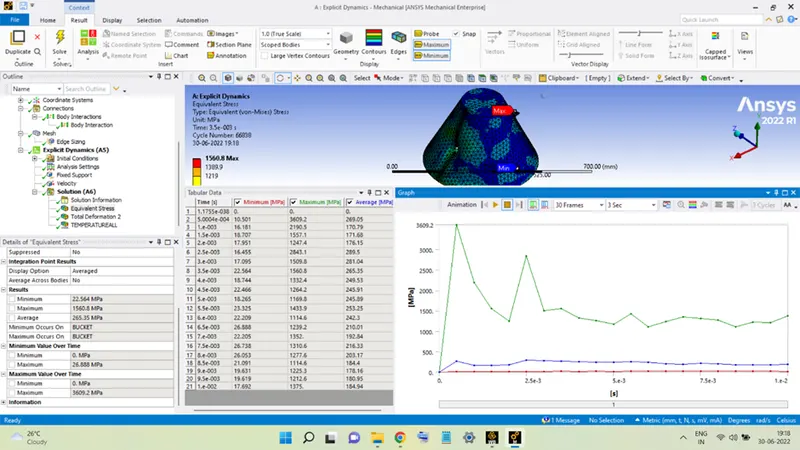
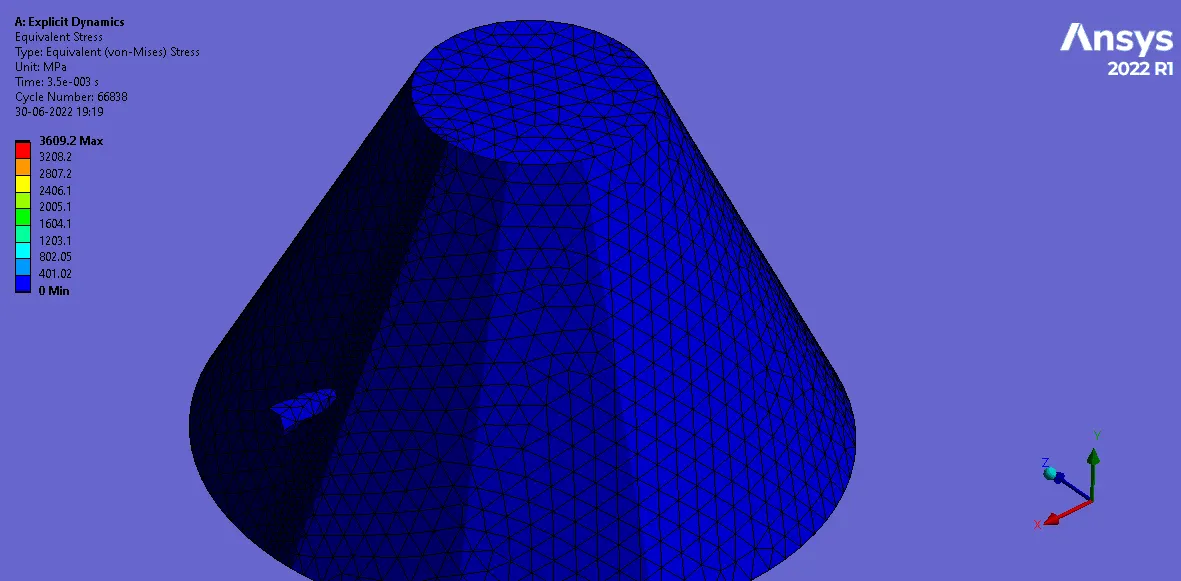
The variation of the stress developed in the BUCKET during the simulation can be seen in the figures above. In the graph, the two peaks are the showing the point at which the BULLET pierces the BUCKET material.
The maximum stress is seen when the BULLET is moving through the second surface of the BUCKET and its value is equal to 3609.2 MPa.
Deformation of BUCKET:
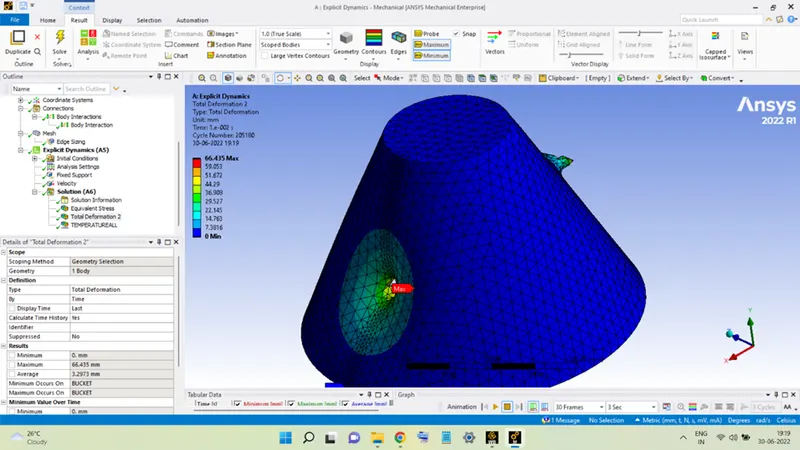
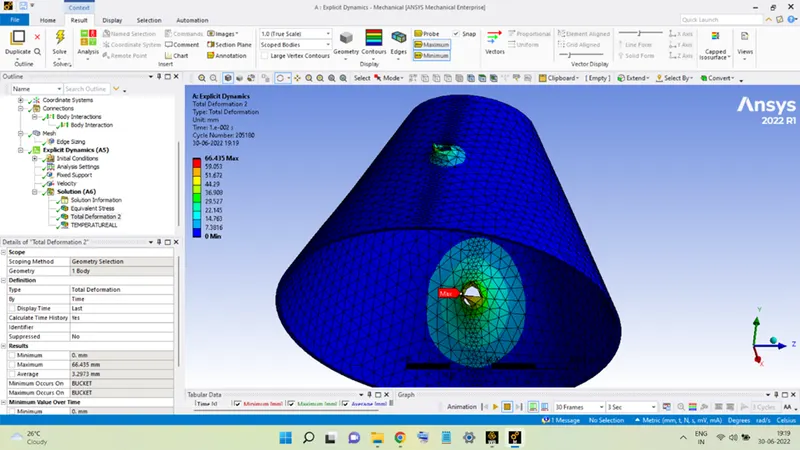
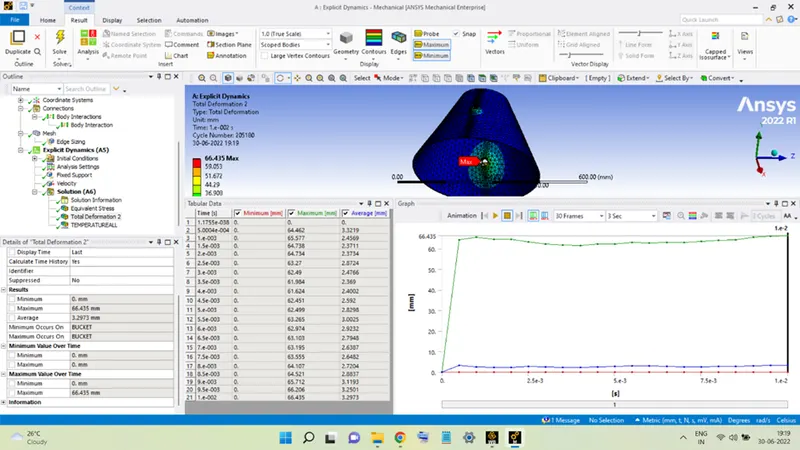
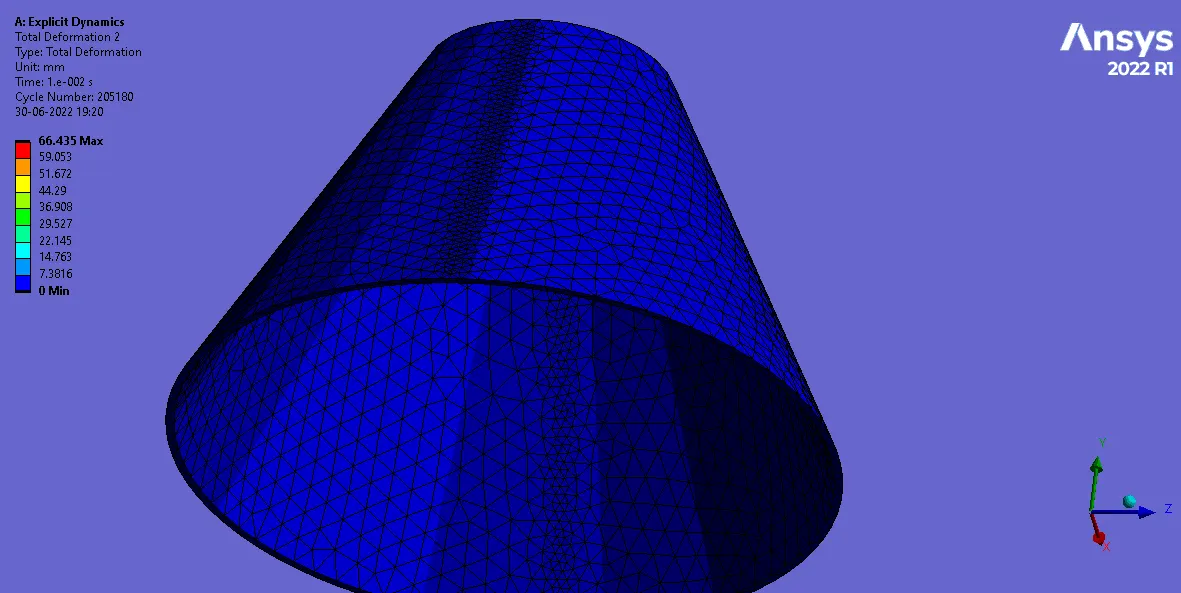
The deformation occurring in the BUCKET curing the penetration is shown above. The deformation is seen to be concentrated near the regions where penetration has occurred, the maximum deformation is seen near the first hole equal to 66.435 mm.
Temperature:
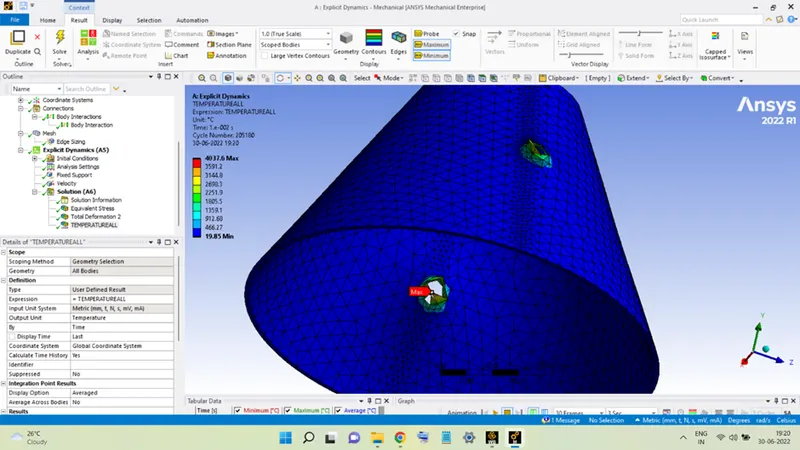
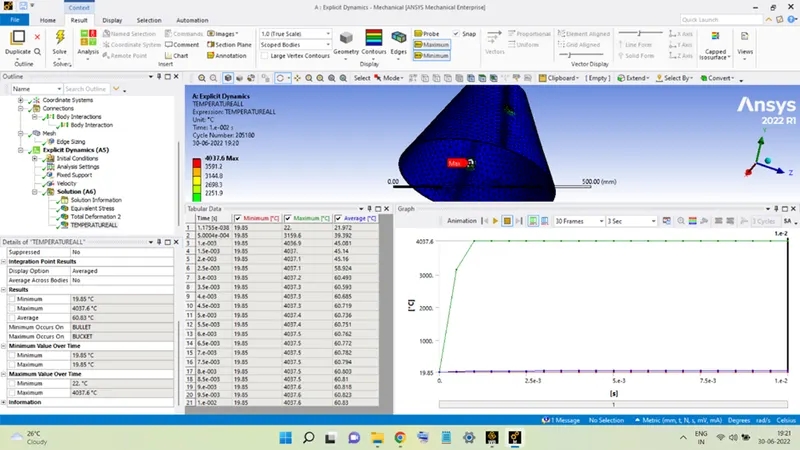
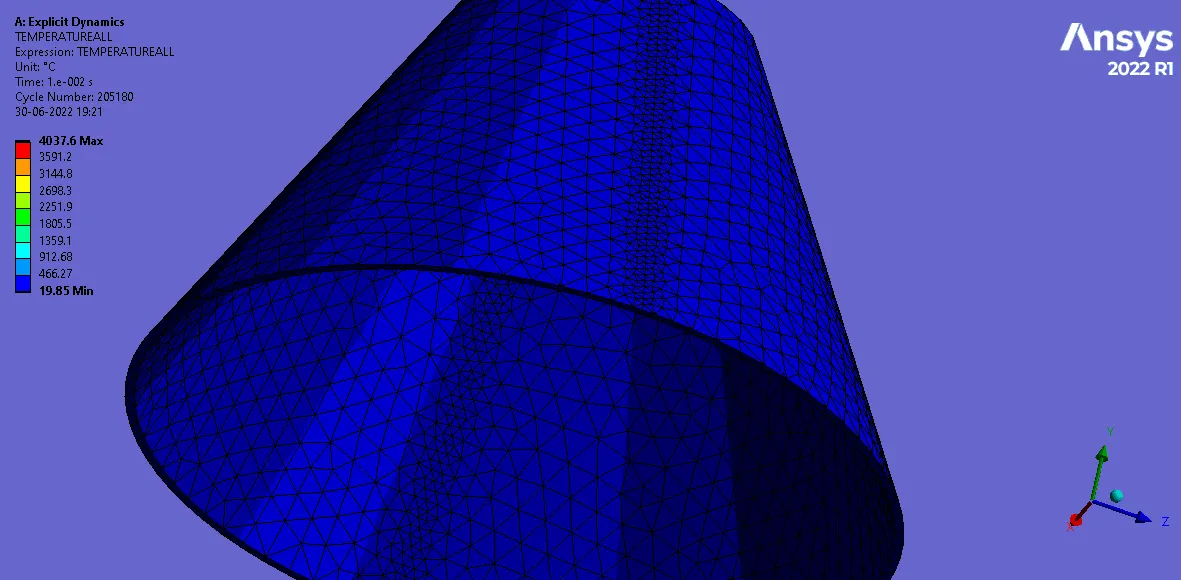
The temperature near the two holes rises up, as shown in the above figures. The two slopes in the graph show the creation of the two holes by the BULLET on the respective BUCKET surfaces. The maximum temperature recorded is equal to 4037.6oC.
Comparison:
|
|
MAX. STRESS (MPa) |
DEFORMATION (mm) |
MAX. TEMPERATURE (OC) |
|
ALUMINIUM ALLOY NL |
832.32 |
50.864 |
1006 |
|
STAINLESS STEEL NL |
4138.5 |
117.72 |
1829.6 |
|
TITANIUM ALLOY NL |
3609.2 |
66.435 |
4037.6 |
After comparing the results for all the cases from the above table, it can be said that:
Stainless steel BUCKET required the most amount of force to be penetrated, followed by Titanium alloy and then Aluminum alloy which required the least amount of force.
The deformability is seen to be least for Aluminium alloy and maximum for the Stainless steel as the maximum deformation was noted for the Stainless Steel.
The temperature rise was excessively high in the case of Titanium Alloy, signifying a very high amount of stored energy released after penetration as well as a high amount of energy transfer from the BULLET to the bucket.