Week 1 Understanding Different Battery Chemistry
Question:1
Prepare a table which includes materials & chemical reactions occurring at the anode and cathode of LCO, LMO, NCA, NMC, LFP and LTO type of lithium ion cells.Give your detailed explanation on it.
Answer:
A lithium-ion battery or Li-ion battery is a type of rechargeable battery composed of cells in which lithium ions move from the negative electrode through an electrolyte to the positive electrode during discharge and back when charging. Li-ion cells use an intercalated lithium compound as the material at the positive electrode and typically graphite at the negative electrode.
Li-ion batteries have a high energy density, no memory effect (other than LFP cells) and low self-discharge. Cells can be manufactured to either prioritize energy or power density.
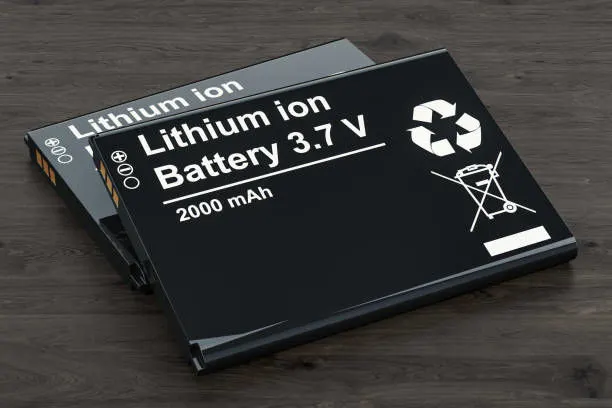
Working of Lithium ion Battery:
The rechargeable lithium-ion battery is made of one or more power-generating compartments called cells. Each cell has essentially three components.- positive electrode, negative electrode and electrolyte.
A positive electrode connects to the battery's positive or + terminal. A negative electrode connects to the negative or − terminal. And a chemical called an electrolyte in between them.
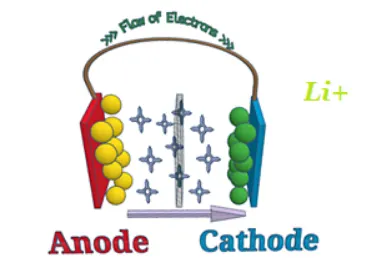
The positive electrode is typically made from a chemical compound called lithium-cobalt oxide (LiCoO2) or lithium iron phosphate (LiFePO4). The negative electrode is generally made from carbon (graphite). The electrolyte varies from one type of battery to another.
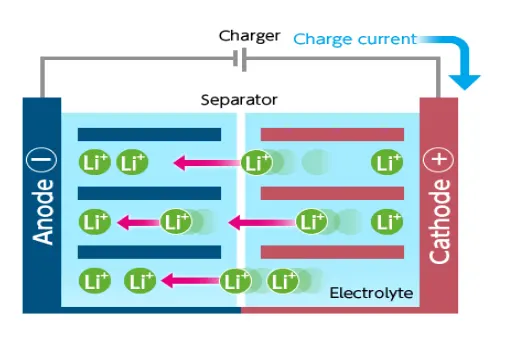
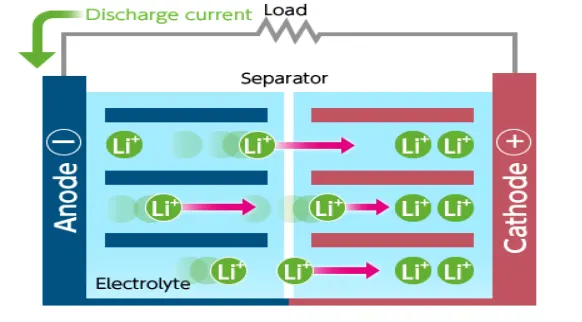
The electrolyte carries positively charged lithium ions from the anode to the cathode.The movement of the lithium ions creates free electrons in the anode which creates a charge at the positive current collector.
The electrical current then flows from the current collector through a device being powered (cell phone, computer, etc.) to the negative current collector. The separator blocks the flow of electrons inside the battery.
While the battery is discharging and providing an electric current, the anode releases lithium ions to the cathode, generating a flow of electrons from one side to the other. When plugging in the device, the opposite reaction happens, the cathode releases lithium ions and anode receives them.
Application of Lithium ion Battery:
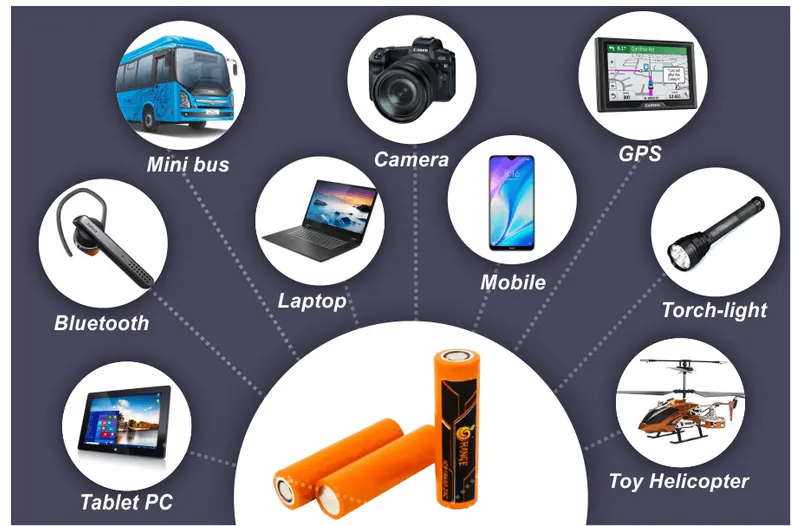
Li-ion batteries are available in all shapes and sizes. lithium-ion batteries offer power solutions across the spectrum- from energy storage solutions to portable energy solutions. Some of the most common applications of lithium-ion batteries are:
- Power backups/UPS
- Mobile, Laptops, and other commonly used consumer electronic goods
- Electric mobility
- Energy Storage Systems
Types of Lithium ion cells:
|
Type |
Chemical Name |
Cathode Material |
Anode Material |
Reaction at the Cathode |
Reaction at the Anode |
|
Lithium Cobalt Oxide(LCO) |
LiCoO2 |
Lithium Cobalt Oxide |
Graphite Carbon |
 |
 |
|
Lithium ion Manganese Oxide(LMO) |
LiMn2O4 |
Lithium Manganese Oxide |
Graphite Carbon |
 |
 |
|
Lithium Nickel Cobalt Aluminum Oxide(NCA) |
LiNiCoAlO2 |
Lithium Nickel Cobalt Aluminum oxide |
Graphite Carbon |
 |
 |
|
Lithium Nickel ManganeseCobalt Oxide(NMC) |
LiNiMnCoO2 |
Lithium Nickel Manganese Cobalt Oxide |
Graphite Carbon |
 |
 |
|
Lithium Iron Phosphate Battery(LFP) |
LiFePO4 |
Lithium Iron Phosphate |
Graphite Carbon |
 |
 |
|
Lithium Titanate Oxide Battery(LTO) |
Li2TiO3 |
Manganese Oxide |
Graphite Carbon |
 |
 |
1)Lithium cobalt oxide Battery:
Lithium cobalt oxide sometimes called lithium cobaltate[or lithium cobaltite is a chemical compound with formula LiCoO
The cobalt atoms are formally in the +3 oxidation state, hence the IUPAC name lithium cobalt(III) oxide.
Lithium cobalt oxide is a dark blue or bluish-gray crystalline solid, and is commonly used in the positive electrodes of lithium-ion batteries.
2) Lithium ion manganese oxide battery
A lithium ion manganese oxide battery (LMO) is a lithium-ion cell that uses manganese dioxide, MnO, as the cathode material. They function through the same intercalation/de-intercalation mechanism as other commercialized secondary battery technologies. Cathodes based on manganese-oxide components are earth-abundant, inexpensive, non-toxic, and provide better thermal stability.
3)Lithium nickel cobalt aluminium oxides (NCAs) battery
The lithium nickel cobalt aluminium oxides (NCAs) are a group of mixed metal oxide. Some of them are important due to their application in lithium ion batteries. NCAs are used as active material on the positive pole (which is the cathode when the battery is discharged). NCAs are composed of the cations of the chemical elements lithium, nickel, cobalt and aluminium.
4) Lithium nickel manganese cobalt oxides(LNMC) battery
Lithium nickel manganese cobalt oxides (abbreviated Li-NMC, LNMC, NMC or NCM) are mixed metal oxides of Lithium, nickel, manganese and cobalt. They have the general formula LiNixMnyCozO2. The most important representatives have a composition with x + y + z that is near 1, with a small amount of lithium on the transition metal site. In commercial NMC samples, the composition typically has < 5% excess lithium. Structurally materials in this group are closely related to lithium cobalt (iii) oxide (LiCoO2) and have a layered structure but possess an ideal charge distribution of Mn(IV), Co(III), and Ni(II) at the 1:1:1 stoichiometry.
5)Lithium iron phosphate battery (LiFePO battery)
The lithium iron phosphate battery (LiFePO battery) or LFP battery (lithium ferrophosphate) is a type of lithoum- ions battery using lithium iron phosphate (LiFePO as the cathodematerial, and a graphitic carbon with a metallic backing as the anode. The energy density of an LFP battery is lower than that of other common lithium ion battery types such as Nickel Manganese Cobalt (NMC) and Nickel Cobalt Aluminum (NCA), and also has a lower operating voltage LFP batteries are currently at 125 Wh/kg, up to possibly 160 Wh/kg with improved packing technology
Question: 2 Compare the differences between each type of Li+ion batteries based on their characteristics.
Answer:
1) Lithium -Cobalt Oxide Battery:
- Used mostly in hand held Electronics (Cell phones,Laptops and Camera).
- Risky especially when damaged.
- Cobalt is scarce and expensive.
- Low discharge rate.
- Highest energy density(110-190 Wh/kg).
2) Lithium -Titanate Battery:
- Can operate at very low temperature( 40 degree celsius).
- Rapid charge and discharge.
- Used in Mitsubishi- MiEV.
- Lower Inherent voltage 2.4V( compared to 3.7V).
- Lowest energy density (30-110 Wh/kg).
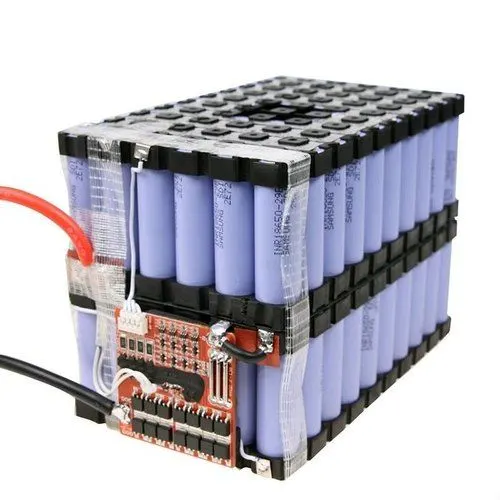
3) Lithium- Iron Phosphate Battery:
- Dramatically reduces the risks of overheating and fire.
- Offers much less volumetric capacity.
- Used in power tools and medical equipment.
- Longer life and inherently safe.
- Lower Energy Density (95-140 Wh/kg).
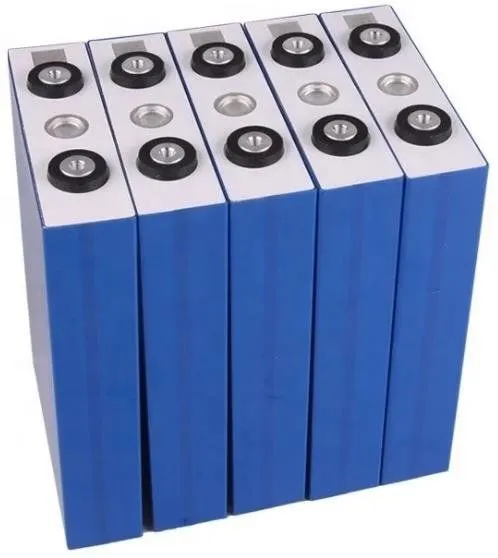
4) Lithium- Nickel Manganese Cobalt Oxide Battery:
- Longer life and inherent safety.
- Cobalt is scarce and expensive.
- Less prone to heating.
- Used in power tools, e- bikes and electric power trains.
- Lower energy density.
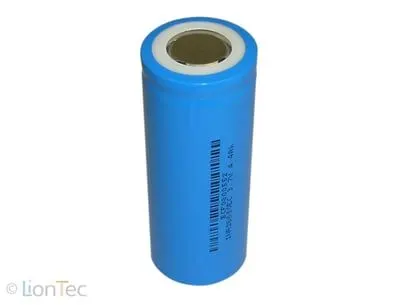
5) Lithium- Manganese Oxide Battery:
- Lower cost
- Longer life and inherently safe.
- Used in Hybrid Vehicles, Cellphones and Laptops.
- High Discharge rates.
- Lower Energy density.