Week 1 Understanding Different Battery Chemistry
Aim:- Understanding Different Battery Chemistry
Objective:-
Prepare a table which includes materials & chemical reactions occurring at the anode and cathode of LCO, LMO, NCA, NMC, LFP and LTO type of lithium ion cells.
Introduction:-
A battery is a device that converts chemical energy contained within its active materials directly into electric energy by means of an electrochemical oxidation-reduction (redox) reaction. This type of reaction involves the transfer of electrons from one material to another via an electric circuit.
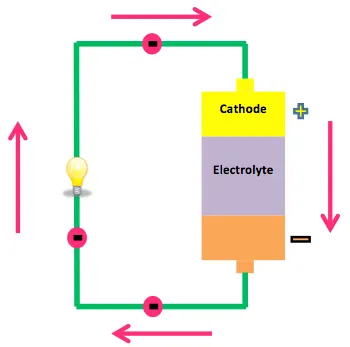
https://www.youtube.com/watch?v=gWKOjncBMCQ
Types of Batteries
Batteries are basically classified into 2 types:
- Non-rechargeable batteries (primary batteries)
- Rechargeable batteries (secondary batteries)
Non-rechargeable Batteries
These are basically considered as primary batteries because they can be used only once. These batteries cannot be recharged and used again. Let’s see about the regular, daily life primary batteries that we see.
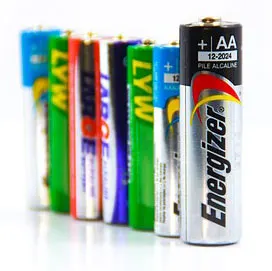
- Alkaline batteries: It is basically constructed with the chemical composition of Zinc (Zn) and Manganese dioxide (MnO2), as the electrolyte used in it is potassium hydroxide which is purely an alkaline substance the battery is named as alkaline battery having he power density of 100 Wh/Kg.
Advantages:
- Cycle life is more
- More compatible and efficient for powering up portable devices.
- Shelf life is more.
- Small in size.
- Highly efficient.
- Low internal resistance so that discharge state in idle state is less.
- Leakage is low.
Disadvantages:
- Cost is a bit high. Except it everything is an advantage.
Applications:
It can used in torches, remotes, wall clocks, small portable gadgets etc.
Rechargeable Batteries
These are generally called as secondary batteries which can be recharged and can be reused. Though the cost is high, but they can be recharged and reused and can have a huge life span when properly used and safely charged.
Advantages:
- Cheap in cost
- Easily rechargeable
- High power output capability
Disadvantages:
- Very heavy
- Occupies much space
- Power density is very low
Applications:
Used in cars, UPS (uninterrupted Power Supply), robotics, heavy machinery etc.
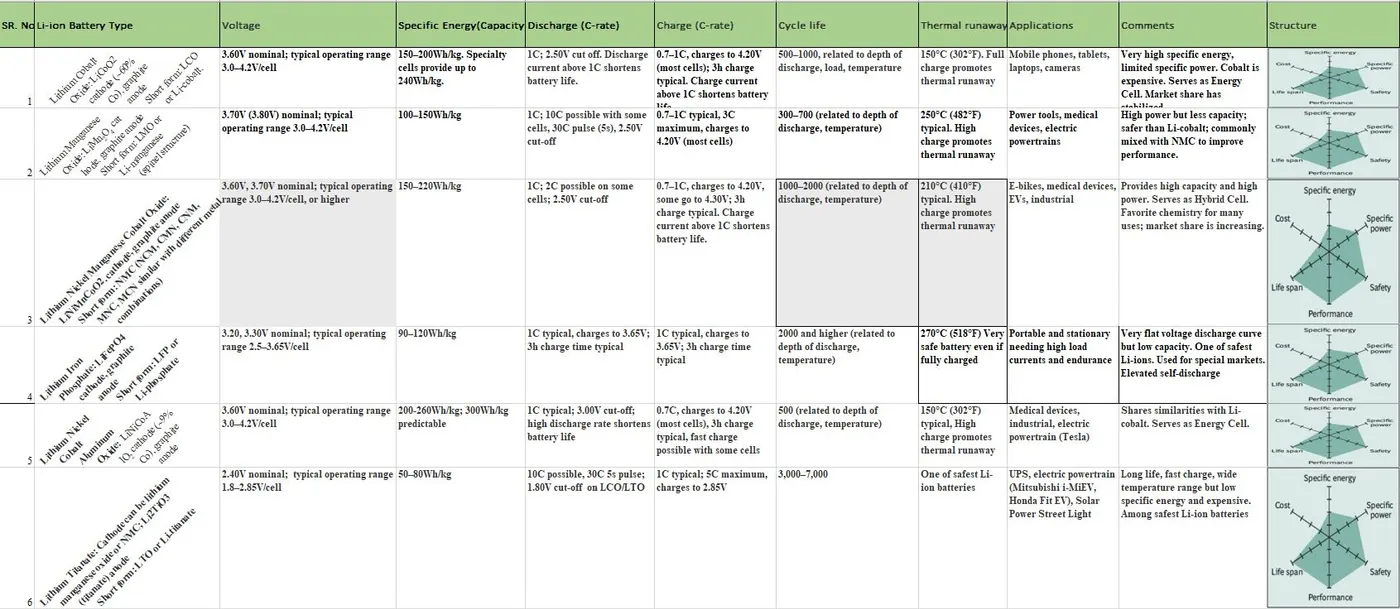
Diffirent type of Lithium-Ion Battery:-
Chemical Reactions in different type of Battery-
1. Lithium Cobalt Oxide Battery `(LiCoO_2)`-LCO
Dring Discharge-
At the Anode, Lithium is oxidised. Lithium ions are released from the Carbon along with Electrons:
At the Cathode, Lithium-ions are absorbed by the lithium dioxide, and the electrode is reduced as it also recieves the electrons from the circuit:

The overall reaction is:
`C_6+LiCoO_2harrLi_xC_6+Li_(1-_x)CoO_2`
2. Lithium Mangnese Oxide(`(LiMn_2O_4)`-LMO
Reaction at Anode : `Li-gtLi++bare`
Reaction at cathode : `Mno_2+Li++bare-gtLiMnO_4`
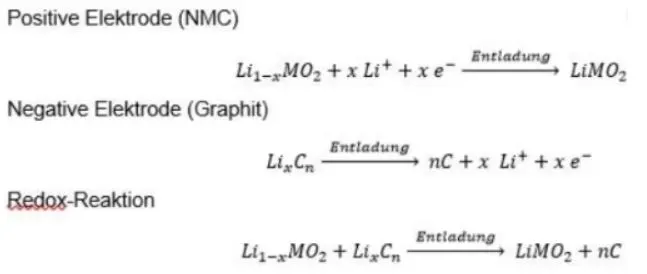
3. Lithium Nickel Mangnese Cobalt Oxide (`LiMnCoO_2`)-NMC
4. Lithium Iron Phosphate(`LiFePO_4`)-LFP
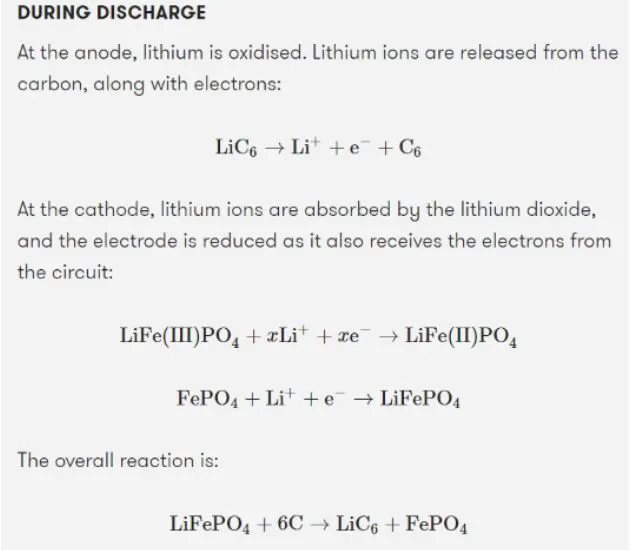
5. Lithium Nickel Cobalt Aluminum Oxide(`LiNiCoAlO_2`)-NCA
`Li_0.5CoO_2->1/2LiCoO_2+1/6Co_3O_4+1/6O_2`
`Li_((1-x))NiO_2->(1-2x)LiNiO_2+xLiNi_2O_4(xle0.5)`
`Li_((1-x))NiO_2->[Li_((1-x)Ni_((2x-1)/3]]]O_((8-4x)/3+(2x-1)/(3O_2)(x>0.5)`
`Li_((1-x)NiO_2->(2-x)Li_(((1-x))/((2-x)))Ni_((1)/((2-x) ))O+X/(2O_2)`