Week 1 Stress Concentration on a Plate with hole
- Objective: As a Product Engineer in an Automotive Industry, compare and choose between two models that has been made of Structural Steel on the basis of deformation and max. stress developed in them after loading.
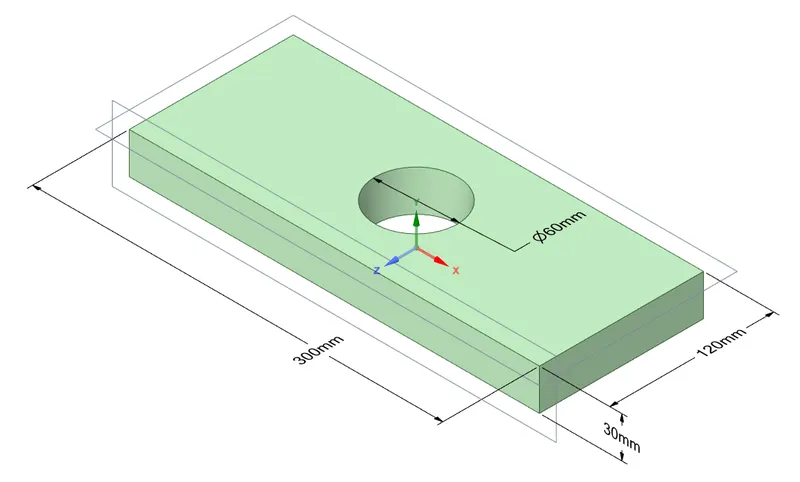
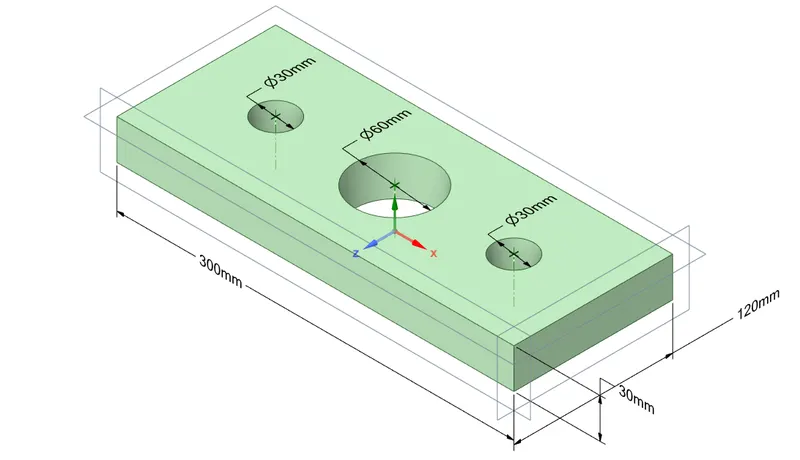
- Geometrical Design: Given below are the 3-D models of the test specimens with respective dimensions i.e, "Plate with a hole" and "Plate with holes".
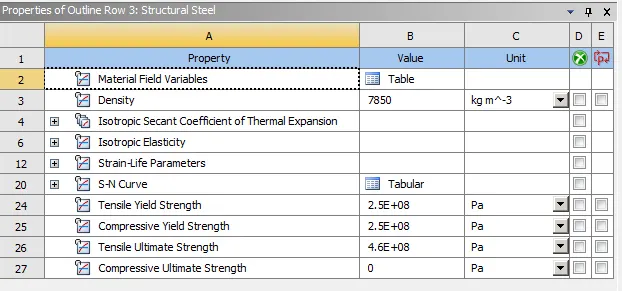
- Material Properties: Given below is the tabular data of the material used for both the specimens i.e, Structural Steel.
- Problem Statement: Determine the max. stress and deformation in both the models when subjected to a load of 500N on the right side of smaller dimension.
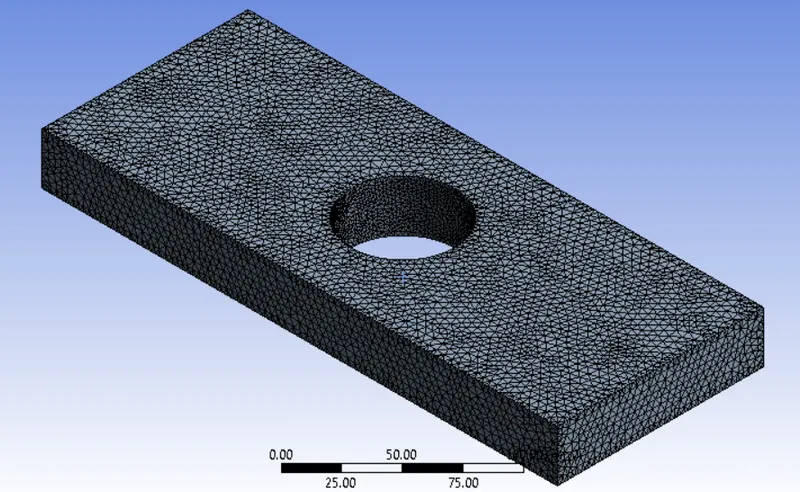
- Mesh Criterion: Tetrahedron elements of 2nd order (quadratic) are being used for the meshing of both the models as it is a static structural analysis.
Element Size - 2mm (for both the models)
Element Type - Tetrahedron (quadratic)
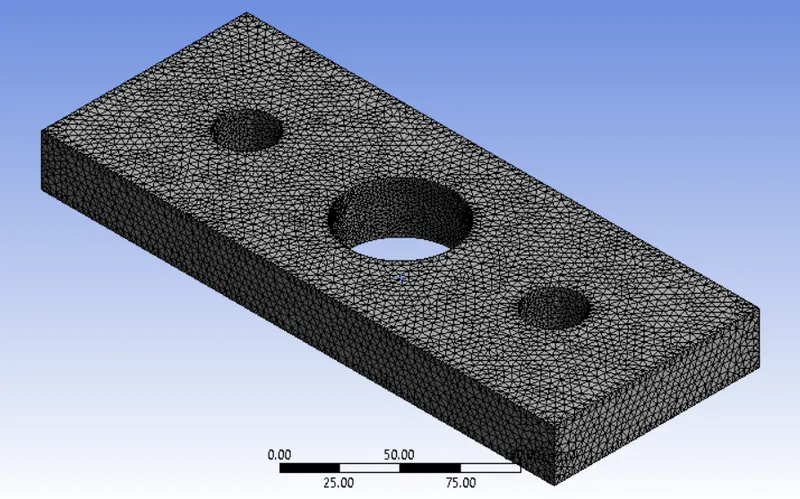
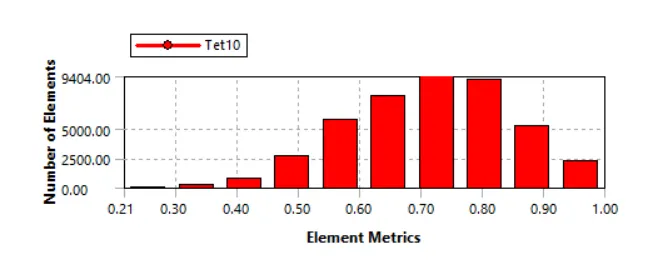
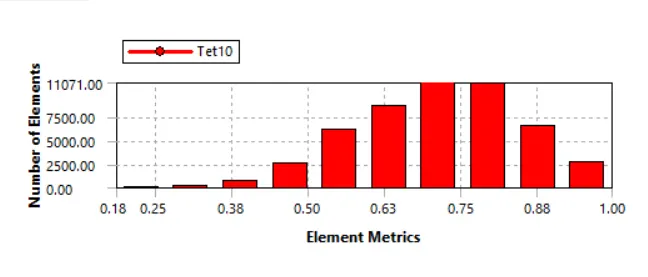
- Boundary Condition: Both the models has to be fixed on the left side along the smaller dimension.
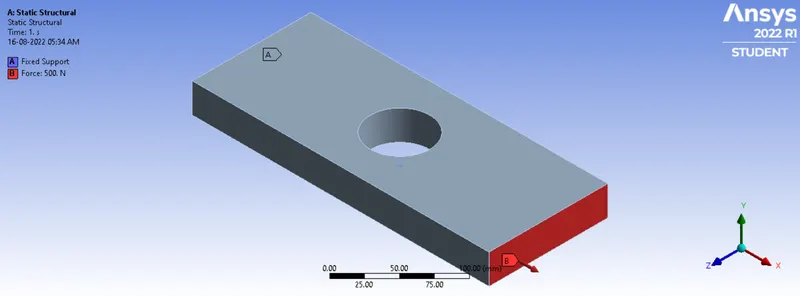
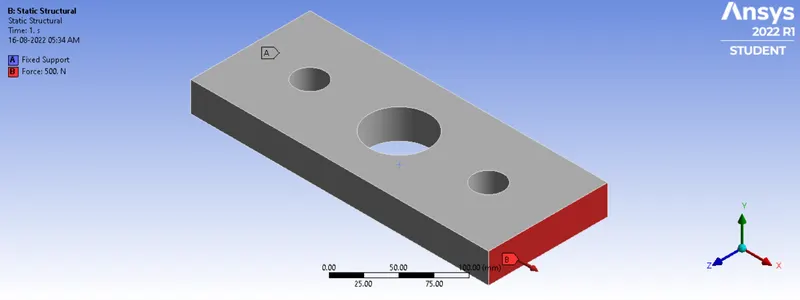
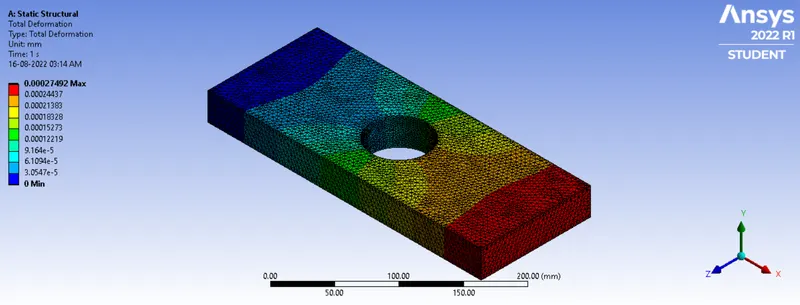
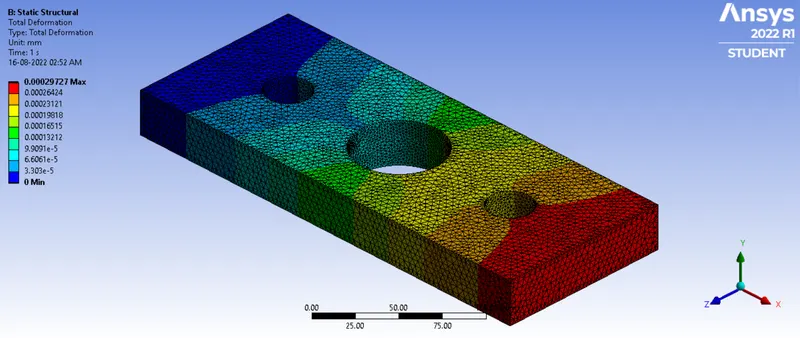
- Results: Below are the results required to be obtained as per the objective, i.e, Total Deformation and Equivalent Stress of both the models along with the amination of both the cases.
Total Deformation:
Plate with a hole: 0.000274 mm (Max.)
Plate with holes: 0.000297 mm (Max.)
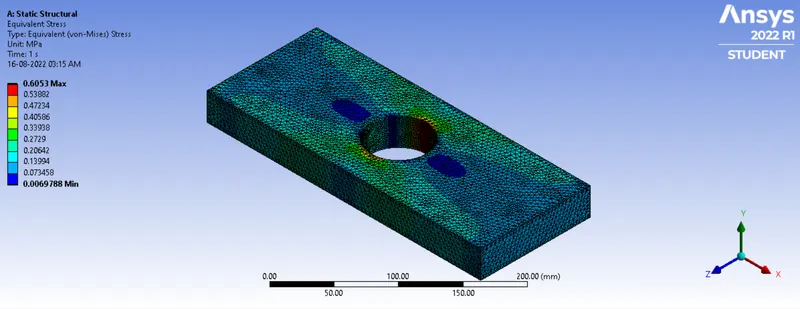
Equivalent Stress (von-Mises):
Plate with a hole - 0.6053 MPa (Max.)
Plate with holes - 0.5816 MPa (Max.)
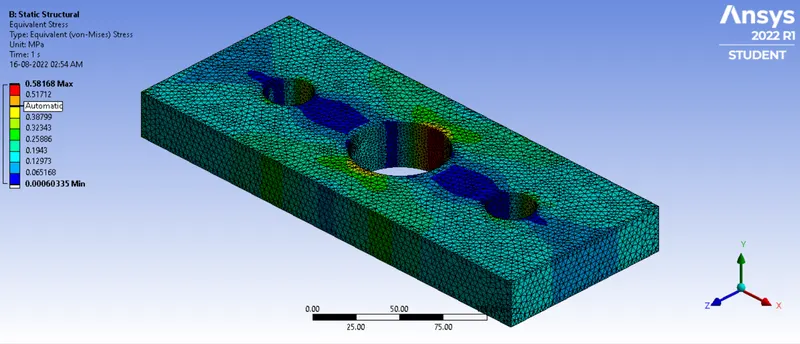
- Conclusion: Both the models have almost same results for total deformation and max. stress after applying the same load.
- So after coming to a conclusion that they are giving almost similar results on applying the same load, from analysis standpoint I will choose "plate with a single hole" as the final design because it has less features i.e, less number of nodes and elements means less time required to obtain the results.
- From the manufacturing point of view also I will choose "plate with a single hole" because it will require a single large drill whereas the other model has two more drills means extra machining time means extra cost.