Week 1 Spur Gear Challenge
Static Structural Analysis of a Spur Gear using Ansys Mechanical
Objective :
- To find out the Equivalent stress, Total deformation, and Stress intensity
- Also to find the possible location of fracture from the simulation.
Case setup :
- Three cases are performed for three different materials which are Cast Iron(ductile), Cast Steel, and Cast Bronze.
- The Engineering materials are selected from the workbench library.
- 3 new cases are created in the new project.
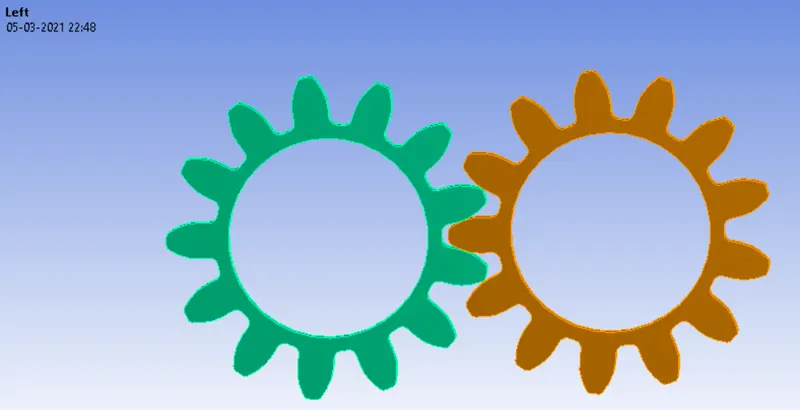
- Initially, the gears are renamed as left and right, the right is the driver and the left is the driven.
- Contacts created between the tooth faces of the gears, the important thing while defining contacts are the contact detection points ( avoid penetrations)
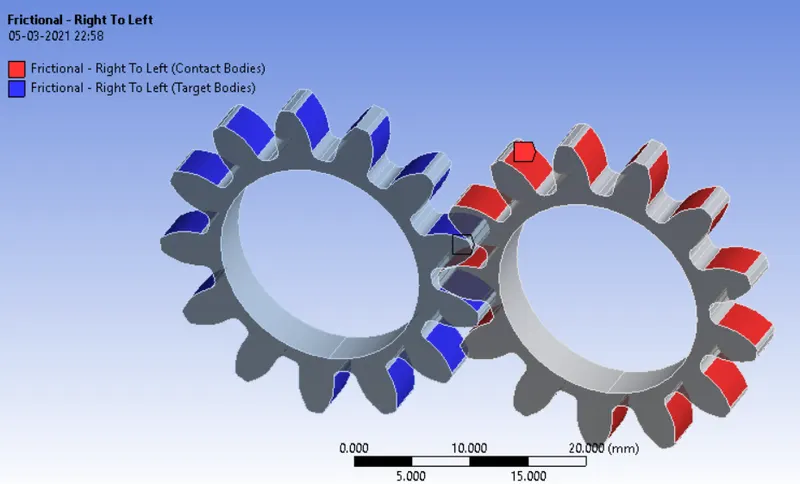
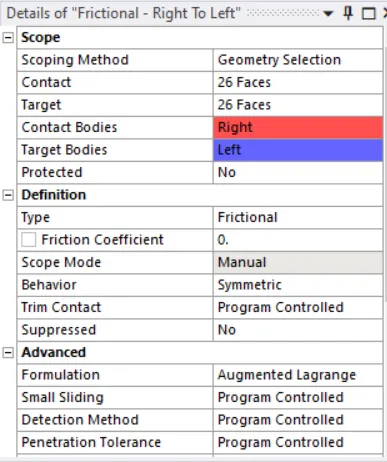
- For this case, we are applying symmetrical contact behavior between the 2 bodies, and the formulation is Augmented, Lagrange ( Penalty Based, penetration allowed)
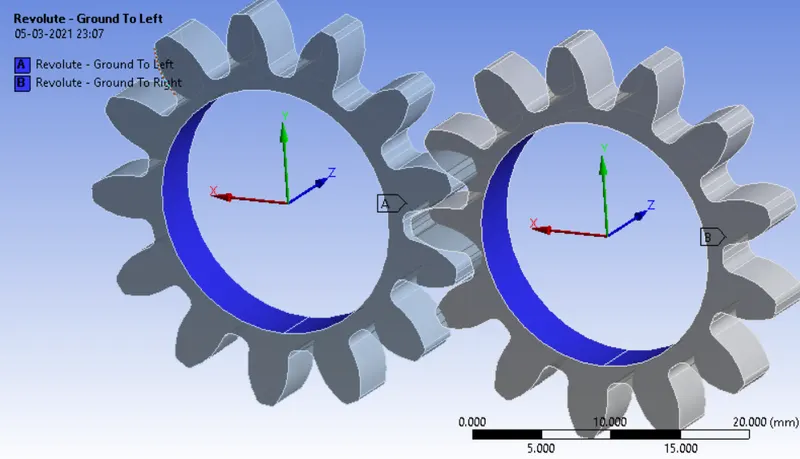
- Joint Creation - revolute ground to body joints created to the bodies.
- Mesh size of 1mm is generated through the automatic mesh method
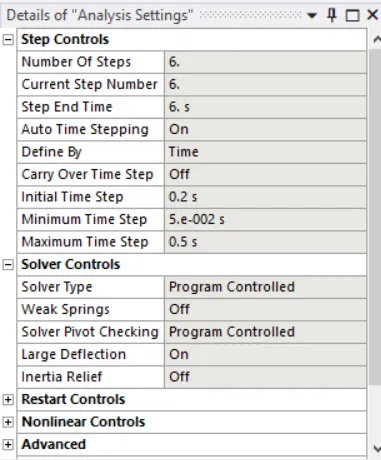
- Analysis settings: since non-linearity is expected we are providing loads in steps 6 load steps are given.
- Min time step of 0.05 seconds and Maximum time step of 0.5 seconds is given with initial time step as 0.2 seconds.
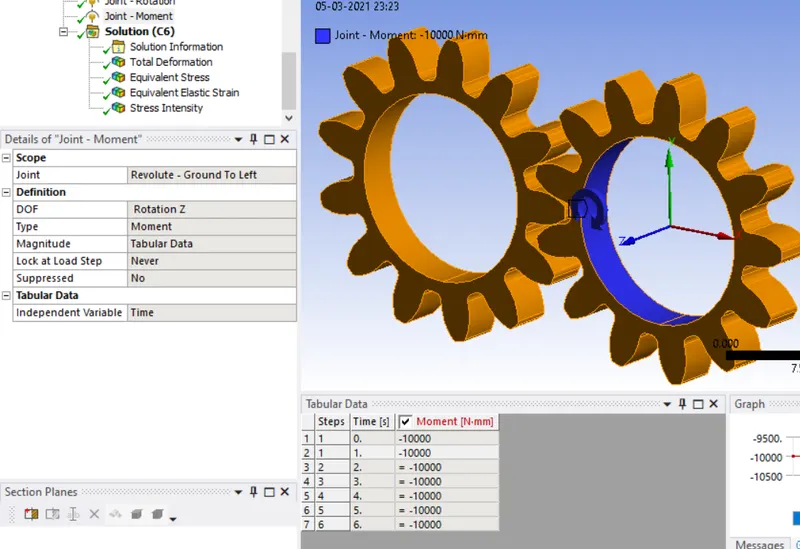
- Boundary Conditions and loading, the driven right gear is given a moment -10000 N mm for driver gear.
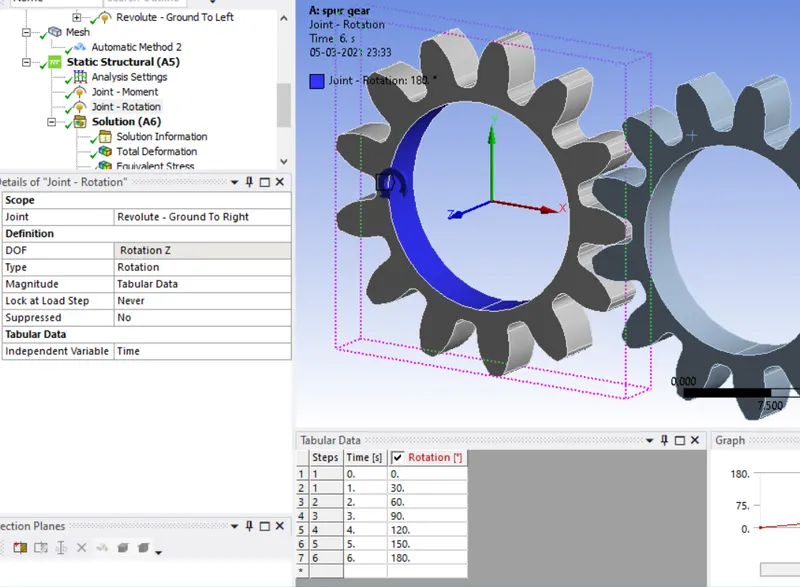
- The driven gear joint is given rotational degree movement.
Results :
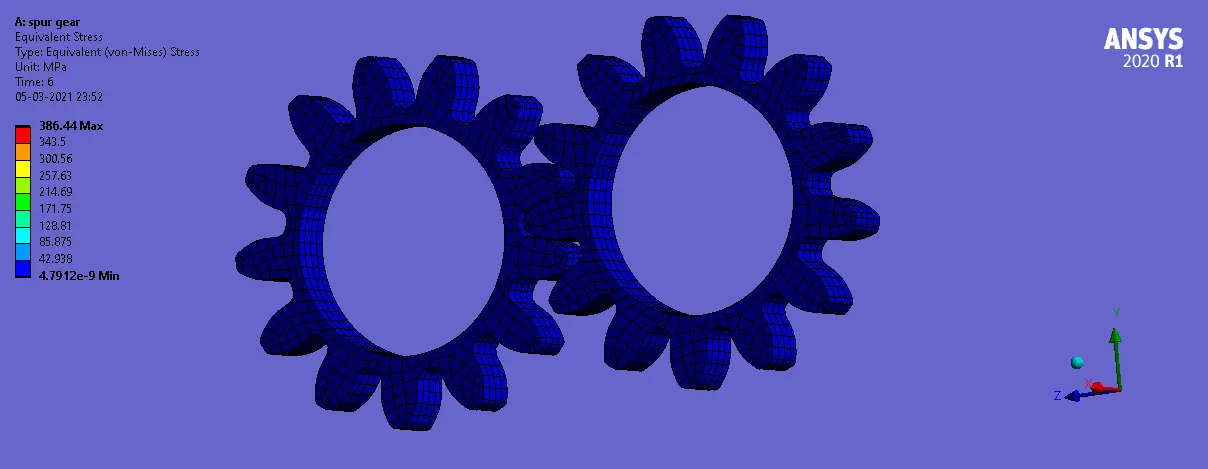
| Material | Equivalent stress Max (MPa) | Total Deformation (mm) | Stress Intensity (MPa) | Yield Stress (MPa) | Elastic Modulus (MPa) |
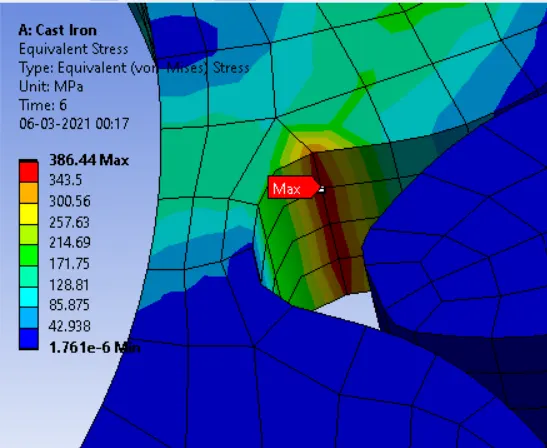
| CI Ductile | 386.44 | 30 | 410.25 | 344 | 1.71e+05 |
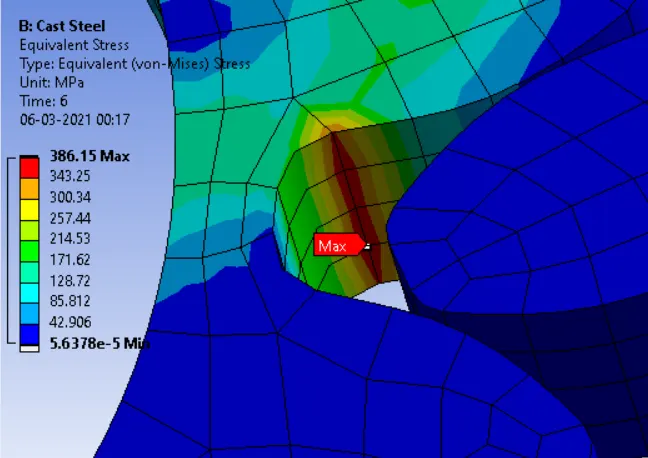
| Cast Steel | 386.15 | 30 | 411.6 | 349 | 2.03e+05 |
| Cast Bronze | 371.13 | 30 | 399.16 | 144 | 80000 |
A brief explanation of the result terms obtained.
- Equivalent stress - Equivalent stress (also called von Mises stress) is often used in design work because it allows any arbitrary three-dimensional stress state to be represented as a single positive stress value. Equivalent stress is part of the maximum equivalent stress failure theory used to predict yielding in a ductile material.
- Stress Intensity - Stress intensity is defined as the largest of the absolute values of σ1 - σ2, σ2 - σ3, or σ3 - σ1 where sigmas are the principal stress in the 3 axes.
The possible location of fracture is at the root of the driver gear due to:
- Stress concentrations are developed due to the change in radius
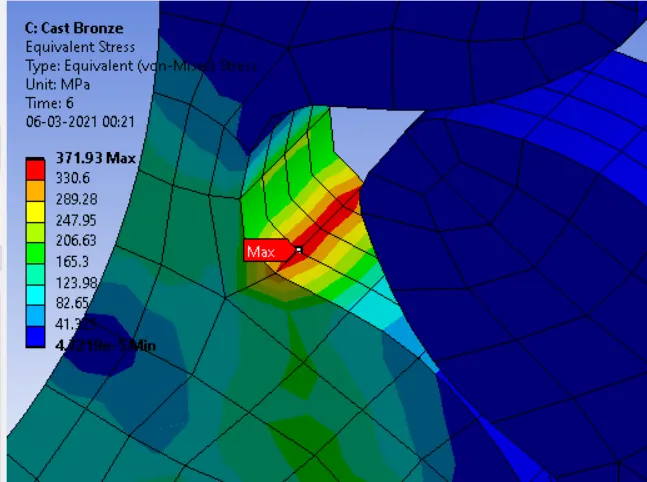
- Out of the three materials, bronze yields the earlier and is the least stiff material, hence it is ruled out.
- Cast Steel is preferred over CI because of its better young's modulus, but in terms of machinability, cost, and damping capability CI is preferred.
Drive Link for the Project File: https://drive.google.com/file/d/1FBzgzHGEZGAyQDqw3-rVw1zbupFaMTwO/view?usp=sharing
References :