(ANSYS_P_3) Simulation Analysis (ANSYS)
AIM : Perform an analysis on three different materials to determine the best materials for the application
OBJECTIVE :
- Case 1:
Using Cast Iron(ductile) as a material, carry out a static structural analysis to find out Equivalent stress, Total deformation and Stress intensity(Learn about what stress intensity is). Find location for possible fracture
- Case 2:
Using Cast Steel as material, perform the same analysis for the results as in Case
- Case 3:
Using Cast Bronze as material, perform the same analysis for the results as in
PROCEDURE
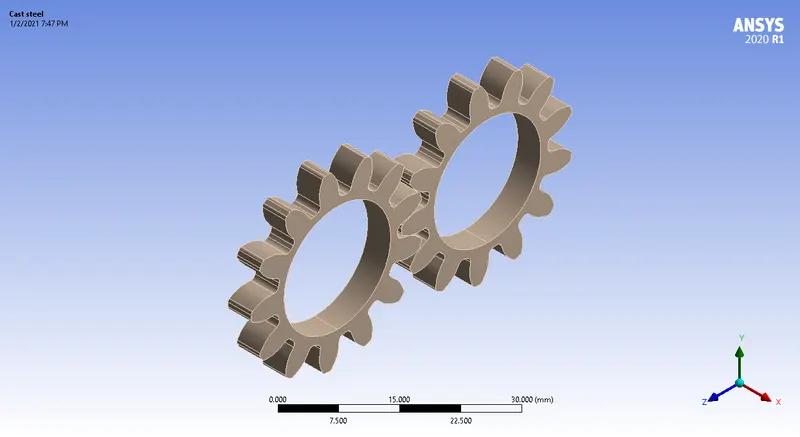
MODEL
MATERIALS
- Cast Bronze
- Cast Iron Ductile
- Cast Steel
Cast Bronze
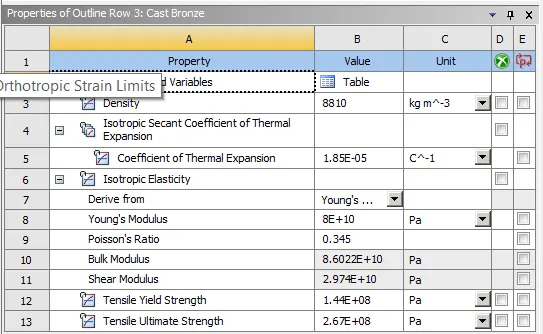
This material is defined in workbench with the following data.
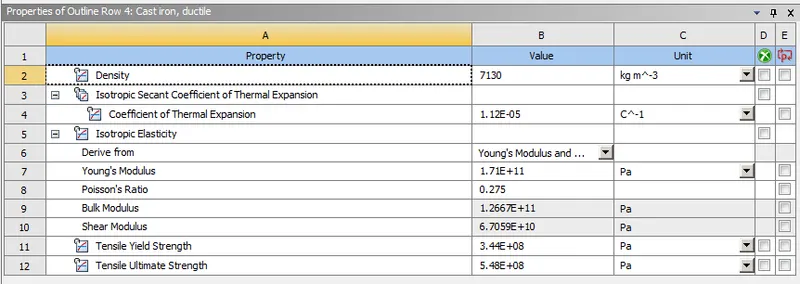
Cast Iron Ductile
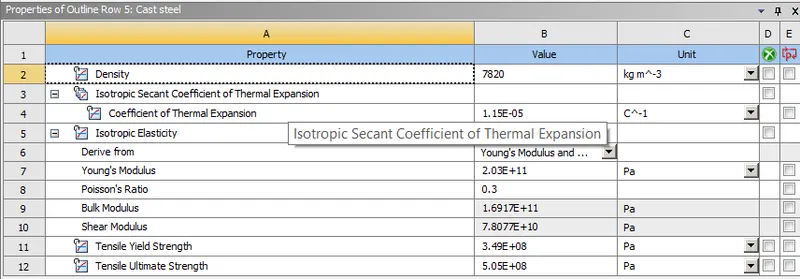
Cast Steel
CONTACTS
Frictional contacts is defined to specify the parts which are going to make contacts during the simulation and these are specified by contacts and target.Augumented Lagrange is selected to increase the stiffness of the gears and interface treatment of adjust to touch is selected.
JOINTS
Two body to ground joints is created and the inner circumference of the gears are selected. A Revolute cordinate is defined for both gears.
MESHING
Tetrahedon elements of 2mm size is used for the meshing of hte gears and this is specifoed and done automatically
ANALYTICAL SETTINGS
Using a multi time of 6 steps, the rotation of the gears is done in 6 steps with each step 1 s. The results are calculated at an initial time step of 0.2 with maximum at 0.5.
The left gear is defind with a revolution of 30 degree increment as it can be seen from the image below
The right step is defined with a moment of -10Nm to provide the moment needed to drive the gears.
RESULTS
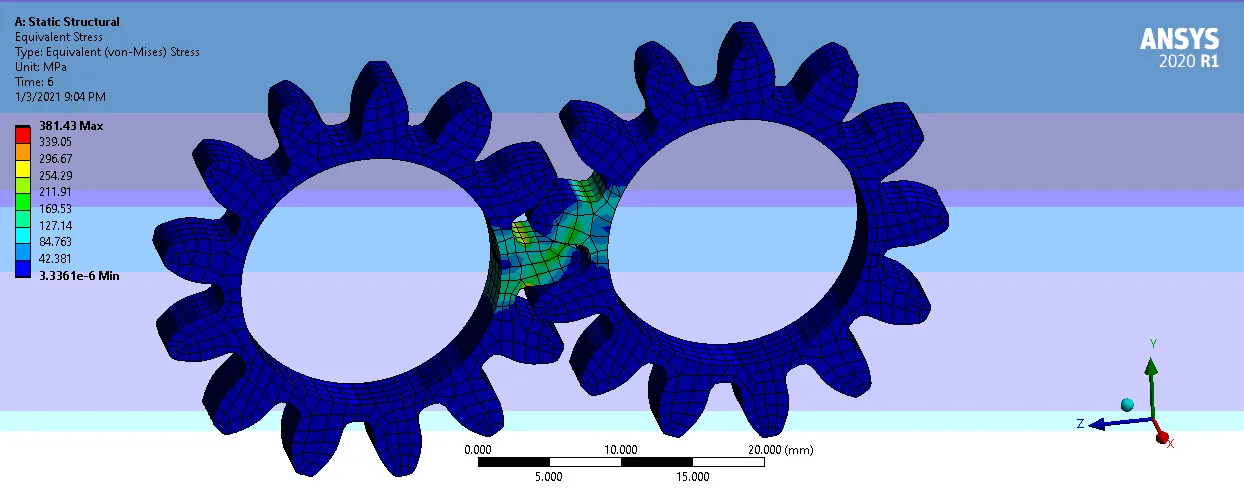
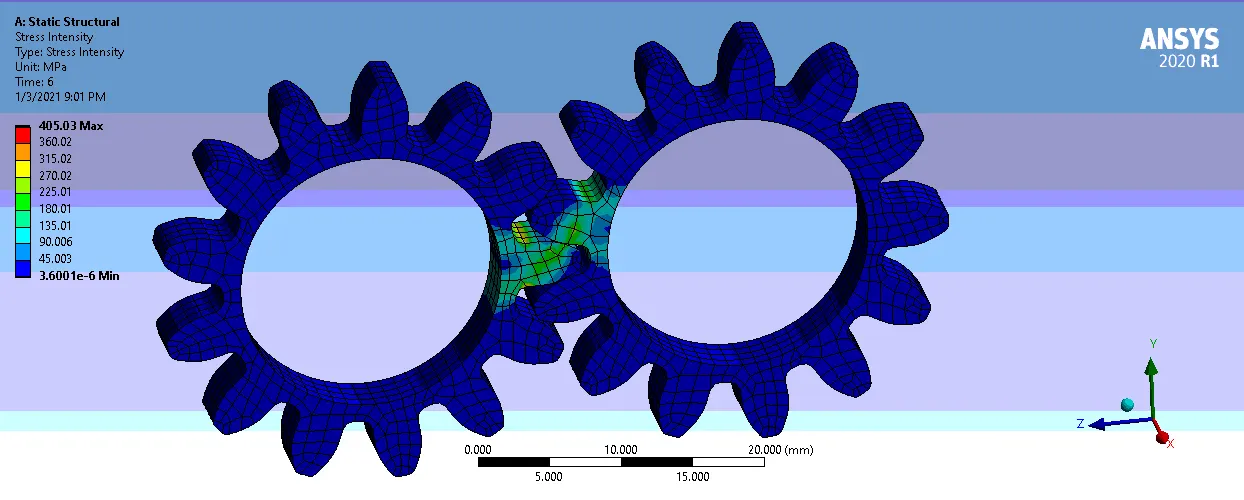
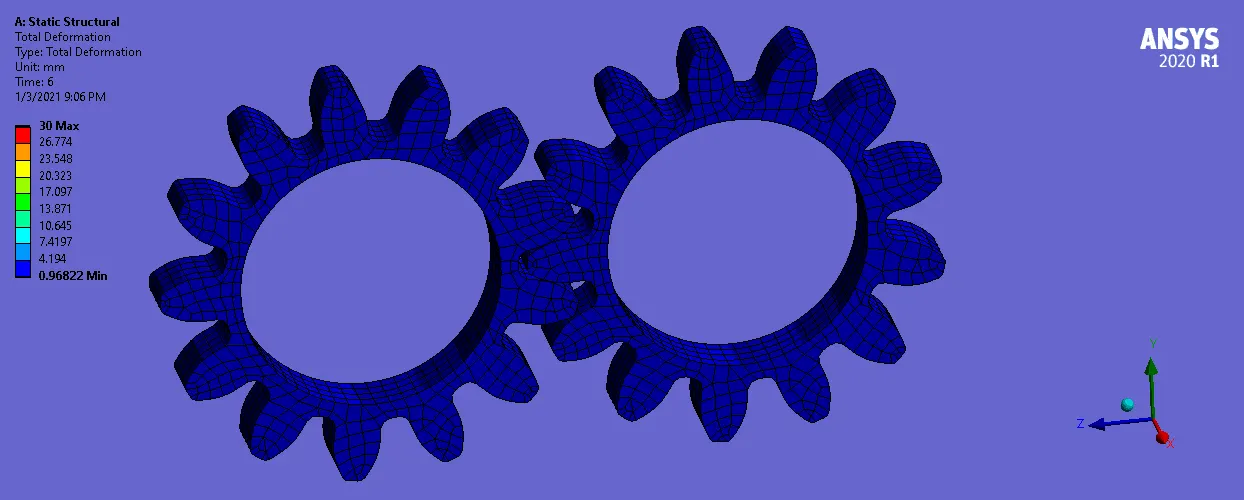
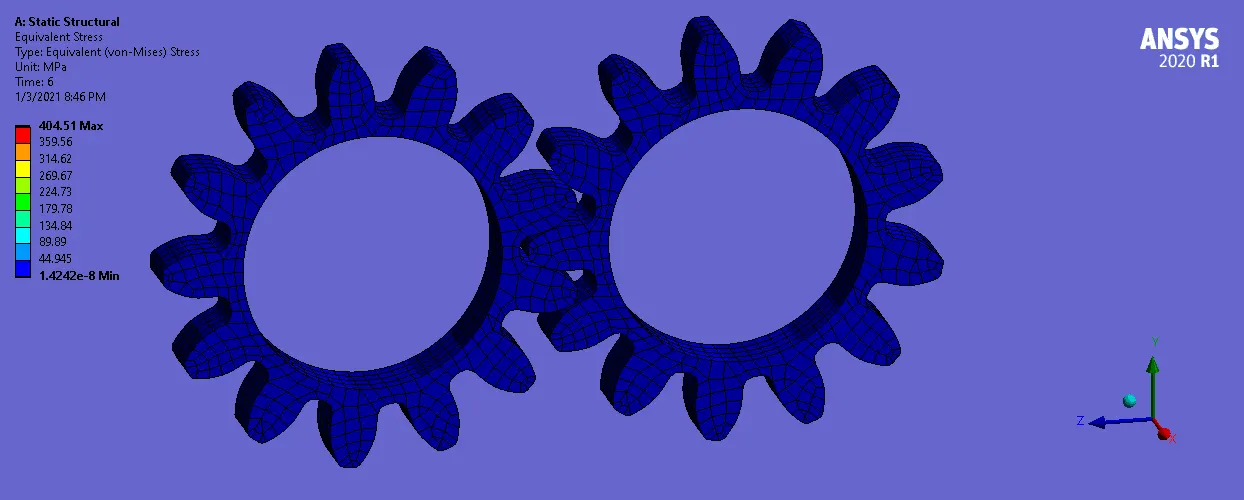
Below are the simulation results of all the cases with regards to stress intensity, deformation and eqiuvalent von-mises stress. At each time step the minimum and maximum value is presented and can be seen analysed it the graphs below.
CASE_1 (CAST IRON DUCTILE)
Cast iron are metals which have very low melting points with carbon content alloy greater than 2%.The ductile type has properties which havegraphite grains which stops cracks from propagation unlike grey cast iron which deflects and initiate cracks throuh the material. Also there is whote cast iron which allows the propagation of cracks through them.
Von mises stress
Stress intensity
This stress intensity factor, , is used in fracture mechanics to predict the stress state ("stress intensity") near the tip of a crack or notch caused by a remote load or residual stresses. It is a theoretical construct usually applied to a homogeneous, linear elastic material and is useful for providing a failure criterion for brittle materials, and is a critical technique in the discipline of damage tolerance. The concept can also be applied to materials that exhibit small-scale yielding at a crack tip.
Deformation
CASE_2 (CAST STEEL)
Cast steel is a ferrous alloy with a maximum carbon content of approximately 0.75%. Steel castings are solid metal objects produced by filling the void within a mold with liquid steel. They are available in many of the same carbon and alloy steels that can be produced as wrought metals. Mechanical properties for cast steel are generally lower than wrought steels, but with the same chemical composition. Cast steel compensates for this disadvantage with its ability to form complex shapes in fewer steps.
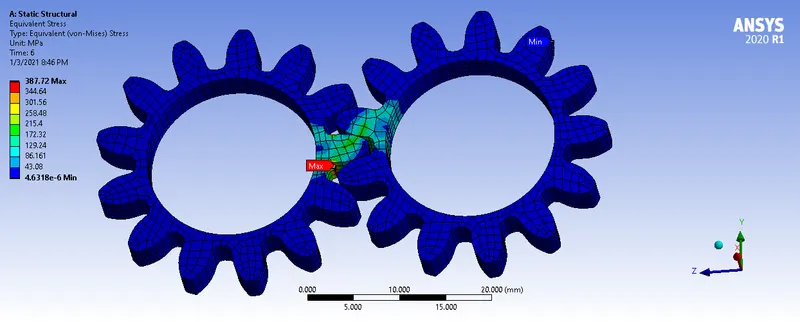
Von mises stress
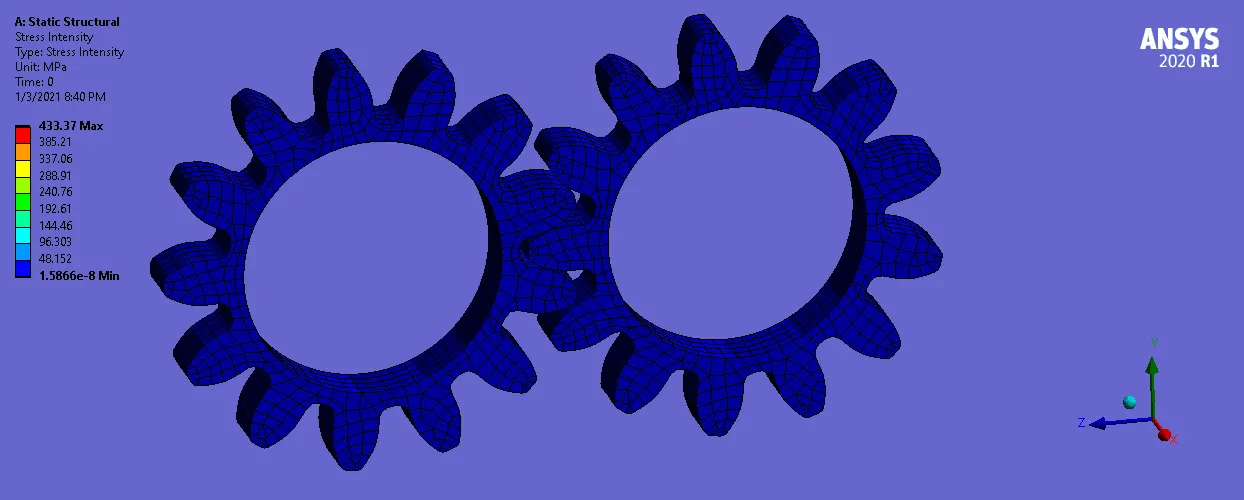
Stress intensity
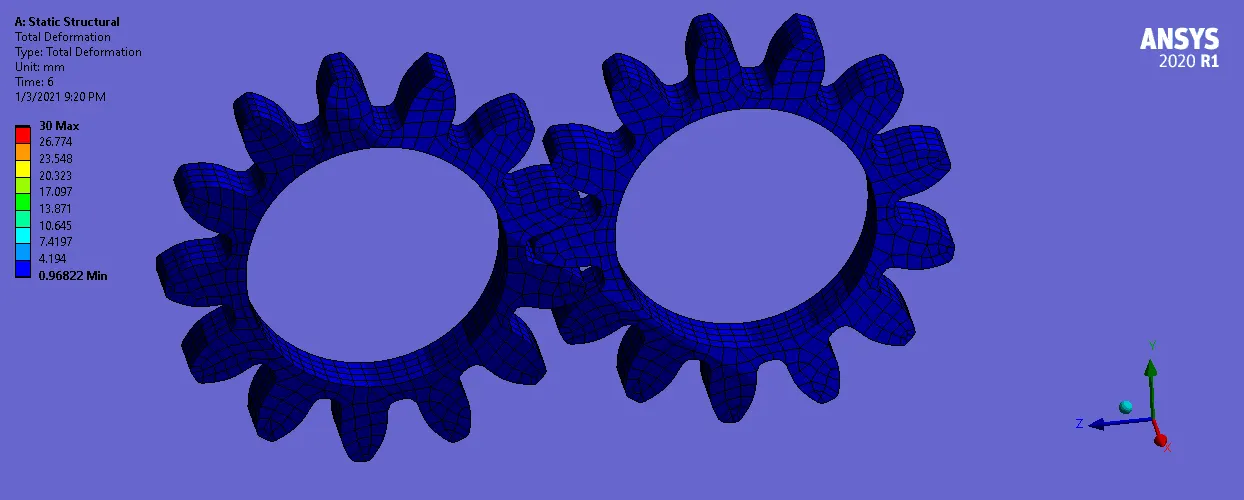
Deformation
CASE_2 (CAST BRONZE)
Bronze is the most popular metal for cast metal sculptures; a cast bronze sculpture is often called simply a "bronze". It can be used for statues, singly or in groups, reliefs, and small statuettes and figurines, as well as bronze elements to be fitted to other objects such as furniture. It is often gilded to give gilt-bronze
Common bronze alloys have the unusual and desirable property of expanding slightly just before they set, thus filling the finest details of a mould. Then, as the bronze cools, it shrinks a little, making it easier to separate from the mould.Their strength and ductility (lack of brittleness) is an advantage when figures in action are to be created, especially when compared to various ceramic or stone materials (such as marble sculpture).
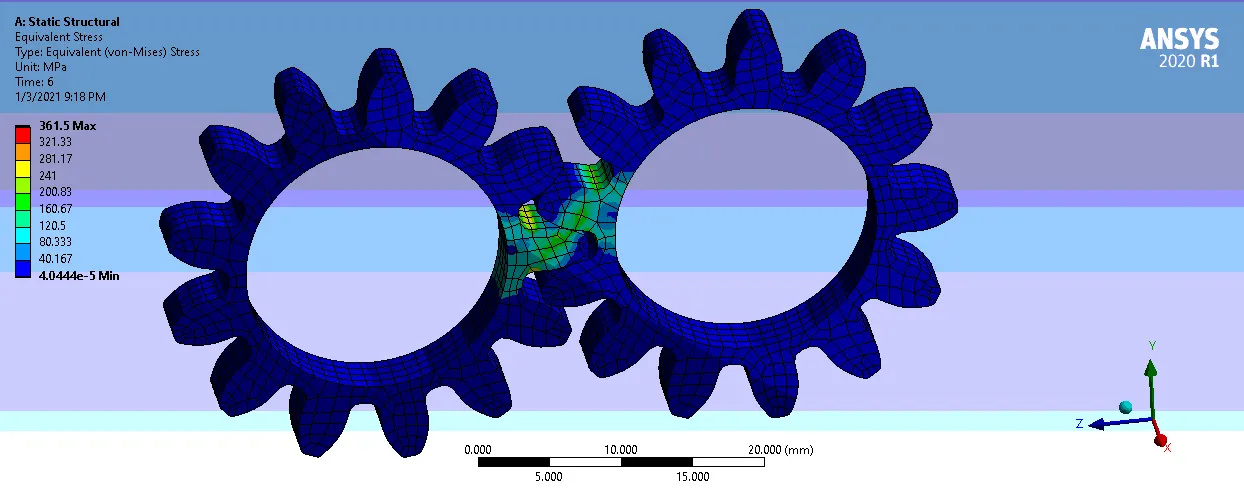
Von mises stress
Stress intensity
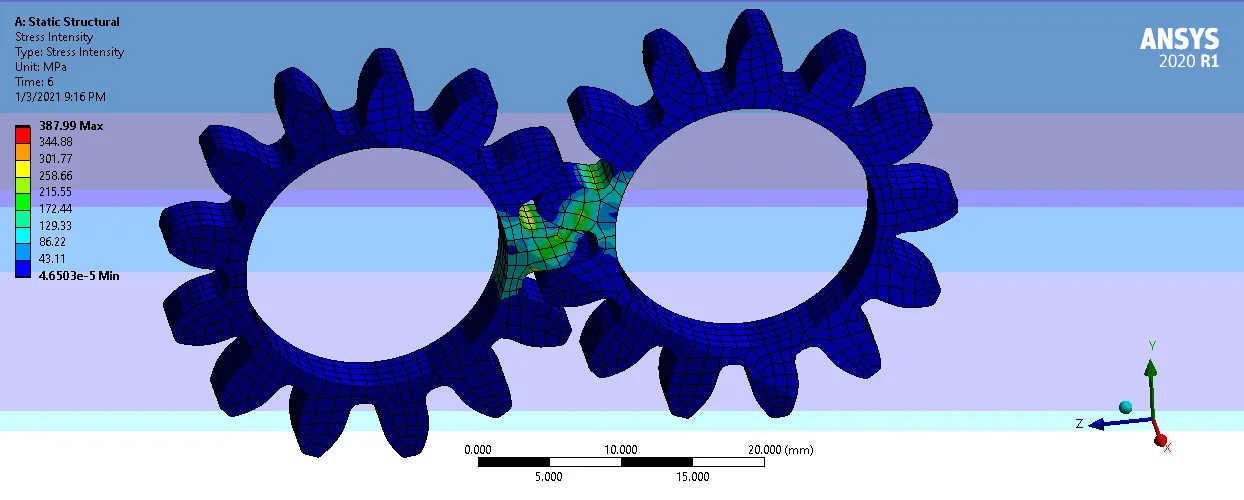
Deformation
RESULTS AND DISCUSSION
| Case | Maximum deformation(mm) | Maximum Stress Intensty(Mpa) | Maximum Stress (Mpa) |
| 1 | 30 | 405 | 381 |
| 2 | 30 | 413 | 388 |
| 3 | 30 | 388 | 362 |
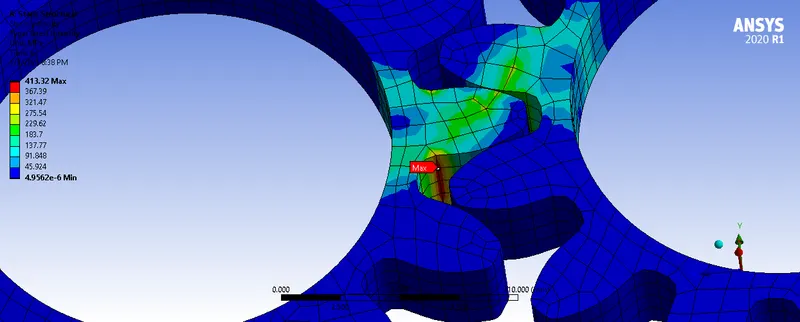
Considering the stress intensity, the material with the highest value can be seen at the tooth and the highest value is developed on the Cast steel material. This is the point which would develop cracks during fatigue failures. The difference between the yield strength and stress intensity should be minimum enough to show that the material would have a higher life as cracks propagation would be slow. Considering all three materials, Cast Iron would have the least difference of 61.
|
Material |
Stress Intensity (Mpa) |
Yield Strength (Mpa) |
(Yield Strength) – (Stress Intensity) (Mpa) |
|
Cast Ductile iron |
405 |
344 |
61 |
|
Cast Steel |
413 |
349 |
64 |
|
Cast Bronze |
388 |
144 |
244 |
Considering the generated maximum stress, cast bronze has a value of 362Mpa with a yield strength of 144Mpa which means the gears of this material is going to fail or fracture because the ultimate tensile strength is still lower than the maximum stress value. Cast Bronze would not be suitable for this application.
Cast steel and Cast iron both have developed maximum stress greater than the yield strength but lesser than the ultimate tensile strength. Therefore, these materials wont crack but would deform plastically. If considering stress intensity , as said above cast iron is the best option as cracks would move slowly compared to the cast steel.These cracks would begin at the maximum position around the tooth.
CONCLUSION
Per my research and simulation I would choose cast iron(Ductile) based on the results developed