Week 1 Spur Gear Challenge
Spur Gear Report
Objective: Write a detailed report comparing the results of the three cases and conclude which material would you recommend based on these results.
Procedure:
- Select Static Structural, drag and drop into Project Schematic.
- Choose material as per the case, under Engineering Data.
- Under geometry tab, import the given geometry, double-click to open SpaceClaim to register the model.
- Then in Mechanical Module, assign a frictional connection between the gear teeth. (Right to Left)
- Assign revolute joints to both the gear. (Ground to Left/Right)
- Under static structural tab, we enter the values of rotational motion of the two gears.
- The Left gear is made to rotate up to 180deg in six steps of 30deg each.
- The right gear is made to rotate with a moment of -10Nm. Negative sign implies counterclockwise motion.
- The entire set up is solved with a mesh element size of 1mm.
- Total Deformation, Equivalent Elastic Strain, Equivalent Stress and Stress Intensity plots are requested from the solver as outputs.
- The same process is repeated for each case by changing the material assigned.
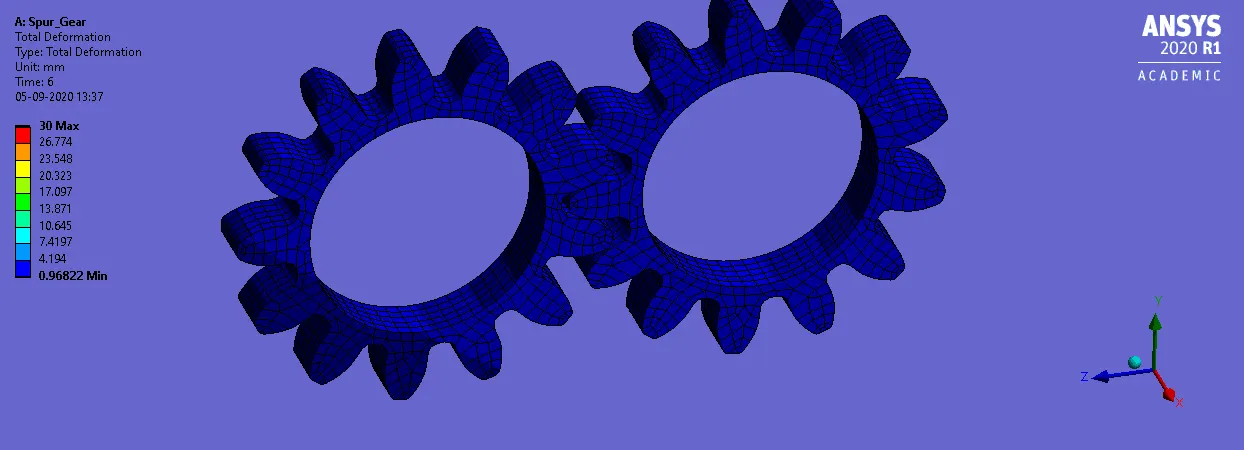
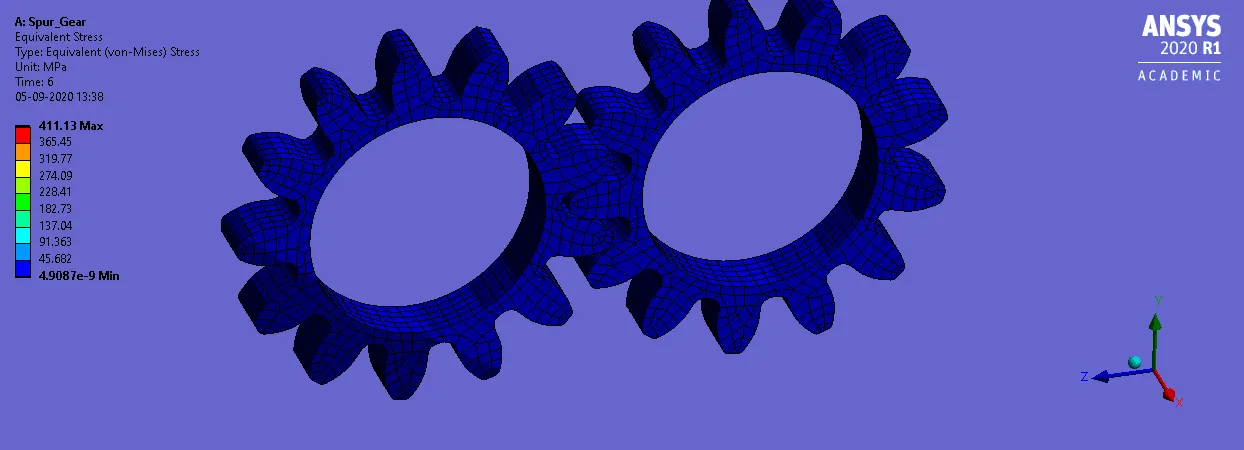
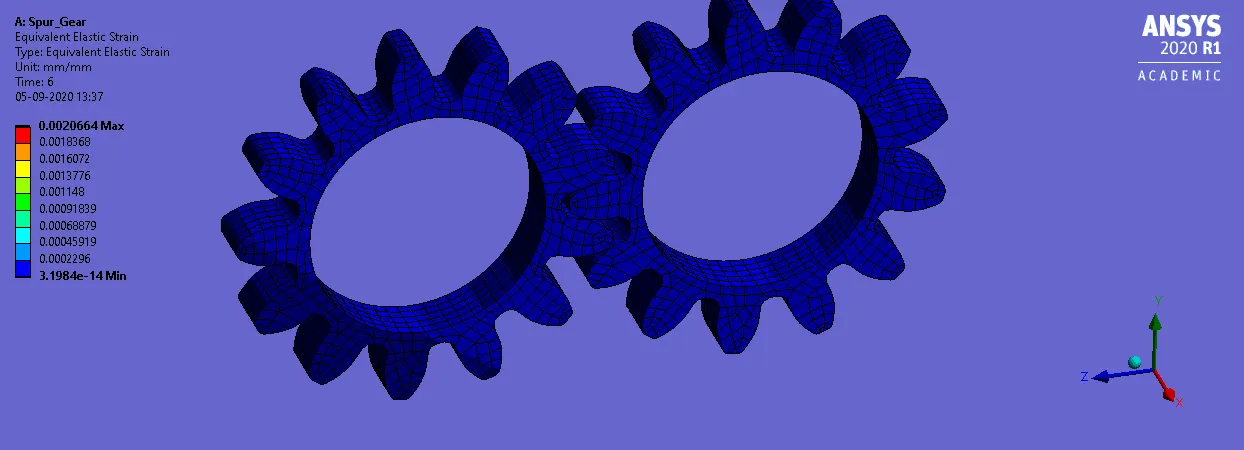
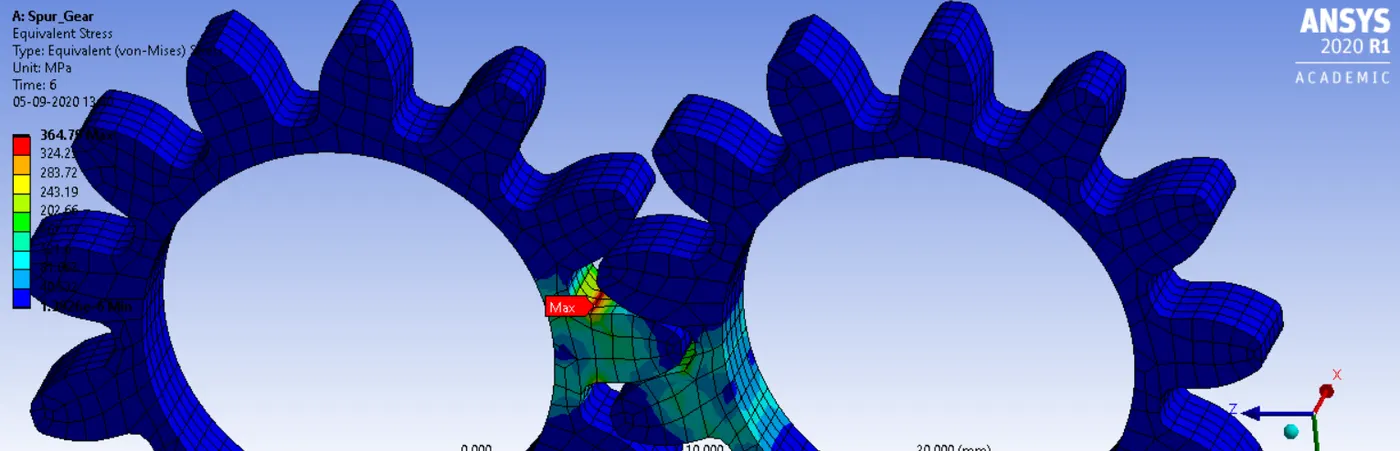
Case 1: Used Cast Iron(ductile) as a material, carried out a static structural analysis to find out Equivalent stress, Total deformation and Stress intensity. Found location for possible fracture.
The results are given below:
Total Deformation:
Equivalent Stress:
Equivalent Elastic strain:
Stress Intensity:
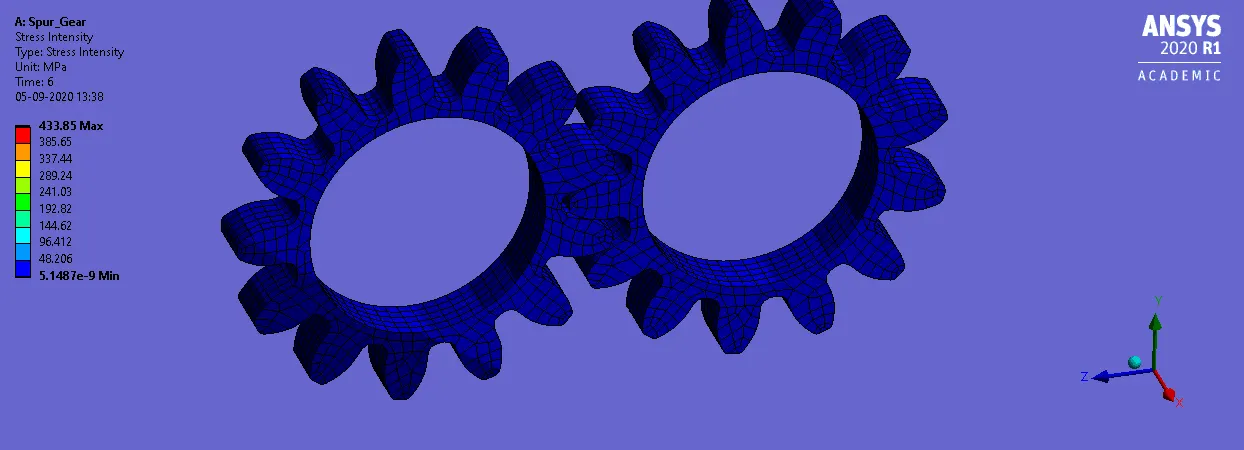
- We can infer from the pic below that the gear is most likely to fracture at the base of one of its teeth. Indicated by the MAX label.
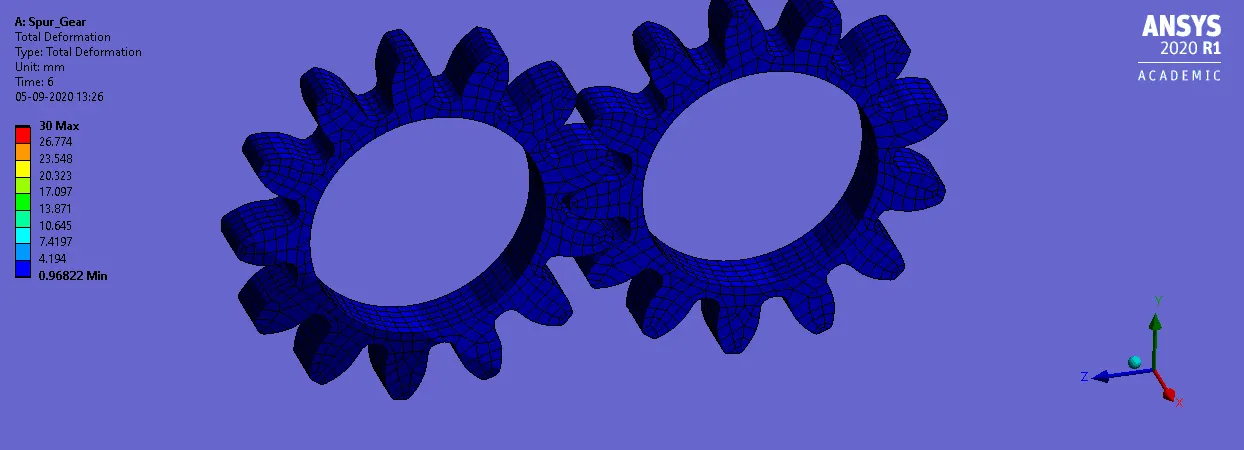
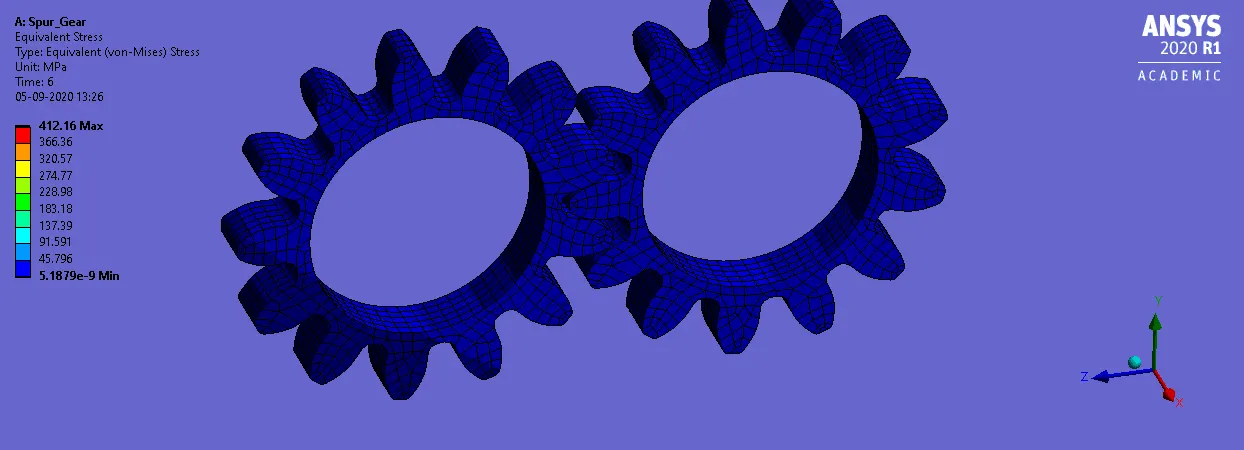
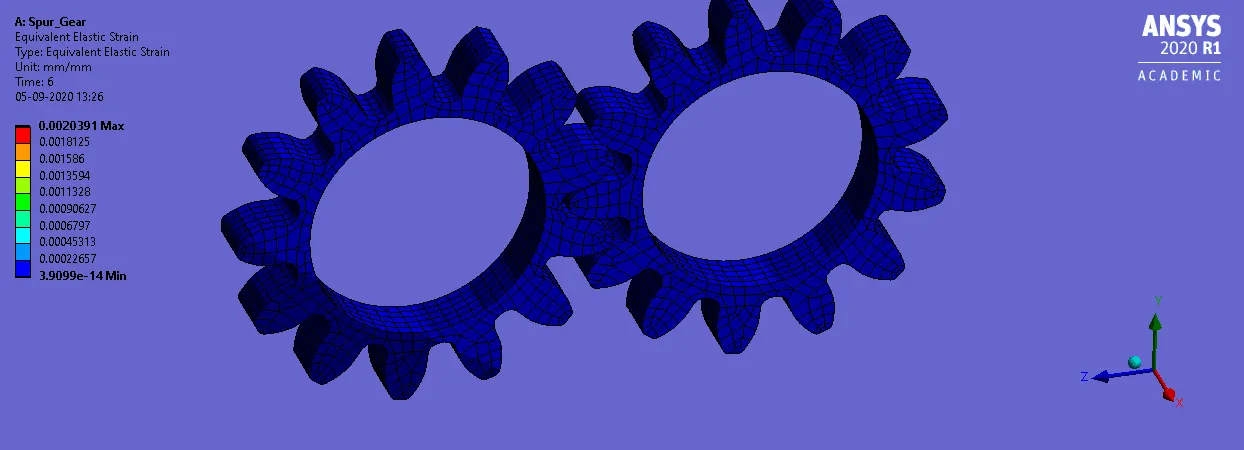
Case 2: Used Cast Steel as a material, carried out a static structural analysis to find out Equivalent stress, Total deformation and Stress intensity. Found location for possible fracture.
The results are given below:
Total Deformation:
Equivalent Stress:
Equivalent Elastic strain:
Stress Intensity:
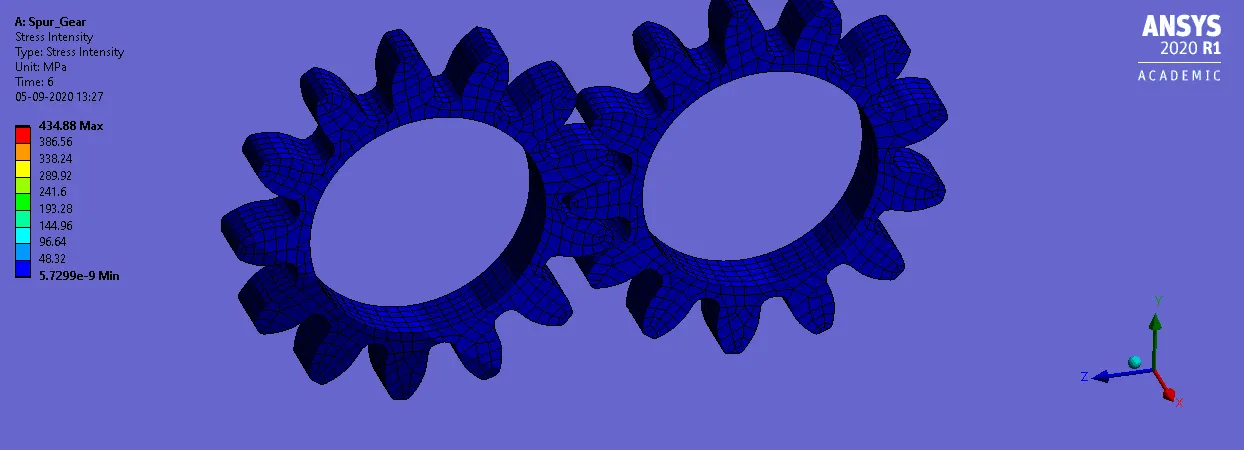
Case 3: Used Cast Bronze as a material, carried out a static structural analysis to find out Equivalent stress, Total deformation and Stress intensity. Found location for possible fracture.
The results are given below:
Total Deformation:
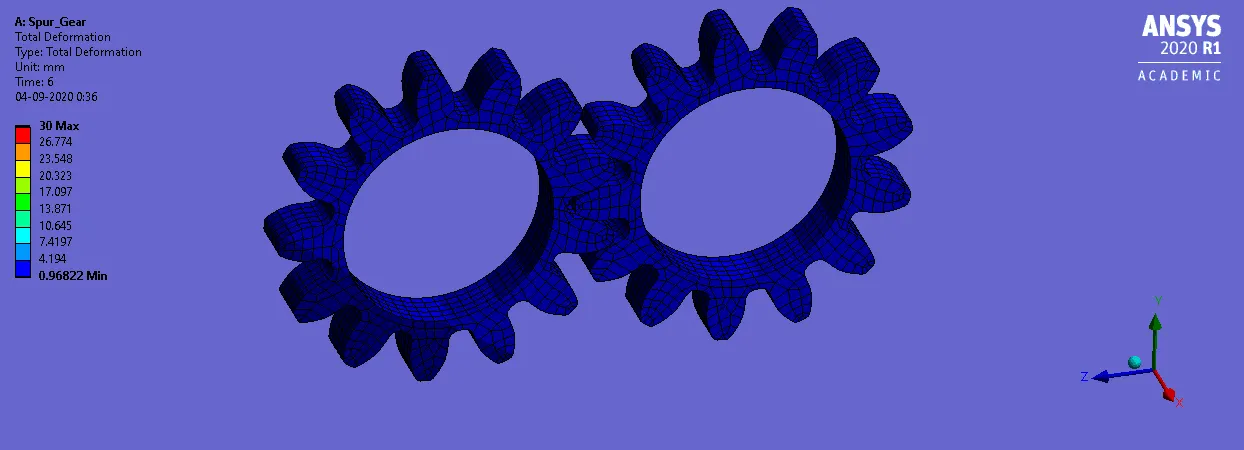
Equivalent Stress:
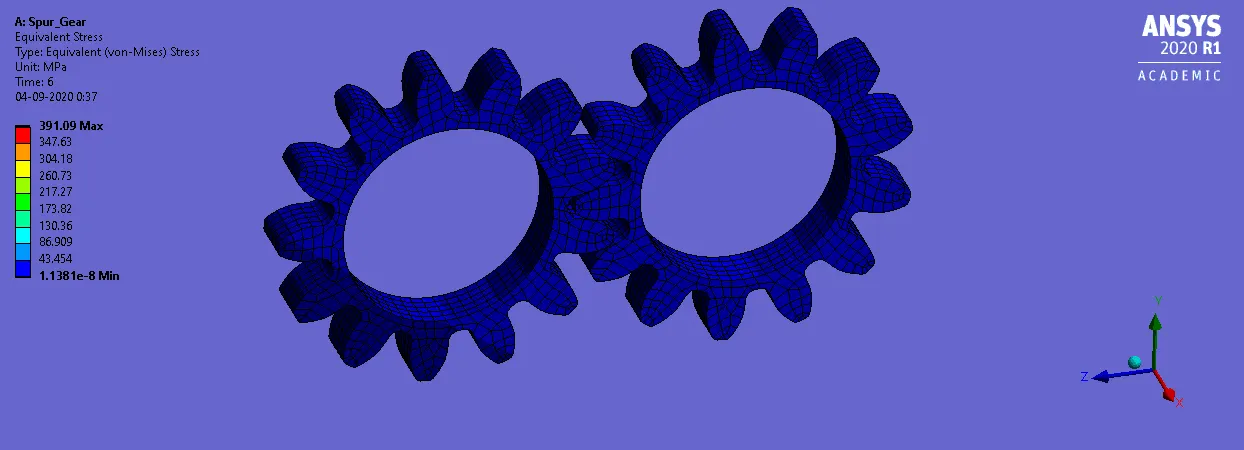
Equivalent Elastic strain:
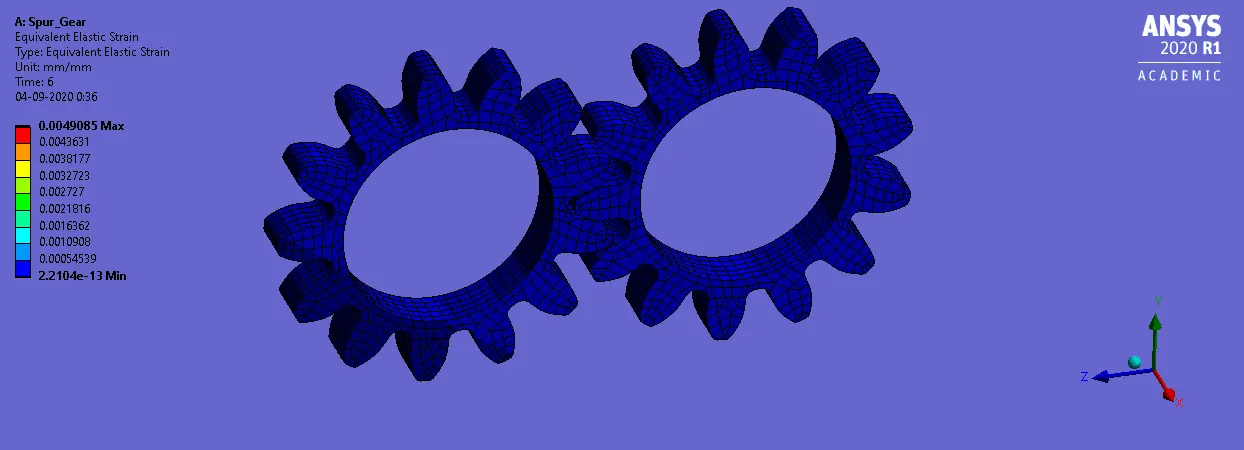
Stress Intensity:
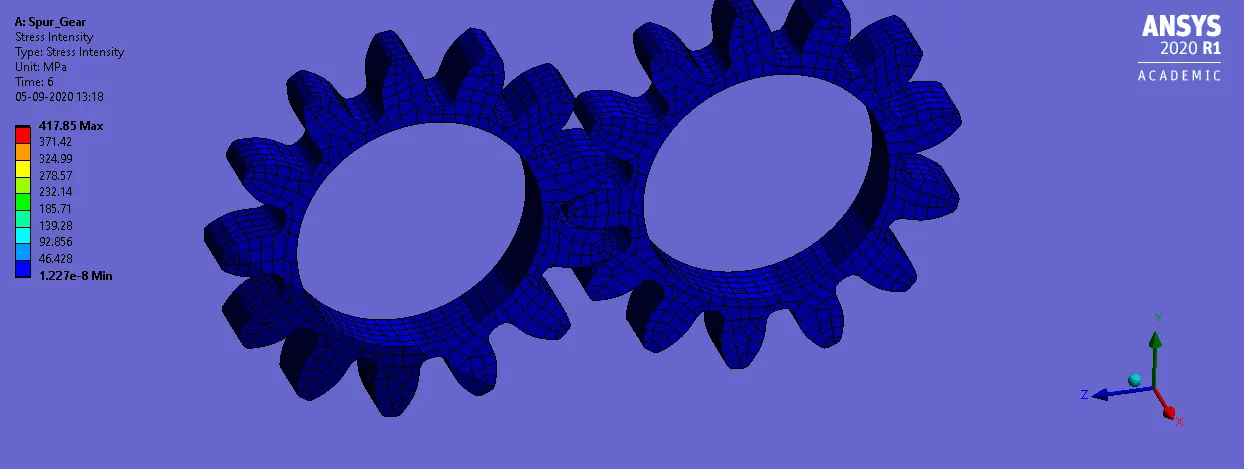
Conclusion: We can infer the following data from the three cases:
|
Gear Material |
Equivalent Stress (MPa) |
Equivalent Elastic Strain |
Total Deformation (mm) |
Stress Intensity (MPa) |
|
Structural Steel |
411.13 |
0.0020664 |
30 |
433.85 |
|
Cast Steel |
412.16 |
0.0020391 |
30 |
434.88 |
|
Cast Bronze |
391.09 |
0.0049085 |
30 |
417.85 |
Case Bronze has the least amount of stress as well as stress intensity. The stress intensity factor is used in fracture mechanics to predict the stress state near the tip of a crack or notch caused by a remote load or residual stresses. I would choose Cast Bronze as the material for the gears.